Sarajevo Public Transport: Trams, Buses & Tickets
How Sarajevo trams, trolleybuses and buses work: GRAS fares in KM, where to buy tickets, the Javni Prevoz KS app, and when to walk instead.
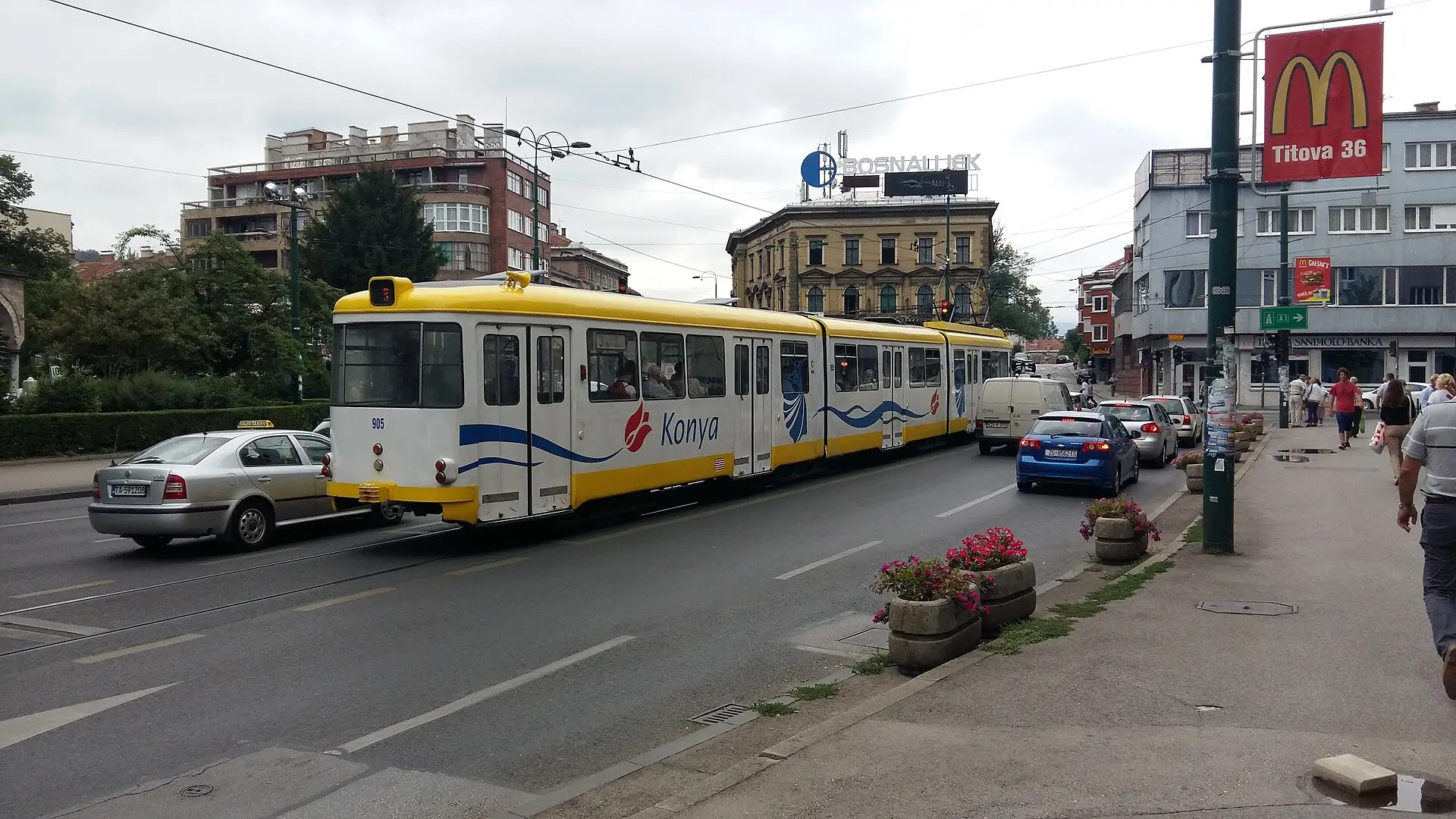
Sarajevo’s public transport is simple once you see the shape of the city. The valley floor runs on trams. The southern suburbs and the airport neighbourhood run on trolleybuses. The hills and outer districts run on buses and minibuses. A single GRAS city ride costs 2.20 KM (convertible marks); a day ticket is 7.10 KM. Buy singles at a GRAS kiosk or in the official Javni Prevoz KS app (many vehicles also sell a cash single from the driver). Day and ten-day tickets are kiosk products on the GRAS list - not something to count on from the driver. What trips people up isn’t the fare - it’s that two operators share the streets, and a GRAS paper ticket doesn’t work on a Centrotrans bus. This page is for moving around the city itself. Country-wide buses, the Mostar train and car hire sit in getting around Bosnia.
How the network fits the valley
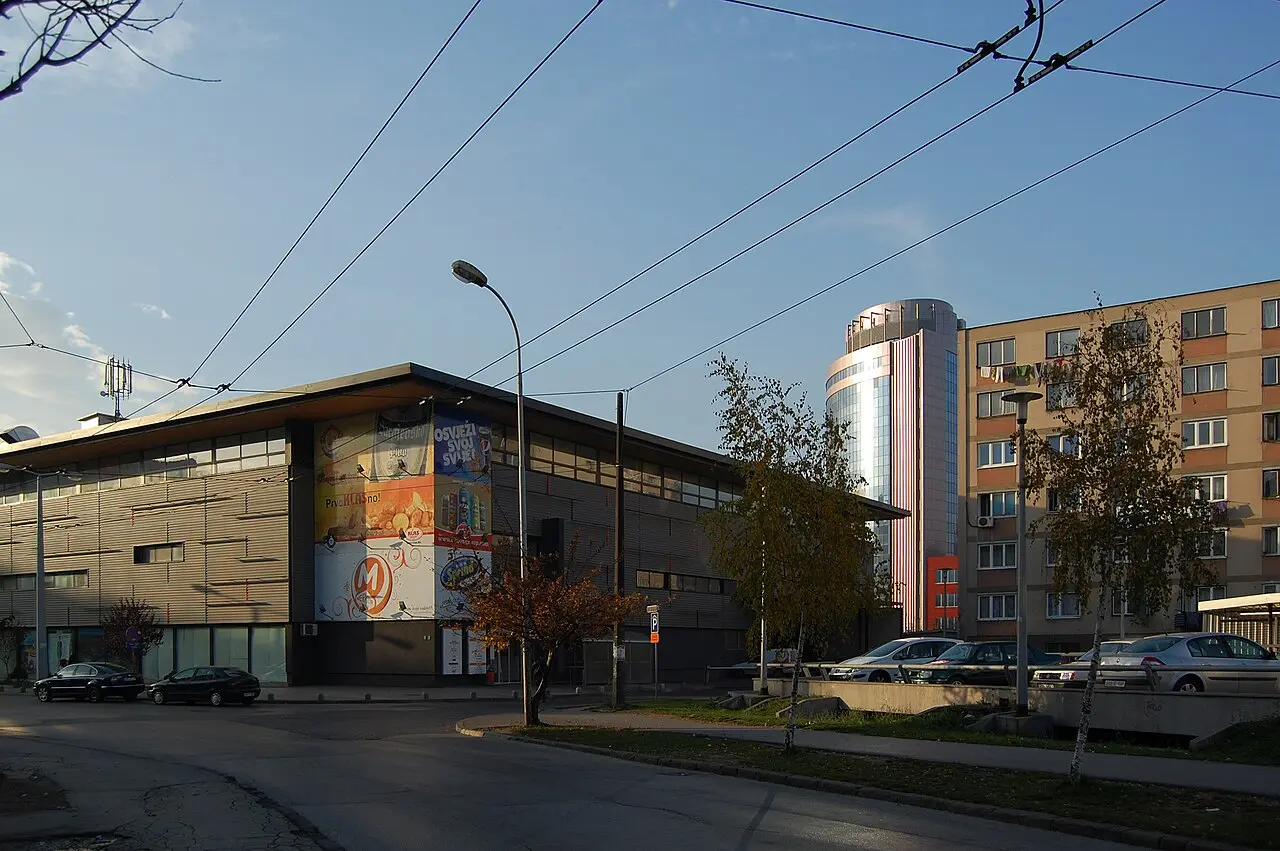
Sarajevo sits in a long bowl. The old Ottoman core, Baščaršija, anchors the east end. Ilidža stretches west toward the airport suburbs. Between them, the tram corridor follows the main avenues along the Miljacka. That single spine is what most visitors actually use: get on near the old town, ride west past the Austro-Hungarian centre, the university stretch and the newer districts, and get off when the map says you’ve gone far enough.
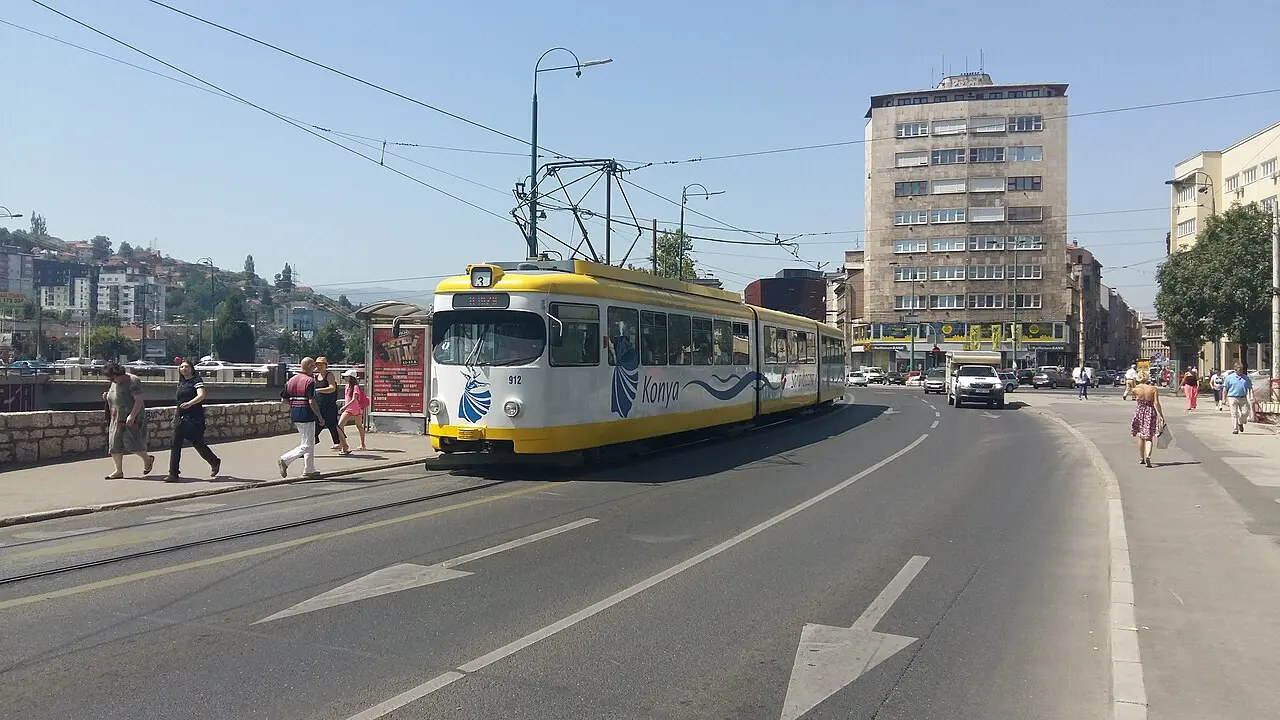
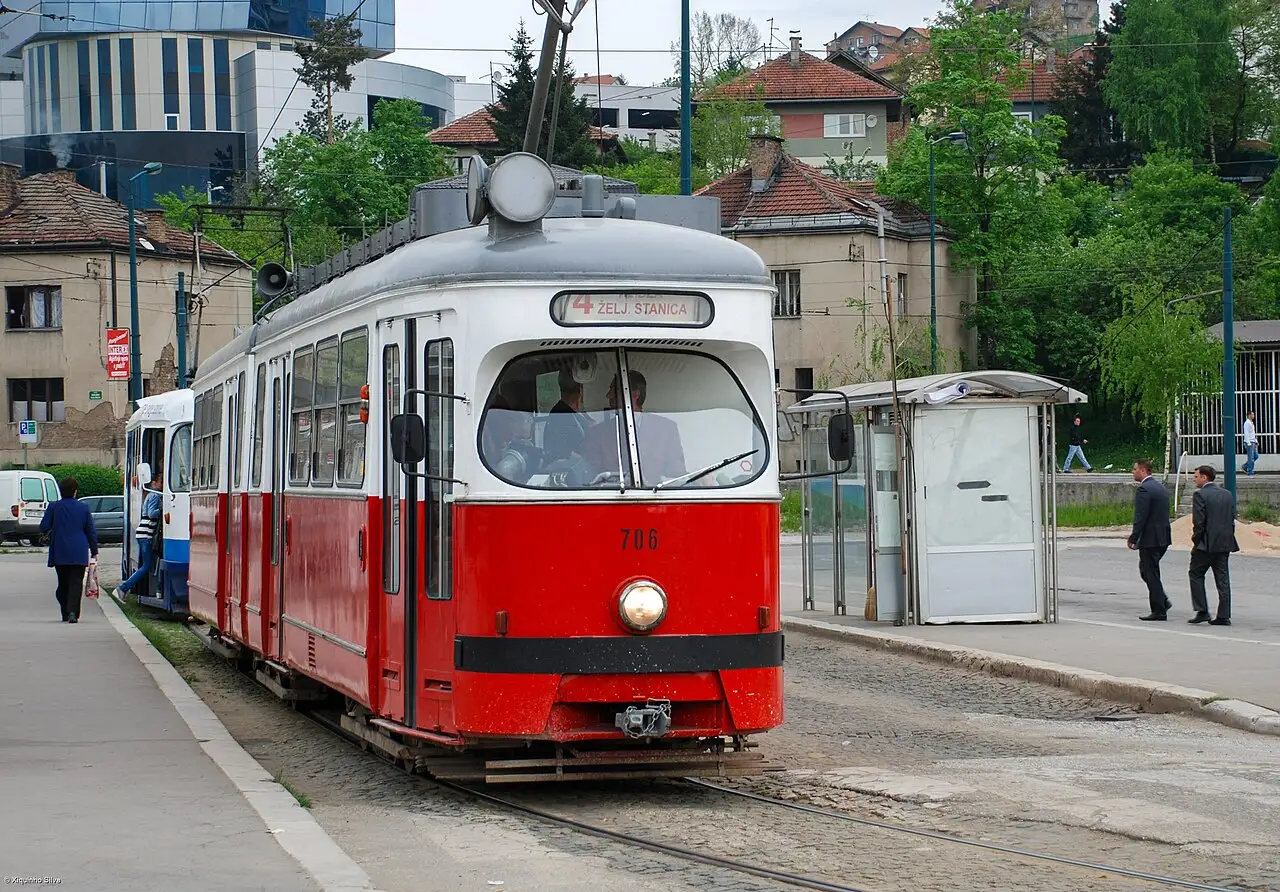
Tram line 3 is the full Baščaršija-Ilidža run and the one you’ll hear locals mention first. Tram line 1 is the short, useful hop between Baščaršija and the main railway and coach station. Other numbered tram services share pieces of the same tracks; treat the corridor as east-west along the valley, not as a metro map with branches everywhere.
Trolleybuses peel south. Line 103 runs Dobrinja-Trg Austrije: Dobrinja is the neighbourhood beside the airport, and Trg Austrije sits a few minutes’ walk from Vijećnica and the old town edge. Line 107 also starts in Dobrinja and heads toward Jezero. That is why the airport transfer story and this city story overlap - the cheap ride into town starts with a short walk to Dobrinja, not at the terminal door. Details and late-night limits are in Sarajevo Airport to the city.
Buses and minibuses fill what rails can’t. Steep residential streets, outer cantonal towns, mountain seasonals - those are road jobs. GRAS publishes separate prigrad (suburban) and planina (mountain) fares for those lines; they aren’t the flat 2.20 KM city ticket.
Tickets and prices (official GRAS, from 1 July 2025)
Prices below come from KJKP GRAS’s published tariff on gras.ba/karte and the pretplatni cjenovnik PDF dated 1 July 2025. They’re in KM (BAM), pegged to the euro at about 1.96. Carry small notes or coins for the driver; card acceptance on board is not something you should count on.
| Ticket (GRAS) | Price with VAT |
|---|---|
| Single ride - tram, trolleybus, city bus or city minibus | 2.20 KM |
| Child single (same modes) | 1.10 KM |
| Express bus single | 2.70 KM |
| Day ticket (dnevna) | 7.10 KM |
| Ten-day ticket | 50.00 KM |
| Mountain bus one way / return | 6.10 / 8.50 KM |
| Supplementary / penalty ticket (doplatna) | 30.60 KM |
Suburban bus and minibus singles climb by line on the GRAS table - minibus prigrad starts at 2.20 KM and the longer bus prigrad runs reach 6.70 KM; the full ladder is on the same GRAS page. For a typical tourist day inside the centre and along the tram, you only need the city column.
When a day ticket pays for itself
Four singles already cost 8.80 KM. The day ticket at 7.10 KM wins as soon as you expect four or more GRAS rides the same day - tram out to Ilidža, trolleybus across town, a bus back, and another hop in the evening. The ten-day ticket at 50.00 KM only makes sense if you’re based in the city for a stretch and riding daily; a weekend visitor won’t amortise it.
Per GRAS’s pretplatni rules, day and ten-day tickets cover unlimited rides on JGPP modes and lines except inter-entity services, express lines and named seasonal exceptions (the PDF lists Vijećnica-Dobrinja, F.Račkog-Bjelašnica and Ilidža-Vrelo Bosne among those carve-outs). In practice: buy a day ticket for ordinary city moving around; don’t assume it covers every special or seasonal bus you see advertised at a terminus.
Where to buy, and how validation works
GRAS lists five open kiosk points: Ilidža, Stup (underpass), Dobrinja terminal, Otoka trolley terminal and Baščaršija. At those counters you can buy the single (2.20 KM), the day ticket (7.10 KM), the ten-day (50.00 KM) and children’s tram or trolley tickets (1.10 KM).
You can also buy a single from the driver with cash when you board. Keep the ticket for the whole ride. Controllers do check, and GRAS’s published doplatna figure - 30.60 KM - is the expensive way to learn that.
The cleaner option for many visitors is the official Javni Prevoz KS app (App Store and Google Play), launched by the Ministry of Transport of Sarajevo Canton. Per the canton’s own announcement it shows timetables for both GRAS and Centrotrans, live vehicle arrivals at your stop, and online purchase of GRAS tickets for trams, trolleybuses, buses and minibuses. You get a QR code; you validate it on the scanner by the doors once you’re on board. Registration is required for ticket purchase. Foreign cards sometimes work fine and sometimes don’t - have cash as backup on day one.
GRAS and Centrotrans: same streets, different tickets
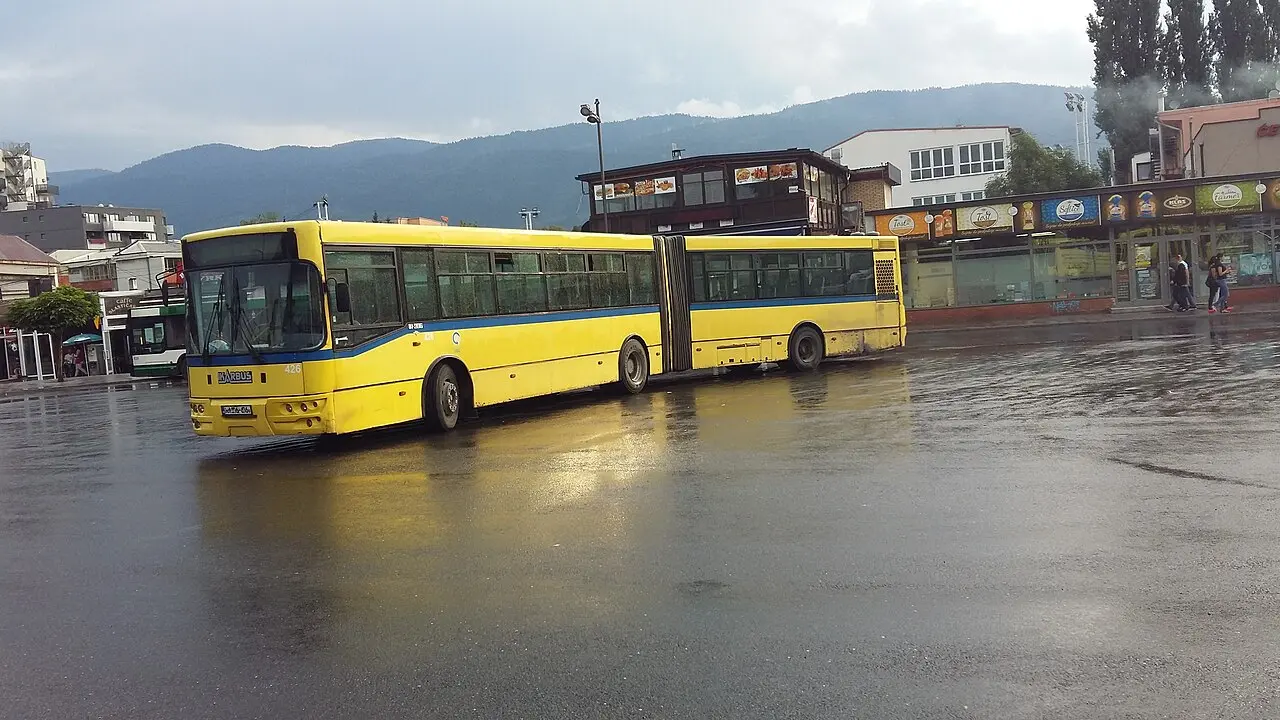
City buses aren’t all GRAS. Centrotrans runs many bus and minibus lines in the canton as well. The app shows both operators’ movements, which is useful, but paper singles are not interchangeable. A GRAS 2.20 KM ticket does not entitle you to ride a Centrotrans bus, and Centrotrans’s own terms describe a separate paper ticket bought from their driver (exact change expected) plus CentroCard products validated on their onboard scanners.
For a short stay, the practical rule is blunt:
- On a tram or trolleybus, you’re on GRAS - use a GRAS ticket or the app purchase.
- On a bus, look at the operator branding before you board. A GRAS paper single does not cover a Centrotrans bus; buy from that driver or use their accepted product.
- A GRAS day or ten-day ticket is different: per GRAS’s pretplatni cjenovnik those time tickets cover JGPP modes and lines in the named zone (minus express, seasonal and inter-entity carve-outs). That is why the day ticket is the clean way to hop without guessing which company painted the bus.
The non-obvious trap is the single, not the day pass. Visitors who treat every city vehicle as one fare system get caught when they board the wrong operator with a paper single from the other.
What to ride for common trips
Old town and central hotels. Walk. Baščaršija, the riverside museums, the cathedral quarter and most mid-range stays sit inside a compact grid. You’ll burn more time waiting for a tram than crossing on foot.
Main railway / coach station. Tram line 1 from Baščaršija, or a short walk from the western edge of the centre depending on your hotel. Useful before an intercity coach - and remember Sarajevo has a second station at East Sarajevo (Lukavica) for many Serbia and Montenegro departures; that’s a trolleybus job, covered in the country transport page.
Ilidža, Vrelo Bosne, Tunnel of Hope approaches. Tram west on line 3 to Ilidža, then walk, taxi or a local bus for the last stretch depending on the exact sight. The tram itself is the easy bit.
Airport day arrivals. Trolleybus 103 from Dobrinja after the terminal walk - see the airport page for hours and luggage trade-offs. Don’t plan that hop for a late-night landing.
Hill neighbourhoods and viewpoints. Minibus or taxi. The tram won’t climb to every residential street, and that’s geography, not a broken system.
Frequencies change by hour and by day. Use Javni Prevoz KS for live arrivals at your stop instead of memorising a printed headway from a blog post. Special events (matches at Grbavica, street closures downtown) regularly alter evening service; GRAS posts those notices on its site the same week.
What runs in 2026, and how often
The tram fleet changed hard this year, and it shows up as waiting time rather than as anything you see on a map. On 12 February 2026 a Czech-built Tatra K2 derailed at the Muzeji stop by the National Museum: the brakes failed on a car assembled in 1975, one passenger died and four were hurt. The canton pulled the remaining Czech cars and the donated Konya trams out of service that day, and both the GRAS director and the canton prime minister resigned.
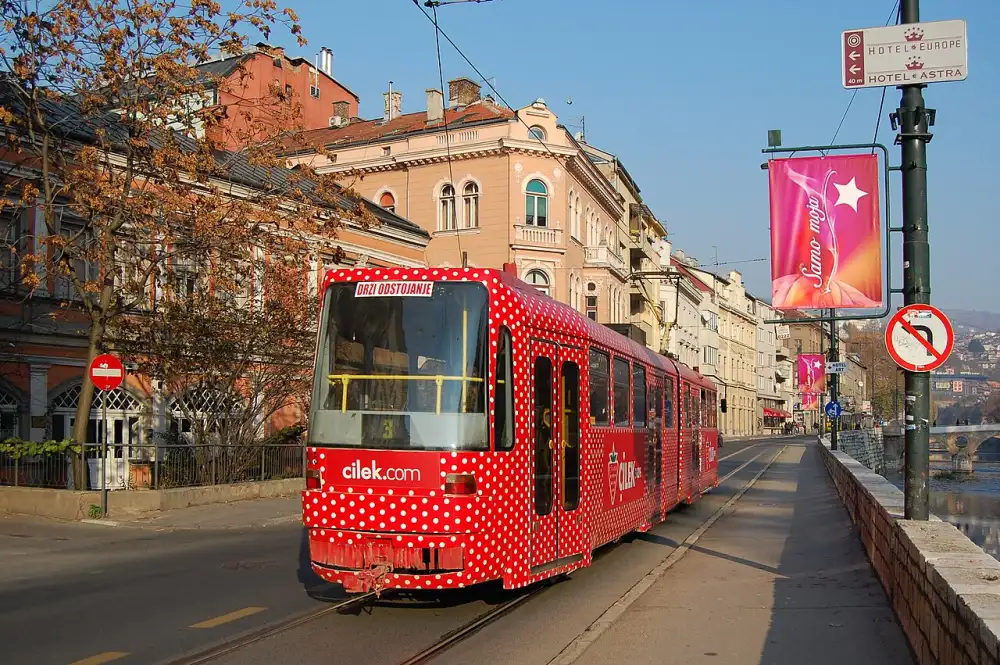
What you ride now is the Stadler Tango NF3 - 25 delivered between 2023 and 2025, of which 23 were running when Oslobodjenje checked the depot in April 2026. That is a younger, quieter fleet than the photos in most guides suggest, and it is a smaller one.
The practical part is the gap the withdrawal left. Amir Muminovic, who heads the GRAS union, told Oslobodjenje in April 2026 that trams were reaching stops every 5 to 6 minutes instead of the 2 to 3 the service plan assumes, with about 20 cars in traffic against roughly 40 needed. Those are union figures from the spring rather than a published headway, so treat them as the shape of the problem, not today’s timetable: the corridor is frequent, but it is not turn-up-and-go at the promise. If you are catching a train or an intercity coach at the main station, leave a buffer instead of trusting one tram.
Taxis, walking and when public transport isn’t worth it
Taxis are metered and common. For a short hop up a steep street, a late return after the last trolleybus, or a group with bags, a cab often costs less hassle than stitching minibuses. Insist on the meter, as you would anywhere. For door-to-door from the airport after dark, a taxi or pre-booked transfer still beats hoping the Dobrinja stop is awake.
Inside the historic core, public transport is almost irrelevant. You’ll walk between coffee, bazaar lanes and museums, then use the tram only when the day stretches west toward Ilidža or south toward Dobrinja. That mix - walk the east, ride the valley, taxi the hills - is how the city actually moves for visitors.
Building a day that uses the network
A practical pattern for a first full day: morning on foot around Baščaršija and the riverside, tram west along line 3 for lunch or a park stop toward Ilidža, back on the same corridor, then either stay central for dinner or catch trolleybus 103 only if you’re based near Dobrinja. Buy the 7.10 KM day ticket that morning at the Baščaršija kiosk if you already know you’ll cross the city twice. Keep the 2.20 KM single for a single errand day when you’re mostly walking.
Once you’re off the tram, the sights themselves are mapped in Sarajevo highlights and day plans. For leaving the city toward Mostar, Banja Luka or the coast, switch to getting around Bosnia - different tickets, different stations, different operators. City GRAS fares stop at the canton edge; they don’t buy you an intercity seat.
Check gras.ba/karte before you travel if you’re reading this months later: the numbers above are the official table verified in August 2026 against the July 2025 cjenovnik, and operators do revise tariffs. The shape of the network - valley tram, Dobrinja trolleybus, hill minibuses, two bus companies - changes far more slowly than the price of a single ride.
Photos
Read also

Transport · 13 min read
Bosnia-Montenegro Border Crossings: What to Expect
Verified · August 24, 2026Bosnia-Montenegro at Hum, Klobuk, Deleuša and Zupci: real insurance rules, honest queue ranges, rental car paperwork, and which crossing fits your route.

Transport · 11 min read
Sarajevo to Travnik & Jajce: Bus and Driving Guide
Verified · August 22, 2026Sarajevo to Travnik and Jajce: Centrotrans bus from 26.50 KM, or drive 90 min to Travnik, 2h50 to Jajce. One corridor, both towns. Checked August 2026.

Transport · 10 min read
Sarajevo to Trebinje 2026: Drive 4h or 07:45 Bus
Verified · August 15, 2026Sarajevo to Trebinje: 222 km, about 4 hours by car via Foča and Gacko. Morning bus from East Sarajevo; confirm the fare at the window.

Transport · 8 min read
Sarajevo to Banja Luka 2026: Bus 55 KM (about 5h)
Verified · August 13, 2026Sarajevo to Banja Luka: Centrotrans bus 55 KM (about 5h) or drive about 3.5h via Travnik, Jajce and the Vrbas canyon. No passenger train. Confirm times.