Transport in Bosnia: Getting Around by Bus, Train & Car
Transport in Bosnia and Herzegovina explained: buses are the backbone, one scenic Sarajevo-Mostar train, and when a car wins for the countryside.
Buses are how you get around Bosnia and Herzegovina. They reach almost every town worth visiting, they run often, and they’re cheap. Trains barely count: there’s one genuinely lovely line, Sarajevo to Mostar, and almost nothing else a traveller would use. And for a good chunk of what people come here to see, the scattered sights of Herzegovina and the mountains, you will move faster and see more with your own car. So the real planning question isn’t “bus or train” but “how much of my trip is cities I can hop between, versus countryside a timetable won’t reach.” This guide sorts out each option and where it earns its place. Moving around the capital itself is its own system of trams, trolleybuses and buses, priced separately - see Sarajevo public transport.
Transport in Bosnia and Herzegovina at a glance
Five ways to move around Bosnia and Herzegovina, and where each earns its place:
- Intercity buses - the backbone. Frequent, cheap and reaching almost every town; you rarely need to book far ahead.
- Train - one scenic line only, Sarajevo to Mostar (about 2 hours, twice a day; second class was 14.10 KM at the last published tariff and ŽFBH announced a 20% rise from 1 March 2026 without a new price list, so confirm at the counter), plus a summer-weekend run on to Ploče on the Croatian coast.
- Car hire - the way to reach Herzegovina’s day-trip sights, the national parks and the mountains that no bus serves well.
- Private transfers or a day driver - hands-free door to door, worth it for a group or a one-off trip into the countryside.
- City transport - trams, trolleybuses and buses in Sarajevo, though most old towns are small enough to walk.
The catch that trips up more first-timers than anything else: Sarajevo has two bus stations, in different entities, and your coach may leave from either.
Buses are the backbone
Intercity coaches carry the load in Bosnia. From Sarajevo you can reach Mostar, Banja Luka, Bihać, Jajce, Travnik, Tuzla, Zenica, Visoko and the smaller places in between, most of them several times a day. The dominant operator is Centrotrans (Centrotrans Eurolines), a Sarajevo firm running since 1963 with a couple of hundred daily departures, but it’s not the only one: Autoprevoz Mostar, Arriva, Nomago and various regional lines cover the same network, so a single route often has more than one company on it.
The practical upshot is that you rarely need to plan far ahead. Turn up at the station, buy a ticket at the window or from the driver, and go. Fares are modest and vary a little by operator, so treat any figure you see online as a ballpark and check on the day rather than assuming a fixed price. One small local habit worth knowing: you sometimes pay a token fee (a mark or two) to put a bag in the hold, handed straight to the person loading the luggage.
Sarajevo has two bus stations, and it matters
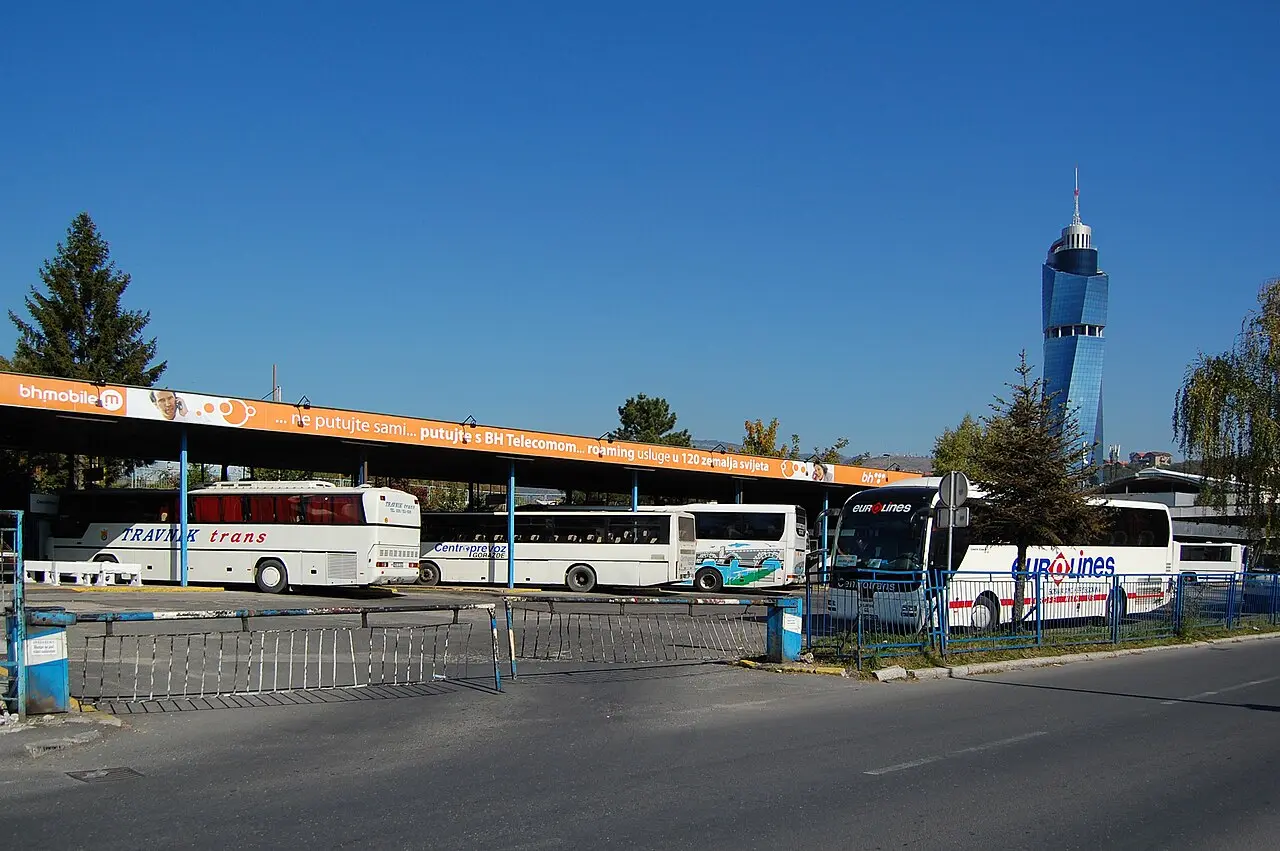
This trips up more first-time visitors than anything else about Bosnian transport. Sarajevo doesn’t have one central bus station; it has two, split along the line between the country’s two entities.
The main station, in the city centre next to the train station, handles domestic routes across the Federation and international coaches to Croatia, Slovenia and Western Europe - including the licensed Centrotrans Sarajevo-Banja Luka line from main “AS” (about 55 KM / 4h55 as of August 2026). The second, at East Sarajevo (Lukavica) out on the edge of town in Republika Srpska, is where most services to Serbia and Montenegro depart, along with buses to Trebinje and Bijeljina and some Republika Srpska-based coaches. So if you’re heading for Belgrade or down to the Montenegrin coast (Herceg Novi, Kotor), your coach very likely leaves from Lukavica, not the central station, and the two are a trolleybus ride apart (the 103 from Austrijski trg, or the 107 from Skenderija). Book online and the ticket will name the station; the mistake to avoid is assuming there is only one and showing up at the wrong end of the city.
The Sarajevo to Mostar train: take it for the ride
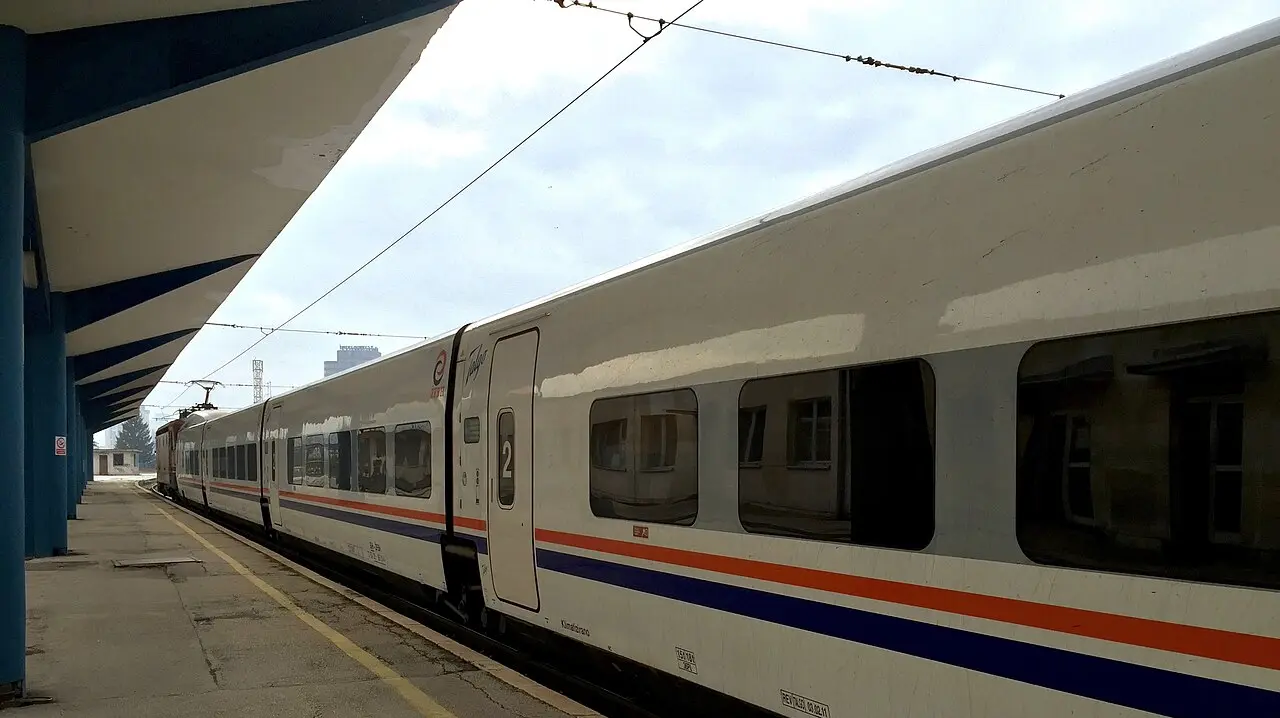
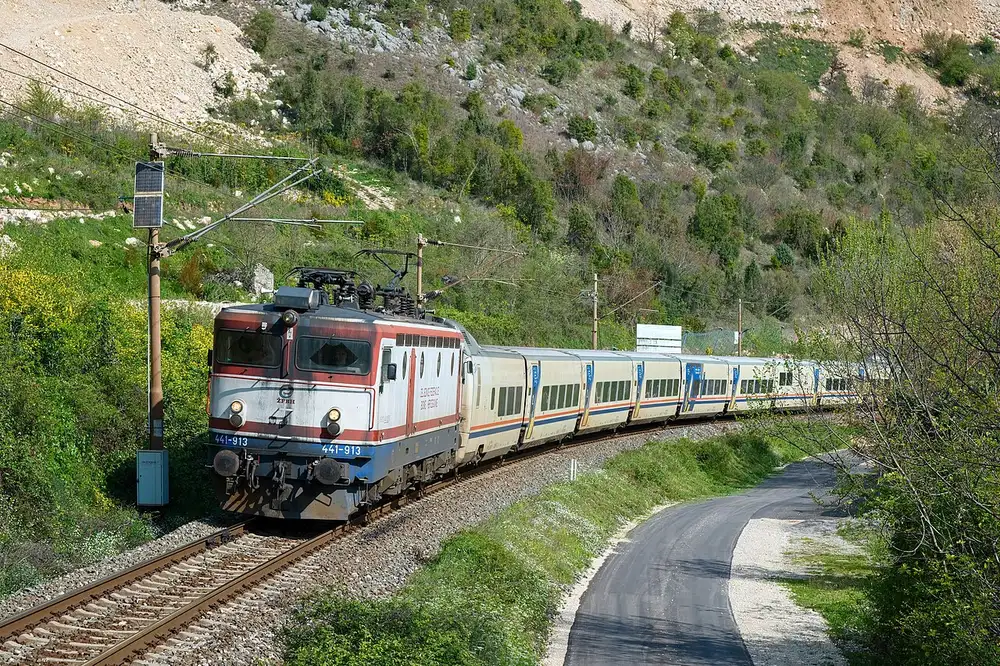
Bosnia’s one train worth building a plan around runs down the Neretva valley from Sarajevo to Mostar, and it’s one of the most scenic rail journeys in the Balkans. Modern air-conditioned Talgo trains, run by the Federation railways (ŽFBH), cover the 129 km in about two hours, with a cafe-bar on board and a window onto gorges, reservoirs and river bends you simply can’t see from the parallel road.
The practicalities are simple enough. Two trains run each way per day: departures from Sarajevo at 07:15 and 16:46 (per ŽFBH’s own current timetable), and back from Mostar at around 06:36 and 17:09 (per independent rail-travel site seat61, since ŽFBH’s public schedule only spells out the Sarajevo and Čapljina/Ploče end points), though schedules do shift with the seasons, so confirm current times before you rely on them. A one-way second-class ticket runs around 14 KM, with a discount if you buy a return; ŽFBH doesn’t sell it online, so pick it up at the station. Sit on the left going south for the best of the valley. The line actually carries on past Mostar to Čapljina, and on summer weekends a third train runs seasonally all the way down to Ploče on the Croatian coast, which makes a memorable, if slow, way to reach the Adriatic.
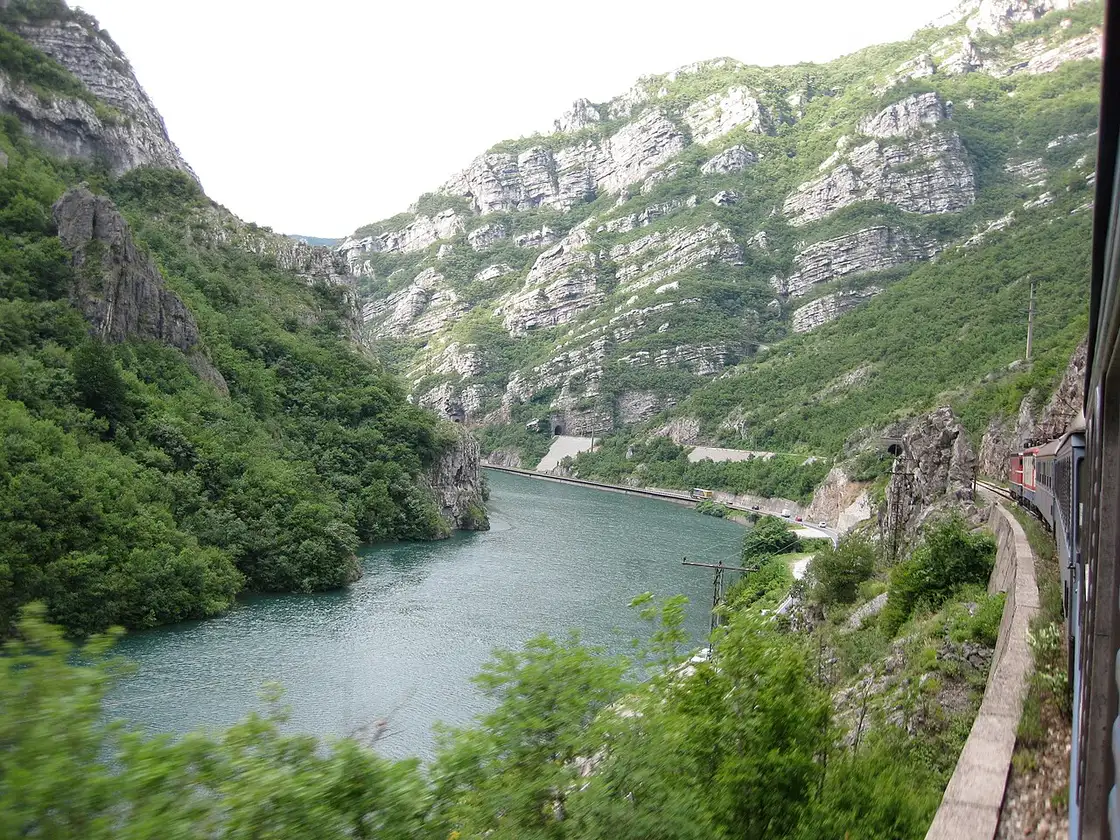
The thing to be clear-eyed about: this is a scenic experience that happens to be useful, not a transport network. Two trains a day means the timetable dictates your whole plan, and if you want to stop off at Blagaj or Počitelj on the way, the train can’t do it. Plenty of people ride the train down to Mostar for the views and come back by bus, which run far more often. The full comparison of every way to make that trip is in our Sarajevo to Mostar guide.
There is no real rail network beyond that
It is worth saying plainly so you don’t waste time hunting for connections that aren’t there. Outside the Neretva line, Bosnia’s passenger railway is threadbare. Federation Railways’ 2025/2026 timetable still lists slow locals towards Zenica, Maglaj and Visoko, but there is no passenger train Sarajevo-Banja Luka right now - older maps that draw the line are out of date. Decades of underinvestment and the damage of the 1990s left the network a shadow of what a country this size might have. So enjoy the Mostar train as the exception it is, and picture everywhere else as a bus destination.
Where a car pulls ahead: Herzegovina and the mountains
Buses connect the towns well. What they don’t connect is the countryside, and in Bosnia the countryside is a big part of the point. The Herzegovina day-trip circuit, Blagaj, Počitelj and the Kravice waterfalls, sits off the main bus corridors and is awkward to string together without your own wheels. The same goes for the Olympic mountains above Sarajevo (Jahorina, Bjelašnica), Sutjeska National Park in the far southeast, and Una National Park up northwest: reachable, but painful to reach on public transport, and impossible to do as a flexible day out.
A car also changes the character of the driving here in a way the numbers hide. Distances look tiny on a map and take far longer in reality, because outside one short motorway near Sarajevo you’re on scenic two-lane roads, climbing passes and waiting to overtake trucks. That’s a feature once you accept it, but it means you want to be the one setting the pace. Our guide to driving in Bosnia covers the roads, the tolls and the winter-tyre law; the practical side of hiring and whether you even need to is in the car rental in Bosnia guide.
If you would rather not drive at all but still want to reach the scattered sights, a private transfer or a hired driver for the day splits the difference: someone else takes the wheel on the mountain roads while you keep the flexibility to stop where you like. It costs more than the bus, obviously, but for a group or a one-off day trip to Herzegovina it can work out reasonable per person, and it solves the exact problem the bus can’t.
A quick way to decide
If your trip is mostly cities, Sarajevo, Mostar, a night in Banja Luka or Bihać, the bus network does the job cheaply and you don’t need to think much harder than that. Ride the train once, Sarajevo to Mostar, purely for the valley. If your list leans towards waterfalls, mountains, national parks and the small Herzegovina villages, rent a car (or line up a transfer for the days you want them) and let the timetable stop dictating where you can go. Most people who come for a week end up doing a bit of both, and that mix, buses between the cities and a car or driver for the countryside, is the setup that gets the most out of a small, slow, gorgeous country. Before you lock anything in, it helps to know which airport to fly into, since that quietly shapes how the rest of your route hangs together. And whichever way you travel, a local SIM or eSIM keeps maps, bus times and ride apps working on the move.
Photos
Read also

Transport · 11 min read
Sarajevo Public Transport: Trams, Buses & Tickets
Verified · September 3, 2026How Sarajevo trams, trolleybuses and buses work: GRAS fares in KM, where to buy tickets, the Javni Prevoz KS app, and when to walk instead.

Transport · 13 min read
Bosnia-Montenegro Border Crossings: What to Expect
Verified · August 24, 2026Bosnia-Montenegro at Hum, Klobuk, Deleuša and Zupci: real insurance rules, honest queue ranges, rental car paperwork, and which crossing fits your route.

Transport · 11 min read
Sarajevo to Travnik & Jajce: Bus and Driving Guide
Verified · August 22, 2026Sarajevo to Travnik and Jajce: Centrotrans bus from 26.50 KM, or drive 90 min to Travnik, 2h50 to Jajce. One corridor, both towns. Checked August 2026.

Transport · 10 min read
Sarajevo to Trebinje 2026: Drive 4h or 07:45 Bus
Verified · August 15, 2026Sarajevo to Trebinje: 222 km, about 4 hours by car via Foča and Gacko. Morning bus from East Sarajevo; confirm the fare at the window.