Car Rental in Bosnia: Tips & Where to Book 2026
Do you need a car in Bosnia, where to book it, automatic vs manual, winter tyres, cross-border to Croatia and Montenegro, tolls, parking and driving rules.
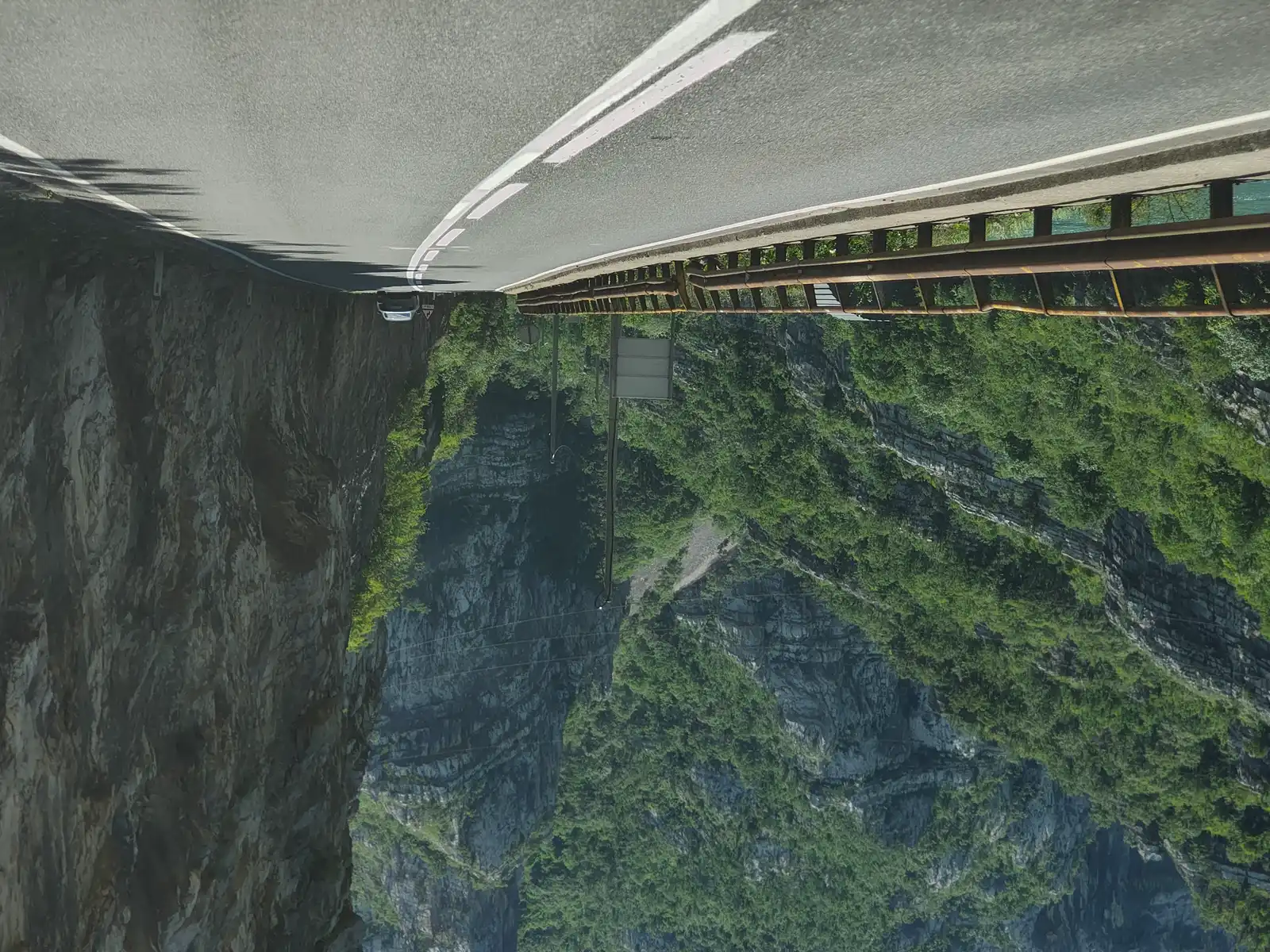
Short answer: for the classic Bosnia trip - a loop out of Sarajevo through Mostar and the Herzegovina sights - you want a car, because the very things that make the country special sit off the bus and train map and stitching them together any other way is a slog. For a Sarajevo city break, or Mostar as a day trip from the Croatian coast, you probably don’t - day tours and private transfers will do the job without the parking and paperwork. As for where to book: compare across an aggregator rather than walking up to a single airport desk, because the big internationals and the cheaper local agencies both operate here, and the price gap between them is real. This guide covers the whole decision - which airport, automatic or manual, what to check before you sign, winter tyres, tolls, and the cross-border rules for Croatia and Montenegro - with the honest bits included.
Do you actually need a car in Bosnia?
This is the question worth settling first, because a hire car you don’t use is just an expensive way to feel stressed about parking.
Rent a car if you’re doing anything beyond the two big cities. The headline experiences of Bosnia and Herzegovina - the Blagaj dervish house, the walled town of Počitelj, the Kravice waterfalls, the wine town of Trebinje, the Neretva canyon itself - are strung across the countryside with little or no useful public transport between them. Our 7-day Bosnia itinerary is built around a self-drive loop for exactly this reason: with a car it flows; without one it doesn’t really work. If that’s your trip, stop deliberating and hire.
You may not need one if your plans are narrower. Sarajevo is walkable, has trams, and its two big out-of-centre sights (the Tunnel of Hope and the Trebević cable car) are an easy taxi or ride-hail away - a car there is a liability, not an asset. And if you’re seeing Mostar as a day trip from Dubrovnik or Split, tours and transfers already run that route daily. There’s even a lovely middle path for the Sarajevo-Mostar leg: the train down the Neretva canyon (about two hours, twice a day each way; the last published second-class fare was 14.10 KM and ŽFBH announced a 20% rise from 1 March 2026 without a new price list, so confirm at the counter) is one of the best rides in the Balkans and needs no driving at all.
If you land in the “not really” camp, the flexible no-car option is a private transfer between towns plus a local driver for any day trips - pricier per journey than a rental, but hands-free, and worth pricing up before you commit either way.
Where to book car rental in Bosnia
Don’t just rock up to the first counter at arrivals. The rental market here runs from the familiar internationals (Europcar, Enterprise, Budget, Sixt) to budget chains (Goldcar, OK Mobility) and a good number of local Bosnian agencies - and the locals are often noticeably cheaper, sometimes with lower deposits or cash-friendly terms. Quality and terms vary between them, though, so you want to see them side by side.
The practical move is to compare on an aggregator, filter by what matters to you (automatic, cross-border allowed, low excess), read the specific supplier’s terms, and book ahead. Booking early matters more here than in most of Europe for two reasons: summer demand, and automatics (more on that next). Prices swing a lot by season, car and how far ahead you book, so we won’t quote a daily rate that would be wrong by next month - small economy cars are cheap by Western-European standards, and you’ll get the real number by checking live for your dates.
Automatic or manual?
Worth flagging early, because it can dictate whether you can drive at all. Like most of the region, the Bosnian rental fleet is mostly manual - stick-shift cars are the default, and automatics are a smaller, pricier slice that books out first, especially in summer. If you can’t drive a manual, treat an automatic as something to reserve well in advance, not to sort out on arrival.
If you can drive manual, it’s genuinely handy here: you’ll spend real time crawling behind trucks on two-lane roads and grinding up mountain grades, and the extra control earns its keep.
What to check before you drive off
A few minutes of care at the desk saves the classic holiday headaches. Run through this:
- The excess (deductible) and deposit. The cheap headline price usually comes with a big excess - the amount you’re liable for if anything happens - held against your card. Read what the included insurance actually covers: tyres, windscreen, and the underside of the car are commonly excluded. You can buy the agency’s excess-reduction cover, or carry your own travel insurance and, ideally, a standalone excess policy - just don’t assume “fully insured” means what it says. Our guide to travel insurance for Bosnia explains why a travel-medical policy and the car excess are two separate things, so you don’t end up paying for the same gap twice or missing it entirely.
- Photograph everything. Before you leave the lot, film or photograph the whole car - all four sides, the wheels, the windscreen, the interior - with the date visible. It’s your evidence against a phantom scratch at drop-off.
- Cross-border permission, if you’re leaving Bosnia - this has to be arranged when you book, not at the border (see below).
- Winter tyres, if you’re travelling between mid-November and mid-April - confirm the car is fitted (again, below).
- The boring boxes: fuel policy (full-to-full is fairest), any mileage cap, second-driver fees, and the young-driver surcharge if you’re under 25 or newly licensed.
Winter tyres are mandatory (15 November - 15 April)
This one is law, not advice. From 15 November to 15 April, vehicles in Bosnia and Herzegovina must be on winter or all-season (M+S) tyres with at least 4 mm of tread - or, alternatively, carry snow chains and be able to fit them if you’re on summer tyres. Studded tyres are banned. The absolute legal minimum tread is 1.6 mm, but 4 mm is the sensible floor for winter here.
In practice a reputable agency fits winter tyres automatically during the season, but confirm it’s done - it matters most on the routes you’ll actually want in winter: the ski mountains above Sarajevo (Bjelašnica, Jahorina), the high passes, and the M17 down the Neretva when it snows. Mountain weather turns fast, so don’t take the fit-out on trust.
The driving rules foreign drivers trip over
Bosnian rules are broadly European, with a few worth knowing before you set off (our guide to driving in Bosnia goes deeper on the roads, tolls and Cyrillic signs):
- Speed limits: 50 km/h in towns, 80 on the open road, 100 on expressways and 130 on the A1 motorway.
- Alcohol: the limit is 0.03% (0.3‰) for experienced drivers, and zero for novices (under 21 or licence held under three years) and professional drivers. Given the mountain roads, treat it as don’t-drink-and-drive and you can’t go wrong.
- Lights on: dipped headlights or daytime running lights are required during the day. Seatbelts are compulsory for everyone; children need proper restraints.
- The kit that must be in the car: a warning triangle, a hi-vis reflective vest, a first-aid kit and spare bulbs. The rental supplies these - open the boot and check they’re actually there before you leave.
- Your licence: EU and EEA licences are fine as they are. Everyone else should carry an International Driving Permit alongside the home licence - it’s cheap, and it’s what a roadside police check will ask for. Foreign licences are valid for up to six months; minimum driving age is 18, though rental firms usually set 21+.
Which airport should you fly into?
- Sarajevo (SJJ) is the main international airport and the natural place to start a loop - the widest choice of rental desks (internationals and locals) sits right here, near the terminal entrance. If in doubt, this is your airport. Our car rental in Sarajevo guide breaks down which of the roughly twenty desks are worth comparing and what the real prices look like.
- Tuzla (TZL) is the low-cost hub (this is where the Wizz Air fares land). Rental choice is thinner and it’s roughly 2.5-3 hours’ drive north of Sarajevo - fine if the airfare saving is big and you factor in the extra driving.
- Mostar (OMO) has very limited scheduled flights; don’t build a plan around flying into it. A lot of visitors actually arrive via Dubrovnik (DBV) or Split (SPU) in Croatia and drive or transfer in - but note that’s a Croatian rental crossing a border, which changes the paperwork (next section).
For the full breakdown of each option, including when a coastal airport beats them all, see our guide to which airport to fly into for Bosnia.
One money point: one-way and drop fees. Returning the car to a different city (Sarajevo to Mostar or Tuzla) or a different country adds a drop fee that can be steep. A round loop back to your pickup airport avoids it entirely - another reason the Sarajevo-out-and-back itinerary is the efficient one.
Taking the car to Croatia or Montenegro
This is where people get caught out, so get it right. If there’s any chance you’ll cross a border - a Dubrovnik finish, a Kotor detour, a run into Serbia - you must tell the rental company when you book. They add a cross-border authorisation and fee to your contract. What they will not add for Croatia, Montenegro or Serbia is a Green Card: all four countries sit in the registration-plate section of the Green Card system, where the number plate itself is the accepted proof of insurance. The card is for destinations outside that section, such as Albania, North Macedonia, Turkey or Ukraine. Turn up at the frontier without that and you can be turned back; take the car out of the country unauthorised and you risk penalties that, in the small print, can run up to the full value of the vehicle.
Budget for the fee, too. From a Bosnian rental, crossing borders typically costs around €40 for a single country, or roughly €30 per country if you’re visiting several - the exact figure is supplier-dependent. Some agencies also restrict newer or premium cars from leaving the country, so confirm your specific car is allowed out.
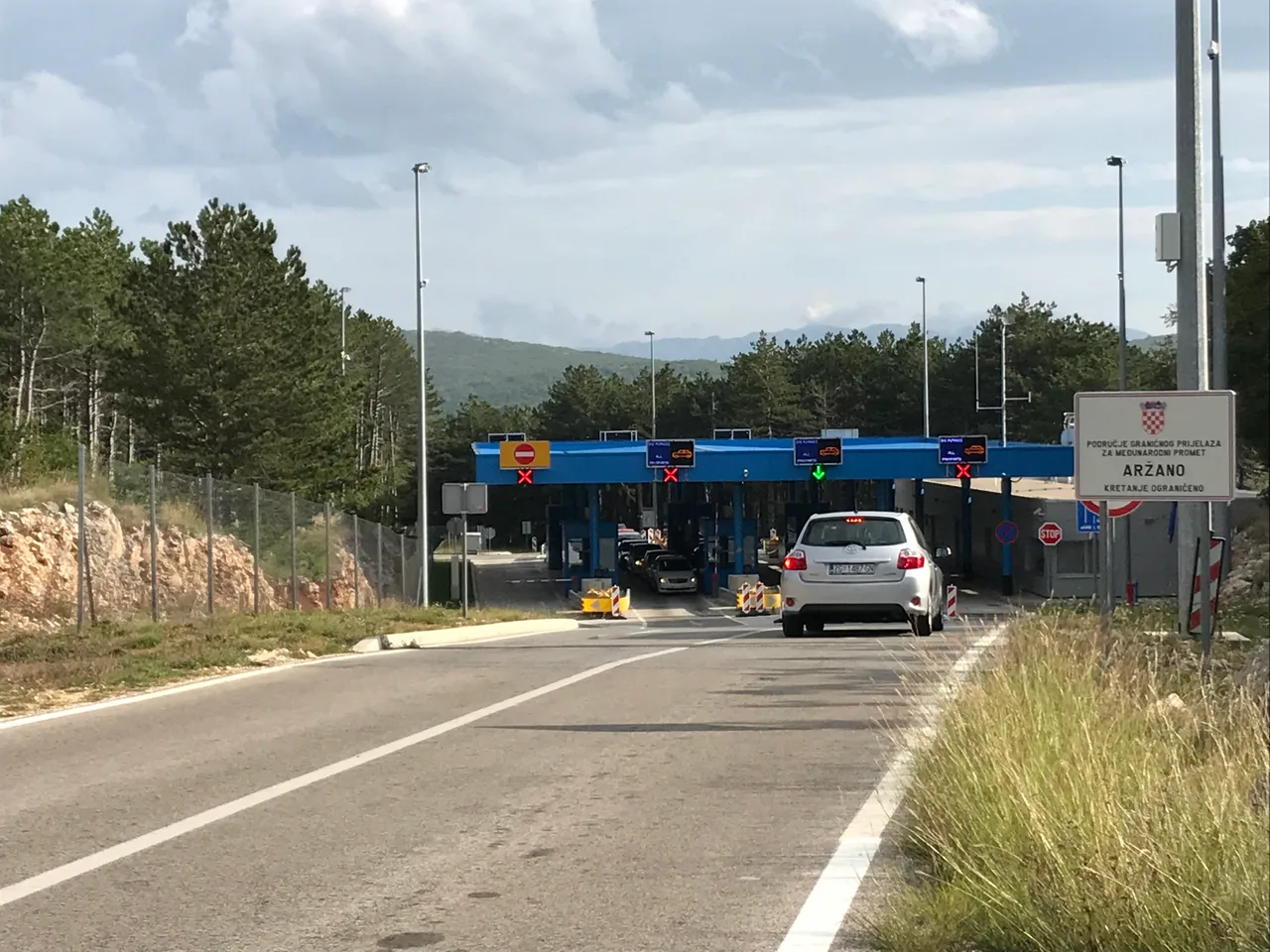
The reverse trip works the same way: renting in Croatia to drive to Mostar, you declare Bosnia and get the authorisation - again without a Green Card. The good news since the Pelješac Bridge opened in 2022 is that the Dubrovnik-Mostar drive now crosses the border only once, not twice.
Tolls, fuel and the roads
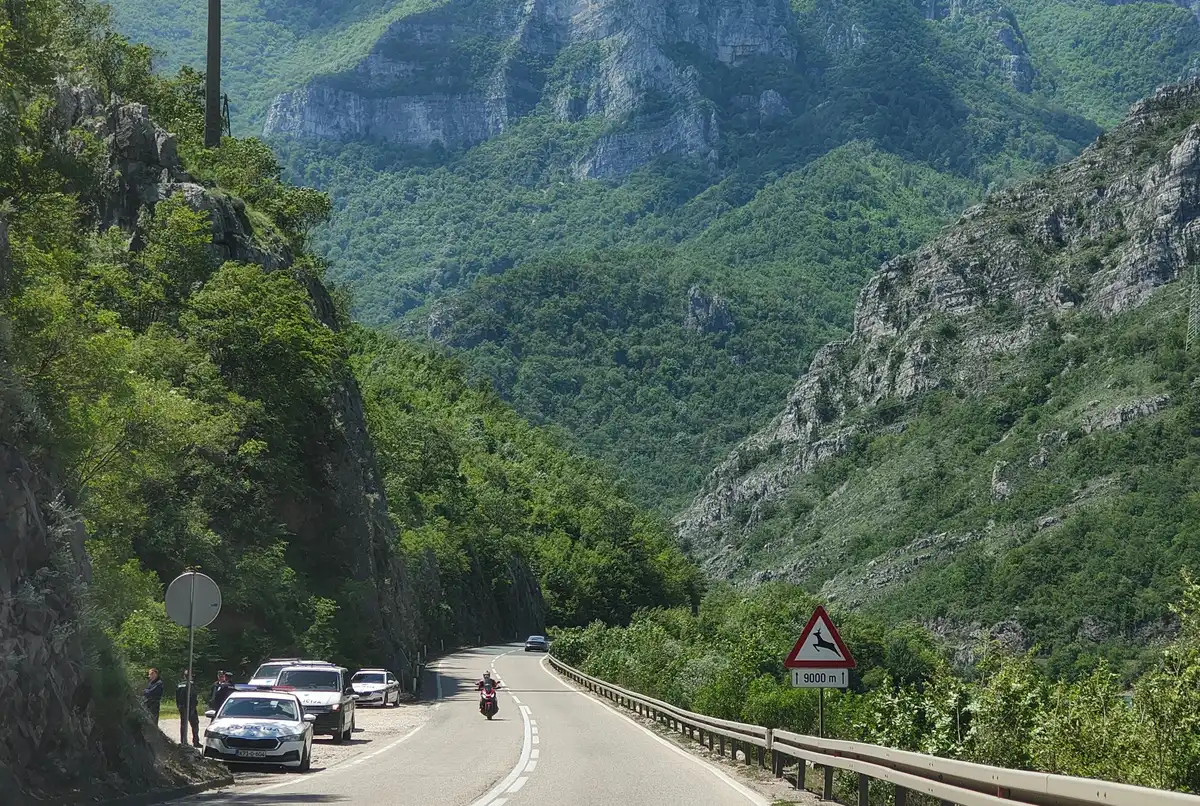
Bosnia charges a toll, not a vignette - so there’s no sticker to buy in advance the way there is in Croatia or Slovenia. The one stretch most visitors meet is the short A1 motorway out of Sarajevo (through the Ivan Tunnel toward the Mostar road); you pay at a booth, in KM or euros, with cards accepted almost everywhere. Beyond that, most of the country - including the scenic M17 down the Neretva - is toll-free two-lane road shared with trucks: good tarmac, beautiful scenery, but plan for modest average speeds and patient overtaking.
Fuel is easy to find and payable by card or in marks; fill up before the emptier stretches (Sutjeska, the eastern interior). Prices move around, so we won’t quote a per-litre figure - just know you’ll pay in KM.
A word on money generally: the currency is the convertible mark (BAM / KM), pegged at about 1.96 to the euro. Cards work for fuel and tolls, but the small stuff on the road - the gates at Blagaj and Kravice, a roadside café - wants cash in marks. Draw KM from an ATM in the towns and you’re covered. And if your loop reaches Trebinje or Banja Luka you’ll cross into Republika Srpska: same country, same currency, no border stop - just Cyrillic road signs and, fair warning, frequent police speed patrols, so keep to the limits.
Parking, briefly
Two things to plan for. In Sarajevo, the Baščaršija old-town core is pedestrian and tight - use a paid garage or lot and don’t try to park at a guesthouse in the bazaar. In Mostar, the cobbled Old Town lanes don’t take cars at all, so pick lodging with parking on the flatter edges or use a day-lot near the centre. At the day-trip sights, Blagaj, Počitelj and Kravice all have paid car parks (Kravice runs about 3 KM an hour or 6 KM a day, cash).
So - car or no car?
If you’re driving the country, a hire car is the single best decision you’ll make: it turns a scatter of hard-to-reach places into one flowing week. Compare local agencies against the big names, sort out cross-border permission and winter tyres up front, carry cash in marks, and drive the two-lane roads at the pace they ask for. If you’re staying put in Sarajevo or day-tripping to Mostar from the coast, skip the car and let a transfer do the work. Either way, the mistake to avoid is renting on autopilot - decide which trip you’re taking first, and the rest falls into place. For the full route the car unlocks, see our 7-day Bosnia itinerary; for more on getting around, the transport section and the rest of the car rental guides fill in the gaps.
Photos
Read also

Car rental · 8 min read
Car Rental in Sarajevo: Airport Pickup & Prices
Verified · August 8, 2026Car rental at Sarajevo Airport: real prices from two named operators, where the desks are, old town parking, and the drive out toward Mostar.

Car rental · 11 min read
Can You Drive a Rental Car From Croatia to Bosnia? 2026
Verified · July 8, 2026Yes, if you flag it when booking: Bosnia needs a Green Card and a cross-border fee, often around EUR 10-15 a day. The 2026 rules, plus Neum exemption.

What to see · 15 min read
Via Dinarica Bosnia: Huts, Stages & Logistics
Verified · September 12, 2026Plan the Via Dinarica White Trail in Bosnia: 12 stages, 334 km, hut booking, trailheads, closures and three workable section packages.

What to see · 10 min read
Jablanica: Neretva Bridge & Roast Lamb Stop
Verified · September 4, 2026Jablanica on the Sarajevo-Mostar road: Battle for the Wounded museum (5 KM), the 1943 bridge, roast lamb lunch. Hours, parking, how long to stop.