1 Week in Bosnia: 7-Day Itinerary from €700
1 week in Bosnia by car: €700-910 ($805-1,045), 580 km. Day-by-day Sarajevo-Mostar-Trebinje loop, SJJ airport, drive times, and when 7 days beats 10.
One week in Bosnia costs about €700-910 per person mid-range ($805-1,045, or £600-780), covers 580 km of driving, and closes a southern loop: Sarajevo → Mostar and the Herzegovina day trips → Trebinje → back. This is the day-by-day plan once you’ve already settled on roughly seven days.
You’ll want a car. Cities link by bus and the Sarajevo-Mostar train, but Blagaj, Počitelj, Kravice and the Neretva canyon sit off the public-transport map. No single day is a slog at this pace. Still choosing between 4, 7 or 10 days? Start with how many days in Bosnia. Only got a long weekend? See 3 days in Bosnia. Got ten days and want the north? Jump to the 10-day Bosnia road trip.
7 days vs 10 days
Three guides answer three different questions:
- How many days in Bosnia - decide the length (3-4 / 5-7 / 10+ trade-offs). No day-by-day driving plan.
- This 7-day itinerary - run the classic week: south loop only (Sarajevo, Mostar, Trebinje), about 580 km.
- 10-day Bosnia road trip - same south, then Jajce and Una National Park, about 1,050 km.
Pick seven days when Bosnia is the main event and you want Herzegovina in depth without a five-hour transfer day. Pick ten only if Jajce’s town-centre waterfall and Una rafting are on your list - those three extra days buy the north, not a slower version of this same loop. Don’t bolt Jajce onto day 7; the drive from Trebinje is about 250 km and five-plus hours, and it eats the day.
One week in Bosnia: the loop at a glance
Nights: two in Sarajevo, three in Mostar as a Herzegovina base, one in Trebinje, then the drive home. With five days, cut Trebinje and drive Mostar straight back. May, June and September deliver warm days and rivers you can actually swim in, without the July-August crush; best time to visit Bosnia has the full month-by-month case, and in winter the same shape reshapes around the ski slopes above Sarajevo (Bosnia in winter). Want the east instead of another southern night? The Eastern Bosnia Drina route is a separate three-day loop to Višegrad and Sutjeska - don’t try to staple it onto this week.
Which airport to fly into
Almost everyone flying in for one week lands at Sarajevo (SJJ), and for this loop that’s the right call: the route starts and finishes in the capital, so a return ticket into SJJ keeps the hire car simple and avoids a one-way drop-off fee. The airport is 12 km from the centre, 15 to 25 minutes by road; our Sarajevo airport guide covers taxis, the trolleybus and transfers.
Two alternatives are worth pricing. Tuzla (TZL) is Wizz Air’s Bosnian base and often far cheaper from Western and Northern Europe, but it sits two to two and a half hours from Sarajevo by road, so add the transfer to the fare. Dubrovnik or Split can beat both from the UK or Ireland: fly to the coast, hire the car there, and run this loop in reverse, opening in Trebinje or Mostar and finishing in Sarajevo. Tell the rental desk you’re crossing into Bosnia and get its written permission on the paperwork - since 2021 a Croatian plate has been recognised in Bosnia on its own, so the desk’s own cross-border sign-off matters more than the Green Card label it often still carries. Our guide to which airport to fly into lays out the decision. For where to sleep once you’re in, start with where to stay in Bosnia and the city pages for Sarajevo and Mostar.
Days 1-2: Sarajevo
Two nights is the right length here, and it buys you more than the bazaar itself. Anchor yourself in or right beside Baščaršija: the coppersmiths’ stalls, the plane-tree corners and half the sights below sit a five-minute walk from any bed in that quarter.
Split the two days by mood rather than by map. Keep day one at street level: the Sebilj fountain, the 1531 Gazi Husrev-beg Mosque, the brass “Sarajevo Meeting of Cultures” line where the Ottoman bazaar hands off to a Habsburg boulevard, and the Latin Bridge, where the 28 June 1914 assassination that triggered the First World War took place. Then lift day two above the rooftops. The cable car up Mount Trebević is worth the climb for the view alone, and a few minutes’ walk from the top station brings you to the long-abandoned bobsled track built for the 1984 Winter Olympics. Round off the day with an hour at the Tunnel of Hope, the siege museum near the airport, which tells the war story without spin (20 KM, cash in marks). For the hour-by-hour order, our 2 days in Sarajevo plan and the full Sarajevo guide do the street-level work this page doesn’t need to repeat.

Wait until day three morning to collect the hire car: Baščaršija is pedestrian and next to impossible to park in, and a rental sitting outside your guesthouse for two days is money doing nothing.
Day 3: down the M17 to Mostar
This leg rewards patience: 130 km, 2 to 2.5 hours of driving through the Neretva canyon on the M17, and every extra minute you give it buys a view rather than costing you one. Sarajevo lets go slowly - motorway as far as the Ivan Tunnel, then a toll booth drops you onto the two-lane M17 for what remains of the drive, the river on one side and a line of trucks to work around on the other. The Cyrillic signage change, the tolls and the winter-tyre law all live in our driving in Bosnia guide rather than here.
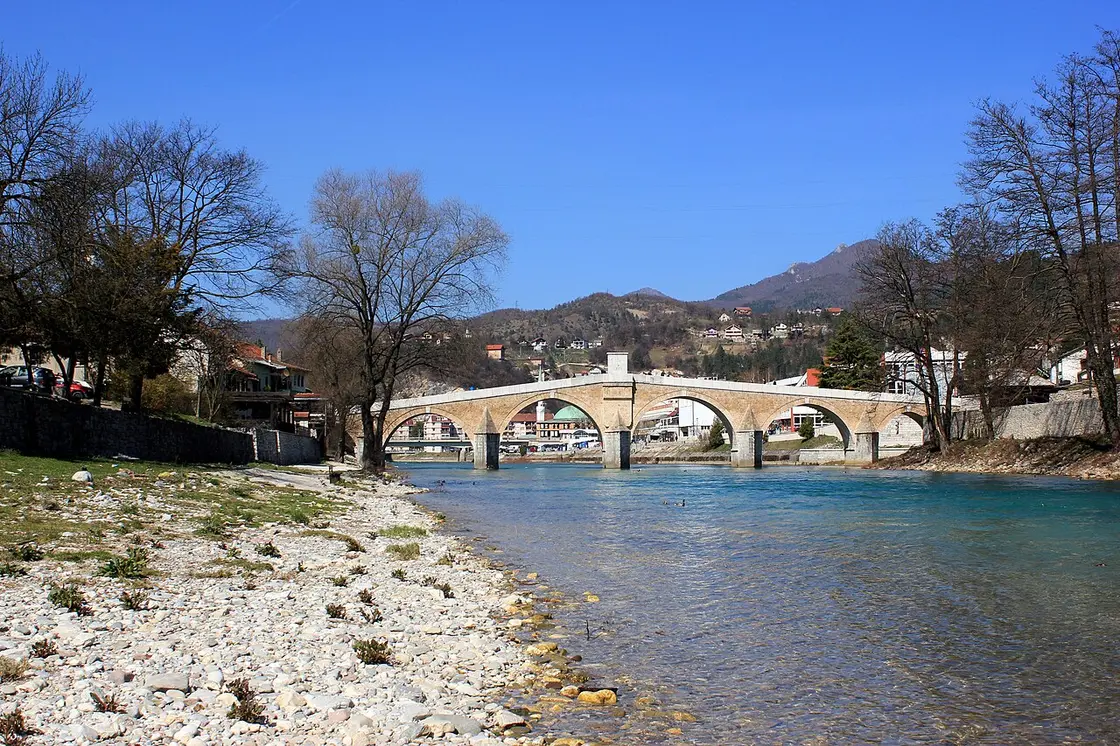
Konjic sits almost exactly at the midpoint, and it earns more than a photo stop. Above ground, the town’s Ottoman stone bridge is a five-minute look; below it, 280 metres into the hillside, ARK D-0 was Tito’s secret nuclear bunker, built between 1953 and 1979 and open now only on a prebooked guided tour running 60 to 90 minutes - there’s no walk-in option, so book ahead if it’s on your list. Rafting outfits on the Neretva also launch from here if you’d rather get wet than go underground. Either choice makes a natural lunch break before the final run into Mostar.
Time the arrival for late afternoon, after the day-trip coaches have pulled out of Mostar. Book a guesthouse on the east bank, in or just above the Old Town, leave the car wherever the streets widen out, and make your first look at Stari Most an evening one - the stone catches the light best once the crowds have thinned.
Day 4: Mostar and Blagaj
Claim Mostar for yourself before the coaches arrive. Stari Most is the reason everyone’s here, a single-arch Ottoman span shelled into the river in 1993 and rebuilt to reopen in 2004, and it rewards a slow crossing since the paving is glassier and steeper underfoot than any photo lets on. Stick around long enough on a summer afternoon and you’ll see a local diver clear the 24-metre drop for tips, a tradition going back to 1664; leave that one to them. Once you’re across, disappear into Kujundžiluk, the old coppersmiths’ bazaar, and work your way up the Koski Mehmed-Paša minaret, where the outlook stretches the length of the water. Our things to do in Mostar guide fills in everything else worth seeing in town.
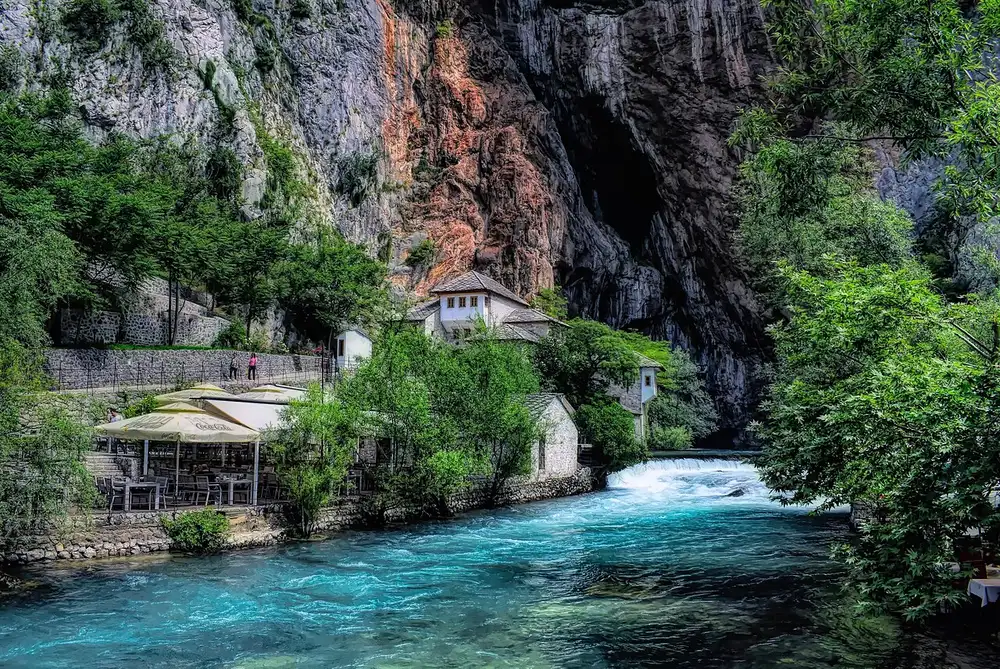
Keep the afternoon for Blagaj, 12 km southeast and a 15-25 minute drive. A 200-metre limestone wall backs the Blagaj Tekke, a white 16th-century dervish lodge built where the Buna forces its way out of a cave, reckoned one of the largest karst springs anywhere in Europe. Getting in means an entry fee at the booth, so bring marks in cash (the lodge doesn’t publish the amount online), and the dress code is enforced rather than decorative (free wraps wait at the door if you turn up bare-shouldered). Most visitors take the photo and go; give yourself the extra half-hour to climb the ruined Stjepan-grad fortress above, or ask whether the little boat into the spring cave itself is running, since its operator publishes no season. Full detail in our Blagaj Tekke guide.
Back in Mostar for the evening, walk inland a block or two before you sit down - the river-view terraces charge for the view as much as the food - and order ćevapi or grilled trout, finishing, as always, with a proper Bosnian coffee.
Day 5: The Herzegovina loop - Počitelj and Kravice
This is the day that justifies the hire car. South of Mostar, two of the region’s headline sights sit an easy drive apart, and no useful bus links them.
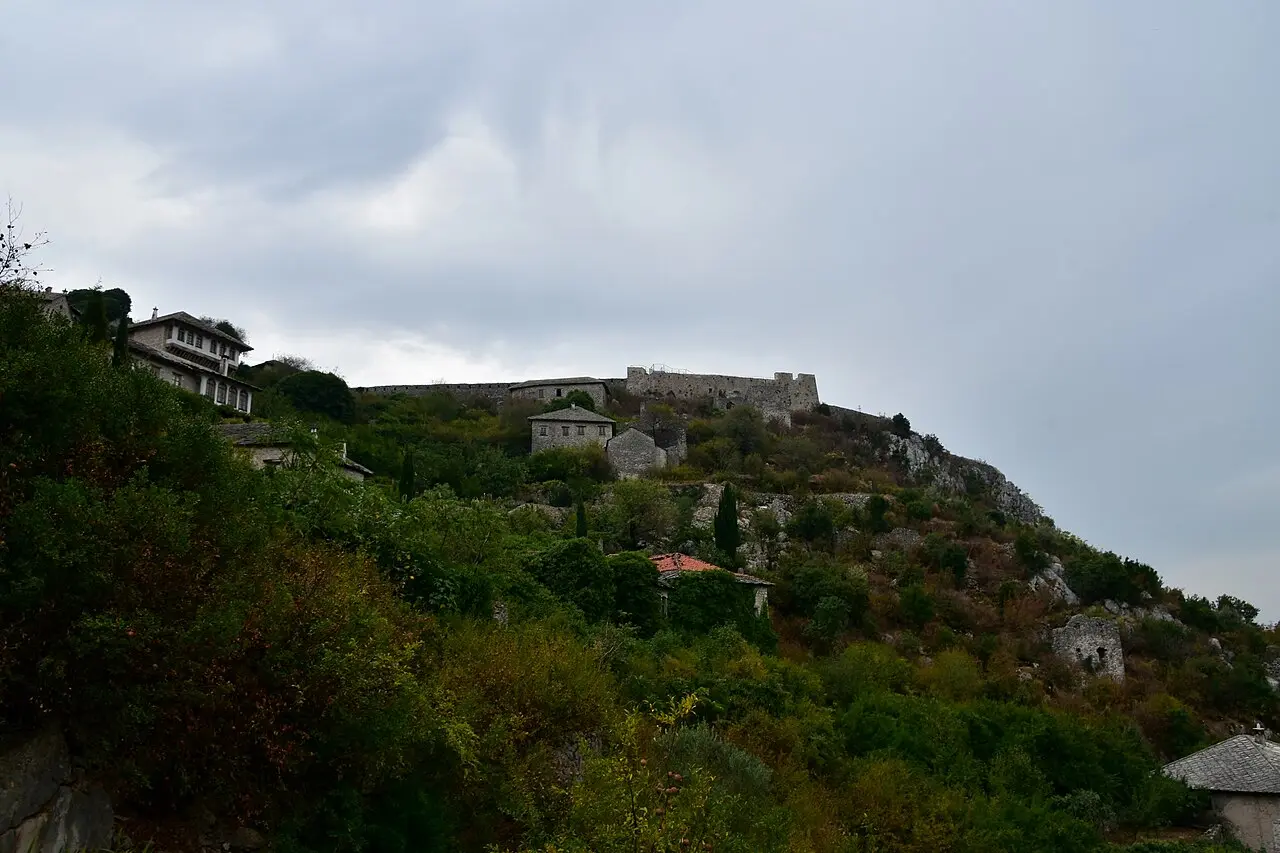
First stop south is Počitelj, roughly 30 km and half an hour down the old M17/M6. Ottoman and medieval builders both had a hand in it: King Tvrtko I raised the first fortress here in 1383, a mosque followed in 1563, and a stone clock tower and a run of stepped houses fill the climb between them, all in the same pale limestone. There’s no admission charge and no closing time, and 45 to 90 minutes covers a proper look, scramble up to the citadel included, where the reward is a view over terracotta rooftops to the river with barely another visitor in sight once the coach groups clear out.
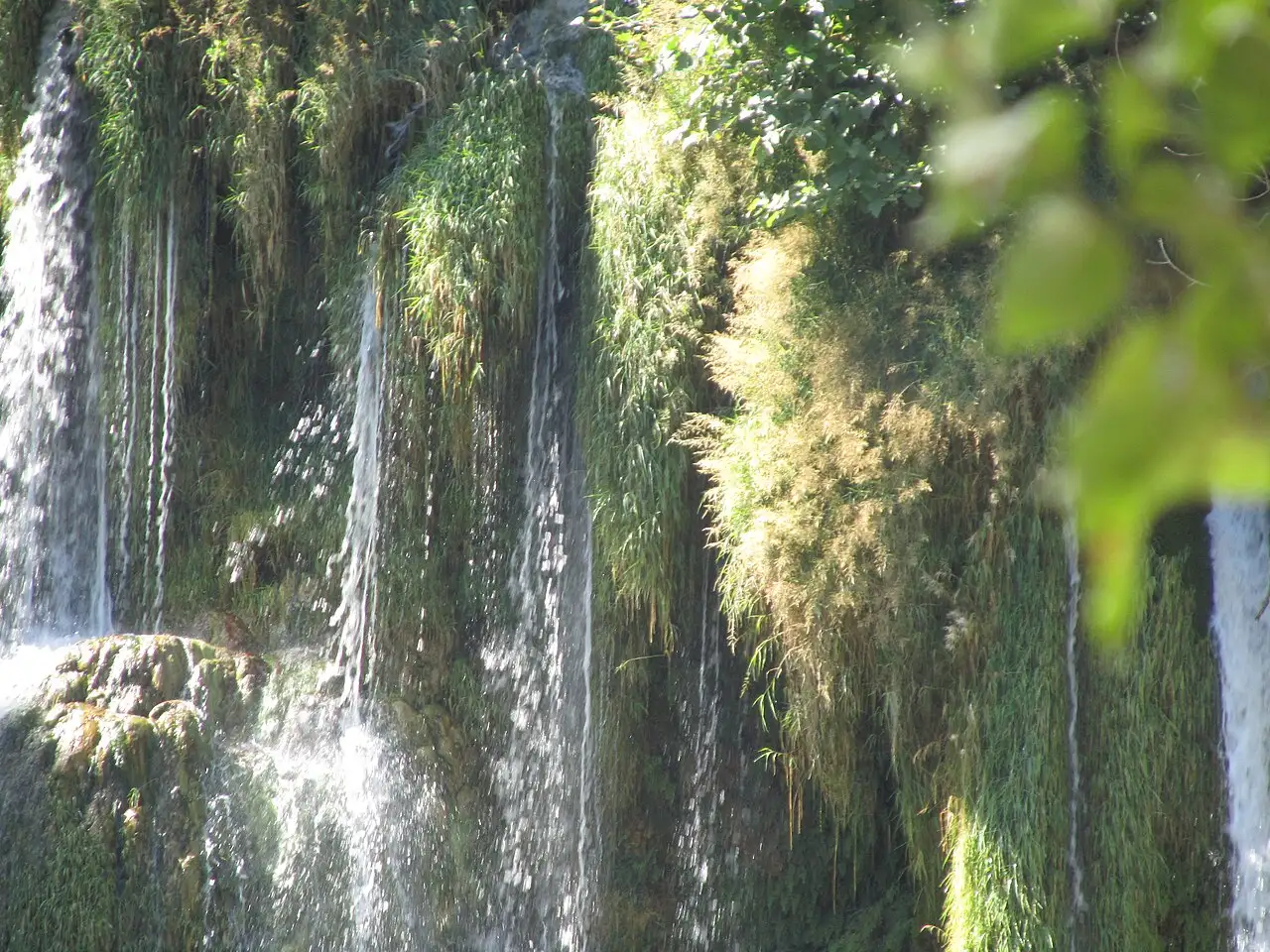
Kravice is another 30-40 minutes on, call it 40 km from Mostar door to door, and it’s less a waterfall than a wall of them: the Trebižat spills over a curved travertine shelf about 28 metres high and 120 metres wide into a green pool below, cold enough to hold at a bracing 20°C through the June-to-September swim season, when it’s arguably the best swimming hole in the country. The gate charges 20 KM (roughly €10), cash, all year, parking separately, and there’s no lifeguard on duty, so the swim is on you. Skip the midday coach rush by arriving early or staying late; timing, the fee and the swim window are all in our Kravice guide.
Drive back to Mostar for a third and final night.
Day 6: Mostar to Trebinje
The country changes character today. Trebinje sits 115 km and just over two hours past Mostar, on the far side of the invisible line that splits Bosnia into two entities, and the drive there is worth building the day around rather than rushing: go via Stolac, stop at the Radimlja necropolis to see the carved medieval stećci standing in their field, then climb the quiet karst road that carries you into Republika Srpska. Nothing stops you at the border itself - one country, one currency, and the only real change is Cyrillic on the road signs - though the speed checks around Stolac and Ljubinje are real, so keep to the limit.
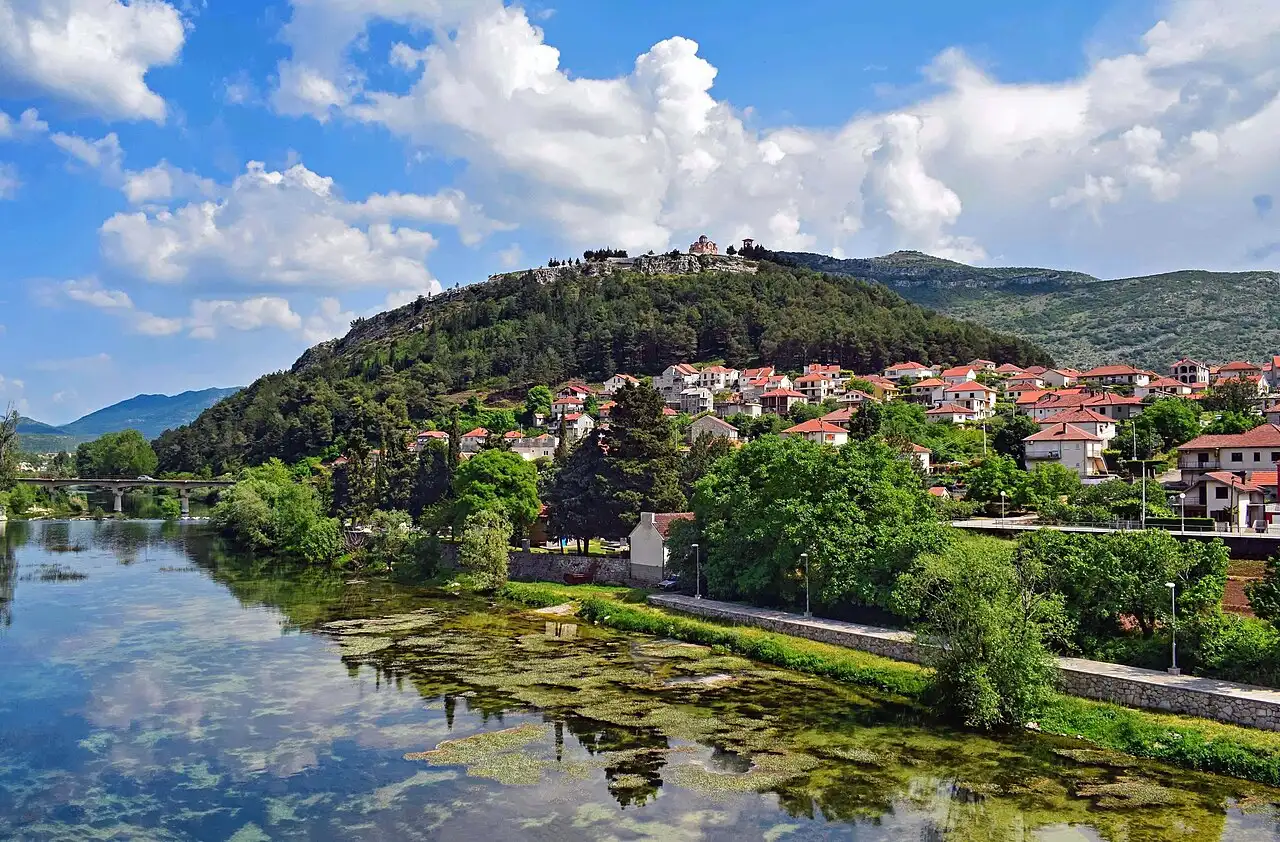
Once you arrive, the pace of the trip drops with you. Trebinje’s walled Ottoman old town, raised in the 18th century around a square shaded by plane trees, sits at the heart of Herzegovina’s wine country, and its best-known monument has moved once already: the Arslanagić Bridge went up in 1574, was dismantled piece by numbered piece when a 1960s dam flooded its original site, and now stands in the Gradina district, roughly 10 km downstream of where it started. The Hercegovačka Gračanica church on the hill above looks far older than its 2000 completion date and is worth the climb for the view alone, and a short drive out at Tvrdoš Monastery the monks bottle their own Vranac and Žilavka, a glass of either being the obvious way to end a day of driving. Book the night here rather than pushing on: the square empties out once the Dubrovnik day-trip buses leave, and it turns into one of the calmest evenings you’ll spend anywhere in the country. Wineries and walking routes are in our Trebinje guide.
Day 7: Back to Sarajevo
The last day is the longest drive, so start reasonably early. Closing the loop from Trebinje back to Sarajevo is roughly 220 km and about 3.5-4 hours the sensible way, back up through the Neretva valley past Mostar. (The eastern route through Bileća, Gacko and Nevesinje looks shorter but is slower over mountain roads.) Break it wherever you fancy a coffee.
If Sarajevo is where your flight home leaves from, budget time to return the car before you check in. Flying from Dubrovnik instead is a common move, since it’s close to Trebinje: skip the drive north and finish on the Croatian coast. Our sister site’s Dubrovnik guide covers that end.
What the week costs
Prices come in convertible marks (KM), fixed at 1 EUR = 1.95583 KM. Our Bosnia trip cost guide puts mid-range travel at €100-130 per person per day, so €700-910 for the week (about $805-1,045, or £600-780). Two people sharing a double and splitting a hire car sit at the bottom of that band; a solo traveller paying for both alone sits at the top. Backpacker pace: €45-60 a day (€315-420 for the week). Comfort: €160-200 a day.
The 580 km loop burns roughly 38 litres in a small petrol car. At late-July 2026 pump prices (Super 95 mostly 2.75-3.00 KM a litre) that’s about 105-115 KM, or €55-60, for the whole week’s fuel. Diesel is dearer than petrol here (around 3.10-3.35 KM a litre), so the usual “take the diesel” reflex doesn’t pay off on a week this short. Only the brief A1 stretch near Sarajevo charges a toll. Carry cash in marks for the small payments: Blagaj’s entry booth, Kravice (20 KM plus parking, and its card terminals are unreliable), the divers’ bucket at Stari Most, village cafés.
Renting a car and getting around
Nothing past day three works without your own wheels. Have the rental ready to collect the morning you head out of Sarajevo, not a day before:
- If Dubrovnik might be your finish line, say so when you book: the rental desk needs to authorise the car for a cross-border drop, and that authorisation, not whatever label the paperwork gives it, is the document you’ll be asked for at the barrier. Full detail in our Bosnia car rental guide.
- Gearbox. Manuals dominate; book early if you need an automatic.
- Road conditions. Past the brief motorway stretch near Sarajevo, everything narrows to two lanes shared with slower trucks - the surface holds up well, but don’t plan on averaging much past 60-70 km/h. Republika Srpska in particular runs regular speed checks.
Prefer not to drive? Private transfers between cities with local drivers for the day trips work, but cost more and lose spontaneity. Food picks live in the restaurant directory; headline sights sit on the attractions hub.
Got longer than a week? Open the 10-day Bosnia road trip and keep this southern loop while you add Jajce and the Una. Prefer wilderness over the northwest? Swap those northern days for Sutjeska National Park and Maglić or the Eastern Bosnia Drina route. Still unsure on length? Back to how many days in Bosnia.
One week done this way - two cities, a canyon drive, waterfalls and a dervish house, a wine town to finish - is still the best introduction to Bosnia you can book. Keep the driving unhurried, keep marks in your pocket, and you’ll end the week wishing you’d booked longer.
Route day by day
- Days on the road
- 7
- Distance
- ≈580 km
- Budget from
- 90 EUR
- Best season
- May, June, July, August, September
-
Sarajevo
Route startstop ≈2880 min
Days 1-2. The layered capital - Ottoman bazaar, the siege story and Mount Trebević. Pick up your hire car here.
Photo: BiHVolim / Wikimedia Commons, CC BY-SA 4.0 ( source) -
Konjic
55 km from the startstop ≈120 min
Day 3, en route. Halfway to Mostar on the M17: the Ottoman stone bridge over the Neretva and Tito’s Cold War bunker (ARK D-0, tours by prebooking).
Photo: Julian Nyča / Wikimedia Commons, CC BY-SA 3.0 ( source) -
Mostar
130 km from the startstop ≈2880 min
Days 3-5, your Herzegovina base. Stari Most and its divers, the coppersmiths’ bazaar, and the springboard for the day trips below.
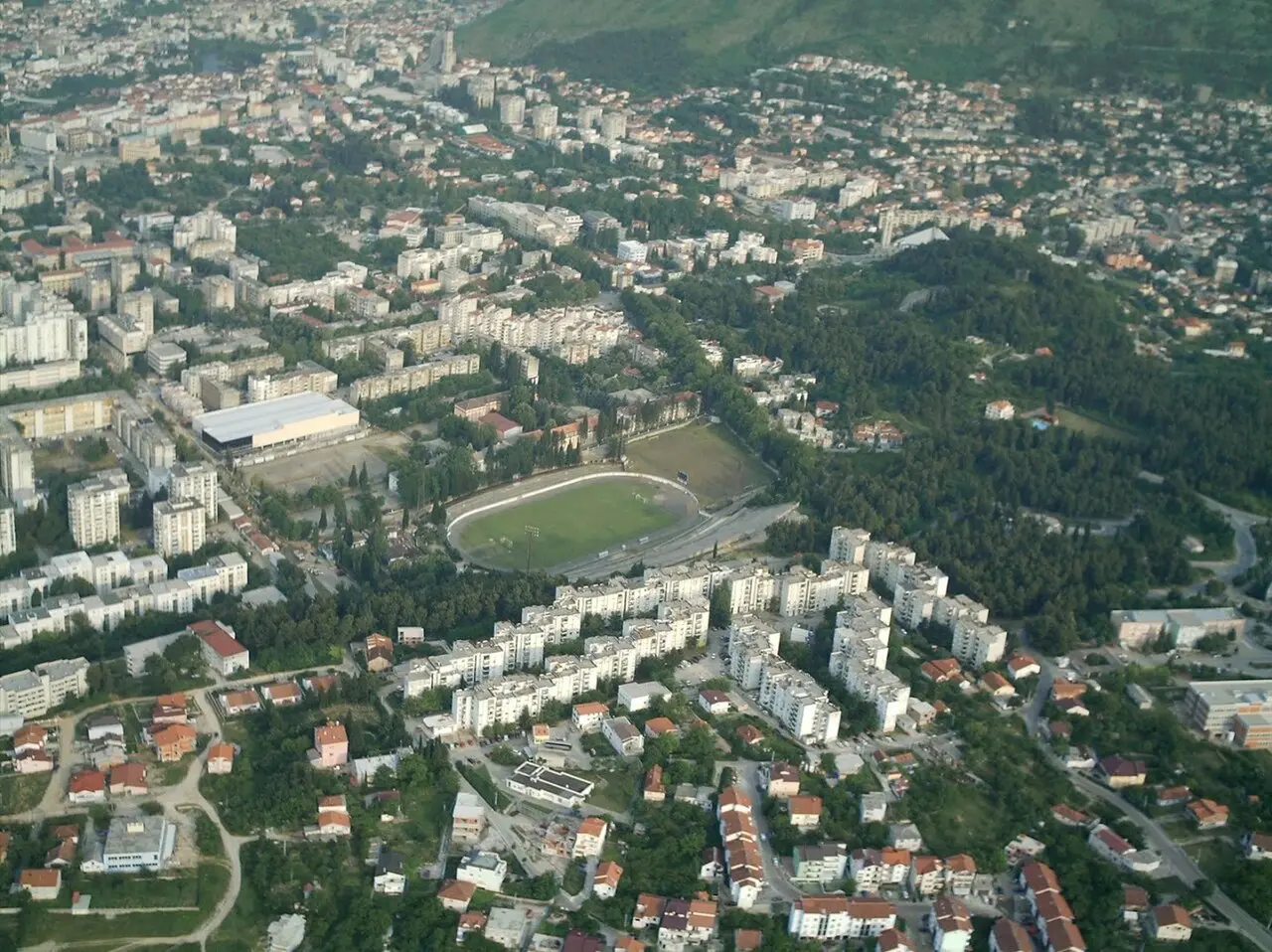
Photo: Mario Knezović / Wikimedia Commons, CC BY-SA 3.0 ( source) -
Blagaj
142 km from the startstop ≈150 min
Day 4. The cliffside dervish house where the Buna river bursts from a cave - 12 km from Mostar, and the classic half-day out.
Photo: Jocelyn Erskine-Kellie / Wikimedia Commons, CC BY 2.0 ( source) -
Počitelj
160 km from the startstop ≈90 min
Day 5. A stepped Ottoman-medieval town stacked up the hillside above the Neretva, with a fortress you can climb for free.
Photo: Richard Mortel / Wikimedia Commons, CC BY 2.0 ( source) -
Kravice Waterfalls
200 km from the startstop ≈180 min
Day 5. A broad horseshoe of waterfalls on the Trebižat - and the region’s best swimming hole from June to September.
Photo: Stephan Hense / Wikimedia Commons, CC BY-SA 3.0 ( source) -
Trebinje
315 km from the startstop ≈1440 min
Day 6. Herzegovina’s wine town: an Ottoman old town, a rebuilt Ottoman bridge, a hilltop monastery and the vineyards of Tvrdoš.
Photo: Jocelyn Erskine-Kellie / Wikimedia Commons, CC BY-SA 2.0 ( source)
Route map
The map with stops loads on click - to keep the page lightweight.
The map didn’t load. Check your connection and refresh the page.