Una National Park & Bihać: Rafting & Falls
Una National Park and Bihać, northwest Bosnia: rafting the emerald Una, the Štrbački buk and Milančev buk waterfalls, fees, season and how to get there.
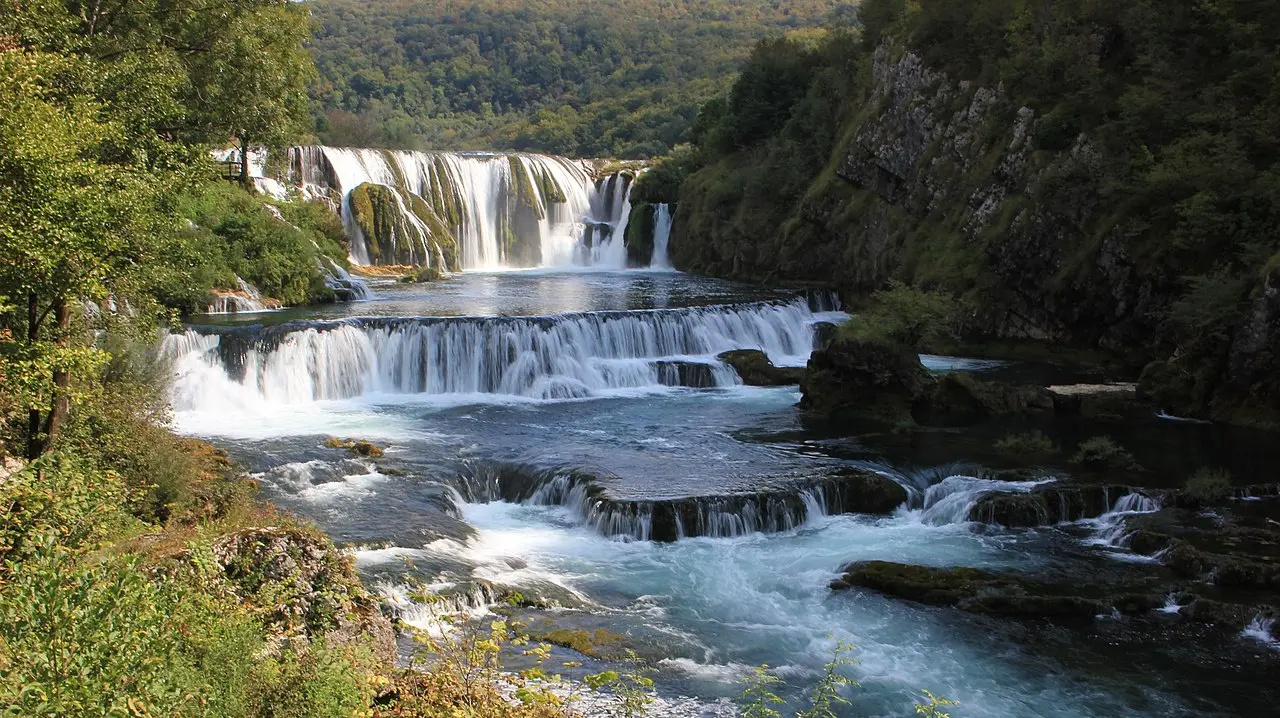
Una National Park protects the most improbably coloured river in Bosnia - the Una, an emerald-green ribbon in the country’s far northwest that pours over broad natural dams into pool after pool of turquoise water. This is Bosnia’s biggest national park (established 29 May 2008, roughly 350 km²), its best rafting, and two of its finest waterfalls: Štrbački buk, a wide staircase of falls about 24-25 metres high, and the sprawling cascades of Milančev buk at Martin Brod. The base for all of it is Bihać, a river town in the region known as Bosanska Krajina. This guide covers what to raft, what to see, what it costs, and - not to sugar-coat it - how far out of the way it all is.
Why the Una is that colour
The Una’s colour isn’t a trick of the light. Like Kravice in the south and the falls at Jajce, the river is loaded with dissolved calcium carbonate, which precipitates out as tufa (also called travertine) - a soft, porous rock the water lays down as it flows. Over centuries that mineral build-up forms the stepped natural barriers you see everywhere along the Una: low terraced dams, mid-river ledges, and the big cascades. It’s the same chemistry that turns the water that vivid green and builds the ledges you end up rafting over. Once you know to look for it, you see the whole river as a slow-motion sculpture the water is still carving.
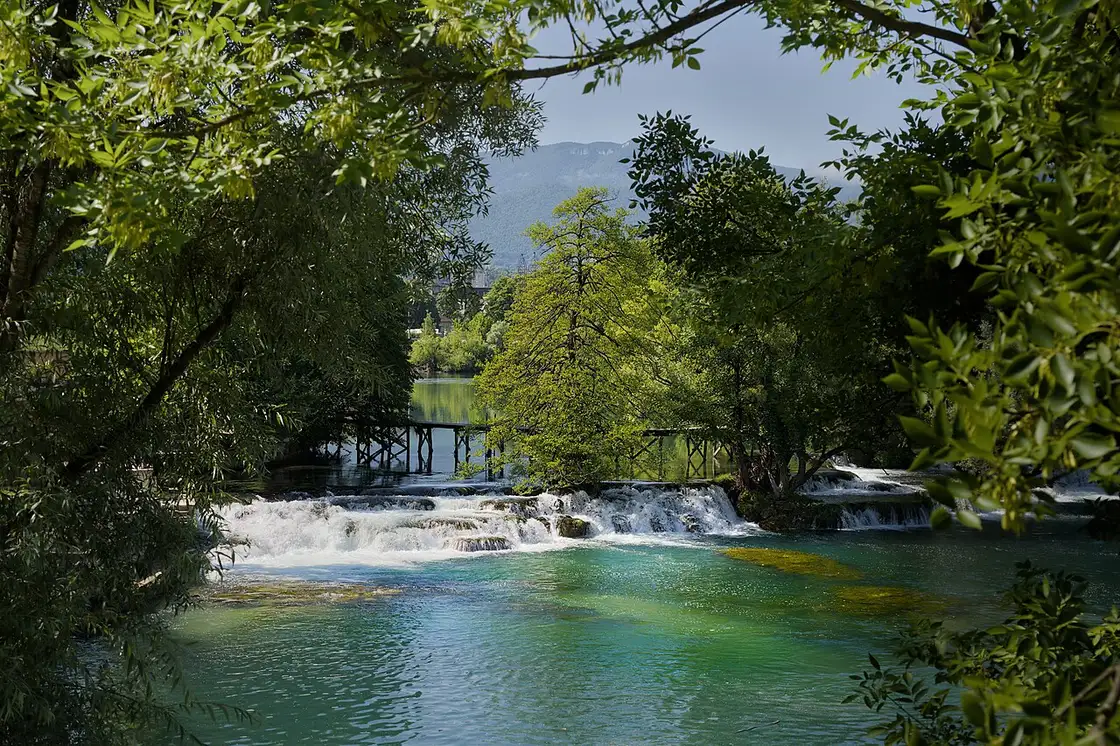
The park runs along the upper Una and its tributaries the Unac and the Krka, a mix of river gorge, forest and karst that’s home to otters, herons and - higher up - bears and wolves. But nobody comes for a checklist of wildlife; they come to get on, or beside, the water.
Rafting the Una from Bihać
Rafting is the reason the Una is on the map for most travellers, and it’s genuinely good - cold, clear, fast water through forest, with tufa ledges to bounce over and calm turquoise pools to drift in between. Several certified agencies run guided trips out of Bihać, and the important thing to understand is that there are two quite different experiences, so pick the section, not just “rafting”. If you’re weighing the Una against the country’s other white water, our guide to rafting in Bosnia compares it with the Tara and the Vrbas.
- The Štrbački buk stage is the adrenaline run: the wilder, higher-grade water on the upper river near the big waterfall, with real rapids and the drama of the falls themselves. This is the one thrill-seekers want, and it’s not for small children.
- The gentler stretches - around Kostela and down toward Bosanska Krupa - are calm enough for families and first-timers, more float-and-splash than white-knuckle.
A guided half-day typically runs around 100-105 KM (about €54) per person, and that price usually includes park entry, a qualified skipper, all the gear (wetsuit, helmet, buoyancy aid), transfer to the put-in and back, and basic insurance - but rates and sections vary by operator and water level, so confirm when you book. The season runs roughly April to October; spring water is higher, faster and colder (snowmelt), summer is gentler and warmer. Wetsuits are provided, but a change of dry clothes and shoes you don’t mind soaking are on you.
One practical note worth flagging: rafting is an activity many standard travel policies exclude or load, so it’s worth checking your cover includes it before you go (see the box below).
Štrbački buk: the headline waterfall
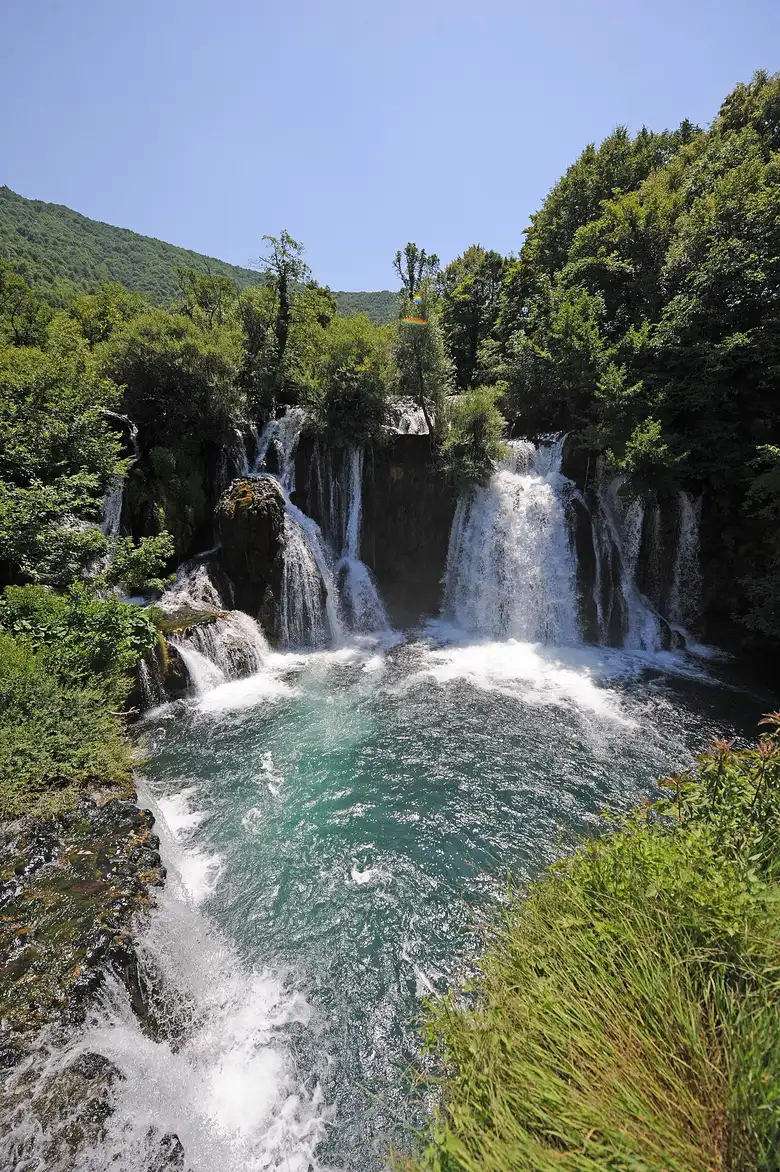
If you see one thing in the park, make it Štrbački buk - the tallest and most photographed waterfall on the Una, a broad terraced curtain of white water tumbling roughly 24 to 25 metres over a series of tufa steps into a green pool. It’s one of the country’s headline cascades; our round-up of the best waterfalls in Bosnia sets it against Kravice, Jajce’s Pliva and the rest. (You’ll see both figures quoted; take mid-twenties as the honest number.) There are wooden boardwalks and viewing platforms on both sides, and a footbridge that gives you the falls head-on.
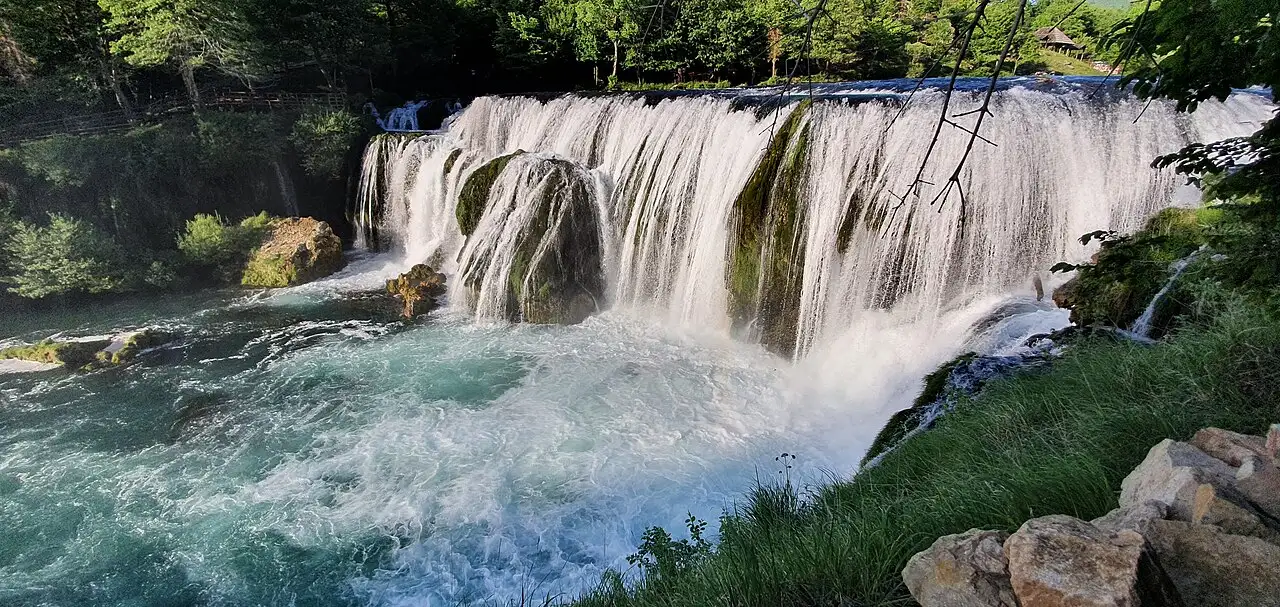
A quirk worth knowing: Štrbački buk sits right on the border with Croatia - the frontier runs down the river here - so half the view is technically in another country. It’s a bumpy drive down a gravel road from the main routes to reach the viewpoint and the rafting put-in, so allow time and take it slow.
Milančev buk and Martin Brod
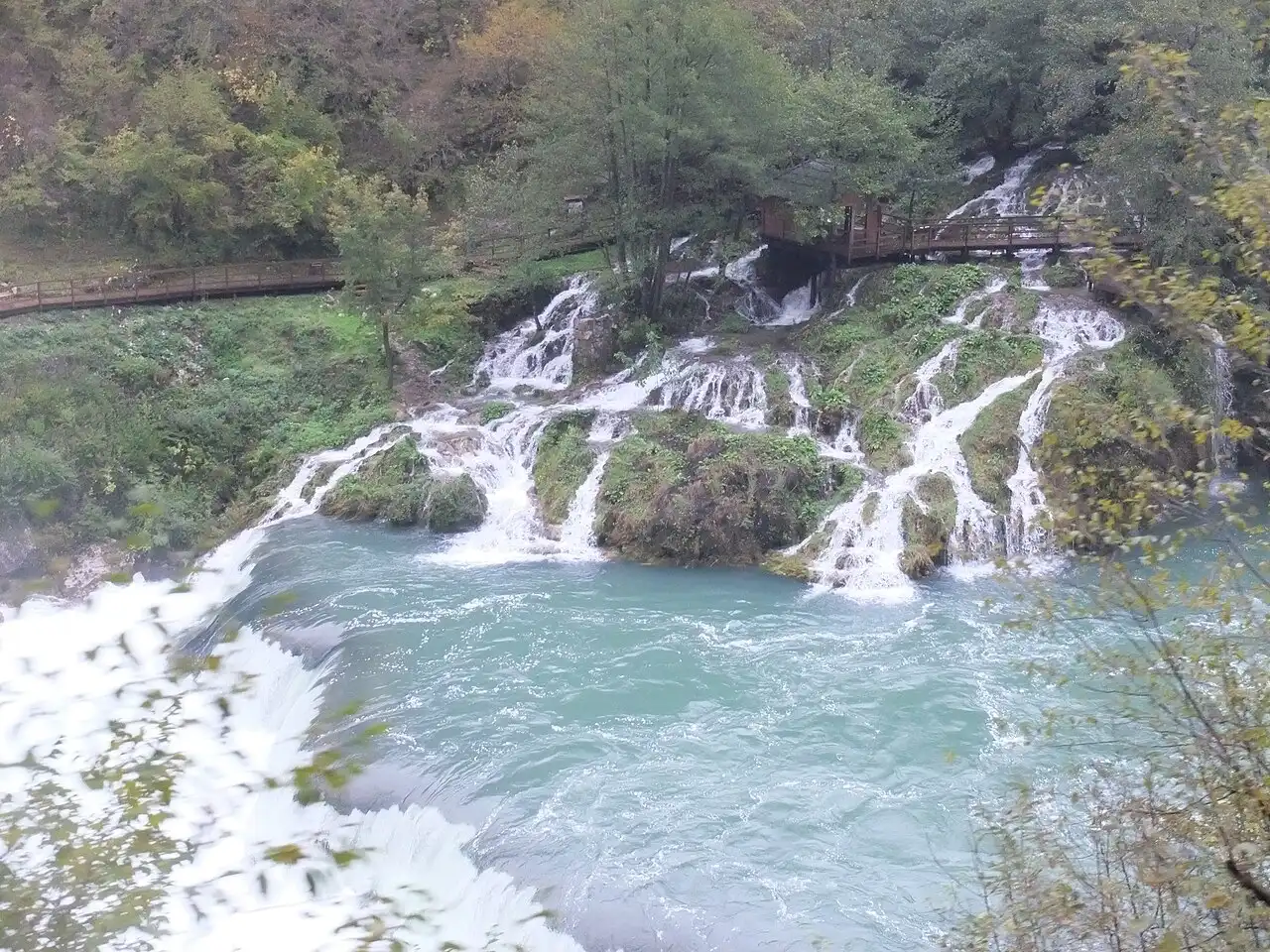
At the park’s southern end, where the Unac joins the Una, the little village of Martin Brod wears a whole system of falls called Milančev buk. This one is different in character from Štrbački buk: not a single big drop but a complex of cascades tumbling over roughly 54 metres of descent, spread across about 800 metres of terraces and mill channels, threading right past old houses and watermills. It’s quieter, greener and more intimate - you wander boardwalks among the cascades rather than viewing one grand set-piece. Martin Brod is also the traditional start of the annual Una Regatta, a river procession of kayaks and rafts each summer.
Bihać and Ostrožac castle
Bihać itself is a relaxed river town of fewer than 60,000 people, strung along the Una in the far northwest. It won’t fill a day of sightseeing, but it’s a pleasant base: the Fethija Mosque (a Gothic church converted after the Ottoman conquest), the medieval Captain’s Tower by the river, and a run of cafés and swimming spots where locals leap off the town bridges into the Una in summer. Our full Bihać city guide covers the mosque, the Captains Tower museum and the town’s odd frontier history in half a day.
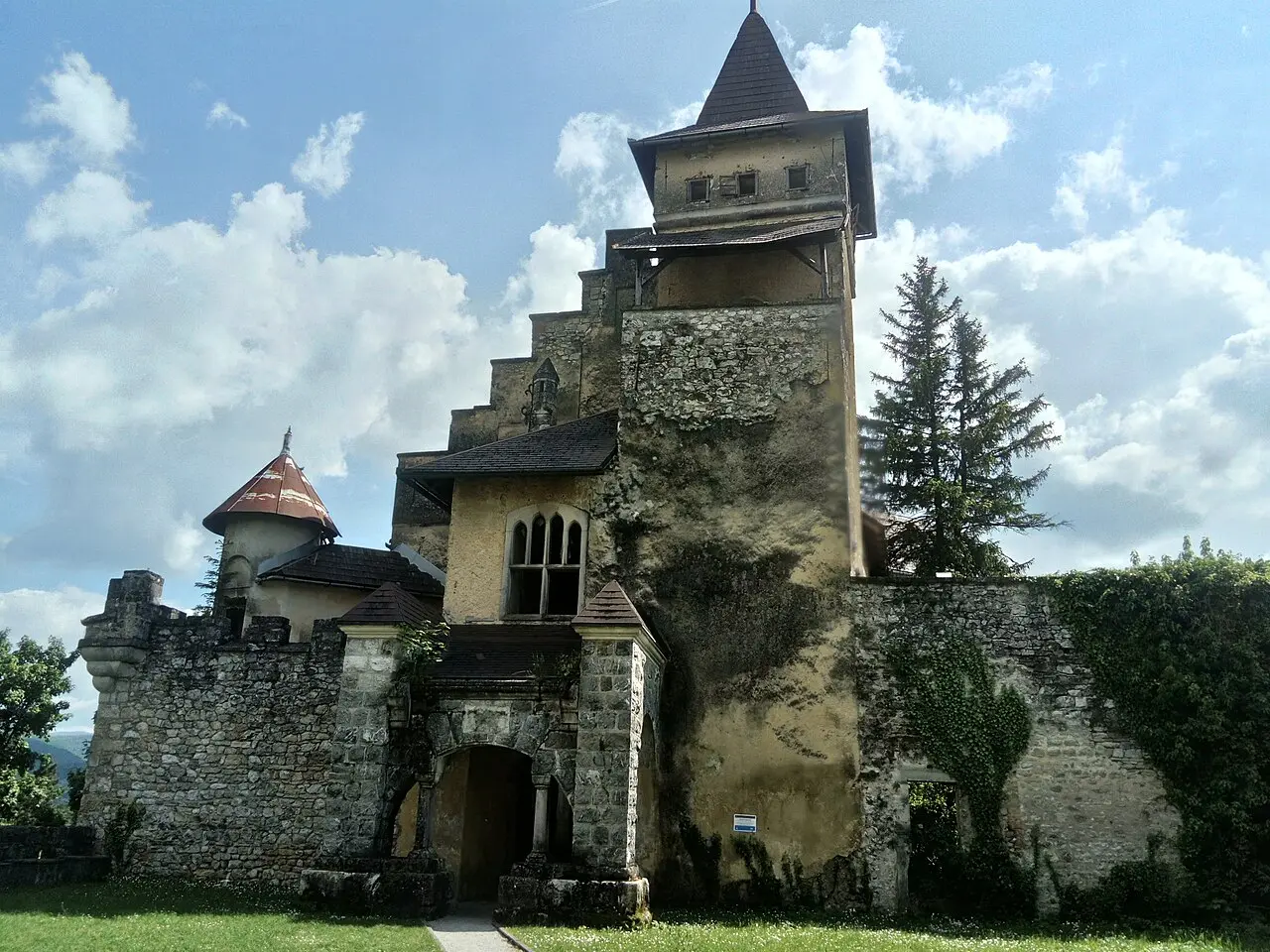
The standout side trip is Ostrožac, a big, brooding castle above the Una about 20 km upstream near Cazin. It’s a proper layer cake of a fortress: a medieval core, Ottoman-era additions, and a 19th-century neo-Gothic residence built by an Austro-Hungarian noble family grafted on top - plus, oddly and wonderfully, an open-air stone-sculpture park left by decades of artists’ colonies held in the grounds. Opening times and any fee are informal, so check locally, but wandering its overgrown ramparts with the river below is one of the region’s quiet highlights.
When to go, and the honest bit about getting there
Rafting and swimming want late spring to early autumn; the falls run all year but look fullest after the spring melt, and July-August is warmest but busiest. Our guide to the best time to visit Bosnia breaks the seasons down month by month, and the short version for the Una is: come May, June or September for the best mix of warm days and manageable water.
Now the honest part. Bihać is out on a limb - the far northwestern corner of Bosnia, roughly 300 km and four and a half to five hours from Sarajevo. It is genuinely closer to Zagreb than to the Bosnian capital, and it sits barely an hour from Plitvice Lakes across the Croatian border. That reframes the whole trip: the Una is not a day trip from Sarajevo, and it doesn’t slot neatly into the classic Sarajevo-Mostar-Herzegovina route.
The sensible ways to do it are: as its own two-day nature trip from Sarajevo or Banja Luka, or - much more naturally - as an add-on to a Croatia leg, tacked on to Plitvice or on the drive between Zagreb and the coast. Where you actually sleep - Bihać town, riverside Kulen Vakuf in the park, or an ethno-house on the water - is its own choice, weighed up in our guide to where to stay for Una National Park. A car makes it hugely easier; public transport reaches Bihać but not the trailheads, put-ins and Ostrožac, and having your own wheels turns a scattered set of sights into one easy day (see the box below). For a ready-made drive, our Una River loop threads the whole valley over two or three days - Ostrožac castle, Bosanska Krupa, Martin Brod, riverside Kulen Vakuf and the Štrbački buk falls.
Is it worth the detour?
For a first, short trip to Bosnia focused on Mostar and Sarajevo, no - the Una is too far off the line to justify the drive, and you’ll find swimming falls closer at Kravice. But if you have a week or more, love rivers, and want the country’s best rafting away from the crowds - or if you’re already crossing to or from Croatia - the Una rewards the effort handsomely. Our seven-day Bosnia itinerary sticks to the classic loop, but treat the Una as the wilder northern chapter you add when you have the time: emerald water, a proper waterfall or two, and a raft trip you’ll remember longer than most. If you can spare ten days, our 10-day Bosnia road trip works the Una and Jajce into a full northern leg. For wilderness of a rockier kind, Sutjeska National Park and Maglić in the far southeast is the country’s other great nature park - the highest mountain and Europe’s last primeval forest.
Photos
On the map
The map loads on click - to keep the page lightweight.
The map didn’t load. Check your connection and refresh the page.
Admission and opening hours
- Admission price
- Park entry is roughly 12-16 KM per person (cash, in KM); it is usually folded into the price of a guided rafting trip. A half-day guided raft runs around 100-105 KM (~€54) per person including entry, guide, gear, transfer and basic insurance - confirm the current rate and section with the operator.
- Opening hours
- The park and its waterfall viewpoints are open in daylight, year-round; rafting runs roughly April to October, depending on water levels. Štrbački buk and Martin Brod have boardwalks and viewing platforms. Confirm rafting dates and river grade with your operator before booking.
Prices are in convertible marks (KM / BAM); carry cash, as card acceptance is patchy out here. The wilder rafting section by Štrbački buk is snow-fed and cold in spring; wetsuits are provided.
Details checked: July 3, 2026
Distance ≈300 km · ~4.5-5 h by car
- Sarajevo ≈300 km · ~4.5-5 h by car The far northwest corner of the country - a long haul from Sarajevo. Most people make Una its own trip, or reach it from Croatia (Zagreb and Plitvice are 2.5-3 h away).
Read also

What to see · 15 min read
Via Dinarica Bosnia: Huts, Stages & Logistics
Verified · September 12, 2026Plan the Via Dinarica White Trail in Bosnia: 12 stages, 334 km, hut booking, trailheads, closures and three workable section packages.

What to see · 10 min read
Jablanica: Neretva Bridge & Roast Lamb Stop
Verified · September 4, 2026Jablanica on the Sarajevo-Mostar road: Battle for the Wounded museum (5 KM), the 1943 bridge, roast lamb lunch. Hours, parking, how long to stop.

What to see · 8 min read
Prokoško Lake: Shepherd Huts High Above Fojnica
Verified · September 3, 2026Prokoško on Vranica at 1,636 m: katuni, gate prices for foreigners, no swimming, and the 2026 asphalt climb from Fojnica.

What to see · 11 min read
Franz Ferdinand's Sarajevo: Latin Bridge & 1914 Site
Verified · August 29, 2026The Latin Bridge corner in Sarajevo where Franz Ferdinand was shot in 1914: what happened, the Museum of Sarajevo 1878-1918 inside, hours and tickets.