Jajce: Waterfall, Fortress & Pliva Lakes
Jajce, central Bosnia: the waterfall in the town centre, the medieval fortress and last royal capital, the catacombs, Mithras temple and Pliva watermills.
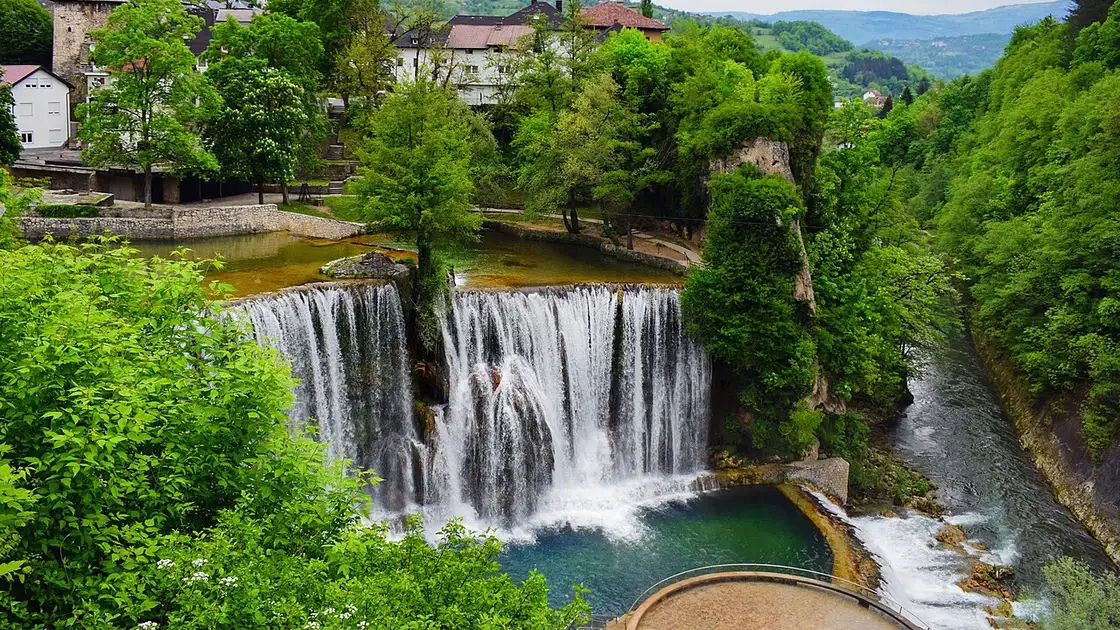
Jajce is the small town in central Bosnia where a waterfall drops straight through the middle of the old streets - the Pliva river pouring about 22 metres over a tufa ledge right where it joins the Vrbas, with a walled medieval town climbing the hill above it. That combination is close to unique: a proper waterfall in a town centre, under a fortress that was the last capital of the Bosnian kingdom. Add a Roman temple, a rock-cut royal crypt, and a string of little wooden watermills on the lakes just upstream, and you have the most layered couple of hours you can spend anywhere in the country. This guide covers what to see, what it costs, how the waterfall works, and how to fit Jajce into a Bosnia trip.
The waterfall in the middle of town
Start with the thing everyone comes for. The Pliva Waterfall sits at the confluence of two rivers, the Pliva and the Vrbas, at the foot of the old town - so instead of hiking to it, you more or less walk up to the edge and look down. The river spreads across a curved barrier of tufa (the same soft, self-building limestone you get at Kravice in the south) and comes over in a broad white sheet.
How tall is it? Depends who you ask, and the disagreement has a reason behind it. The falls are usually given as around 20 to 22 metres today, but older sources put them at closer to 30 metres. The drop shrank after the 1990s war: damage to a hydro plant upstream and later flooding raised the pool at the base and swallowed part of the height. So the figure you’ll see quoted varies - take roughly 22 metres as a fair working number and don’t be surprised if a sign says otherwise.
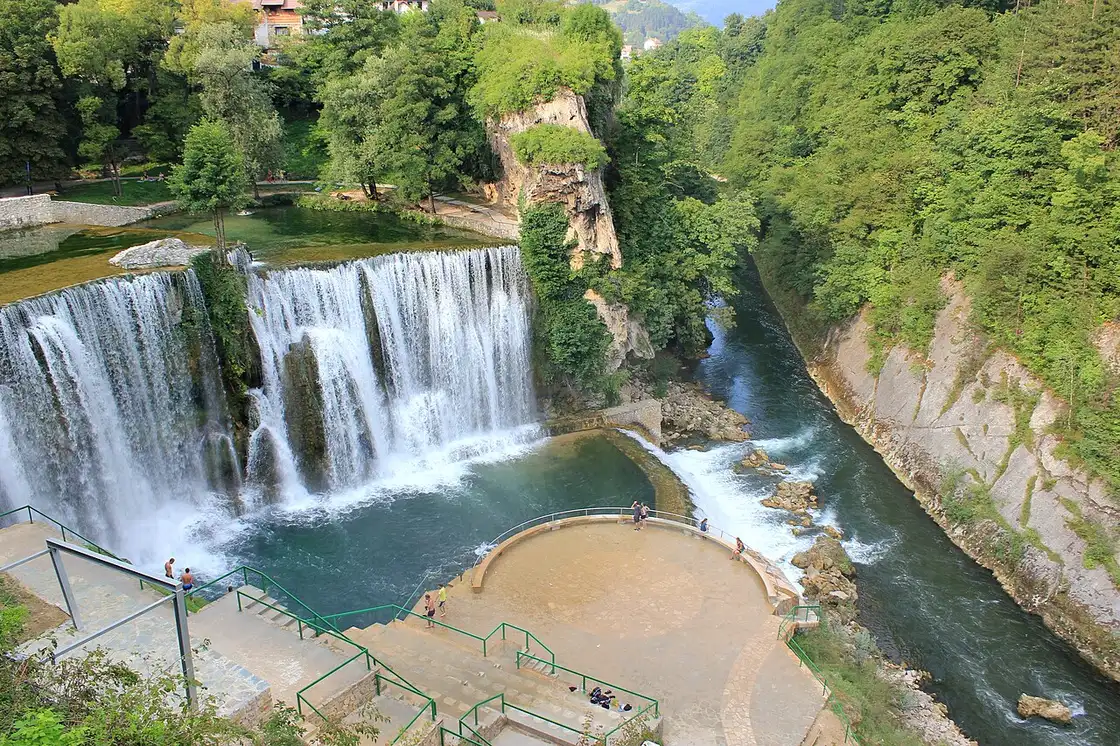
The best head-on view is from the lower platform reached by a path and steps down from the old town (there’s a small charge in season); the footbridge just above the falls, its railings weighed down with lovers’ padlocks, gives you the top of the drop and the town behind. Give yourself both angles - the walk down and back up is ten minutes and worth it. The falls run all year and look most powerful after the spring snowmelt; in high summer the flow eases but the light is kinder.
The fortress and the last king of Bosnia
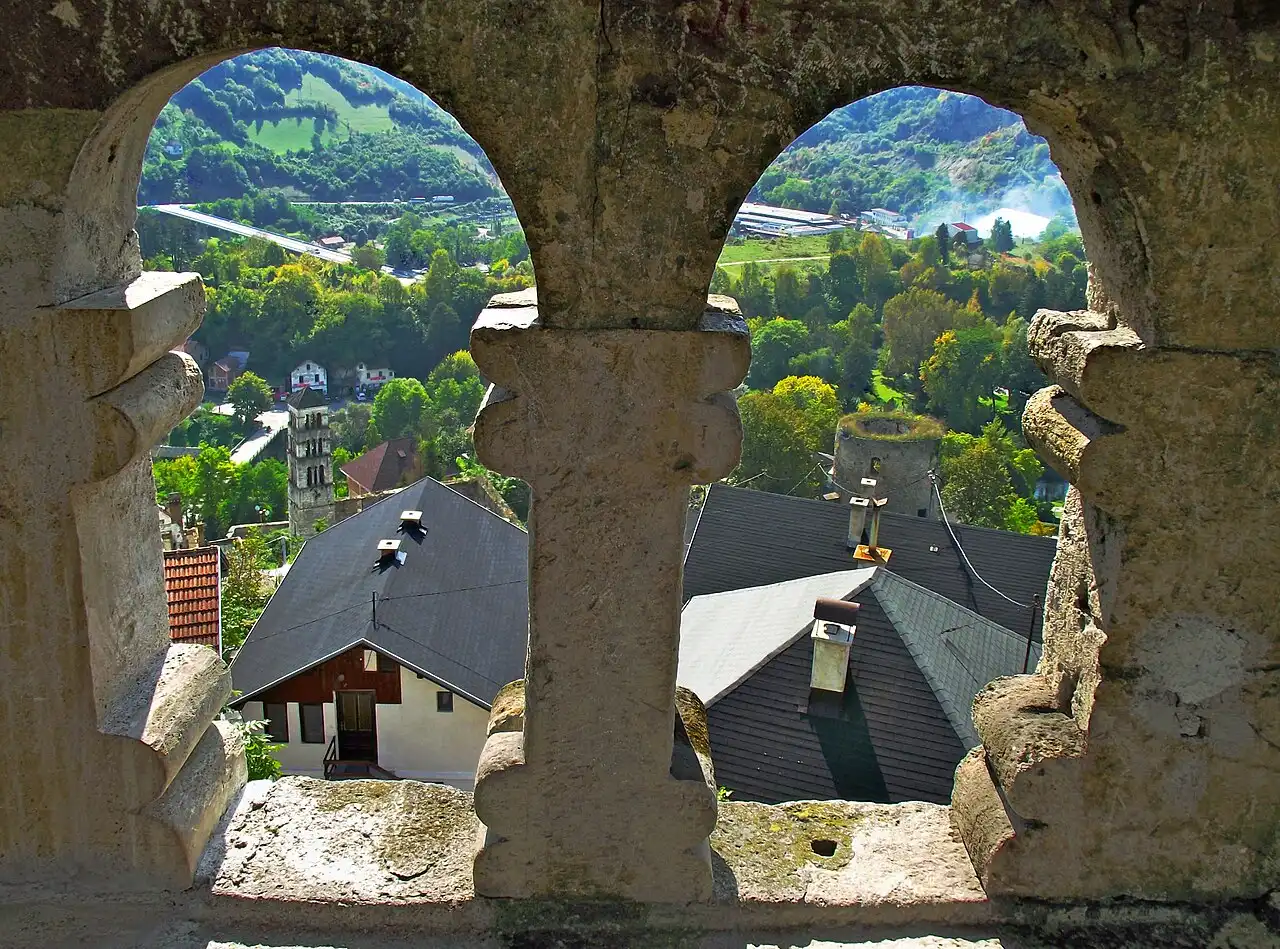
Above the waterfall, the town rises in tiers of stone houses to a fortress on the summit, ringed by walls that still run right down the hillside and around the medieval core. It’s a stiff but short climb through the old gates, and the reward at the top is a wide view over the red roofs to the rivers and the hills beyond - the single best way to understand how the town is stitched into its gorge.
Here the history gets heavy for such a quiet place. Jajce grew up in the late 14th century around a fort built by Duke Hrvoje Vukčić Hrvatinić (the town’s first written mention is 1396), and it became the seat of the Bosnian kingdom in its final decades. In 1461 the last Bosnian king, Stjepan Tomašević, was crowned here, having received his crown from Pope Pius II. Two years later the story ended: the Ottomans besieged Jajce in 1463, took the town, and executed Tomašević - the last king of an independent medieval Bosnia. The town then changed hands between Ottomans and Hungarians for decades before settling firmly under Ottoman rule in the 1520s.
The catacombs and the Temple of Mithras
Two smaller sights make Jajce genuinely unusual, and both sit a short walk apart in the town.
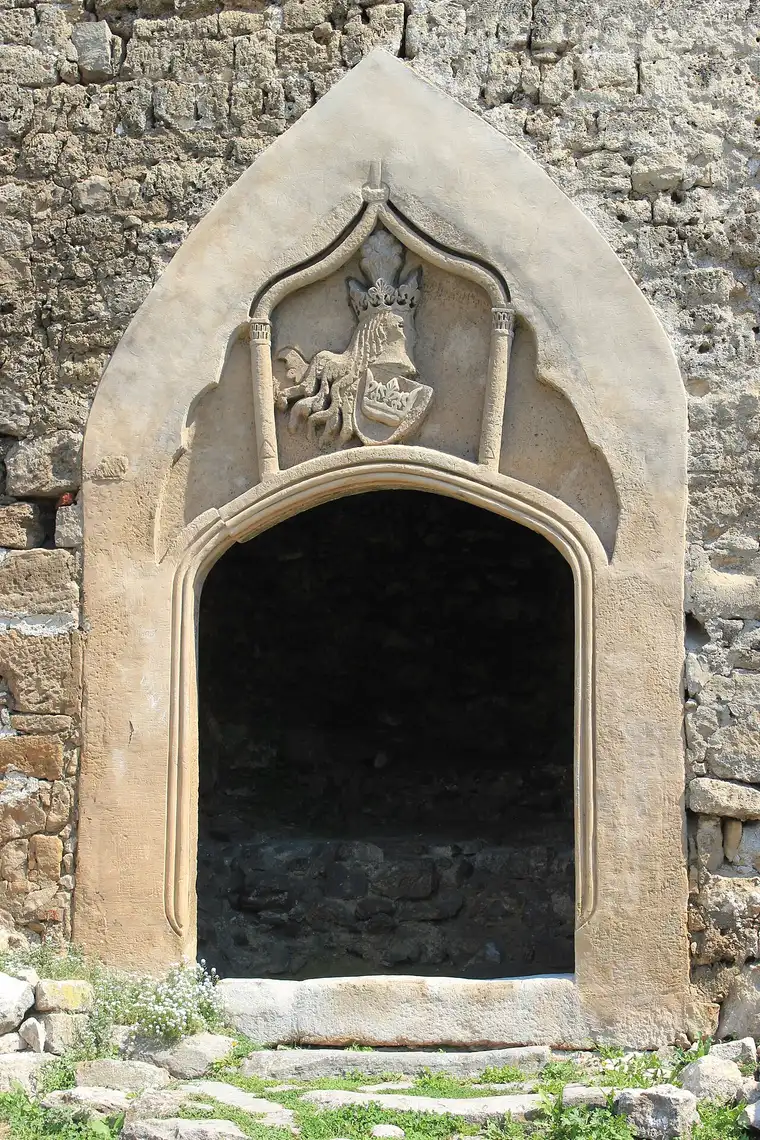
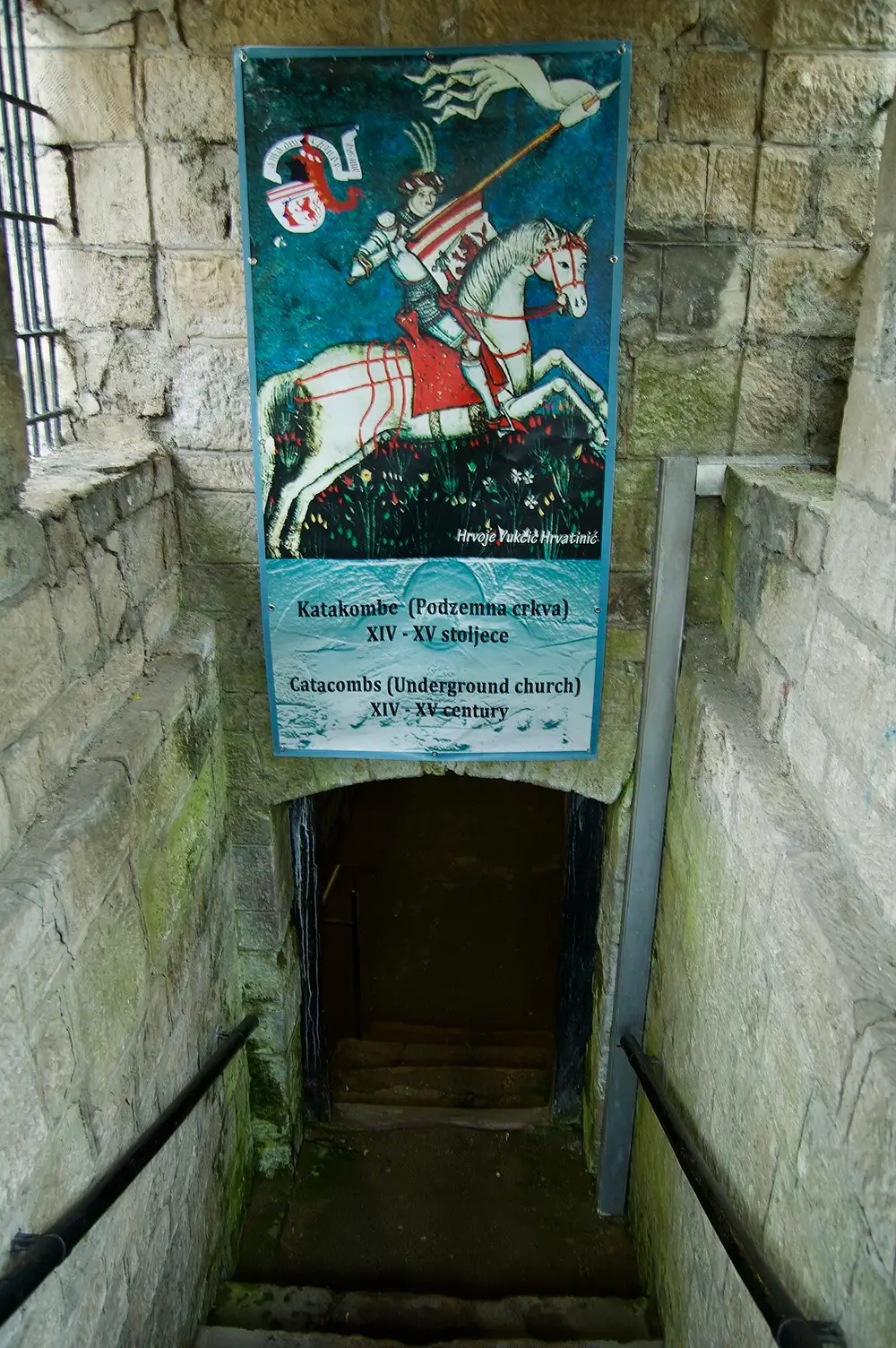
The catacombs are an underground church cut into the rock, commissioned around 1400 by Hrvoje Vukčić Hrvatinić - the same man who founded the town - as a family crypt and burial chapel. It was never finished, which is part of the strange atmosphere: bare carved chambers, a cross and worn heraldry in the stone, and a cool damp hush a few steps below the street. Entry is about 4 KM (reduced 2 KM), and it’s typically open daily from roughly May to October; bring a phone torch for the darker corners.
Then, tucked under a modern protective building, there’s the Temple of Mithras - a Roman mithraeum, one of the best-preserved in Europe, with a carved relief of the god Mithras slaying the bull. It’s usually dated to the 2nd century AD with 4th-century renovations, which makes it older than anything else in town by more than a thousand years. You view it through glass for a small fee. It’s a five-minute stop, but standing over a working Roman shrine in a Bosnian market town is the kind of thing that sticks.
One layer more, if you like your history recent: Jajce is also where the second session of AVNOJ met on 29 November 1943 and laid the foundations of federal socialist Yugoslavia. The AVNOJ museum in town marks it. Coronation of a medieval king, a Roman temple, and the birthplace of a 20th-century state - all within a few walkable blocks.
The Pliva Lakes and the watermills
When you’ve done the town, drive or cycle about 3 kilometres west to the Pliva Lakes - Veliko (Great) and Malo (Small) Plivsko jezero - a pair of calm green lakes strung along the river before it reaches the falls. In summer this is where Jajce goes to swim, paddle and picnic; there are small beaches, boat and pedalo rental, and a couple of cafés. For how Pliva ranks against Bosnia’s other swim and road-trip lakes, see the best lakes in Bosnia round-up.
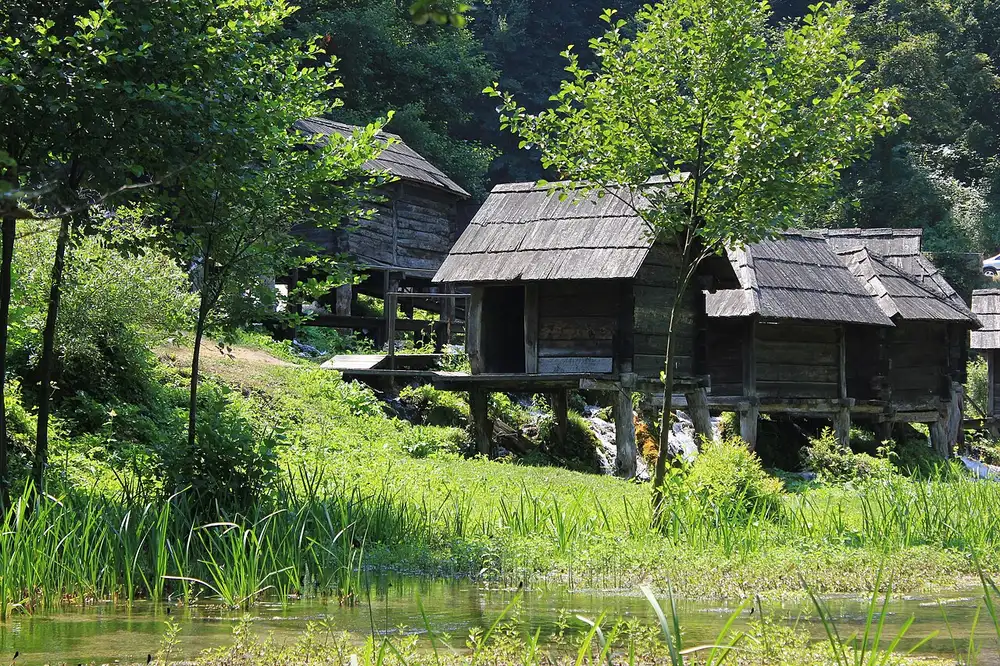
The highlight between the lakes is the Mlinčići - a photogenic cluster of small wooden watermills straddling the braided channels where the water steps down from one lake to the next. The mills go back to the 16th century and were rebuilt over the Austro-Hungarian years; some were still grinding grain within living memory. Wandering the little bridges and boardwalks among them is free (you pay only for parking), and early or late in the day, with the water rushing under the timbers and nobody about, it’s one of the prettiest corners in central Bosnia.
How long to spend, and how to get there
Jajce is compact: the waterfall, fortress, catacombs and Mithras temple all sit within a short walk of each other, and you can see the lot in a focused half-day. Add the Pliva Lakes and watermills and it becomes a comfortable full day - which is what I’d aim for, because rushing the town to tick off the waterfall misses the point. If you’re staying overnight rather than day-tripping, our where to stay in Jajce guide compares the old-town hotels by the falls with the lakeside options west of town.
Getting here takes a bit of commitment, and that’s exactly why it stays quiet. Jajce lies in central Bosnia on the Sarajevo-Banja Luka road, near Travnik, roughly 165 km and 2.5 to 3 hours northwest of Sarajevo. Buses run several times a day from Sarajevo, Banja Luka and Travnik, so it’s doable without a car (our Sarajevo to Travnik and Jajce guide has the exact fares and departure times) - but the town sits off the well-worn Sarajevo-Mostar tourist line, and a car makes it far easier to fold in the lakes and pair the day with Travnik. If you’re planning the wider trip, our 10-day Bosnia road trip folds Jajce and the Una into a full northern leg, the seven-day itinerary shows the classic southern loop, and the Sarajevo guide covers the city you’ll most likely base from. Hiring wheels for the run north pays off in freedom (see the box below). If you want those two towns and a night without continuing to the Una, the two-day Travnik and Jajce route is the logistics.
Is Jajce worth it - and how does it compare?
If your Bosnia trip is short and coast-focused, Jajce is a detour you can skip without guilt: it’s a good three hours from the Herzegovina sights, and it’s a different kind of day out. But if you have the time and any taste for history, it’s one of the most rewarding small towns in the Balkans - layered, walkable, and refreshingly untouristy.
Worth being clear on one comparison. If it’s the swimming waterfall you’re after - the turquoise pool you can jump into - that’s Kravice down in Herzegovina, not here; Jajce’s falls are for looking at, from a town wrapped around them. Our round-up of the best waterfalls in Bosnia lays out how the Pliva compares with the country’s other cascades and which suit which kind of day. Come to Jajce for the whole package instead: a king’s capital, a Roman shrine, a socialist republic’s birthplace, and a waterfall you can hear from the main square - a genuinely singular half-day, and quiet enough that you’ll often have the viewpoint to yourself.
Photos
On the map
The map loads on click - to keep the page lightweight.
The map didn’t load. Check your connection and refresh the page.
Admission and opening hours
- Admission price
- Most sights are cheap and ticketed separately, in cash (KM): the catacombs about 4 KM (reduced 2 KM), the Temple of Mithras and the fortress a small fee each; the Pliva watermills are free to walk among (parking is paid). Budget 20-30 KM to see everything.
- Opening hours
- Catacombs run roughly daily 09:00-19:00 from about May to October, shorter (to ~16:00) in winter; the fortress and Mithras temple keep similar daylight hours. Times shift by season and can change - confirm on the day, especially out of summer.
Prices are in convertible marks (KM / BAM); euros are not reliably accepted, so carry cash. The waterfall viewpoint and the padlock bridge are free and open all hours.
Details checked: July 3, 2026
Distance ≈165 km · ~2.5-3 h by car
- Sarajevo ≈165 km · ~2.5-3 h by car On the Sarajevo-Banja Luka road via Travnik. Buses run several times a day; most visitors come as a long day trip or an overnight paired with Travnik.
Read also

Cities · 12 min read
Bihać City Guide: Your Base for Una National Park
Verified · July 23, 2026Bihac in northwest Bosnia: a Gothic church that became a mosque in 1592, the Captains Tower museum, the Una through town and the July regatta.

Cities · 9 min read
Konjic: Ottoman Bridge, Rafting & Cold War Secrets
Verified · July 21, 2026A guide to Konjic on the Neretva: the 1682 Ottoman bridge, upper-Neretva rafting, a secret Cold War bunker, a UNESCO woodcraft and Boračko Lake.

Cities · 12 min read
Things to Do in Banja Luka: Bosnia's Second City
Verified · August 9, 2026Things to do in Banja Luka: Kastel fortress on the Vrbas, the rebuilt Ferhadija mosque, cafe-lined Gospodska and the city's Trappist beer heritage.

Cities · 10 min read
Travnik: Vizier Capital, Fortress & Painted Mosque
Verified · July 20, 2026Things to do in Travnik, Bosnia's old Ottoman vizier capital: the best-preserved fortress, the painted Sarena Dzamija over a bazaar, and Plava Voda.