Bihać City Guide: Your Base for Una National Park
Bihac in northwest Bosnia: a Gothic church that became a mosque in 1592, the Captains Tower museum, the Una through town and the July regatta.
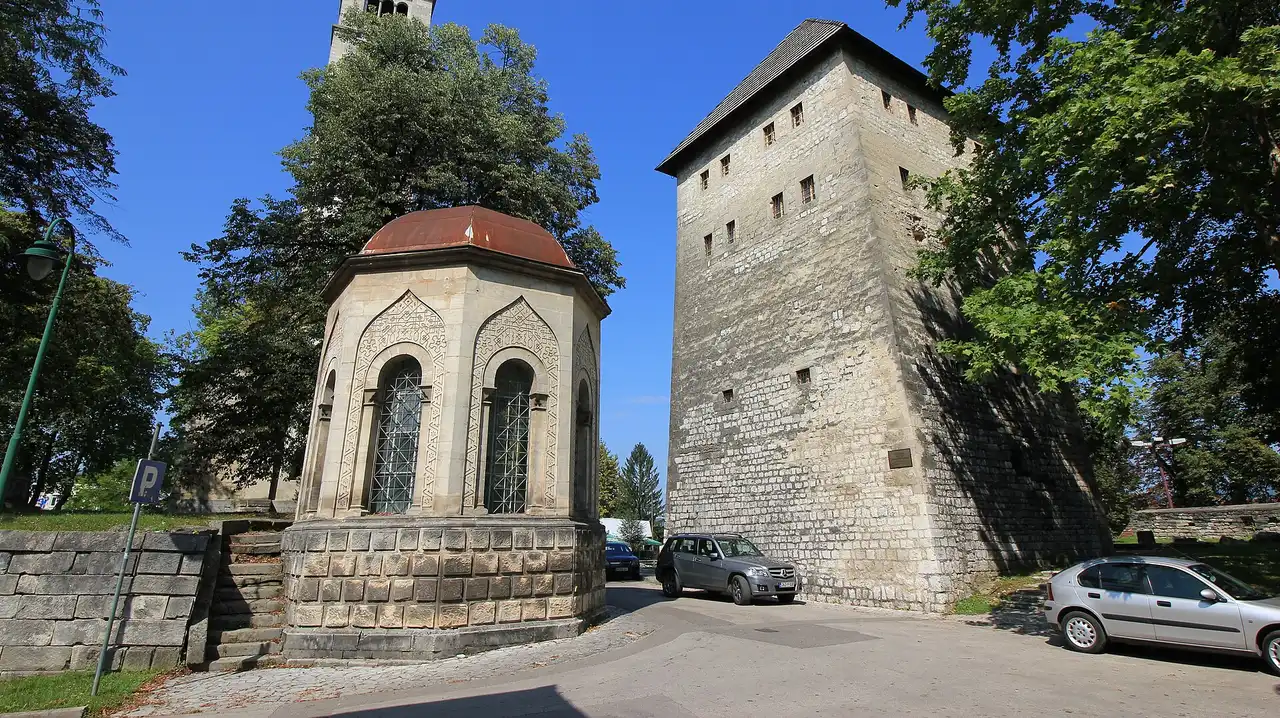
Bihać is the town you sleep in for Una National Park, and it repays about half a day of its own before you ever get on the water. Within three walkable blocks there’s a Gothic church of 1266 that has been a mosque since 1592, a stone keep that now holds the cantonal museum, and an octagonal mausoleum parked on what amounts to a traffic island. The Una runs green and quick through the middle of it. The town has roughly 56,000 people, sits at 230 m, and is closer to Zagreb than to Sarajevo.
Most visitors turn up with rafting already booked and treat Bihać as a bed with parking. That trade costs you the oddest three hours in northwest Bosnia.
A town in the wrong corner of the country
Bihać is the capital of Una-Sana Canton, out in Bosanska Krajina where the country bulges into Croatia. From Sarajevo it’s about 300 km and four and a half to five hours; from Zagreb, direct buses take roughly two and a half hours; Plitvice Lakes is about an hour away across the border. Look at a map and the trip organises itself: Bihać isn’t a detour from the classic Sarajevo to Mostar run; it’s either its own two-day nature trip or an add-on to a Croatian leg.
That geography shaped the town long before it shaped tourism. This was the frontier: Hungarian, then Ottoman, then Habsburg, and the buildings still argue about it on the same street corner.
Fethija: a Gothic church that has been a mosque since 1592
Start here, because there’s nothing else quite like it in the country. The Fethija mosque was built in 1266 as the Catholic Church of St Anthony of Padua, with a Dominican monastery beside it, and it’s the oldest Gothic building in Bosnia and Herzegovina. When the Ottomans took Bihać in 1592 they converted it and named it Fethija, from the word for conquest.
What makes it worth ten minutes is how little was changed. The stone body is still a Gothic church: buttressed walls, a rose window, a pointed-arch doorway with carved capitals. An Ottoman inscription panel was set into the arch above the door, and the original Gothic bell tower simply became the minaret. That arrangement held until 1863, when the old tower had decayed past saving, was taken down, and the present minaret went up in its place.
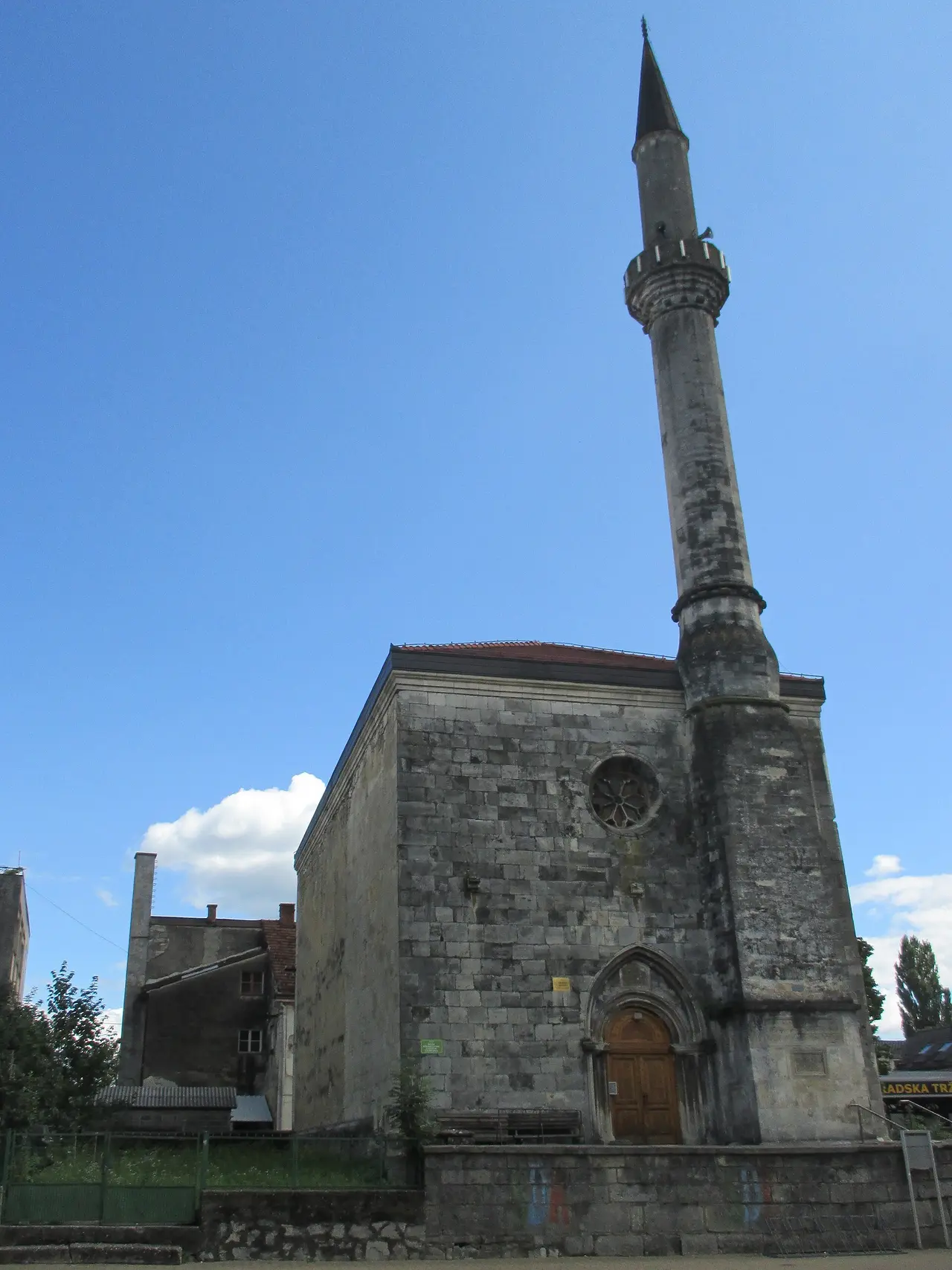
It’s a working mosque rather than an exhibit: shoes off, shoulders and knees covered, and stay outside around the five daily prayers. The doorway alone is worth the walk if you’re short of time.
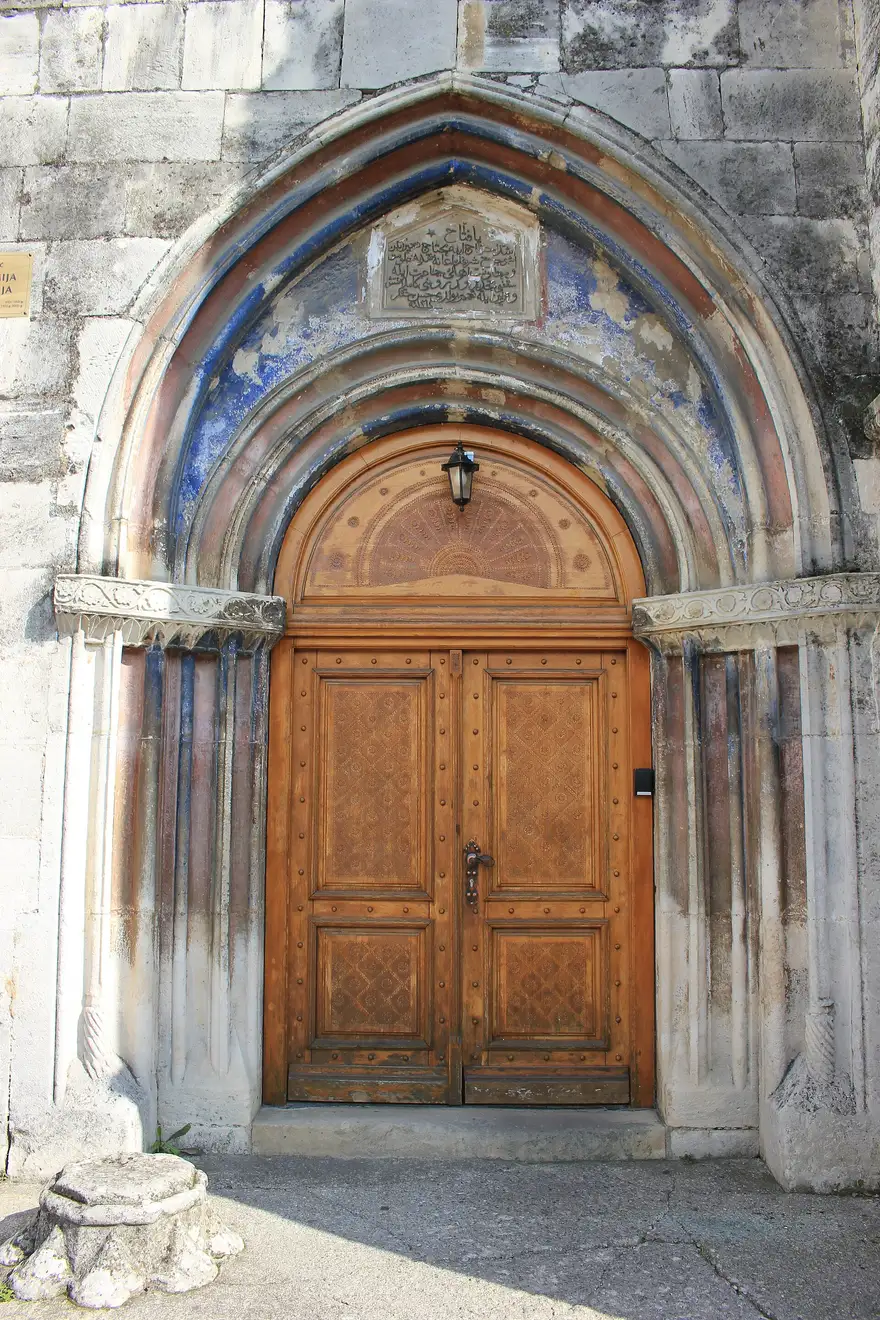
The Captains Tower, the Turbe and a bell tower with no church
Two minutes downhill, three buildings stand in a row that carries the rest of the story.
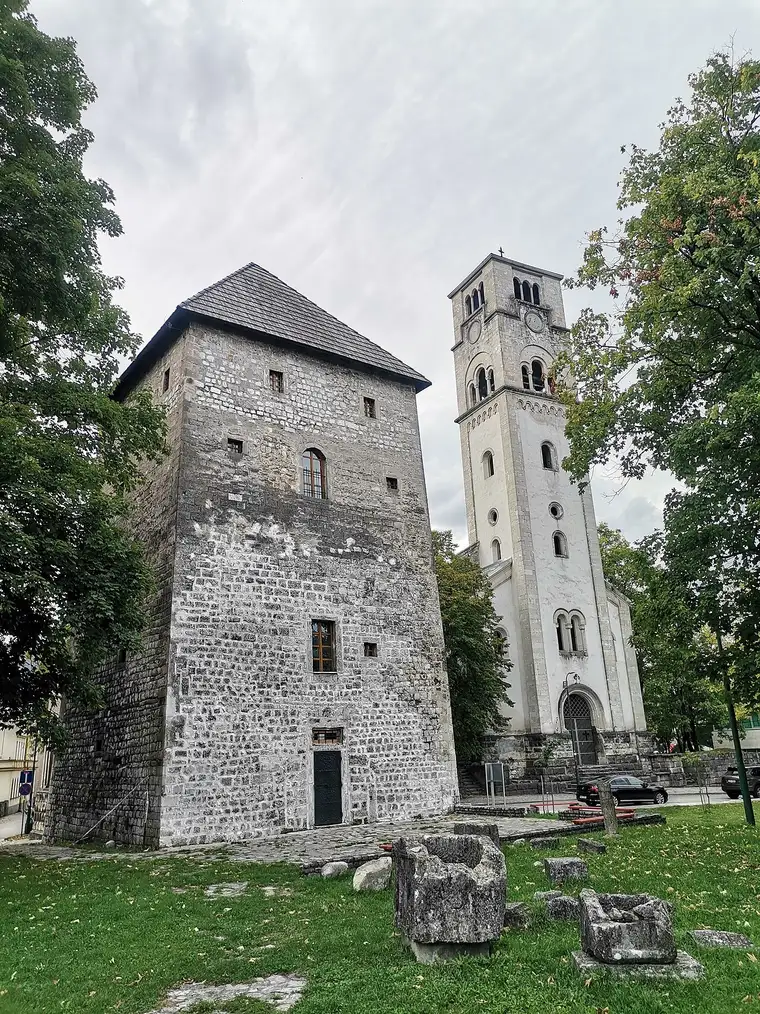
The Captains Tower (Kapetanova kula) is the last of four towers that once guarded Bihać, and how old it’s depends on who you ask. Local tradition and the city’s own tourist material put the first tower at 1205; the cantonal heritage institute dates the building standing today to the early 18th century and treats it as the most important surviving piece of Ottoman Bihać. Both can be true of the same site, and nobody has settled it. It has been a fortification and, later, a prison; today it holds the Museum of the Una-Sana Canton with five permanent exhibitions, and the top gives you the rooftop view over the old centre. The hours announced for the 2025 season were Monday 10:00-15:00 and Tuesday to Saturday 11:00-18:00, stretching to 20:00 in high summer, and nothing newer has been published, so treat them as a guide rather than a timetable. No ticket price is published anywhere we can verify, so carry cash in convertible marks and ask at the door, or phone ahead on +387 37 223 214.
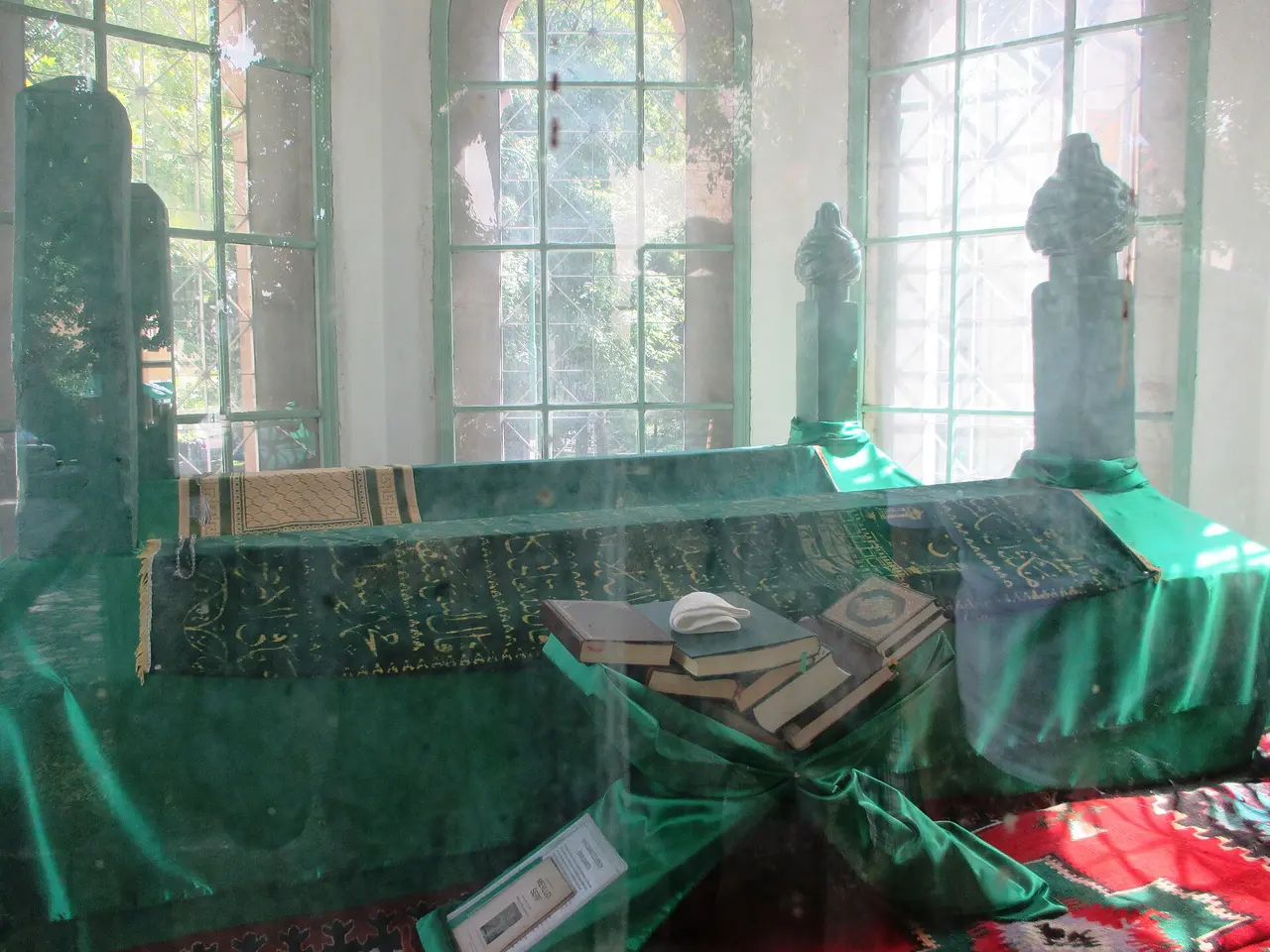
Beside it sits the Turbe, an octagonal mausoleum cut from local bihacit stone and put up in the late 19th century, on the spot where an older wooden turbe had stood. Its carved arches are now glazed, so you can look in at the green-draped graves without opening a door. Who lies under them isn’t actually known: there’s no inscription on the turbe or on the headstones inside, and the accounts that survive are traditions rather than records - the most common of them says these are men who died defending the town against the Austro-Hungarian advance of 1878. The building stands on a scrap of ground where the road bends around it, which is either careless or perfectly Bosnian, depending on your mood.
The tall tower behind them has the saddest history of the three. The Catholic Church of St Anthony of Padua went up under Austro-Hungarian rule, begun in 1885 and finished in 1891, lengthened in 1899 and rebuilt bigger between 1938 and 1941 until it ran 58 m long over some 900 m², with a rectangular bell tower about 50 m high that dominated the skyline. Allied bombers destroyed it in 1943, on Palm Sunday, with the congregation inside; the bell tower was the only part left standing. The church was never rebuilt, and the Franciscans put up an octagonal replacement in 1970-72 instead. So the tower you photograph is a survivor keeping company with a building it was never designed for.
The river, which is why anyone stays
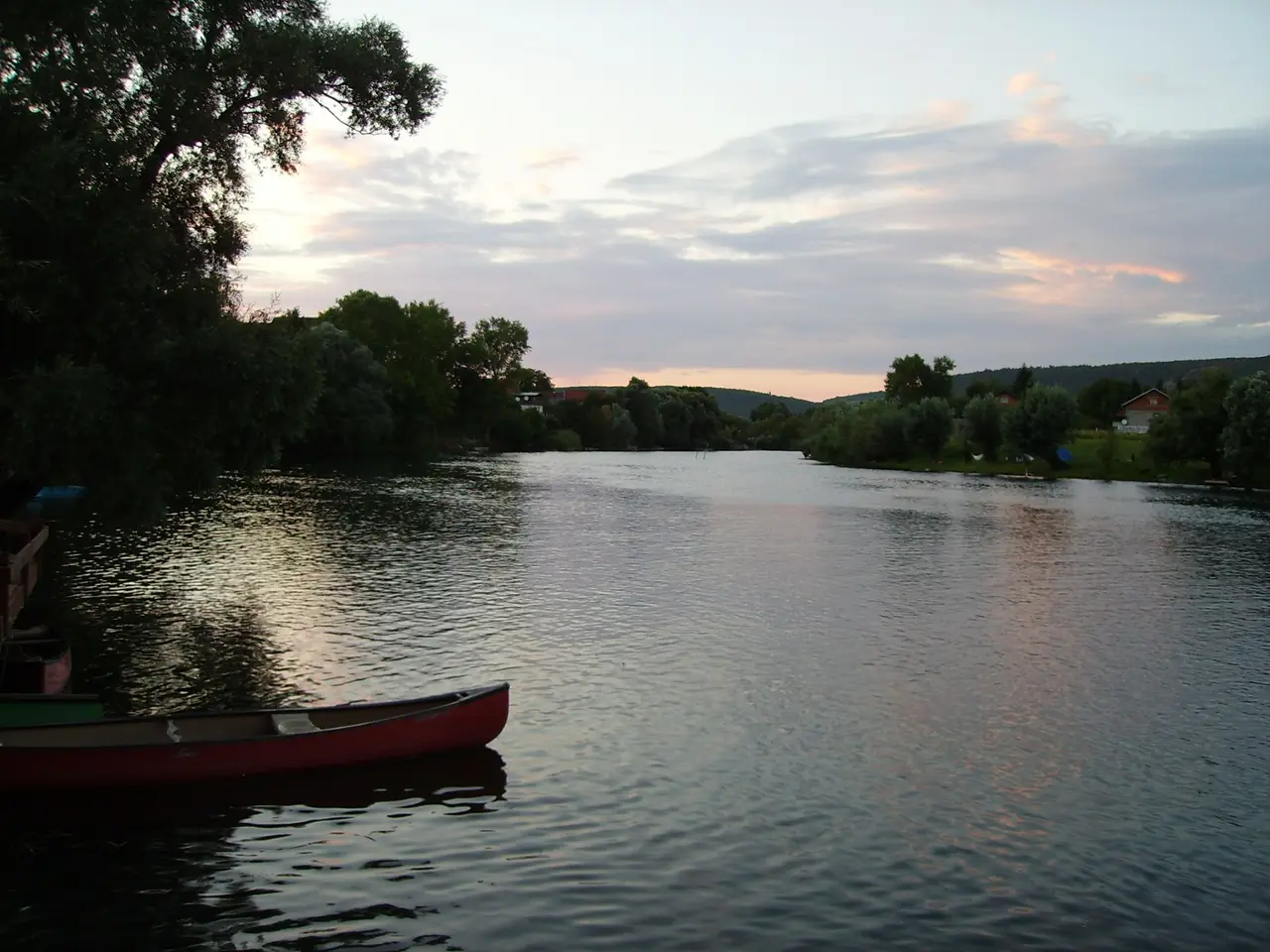
Bihać works because the Una runs straight through it, and the water here’s the same startling green it’s inside the national park. Weirs step it down through the town, ducks commute along the concrete crossings, and in July people swim off the banks in the middle of the afternoon. Riverside terraces are the local institution: Čardak na Uni, Bistro River Una, River Dock and Sunce, which sits on an island in the cascades, all trade on the same view and on Una trout, grilled fish and the standard Bosnian repertoire of ćevapi, begova čorba and bosanski lonac. Prices aren’t published, but this isn’t a town where anyone is trying to fleece you.
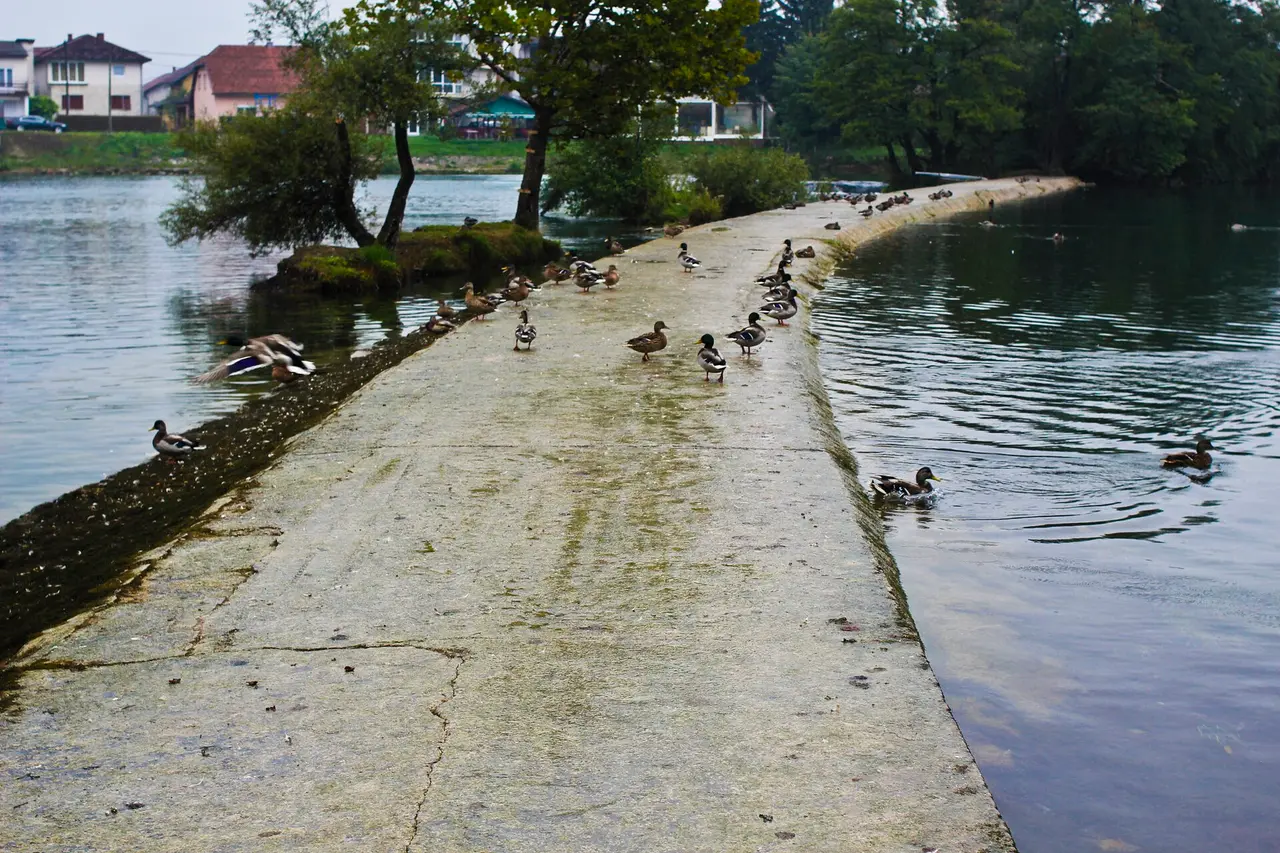
Come out at the end of the day and walk the bank south of the centre, where the town thins into gardens, boat sheds and willow. That stretch, more than any monument, is what people remember about Bihać.
Regatta week, 22 to 25 July
The 52nd International Tourist Una Regatta runs 22 to 25 July 2026, with a demonstration kayak stage on Tuesday 21 July. It’s the biggest recreational descent in the country: seven stages and over 100 km of protected river, starting up at Martin Brod and finishing at Bosanska Krupa, passing Kulen Vakuf, Štrbački buk, Ripač and Bihać on the way. Entry is 50 KM per person, registration is online at regata52.unaventa.net, and the organiser is the national park itself (+387 37 222 255). It’s an 18+ event; under-18s go with a parent or guardian. See what else is happening that week across the country.
Two warnings before you build a trip around it. Resellers have quoted different dates for this regatta in the past, so confirm with the organiser rather than an agency. And if you’re not paddling, regatta week is the one week of the year when Bihać’s small stock of beds runs out - don’t leave the room booking to the last minute. The evenings at the riverside camps, with music and grilled food, are the part outsiders enjoy most. Our guide to rafting in Bosnia covers the operators who put mixed groups on this river all season, and Una National Park has the waterfalls and the park practicalities.
The history under the surface
For a town this size, Bihać has been at the centre of things twice in one century. The first session of AVNOJ, the assembly that became the framework of socialist Yugoslavia, met here on 26 and 27 November 1942, in the Partisan-held pocket of western Bosnia nicknamed the Bihać Republic, which lasted until January 1943. The second session met a year later in Jajce, and our Jajce guide picks up that thread.
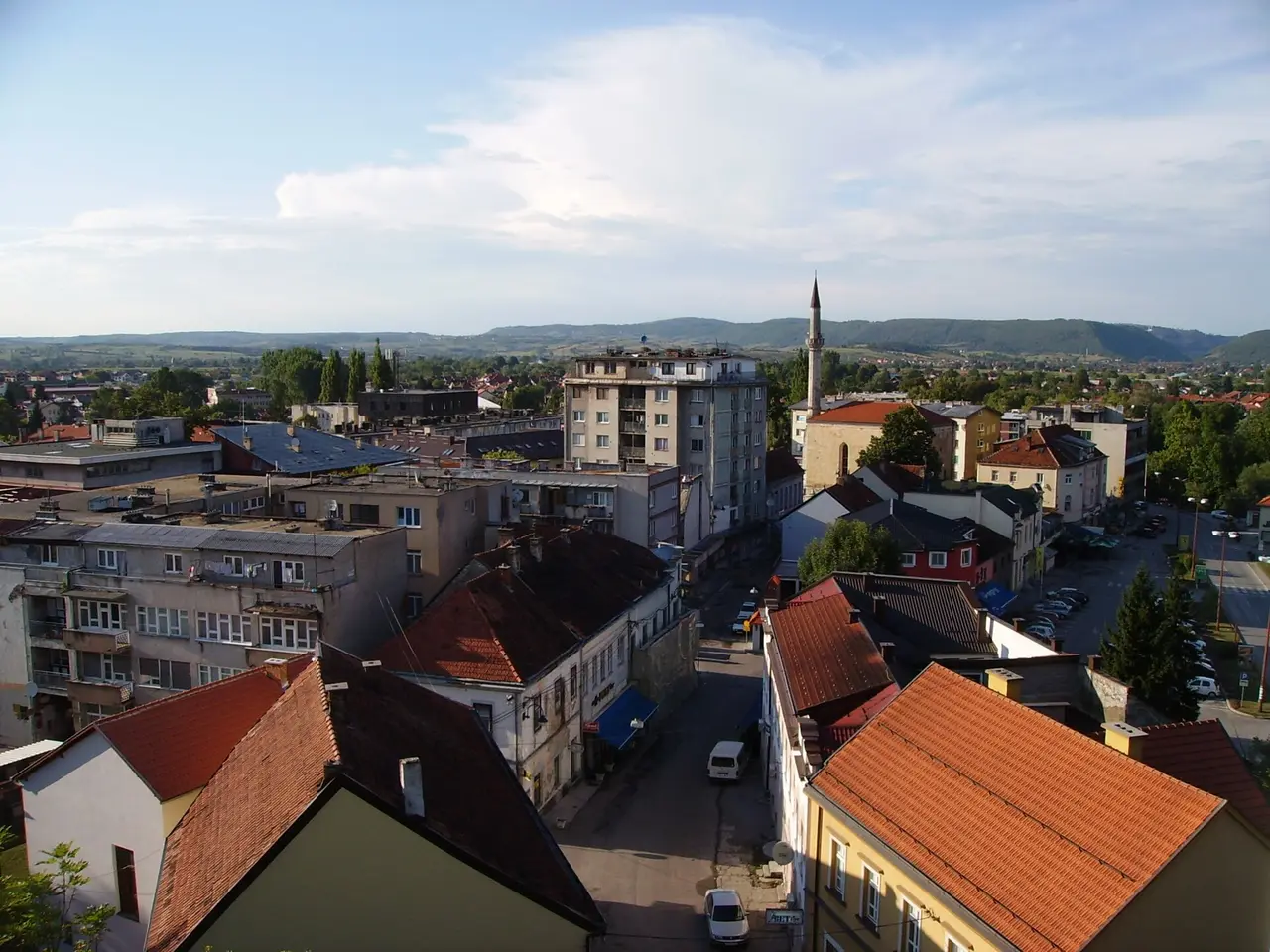
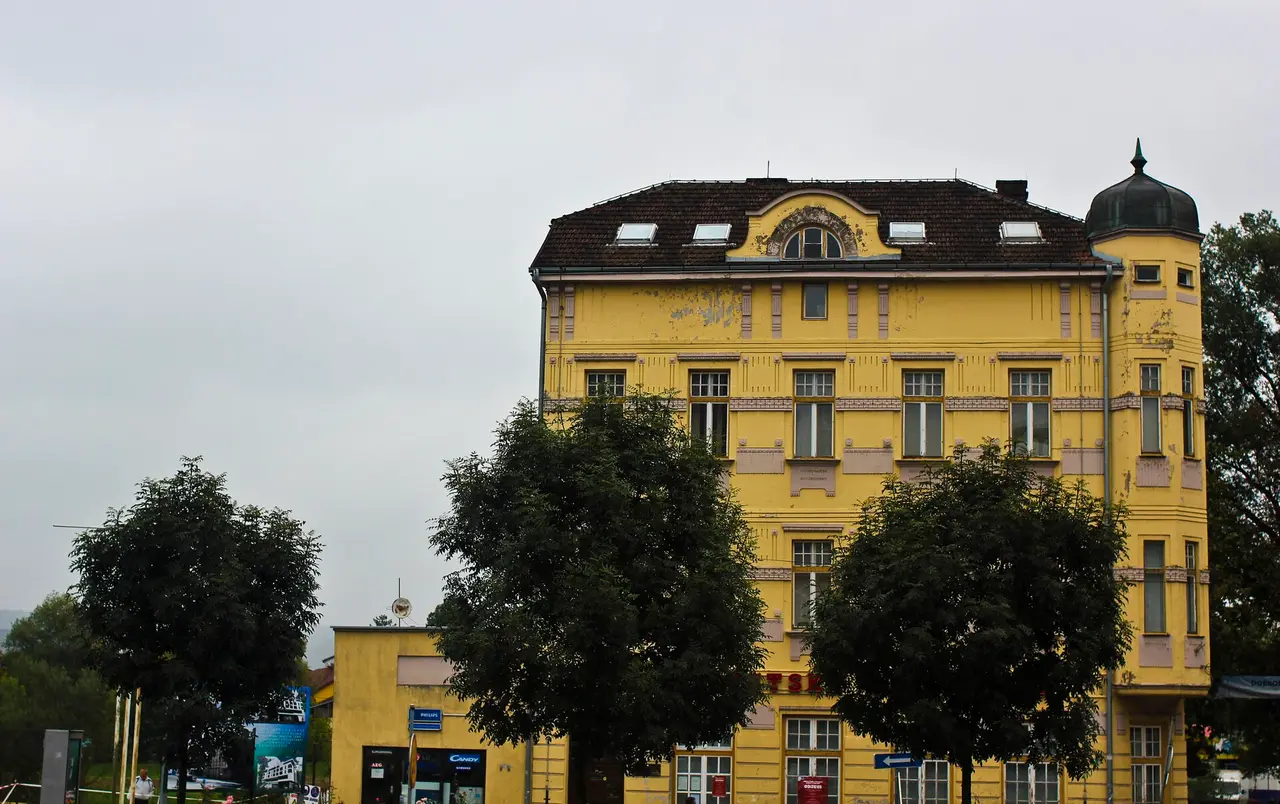
Fifty years on, Bihać was besieged for three years, from 1992 to 1995, and designated a UN safe area. The town you walk through now is a rebuilt one: yellow Habsburg blocks with peeling stucco next to plain concrete from the 1970s and later, and not much in between. The gap between those two layers is the war. Once you can see it, the street reads differently - and that’s the history under the paint.
Worth the drive out of town
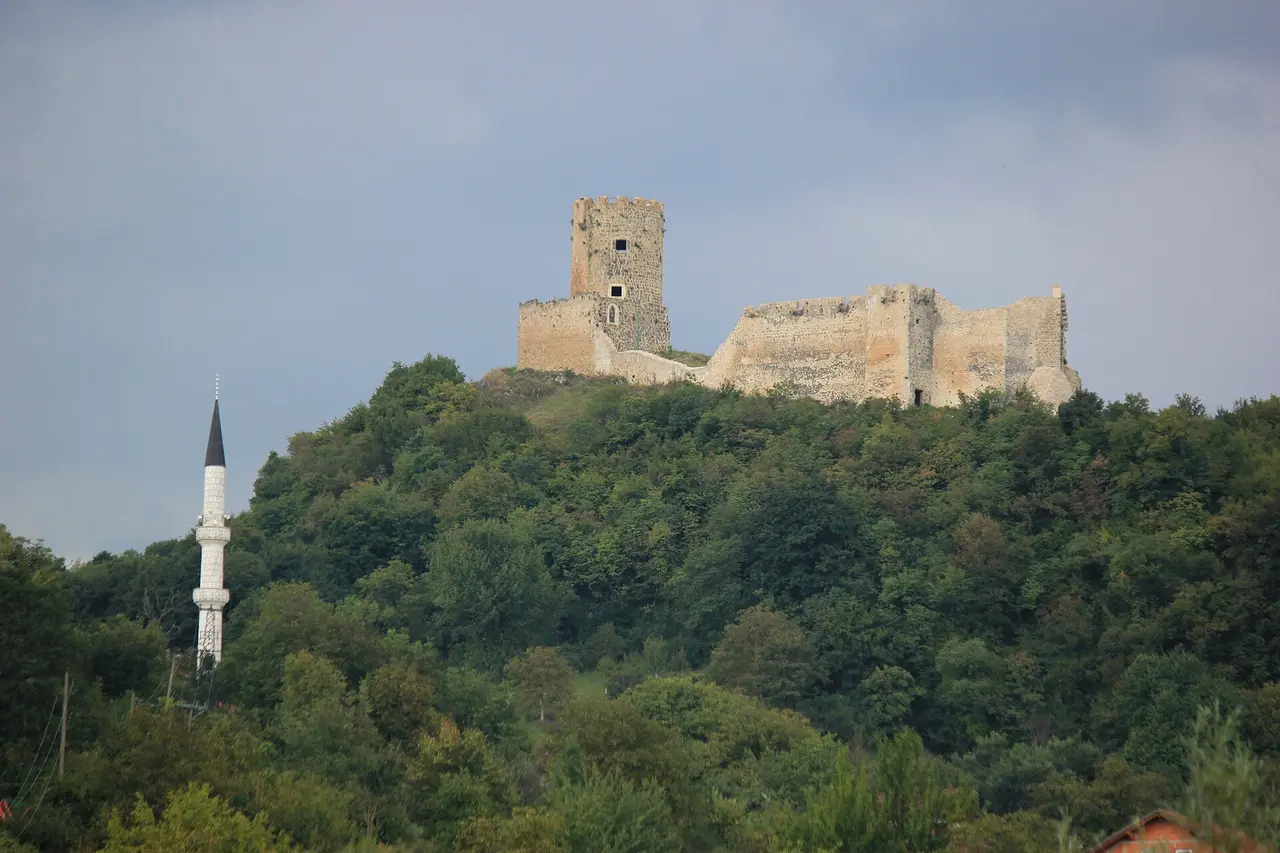
Sokolac, a ruined hilltop fortress a short drive from Bihać, gives you a keep, a broken curtain wall and a view down the valley for the price of a walk uphill. Beyond that the valley opens up: Ostrožac castle, the falls at Štrbački buk and Martin Brod, and riverside Kulen Vakuf. Our Una River loop strings them into a two or three-day drive, and the best waterfalls in Bosnia guide ranks the cascades if you only have time for one.
One place to leave alone. The abandoned Željava air base, dug into Gola Plješevica on the border, was the largest underground airbase in Yugoslavia and was blown up in 1991-92 with tonnes of explosives. It circulates online as an urban-exploration trophy. It’s also still mined: a Bosnian Air Force major was killed by a mine there in 2000, and the area has been used to train mine-detection dogs. Don’t go poking around it, whatever a video suggests. Our guide to how safe Bosnia is sets out the same rule for the countryside in general.
Practical notes
Buses reach Bihać from Zagreb, Sarajevo and the Croatian coast, and the centre is small enough to walk. Everything beyond it, from Ostrožac to the park gates, is far easier with your own car, which you can rent in Bosnia or pick up on the Croatian side. Pay in convertible marks (KM) and carry cash: card acceptance in the smaller places out here’s patchy.
For timing, May, June and September give you warm water without the crush, while July and August bring both the heat and the regatta crowds. Our guide to the best time to visit Bosnia breaks it down month by month, and if you’re weighing a room in town against a riverside ethno-house or Kulen Vakuf, our where to stay for Una National Park guide compares the three side by side.
Give the town a slow morning: mosque, tower, mausoleum, coffee, then the riverbank. By lunchtime you’ll have seen Bihać, and the rest of the trip belongs to the water, which is what you came for anyway.
Photos
On the map
The map loads on click - to keep the page lightweight.
The map didn’t load. Check your connection and refresh the page.
Admission and opening hours
- Opening hours
- Museum of the Una-Sana Canton in the Captains Tower, as announced for the 2025 season: Monday 10:00-15:00, Tuesday to Saturday 11:00-18:00, extended to 20:00 in the summer months. No 2026 update has been published, so confirm before you walk over (+387 37 223 214) - a small municipal museum can close for events at short notice.
The museum ticket price is not published online; bring cash in convertible marks (KM / BAM). The Fethija mosque is a working mosque: shoes off, shoulders and knees covered, and avoid the five prayer times.
Details checked: July 23, 2026
Distance ≈300 km · ~4.5-5 h by car
- Sarajevo ≈300 km · ~4.5-5 h by car The far northwestern corner of the country. Bihac is closer to Zagreb than to Sarajevo, with direct Zagreb buses in roughly 2.5 hours, and it sits about an hour from Plitvice Lakes across the Croatian border.
Read also

Cities · 9 min read
Konjic: Ottoman Bridge, Rafting & Cold War Secrets
Verified · July 21, 2026A guide to Konjic on the Neretva: the 1682 Ottoman bridge, upper-Neretva rafting, a secret Cold War bunker, a UNESCO woodcraft and Boračko Lake.

Cities · 12 min read
Things to Do in Banja Luka: Bosnia's Second City
Verified · August 9, 2026Things to do in Banja Luka: Kastel fortress on the Vrbas, the rebuilt Ferhadija mosque, cafe-lined Gospodska and the city's Trappist beer heritage.

Cities · 10 min read
Travnik: Vizier Capital, Fortress & Painted Mosque
Verified · July 20, 2026Things to do in Travnik, Bosnia's old Ottoman vizier capital: the best-preserved fortress, the painted Sarena Dzamija over a bazaar, and Plava Voda.

Cities · 10 min read
Neum: Bosnia's Only Beach Town
Verified · July 9, 2026Bosnia's only stretch of coast: 20 km of Adriatic at Neum, pebble beaches and hotels at roughly half Croatian prices. What it's like and when to go.