Is Bosnia Safe to Visit in 2026? An Honest Guide
Yes, Bosnia is safe for tourists in 2026: low violent crime, warm welcome. The one real caveat is rural landmines - stay on paved roads and marked trails.
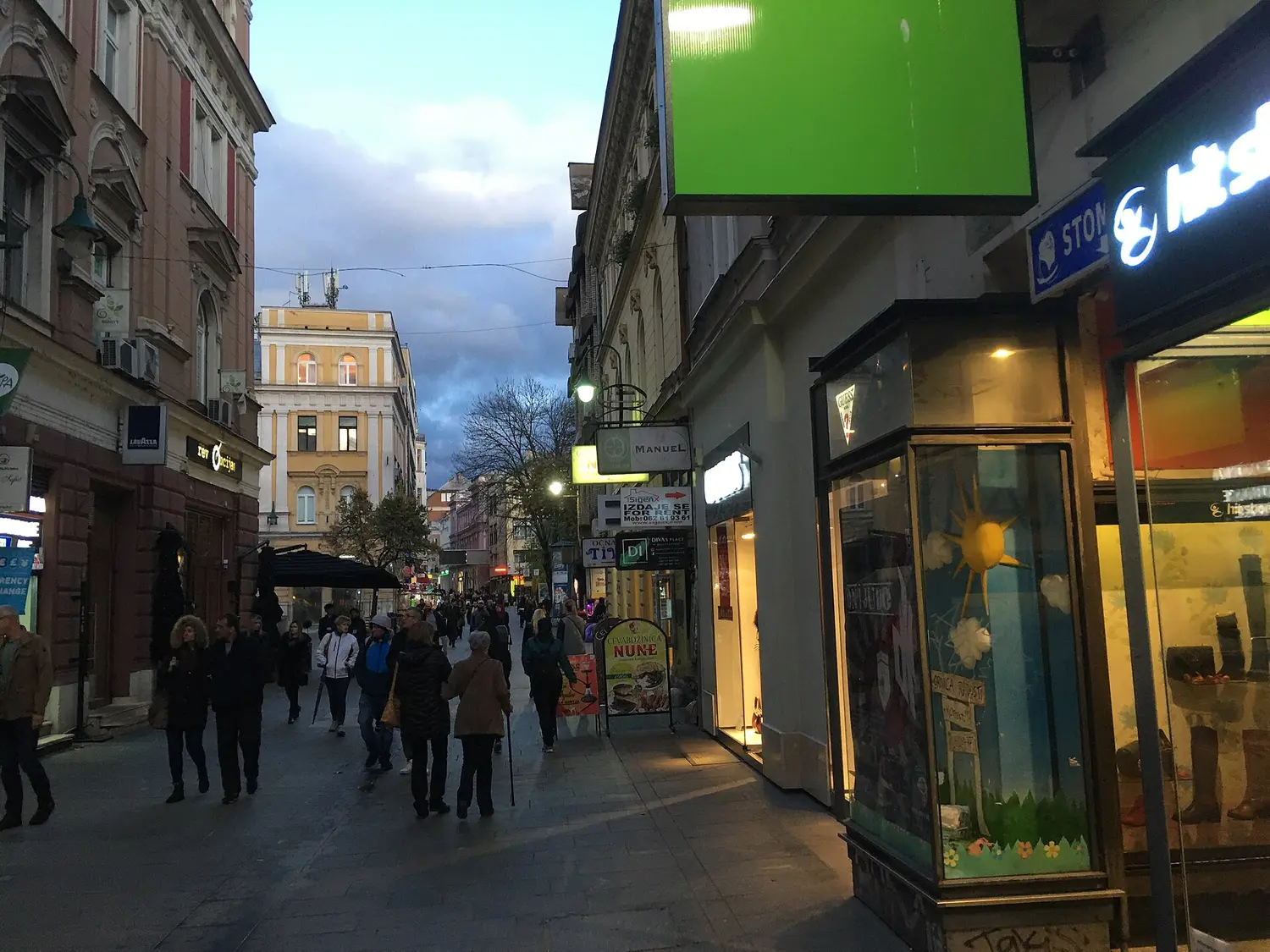
Yes, Bosnia and Herzegovina is a safe country to visit. Violent crime against tourists is rare, the cities and main routes feel relaxed, and hundreds of thousands of people travel here every year without trouble. The one hazard that genuinely sets Bosnia apart from a normal European trip is left over from the 1992 to 1995 war: landmines and unexploded ordnance in rural areas along the old front lines. Staying clear of them is simple, and it comes down to one habit - don’t leave paved roads, marked paths and cleared ground, and never poke around abandoned buildings or open countryside. Do that, and the mines are a statistic rather than a risk to you. This guide sets out how safe Bosnia really is, section by section, and what the official advice actually says.
This guide reflects UK and US government advice and BHMAC demining figures as of July 2026. Safety information changes, and this is background rather than official travel advice - check the live government pages linked below before you travel, and follow local signs and instructions on the ground.
The short version: how safe is day-to-day travel?
For the ordinary business of travelling - walking around Sarajevo and Mostar, riding trams and buses, eating out, taking day trips on marked roads and trails - Bosnia is comfortable and low-stress. The US State Department places the country at Level 2, “Exercise Increased Caution”, the same rating it gives to France, Germany, Italy and Spain, so it sits in the broad middle of the scale rather than anywhere alarming. People are famously warm and hospitable, English is common among younger Bosnians, and the atmosphere in the tourist towns is friendly and unhurried.
That doesn’t mean switching your brain off. There’s petty crime to watch in the cities, mountain roads that demand respect behind the wheel, and the war legacy in the countryside that needs a clear rule or two. None of it should put you off. It just means travelling with the same everyday awareness you would use in any unfamiliar place, plus one Bosnia-specific habit about staying on cleared ground. The rest of this guide takes each of those in turn.
Landmines and unexploded ordnance: the honest section
This is the part worth reading slowly, because it’s the one real danger unique to Bosnia and the one most surrounded by half-truths. The war ended three decades ago, but the mines it scattered have not all gone, and clearing them is painstaking work that is still going on.
Start with the reassuring half, straight from the source. The UK Foreign Office states that “landmines and other unexploded weapons remain from the 1992 to 1995 war,” but that “highly populated areas and major routes are largely clear, [and] there is still a risk in less populated and rural areas.” In other words, the places you actually spend your time - the cities, the towns, the main roads, the maintained tourist sites - are the parts that have been dealt with first. The contamination that remains is out in the countryside, along the old lines of conflict, and it’s mapped rather than random.
Then the half that stops you being complacent. This isn’t a theoretical problem. The US State Department is blunt: “Minefields, active landmines, and unexploded ordnances are a threat throughout the country,” and “landmine explosions have injured and killed many people in Bosnia and Herzegovina since 1995.” The scale is still significant. According to Bosnia’s official demining agency, BHMAC (the Bosnia and Herzegovina Mine Action Centre), more than 820 square kilometres - roughly 1.6 percent of the country’s territory - remained contaminated as of mid-2025. That figure is falling steadily: of the more than 4,180 square kilometres originally affected, about 3,360 have been cleared, but the job isn’t finished and no final mine-free date has yet been set.
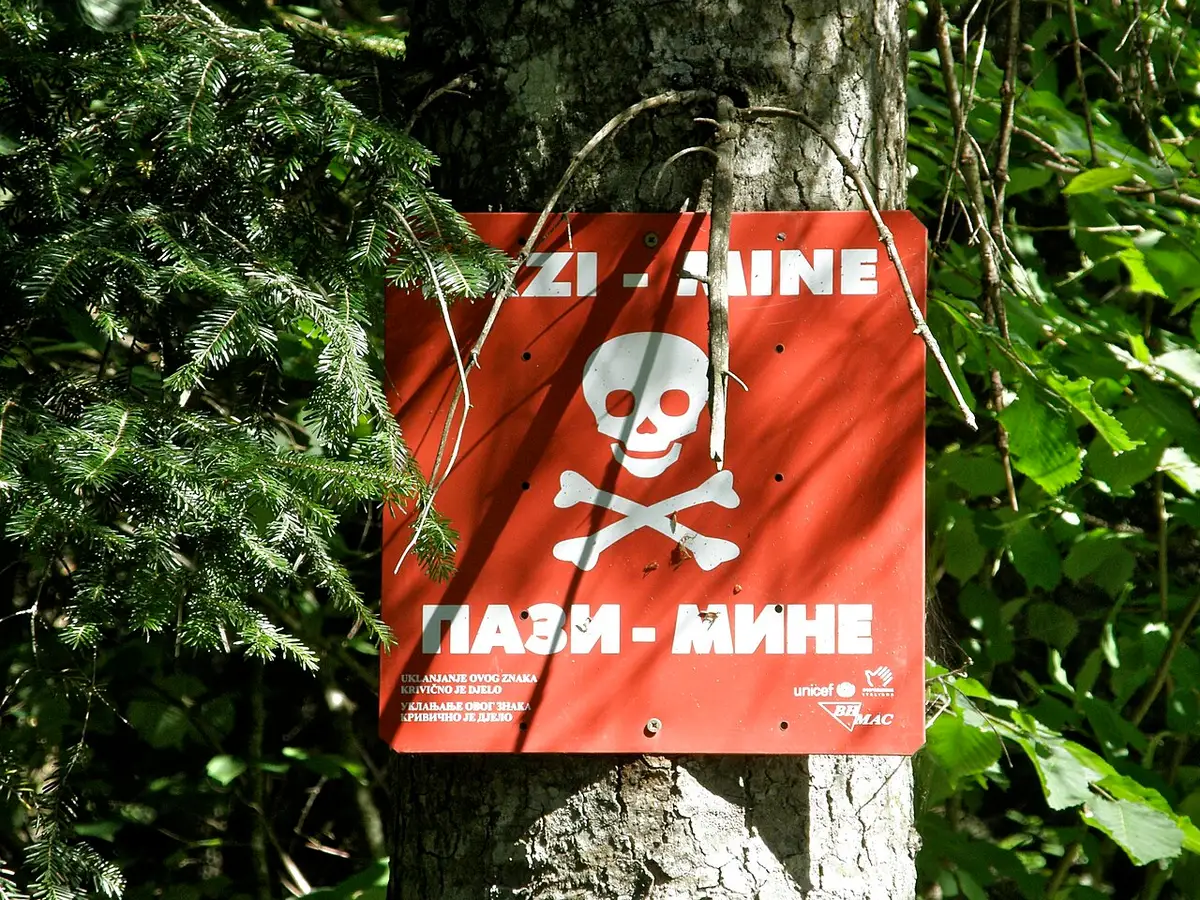
The good news is that keeping yourself safe is genuinely straightforward, and the official advice boils down to a handful of concrete rules. The UK government’s list is worth quoting in full: “Do not step off roads and paved areas without an experienced guide. Take care near: the former lines of conflict, the edge of roads, the open countryside, destroyed or abandoned buildings (including in towns), neglected land, untarred roads, woods and orchards.” The US State Department adds two more: “stay on hard surfaced areas and out of abandoned buildings,” and “avoid unmarked trails” whether or not an area is thought to be clear. Put simply:
- Stay on paved roads, established trails and cleared, obviously-used ground. If you’re hiking, use marked, maintained routes and don’t shortcut across open hillside.
- Respect every warning sign and marker. A red-and-white sign reading Pazi Mine (“beware mines”), red tape, painted stones or a skull symbol means stop - don’t step past it for a photo or a shortcut, ever.
- Never enter abandoned or ruined buildings, even in towns, and steer clear of neglected land, the fringes of fields, and woods and orchards away from paths.
- If in doubt, ask a local, use a licensed guide, or simply don’t go. For remote hikes, check current maps with BHMAC, which keeps the official minefield records, and see our guide to hiking in Bosnia, which applies this same stay-on-the-path rule massif by massif.
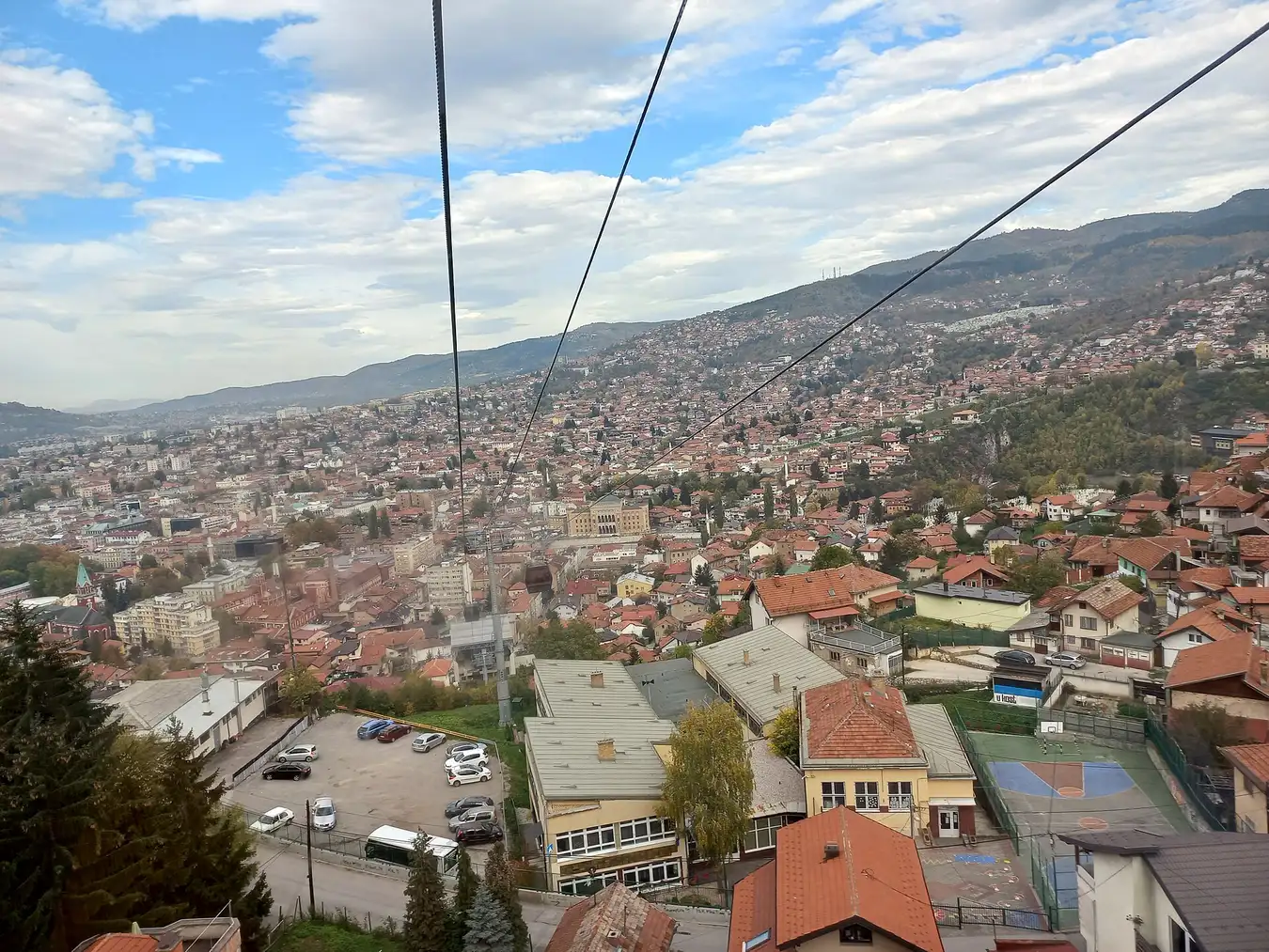
One example makes the rule concrete. The hills that ring Sarajevo, Mount Trebević among them, sat directly on the siege front line, and while the cable car, the old bobsled track and the marked walking routes have been cleared and are perfectly safe, warning signs still steer you off the open slopes to either side. It’s the same wherever the fighting was fixed in place for months: the tourist infrastructure is cleared first, the ground beyond the tape may not be. So the geography looks after itself if you treat the marked route as the safe zone and everything past a sign as off-limits. That holds in the popular spots as much as the remote ones.
Follow those and the risk to a normal traveller sticking to towns, roads and marked trails is very low. The people hurt by mines are overwhelmingly locals working the land, foragers and, occasionally, adventurers who went off-piste. Do not be the last category.
Crime and scams
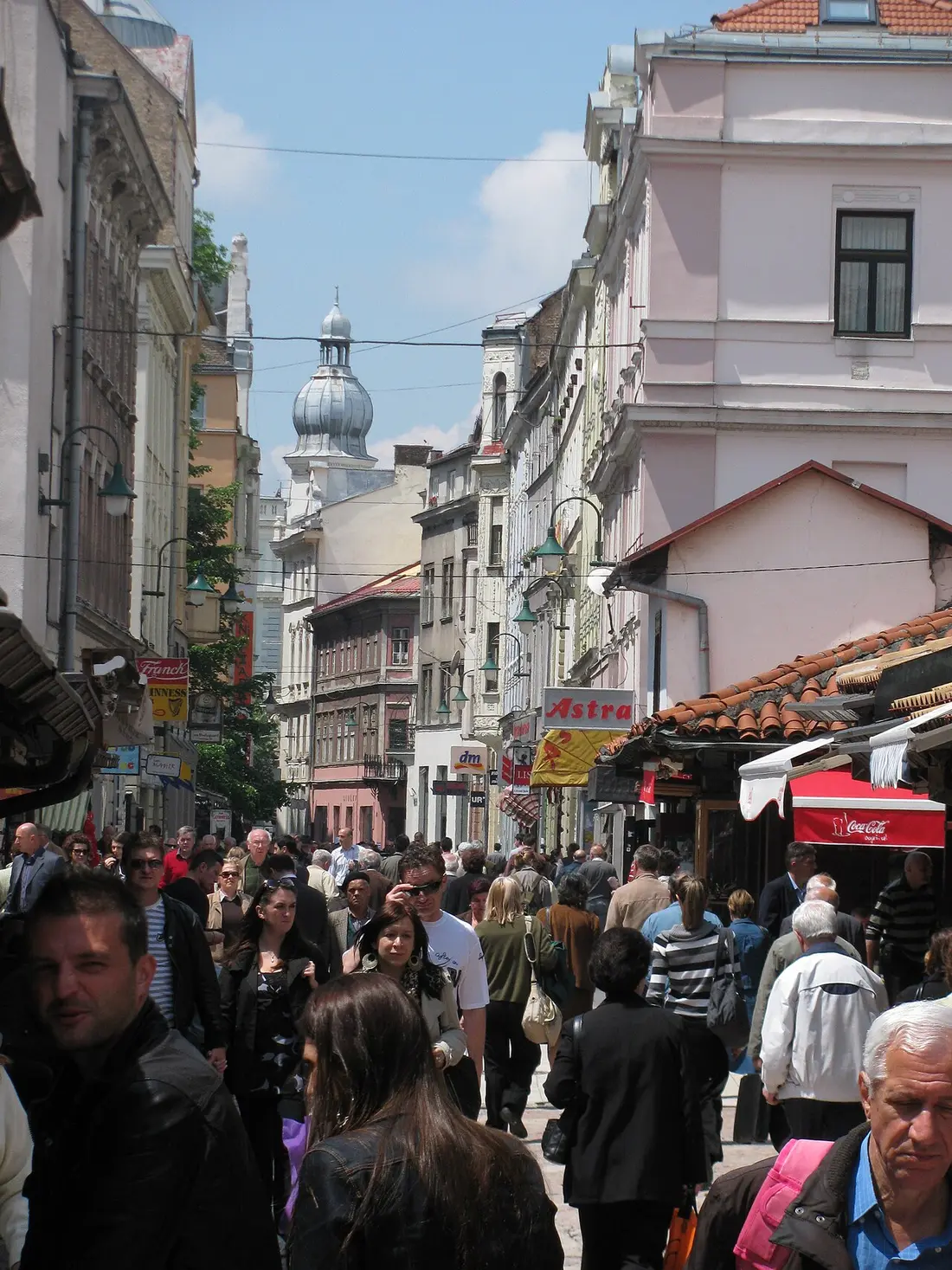
Set the mines aside and Bosnia’s crime picture looks like much of Europe: violent crime is rare and rarely touches visitors, while opportunistic petty crime exists and is the thing to guard against. The two governments frame it slightly differently, and it’s fair to give you both. The US State Department, in cautious official language, notes that “the overall crime rate for the country is high, and Sarajevo has a high rate of property-related crime,” listing “robberies, residential and vehicle break-ins, theft, and pickpocketing in areas frequented by tourists.” The UK Foreign Office is more specific about what that means on the ground: “beware of pickpockets and bag-snatchers on public transport and in the tourist and pedestrian areas of Sarajevo and other cities.”
The practical takeaways are ordinary city sense. Watch your bag and phone on crowded trams and in the busy lanes of Baščaršija; don’t leave anything visible in a parked car, a point the UK government flags specifically after “an increase in thefts from cars in popular tourist areas in and around Sarajevo, particularly on Mount Trebević,” where hikers leave vehicles at trailheads. As for the organised-crime shootings that occasionally make the news, the UK advice is reassuring on the one point that matters to a traveller: incidents between criminal groups “can happen, including shootings,” but “you are unlikely to be targeted.” Violent crime here is not a tourist problem; petty theft is the realistic risk, and a little care handles it.
One more thing that occasionally rattles first-time visitors but isn’t a safety issue: public protests. The UK government notes they “occur from time to time and can cause traffic disruption,” but that they “are normally peaceful.” Avoid them as you would anywhere, mostly to save yourself the hassle of blocked roads, and you’ll barely register them otherwise.
You may also see headlines about tension between Bosnia’s two entities, and in particular statements from politicians in Republika Srpska, the Serb-majority half of the country. It rarely touches day-to-day travel: there is no checkpoint or passport control between the entities, the currency and the rules are the same on both sides, and the friction is political rather than anything a visitor feels on the ground. The UK Foreign Office also carries the standard line, as it does for most of Europe, that “terrorist attacks… cannot be ruled out” - but there’s no threat aimed at tourists and no recent incident affecting them. Treat both as background rather than a reason to change your plans, and check the live FCDO page before you go if the news looks noisy.
Driving safety
If you rent a car - and it is the best way to reach the waterfalls and the Herzegovina hinterland - the roads are where you should focus your caution, not crime or mines. Bosnia is a country of mountains and river gorges, so away from the short stretches of motorway you get winding two-lane roads, blind bends, tunnels, sheer drops and, on rural routes, the occasional flock of sheep or slow tractor. Local overtaking can be assertive. None of it is dangerous if you drive to the conditions, keep your speed down and don’t rush the distances - and the distances are slow here, with Sarajevo to Mostar taking about two hours for only 130 kilometres.
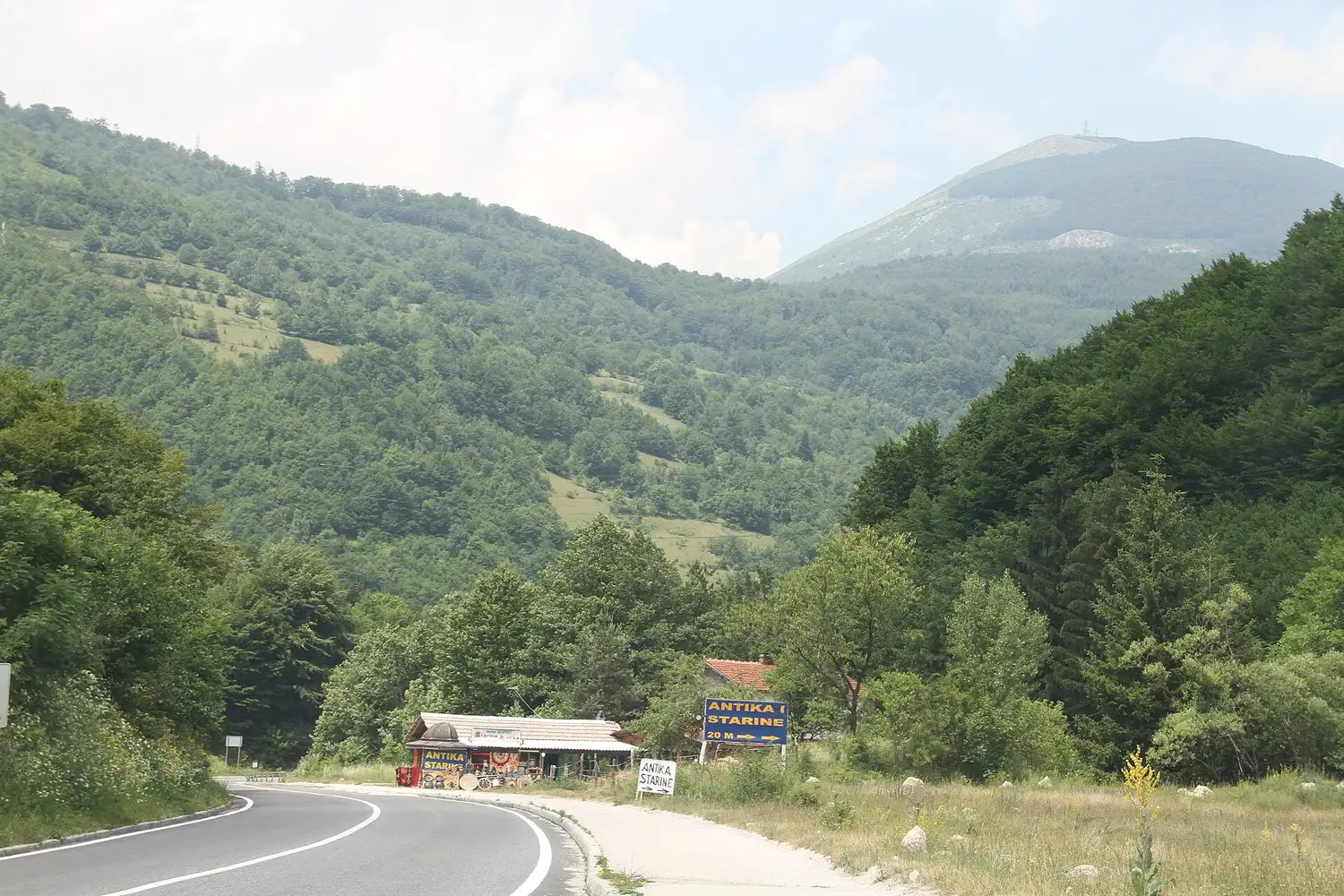
Two legal points are stricter than many visitors expect. The drink-drive limit is a low 0.03 percent, so effectively don’t drink and drive at all, and snow tyres are required from November through April, per the US State Department, which matters if you’re visiting the mountains in the colder half of the year. Our guide to driving in Bosnia goes through the road rules, the tolls and the practicalities in detail, and it is worth reading before you pick up the keys. The mine rule applies here too: stick to the road surface and established lay-bys, and don’t wander off onto verges or tracks in rural former-conflict areas.
Solo travellers and women
Bosnia is widely regarded as a comfortable, welcoming destination for solo travellers and for women, and it is worth being straight about the evidence. Neither the UK nor the US government publishes a Bosnia-specific warning for women travellers, and the general consensus among those who have travelled here is positive, with the country often described as easy-going and hospitable by regional standards. That’s not a guarantee, and it is no substitute for the usual precautions anyone sensible takes anywhere - staying aware at night, keeping an eye on your drink, trusting your instincts about a situation. But there’s no particular red flag here, and plenty of solo and women travellers move around Bosnia happily. The honest way to put it’s that no official body flags a specific risk, rather than that nothing ever happens.
A few practical notes if you’re travelling alone. Sarajevo and Mostar stay busy and well lit into the evening, so walking back from dinner in the old towns feels ordinary rather than edgy. Intercity buses and the Sarajevo-Mostar train are used by everyone and are an easy, low-stress way to get around without a car. And the hostel and guesthouse scene is small and sociable, which makes it simple to find company for a day trip or to split a taxi out to somewhere like Kravice. The one habit worth keeping is the same as anywhere: skip unlit, empty streets late at night, and use a booked taxi or ride app rather than an unmarked car after dark.
Wildlife and nature
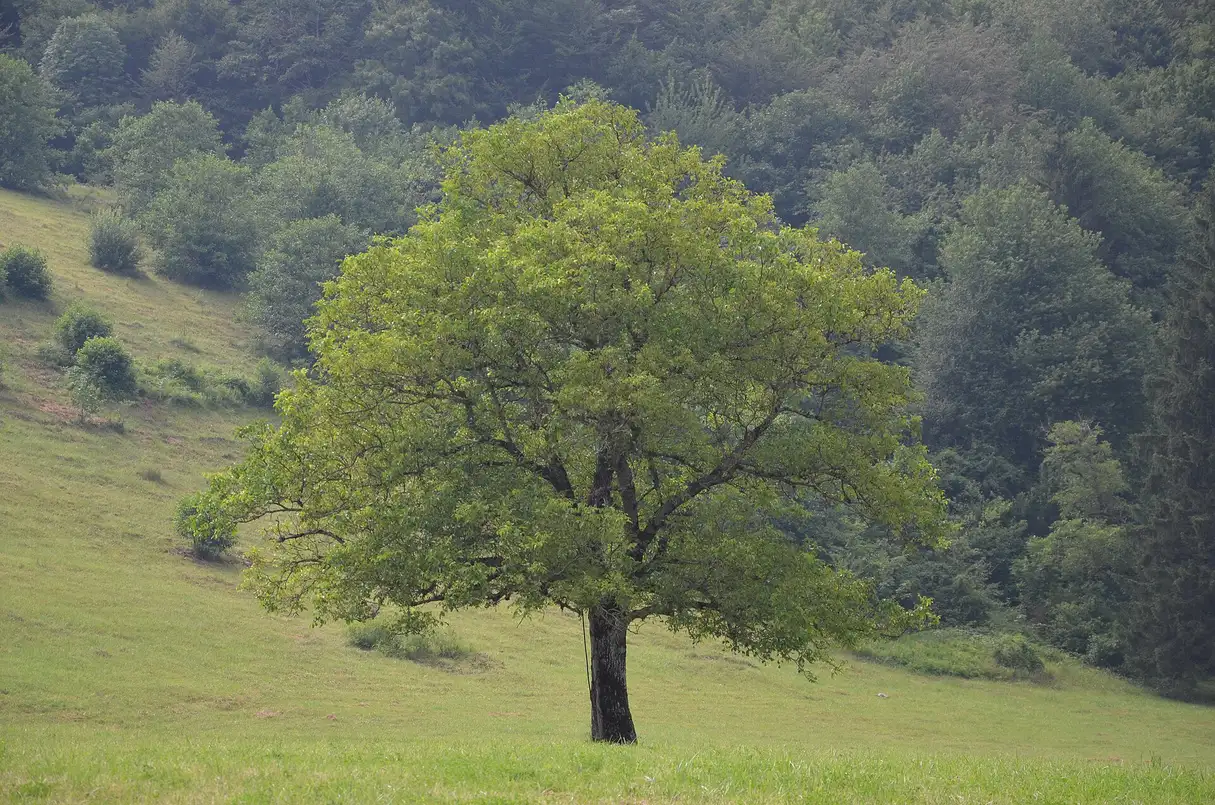
This is a minor concern, but a fair one to mention because it reinforces the single most useful rule in the whole guide. Bosnia’s remote mountains and forests - places like Sutjeska and the Dinaric ranges - are home to brown bears, wolves and wild boar. Encounters with tourists are extremely rare, and none of it’s a concern in the cities or on the roads. In rocky, rural country in the warmer months there are also snakes, including the venomous nose-horned viper. The practical response is the same rule that keeps you clear of mines: stay on marked trails and out of the deep undergrowth. Doing so keeps you away from the animals, the snakes and the ordnance in one move.
Health, water and emergencies
On the everyday-health side there’s little to worry about. Tap water in Sarajevo and the main towns is generally safe to drink, and food hygiene in restaurants is normal for Europe. Save the emergency numbers before you travel: 124 for an ambulance, 122 for police, and 123 for fire. Bosnia’s EU-style 112 system is not fully rolled out - don’t rely on 112 alone. The one thing to sort in advance is insurance. Bosnia is outside the EU, so the European health cards (EHIC and GHIC) don’t cover it, and foreigners are treated as private, paying patients, so a medical problem gets expensive without cover. Our guide to travel insurance for Bosnia explains what a policy should include, and why evacuation cover matters if you’re heading for the mountains or the rivers.
The verdict, and a quick pre-trip checklist
So, is Bosnia safe? Yes - for the vast majority of visitors it is a rewarding, low-drama trip, and the country’s reputation for danger belongs to the 1990s, not to travel here today. The cities are relaxed, the people are welcoming, and violent crime isn’t a tourist concern. Treat the two real cautions with respect - the rural mines and the mountain roads - and you strip out almost all of the risk that is specific to Bosnia. With the safety question settled, our guide to whether Bosnia is worth visiting makes the positive case for the trip.
Before you go, a short checklist: keep your valuables close in city crowds and out of parked cars; on any hike, stay on marked, maintained trails and never cross a Pazi Mine sign or wander into ruins and open ground; drive to the mountain conditions and carry the right tyres in winter; check the entry requirements for your passport; arrange travel insurance with medical and evacuation cover; and save 122, 123 and 124 offline. Then plan the good part - our guides to the best time to visit Bosnia and things to do in Sarajevo will get the trip itself started.
As above, this is background information as of July 2026, not official travel advice. Situations change - always check the current UK FCDO and US State Department pages for Bosnia and Herzegovina, and heed local signs and guidance, before and during your trip.
Photos
Read also

Before you go · 10 min read
Where to Stay in Medjugorje: Pansions & Hotels
Updated · August 25, 2026Where to stay in Medjugorje: guesthouses near St James Church, pilgrim hotels, peak dates, and whether to sleep here or day-trip from Mostar.

Before you go · 9 min read
Where to Stay in Jajce: Hotels by the Waterfall
Updated · August 23, 2026Where to stay in Jajce: old-town hotels steps from the Pliva Waterfall, lakeside rooms by the watermills, and which base suits a one-night stop.

Before you go · 11 min read
Mostar or Trebinje: Which Herzegovina Base?
Verified · August 18, 2026Mostar or Trebinje as a Herzegovina base: crowds, hotel prices, summer heat, Dubrovnik access and wine - pick the nights that fit your trip.

Before you go · 7 min read
Cash, Cards and Tipping Across the Balkans in 2026
Verified · August 15, 2026Twelve currencies, three of them the euro, and two pegged to it. What is fixed, what is a habit, and where you still need notes in your pocket.