Bosnia Entry Requirements: Visa Rules for Tourists
Do you need a visa for Bosnia? US, UK, EU, Canada and Australia get 90 visa-free days. Passport validity, the 90/180 rule and registration explained.
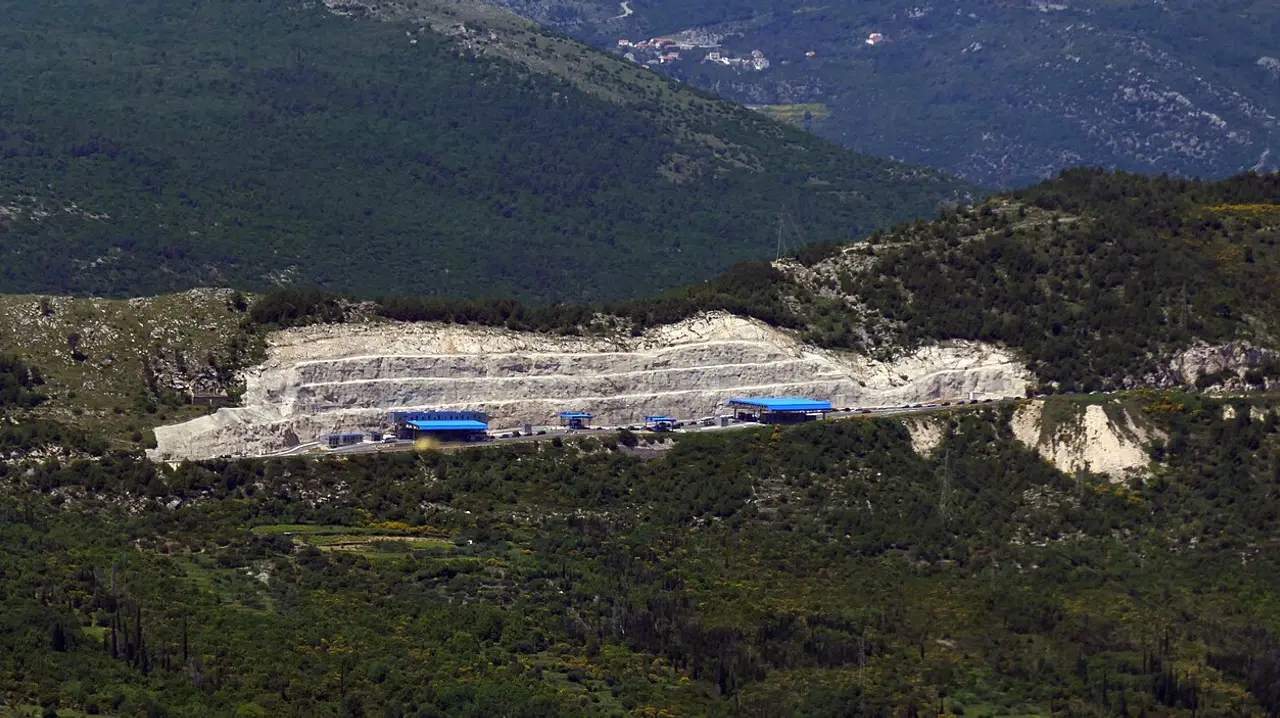
Most visitors don’t need a visa for Bosnia and Herzegovina. If you hold a passport from the US, UK, EU, Canada, Australia or New Zealand, you can turn up at the border, get stamped in, and stay for up to 90 days in any 180 without paperwork or a fee. That’s the whole story for a normal holiday. What actually trips people up isn’t the visa, which they don’t need, but three small things around it: a passport that’s technically too old, a missing exit stamp, and the registration rule that catches anyone not staying in a hotel. The rules below are as the UK and US governments and the Bosnian authorities state them, checked in July 2026. Rules do change, so treat the official links here as the final word and check the rules for your nationality before you fly.
Do you need a visa?
For a tourist trip, almost certainly not. Bosnia grants visa-free entry to citizens of every country on the EU’s Schengen “Annex II” list, which covers the whole of the EU and EEA plus the US, UK, Canada, Australia, New Zealand, Japan, South Korea and many more. On top of that it waives visas for a handful of others, including China, Turkey, Qatar, Kuwait and Russia. In practice, if your country’s passport gets you into the Schengen area without a visa, it gets you into Bosnia the same way. The one notable exception on the Annex II list is Kosovo, whose passport holders do need a visa.
The allowance is the standard one: up to 90 days within any 180-day period. The UK Foreign Office puts it as “up to 90 days within a 6-month period,” which is the same allowance in looser words; the next section explains why the looser wording misleads people. No visa means no fee and no online form to fill in before you go, which makes Bosnia refreshingly simple next to its Schengen neighbours. If you are coming for work, study, or to stay longer than 90 days, that’s a different process, covered near the end.
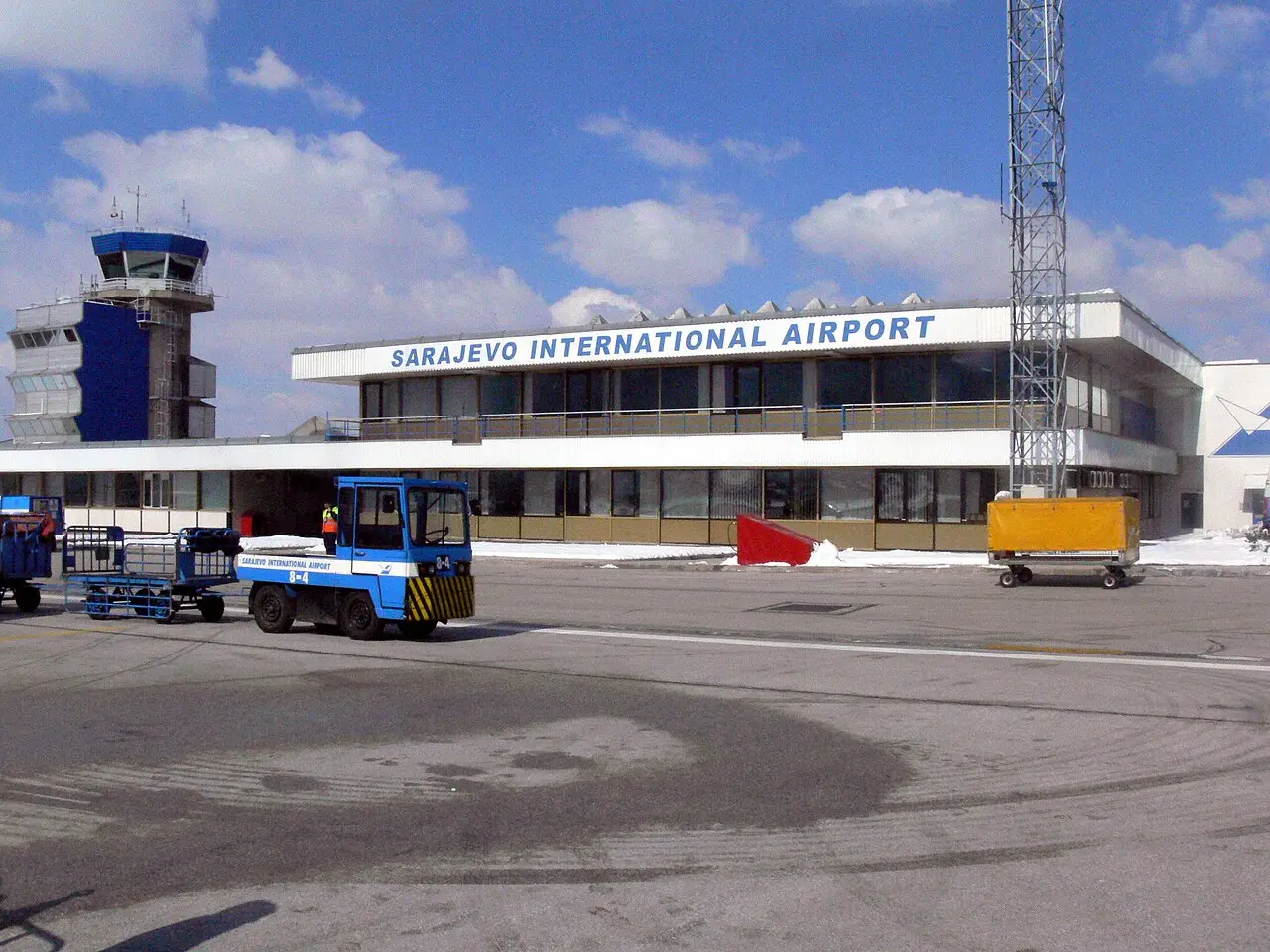
The 90/180 rule, and why Bosnia is not part of your Schengen count
This is the point most worth understanding, because it works in your favour. Bosnia is not in the EU and not in the Schengen area, so its 90 days are its own, entirely separate from the Schengen 90/180 clock that governs Croatia, France, Germany and the rest. Time spent in Bosnia doesn’t eat into your Schengen allowance, and vice versa. For anyone touring the Balkans on a single passport, that is genuinely useful: a few weeks in Bosnia buys you breathing room on the Schengen side.
What that allowance is not, despite how it’s often written up, is a fresh 90 days starting from the day you first arrive. Bosnia counts it as a rolling window: both the Ministry of Security and the Service for Foreigners’ Affairs FAQ state it as 90 days in any 180-day period, “taking into account the 180-day period preceding each day of stay.” On any given day the officer looks back over the previous 180 and adds up what you’ve already spent. Consular advice pages compress this to “a 6-month period,” and that shorthand reads like a fixed window running from your first entry. It’s not one - and the confusion runs deep enough that one of the Service’s own older pages still describes the allowance as 90 days within six months counted from the first entry, the very reading its current FAQ corrects, so if you meet that version online, trust the FAQ. The practical consequence is the same either way: you can’t hop out to Croatia for a coffee and come back with a clean 90, and if you’ve used the full three months in one run, you’re waiting roughly that long again before the window has room in it. Count your days honestly.
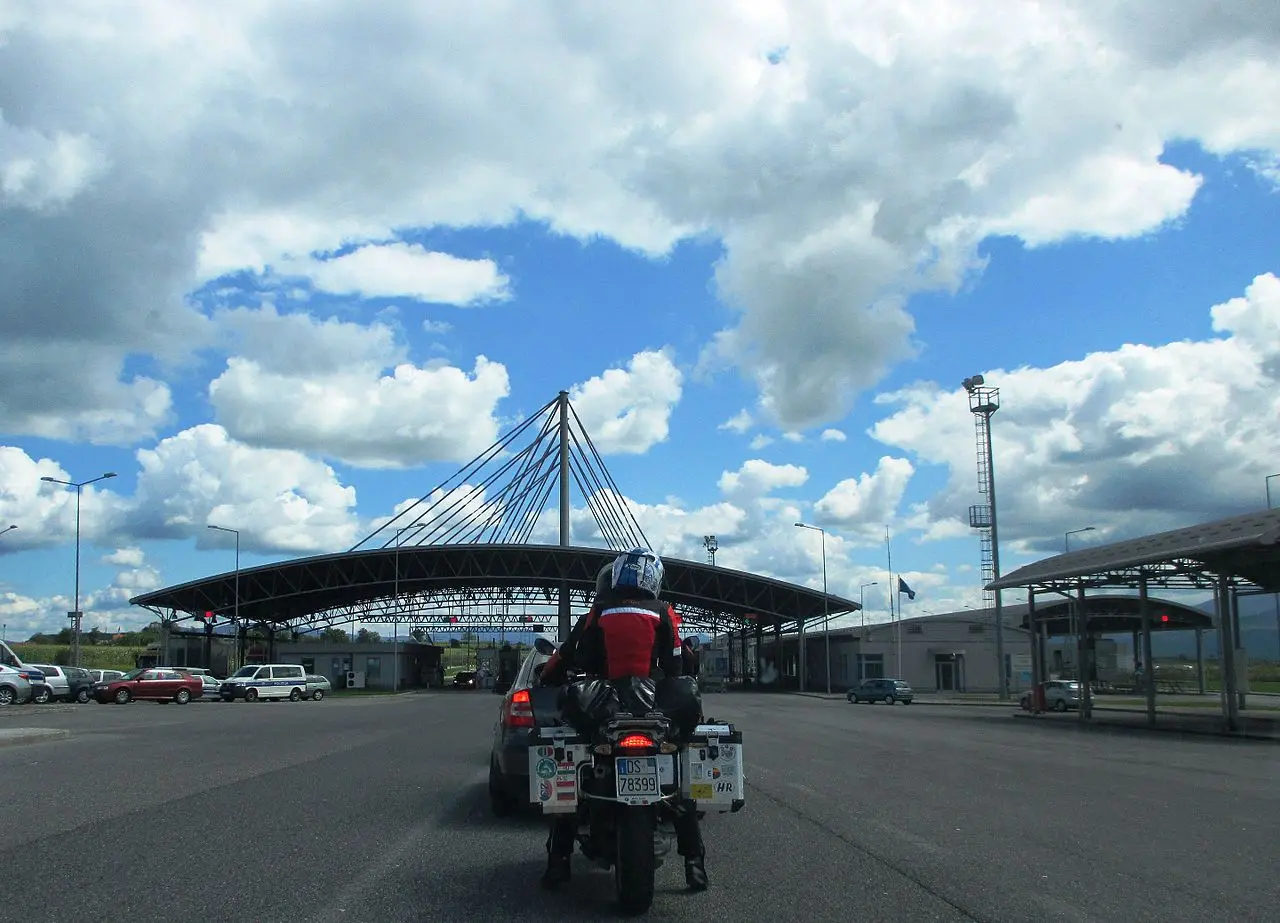
One modern wrinkle sits on the other side of the fence. Since 10 April 2026 the EU’s biometric Entry/Exit System has been live at Croatia’s borders, which means the Croatian officers now log your face and fingerprints rather than ink a stamp. That doesn’t change your right to visit Bosnia at all, but it’s why a first land crossing from the coast can be slower than it used to be. If you are driving in from Dubrovnik or Split, our guide to the Bosnia to Croatia border crossing covers the queues and the paperwork in full.
Your passport: the two rules to check before you fly
Nearly everyone clears these without thinking, but they are the reason the occasional traveller gets turned away at check-in, so give your passport a look before you leave home.
Expiry. Your passport needs to be valid for at least three months beyond the day you plan to leave Bosnia. The UK Foreign Office states the same rule as an “expiry date at least 90 days after the date you plan to leave.” If your renewal is due around your trip, sort it first.
Date of issue. This one is Bosnian law, not a British quirk: the Ministry of Security, citing Article 19 of the Law on Foreigners, requires a passport issued within the last ten years on top of the three-months-past-departure rule, for every foreign visitor. The UK guidance flags it prominently (“less than 10 years before the date you arrive”) because it bites British travellers in particular: it catches anyone who renewed early in the years around 2018, because extra months were once carried over onto the new document, which can leave the issue date more than ten years back even though the passport hasn’t expired. Check both dates, not just the expiry.
You’ll also want one blank page for the entry stamp, which the US State Department lists as a requirement. That’s rarely an issue on a modern passport, but a well-travelled one running low on space is worth adding pages to or renewing before you go.
Get your passport stamped, both ways
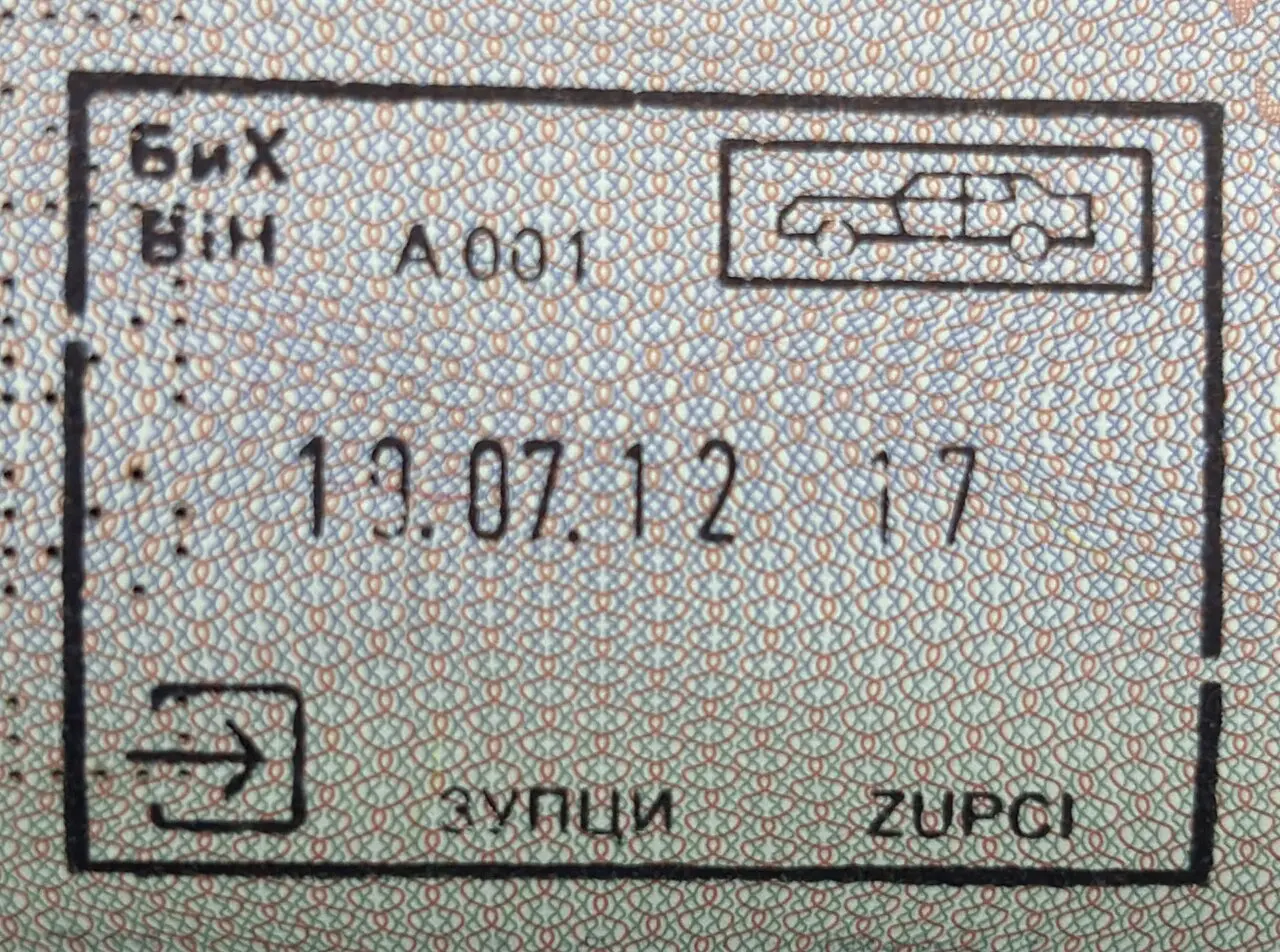
Here is the small habit that saves a headache on the way out. The UK Foreign Office is blunt: “Make sure you get your passport stamped on entry and exit.” When you leave, a border officer checks your entry and exit stamps to confirm you didn’t overstay the 90 days, and a missing stamp can mean a fine or an awkward interrogation while they work out how long you were really in the country. At a busy summer crossing it is easy for a stamp to be skipped, so glance at your passport before you drive off, and if the officer waved you through without inking it, ask.
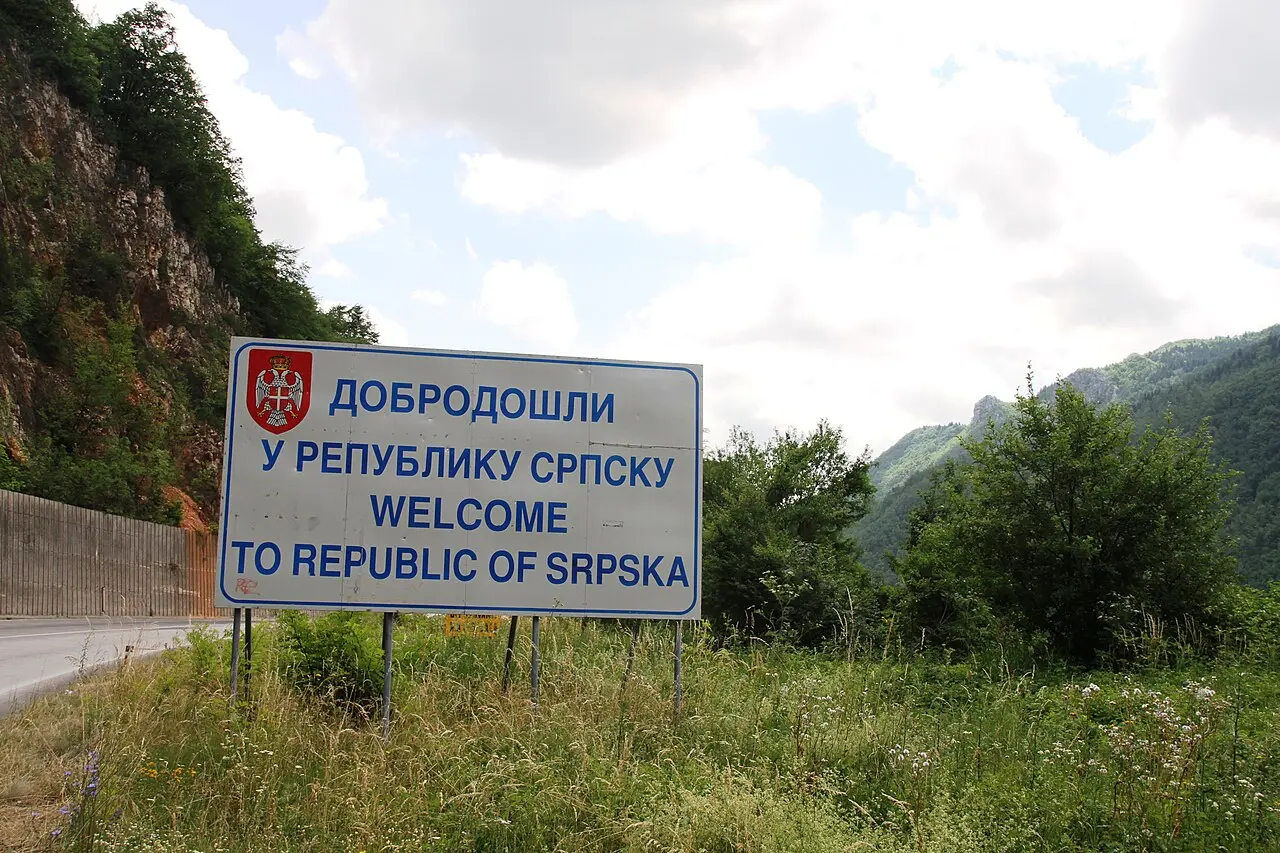
One thing that’s not a border, despite appearances: the internal boundary between Bosnia’s two entities, the Federation and Republika Srpska. You’ll cross it several times on any real trip, the road signs flip between Latin and Cyrillic script, and it can feel like a frontier, but there’s no passport check and no stamp. It’s one country with one currency throughout. Only the international border, the one with Croatia, Serbia or Montenegro, stamps you.
Registration: the bit tourists forget
Bosnia requires every foreigner to register their address with the authorities shortly after arriving. It sounds ominous and is usually invisible, because if you stay in a hotel, hostel or registered guesthouse, they do it for you at check-in, the way hotels across the region have long handled it. You hand over your passport, they log your stay, done.
The catch is for anyone not in commercial accommodation, staying in a private apartment booked through Airbnb, with friends, or in a place that doesn’t register guests. Then the job falls to you or your host, and there’s a short window to do it. Foreign advice pages differ on the deadline: the UK Foreign Office says foreign nationals must register “within 72 hours of arrival,” while the US State Department gives 48 hours for a private-residence stay of three or more days. Bosnia’s own authorities are the tighter of the two. Both the Ministry of Security and the Service for Foreigners’ Affairs state 48 hours from entry, and only where the stay will run longer than three days; commercial providers must register a guest within 12 hours. So treat 48 hours as your deadline, at the nearest field office of the Service (the “terenski centar”) or at the local police station - the Ministry names both as places that take registrations, and in a small town the police desk is usually the nearer of the two. Failing to register can bring a fine, and it can complicate a later residence application, so if you’re in a private stay, confirm your host is doing it or handle it yourself.
Staying longer than 90 days
If Bosnia is more than a holiday, the 90-day visa-free stay isn’t something you can quietly extend by lying low. To stay on, you apply for temporary residence at the local field office of the Service for Foreigners’ Affairs, on a specific ground such as work, study, family or property. The timing matters: the application must go in at least 15 days before the visa-free period expires, so this is a thing to start well before your three months run out, not in the final week. Remote workers and long-stayers weighing a base here will find more on the practical side of settling in our guide to living in Sarajevo as a digital nomad. For the residence application itself, our moving to Bosnia residence permit guide walks through the grounds, documents and timeline.
A few practical notes that are not about the visa
A short list of things that share the “before you travel” mental folder:
- Money at the border. There is no health or insurance check to enter, but there’s a cash rule: amounts over 10,000 euros must be declared on the way in. For everyday spending, Bosnia runs largely on cash in the local convertible mark, as our guide to money in Bosnia explains.
- Insurance isn’t required, but it is smart. No one at the border asks for a policy, yet the European health cards (EHIC and GHIC) don’t cover Bosnia, and foreigners pay clinics upfront and claim back later. Our travel insurance guide for Bosnia covers what a policy should actually do, especially if you are rafting, hiking or skiing.
- Staying connected. Bosnia sits outside the EU roaming zone, so your home SIM may charge you here; our Bosnia SIM card and eSIM guide covers the local prepaid and eSIM options.
- Dual nationality. If you were born to Bosnian parents or are of Bosnian descent, you may be treated as a Bosnian citizen on arrival, which carries its own rules; check with a Bosnian embassy before you travel.
- Is it safe? Entry is easy, and the country is calm to travel; the one genuine legacy risk, uncleared landmines well off the beaten track, is covered in our guide to whether Bosnia is safe to visit.
The short version
For a holiday, Bosnia asks very little of you. Citizens of the US, UK, EU, Canada, Australia, New Zealand and most other Western countries need no visa for a stay of up to 90 days in any 180, and those days are separate from your Schengen count. Carry a passport that is valid for three months past your departure and issued within the last ten years, make sure you’re stamped in and out, and let your hotel handle registration, or do it yourself within a day or two if you are in a private stay. Get those four things right and there’s nothing else to arrange.
This is a practical summary rather than legal advice, and entry rules can change, especially the time-bound parts around EU border systems. The definitive, current word is the UK Foreign Office entry page, the US State Department country page and Bosnia’s own Service for Foreigners’ Affairs FAQ; check the one that fits your nationality before you travel. One caution on the Bosnian side: an older entry-conditions page on the Service’s site still carries the superseded “90 days within six months from first entry” phrasing, so on how the days are counted, trust the FAQ and the Ministry of Security. Entry rules verified July 2026; the 90/180 wording, the registration deadline and the official source links were re-checked against the Bosnian authorities on 20 August 2026.
Photos
Read also

Before you go · 10 min read
Where to Stay in Medjugorje: Pansions & Hotels
Updated · August 25, 2026Where to stay in Medjugorje: guesthouses near St James Church, pilgrim hotels, peak dates, and whether to sleep here or day-trip from Mostar.

Before you go · 9 min read
Where to Stay in Jajce: Hotels by the Waterfall
Updated · August 23, 2026Where to stay in Jajce: old-town hotels steps from the Pliva Waterfall, lakeside rooms by the watermills, and which base suits a one-night stop.

Before you go · 11 min read
Mostar or Trebinje: Which Herzegovina Base?
Verified · August 18, 2026Mostar or Trebinje as a Herzegovina base: crowds, hotel prices, summer heat, Dubrovnik access and wine - pick the nights that fit your trip.

Before you go · 7 min read
Cash, Cards and Tipping Across the Balkans in 2026
Verified · August 15, 2026Twelve currencies, three of them the euro, and two pegged to it. What is fixed, what is a habit, and where you still need notes in your pocket.