Money in Bosnia: Convertible Mark, Euros, Cards & Tipping
How money works in Bosnia: the convertible mark and its fixed euro peg, where euros are taken, ATMs, cards, the DCC trap and tipping.
Short answer: Bosnia’s money is the convertible mark, written KM or BAM, and it’s locked to the euro at a fixed rate of 1 EUR = 1.95583 KM (call it roughly two marks to the euro). You can spend euros in a few tourist-facing places, but usually at a worse rate, so the rule is simple: carry marks in cash. Bosnia leans heavily on cash, cities take cards fine for bigger purchases, and tipping is light. Below is exactly how to handle money here, from the peg and the ATMs to the one screen you should always say no to, and what to leave as a tip. If the trip covers more than Bosnia, cash, cards and tipping across the Balkans lines up all twelve currencies and shows which of them are pegged.
The currency: the convertible mark, tied to the euro
Bosnia uses the convertible mark. Locals write it KM and banks abbreviate it BAM; both mean the same thing. Notes come in 10, 20, 50, 100 and 200 KM, with coins for the marks and the small change (fening) below them.
The useful part is the peg. The mark runs on a currency board: every mark in circulation is backed by euro reserves, and the rate is fixed at 1 EUR = 1.95583 KM and has never moved since the euro replaced the German mark in 2002. In practice that means euro and mark prices track each other exactly, so if you think in euros you can halve a mark price in your head for a close guess. The same currency is used across the whole country, in both the Federation and Republika Srpska, so you never change money crossing between the two. For what things actually cost once you have the marks in hand, our Bosnia trip cost guide has the day-to-day numbers, and our Bosnia cost index compares them city by city.
Can you pay in euros?
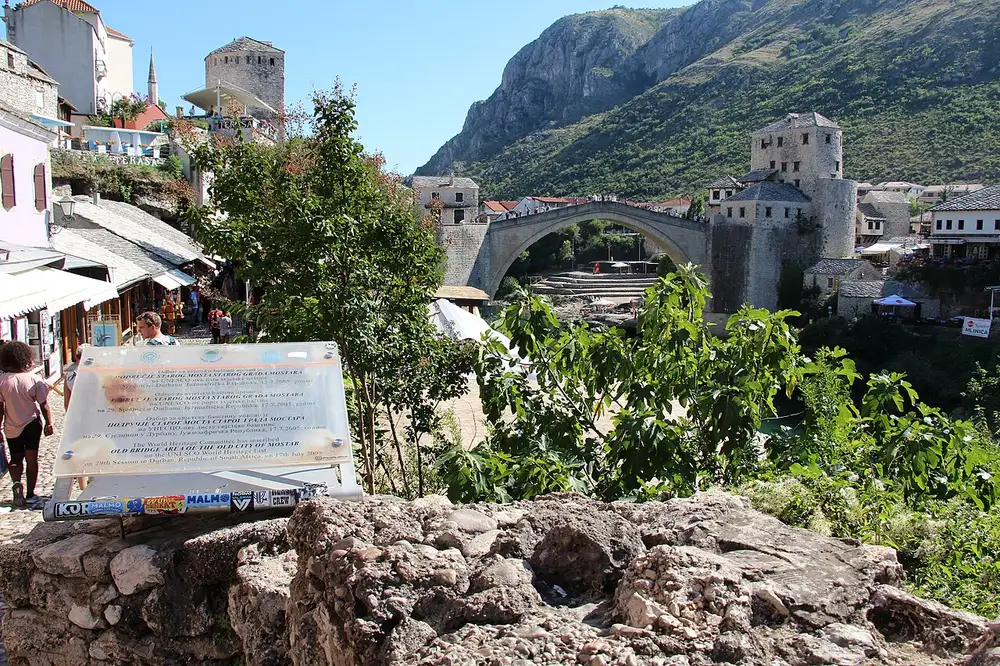
Sometimes, but don’t count on it, and don’t want to. Some hotels, tour operators and tourist-facing shops, especially in Mostar and other spots used to visitors, will take euros. The catch is the rate: they tend to round it to a flat 2 marks to the euro rather than the real 1.95583, and often worse, so you quietly lose a few percent every time you hand over euros instead of marks. Everywhere else, the market stall, the café, the bakery, the bus ticket, the corner shop, it’s marks or nothing. Treat the odd euro-friendly hotel as a convenience for a big bill, not a reason to skip getting local cash.
Cash or card?
Bosnia is still a cash country, more so than most of Europe, and that’s the single most important thing to plan around. Cards, ideally contactless, work fine in city hotels, supermarkets, malls and larger restaurants in Sarajevo and Mostar. Step outside that, though, and cash takes over fast: small guesthouses, grill houses and cafés, market stalls, taxis, intercity buses and most paid sights either want cash or only take it. The Tunnel of Hope, one of Sarajevo’s essential visits, is cash in marks only, and it’s far from alone.
The practical takeaway: keep a decent float of marks on you, and a good spread of small notes and coins. A 100 KM note is awkward for a 3 KM burek, and a lot of small vendors genuinely struggle to break big notes. This is doubly true if you are here for a longer stay rather than a short trip, a point our cost of living in Bosnia guide comes back to.
ATMs: where to get your marks
The easy way to get marks is an ATM (a bankomat), and they’re common in any town of size. A few things to know:
- They dispense marks only. You can’t draw euros, which is fine, because marks are what you need.
- Use bank machines, not the standalone ones. ATMs attached to real banks, names like UniCredit and Raiffeisen, are the ones to trust. Some charge a withdrawal fee in the region of 10 to 16 KM and some charge foreign cards nothing at all, so it pays to try a couple.
- Avoid Euronet and other non-bank machines (the bright ones in tourist areas and some shops). They reliably charge the highest fees and push the worst conversion, and they’re the machines most likely to try the trick in the next section.
- Withdraw a sensible lump rather than lots of small amounts, so any fixed fee is spread over more cash, and keep a card back in your accommodation as a spare.
A travel card like Wise or Revolut works well here and is worth carrying. Both hand out marks at the ATM and convert at close to the interbank rate, which, thanks to the euro peg, tracks the real 1.95583 for a euro balance rather than the marked-up rate a typical high-street bank card applies. Revolut gives fee-free withdrawals up to a monthly limit on its plans and Wise a smaller free allowance, after which each adds a percentage point or two. The catch to remember: a good card doesn’t exempt you from the machine’s own withdrawal fee or the conversion trick in the next section, so you still want a bank ATM, and you still say no when the screen offers to charge you in your home currency. These apps also need data to check a rate or move money, which is one more reason to sort a local SIM or eSIM when you arrive.
The one screen to always refuse: dynamic currency conversion
This is the money mistake that quietly costs travellers the most, at ATMs and card terminals alike. When you pay or withdraw, the machine may offer to bill you in your home currency, euros, pounds, dollars, with a cheerful message and a shown rate. That’s dynamic currency conversion (DCC), and it typically bakes in a 5 to 7 percent markup over the real rate.
The fix is easy once you know it: always choose to be charged in the local currency, marks (BAM). Decline the conversion, pick “pay in KM” or “without conversion,” and let your own bank do the exchange at a normal rate. Say no to the home-currency option every single time, at the cash machine and on the card reader in a shop, and you’ll not think about it again.
Tipping: light, cash, and never obligatory
Tipping in Bosnia is relaxed. It’s appreciated, but nobody is depending on it the way waiters do in the United States, and no one will chase you down the street if you skip it. The norms:
- Restaurants: round up, or leave around 5 to 10 percent for good service. First, glance at the bill, some places in the bigger towns already add a service charge, and if they have, you don’t need to add more.
- Cafés and bars: just round the change up. Leaving the coins from a 4 KM coffee is plenty.
- Taxis: round up to the nearest whole. An 8.50 KM fare becomes 10 and you wave off the change.
- Hotels: a mark or two per bag for a porter, and a couple of marks a day for housekeeping if you like, is normal.
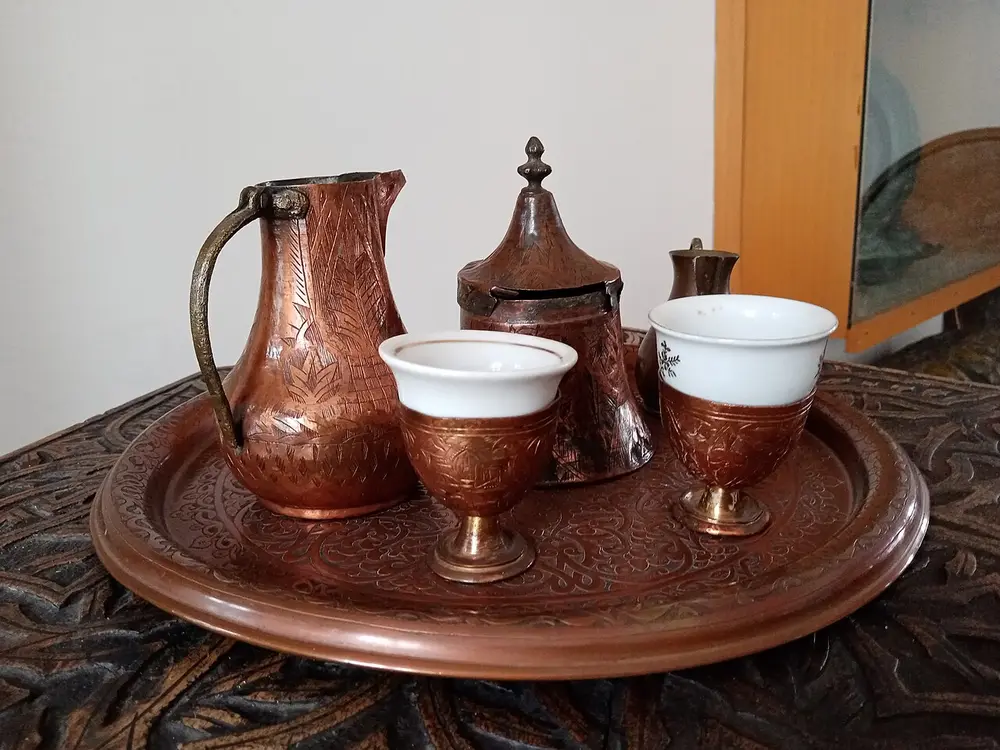
One habit worth keeping: tip in cash, even when you pay the bill by card. There’s no reliable way to add a tip to a card payment here, so leave the extra as coins or a note on the table. It’s another reason to keep small marks in your pocket.
The short version
Get this handful of things right and money in Bosnia is genuinely easy. Draw a chunk of marks from a bank ATM on arrival, always decline the home-currency conversion so you’re charged in KM, and keep a stack of small notes for the cash-only half of the country. Use your card freely for hotels and city restaurants, do not rely on euros beyond the odd tourist hotel, and round up a little where the service was good. Do that and you’ll get the real exchange rate, dodge the DCC skim, and never be the person at the market stall who can’t pay for their burek.
Photos
Read also

Before you go · 10 min read
Where to Stay in Medjugorje: Pansions & Hotels
Updated · August 25, 2026Where to stay in Medjugorje: guesthouses near St James Church, pilgrim hotels, peak dates, and whether to sleep here or day-trip from Mostar.

Before you go · 9 min read
Where to Stay in Jajce: Hotels by the Waterfall
Updated · August 23, 2026Where to stay in Jajce: old-town hotels steps from the Pliva Waterfall, lakeside rooms by the watermills, and which base suits a one-night stop.

Before you go · 11 min read
Mostar or Trebinje: Which Herzegovina Base?
Verified · August 18, 2026Mostar or Trebinje as a Herzegovina base: crowds, hotel prices, summer heat, Dubrovnik access and wine - pick the nights that fit your trip.

Before you go · 7 min read
Cash, Cards and Tipping Across the Balkans in 2026
Verified · August 15, 2026Twelve currencies, three of them the euro, and two pegged to it. What is fixed, what is a habit, and where you still need notes in your pocket.