Cost of Living in Bosnia
A longer stay in Bosnia in 2026: rent in Sarajevo, Mostar and Banja Luka, the Sarajevo heating tariff, shop prices, transport, data and coworking, in KM.
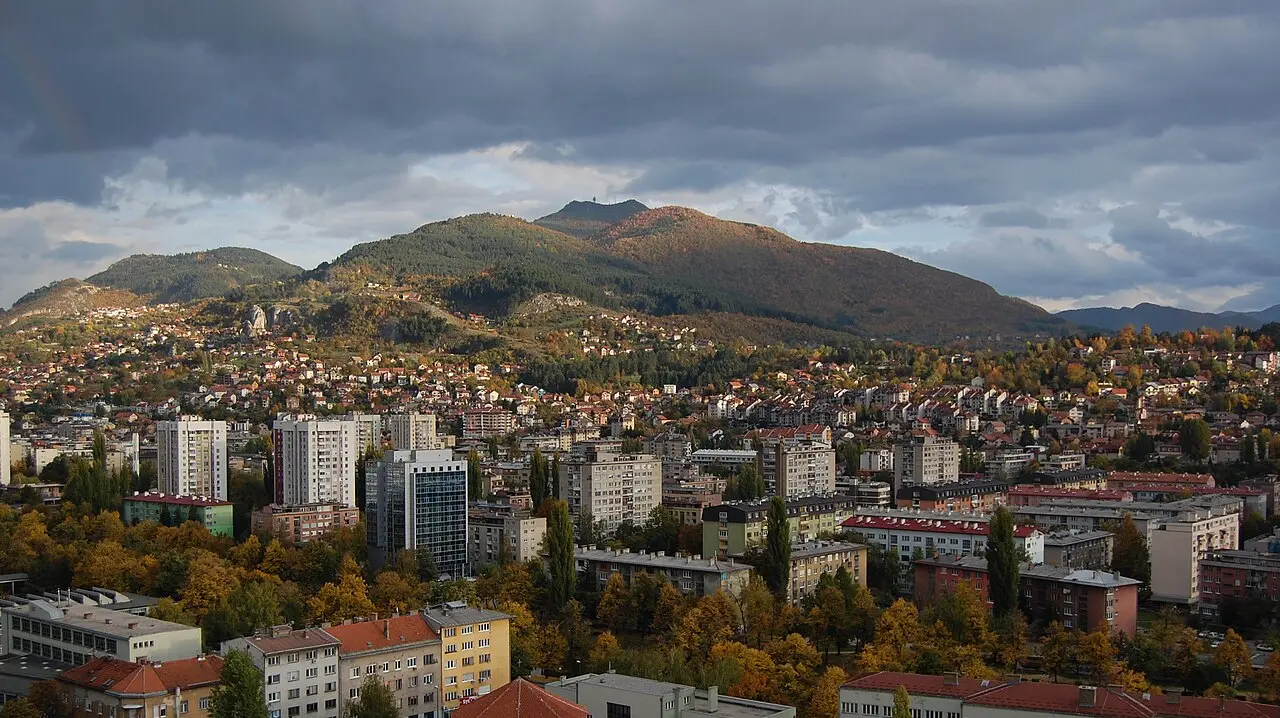
Bosnia is still one of the cheaper places in Europe to base yourself for a while, but the cheap part isn’t the rent any more. In September 2026 flats in Sarajevo were advertised at 600 to 1,000 KM a month (about 305 to 510 euros), and one-bedrooms in Mostar were asking much the same in July. Add a winter month of district heating and a tram pass, and the fixed part of a single person’s month in the capital comes to roughly 800 to 1,200 KM (about 410 to 620 euros) before food, power and going out. Those extras are where Bosnia really is cheap, and below they’re priced from whoever sets or records them: the Agency for Statistics of BiH, the canton’s heating tariff, the tram company, the mobile operator. For scale, the average net wage here was 1,732 KM a month in July 2026. None of this is financial advice, and prices drift, so read it as a dated starting sketch rather than a quote.
First, the money itself
Bosnia’s currency is the convertible mark, written KM or BAM, and it’s pegged to the euro at a fixed rate of about 1.96 KM to 1 EUR. That peg is handy: it means euro prices and mark prices track each other steadily, so you can hold a rough budget in either. What you shouldn’t do is assume you can pay in euros everywhere. Some landlords and larger businesses will quote and take euros, but day-to-day life, the market stall, the café, the tram, the corner shop, runs on marks in cash, often at a poor rate if you try to hand over euros instead. Draw KM from an ATM and keep small notes on you. Our money in Bosnia guide goes deeper on euros, cards, ATMs and tipping.
Rent: the number that decides everything
Housing is the biggest line in your budget and the one with the widest spread, so it’s worth getting specific. Nobody publishes an official rent, so the figures here come from local reporters who went through the listings, with the month they did it. In Sarajevo, Face.ba found flats advertised at 600 to 1,000 KM a month in September 2026, with bigger, better-placed or more luxurious places well above that. Večernji list BiH, looking in July 2026, put a 40-50 m² one-bedroom in some of the city’s municipalities at 700 to 1,000 KM. The newest complexes are a bracket of their own: when Klix checked the Avenija development at Otoka in September 2025, a 49 m² flat was listed at 1,200 KM and a 51 m² one at 1,350 KM, and even the studios there asked 850 KM.
The reason is plain demand. The capital draws students, workers and people moving in from other parts of the country, and long-term flats don’t come up often enough to meet it. As Večernji list reported, more and more tenants say on local forums and social media that they can’t cover the rent without help from family or a flatmate. Keep in mind that all of this describes a normal local lease. A furnished flat taken for a few weeks is a different product, priced by the night for visitors, so if you’re staying several months, a proper lease is the thing to hunt for, and if you want to land and settle in for a few weeks, budget for the convenience.
Don’t forget the winter heating bill
The cost people underbudget is heat. Sarajevo sits in a high valley and gets a proper cold, snowy winter, and if your flat is on the canton’s district-heating network, run by Toplane-Sarajevo, the bill goes by floor area unless the building has heat meters. Under the tariff the Sarajevo Canton government set from 1 April 2026, a household without a meter pays 1.7748 KM a square metre for heat, billed for seven months of the year, plus 0.7125 KM a square metre for the connection, billed all twelve, both before 17 percent VAT. For a 50 m² flat that’s about 146 KM a month with VAT through the seven billing months and about 42 KM in the other five, roughly 1,230 KM over a year.
Flats heated by gas, electricity or wood pay by the unit instead. In August 2026 the Agency for Statistics of BiH put the national averages at 1.30 KM a cubic metre for natural gas, 0.20 KM a kWh for electricity at the higher tariff and 126.30 KM a cubic metre for firewood. Ask a landlord how the place is heated before you sign, because a poorly insulated flat on electric heaters is a nasty surprise in January. Water barely registers next to that: 1.40 KM a cubic metre, plus 0.70 KM for sewerage, on the same national averages. Our guide to the best time to visit Bosnia lays out just how cold the interior gets.
Food and eating out
This is where Bosnia feels genuinely cheap. The Agency for Statistics of BiH publishes average shop prices every month, and in August 2026 a kilo of bread came to 4 KM, a litre of milk 1.70 KM, an egg 0.40 KM, a kilo of fresh chicken 6.60 KM and a kilo of potatoes 1.40 KM. What that adds up to in a month depends on how you eat, so this page won’t pretend to know your total. Eurostat’s price survey gives the comparison in one number: in 2024 it scored food and non-alcoholic drinks at 83 in Bosnia, against 103 in Germany and 104 in Croatia, with the EU average at 100. The Markale and other city markets are the enjoyable way to buy fresh produce.
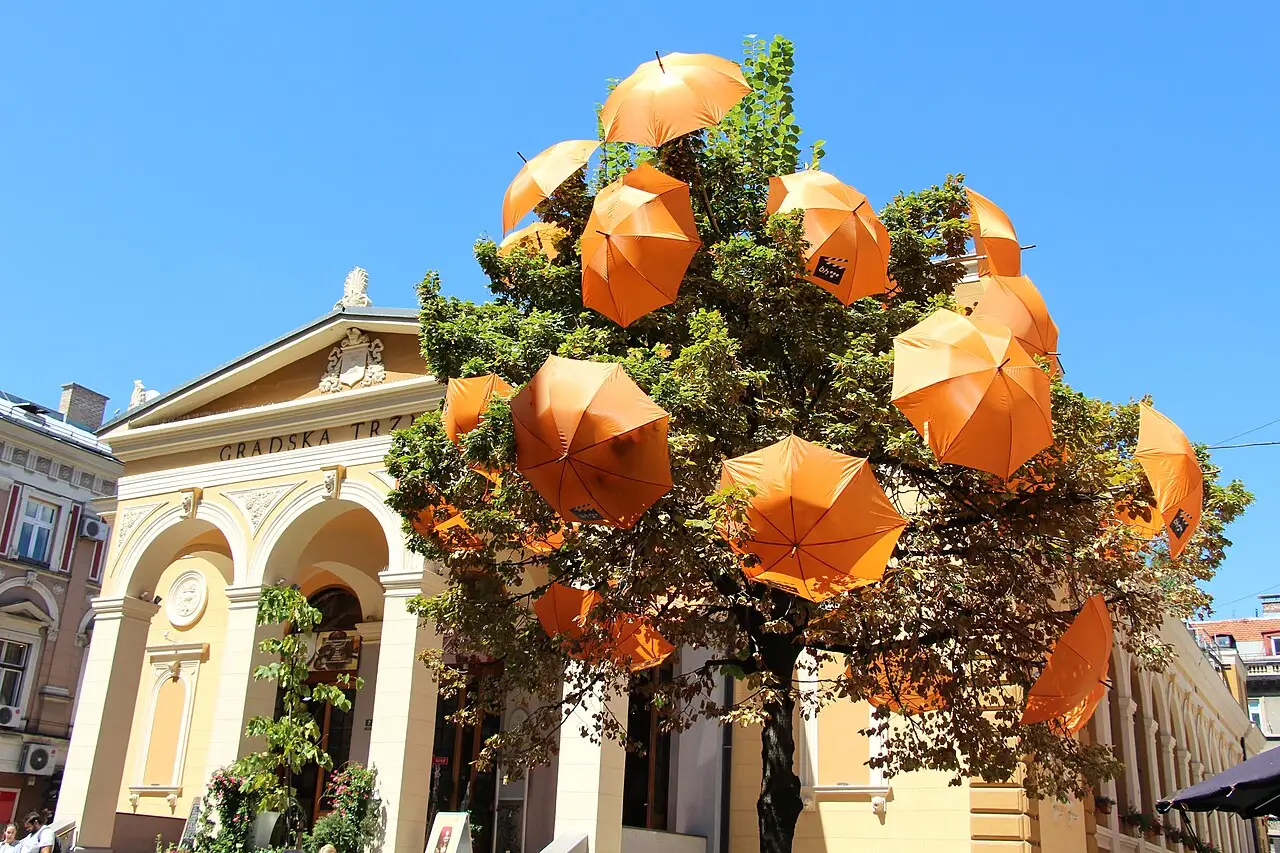
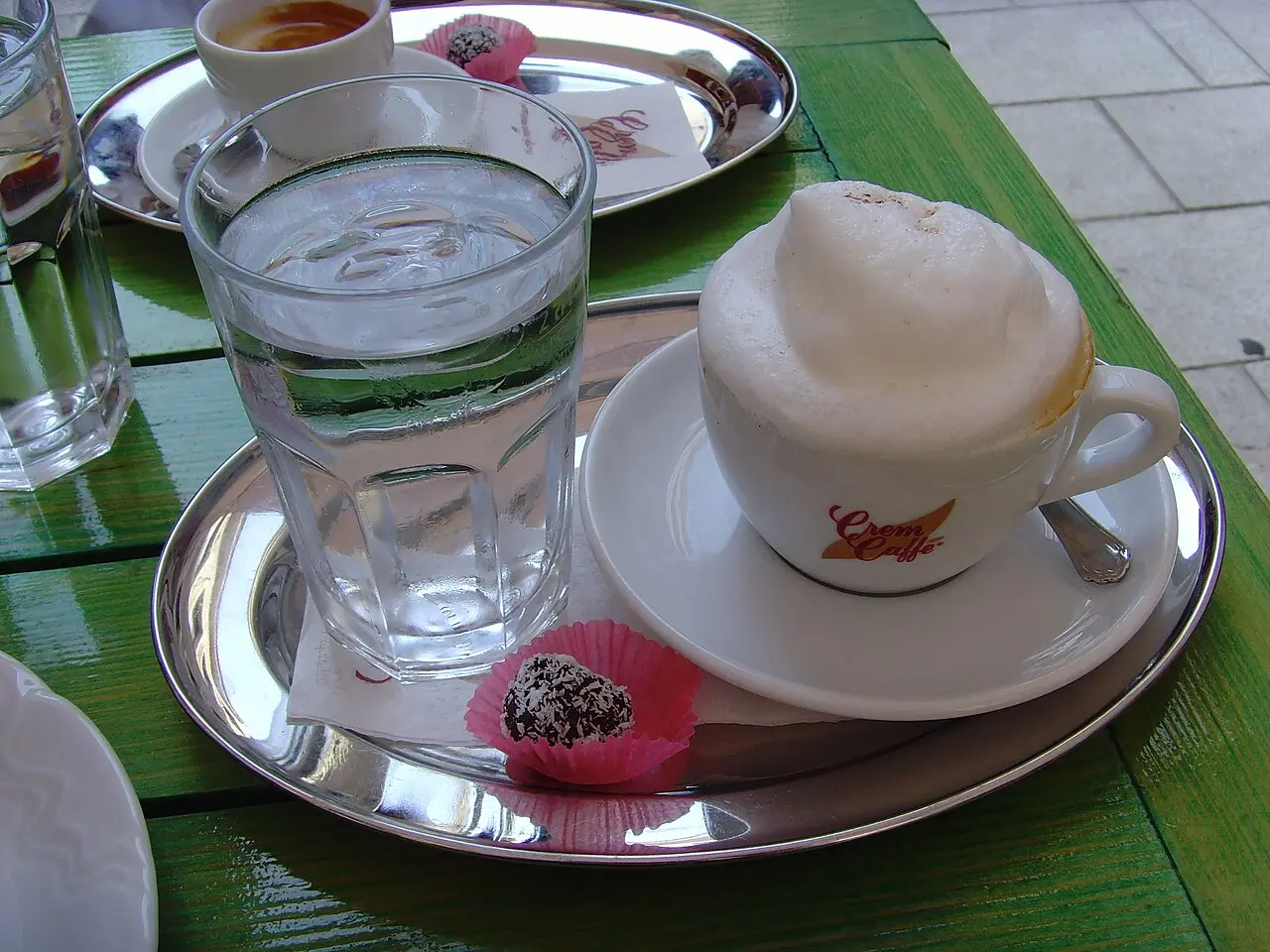
Eating out is affordable enough that a lot of long-stayers do it often. The Agency for Statistics of BiH put the national average for a pizza at 13.10 KM and a steak portion at 21.30 KM in August 2026, and ten ćevapi cost 12 to 14 KM in Sarajevo in June 2025, depending on the street. An ordinary café coffee was 2.50 to 3 KM in Sarajevo when N1 last surveyed cafés, in October 2022, and that matters more than it sounds, because coffee is a daily social ritual here rather than a takeaway habit. Sit on Baščaršija and it costs more: the Sebilj caffe bar there was charging 6 KM for a Bosnian coffee by June 2025. You can eat and drink out several times a week without it wrecking the budget, and if you’re curious about what to order, our guides to Bosnian food and Bosnian coffee are a good primer.
Getting around on the cheap
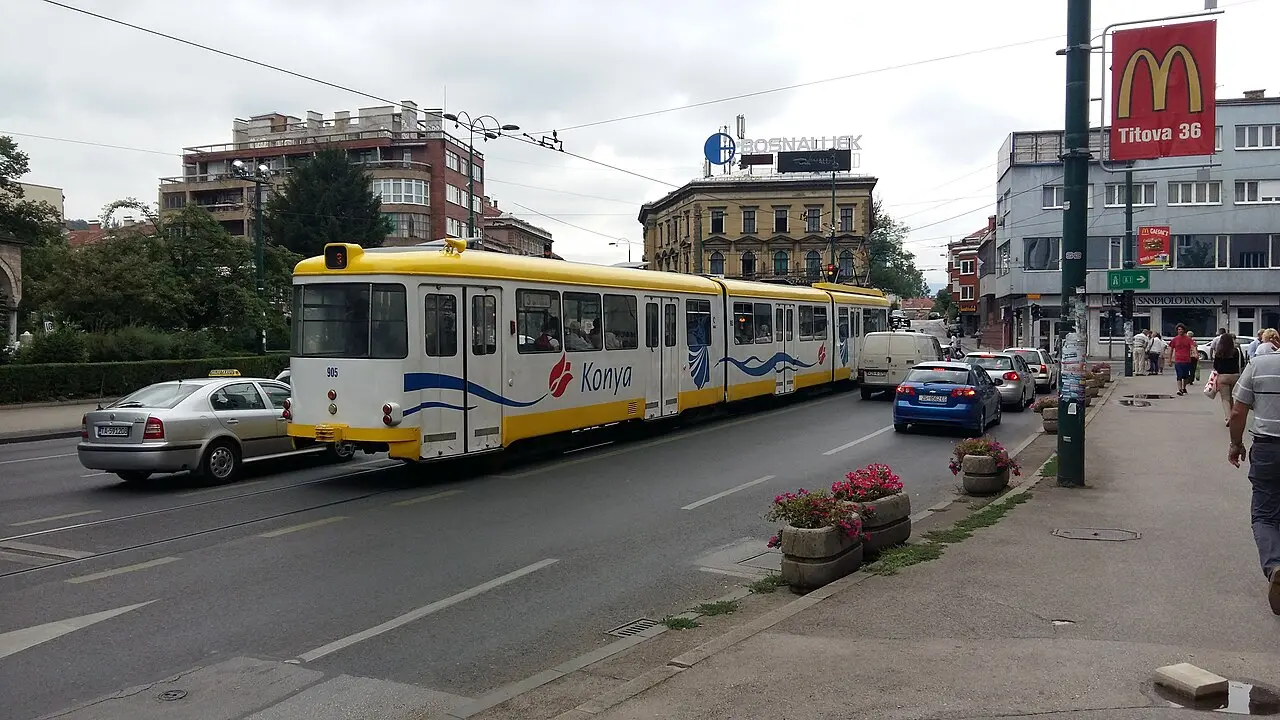
Local transport barely registers as a cost. In Sarajevo a single tram, trolleybus or bus ticket is 2.20 KM (GRAS’s own current price list), and a monthly pass for one zone is 60 KM on the standard “radnička” card, which for daily commuting is close to free by Western standards. The city is compact and walkable anyway, with the trams strung along the flat valley floor, so many residents rarely need more than the odd single ticket. If you plan to explore the country at weekends rather than just live in the city, that’s a separate question, and hiring a car for those trips is covered in our getting around Bosnia overview.
Working remotely: internet, data and coworking
For a remote worker the connectivity is better than Bosnia’s reputation suggests. Mobile data is cheap: on the prepaid price list BH Telecom published in April 2026, a monthly bundle of 20 GB for 30 days costs 20 KM and renews itself each month, and a one-off 30 GB for ten days is 10 KM. The Tourist top-ups on the same list, 15 KM for 10 GB over ten days and 35 KM for 30 GB over a month, are extra data for BH Telecom’s Tourist packages, and the list lets Tourist users buy them only once the package’s own data is used up, so on a longer stay the bundles above are the cheaper buy. If you’d rather not chase a SIM on arrival, an eSIM loaded before you fly gives you data from the moment you land.
For a proper desk away from your flat, the scene is small but real, and two spaces publish their prices. HUB387 lists a day pass at 30 KM and a month’s desk at 399 to 419 KM; tershouse on Kolodvorska sells a single day for 25 KM, less in its multi-day bundles, and a dedicated desk from 300 KM a month. Both come with wifi and tea or coffee; meeting rooms are included in some plans and charged extra in others. If your work depends on a stable connection and you dislike working from cafés, factor one in; if you’re happy at a kitchen table, you can skip the line entirely. Our guide to living in Sarajevo as a digital nomad names the main coworking spaces and the reliable work cafés, and covers the visa and registration rule for a longer stay.
Mostar and Banja Luka: smaller, and not always cheaper to rent
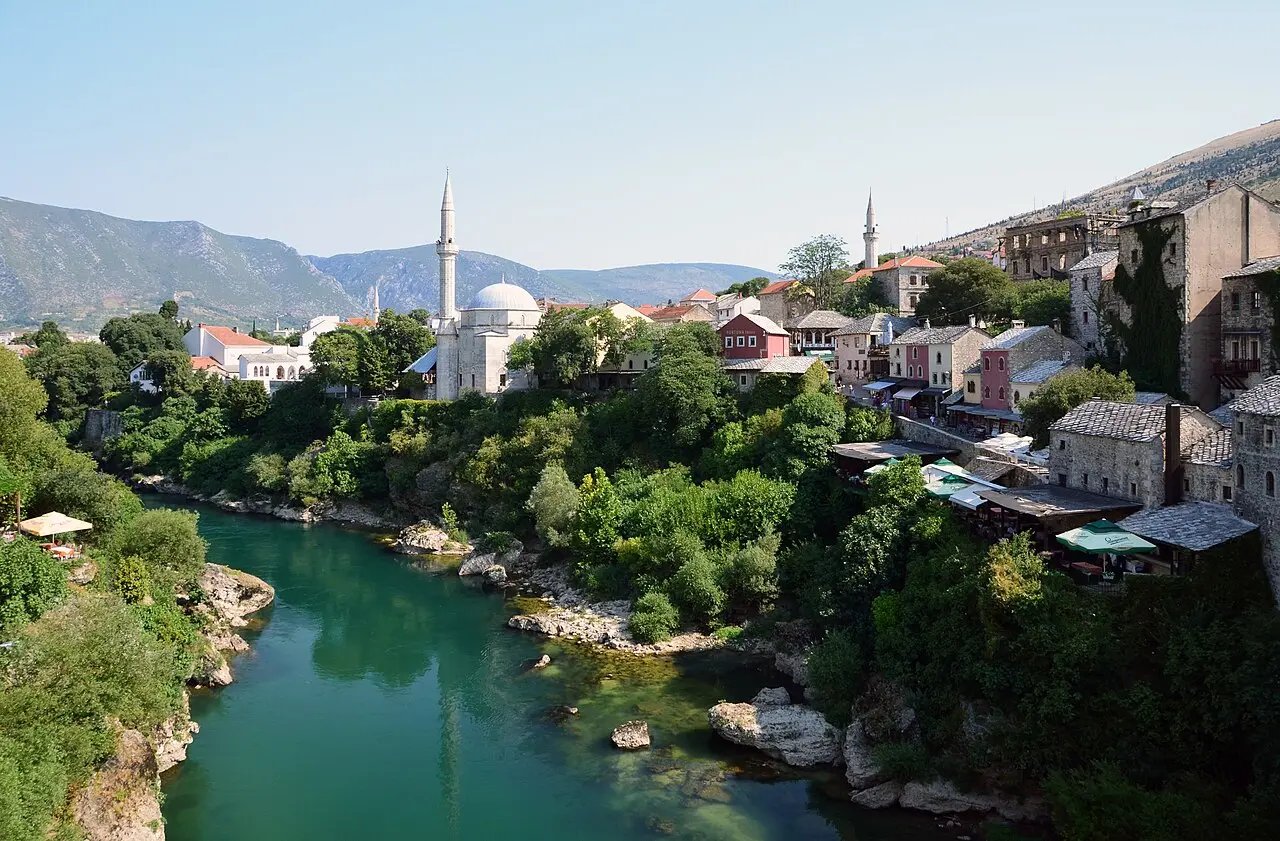
Sarajevo isn’t the only option, but Mostar saves you less on rent than you might expect. When Večernji list went through the listings in July 2026, one-bedroom flats in Mostar were mostly asking 600 to 900 KM a month, against 700 to 1,000 KM for a 40-50 m² one-bedroom in some Sarajevo municipalities. Two-bedrooms in Mostar asked more than 700 KM, and anything offered at 500 or 550 KM went almost at once. Tourism is part of the squeeze: at the start of the year a single classifieds site carried more than a hundred Mostar flats for day-by-day letting, every one of them a flat that isn’t on the long-term market. The trade-off beyond price is size and climate: Mostar is much smaller, with a thinner coworking and social scene, and its low Herzegovinian setting brings fierce summer heat that Sarajevo’s altitude spares you. It suits someone who wants quiet and sun; the capital suits someone who wants more going on.
Banja Luka is where the rent line does drop. Face.ba found smaller flats and studios there at about 400 to 550 KM in September 2026, with bigger, better-equipped flats from 600 KM. Trebinje is quieter again, with fewer of the conveniences a remote worker leans on. For a traveller’s city-by-city price breakdown of these same towns, our Bosnia cost index sets them side by side.
Putting a monthly budget together
Put the fixed lines together and a single person in a Sarajevo one-bedroom looks like this in winter: rent of 600 to 1,000 KM from the September 2026 listings, about 146 KM of district heating for 50 m², and a 60 KM tram pass. That’s roughly 800 to 1,200 KM, or about 410 to 620 euros, before food, power, water and data. In the five months without a heating bill the same flat costs about 104 KM less, because only the connection charge is left. From there the total is yours to steer: bread at 4 KM a kilo, a pizza out at 13.10 KM on the national average, a 20 KM monthly bundle for your data, a coworking desk from 300 KM if you want one. A new-build flat, a furnished short-let or restaurant dinners every night will push you past the top of that band. And for a sense of proportion, the rent band alone runs from about a third to more than half of the 1,732 KM average net wage.
Two honest caveats to close on. This covers cost of living only, not the legalities: whether you can stay long-term, and any visa, residence or tax questions, are a separate matter that depends on your nationality and that you should check against official sources rather than a travel guide - our moving to Bosnia residence permit guide covers the actual application. And these are dated figures, not a personal quote, so build in a margin and confirm real prices on the ground. With that said, few places in Europe let you live this comfortably for this little, and if you’re weighing up a base for a few months, Bosnia earns its place on the shortlist. When you get here, our guide to where to stay in Sarajevo breaks the neighbourhoods down by who each one suits.
Photos
Read also

Relocation · 14 min read
Moving to Bosnia: Residence Permits & the 90-Day Reality
Verified · August 3, 2026Bosnia gives you 90 visa-free days. After that: temporary residence up to a year, a 15-day filing deadline, about 150 KM in fees, 5 years to permanent.

Relocation · 12 min read
Living in Sarajevo as a Digital Nomad
Verified · July 4, 2026Sarajevo for remote work: cheap, atmospheric, decent internet, but a small community and cold winters. Coworking, cafes, neighbourhoods and the visa rule.

What to see · 15 min read
Via Dinarica Bosnia: Huts, Stages & Logistics
Verified · September 12, 2026Plan the Via Dinarica White Trail in Bosnia: 12 stages, 334 km, hut booking, trailheads, closures and three workable section packages.

What to see · 10 min read
Jablanica: Neretva Bridge & Roast Lamb Stop
Verified · September 4, 2026Jablanica on the Sarajevo-Mostar road: Battle for the Wounded museum (5 KM), the 1943 bridge, roast lamb lunch. Hours, parking, how long to stop.