How to Drink Bosnian Coffee: The Ritual, Step by Step
Let it settle, spoon foam into the fildžan, pour slowly, dip and bite a sugar cube, sip water in between. How bosanska kafa differs from Turkish coffee.
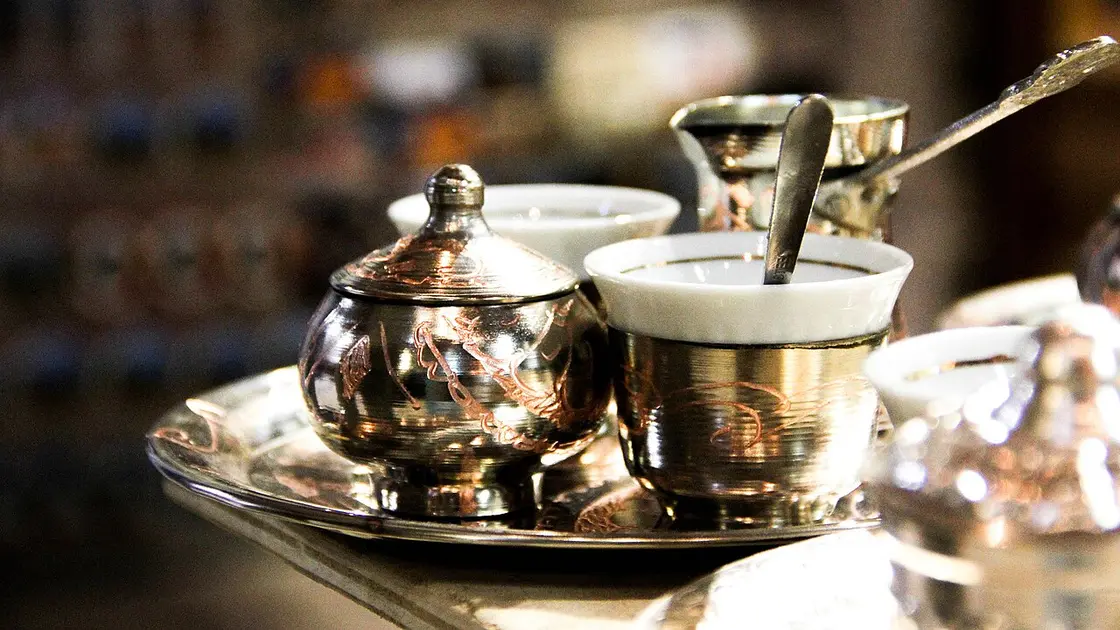
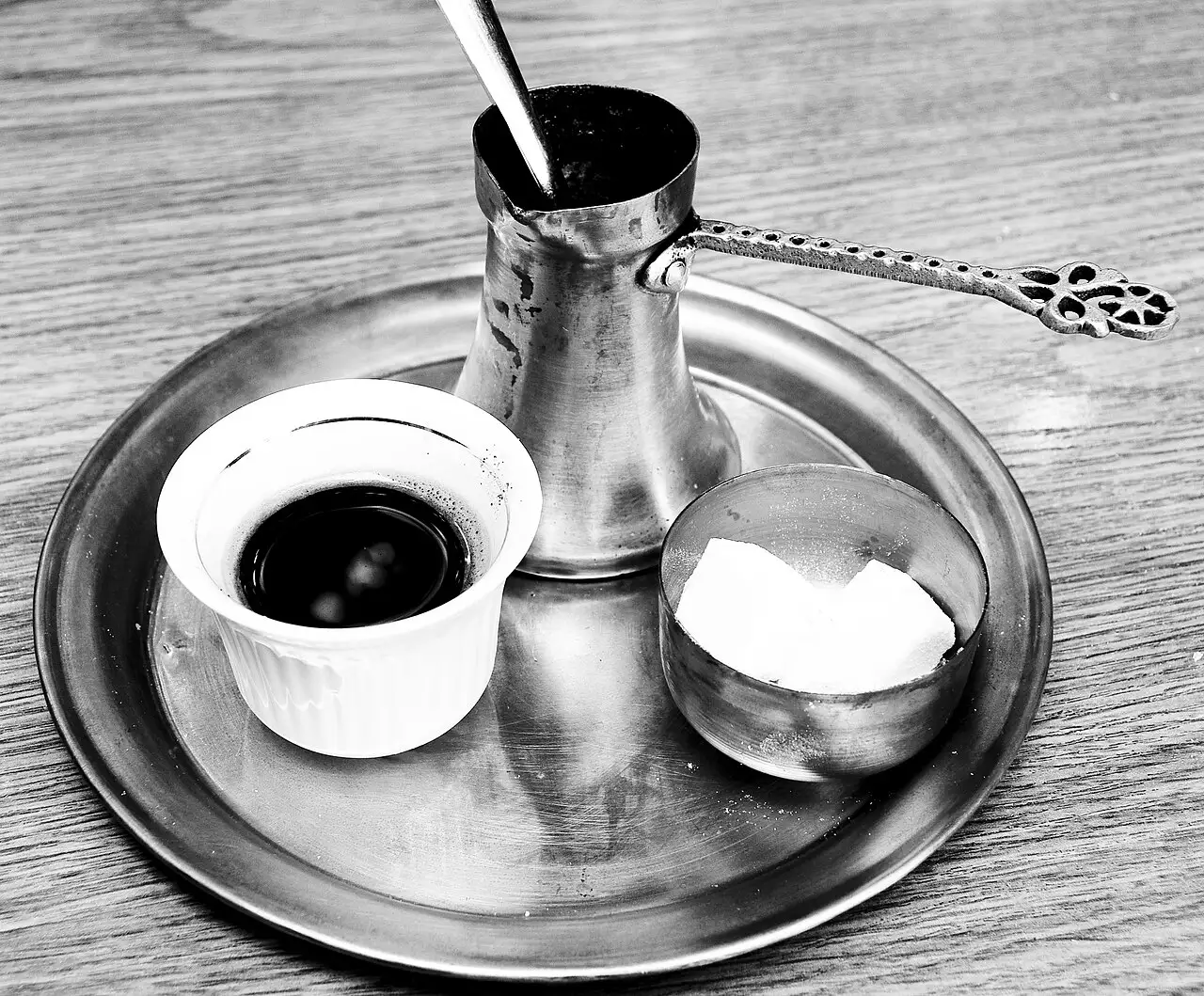
To drink Bosnian coffee, don’t stir it: let it settle for a few minutes while you eat the rahat lokum, spoon a little of the foam into the fildžan (the small handleless cup), then pour slowly from the copper džezva so the grounds stay in the pot. Take the sugar on the side, dipping a cube and biting it or holding a small piece under your tongue while you drink, sip cold water between mouthfuls, and stop before the grounds at the bottom of the cup. It’s a close cousin of Turkish coffee, but bosanska kafa is traditionally made by adding the coffee to water that has already boiled, and it comes to your table in its pot so you can pour it yourself.
If you want the full spread of what to eat around it, from ćevapi to the sweet trolley, our guide to Bosnian food and 15 dishes to try covers the plates; this one is about the cup.
What arrives on the tray
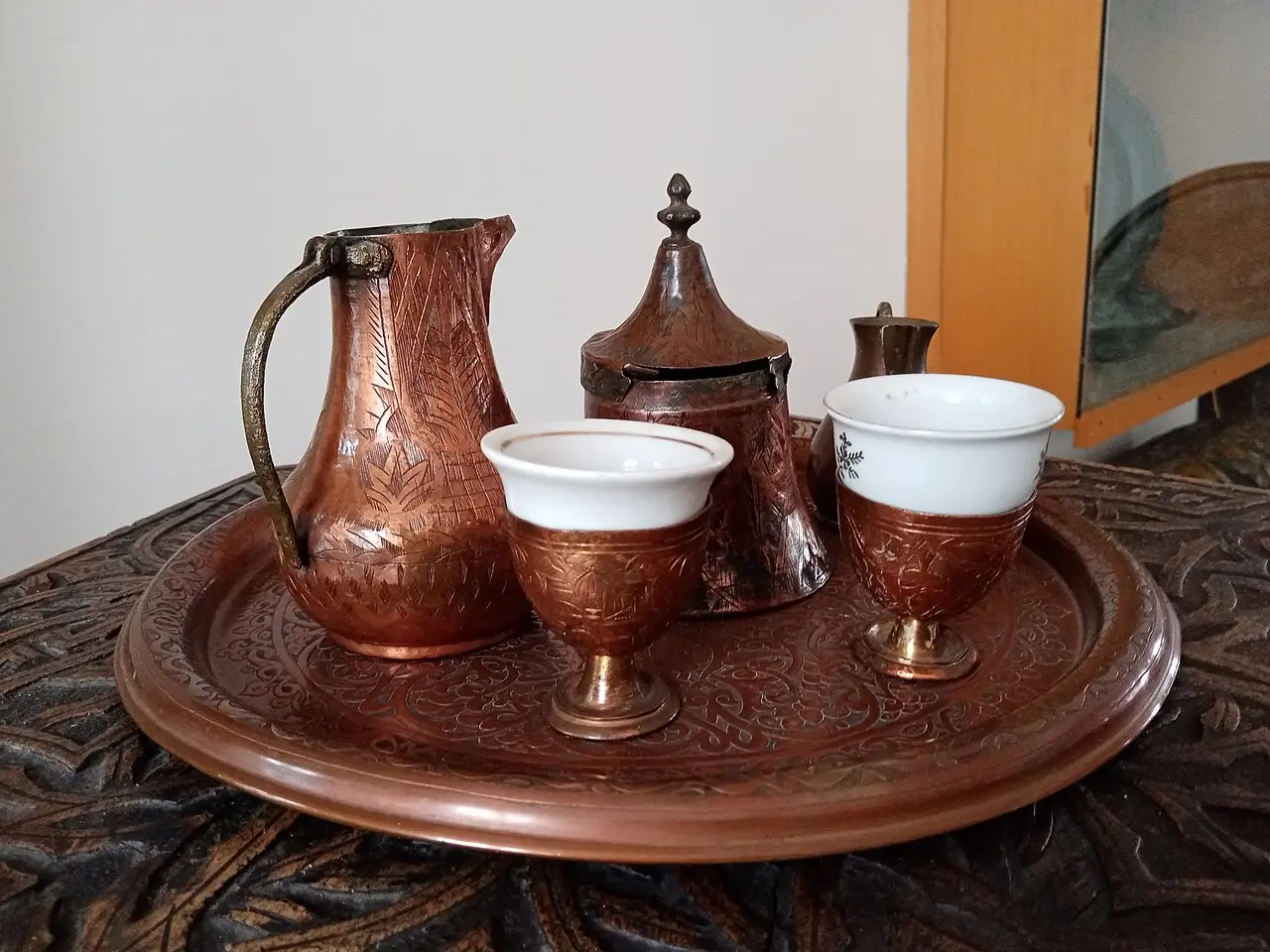
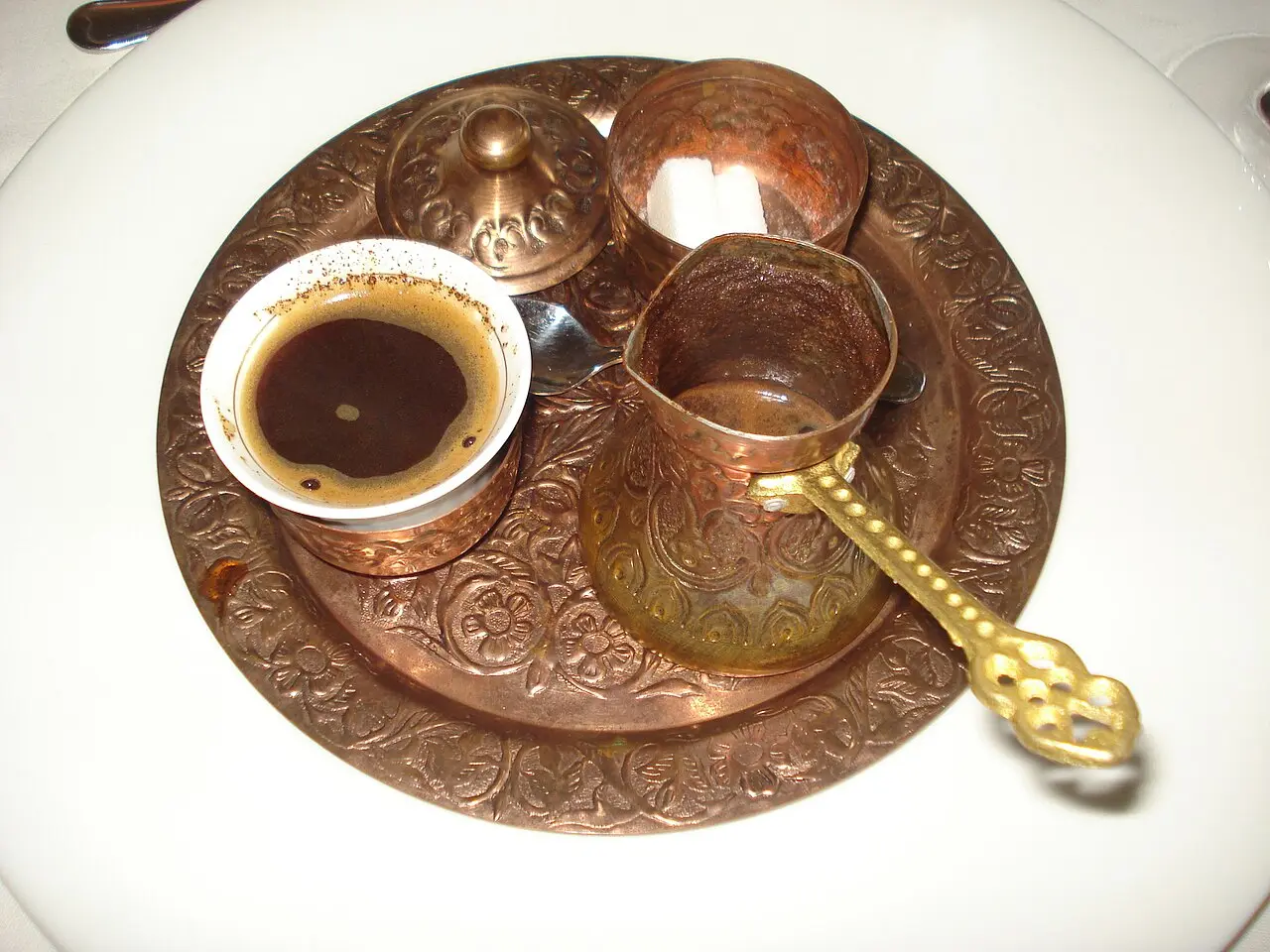
Order a coffee in a traditional café and it arrives on a round metal tray with its own kit. There’s the džezva, the long-handled copper pot it was brewed in; the fildžan, a small handleless cup, sometimes sitting in an engraved copper holder; a glass of cold water; sugar cubes, loose in a bowl or in a lidded copper pot; and usually a piece of rahat lokum, the soft, chewy Turkish delight.
Every piece has a job. The lokum keeps you busy while the grounds settle, the water freshens your palate between sips, and the pot doubles as the serving jug, so what you haven’t poured yet stays warm. Sarajevo’s coppersmiths still make sets like this in their workshops on and around Kazandžiluk, the coppersmiths’ lane in the old bazaar.
How to drink Bosnian coffee in seven steps
Nobody will quiz you on it, but the order matters, because most of the steps are about keeping the grounds where they belong.
- Don’t stir; give it a few minutes. The coffee reaches you freshly made, and the grounds need time to sink to the bottom of the džezva; a spoon in the pot only lifts them again. That’s what the lokum is for: eat it while you wait.
- Spoon some foam into the empty cup. The pale foam on top, called kajmak, is the prized part. The local habit is to spoon a little into the fildžan before any coffee goes in, so every cup gets its share.
- Pour slowly and watch the colour. Tip the pot gently. The stream should run the colour of copper, and the moment it darkens to a muddy brown, stop and leave the rest in the pot. A teaspoon held at the spout catches any stray grounds.
- Sweeten it your way. The coffee comes unsweetened, and there are three common local ways with the cubes. Dip a corner into the coffee, bite off the soaked bit and sip; hold a small bite under your tongue and let the coffee melt it; or set a cube in the foam before you pour, so the coffee runs over it. Plenty of locals never stir sugar into the cup at all.
- Sip small, with water in between. Little sips, with a mouthful of cold water now and then so the coffee tastes fresh each time. The noisy slurp that pulls a little air in with it even has its own verb, srkati, and it isn’t rude: it cools the coffee on the way in.
- Too strong? Wait. Too weak? Swirl. Leave a strong cup to settle a little longer. If it’s too mild, a gentle swirl of the cup lifts a touch of the grounds back into it.
- Stop before the bottom. The last mouthful is grounds. When the coffee turns gritty on your lip, you’re done, and the dregs stay in the cup.
Is Bosnian coffee like Turkish coffee?
Very like it: in Bosnia and Herzegovina, Turkish coffee also goes by the name Bosnian coffee, and it’s made slightly differently. Both are unfiltered coffee brewed from powder-fine grounds in a long-handled pot, a habit that spread through the region with the Ottomans. The differences locals point to are the order and the serve. The classic Bosnian method boils the water first and adds the coffee after; Turkish coffee usually starts coffee, water and any sugar together in the pot. And a Bosnian coffee arrives in its pot for you to pour, where in Turkey it tends to come already in the cup. Some guides add that Bosnians roast their beans lighter. Home recipes vary from one Bosnian kitchen to the next, so read this as the classic version, and order bosanska kafa to stay on the right side of a friendly argument.
What’s special about Bosnian coffee?
Less the bean than everything around it. The foam, for a start: without its layer of kajmak, a Bosnian coffee hardly counts as one. Then there’s the pace. Where an espresso is fuel you knock back standing at a counter, this is the reason you sat down, and an invitation to “have a coffee” often means “let’s sit and talk”, with the drink as the excuse. If someone offers you one, say yes: accepting, even if you only drink a little, is usually appreciated.
The mood has a name, ćejf (you’ll also see ćeif or ćef): roughly, the pleasure of doing something purely because you enjoy it, at your own speed. You probably won’t hear the word at the table, but it’s what you’re being invited into, so put the phone down, ask for another glass of water and let the afternoon stretch.
Where to drink it
If you want one address, our where to eat in Sarajevo guide sends you to the courtyard café at Morića Han, the old Ottoman travellers’ inn on Sarači, where it comes with baklava, hurmašica or kadaif. The lanes of Baščaršija around it are full of smaller coffee houses where lingering over one cup is the whole idea; the wider bazaar is mapped in our guide to things to do in Sarajevo. In Herzegovina, Trebinje’s Old Town is dotted with little cafés and known for its Bosnian coffee, and the old bazaar in Mostar serves the full tray too.
Carry some cash in convertible marks (KM), since the smaller old-town cafés may not take cards. And if you fall for the ritual, the kit to recreate it (a džezva, a set of fildžani and a tray) is sold in the same lanes where you drank it.
Making bosanska kafa at home
You’ll need a džezva (any small long-handled pot will do) and coffee ground to a fine powder. The usual measure in Bosnian recipes is one heaped teaspoon of coffee for every fildžan of water, so the small cup you’ll drink from is your measuring cup too.
- Measure one fildžan of water per person into the džezva and bring it to the boil, then pour a little off into a spare cup and set it aside.
- Tip the coffee into the pot and stir it in quickly.
- When the foam subsides, pour the reserved water back in.
- Let it come back up and take it off the heat the moment the foam climbs to the rim. Watch it closely: a džezva boils over the second you look away.
- Let it stand a few minutes so the grounds sink, then serve it the café way: a spoonful of foam into each cup first, then the coffee, poured slowly.
That set-aside splash is the classic Bosnian twist on the Turkish method. Not every Bosnian recipe bothers with it, though, and some even sweeten the pot while it brews, so if it tastes right to you, it’s right.
Bosnia’s traditional drink
Bosnia’s traditional drink is the one in your fildžan: coffee is an everyday custom and the centre of most get-togethers. The strong one is rakija, a fruit brandy distilled from plums, grapes, pears, apples and other fruit. Our guide to rakija in Bosnia covers the types, three bars worth finding in Sarajevo, and how to wave off a round without causing offence.
Photos
Read also

Food · 12 min read
Where to Eat in Mostar: Old Town Restaurants With a View
Verified · August 17, 2026Mostar Old Town restaurants by job: a terrace facing Stari Most, a courtyard off the bazaar, and a grill for cevapi. Addresses, cash, and what to order.

Food · 8 min read
Rakija in Bosnia: What It Is and Where to Taste It
Verified · August 9, 2026Rakija in Bosnia: the types, three named Sarajevo bars, tours with 2026 prices, customs limits for taking a bottle home, and how to decline politely.

Food · 9 min read
Herzegovina Wine Guide: Žilavka, Blatina & the Wine Route
Verified · July 25, 2026Herzegovina wine: the native Žilavka and Blatina grapes, the Wine Route cellars from Mostar to Trebinje, when to go, and how to taste it.

Food · 11 min read
Bosnian Burek: Types, Etiquette & Where to Try It
Verified · July 24, 2026In Bosnia burek means meat, full stop. What sirnica and zeljanica are, how pita is sold by the kilo, what it costs and where to eat it in Sarajevo.