Bosnian Burek: Types, Etiquette & Where to Try It
In Bosnia burek means meat, full stop. What sirnica and zeljanica are, how pita is sold by the kilo, what it costs and where to eat it in Sarajevo.
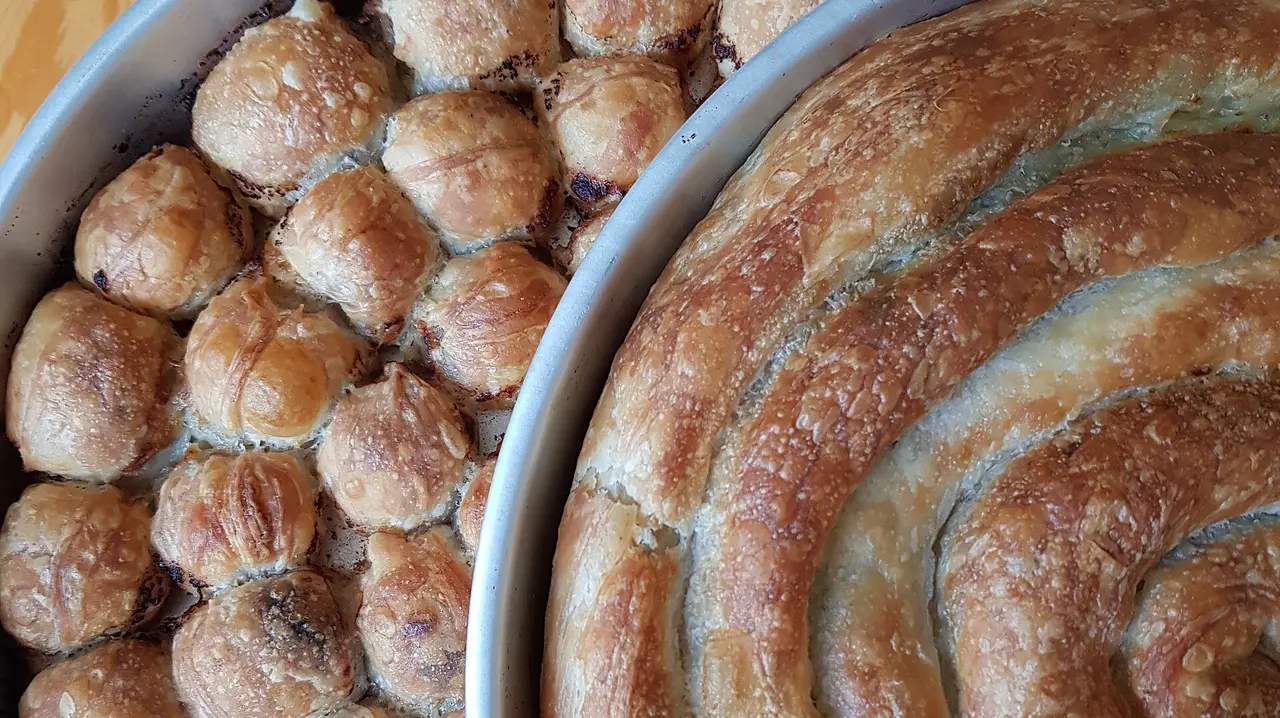
In Bosnia, burek is the one with meat. Not “burek with cheese” and not “burek with spinach”: those are sirnica and zeljanica, they have their own names, and the family all of them belong to is pita. Get that straight and the rest of the system falls into place, including the part nobody warns you about, which is that you buy the stuff by weight rather than by the piece.
Cross into Serbia or Croatia and the word goes soft, covering any filling you like. Inside Bosnia it doesn’t. Klix.ba put the local position plainly in 2022: in some countries almost every pita is called burek, and almost every resident of Bosnia and Herzegovina will point out that this is a mistake, because burek is exclusively the pita made with meat. Nobody will be rude about it. You’ll simply be corrected, and then told a story about someone’s grandmother.
The words that cover the whole counter
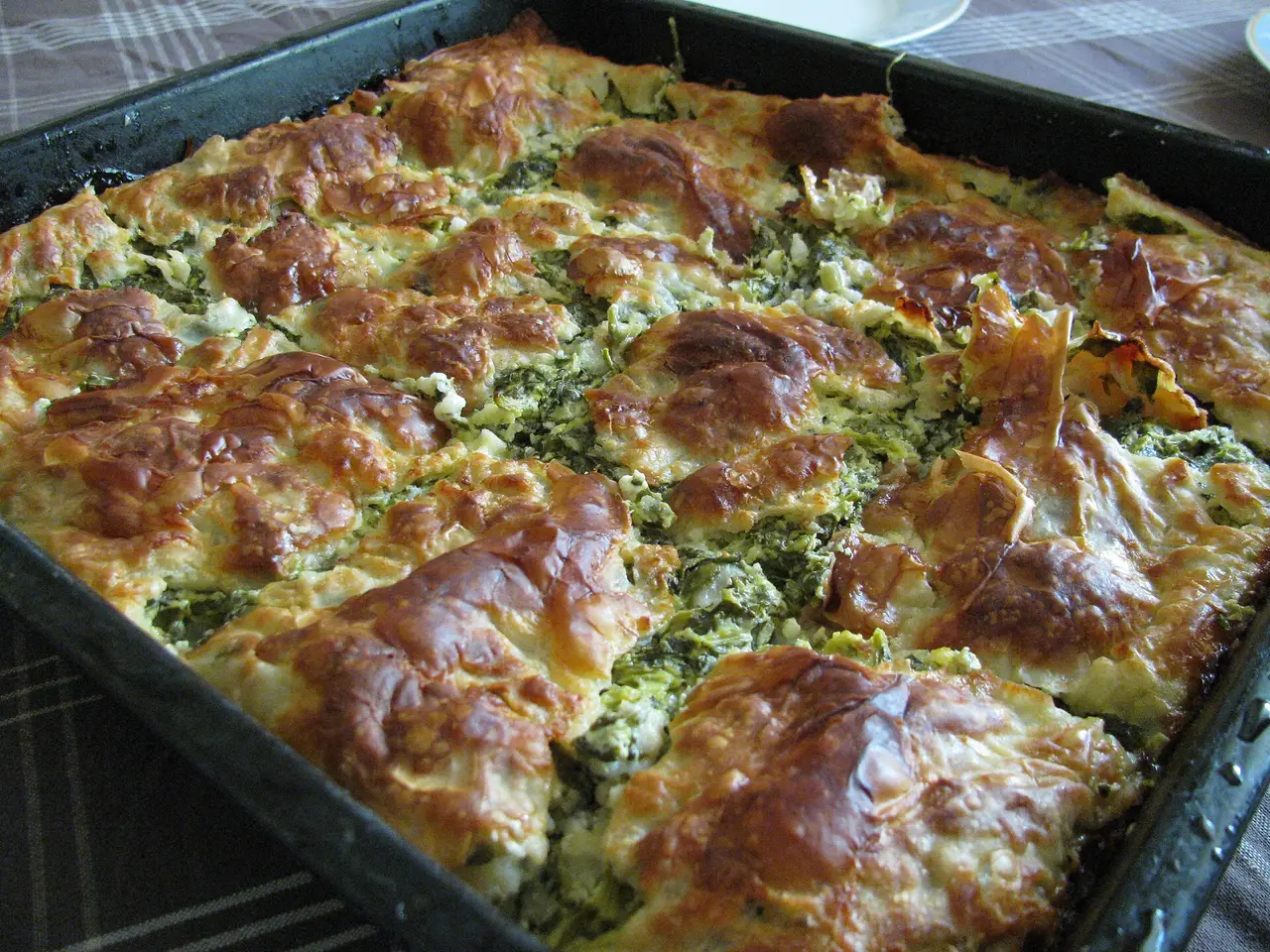
Burek is minced or hand-chopped beef. Sirnica is soft white cheese. Zeljanica is spinach and cheese, and it’s the one most vegetarians end up ordering twice. Krompiruša is seasoned potato, the cheapest tray on the counter and the one locals defend most fiercely. Alongside those four you’ll meet tikvenica, made with pumpkin, which Klix had on its price survey in October; some counters, ASDŽ on Bravadžiluk among them, also do a maslenica, the plain buttered one with no filling at all.
All of it starts as jufka, dough stretched by hand until you can read through it, made from nothing more than warm water, flour, oil and a little salt. The stretching is the skill. Everything else is filling.
Coiled or layered, and why it shows up on the bill
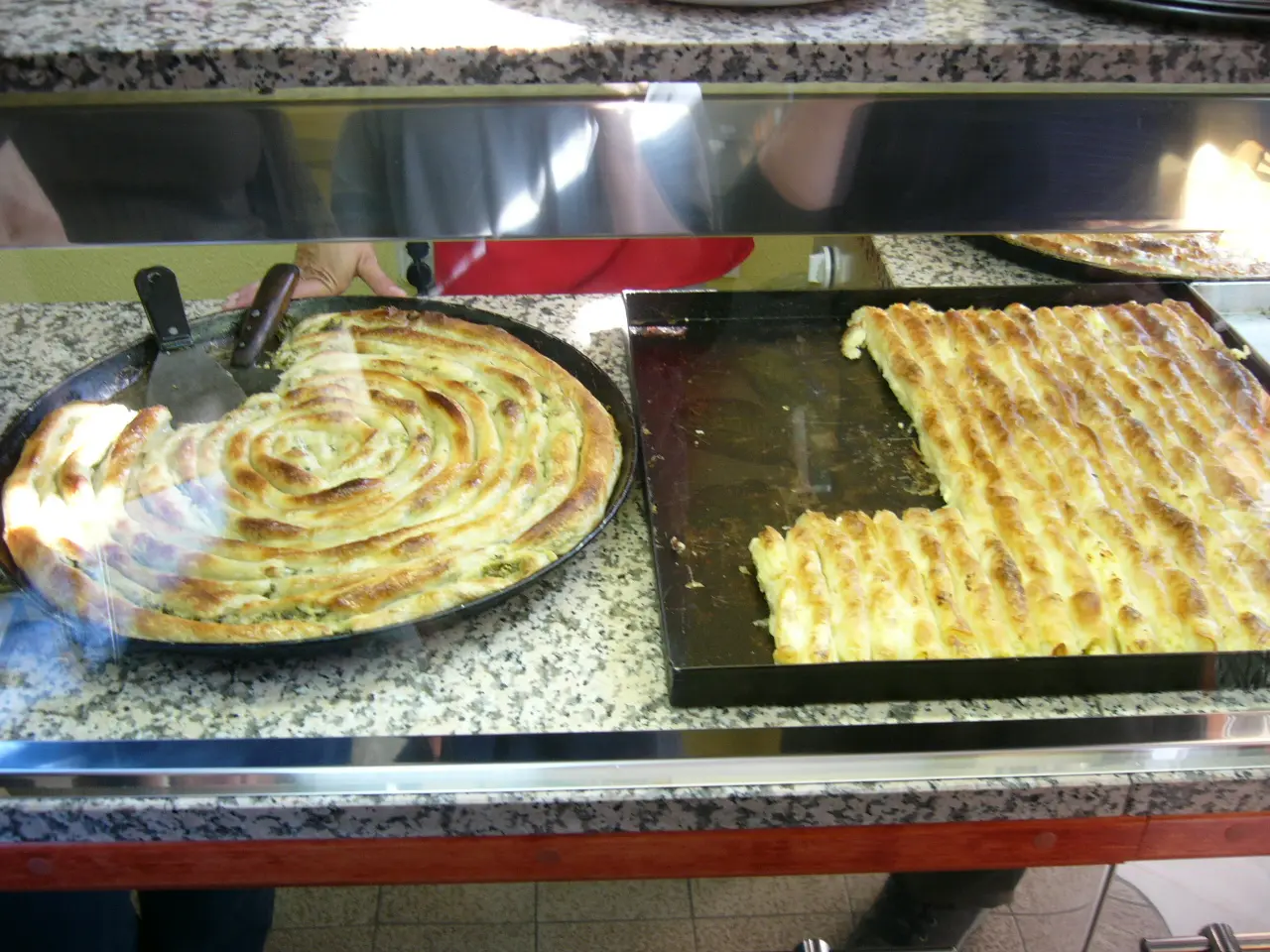
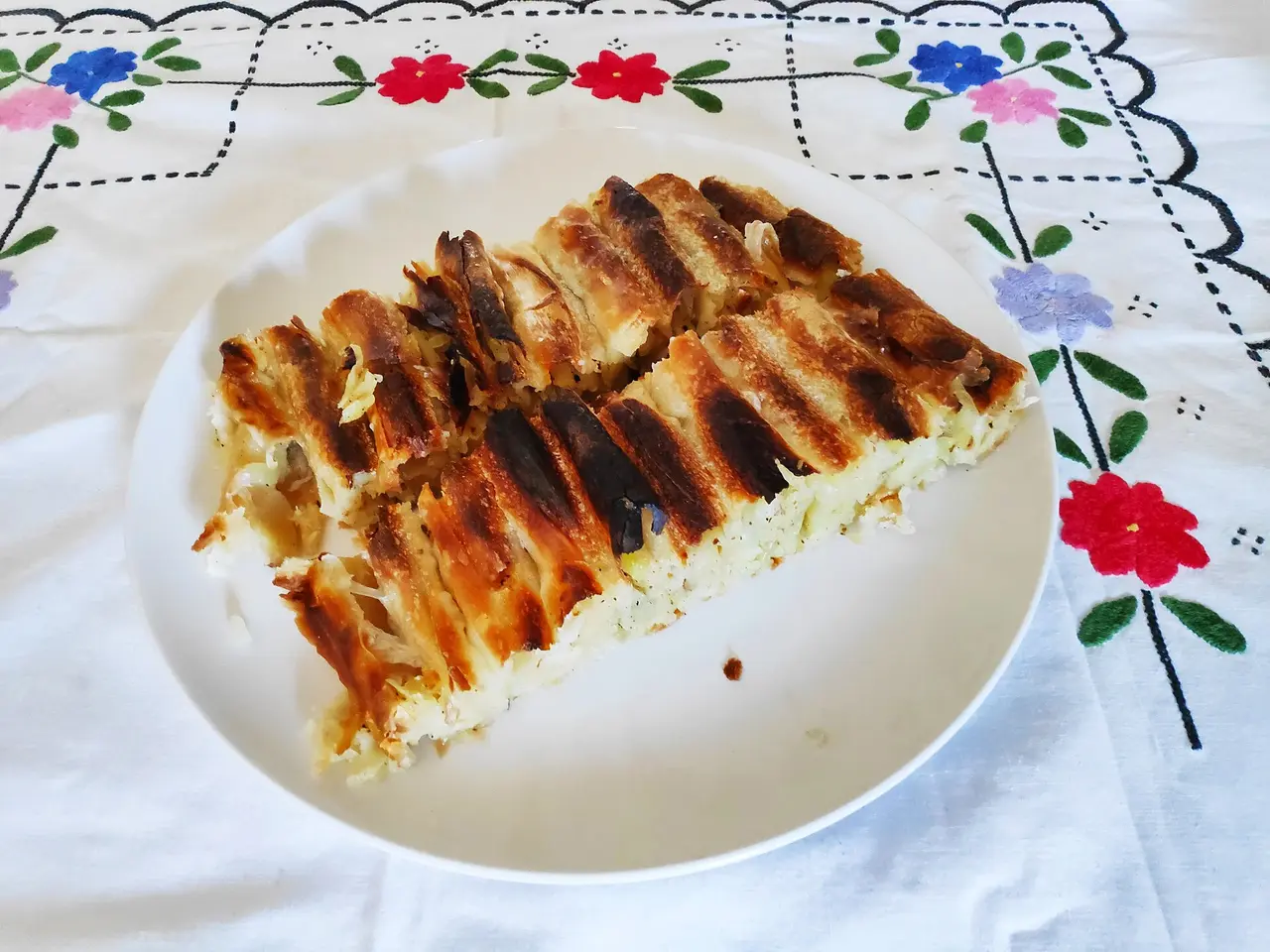
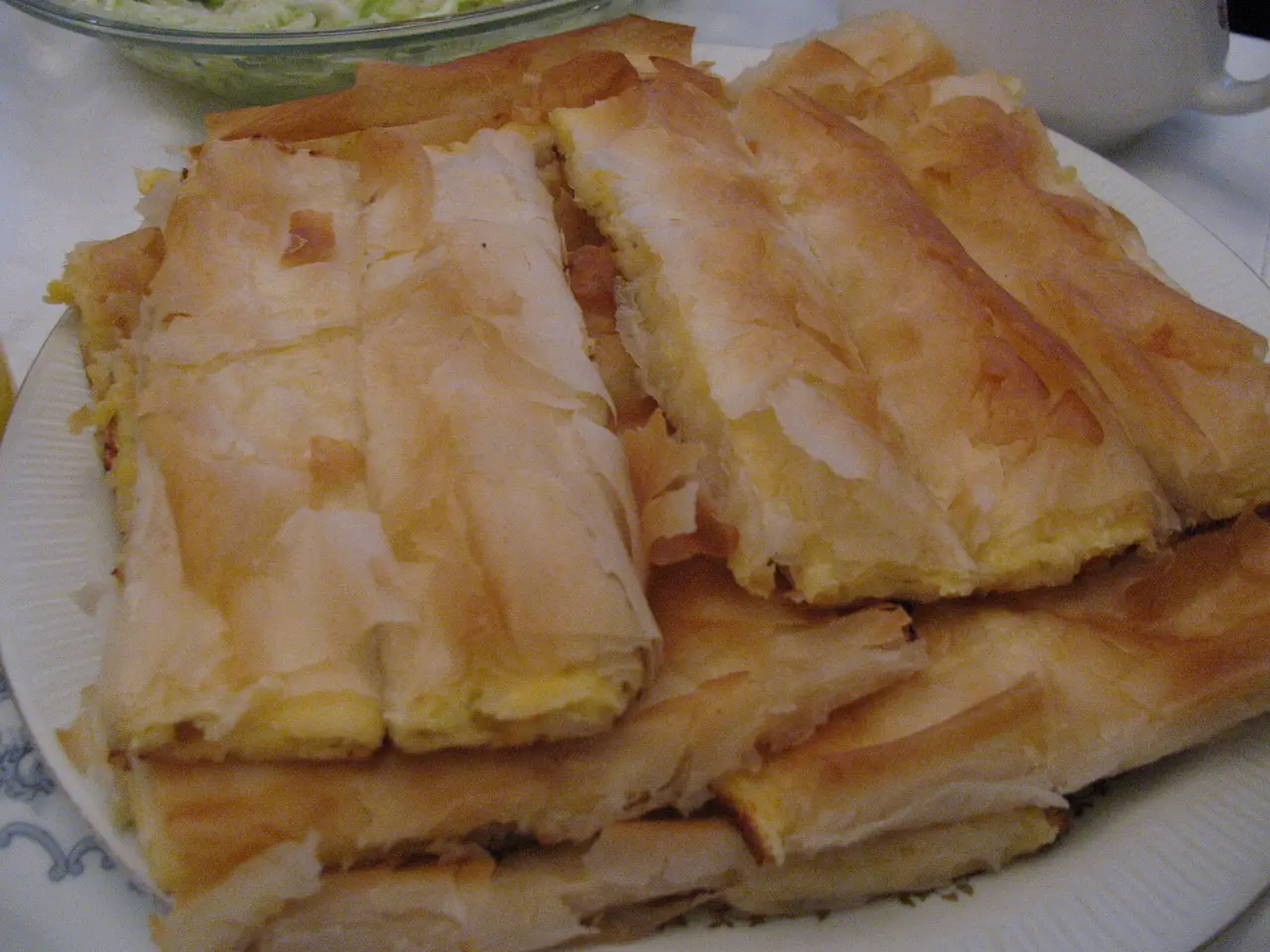
There are two ways to build a pita. The filled sheet gets rolled into a long rope and wound into a zvrk, a spiral that fills a shallow round tray, or the sheets get stacked flat in layers, which is slagana pita. The coil takes longer, holds more air and gives you those crisp ridges on top. The layered one is quicker and softer.
Most visitors never notice the difference. The price lists do. When Radio Sarajevo walked round the city in June 2025, one long-established buregdžinica in Centar was charging 16 to 20 KM a kilo for zeljanica depending on whether it was made as a zvrk or slagana, at the same counter on the same day. If a place charges more for the coil, that’s a decent hint about where its pride lives.
The other split is in the meat. Faširani burek is minced; sjeckani is hand-chopped, coarser, and the reason it costs several marks more per kilo is that somebody stood there with a knife. If you only eat burek once in Bosnia, spend the extra on the chopped one.
The best of it is baked under a metal lid
Ask anyone which pita is best and you’ll get the same answer: the one made ispod sača. The sač is a heavy metal dome that sits over the tray with hot embers heaped on top, so the pastry bakes from above and below at once, in less fat than an oven needs, and comes out with a crust that shatters rather than bends.
It’s slower, which is why not everyone does it, and it is worth walking past three ordinary buregdžinicas to find one that does. In the Sarajevo old town, Buregdžinica ASDŽ on Bravadžiluk 28 advertises exactly that: a wide choice of pies baked under the sač. Buregdžinica Sač on Mali Bravadžiluk 2 named itself after the method; a Croatian food writer visiting in 2018 described pastry that soaks up the meat juices under the lid and a few tables outside, and that’s still what people go for.
Ordering: you are buying weight, not portions
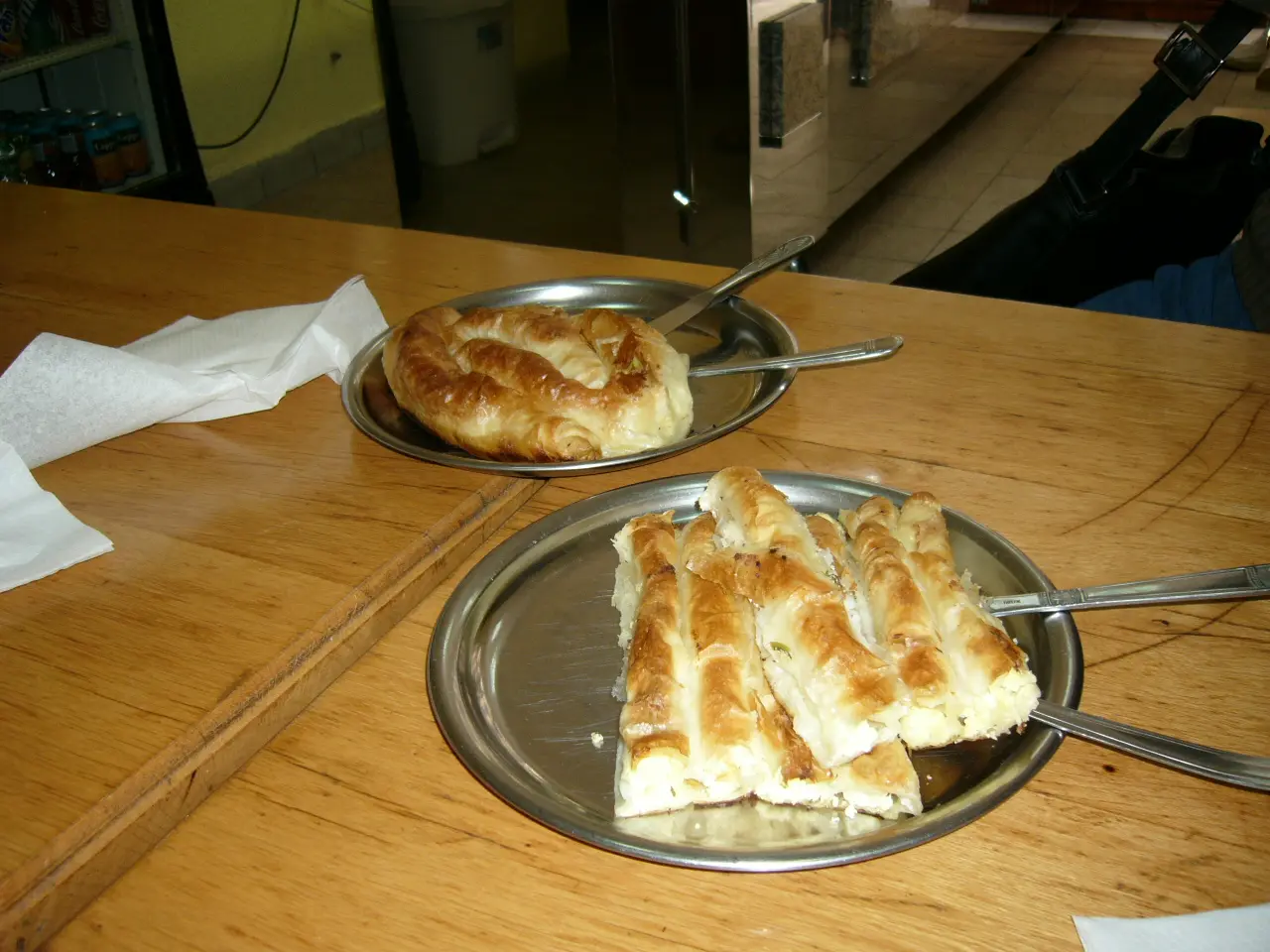
This is the bit that catches everybody. There’s no “one burek, please”. The tray is cut and weighed, and prices are written per kilogram. A frtalj is a quarter of a kilo and does for a light breakfast. Pola kile, half a kilo, is a full lunch for one hungry person. A kilo feeds a small family, which is why you see people leaving with a wrapped slab under one arm at nine in the morning.
Point at the tray, say how much you want, and let them cut it. If you want it hot, ask which tray came out most recently rather than which one looks best, because the two are rarely the same thing. Nothing kills a good pita like twenty minutes under a warming lamp.
The drink is yoghurt, the thin drinkable kind you’ll also see called ayran, served in a glass and drunk alongside rather than after. It cuts the fat and it’s what the counter will hand you if you hesitate. Coffee comes later and somewhere else, which is a whole ritual of its own and covered in our guide to Bosnian coffee.
What it actually costs, and how much the bazaar mark-up is worth
Prices have moved fast. Klix compared its October 2024 survey with three years earlier and found burek up from 14 to 16 KM a kilo to 17 to 20 KM, with sirnica and zeljanica at 14 to 18 and krompiruša at 11 to 14.
Then came the number that made the local internet shout. In June 2025 a price list from a well-known Baščaršija buregdžinica was posted on Reddit and picked up by Radio Sarajevo on 10 June 2025: 28 KM a kilo for hand-chopped burek, 22 KM for the minced version, sirnica and zeljanica at 20 KM, krompiruša at 14 KM. Worth keeping the provenance straight, because it matters: that one is a photographed price board, not the paper’s own survey. What Radio Sarajevo did walk itself were the other neighbourhoods.
Their own figures are the useful ones. Out in Novo Sarajevo, Ilidža and Novi Grad: hand-chopped burek 20 KM, minced 18 KM, sirnica and zeljanica 16 KM, krompiruša 14 KM. An older buregdžinica in Centar sold burek at 18 KM and sirnica at 16 KM.
Compare like with like and the bazaar mark-up is real but modest: 22 against 18 KM on minced burek, 20 against 16 KM on sirnica and zeljanica, and 14 KM for krompiruša in both places. On a frtalj that works out at about one mark, which isn’t a reason to walk anywhere. It becomes money at family volumes: a kilo a day for a week is a difference of roughly 28 KM, and if you’re buying the hand-chopped kind on the square at 28 KM against 20 KM out of town, the gap is 8 KM a kilo. Don’t tell yourself the cheap one is the same product either, since the chopped and the minced are different work, which is exactly why the price board separates them.
No city-wide survey has been published for 2026 as far as we can find, so treat those numbers as the last hard data point and read the price board before you order. Our Bosnia cost index puts the rest of a day’s spending around it.
Where to eat it in Sarajevo
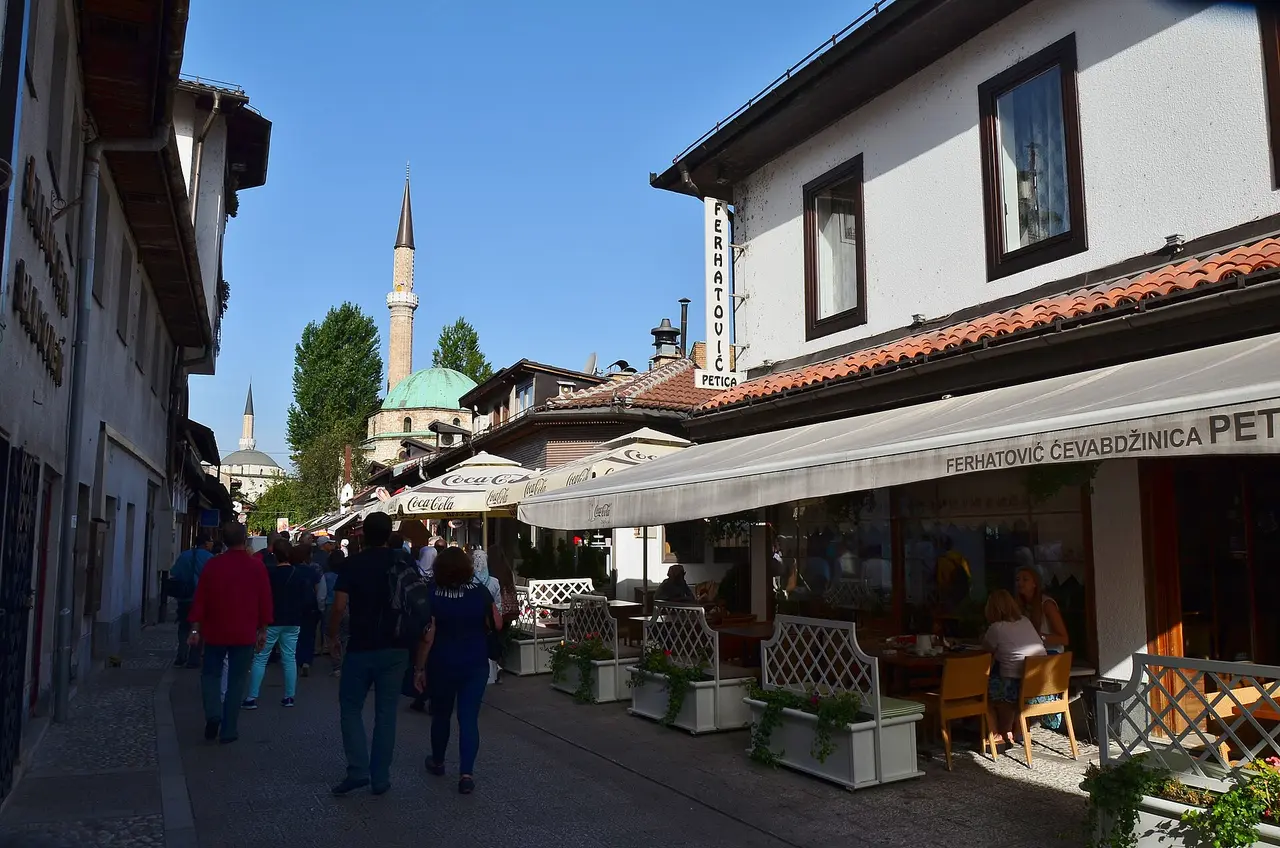
The pita trade clusters on two short lanes at the eastern end of the old town. The Baščaršija trades directory lists fourteen buregdžinicas inside the bazaar alone, and most of them sit on Bravadžiluk or Kundurdžiluk, close enough to compare two in one morning. What none of them are is a sit-down dinner; the restaurants you book an evening for are a separate list, in our guide to where to eat in Sarajevo.
- Buregdžinica ASDŽ, Bravadžiluk 28. Pies under the sač and a long list beyond burek: zeljanica, sirnica, krompiruša, tikvenica, maslenica. The aščinica of the same name moved round the corner to Ćurčiluk mali 3 and the pie shop stayed put.
- Buregdžinica Sač, Mali Bravadžiluk 2. Named for the method, a few tables outside, and pastry that steams under the lid.
- Buregdžinica Bosna, Bravadžiluk 11. The big one, with a garden terrace and two more floors above it, which is the practical choice when the lane is full. When Forbes asked the Sarajevo guide Edin Ogrešević in July 2025 where he sends people, he named their second branch beside the city market, a few minutes west of the bazaar, rather than this one.
- Buregdžinica Oklagija, Bravadžiluk 17a. Milder than its neighbours: the 2018 write-up that put it on the map praised it for going easy on the pepper and the heat. Anyone who doesn’t want a chilli hit at 9am goes straight there.
- Buregdžinica Nagib, listed at Envera Šehovića out at Dolac Malta, and baking since 1978 according to the same 2018 piece. We couldn’t confirm from a current source that it’s still trading, so treat it as a lead rather than a plan.
One honest warning about hours. Buregdžinicas here don’t publish them in any way you can rely on, and the listings you find online are often somebody’s guess from years ago. They start early, they bake in batches, and a place can be out of the tray you wanted by mid-afternoon. Turn up in the morning, look at what’s fresh, and have a second address in your pocket.
Eating it without giving yourself away
Use the fork if you’re sitting down, your hands if you’re walking. Don’t ask for ketchup. Don’t ask for it heated in a microwave, which is the one request that will get you a look. If the pastry has gone slack and greasy at the base, that tray has been sitting too long; try the place again in the morning rather than crossing it off.
And keep the vocabulary straight, because it opens doors. Asking for “a spinach burek” marks you out instantly; using the right name for the tray you’re pointing at changes how the next five minutes go. The same logic runs through the whole food scene here, which is why what to eat in Bosnia is organised by which shop cooks what rather than by dish.
So what should you actually order
First morning, hand-chopped burek from a place that bakes under the sač, with a glass of yoghurt, and pay the Baščaršija premium once for the convenience. Second morning, order krompiruša and zeljanica somewhere with no English menu, because the cheap trays are where a buregdžinica has nothing to hide behind.
Pita is one half of what people come to Sarajevo to eat; the other half is grilled, and our guide to the best ćevapi in Sarajevo settles that argument on the same two streets. For everything else on the menu, Bosnian food and 15 dishes to try runs from begova čorba to tufahija.
Then order it properly: the right name for the tray, a glass of yoghurt, and eat it at the counter while it’s still too hot to hold.
Photos
Admission and opening hours
- Admission price
- Pita is priced per kilogram. Radio Sarajevo, 10 June 2025: a price list from a well-known Bascarsija buregdzinica, first posted on Reddit, showed hand-chopped burek at 28 KM a kilo, minced at 22 KM, sirnica and zeljanica at 20 KM, krompirusa at 14 KM. The neighbourhoods the paper walked itself (Novo Sarajevo, Ilidza, Novi Grad) ran 12 to 20 KM: hand-chopped burek 20 KM, minced 18 KM, sirnica and zeljanica 16 KM, krompirusa 12 to 14 KM. Klix found burek at 17 to 20 KM a kilo in October 2024. No city-wide 2026 survey has been published, so read the board on the day.
- Opening hours
- Buregdzinicas do not publish reliable opening hours. They bake from early morning and work in batches through the day, so the useful question is not when they open but when the next tray comes out.
Prices are in convertible marks (KM / BAM) and quoted by weight, not by the piece. A frtalj is a quarter of a kilo, pola kile is half. Small places are cash-first.
Details checked: July 24, 2026
Read also

Food · 12 min read
Where to Eat in Mostar: Old Town Restaurants With a View
Verified · August 17, 2026Mostar Old Town restaurants by job: a terrace facing Stari Most, a courtyard off the bazaar, and a grill for cevapi. Addresses, cash, and what to order.

Food · 8 min read
Rakija in Bosnia: What It Is and Where to Taste It
Verified · August 9, 2026Rakija in Bosnia: the types, three named Sarajevo bars, tours with 2026 prices, customs limits for taking a bottle home, and how to decline politely.

Food · 9 min read
Herzegovina Wine Guide: Žilavka, Blatina & the Wine Route
Verified · July 25, 2026Herzegovina wine: the native Žilavka and Blatina grapes, the Wine Route cellars from Mostar to Trebinje, when to go, and how to taste it.

Food · 11 min read
Where to Eat in Sarajevo: Best Restaurants Beyond Ćevapi
Verified · September 23, 2026Sit-down restaurants in Sarajevo worth an evening: Ascinica ASDZ, Dveri, Avlija, Kibe Mahala, Park Princeva, Inat kuca. Addresses, closing days, booking.