Bosnian Food: 15 Dishes to Try
A guide to Bosnian food: cevapi, burek and the pita family, begova corba, sarma, klepe, tufahija, baklava and the Bosnian coffee ritual, plus where to eat.
Bosnian food is Ottoman comfort cooking at its best: charcoal-grilled meat, flaky hand-stretched pastries, slow-simmered stews and syrup-soaked sweets, washed down with a coffee ritual that turns a drink into an afternoon. If you only learn one word, make it ćevapi; if you learn two, add pita. This is a cuisine built on a handful of things done exceptionally well rather than endless variety, and it’s generous, meat-forward and, thanks to a mostly halal tradition, largely pork-free. Below are 15 dishes and drinks worth seeking out, roughly in the order you might meet them across a day, plus a quick note on where to find each at its best.
What makes Bosnian food its own thing
Bosnia sits at a crossroads, and its food shows it: a deep Ottoman base of grills, filo pastry and sweet syrups, layered with Austro-Hungarian touches and the wider Balkan love of stews and stuffed vegetables. The result leans on grilling and gentle simmering rather than heavy sauces, with dishes often cooked in little more than their own juices. Because most of the country’s cooking grew out of a Muslim tradition, beef and lamb do the heavy lifting and pork is largely absent from the classic repertoire, which makes eating here refreshingly straightforward if you avoid it.
Knowing where to go matters as much as knowing what to order, because Bosnia specialises. A ćevabdžinica grills ćevapi and little else. A buregdžinica bakes pita. An aščinica is the place for the slow-cooked home-style dishes, the stews and stuffed things that take hours, and a slastičarna is where you go for sweets and coffee. Follow the specialists and you’ll eat far better than at any menu that claims to do all of it.
The grill and the pastry
1. Ćevapi
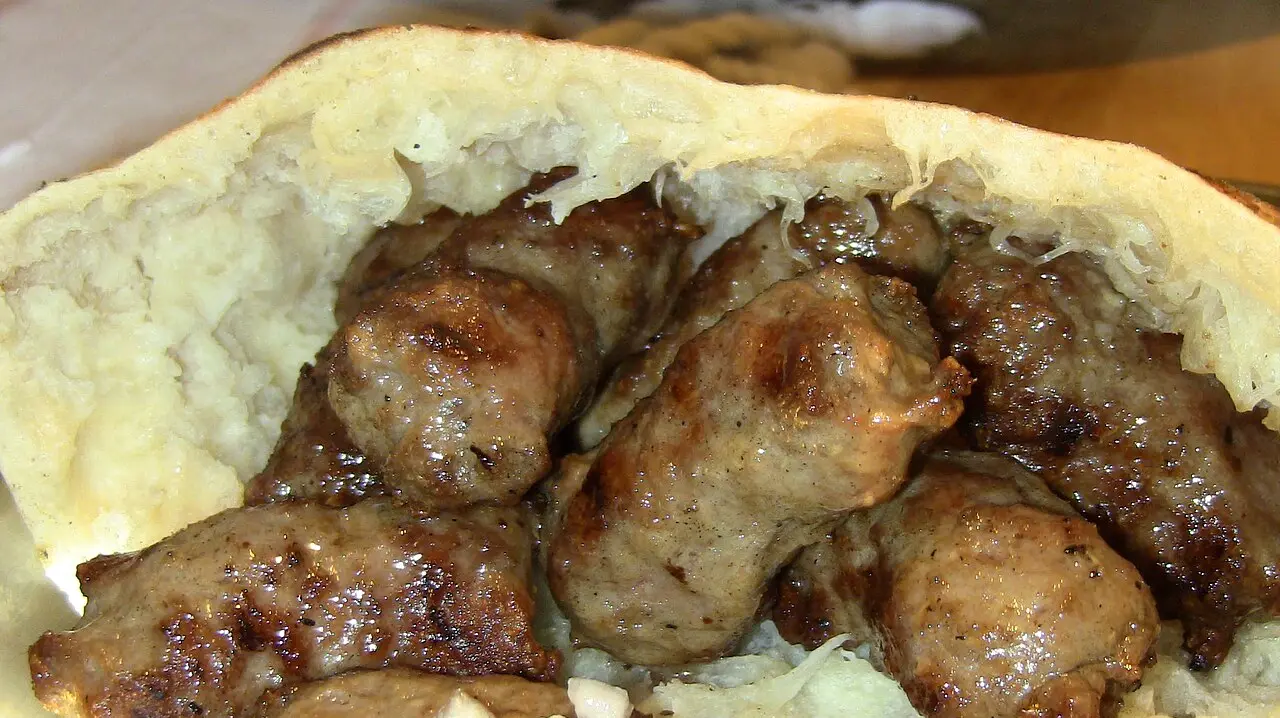
The national dish, and the one to try first. Ćevapi are small, skinless links of minced beef (often with a little lamb), grilled hard over charcoal until they blister, then packed into a warm, pillowy flatbread called somun with a handful of raw chopped onion and, if you know to ask, a smear of kajmak, the tangy clotted cream that melts into the meat. You order them by the piece, usually in fives or tens. Regional pride runs deep: Sarajevo does them small and soft, while Banja Luka grills them in joined blocks of four with a firmer bite. Cheap, smoky and completely addictive. In the capital the argument narrows to a handful of grills - our guide to the best ćevapi in Sarajevo weighs Željo against Petica Ferhatović.
2. Burek
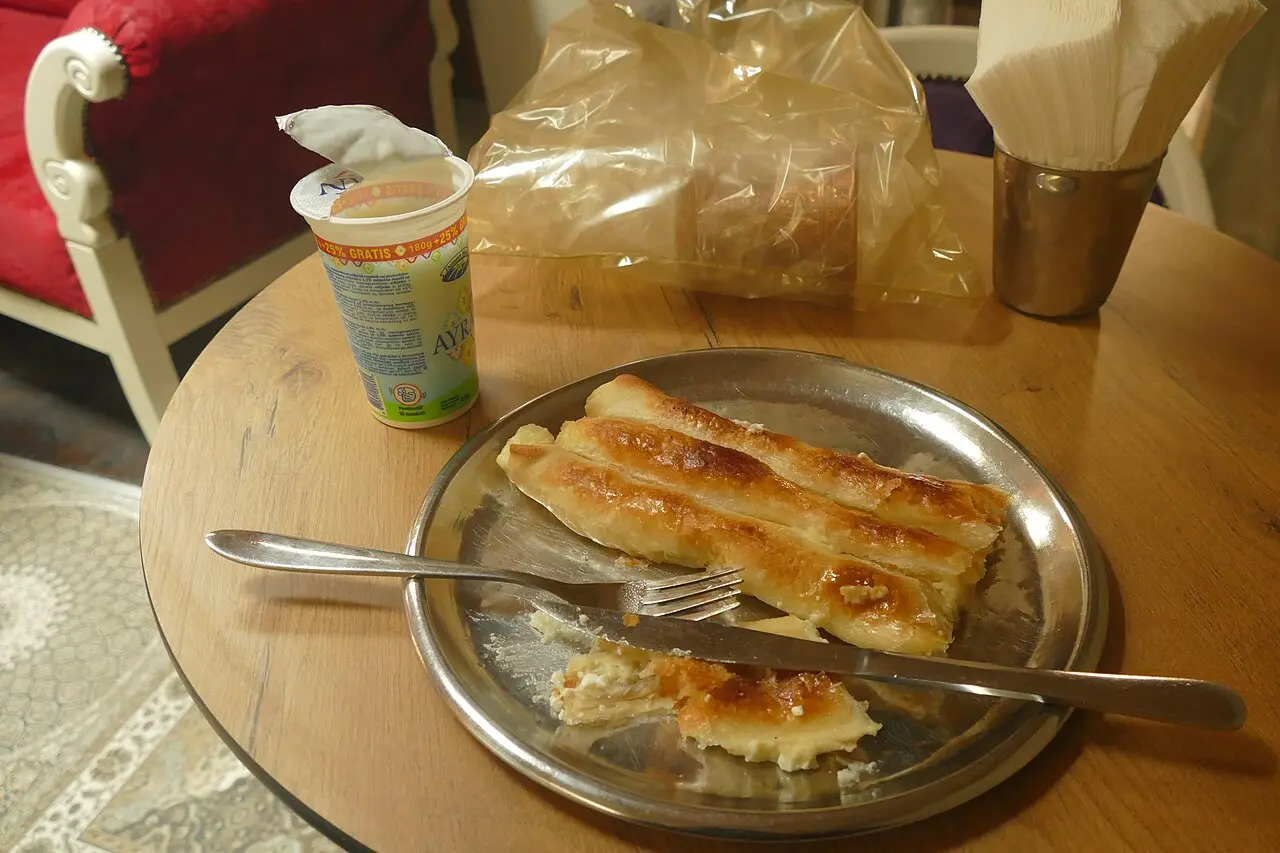
Here is a distinction that trips up visitors and locals from elsewhere alike: in Bosnia, burek means the meat-filled one, full stop. It’s a coil of paper-thin, hand-stretched dough packed with spiced minced beef and baked into a golden spiral, best eaten hot with a cup of drinking yoghurt. Everywhere else in the region, “burek” gets slapped on any filling; call a cheese pie a burek in Sarajevo and someone will gently correct you.
3. Sirnica
The cheese one. Same thin dough, same spiral, filled instead with a soft, slightly salty white cheese. Rich, simple and a staple breakfast.
4. Zeljanica
The green one, filled with spinach and cheese. Arguably the most moreish of the family and an easy win for vegetarians, who otherwise have to read the menu carefully.
5. Krompiruša
The underrated one, filled with seasoned potato. Humble, filling and the cheapest way to eat well when your money is running low. Together, this pastry family is collectively pita, and only number two above earns the name burek.
Soups, stews and stuffed things
6. Begova čorba
Begova čorba, “the Bey’s soup,” is the grand old dish of Bosnian tables: a thick, velvety chicken and okra soup with root vegetables, finished with an egg-and-cream or yoghurt liaison that makes it luxuriously smooth. It was food fit for a bey, hence the name, and it still feels like a small occasion.
7. Sarma
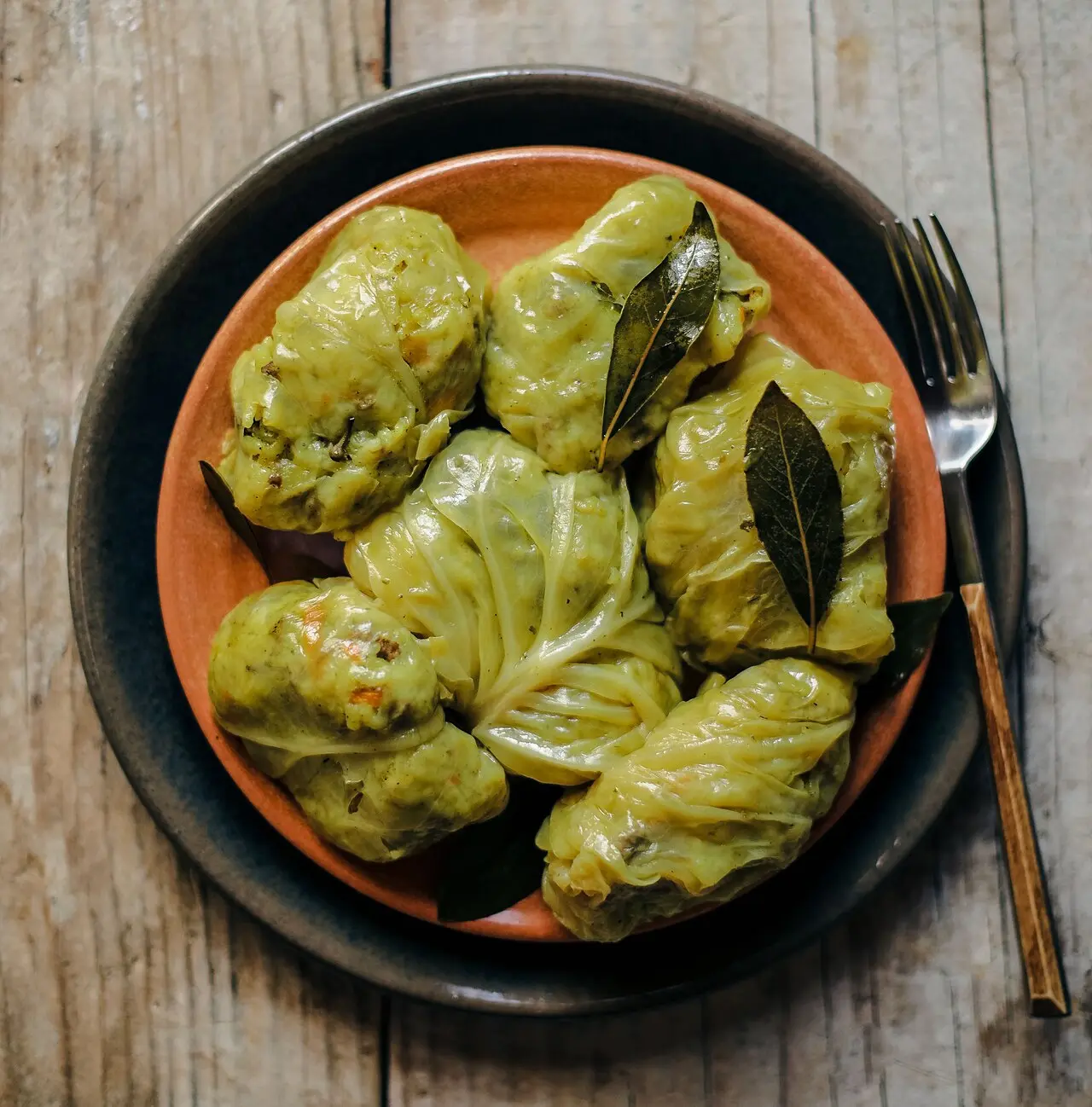
Winter and celebration food. Sarma is minced meat and rice wrapped in soured cabbage leaves and simmered low and slow for hours until meltingly tender, usually made in a huge pot for a crowd. Every family swears theirs is best, and you’ll not find a better argument against that than a good plate of it.
8. Japrak
Sarma’s leaner cousin. Japrak is the same filling rolled in leaves rather than cabbage, most often grape or sour-dock leaves, giving a fresher, slightly tart bite. If you’ve hit sarma fatigue, this is the palate-reset.
9. Sogan-dolma
A Mostar speciality and a personal favourite to order in Herzegovina: sogan-dolma is whole onions, hollowed out and stuffed with minced meat and rice, then braised until soft and served swimming in their own sweet, dark gravy. Ask for it in the south, where it belongs; the Old Town places in Mostar are where to start looking.
10. Dolma
The umbrella term for stuffed vegetables, from peppers to aubergines to courgettes. Meat versions are common, but the plain rice-only dolma is a reliable, genuinely tasty vegetarian option, which is worth knowing in a cuisine this carnivorous.
11. Klepe
Bosnia’s answer to ravioli. Klepe are small steamed dumplings filled with seasoned minced lamb or beef and onion, served drowned in a garlic-and-yoghurt sauce. Comforting, garlicky and not nearly as famous abroad as they deserve to be.
12. Bosanski lonac
The “Bosnian pot” is the ultimate slow food: layers of meat and whatever vegetables are to hand, packed into a tall pot and cooked for hours, traditionally over an open fire, until everything collapses into a deep, savoury stew. It’s peasant cooking in the best sense, and no two are ever quite the same.
The sweet finish
13. Tufahija
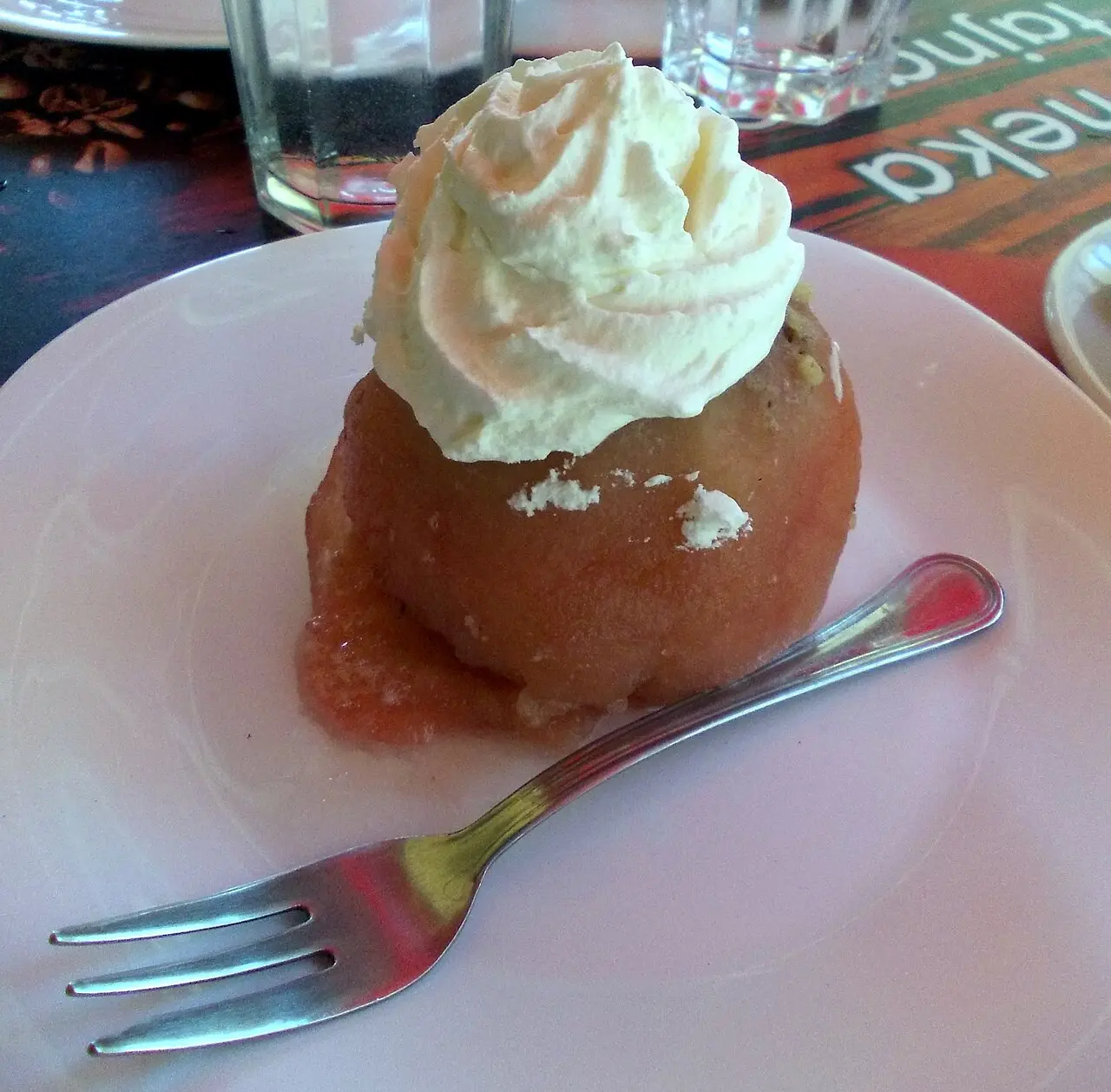
If you order one Bosnian dessert, make it this. Tufahija is a whole apple, cored and gently poached, then stuffed with walnuts and sugar and crowned with whipped cream. It looks demure and delivers far more than it lets on: tender, nutty and not too sweet, a proper Ottoman-era classic.
14. Hurmašica
A little date-shaped pastry of soft semolina dough, baked and then soaked in sugar syrup until it’s dense, moist and sticky through. It looks like a modest biscuit and eats like a sponge for syrup, in the most pleasant possible way.
15. Baklava
The showpiece of the sweet trolley. Bosnian baklava layers wafer-thin filo with crushed walnuts and drenches the lot in syrup, cut into neat diamonds. It tends to be walnut-led rather than pistachio, and is often a touch less cloying than versions further east, though sweetness varies from one slastičarna to the next.
The drinks: coffee first, always
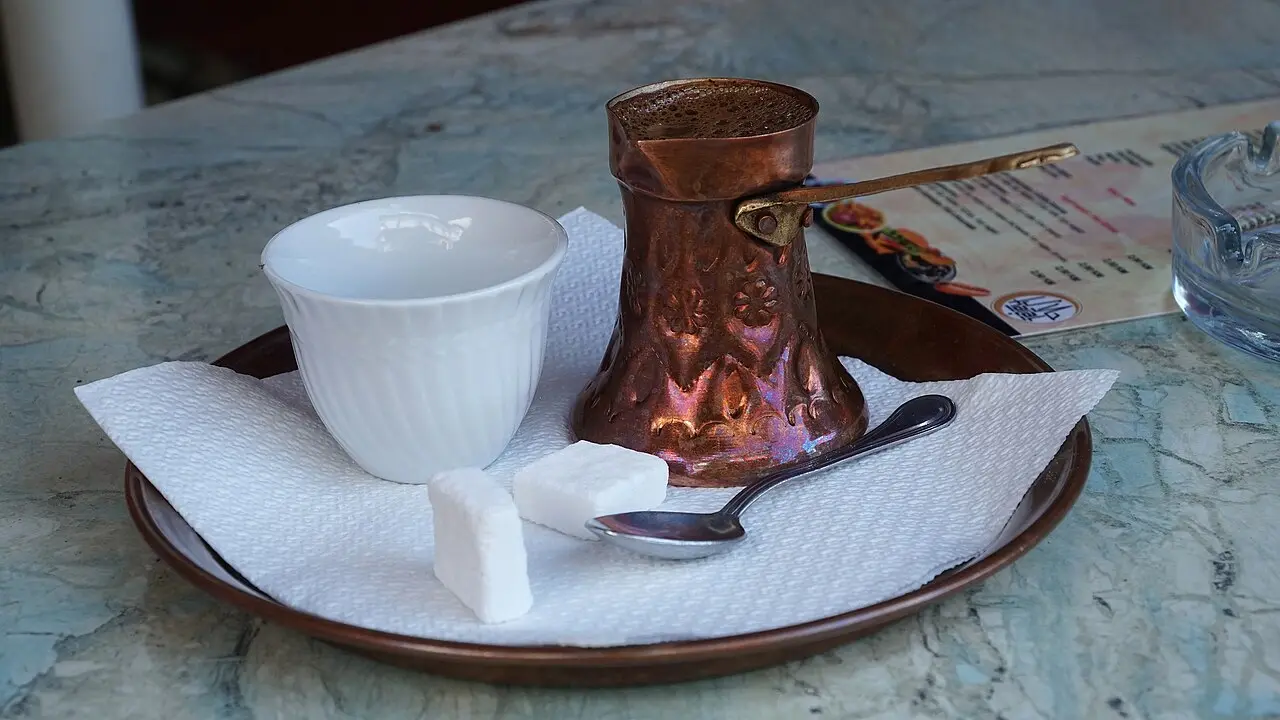
No Bosnian meal is really finished without bosanska kafa, Bosnian coffee, and it is less a drink than a ritual to settle into. Very finely ground coffee is brought to the boil in a small long-handled copper pot, the džezva, and served unfiltered in a tiny handleless cup, the fildžan, alongside a sugar cube, a piece of rahat lokum (Turkish delight) and a glass of water. The done thing is to sip slowly, nibble or dunk the sugar, and let an hour disappear. Rushing it rather misses the point. Our full guide to Bosnian coffee and how to drink it covers the kit, the sugar-cube trick and why it is not quite Turkish coffee.
For something different, look out for boza, a thick, faintly tangy drink made from fermented millet or maize. It has a barely-there alcohol content, a bready sweetness and a long Ottoman pedigree, and it divides opinion on the first sip. It turns up year-round, so ask around; trying it’s part of the fun even if you decide once is enough.
Where to eat it, and how to do it right
The single best advice is to eat where the specialists work and where the locals queue. For ćevapi, find a busy ćevabdžinica in the old town and order by the ten; the copper-lined lanes of Baščaršija in Sarajevo are wall-to-wall with them. For pita, follow the smell to a buregdžinica and eat it standing up with a yoghurt. For the stews, sarma and stuffed dishes, seek out an aščinica, point at what looks good in the trays, and you’ll eat like a local for very little. Our guides to Sarajevo and Mostar point you to the neighbourhoods where the food scene actually lives, and note that some southern specialities like sogan-dolma are best hunted down in Herzegovina.
One practical note: much of this is street-priced and cash-friendly, quoted in convertible marks (KM), and the smaller places may not take cards or euros, so carry some local currency. Beyond that, the only real rule is the coffee’s rule, and it applies to the whole table: slow down. Bosnian food isn’t built to be rushed between sights, it is built to be the reason you stopped, so give it an unhurried hour and let the next ćevapi decide your afternoon.
Photos
Read also

Food · 12 min read
Where to Eat in Mostar: Old Town Restaurants With a View
Verified · August 17, 2026Mostar Old Town restaurants by job: a terrace facing Stari Most, a courtyard off the bazaar, and a grill for cevapi. Addresses, cash, and what to order.

Food · 8 min read
Rakija in Bosnia: What It Is and Where to Taste It
Verified · August 9, 2026Rakija in Bosnia: the types, three named Sarajevo bars, tours with 2026 prices, customs limits for taking a bottle home, and how to decline politely.

Food · 9 min read
Herzegovina Wine Guide: Žilavka, Blatina & the Wine Route
Verified · July 25, 2026Herzegovina wine: the native Žilavka and Blatina grapes, the Wine Route cellars from Mostar to Trebinje, when to go, and how to taste it.

Food · 11 min read
Bosnian Burek: Types, Etiquette & Where to Try It
Verified · July 24, 2026In Bosnia burek means meat, full stop. What sirnica and zeljanica are, how pita is sold by the kilo, what it costs and where to eat it in Sarajevo.