Things to Do in Sarajevo: Sights, History & Food 2026
The best things to do in Sarajevo: Baščaršija, the Tunnel of Hope, Mount Trebević, the 1914 corner, plus where to eat and how many days you need.
Sarajevo is the rare capital you can read like a walk through time: step off the Ottoman bazaar, cross an invisible line in the pavement, and you’re in a Habsburg boulevard of grand façades - with the marks of the 1990s siege still legible through all of it. That layering is the point of the place, and it means Sarajevo rewards a slower visit than its size suggests; most people give it a day and leave feeling they rushed. The short answer up front: the old town is a comfortable half-day, but the city with its siege history and the mountains above it deserves two or three.
Baščaršija: the Ottoman heart
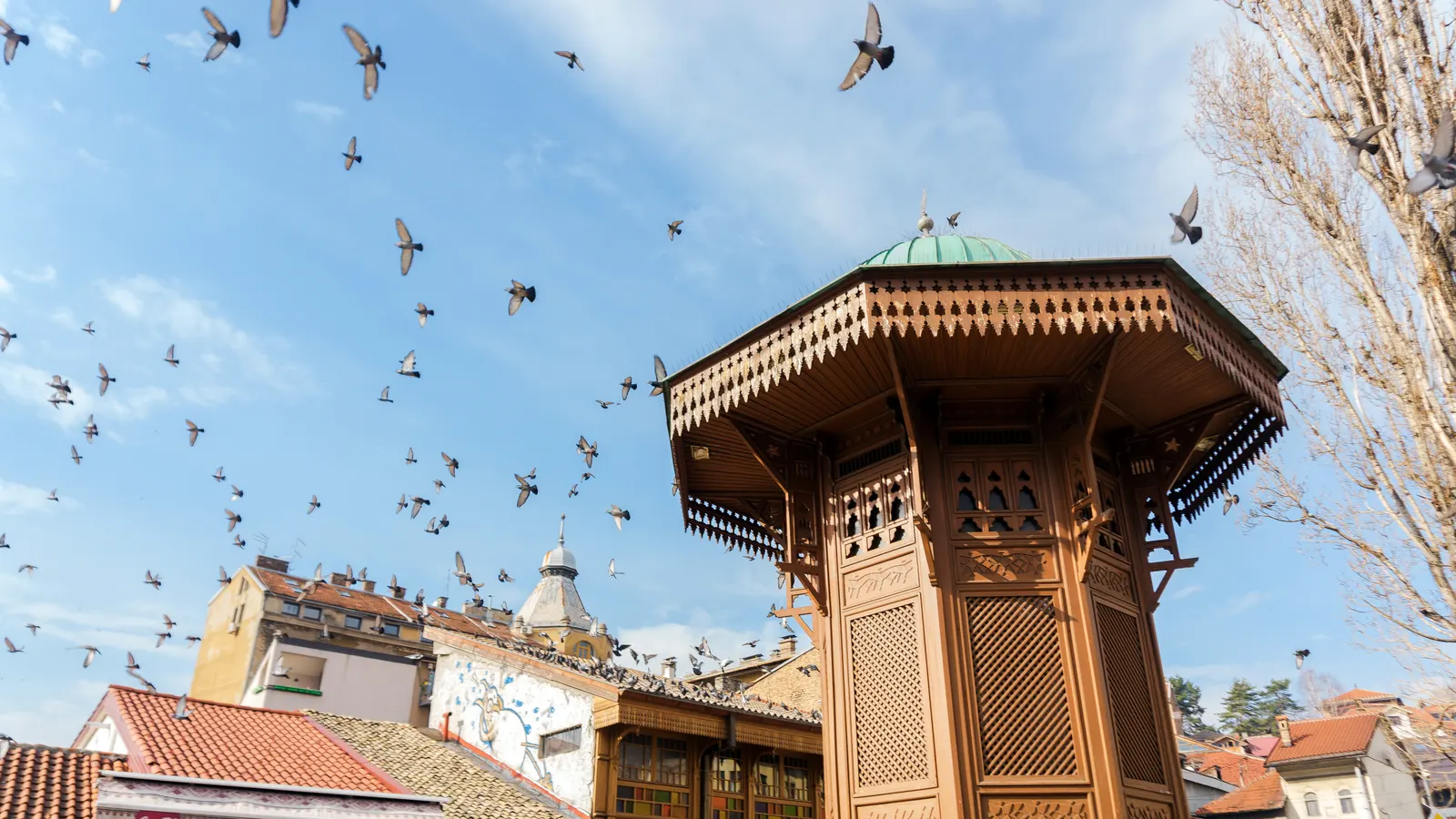
Everything starts at Baščaršija, the old bazaar laid out in the 15th and 16th centuries around the trade of a frontier Ottoman town; our full Baščaršija guide breaks down the Sebilj, the coppersmith street and the mosque. Its name is simply Turkish for “main market,” and it still works like one - a warren of low stone shopfronts, craft workshops and courtyards where the noise is part fountain, part pigeon, part copper being hammered. At its centre stands the Sebilj, the ornate wooden fountain-kiosk that is Sarajevo’s postcard: an Austro-Hungarian rebuild of the Ottoman sebilj that stood here from 1753 - the rebuild’s date is disputed, usually given as the 1890s (often 1891), though some tourist literature says 1913. Locals will tell you that if you drink from it you’re fated to return to Sarajevo.
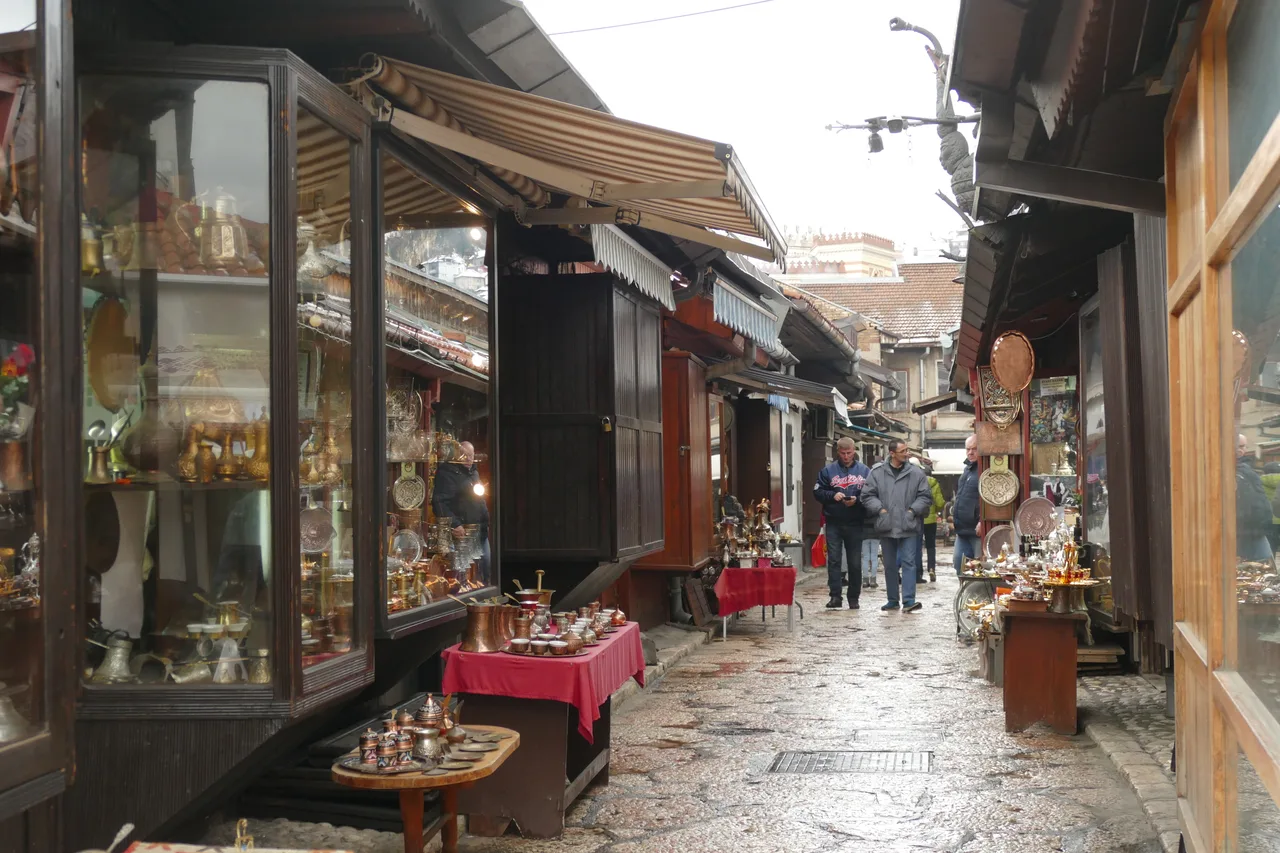
Duck off the square into Kazandžiluk, the coppersmiths’ alley, where a handful of workshops still beat trays, džezva coffee pots and lamps out of sheet metal - the trade that named the lane. Many stalls now sell mass-made souvenirs, but the genuine article is here: a hand-beaten copper coffee set is the one thing worth carrying home. Nearby, the 16th-century caravanserai Morića Han - once an inn for merchants and their horses - survives as a courtyard of cafés and rug shops. This is also the best-fed corner of the country: the bazaar’s ćevapi joints and pastry shops are the place to work through our guide to Bosnian food and the dishes to try.
Gazi Husrev-beg Mosque
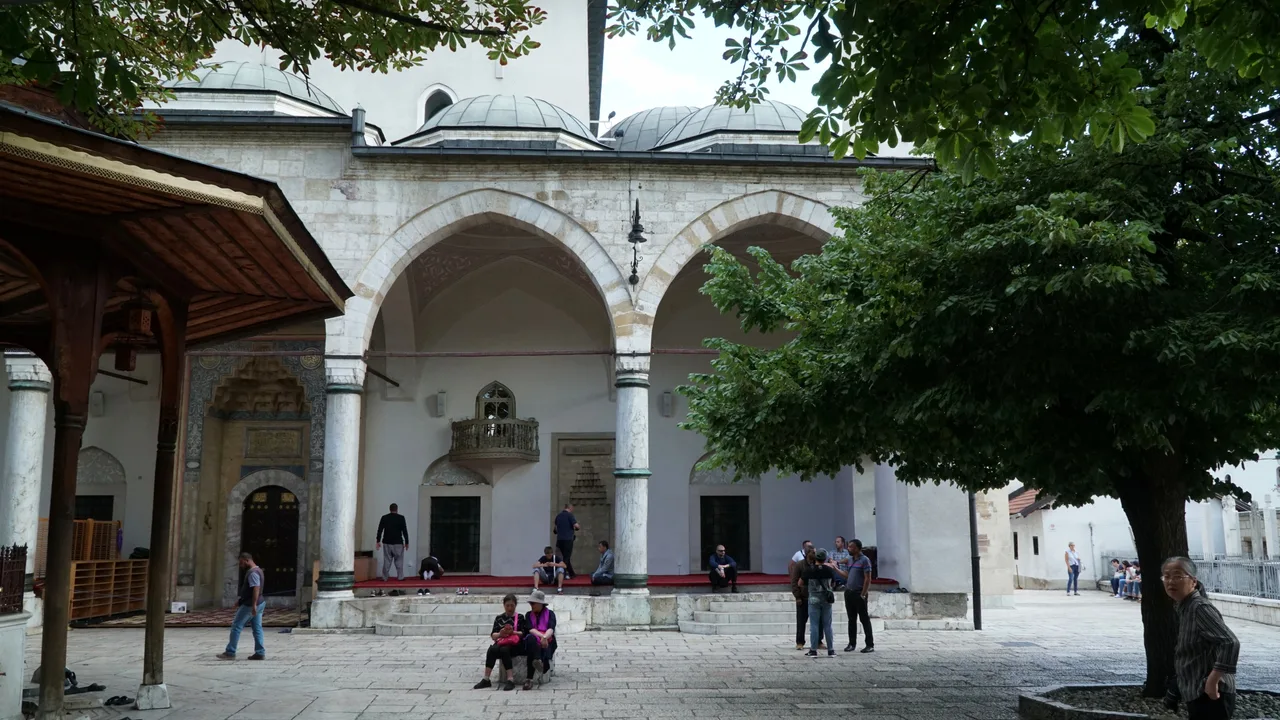
A minute from the Sebilj is the Gazi Husrev-beg Mosque (1531), the largest historic mosque in the country and the finest Ottoman architecture in this part of the Balkans. It anchors a whole endowment - a madrasa, a clock tower (the Sahat-kula, still keeping lunar time for prayers), a covered market and a library - funded five centuries ago by the governor whose name the city keeps returning to. Non-Muslim visitors are welcome outside the five daily prayer times, through a separate door; there’s a small fee (around 3-5 KM when we checked) and a firmly enforced dress code - women cover hair and shoulders (scarves lent at the door), men wear long trousers.
Where East meets West
Walk west along Sarači and, set into the pavement where the bazaar meets the grand Ferhadija shopping street, you’ll find a brass line and the words “Sarajevo Meeting of Cultures” (laid in 2014). Turn one way and you’re among Ottoman cobbles, domes and copper; turn the other and it’s Austro-Hungarian blocks, cafés and a cathedral, all built in a few decades after 1878. Stand with a foot on each side - that’s Sarajevo in one step, and it’s free.
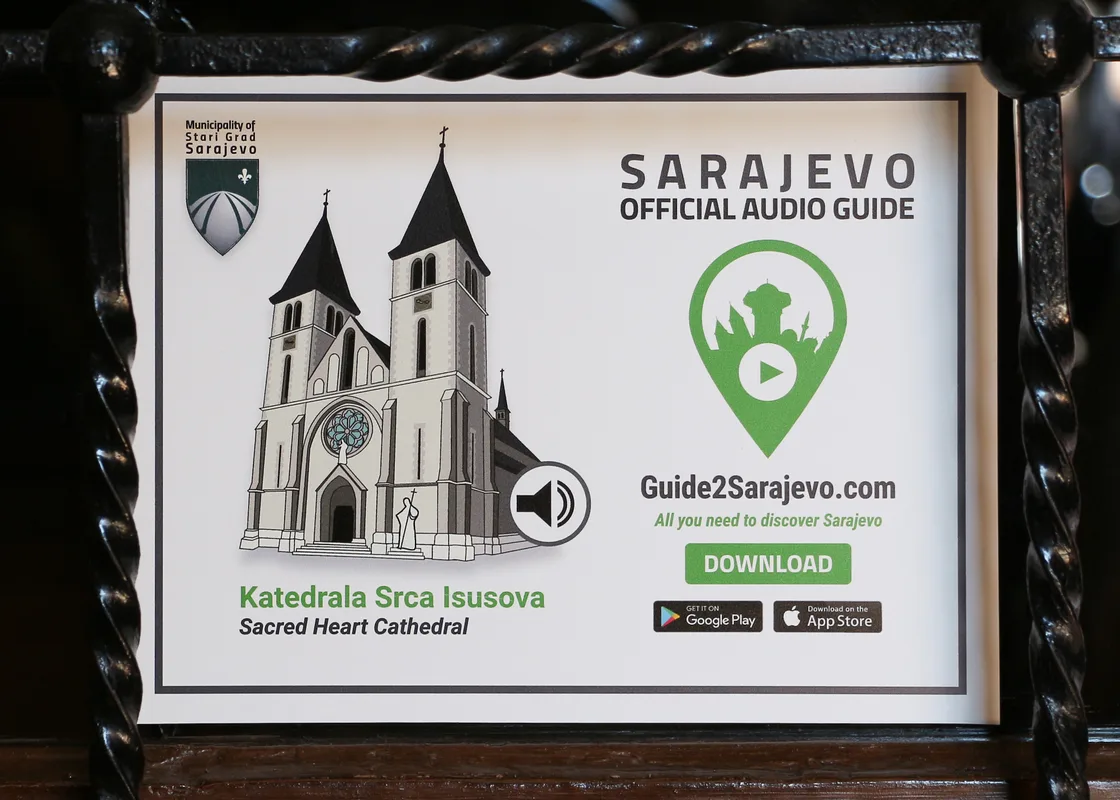
A few blocks along Ferhadija stands the Sacred Heart Cathedral (1889), the neo-Gothic seat of the Catholic archdiocese and the largest cathedral in the country. It’s free to step inside, and in the pavement in front sits one of the city’s Sarajevo Roses - which brings us to the harder part of a visit here.
The siege, told with care
You can’t understand Sarajevo without its recent history, and the city doesn’t hide it. Between 5 April 1992 and 29 February 1996 - 1,425 days - it endured the longest siege of a capital in modern warfare, encircled from the surrounding hills. The most careful post-war counts put the dead at 13,952, including 1,601 children. These aren’t sights to be “ticked off”; they are places where people lived and died, and the city asks you to treat them that way. Our guide to the siege of Sarajevo sets out what happened and the places across the city - Sniper Alley, Markale, the Roses, the cemeteries - where you can understand it, and the city’s war and memory museums, from the War Childhood Museum to Gallery 11/07/95, tell the indoor side of the same story. That history also shapes the one modern safety question people ask; our guide to whether Bosnia is safe to visit answers it, landmines and all.
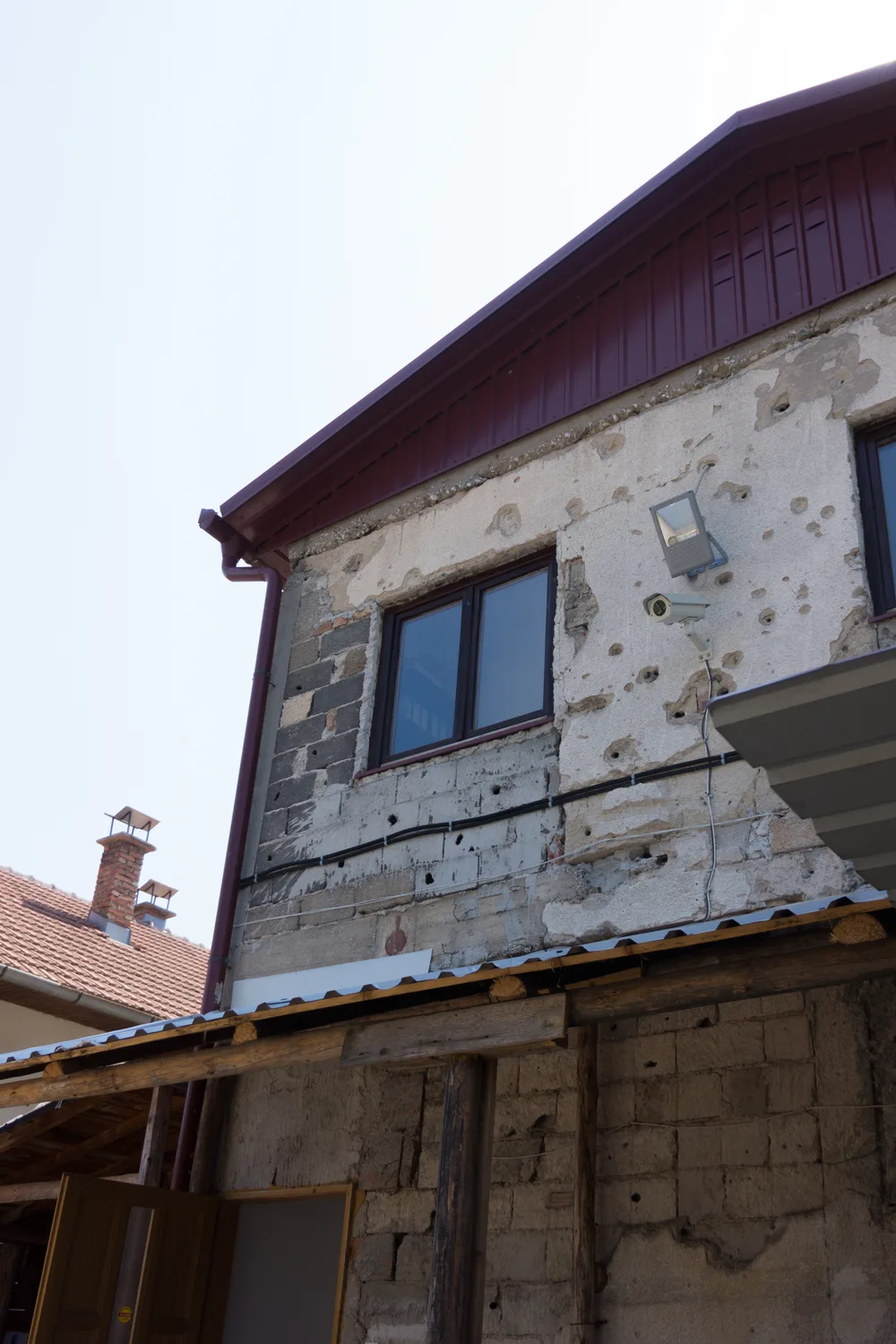
The single best place to grasp it is the Tunnel of Hope (Tunel spasa). In 1993, under the UN-held airport runway, Sarajevans dug an 800-metre tunnel by hand - the city’s only physical link to the outside world, through which food, weapons, fuel and people passed for the rest of the war. A surviving stretch, and the shell-scarred family house it started from, are now a museum in the suburb of Butmir. Admission is 20 KM for adults, 8 KM for students, cash only in Bosnian marks (no cards, no euros); it opens roughly 08:30-17:00 in summer, shorter in winter. It sits by the airport, about 15 minutes by taxi from the centre; our full guide to visiting the tunnel covers how to get there and what to see.
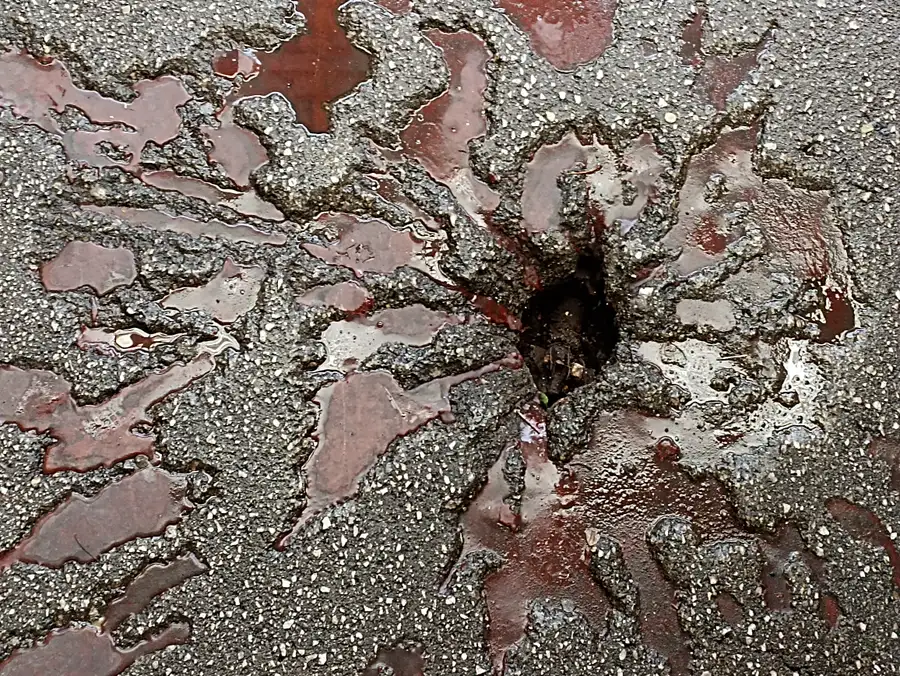
Around the centre you’ll notice the Sarajevo Roses: scars where a mortar shell struck the pavement and killed people, later filled with red resin so the pattern of the blast remains. Most carry no plaque; you come upon them by chance. Tread around them, not on them. You’ll also hear the wartime nickname Sniper Alley for the long boulevard (Zmaja od Bosne) from the airport into town, once fatally exposed to the hills; today it’s an ordinary road, and knowing what it once was changes how you walk it.
One note of care for planning. The Srebrenica-Potočari Memorial, some two hours east, commemorates the July 1995 genocide; 11 July is its day of remembrance. It’s not a day trip in the sightseeing sense, and shouldn’t be treated as one. A good local guide, in the city or at the tunnel, adds the context these places deserve.
The assassination that started a world war
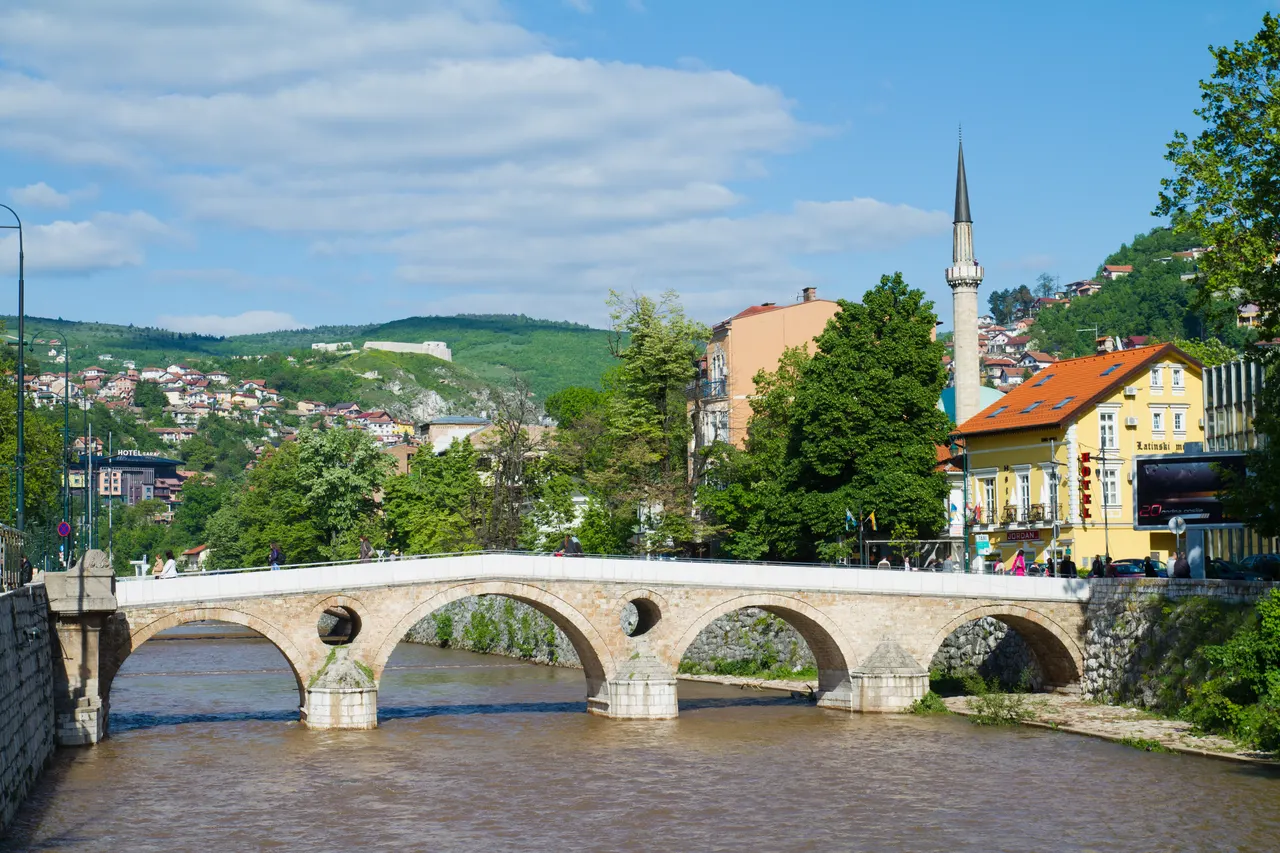
On the Miljacka riverfront stands the modest Latin Bridge, an Ottoman stone span that would be a footnote but for one morning. On 28 June 1914, on the corner beside it, a young Bosnian Serb named Gavrilo Princip shot Archduke Franz Ferdinand of Austria and his wife Sophie - the spark that lit the First World War. The corner building is now the small Museum of Sarajevo 1878-1918: an unremarkable street junction where the twentieth century pivoted.
A little upstream is the Vijećnica, the City Hall - a striped pseudo-Moorish palace from 1896 that’s arguably the city’s grandest building. It held the National and University Library and its two million books until the night of 25-26 August 1992, when a Bosnian Serb shell set it ablaze; librarians and citizens carried out what they could under sniper fire, and at least one died doing it. After more than two decades of reconstruction it reopened in 2014, its atrium restored to full colour. You can visit the interior for a small fee, and it’s floodlit and lovely after dark - full hours, tickets and the basement exhibition are in the Vijećnica City Hall guide.
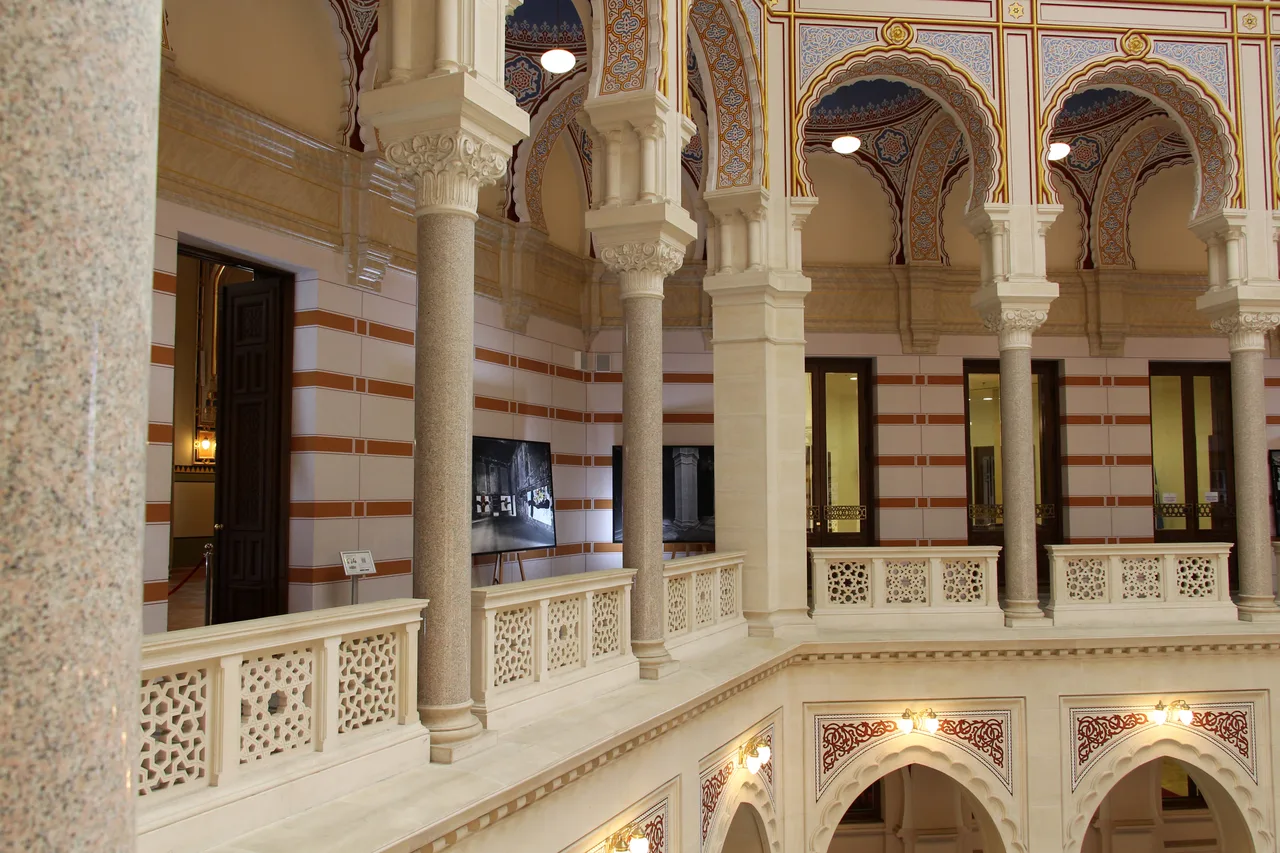
Up Mount Trebević: the cable car and the 1984 Olympics
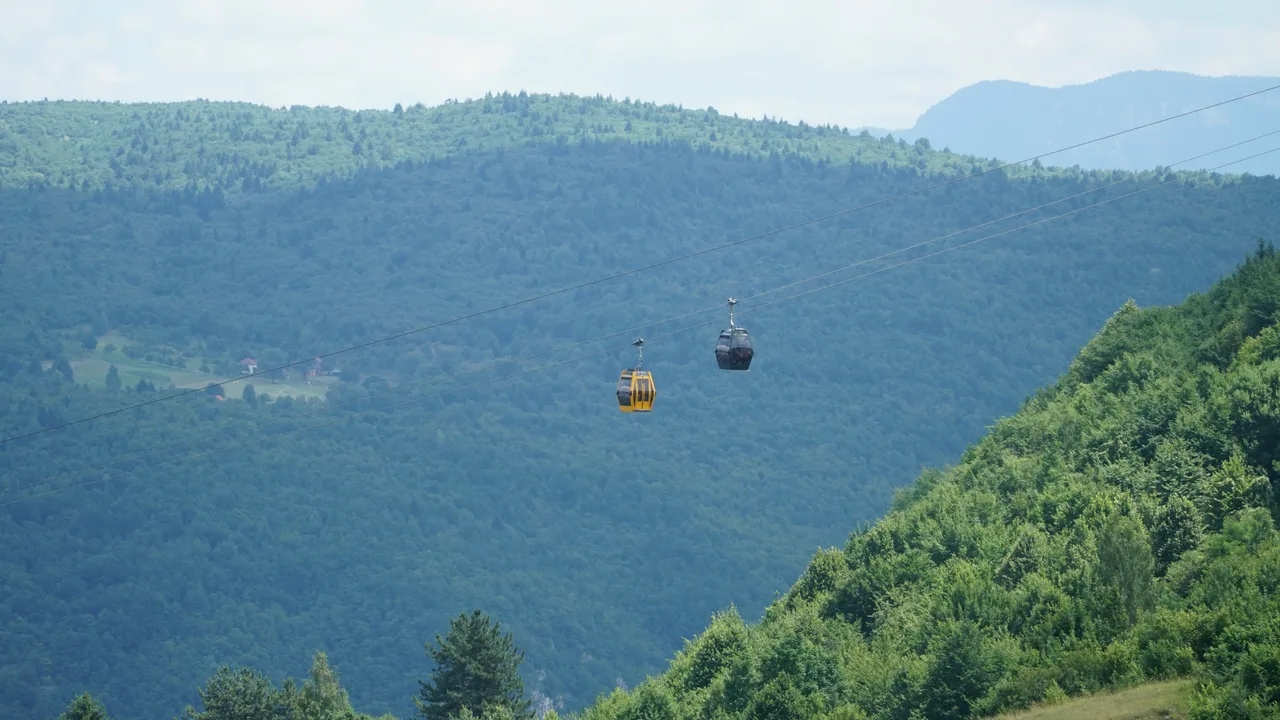
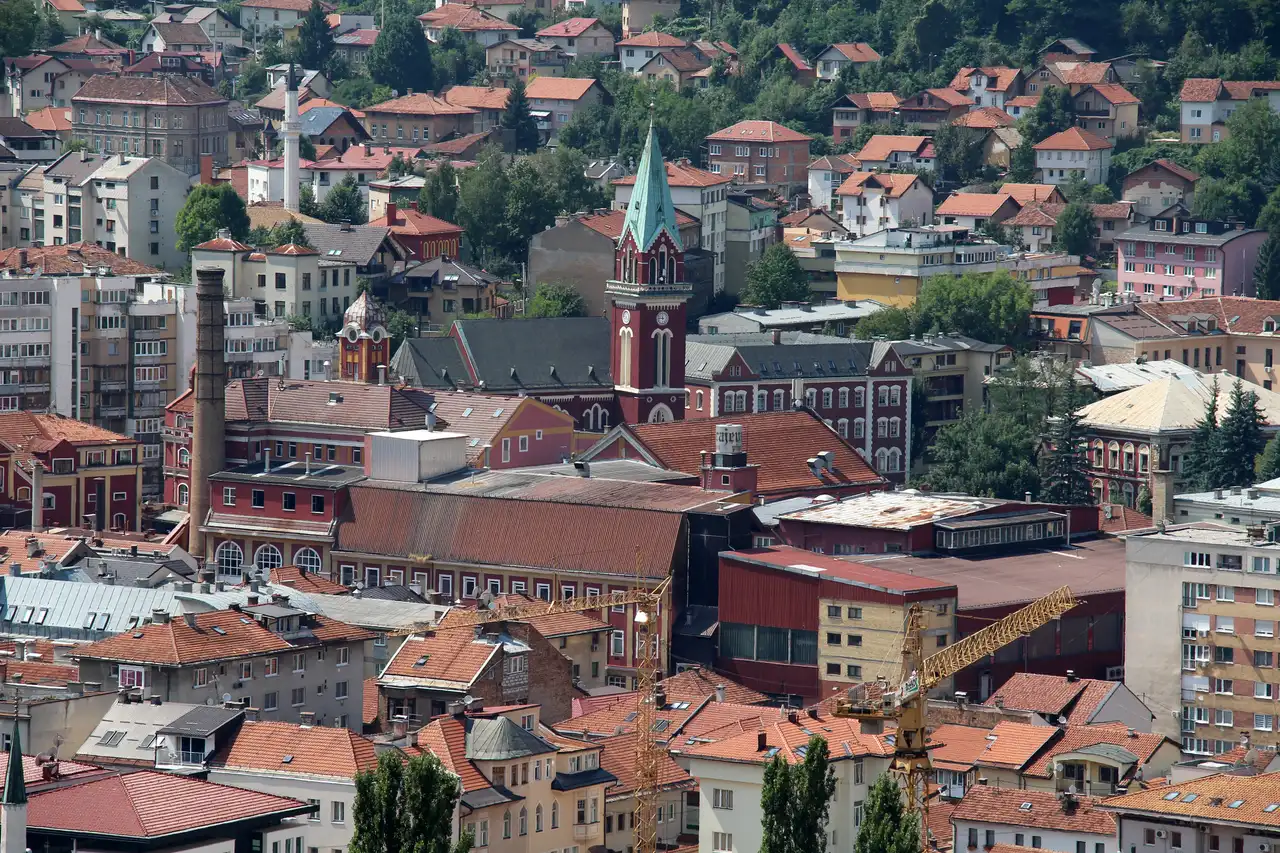
For the best half-day break from the streets, ride the cable car up Mount Trebević. Rebuilt on the original 1959 line that carried crowds to the 1984 Olympics and reopened in 2018, it climbs from Bistrik station to the ridge in about eight minutes. A return ticket is 30 KM for visitors, one-way 20 KM (residents pay far less with local ID). The view over the whole bowl of the city - minarets, red roofs, the river threading through - is the one to save for a clear afternoon.
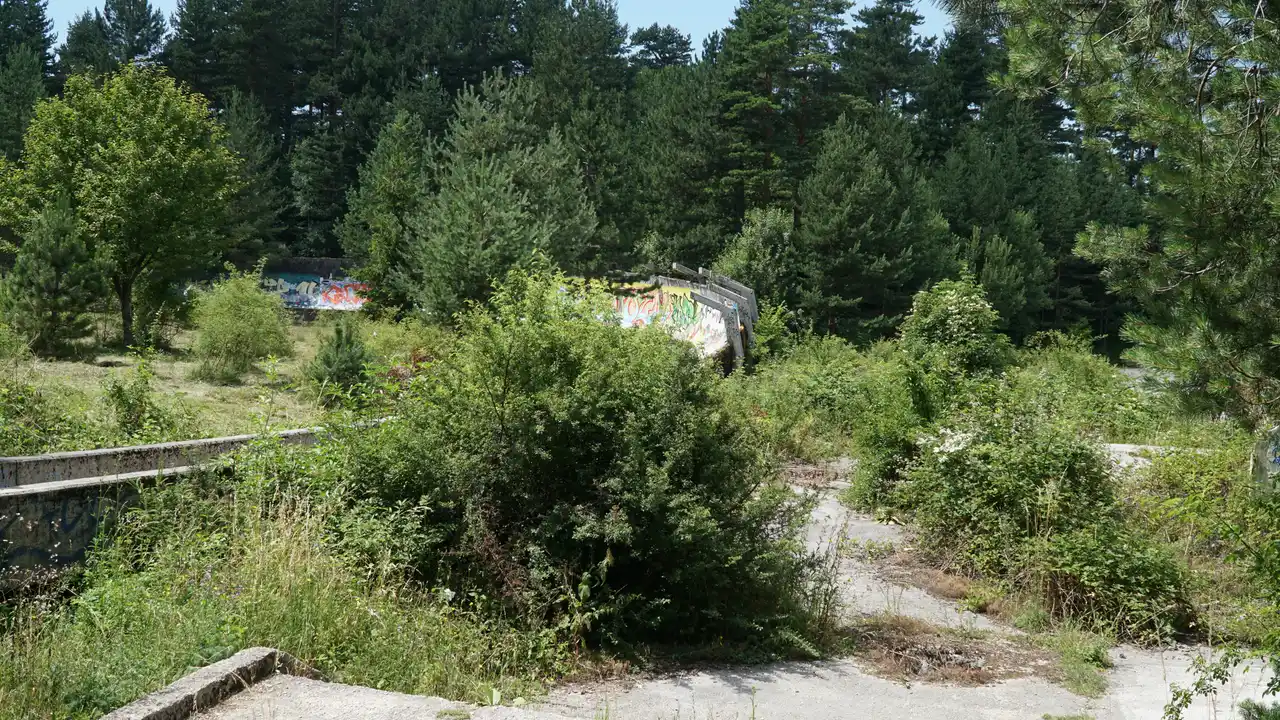
From the top station it’s a short walk downhill to one of the country’s strangest sights: the abandoned 1984 Olympic bobsled and luge track. It’s a concrete channel roughly 1.3 km long, curling through the pines, thick with graffiti - and, like the mountain around it, a front line during the siege, used as an artillery position. There’s no fence, no ticket and no guard; you can walk its length and stand in the banked curves. Wear proper shoes - the surface is slick with pine needles. Free, eerie and genuinely memorable. For the full history, ticket details and how to get up there, see our guide to Trebević and the Olympic bobsled track.
If you’d rather stay in town for your view, walk up through the Vratnik quarter to the Yellow Bastion (Žuta tabija), an Ottoman fortress terrace that’s the city’s free sunset spot - the same cannon fired here each evening in Ramadan to break the fast. The White Bastion (Bijela tabija) sits higher again for the climb.
How long do you need?
The honest breakdown: half a day does Baščaršija, the mosque and the riverfront to the Latin Bridge and Vijećnica. Two full days adds the Tunnel of Hope and the wartime story, plus the cable car and Trebević - the length most visitors should aim for, and our hour-by-hour 2 days in Sarajevo itinerary lays that weekend out. A third day frees you for the 1984 Olympic mountains (Jahorina and Bjelašnica, both under an hour away), a run to Mostar, the curious Bosnian pyramids at Visoko, or Konjic and the Neretva; our guide to the best day trips from Sarajevo ranks these, the nearby Bijambare Caves among them, against the longer runs east to Srebrenica and Višegrad by whether each is worth the drive. For how the capital fits into a wider trip, see how many days you need in Bosnia, and if you’re deciding whether Mostar deserves as much of your time, our Sarajevo or Mostar guide splits the two. If the dates line up, the Sarajevo Film Festival - born out of the siege in 1995 and now the region’s biggest - takes over the city in mid-August (14-21 August in 2026); book beds early.
Where to eat
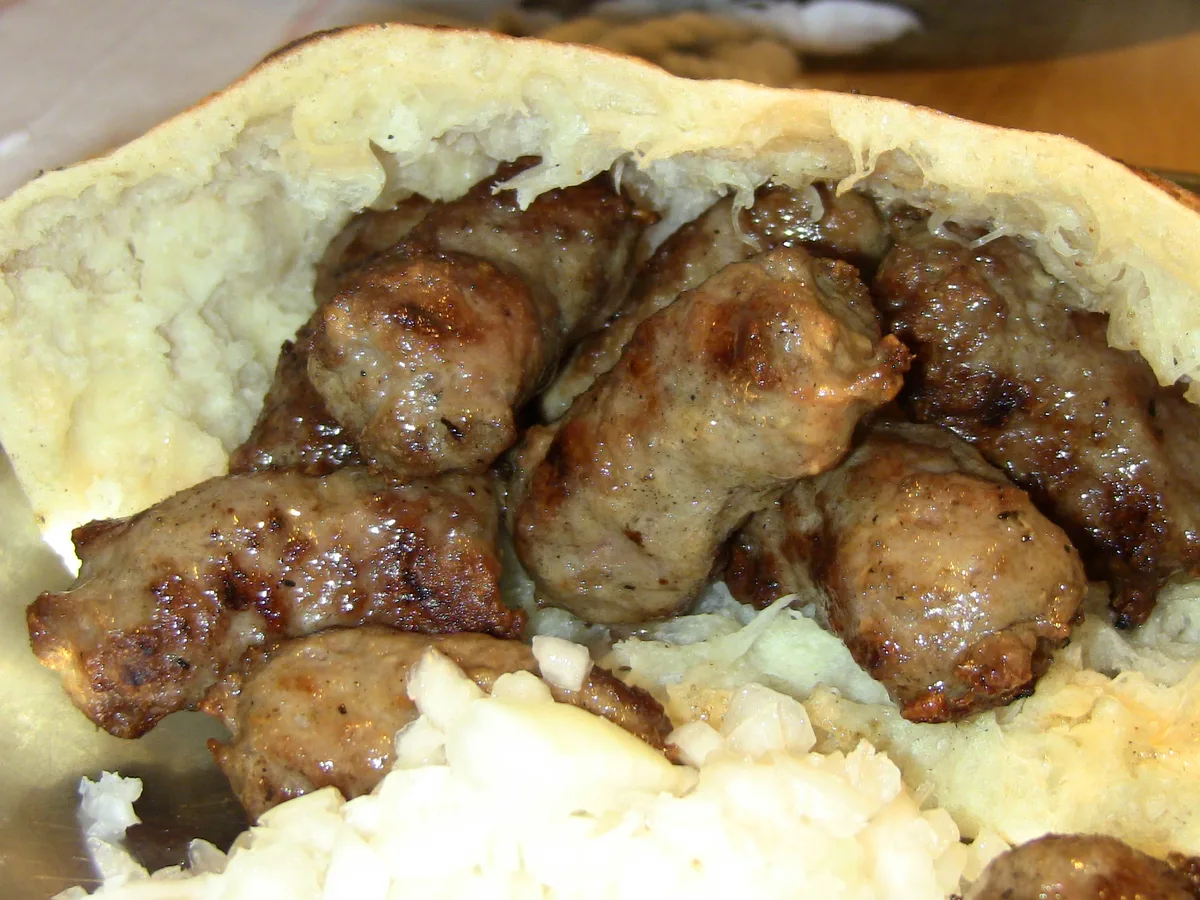
Sarajevo is a serious food town, and cheap. The local institution is ćevapi - small grilled beef sausages served five or ten to a portion inside a puffy somun flatbread, with raw onion and often a spoon of kajmak. The famous grills cluster in Baščaršija (Željo, Petica and Mrkva are the names you’ll hear), and our guide to the best ćevapi in Sarajevo pits them against each other; pick whichever has the queue of locals. For a cheap lunch, find a buregdžinica and order burek - the meat-filled filo coil, sold by weight; the cheese version is sirnica, spinach zeljanica, potato krompiruša. If it is your first time with the cuisine, our guide to what to eat in Bosnia explains which kind of shop cooks what, so you order in the right place. When you want a table and an evening rather than a counter, our guide to where to eat in Sarajevo picks the sit-down restaurants beyond the grills.
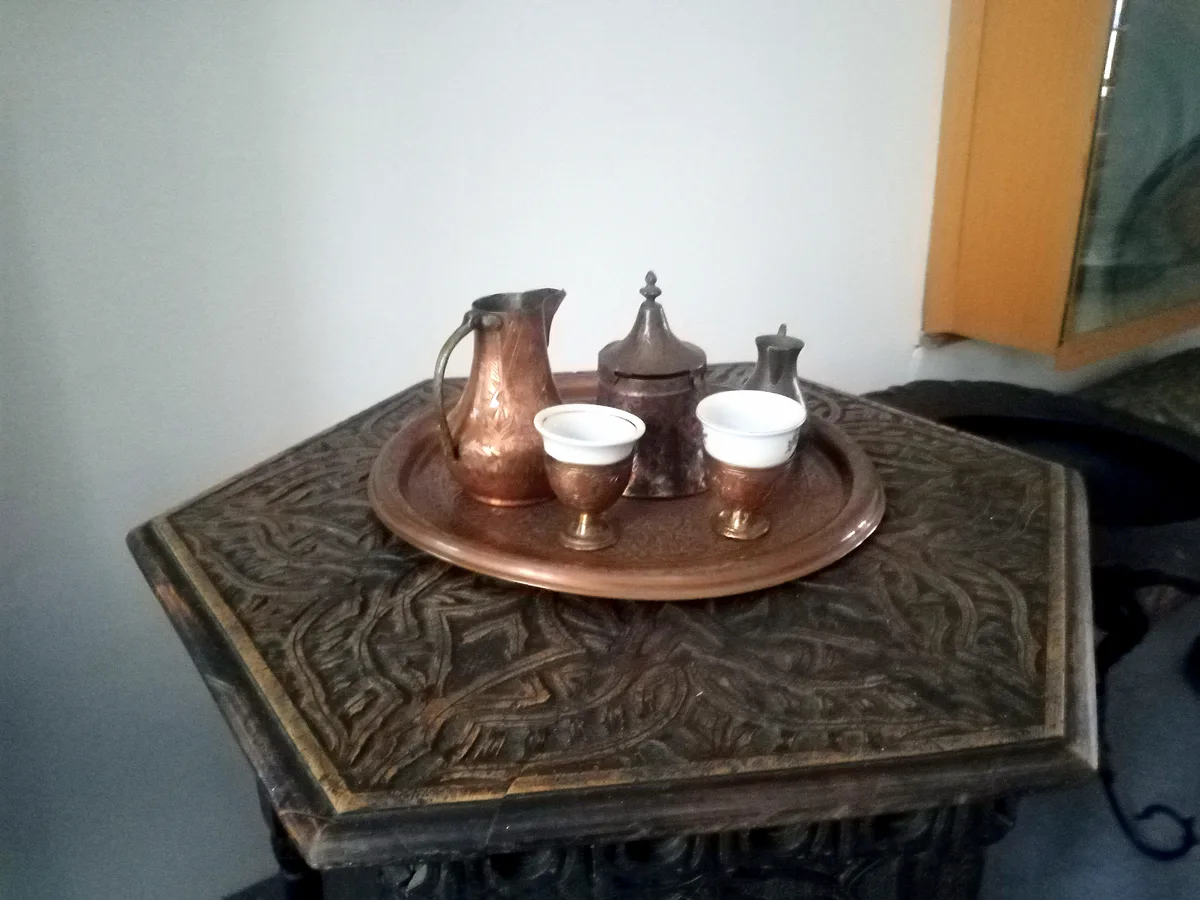
Then slow right down for Bosnian coffee. It arrives as a ritual, not a drink: a little copper džezva, a fildžan cup, a sugar cube and a square of rahat lokum (Turkish delight). You pour, wait for the grounds to settle, and sip slowly - half of Sarajevo’s social life happens over one. Our guide to Bosnian coffee and how to drink it walks through the ritual properly; ask where you’re staying for their pick. After dinner, the same walkable strip from Baščaršija into Ferhadija is where the city drinks - bars, jazz cellars and Sloga nights are mapped in our Sarajevo nightlife guide. If you’re thinking of staying on to work rather than just visit, our guide to living in Sarajevo as a digital nomad covers the practicalities.
Where to stay
For a first visit, base yourself in or right beside Baščaršija and along Ferhadija. It puts the bazaar, the cafés, the mosque and the riverfront on your doorstep, and gives you the old town early and late, when the day-trippers thin out. A short walk out - towards Bistrik for the cable car, or the leafy Marijin Dvor side - buys quieter, cheaper beds still within reach on foot or by tram. If you’re driving, look for parking, as the bazaar lanes are pedestrian and tight. Prices climb during the film festival and around New Year; spring and autumn are the sweet spot. Our guide to where to stay in Sarajevo breaks each area down by who it suits.
Getting there and around
Sarajevo’s international airport (SJJ) is about 12 km southwest of the centre, near Butmir. There’s no train link; a taxi into town runs roughly 20-30 KM - insist on the meter, or agree the fare first - and a private transfer takes the haggling out of a late arrival. Our full guide to getting from Sarajevo Airport to the city centre lays out the taxi, trolleybus 103 and transfer options, plus the evening catch when the cheap buses stop.
The city itself is easy and walkable, with the old town, the riverfront and Marijin Dvor all strung along the flat valley floor. The historic tram line 3, from Baščaršija out to Ilidža, is the useful tourist line. One thing worth flagging, because it’s often misreported: public transport is not free by day - a single ticket is 2.20 KM on the tram, trolleybus, bus and minibus (2.70 KM on express buses), validated on board. Only the overnight service (roughly midnight to 5am) runs free. For trams, trolleybuses, bus tickets and the day pass, see Sarajevo public transport; for coaches and the Mostar train, open the country transport overview.
Sarajevo also makes the natural base for the wider country. The classic move is the train down the Neretva canyon to Mostar - about two hours, twice a day, regularly rated one of the most scenic rail journeys in the Balkans; our Sarajevo to Mostar guide weighs it against the bus and the drive, and our 3 days in Bosnia route builds both cities into a short trip. Arriving from the coast? See our guide to getting from Dubrovnik to Sarajevo by bus, car or transfer, and if you’re still choosing between the two countries, our Croatia vs Bosnia comparison sets them side by side. North instead, it’s about three hours to Jajce, the medieval town with a waterfall through its centre, or you can make a two-day loop of it up the Bosna valley: our northeast Visoko, Vranduk and Tuzla route strings the medieval royal fortress at Vranduk together with the salt lakes you can swim in right in the middle of Tuzla. Pushing on east out of the country, the onward run to Serbia is a bus or a drive rather than a train, laid out in our guide to Sarajevo to Belgrade. For the Olympic mountains and the highland village of Lukomir, Konjic or a Herzegovina loop, though, you’ll want your own wheels: public transport to the trailheads and villages is patchy. In the cold months, those same Olympic mountains put cheap skiing 45 minutes from the old town, which our guide to Bosnia in winter covers in full. When to come is otherwise laid out month by month in our trip-planning guides.
Practical tips
A few things worth knowing before you go:
- Money. The currency is the convertible mark (BAM / KM), pegged to the euro at about 1.96 KM to €1. Some tourist spots take euros, at poor rates - the Tunnel museum, the mosque and small cafés all want cash in KM. ATMs are everywhere.
- The hills are the compass. Sarajevo sits in a long, narrow valley; if you’re lost, head downhill to the river. Pack a layer even in summer - weather turns fast.
- Dress for the mosques and memorials. Cover shoulders and knees for the Gazi Husrev-beg Mosque, and carry a scarf; the same modesty suits the wartime sites.
- Wear real shoes. The bazaar cobbles, the fortress climbs and the bobsled track are all uneven and, in places, slippery.
- When to go. Late spring and early autumn - roughly May, June and September - are the sweet spot: warm days, green hills and thinner crowds. July and August are hot and busiest, mid-August brings the film festival, and the ski season on the mountains runs December to March. Our best time to visit Bosnia guide breaks it down month by month.
Give Sarajevo two unhurried days rather than one rushed one, and you’ll see it for what it’s - one of the most layered, human and quietly moving cities in Europe.
Photos
On the map
The map loads on click - to keep the page lightweight.
The map didn’t load. Check your connection and refresh the page.
Distance
- Mostar ≈129 km · ~2 h by train or car The Neretva-valley train (2 a day each way) is one of the finest rides in the Balkans; buses run roughly hourly.
- Dubrovnik ≈230 km · ~4.5-5 h by car or bus Most people break the journey in Mostar rather than doing it in one go. EU/EEA/Schengen citizens can use a national ID card, others need a passport.
Read also

Cities · 12 min read
Bihać City Guide: Your Base for Una National Park
Verified · July 23, 2026Bihac in northwest Bosnia: a Gothic church that became a mosque in 1592, the Captains Tower museum, the Una through town and the July regatta.

Cities · 9 min read
Konjic: Ottoman Bridge, Rafting & Cold War Secrets
Verified · July 21, 2026A guide to Konjic on the Neretva: the 1682 Ottoman bridge, upper-Neretva rafting, a secret Cold War bunker, a UNESCO woodcraft and Boračko Lake.

Cities · 12 min read
Things to Do in Banja Luka: Bosnia's Second City
Verified · August 9, 2026Things to do in Banja Luka: Kastel fortress on the Vrbas, the rebuilt Ferhadija mosque, cafe-lined Gospodska and the city's Trappist beer heritage.

Cities · 10 min read
Travnik: Vizier Capital, Fortress & Painted Mosque
Verified · July 20, 2026Things to do in Travnik, Bosnia's old Ottoman vizier capital: the best-preserved fortress, the painted Sarena Dzamija over a bazaar, and Plava Voda.