Sarajevo to Belgrade: Bus & Car
Sarajevo to Belgrade with no train running: the bus (7-8 hours, night services), which station to use, the Drina border, and driving via Višegrad.
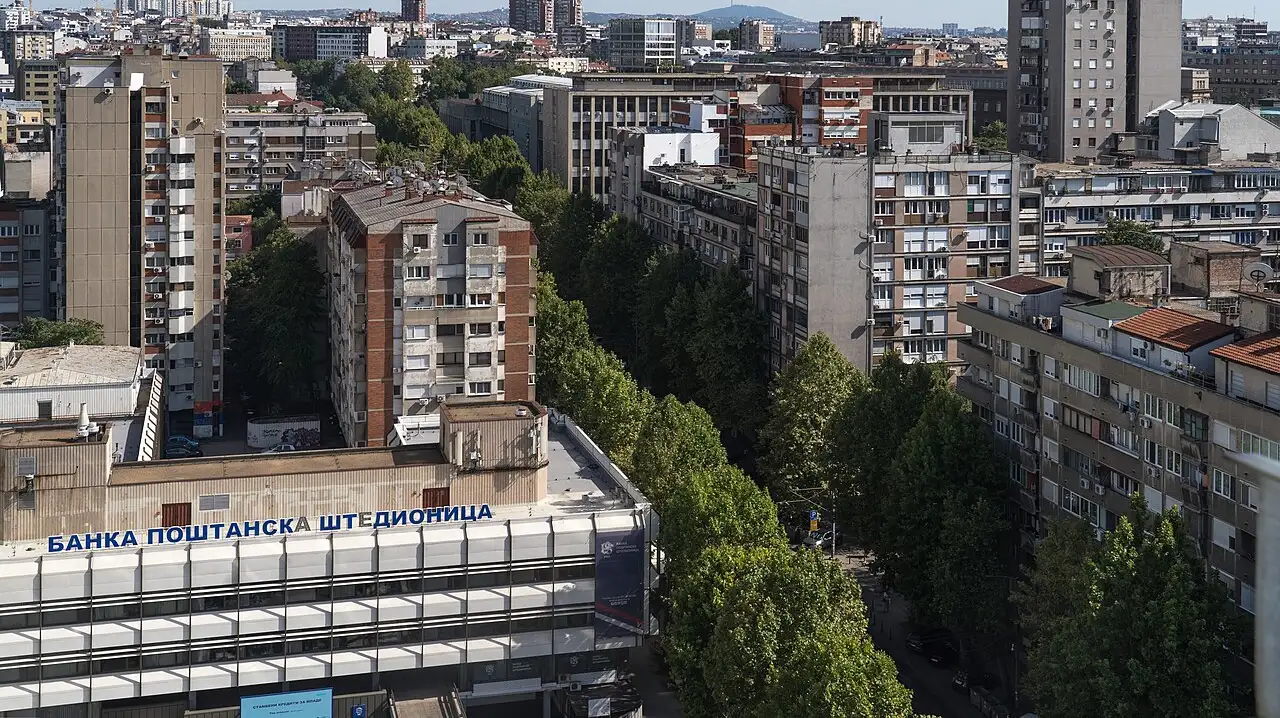
Getting from Sarajevo to Belgrade means taking a bus or driving, because there is no train. The overnight passenger service between the two capitals stopped in 2012 and never came back, so despite both being European capitals a few hundred kilometres apart, rail simply isn’t an option. The bus is the standard way to do it: frequent, cheap, and somewhere between six and nine hours depending on the operator and the wait at the Drina border. Driving is the alternative worth weighing if you want to break the trip at Višegrad or set your own pace. This guide covers both, from the Sarajevo end, including the one detail about which station to leave from that catches people out.
Forget the train
Start here because it saves you an hour of fruitless searching. There is no passenger rail link between Bosnia and Serbia. The direct Belgrade to Sarajevo train was withdrawn in 2012, and nothing has replaced it. You’ll find old timetables and hopeful forum posts online, but on the ground the tracks carry no scheduled passenger service across this border. (For the record, the other rail approach, from Zagreb, has been suspended since 2016, though there’s talk of reviving that particular line for a future timetable. Belgrade isn’t part of those plans.) So the choice is bus or car, and that’s the whole of it.
The bus: the standard way to do it
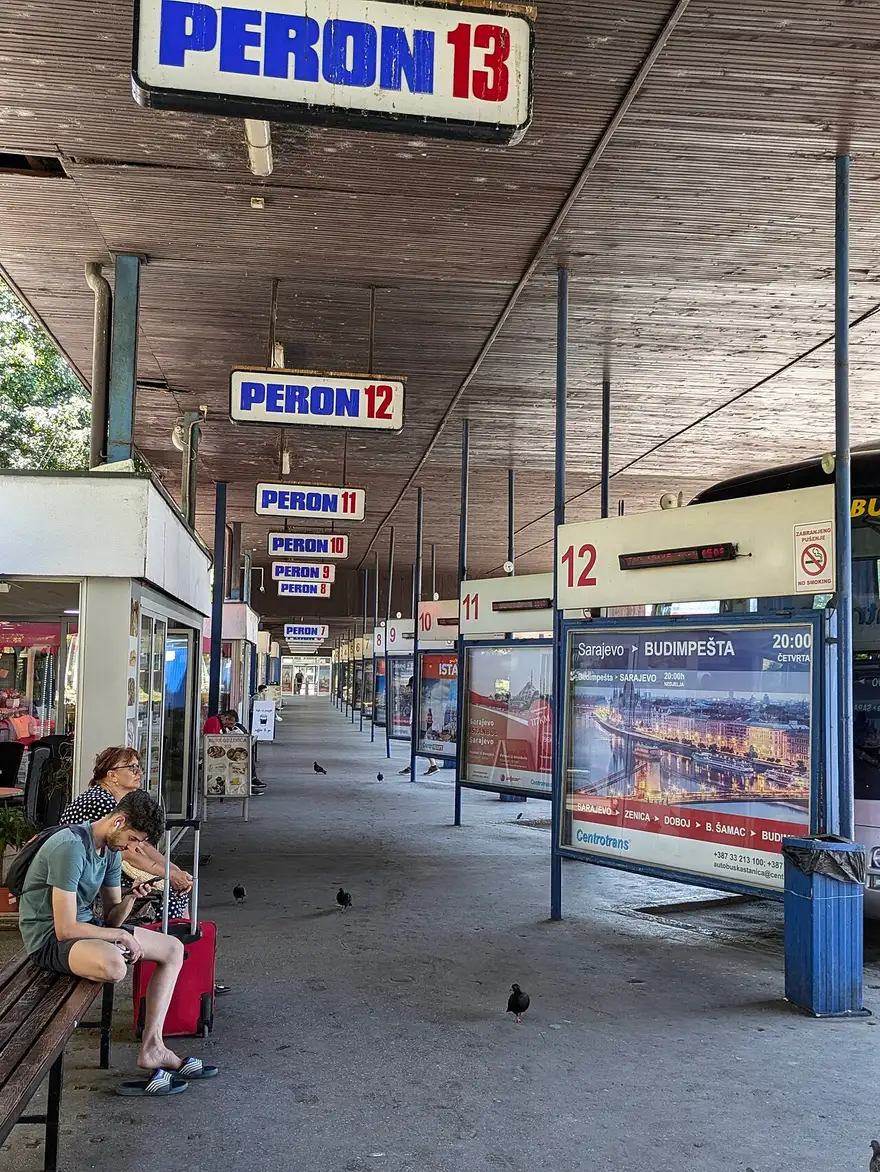
The coach is how most people make this journey, and the network is dense enough that you rarely need to plan far ahead. On a busy weekday there can be well over a dozen departures, thinning out on Sundays, run by a mix of Bosnian operators, Serbian ones and international lines like FlixBus. The trip takes roughly seven to eight hours in practice, sometimes as little as six on a fast daytime run, sometimes closer to nine if the border is busy or the driver takes a longer stop.
Fares are reasonable, generally in the region of 25 to 40 euros one way, cheaper if you book ahead and steeper in the July and August peak. As with all Balkan bus travel, treat any single price you see as a guide rather than a fixed quote, and expect to pay a small extra fee for stowed luggage, handed to the person loading the hold. Times and operators shift season to season, so check a current schedule when you book rather than trusting last year’s numbers.
Day bus or night bus
There are both, and they suit different travellers. Night buses leave Sarajevo in the late evening, roughly nine or ten o’clock, and roll into Belgrade in the early morning, which saves you a hotel night and hands you a full day at the other end. The trade-off is the usual one: sleeping upright on a coach through a midnight border stop is nobody’s idea of rest, and you arrive frayed. Daytime departures cost you a working day but let you actually see the country roll past, and the stretch along the Drina is genuinely pretty. If you sleep well on buses, take the night one; if you don’t, the day bus is kinder and the scenery is a bonus.
Which Sarajevo station, though
This is the part that quietly goes wrong. Sarajevo has two bus stations, and they’re split along the line between the country’s two entities. Most international coaches towards Serbia have historically left from the East Sarajevo (Lukavica) terminal, out on the edge of town, rather than the main central station by the railway. That said, at least one direct Belgrade service does run from the central station, and booking sites sometimes list either one, so the rule isn’t clean.
The safe move is simple: check which station your specific ticket names, and get there accordingly. Lukavica is a fair way from the centre and needs a trolleybus (the 103 or 107) or a taxi to reach, so this is not a mistake you want to make with fifteen minutes to spare and a bag on your shoulder. The two-station quirk is explained in more depth in our guide to getting around Bosnia.
The Drina border
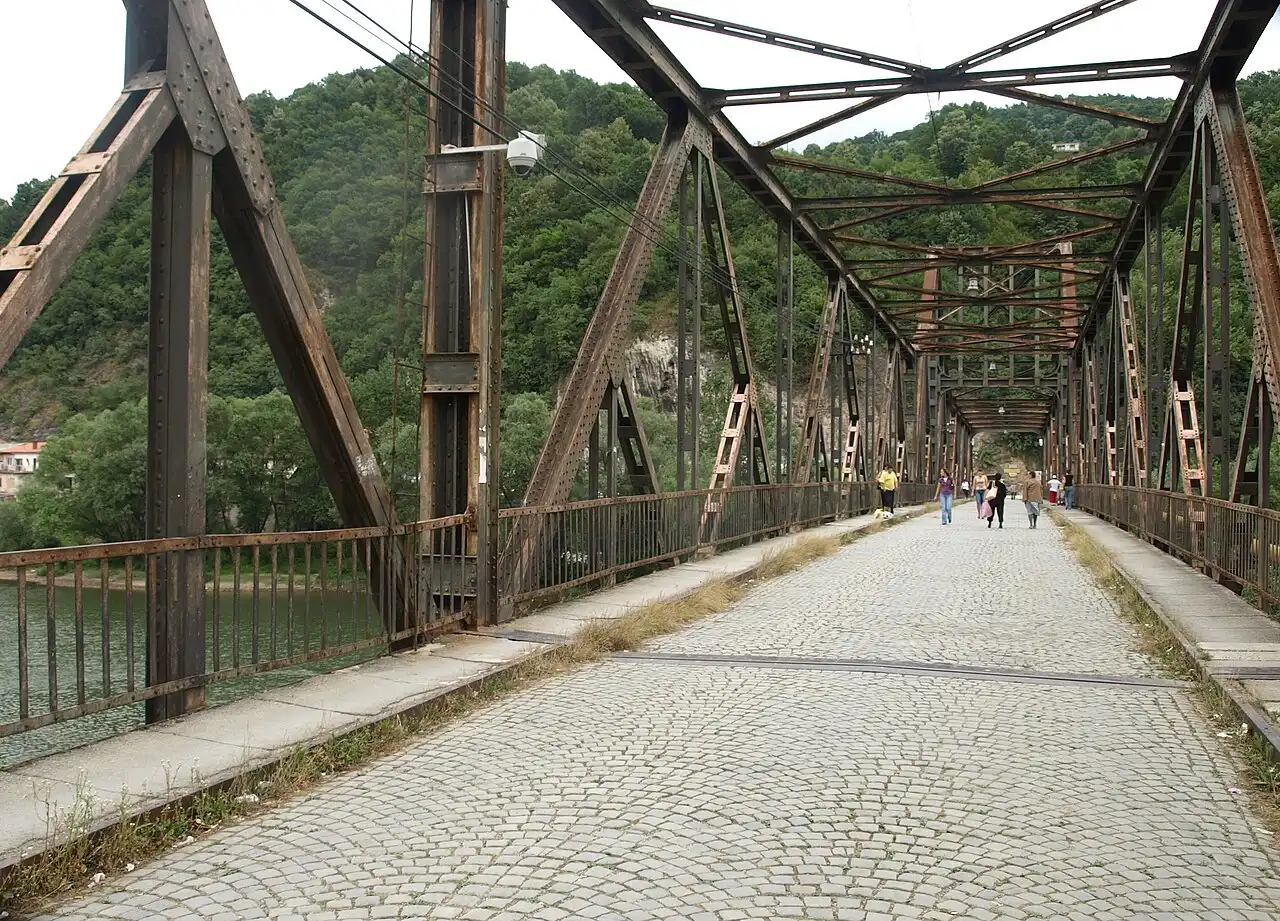
Both the bus and the drive cross into Serbia over the Drina, the river that marks the boundary, most commonly at the Zvornik crossing on the road east. It’s a routine frontier: passports are checked on both sides, and the coach waits while an officer works down the aisle or collects documents. How long that takes is the single biggest variable in the whole journey, anything from a brisk few minutes to a slow hour if you land behind a queue of vehicles.
A couple of practical points. EU, EEA and Schengen citizens can cross both borders on a national ID card; travellers from elsewhere need a passport. Carry whatever your nationality requires and check your own entry rules for Serbia and Bosnia before you go, since both countries admit many travellers visa-free but the details depend on where your passport is from. And keep in mind that much of the Bosnian side of this route runs through Republika Srpska, one of Bosnia’s two entities, which you cross with no internal border at all. The signs simply switch to Cyrillic, a quirk covered in our guide to driving in Bosnia if you’re behind the wheel.
Driving it yourself
Renting a car turns a transit slog into something you control. The moving time is broadly similar to the bus, call it five to six hours plus whatever the border adds, but you set the stops and the pace. The strongest reason to drive is one detour in particular: Višegrad, home to the Ottoman Mehmed Paša Sokolović bridge across the Drina, the eleven-arch UNESCO-listed span made famous by Ivo Andrić’s novel. It sits close to the natural line between the two cities and turns a dull border run into a genuine sightseeing day. If you’d rather give the bridge a full overnight instead of a quick pull-off, our Eastern Bosnia Drina route pairs Višegrad with Foča and Sutjeska over three days.
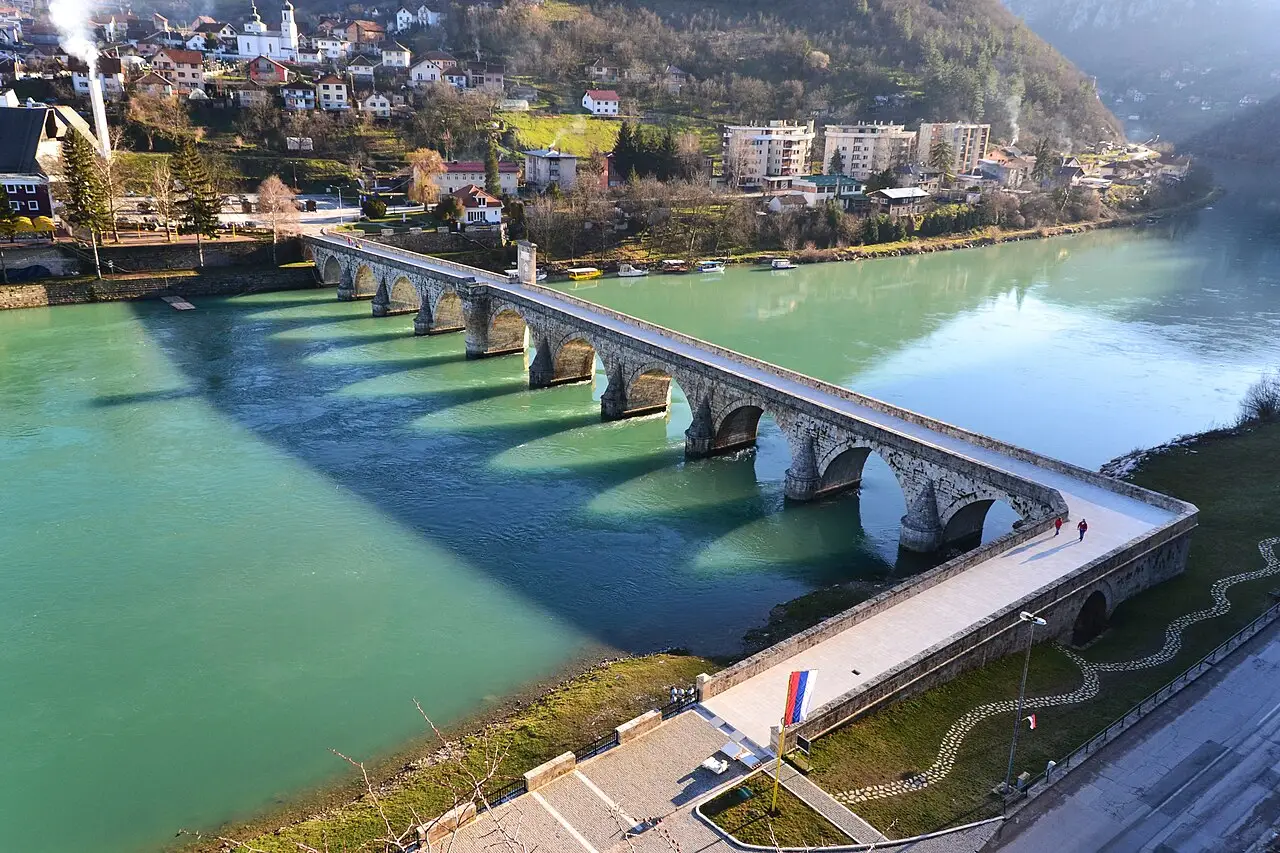
One thing to sort before you set off in a Bosnian hire car: taking it across into Serbia needs cross-border permission arranged when you book, the same paperwork you would organise for a run into Croatia. A Green Card is not part of it - Serbia, Croatia and Bosnia are all in the registration-plate section of the Green Card system, so the plate is the insurance proof. Turn up at the frontier without it and you can be turned back. The details, and whether hiring is worth it for your trip at all, are in our car rental in Bosnia guide. If you like the door-to-door idea but not the driving, a private transfer covers the same route with someone else at the wheel, which for two or three people sharing can land close to the combined cost of separate bus tickets.
So which should you take
For most travellers the answer is the bus, and a fairly easy one: it’s cheap, it runs often, and you turn up, buy a ticket and go. Take the night bus if you sleep well and want to bank a day; take a daytime one if you would rather arrive human and watch the Drina slide by. Choose the car only if Višegrad is calling or you’re the sort who hates handing over control of a long day on the road, and if so, sort the cross-border paperwork at the rental desk before anything else. Either way, build slack around that border, because the timetable is honest about everything except how long the queue at Zvornik will be. Belgrade is worth the haul at the end of it. For the wider picture of moving around the country before you leave, our overview of things to do in Sarajevo is a good place to make the most of your last day in the city.
Photos
Read also

Transport · 11 min read
Sarajevo Public Transport: Trams, Buses & Tickets
Verified · September 3, 2026How Sarajevo trams, trolleybuses and buses work: GRAS fares in KM, where to buy tickets, the Javni Prevoz KS app, and when to walk instead.

Transport · 13 min read
Bosnia-Montenegro Border Crossings: What to Expect
Verified · August 24, 2026Bosnia-Montenegro at Hum, Klobuk, Deleuša and Zupci: real insurance rules, honest queue ranges, rental car paperwork, and which crossing fits your route.

Transport · 11 min read
Sarajevo to Travnik & Jajce: Bus and Driving Guide
Verified · August 22, 2026Sarajevo to Travnik and Jajce: Centrotrans bus from 26.50 KM, or drive 90 min to Travnik, 2h50 to Jajce. One corridor, both towns. Checked August 2026.

Transport · 10 min read
Sarajevo to Trebinje 2026: Drive 4h or 07:45 Bus
Verified · August 15, 2026Sarajevo to Trebinje: 222 km, about 4 hours by car via Foča and Gacko. Morning bus from East Sarajevo; confirm the fare at the window.