Driving in Bosnia: Roads, Rules & Tips
What driving in Bosnia is really like: two-lane roads and passes, A1 tolls, Cyrillic signs in Republika Srpska, speed limits, winter tyres and parking.
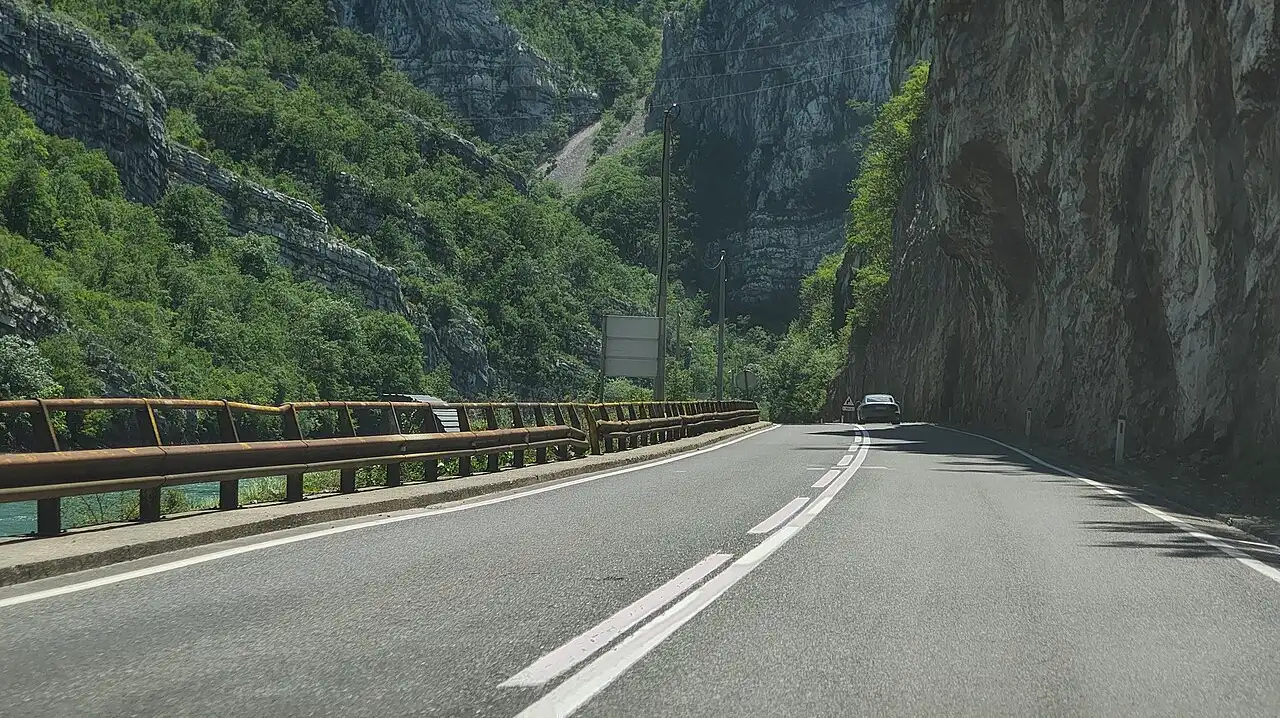
Driving in Bosnia is easy in the ways that matter and slow in the ways you don’t expect. You drive on the right, the rules are standard European, the tarmac is mostly good, and outside one short motorway near Sarajevo you spend the whole trip on scenic two-lane roads shared with trucks. That last part is the thing to plan around: distances that look tiny on a map take longer than the numbers suggest, because you are climbing passes, threading river canyons and waiting for a safe stretch to overtake a lorry. This guide is about what the driving is actually like, plus the rules and quirks that catch first-timers out. If your question is instead whether you need a car and where to book it, that is a separate decision covered in our car rental in Bosnia guide, and how driving stacks up against buses and the train is weighed in our overview of getting around Bosnia.
What the roads are actually like
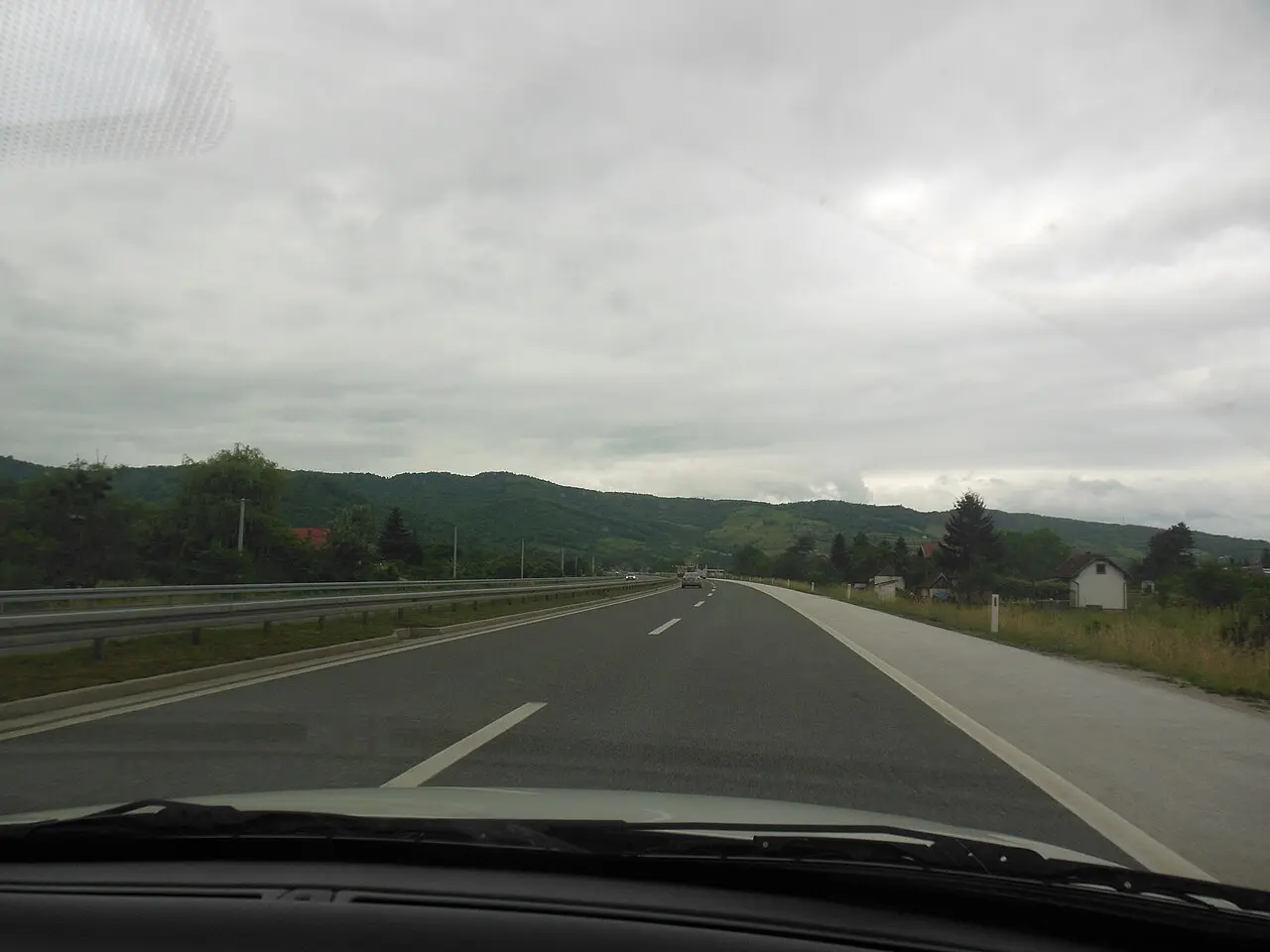
Set your expectations by the map and you will get them wrong. The country has one real motorway, the A1 (part of the pan-European Corridor Vc), and it currently covers only a stretch around Sarajevo plus two short pieces near the Croatian border. Everything else is single-carriageway main road (the “M” routes) or narrower regional and local roads.
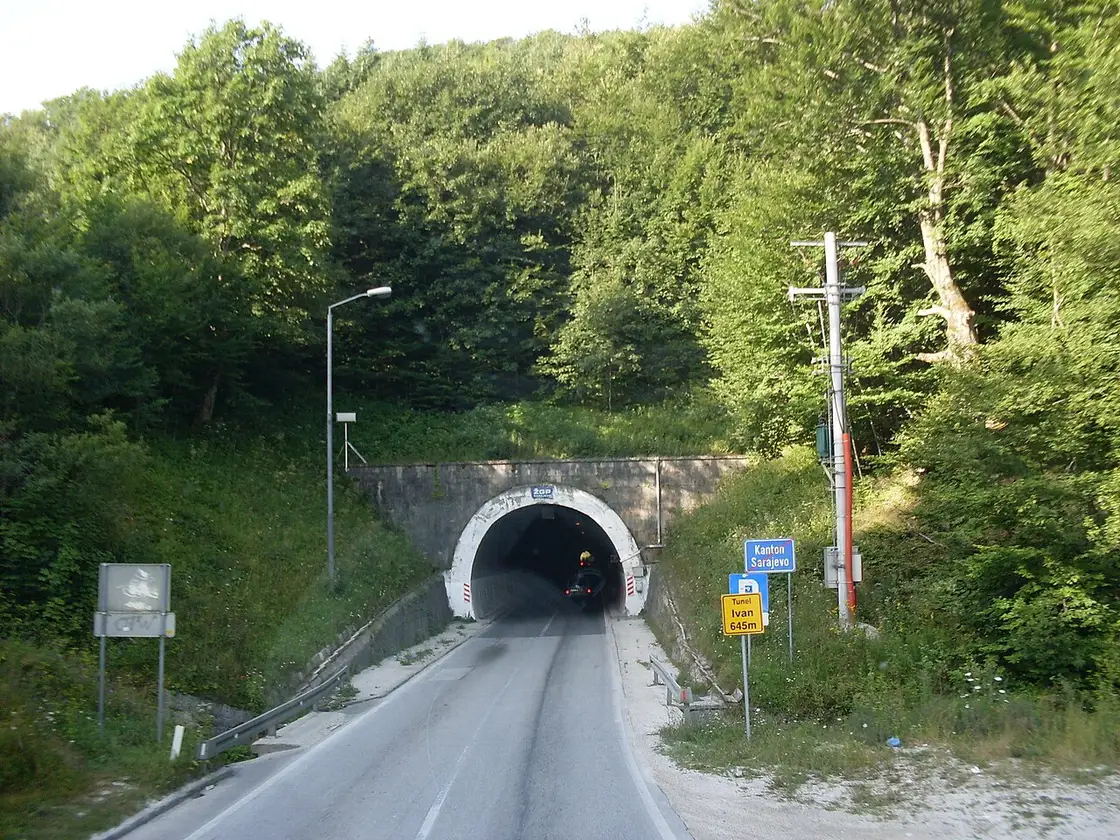
The single most useful road for visitors is the M17 down the Neretva canyon, the classic Sarajevo to Mostar run. It is beautiful and it is two lanes the whole way, which means you will end up behind a truck grinding uphill and you wait, patiently, for a straight bit with clear sight lines to pass. Reckon on average speeds well below the limit and you won’t be frustrated. The same goes for the mountain sections in the interior: good surface, tight bends, and the occasional stretch where the barrier is the only thing between you and a long drop. None of it is technically hard. It just rewards a driver who isn’t in a hurry.
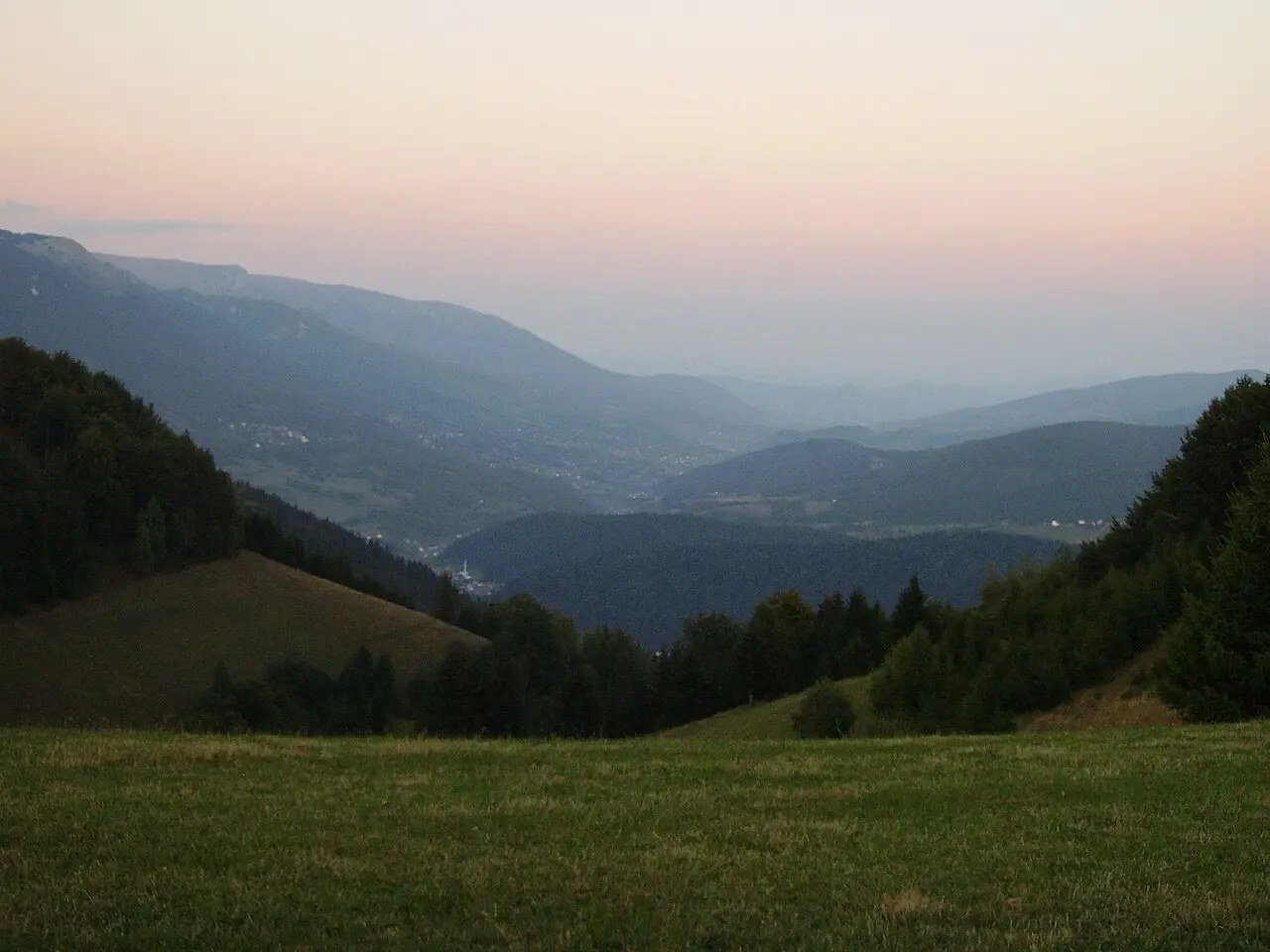
A practical knock-on: build in more time than a routing app promises, and don’t stack too many far-apart sights into one day. The Sarajevo to Mostar leg alone, with a coffee stop, eats a good chunk of a morning even though it is only about 130 km.
Tolls: it’s a booth, not a vignette
This is the point people from Croatia or Slovenia get wrong. Bosnia charges a toll you pay at a booth, not a vignette sticker you buy in advance. There is nothing to stick on your windscreen and no online purchase to make before you cross the border.
You only meet the toll on the A1. Around Sarajevo it runs as a closed system: you take a ticket on entry and pay at the exit plaza according to distance and vehicle class. The short sections near the Croatian border work the same way. You can pay in convertible marks (KM), by card, or in euros at the exit booths, so you don’t need to hunt for cash for this part. There is a prepaid tag system (the ACC card) for regular commuters, but for a one-off trip it isn’t worth the bother; just roll up to the booth and pay.
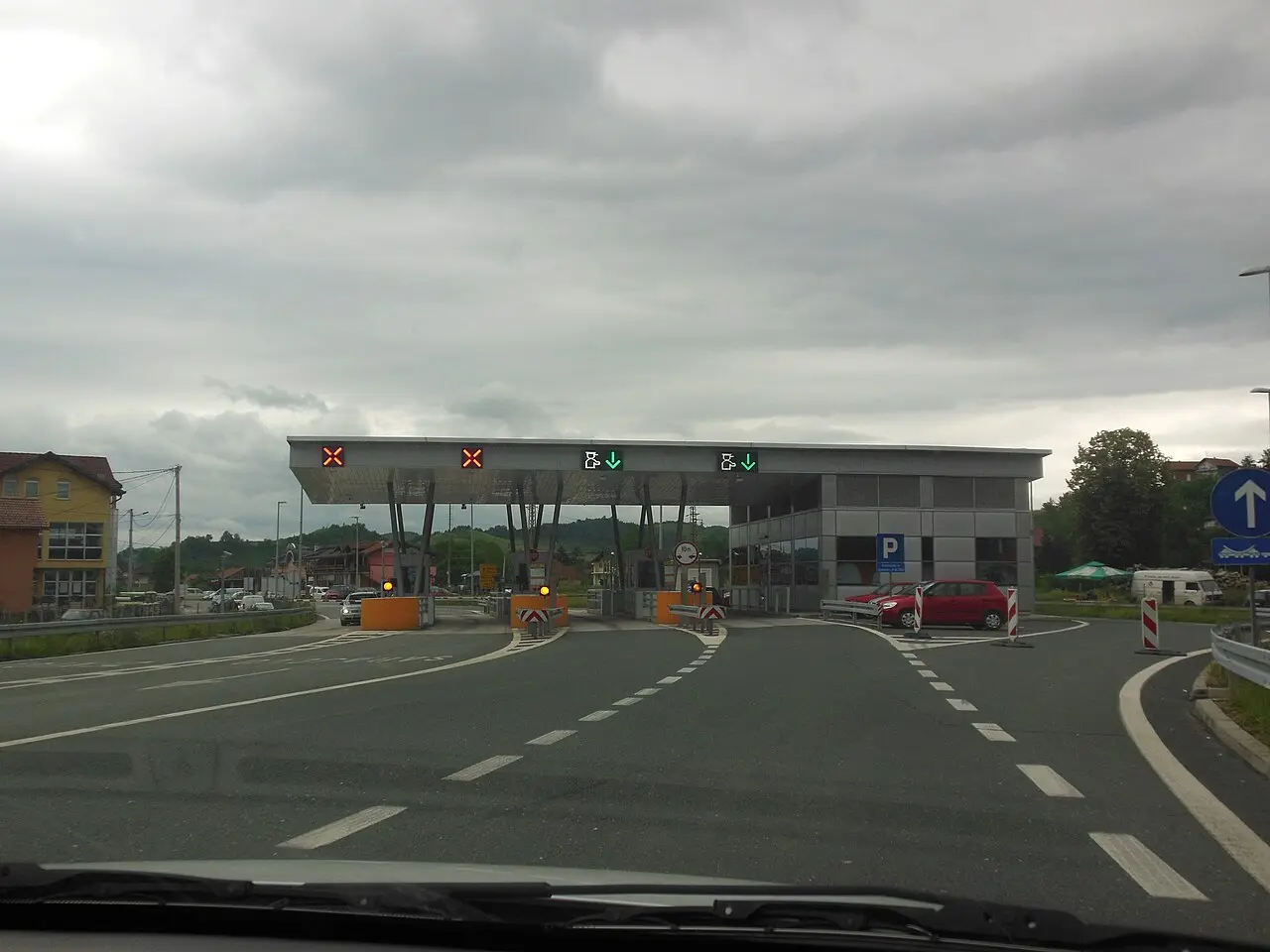
The A1 is still being built out in stages, so exactly how much of it is open and tolled shifts from year to year. At the time of writing it is roughly 70 km around Sarajevo and a couple of 7 km pieces near the border. Beyond that, the whole scenic network, the M17 included, is free. So your total toll spend on a normal Bosnia loop is small; this is not Croatia, where the motorway bill adds up.
Crossing between the two entities
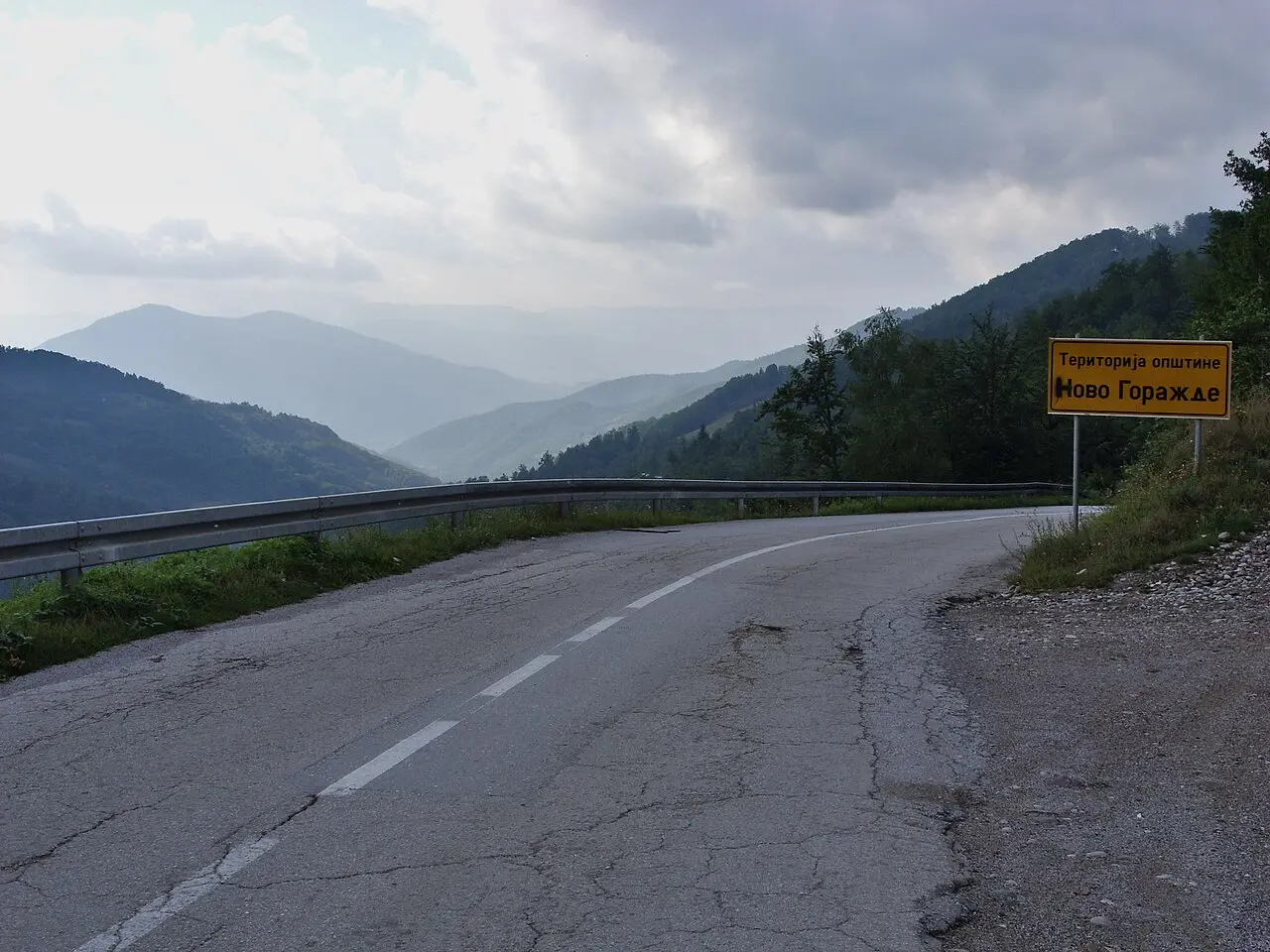
One thing that surprises visitors is that inside Bosnia and Herzegovina you cross between two self-governing entities, the Federation of Bosnia and Herzegovina and Republika Srpska, and you will very likely do it more than once on a normal trip. There is no border, no checkpoint and no passport. You often won’t notice at all, except for one giveaway: in Republika Srpska the road signs are frequently in Cyrillic.
That matters for navigation. A signpost reading “Требиње” is Trebinje, “Бања Лука” is Banja Luka, “Вишеград” is Višegrad. Many signs are bilingual and your sat-nav couldn’t care less, but if you are map-reading the old way, a town you know in Latin script can look unfamiliar for a second. Places you are likely to drive to in Republika Srpska include Trebinje, the Višegrad bridge and Banja Luka; the Herzegovina sights and Sarajevo sit in the Federation.
The rules that trip up foreign drivers
Bosnian traffic law is broadly what you would expect in Europe, with a handful worth fixing in your head before you set off:
- Speed limits: 50 km/h in built-up areas, 80 on the open road, 100 on expressways and 130 on the A1 motorway. In practice the terrain keeps you well under these outside the motorway anyway.
- Headlights on, always. Dipped headlights or daytime running lights are required through the day, not just at night. Rentals with automatic DRLs handle this for you, but check.
- Alcohol: the general limit is 0.03% (0.3‰), and zero for novice drivers (under 21 or licensed under three years) and professional drivers. Given the mountain roads, the safe rule is simply don’t drink and drive.
- Seatbelts are compulsory for every occupant, and children need proper restraints.
- The kit that must be in the car: a warning triangle, a hi-vis reflective vest, a first-aid kit and spare bulbs. A rental supplies these, so open the boot and confirm they are actually there before you leave the lot.
Two behaviours to expect on the road itself. First, police speed checks are common, particularly in Republika Srpska, so keep honestly to the limits rather than trusting an empty road. Second, local overtaking can be assertive on the two-lane roads; hold your line, leave room, and don’t feel pressured into a risky pass just because the car behind wants you to.
Winter tyres are the law (mid-November to mid-April)
This is a legal requirement, not a suggestion, and it is the rule most likely to catch a spring or autumn visitor off guard. From 15 November to 15 April, cars must be on winter or all-season (M+S) tyres with at least 4 mm of tread, or else carry snow chains to fit over summer tyres. Studded tyres are banned. The absolute legal minimum tread is 1.6 mm, but 4 mm is the sensible floor for a Bosnian winter.
A reputable rental agency fits winter tyres automatically in season, but confirm it’s actually done, because it matters most exactly where you’ll want to drive in the cold months: the ski mountains above Sarajevo, the high passes, and the M17 when it snows in the canyon. Conditions up there can flip within the hour, so check the tyres yourself rather than taking the paperwork’s word for it.
Fuel, cash and the convertible mark
Fuel stations are easy to find on the main routes and take cards or cash. The one habit worth keeping is to fill up before the emptier stretches, notably around Sutjeska National Park and the eastern interior, where stations thin out.
On money more broadly: the currency is the convertible mark (BAM / KM), pegged at about 1.96 to the euro. Cards work for fuel and for the A1 toll, but the small roadside stuff wants cash in marks, the parking gates at the day-trip sights, a village café, a market. Euros are accepted patchily and usually at a poor rate, so draw KM from an ATM in the towns rather than relying on being able to pay in euros everywhere.
Parking in Sarajevo and Mostar
Two towns need a parking plan before you arrive. In Sarajevo, the Baščaršija old-town core is pedestrian and tight, so don’t try to drive up to a guesthouse in the bazaar; use a paid garage or lot on the edge and walk in. Our Sarajevo things-to-do guide shows where the walkable centre begins. In Mostar, the cobbled Old Town lanes take no cars at all, so pick lodging with its own parking on the flatter edges of town, or use a day-lot near the centre.
At the day-trip sights, Blagaj, Počitelj and the Kravice waterfalls all have paid car parks. Kravice, as a benchmark, runs about 3 KM an hour or 6 KM for the day, cash only. None of this is expensive; it just wants small notes in marks rather than a card.
Licence, IDP and taking the car abroad
Your paperwork depends on where you’re from. EU and EEA licences are fine as they are. Everyone else should carry an International Driving Permit alongside the home licence; it’s cheap, quick to get before you travel, and it’s what a roadside police check will want to see. Foreign licences are valid for up to six months, and the minimum driving age is 18, though rental firms usually set their own floor at 21 or higher.
If you plan to leave the country in a Bosnian rental, a coastal finish in Dubrovnik or a hop to Kotor, you must arrange cross-border authorisation when you book, not at the frontier. What you don’t need for Croatia or Montenegro is a Green Card: both sit with Bosnia in the registration-plate section of the Green Card system, where the plate itself proves the insurance. Keep the card in mind for Albania, North Macedonia, Turkey or Ukraine, which are outside that section. Turn up without them and you can be turned back. For the drive out to the coast itself, our guide to the Croatia-Bosnia border crossings covers which posts to use, the Neum corridor and summer queue times. The mirror situation applies too: a foreign-plated car entering Bosnia needs valid international motor insurance covering the country, which for most EU cars their standard policy already does. Either way, the border-crossing paperwork and its fees are covered fully in the car rental guide.
The short version
Drive on the right, keep your lights on, and treat every distance as longer than it looks because the two-lane roads and mountain grades set the pace, not the limit sign. Pay the A1 toll at the booth (no vignette), carry cash in marks for parking and the small stuff, and don’t blink when the signs switch to Cyrillic in Republika Srpska; you haven’t left the country. Sort winter tyres if you’re here between mid-November and mid-April, and any cross-border plans at the rental desk rather than the border. Get those few things right and Bosnia is one of the most rewarding countries in Europe to drive, precisely because the best of it sits at the end of a slow, gorgeous road. For the loop that ties it all together, see our 7-day Bosnia itinerary.
Photos
Read also

Transport · 11 min read
Sarajevo Public Transport: Trams, Buses & Tickets
Verified · September 3, 2026How Sarajevo trams, trolleybuses and buses work: GRAS fares in KM, where to buy tickets, the Javni Prevoz KS app, and when to walk instead.

Transport · 13 min read
Bosnia-Montenegro Border Crossings: What to Expect
Verified · August 24, 2026Bosnia-Montenegro at Hum, Klobuk, Deleuša and Zupci: real insurance rules, honest queue ranges, rental car paperwork, and which crossing fits your route.

Transport · 11 min read
Sarajevo to Travnik & Jajce: Bus and Driving Guide
Verified · August 22, 2026Sarajevo to Travnik and Jajce: Centrotrans bus from 26.50 KM, or drive 90 min to Travnik, 2h50 to Jajce. One corridor, both towns. Checked August 2026.

Transport · 10 min read
Sarajevo to Trebinje 2026: Drive 4h or 07:45 Bus
Verified · August 15, 2026Sarajevo to Trebinje: 222 km, about 4 hours by car via Foča and Gacko. Morning bus from East Sarajevo; confirm the fare at the window.