Makarska to Mostar Day Trip: Bus, Tours & Tips
How to do Mostar as a day trip from the Makarska Riviera: about 130 km and 2.5-3 hours, the bus, tours and self-drive compared, plus a Kravice add-on.
Short answer: Mostar is one of the classic day trips off the Makarska Riviera, and in summer it’s a well-worn route. It is roughly 130 km and 2.5 to 3 hours each way by road, over one border crossing, and the most flexible way to do it’s a car or a guided tour rather than the bus, whose timetable makes a same-day return tight. A full day gets you the Old Bridge, the Ottoman old town, and, if you plan it, a swim at the Kravice waterfalls on the way. This guide covers the drive, the bus, the tour option, the border, and how to spend your hours in Mostar without wasting half the day on the road. If you are starting from further up the coast, the Split to Mostar guide covers that longer run.
The honest numbers
By road it’s around 130 km, and with the border you should reckon on 2.5 to 3 hours each way - sometimes more when the summer queues build. The usual route runs down the coast to Ploče, crosses into Bosnia near the Neretva delta at Metković, then follows the green river valley up to Mostar (or takes the faster motorway stretch toward Počitelj). It’s a scenic drive, not a dull one, but it’s a real chunk of the day: budget five to six hours of travel there and back, which is exactly why an early start matters.
One thing to plan around is the heat. This trip peaks in June to September, the same window as your beach holiday, and Herzegovina in high summer is genuinely hot - 30 to 40°C in Mostar is normal. Bring water, sun cover and a hat, because the old town’s stone streets bake by midday. Prices in Bosnia are in convertible marks (KM / BAM), so carry a little cash in marks for the bridge-area cafes, the mosque entry and parking; euros are taken in some tourist spots but at poor rates.
The border
There’s one border crossing on this route, and it’s a proper international frontier - Bosnia sits outside the EU and the Schengen area, and Croatia’s land border with Bosnia is a Schengen external border, so expect passport checks. Who needs what splits by nationality: EU, EEA and Schengen nationals cross on a valid national ID card, while everyone else, including UK and US passport holders, needs a passport. Ninety days visa-free in any 180 covers a day trip comfortably.
Wait times swing with the season. Out of season it is often a quick formality; in July and August it can back up, especially on weekend afternoons with holiday traffic. If you’re driving, cross early - before about 9 am - and time your return to dodge the late-afternoon rush. Our Croatia-Bosnia border crossing guide has the detail on the crossings and the new EES checks. Entry rules can change with nationality, so confirm your own position with the Bosnian Border Police before you go (checked 2026-07-08).
Driving yourself
If you have a car or are happy to hire one, self-driving is the most flexible way to do Mostar from Makarska. You control the timing, you can beat the border queue with an early start, and - the real prize - you can fold in stops the bus and most tours skip. Parking in Mostar is on the flatter edges of the old town, since the cobbled core takes no cars; leave it in a day-lot and walk in.
The catch, if you’re in a Croatian hire car, is the paperwork. Taking a Croatian rental into Bosnia needs the company’s written permission, sorted when you book rather than at the barrier. Since 2021 a Croatian plate’s insurance counts as valid in Bosnia on its own, so a Green Card certificate isn’t actually a legal requirement here - it’s the rental desk’s own cross-border sign-off that matters, even though plenty still file it under that name. It’s routine and usually cheap for Bosnia, but a car without the company’s authorisation can be turned back. We walk through the whole thing in our guide to taking a rental car from Croatia into Bosnia.
Guided tours: the popular choice
Makarska is a busy tour hub, and a guided Mostar day trip is the most popular way people do this without driving. A typical tour runs eight to ten hours, often with hotel or apartment pickup on the Riviera, and bundles Mostar together with a stop or two along the corridor - most commonly the Kravice waterfalls and the walled village of Počitelj, with some longer tours adding Medjugorje. You get the driving, the border and the navigation handled, plus a guide to explain what you’re looking at.
A tour makes sense if you would rather not drive, want the extra stops arranged, and are happy to move on someone else’s schedule. It’s the path of least resistance for a first visit. If instead you want to set your own pace, add a specific stop, or linger in Mostar past the group’s departure time, a self-drive or a private transfer gives you the same route with your hands on the timing.
The bus: doable, but the weak option
There are buses, and on paper they look fine - but be honest with yourself about the timetable. Operators like FlixBus, Croatia Bus and Globtour run this corridor, with roughly three to five departures a day (more on peak days), a fare in the €17 to €28 range, and a scheduled journey of about 2h15m at best, stretching toward three hours once the border is in play. Buses use Makarska’s bus station on the seafront and pull into Mostar’s station north of the old town, a short walk or taxi from the bridge.
The problem is the same one that dogs most cross-border coach runs: the departures are not built for a same-day return. It’s easy to find that the only workable outbound leaves early and the return leaves before you’ve really seen the town, and the two-and-a-bit-hour ride each way eats a large bite of the day. So the bus is a reasonable pick if you’re travelling one way, or staying overnight in Mostar, or on a tight budget with flexible timing. For a classic there-and-back day, it is the weakest of the three options - and schedules shift, so always check the current times on FlixBus, GetByBus or CheckMyBus before you count on a connection.
Kravice: the add-on worth planning for
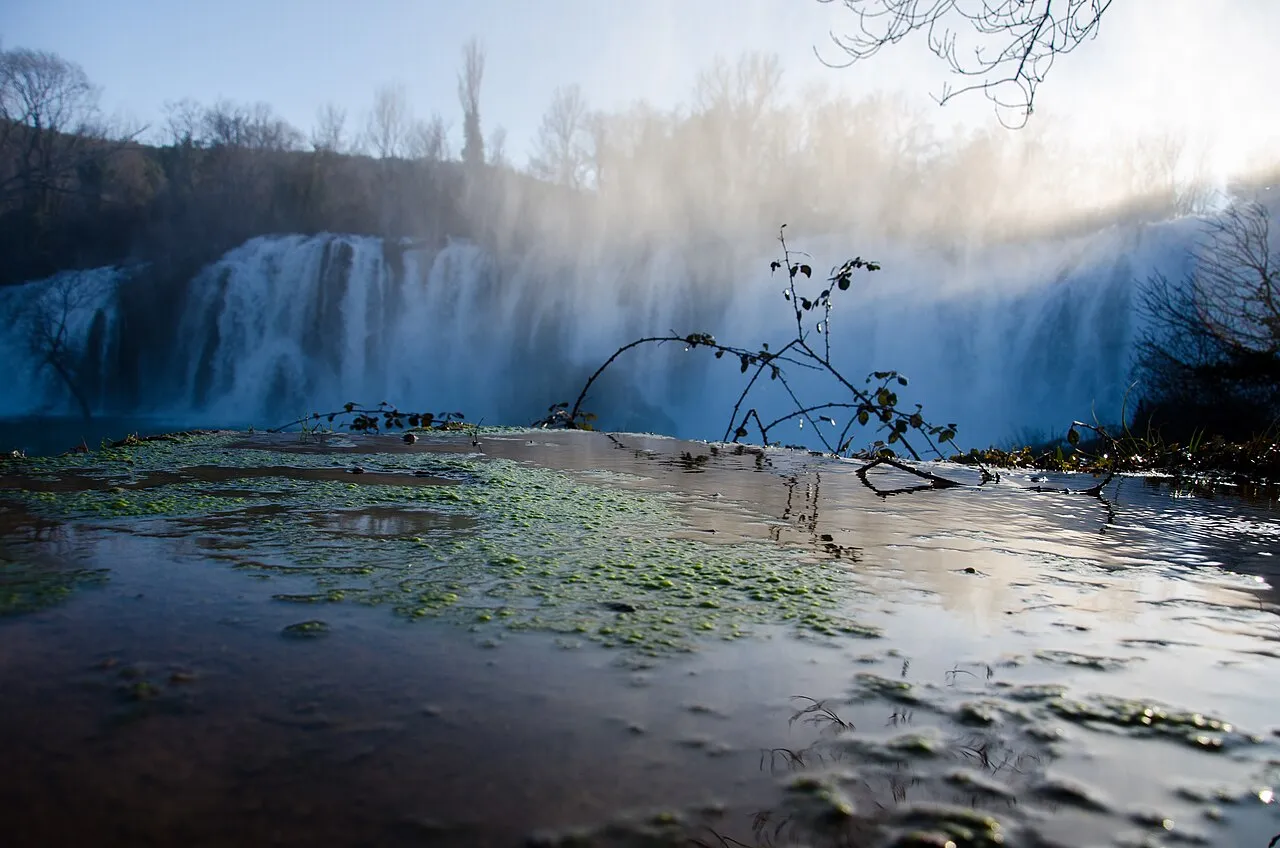
If you have your own car or a tour that includes it, the Kravice waterfalls are the best detour on this route. They sit about 40 km south of Mostar, a wide horseshoe of cascades - roughly 28 metres high and around 120 metres wide - pouring over a travertine ledge into a green pool you can swim in. In the summer heat that swim is the highlight of the day for a lot of people.
A few practical notes so you plan it right. Entry is about 20 KM (around €10) year-round, not just in the warm season, and swimming runs June to September in water that never gets truly warm (it tops out near 20°C - bracing, but glorious under a 35°C sun). There are no lifeguards, and the current near the falls is stronger than it looks, so keep children in the shallow roped-off zone. Bring cash in marks - the card machines at the gate are unreliable. Our Kravice waterfalls guide covers the fee, the boat, and how to time your visit to dodge the crowds. Fitting Kravice in makes for a long but brilliant day; on the bus, it’s essentially out of reach.
What to do with your hours in Mostar
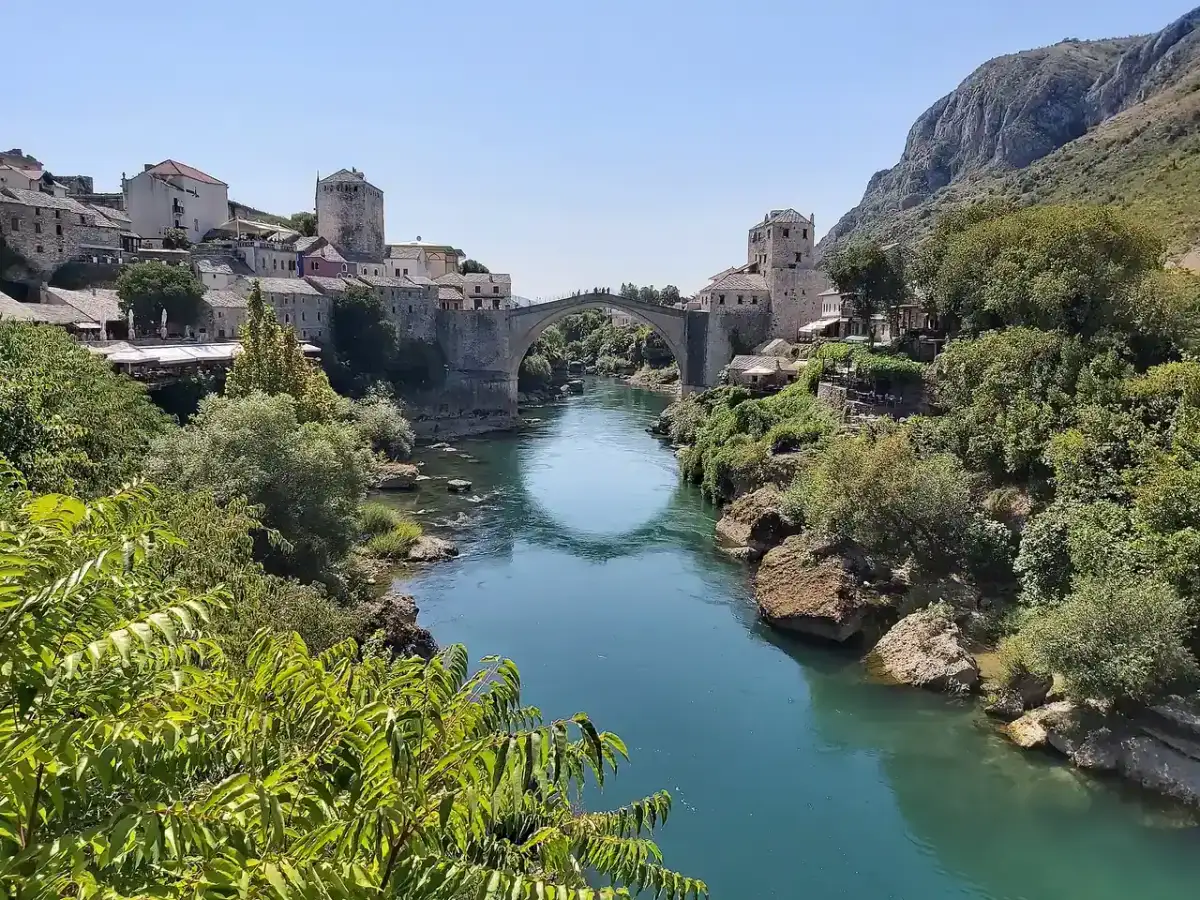
However you arrive, the heart of a Mostar day is small and walkable, which is good news when the clock is ticking. The obvious centrepiece is Stari Most, the rebuilt 16th-century Ottoman bridge arching over the impossibly turquoise Neretva - and if you’re there in summer, you’ll likely catch the local divers who leap from its parapet for a crowd (and a tip). Around it, the cobbled lanes of Kujundžiluk, the old bazaar, are packed with copper workshops and souvenir stalls, best walked early before the coach crowds thicken.
For the postcard view, climb the minaret of the Koski Mehmed-Paša mosque on the river’s edge - the angle back to the bridge is the one you’ve seen on every guidebook cover. With a few hours you can add a coffee on a riverside terrace and a plate of ćevapi, and if the day allows, the sombre, important museums that tell the story of the 1990s siege. Our guide to things to do in Mostar helps you prioritise if your time is short.
Day trip, or stay a night?
A day trip genuinely works - leave Makarska early, cross before the queues, and you get the middle of the day in the old town with a Kravice swim on the side. But Mostar rewards those who stay. Once the day-trip coaches roll out in the late afternoon, the bridge and the bazaar empty and the town turns quiet and golden; you get the Old Bridge at dawn and after dark, time for Blagaj or Počitelj at a proper pace, and a base to go deeper into Herzegovina. If Mostar is the main event of your trip, the overnight is the more satisfying call. If it’s one highlight among many on a beach holiday, the day trip does the job - just respect the timings and the summer heat. Ready to plan the town itself? Start with things to do in Mostar, and if you are weighing other runs off the coast, the Split to Mostar guide sits right alongside this one.
Photos
Read also

Transport · 11 min read
Sarajevo Public Transport: Trams, Buses & Tickets
Verified · September 3, 2026How Sarajevo trams, trolleybuses and buses work: GRAS fares in KM, where to buy tickets, the Javni Prevoz KS app, and when to walk instead.

Transport · 13 min read
Bosnia-Montenegro Border Crossings: What to Expect
Verified · August 24, 2026Bosnia-Montenegro at Hum, Klobuk, Deleuša and Zupci: real insurance rules, honest queue ranges, rental car paperwork, and which crossing fits your route.

Transport · 11 min read
Sarajevo to Travnik & Jajce: Bus and Driving Guide
Verified · August 22, 2026Sarajevo to Travnik and Jajce: Centrotrans bus from 26.50 KM, or drive 90 min to Travnik, 2h50 to Jajce. One corridor, both towns. Checked August 2026.

Transport · 10 min read
Sarajevo to Trebinje 2026: Drive 4h or 07:45 Bus
Verified · August 15, 2026Sarajevo to Trebinje: 222 km, about 4 hours by car via Foča and Gacko. Morning bus from East Sarajevo; confirm the fare at the window.