Bosnia-Montenegro Border Crossings: What to Expect
Bosnia-Montenegro at Hum, Klobuk, Deleuša and Zupci: real insurance rules, honest queue ranges, rental car paperwork, and which crossing fits your route.
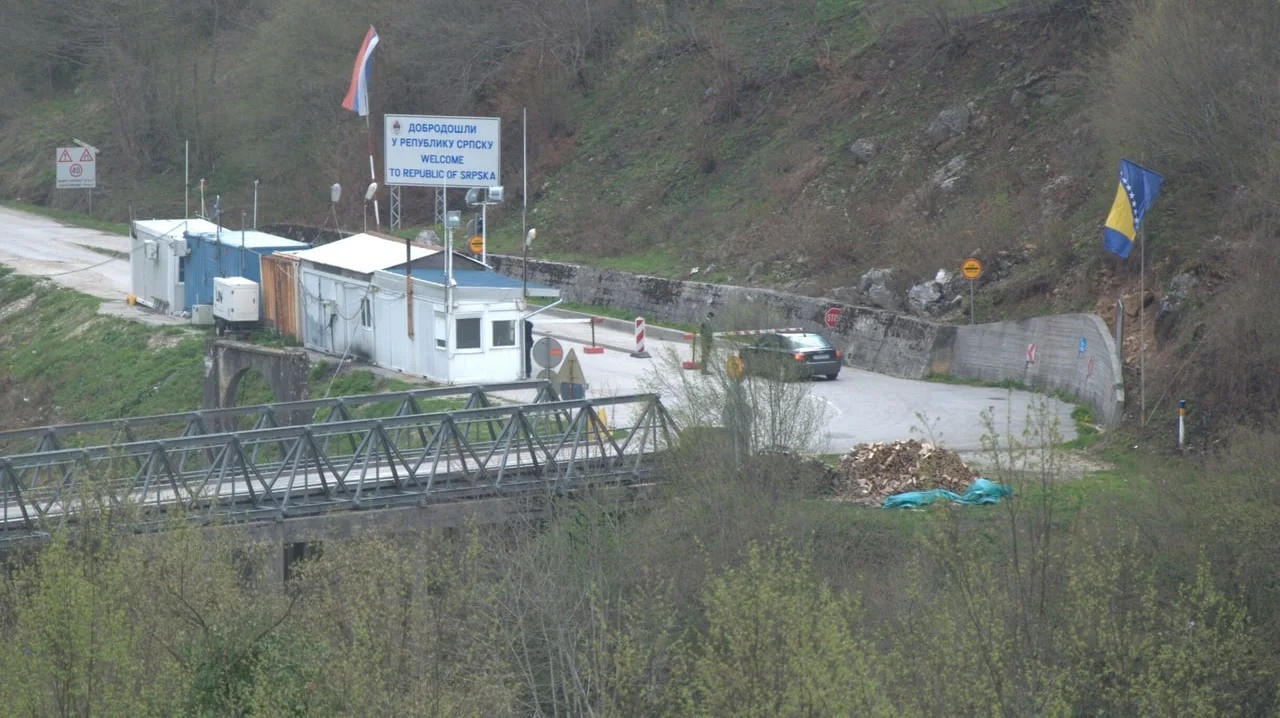
If you’re driving between Bosnia and Montenegro in 2026, the short version is this: neither country is in the EU or Schengen, so everyone gets a real passport check at a real booth; EU and EEA travellers can usually cross on a national ID card as well as a passport; and you’ll pick one of four practical road crossings on the Bosnian side - Hum, Klobuk, Deleuša or Zupci - depending on whether you’re coming from Sarajevo, Trebinje, Bileća or western Republika Srpska. Queues here are nothing like the coastal Croatia crossings, though Hum can still pinch on summer Sunday evenings, and the Green Card question for Bosnian-registered cars is already settled - it’s just not widely known - even if rental contracts haven’t got any simpler.
These borders sit on the inland side of the Balkans, away from the Dubrovnik choke points. That’s why the direct Sarajevo to Kotor run and the Bosnia and Montenegro road-trip loop both depend on knowing which post to aim for before you leave. If you’re also crossing from Croatia, the Croatia-Bosnia border page covers the Neum corridor and the Schengen side separately - this page is only the Bosnia-Montenegro seam.
Passports, ID cards and how long you can stay
Documents come before crossing choice, because no border post cares which route you picked if the paperwork is wrong. Bosnia lets EU, EEA and Schengen nationals in on a national ID card alone - the same courtesy it extends at every European frontier - though bringing a passport anyway is still the safer habit. Montenegro’s version of that rule is narrower: an EU ID card gets you in, but only for up to 30 days, while a passport unlocks the standard 90 days in any 180. Travellers from outside that zone - the UK, the US, Canada, Australia and similar passports - need a passport at both booths, with no ID-card shortcut on either side.
Bosnia is visa-free for short stays for most Western nationalities on that same 90-in-180 basis, and Montenegro runs an identical pattern for passport holders. Nationality-based exceptions do exist and shift over time, so treat this as the general shape rather than the final word - the Bosnian Border Police publish the current list if your passport is anything unusual (checked 2026-08-24).
One structural difference from Croatia: there is no EU Entry/Exit System here. Bosnia and Montenegro still stamp (or scan) in the old way, and the check is usually quick once you reach the window. The wait you feel is almost always the queue ahead of you, not the officer’s questions.
Four crossings on the Bosnian side - which one fits your route
There isn’t a single “the border”. Montenegro’s motoring association lists eight road crossings with Bosnia, but four Bosnian-side names cover nearly every tourist route: Hum, Klobuk, Deleuša and Zupci. Montenegro uses a different name for each one on its side - Šćepan Polje, Ilino Brdo, Vraćenovići and Sitnica - and the two southern pairs, Deleuša/Vraćenovići and Zupci/Sitnica, both sit in the same Trebinje hinterland, which is exactly where GPS apps and older write-ups start mixing them up. Match the road you’re on, not just the pin on the map.
Hum / Šćepan Polje - the Piva canyon route
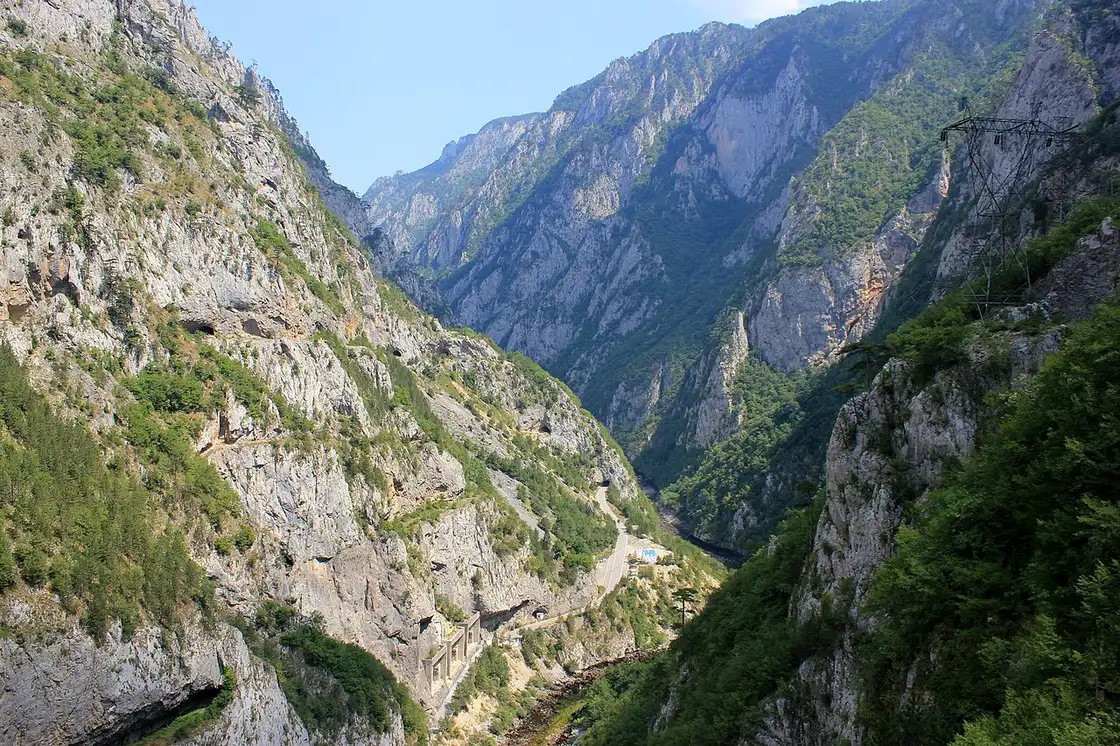
Hum on the Bosnian side pairs with Šćepan Polje in Montenegro on the road from Foča toward Plužine and Nikšić. This is the crossing the Sarajevo to Kotor coaches use when they take the inland scenic line, and it’s the one that drops you straight into the Piva canyon - tunnel after tunnel above a turquoise reservoir, with the huge Mratinje dam wall around the first bend in Montenegro.
Crossing trackers list it as open around the clock, though like most of these rural posts it can thin out overnight rather than run a full night shift, so don’t plan a 3 am arrival on faith alone. On wait times, independent trackers put the typical range at 30 to 90 minutes - which sounds worse than it usually is, because that average gets dragged up by July and August weekend afternoons, while a quiet Tuesday morning out of season can clear in a few minutes. Sunday evenings are the slot to avoid, as weekend traffic heads back toward Sarajevo. Live queue feeds sometimes show Hum busier still on a bad afternoon - the practical fix is to cross early in the morning or after about 6 pm, not to assume it’ll be quiet at midday.
The honest caveat on this routing: the M18 from Foča down toward Hum can be narrow and, in places, rough or under repair. Some drivers prefer the longer swing through Trebinje on better asphalt even though it trades away part of the Piva drama. Check recent road reports before you commit to Foča if you’re driving yourself.
Klobuk / Ilino Brdo - Trebinje toward Nikšić
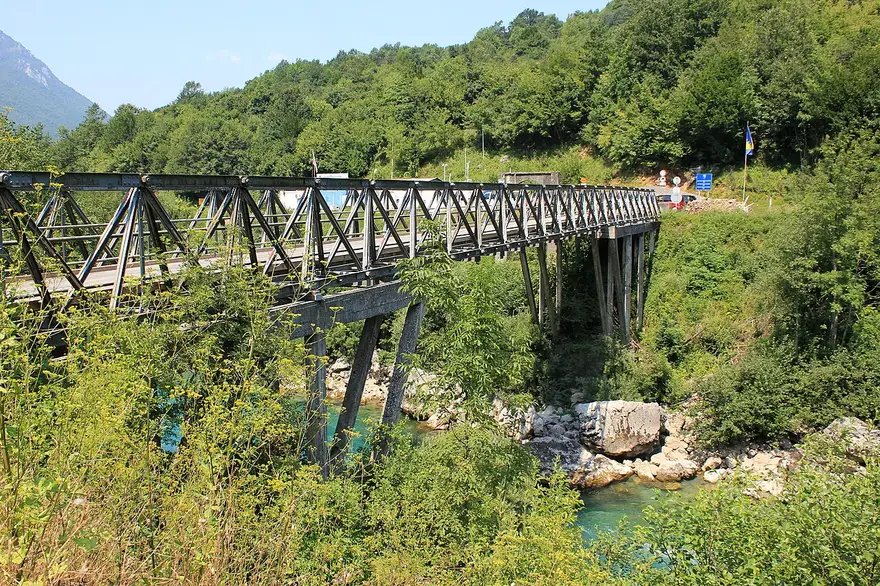
Klobuk sits in the Trebinje hinterland and pairs with Ilino Brdo in Montenegro on the road toward Nikšić and Podgorica, not the Bay of Kotor directly. It’s the natural pick for drivers from Mostar or Trebinje heading inland toward Durmitor, Žabljak or the Smokovac-Mateševo motorway, rather than for anyone aiming straight at the coast.
This is consistently the calmest of the four crossings. Off-season waits of two to five minutes are typical, and even in high summer you’re usually looking at 15 to 30 minutes rather than the hour-plus misery of the Adriatic coast. Sunday evenings can still pinch here, so don’t treat a quiet crossing as one that needs no planning if you’re leaving Kotor on a summer Sunday at 5 pm.
Deleuša / Vraćenovići - the inland link
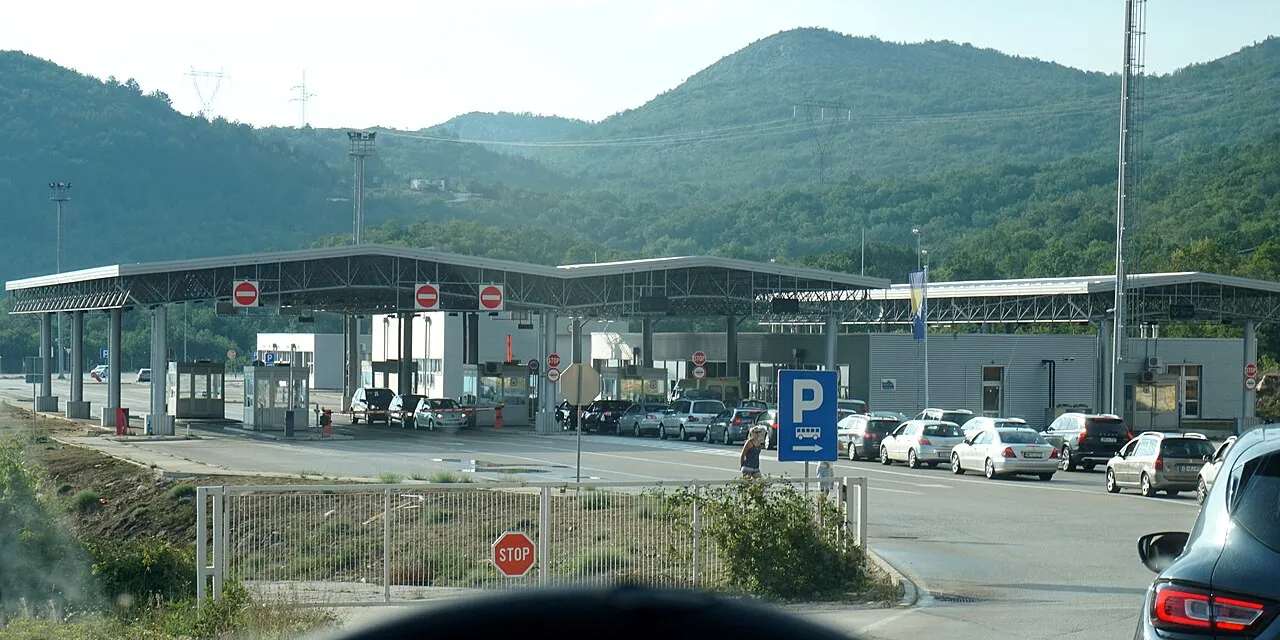
Deleuša on the Bosnian side pairs with Vraćenovići in Montenegro, on the road between Nikšić and Bileća. It’s a genuine joint checkpoint - Bosnian and Montenegrin border police and customs share one facility - opened in October 2020 with EU funding, and built with capacity to spare: three lanes each way plus a dedicated truck lane. The traffic itself is mostly local and rural, which makes it useful if you’re threading eastern Herzegovina without touching the coast at all.
Independent crossing trackers put wait times here at roughly 10 to 45 minutes most of the year, but summer peaks are the outlier worth knowing about: the same trackers have recorded 60 to 240 minutes - up to four hours - on the worst July and August afternoons, occasionally worse than Hum on the very same day. There’s no reliable pattern to when that happens beyond “summer weekend”, so check a live feed before you commit to this crossing in peak season.
Zupci / Sitnica - Trebinje toward Herceg Novi and the coast
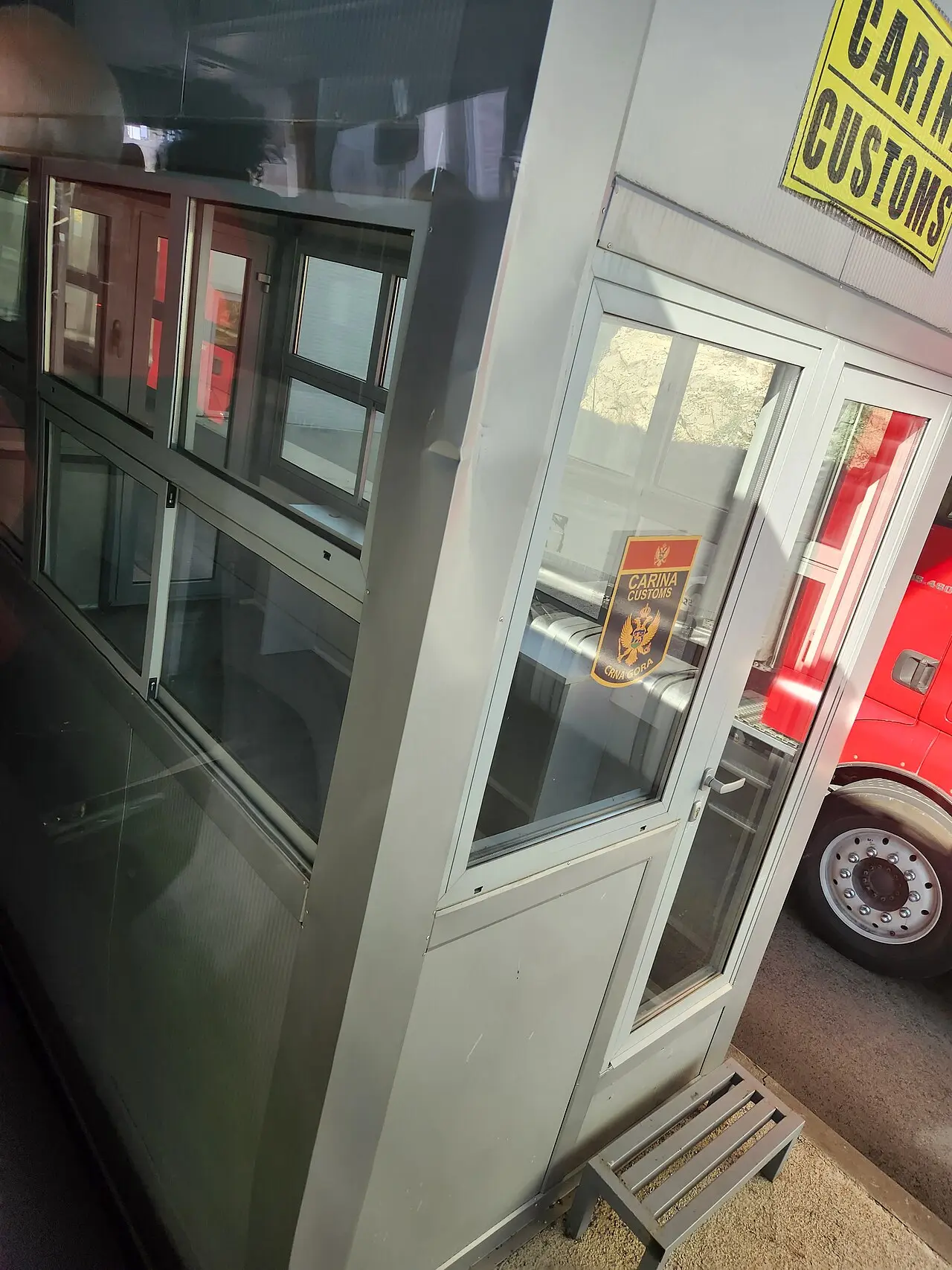
Zupci on the Bosnian side pairs with Sitnica in Montenegro, on the road linking Trebinje with Herceg Novi and the Bay of Kotor. It’s the newest of the four: Bosnia and Montenegro rebuilt it as a second joint checkpoint, sharing one facility for both countries’ border police and customs, and it officially opened in spring 2025. For drivers from Banja Luka or western Republika Srpska aiming at Herceg Novi, Tivat or Kotor rather than Podgorica, this is usually the fastest way to the coast - it saves the detour north to Hum. If you’re building a Bosnia and Montenegro loop that runs Trebinje into Kotor, this is almost certainly your crossing, not Hum.
Wait times track close to Klobuk’s: 2 to 5 minutes off-season and 20 to 45 minutes in peak summer, with mid-July weekends the slowest stretch. Because the crossing is still new, treat those numbers as settling in rather than fixed - traffic patterns take a season or two to catch up with upgraded capacity.
Green Card and rental car rules
Vehicle paperwork catches more drivers than passport rules, especially in a hire car.
Bosnian-registered private cars
Here’s the part a lot of Bosnian drivers don’t realise: you already don’t need a separate Green Card for Montenegro. Bosnia and Montenegro are both members of the Multilateral Agreement, the registration-plate subsystem of the international Green Card insurance network, and the rule has applied since 2021 - it’s just not well known outside people who’ve actually asked. Under that agreement, your ordinary Bosnian registration plate is itself accepted as proof of valid insurance at the Montenegrin border. Both national bureaus confirm it directly: Montenegro’s insurers’ bureau lists Bosnia and Herzegovina among the plate-recognised countries, and Bosnia’s own Green Card bureau confirms the same in reverse for Montenegrin plates (checked 2026-08-24). The agreement doesn’t cover everything: military vehicles, farm machinery and anything without a normal registration plate are excluded and still need a physical Green Card. For an ordinary private car, carry the registration certificate and your driving licence; if the car isn’t yours, bring a notarised authorisation from the owner permitting a border crossing - officers do ask in summer.
Rental cars - permission first, plate second
A hire car is a contract problem before it’s an insurance problem. You must have the rental company’s written permission to enter Montenegro, and you should name Montenegro when you book, not mention it at the counter as an afterthought. Many Sarajevo agencies allow Croatia and Montenegro routinely; some charge a cross-border fee even when no Green Card is technically required for a Bosnian-plated fleet car. A vehicle without the right cover or permission can be turned back at the barrier - and that’s a long U-turn on a mountain road.
If you’re picking up outside Bosnia - Dubrovnik, Split, Podgorica - the insurance mechanics don’t actually change: EU, UK and Swiss-registered cars sit under that same Multilateral Agreement, so the plate still counts as proof of insurance at Bosnia and Montenegro borders alike. What does change is the paperwork - the rental contract still has to list every country you enter, regardless of which bureau’s plate recognises your car. Don’t accept a vague “should be fine” from the desk; get it written on the paperwork you’ll hand over at Hum.
Our car rental in Sarajevo guide covers airport pickup and what to ask before you drive south; once you’re rolling, driving in Bosnia explains the two-lane rhythm on the Bosnian side of the line.
How long the queues really run
Compared with Karasovići on the Croatia-Montenegro coast, these inland posts are relaxed. Independent crossing trackers give these rough ranges for private cars in a normal lane (checked 2026-08-24) - two different trackers don’t fully agree with each other, so read this as the honest spread, not a fixed promise:
| Crossing | Off-season (Oct-Apr) | Peak summer (Jul-Aug) | Worst window |
|---|---|---|---|
| Hum / Šćepan Polje | often just a few minutes | 30-90 min typical; more on bad days | Sunday evening returns |
| Klobuk / Ilino Brdo | 2-5 min | 15-30 min | Sunday evening |
| Zupci / Sitnica | 2-5 min | 20-45 min | mid-July weekends |
| Deleuša / Vraćenovići | 10-45 min | 60-240 min on the worst days | unpredictable - check live feeds |
Weekend midday between about 10 am and 3 pm is the pattern to avoid on the main posts. Friday and Sunday evenings stack returning traffic. A quick look at a live queue tracker - Border Crossing Hub’s Bosnia-Montenegro page is one - is worth an hour before you leave, because the “quiet border” reputation doesn’t survive a coach convoy or a holiday return wave.
At the window - what to have ready
A few habits smooth the crossing:
- Documents within reach. Passports or ID cards where you can hand them through the window without unpacking the boot. In a hire car, keep the rental agreement and cross-border permission on the phone or in the glove box.
- Small cash reserve in both currencies. You’re leaving a convertible-mark country (KM / BAM, pegged around 1.96 per euro) and entering one that runs on the euro without being in the eurozone - an odd combination, but a real one. A few filling stations right at the border take euros on the Bosnian side, though don’t count on that once you’re a few kilometres inland.
- Montenegro’s driving quirks once you’re through. Daytime running lights are mandatory year-round, not just in winter, and it’s a rule Montenegrin police enforce hard against foreign-plated cars - the fine for driving without low beams runs EUR 30-80. You’ll also need a reflective vest, warning triangle and first-aid kit in the car, kept somewhere you can actually reach and not buried under luggage, since Montenegrin roadside checks do look.
- Insurance if you continue beyond Montenegro. The BiH-Montenegro Multilateral Agreement cover doesn’t automatically follow you into Albania or Kosovo. If the loop continues south, check whether you need a physical Green Card for the next country before you leave home.
Pick your crossing and go
Match the post to the road you’re actually driving:
- Sarajevo or Foča toward Kotor via the Piva canyon → Hum / Šćepan Polje, unless the Foča road reports put you off - then swing via Trebinje and Zupci / Sitnica.
- Trebinje or Mostar toward Nikšić, Durmitor or Podgorica → Klobuk / Ilino Brdo.
- Western RS or Banja Luka toward the Bay of Kotor → Zupci / Sitnica, usually faster than dragging yourself north to Hum.
- Bileća-Nikšić inland hop, away from the coast entirely → Deleuša / Vraćenovići.
Sort the documents, confirm the rental paperwork if you’re not in your own car, cross early or late rather than Sunday at noon, and these borders stay a formality instead of the story of the trip. For the move before you reach Montenegro, the Croatia-Bosnia border guide covers the EU side if you’re coming from Split or Dubrovnik; for the full two-country drive, the Bosnia and Montenegro loop strings the crossings into a week on the road.
Photos
Read also

Transport · 11 min read
Sarajevo Public Transport: Trams, Buses & Tickets
Verified · September 3, 2026How Sarajevo trams, trolleybuses and buses work: GRAS fares in KM, where to buy tickets, the Javni Prevoz KS app, and when to walk instead.

Transport · 11 min read
Sarajevo to Travnik & Jajce: Bus and Driving Guide
Verified · August 22, 2026Sarajevo to Travnik and Jajce: Centrotrans bus from 26.50 KM, or drive 90 min to Travnik, 2h50 to Jajce. One corridor, both towns. Checked August 2026.

Transport · 10 min read
Sarajevo to Trebinje 2026: Drive 4h or 07:45 Bus
Verified · August 15, 2026Sarajevo to Trebinje: 222 km, about 4 hours by car via Foča and Gacko. Morning bus from East Sarajevo; confirm the fare at the window.

Transport · 8 min read
Sarajevo to Banja Luka 2026: Bus 55 KM (about 5h)
Verified · August 13, 2026Sarajevo to Banja Luka: Centrotrans bus 55 KM (about 5h) or drive about 3.5h via Travnik, Jajce and the Vrbas canyon. No passenger train. Confirm times.