Croatia-Bosnia Border Crossings: What to Expect
Croatia-Bosnia crossings: EES fingerprints and photo on the EU side since April 2026, which crossing to use, summer queue times, documents needed.
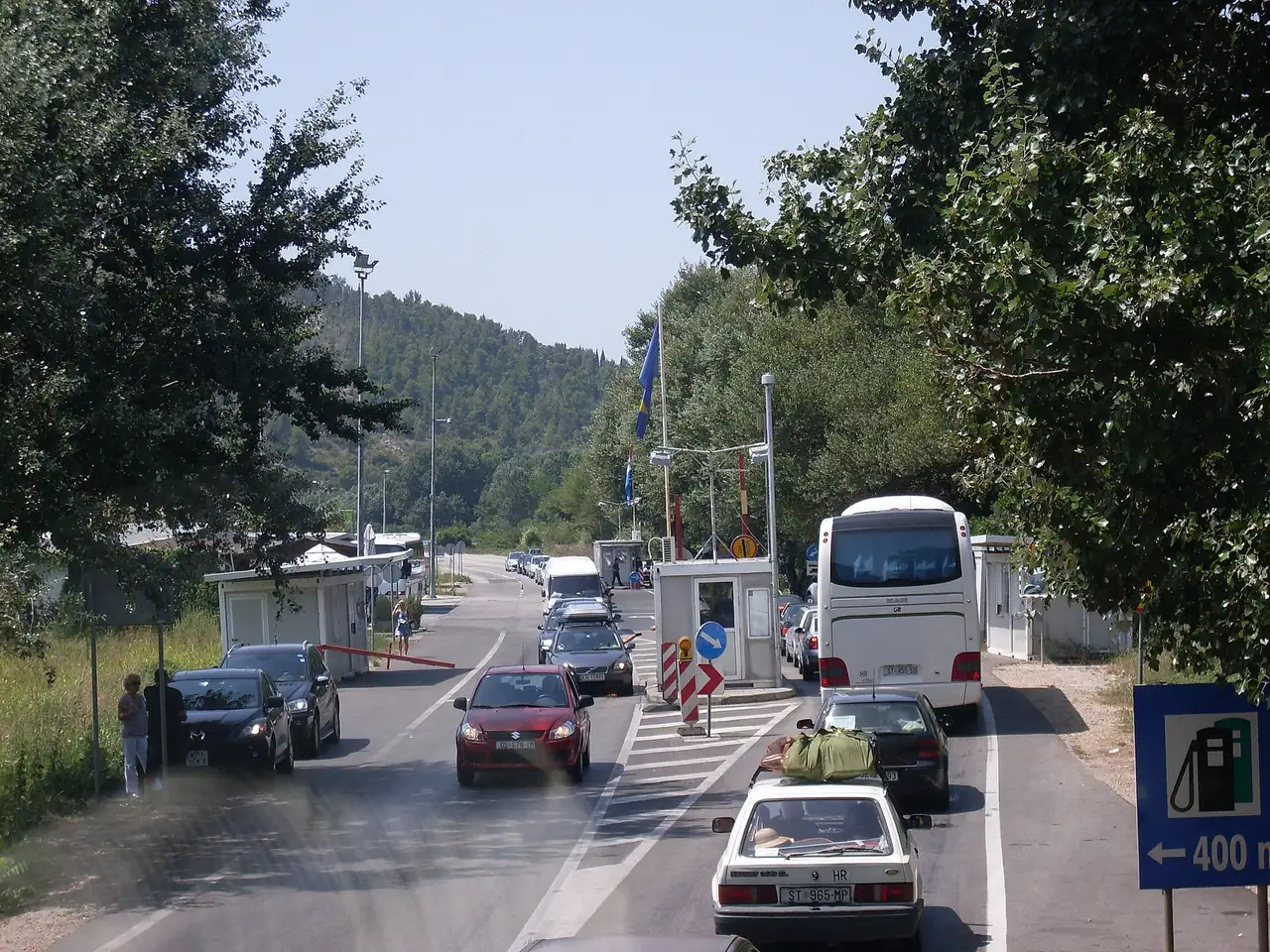
If you’re crossing between Croatia and Bosnia this summer, the short version is this: non-EU travellers need a passport, while EU, EEA and Schengen citizens can cross into Bosnia on a national ID card; you cross one Bosnian border each way; and in July and August the busy coastal crossings can back up from 30 minutes to well over an hour, worst on summer weekends.
One thing has changed at the Croatian booth since April. This is an external border of the European Union, and the EU’s Entry/Exit System (EES) has been fully operational there since 10 April 2026. If you hold a non-EU passport, your first crossing since then means four fingerprints and a facial photo taken at the window instead of a stamp in the passport, which adds a few minutes per person and, at a busy coastal crossing on a Saturday, considerably more to the queue behind you. EU, EEA and Swiss citizens give no biometrics at all. Everything below assumes that, plus the older Neum quirk: Bosnia’s odd little strip of coast still matters even though the Peljesac Bridge lets Croatia-only drivers skip it. Once you’re over, our guide to driving in Bosnia picks up the story.
The document rule: passport or national ID card
Start here, because getting it wrong can turn you back at the barrier. Bosnia is outside the EU and the Schengen area, so the document rule splits by nationality. Citizens of the EU, the EEA and Schengen can enter Bosnia on a valid national ID card - the reciprocal arrangement Bosnia extends to its European neighbours - though a passport works too and is worth carrying anyway. Everyone from outside that zone - UK, US, Canada, Australia and the rest - needs a passport. The bigger catch is that the Croatian side is now a Schengen external border, which means real checks in both directions rather than the wave-through of an internal EU frontier, so budget time for it in summer. As a rule of thumb, keep at least a few months of validity on whatever document you carry.
Bosnia is visa-free for short stays for most Western nationalities, on the usual 90 days in any 180 basis. Rules depend on your nationality and do change, so confirm the current position with the Bosnian Border Police before you travel (checked 2026-07-07).
The Neum corridor, and why the bridge does not always help
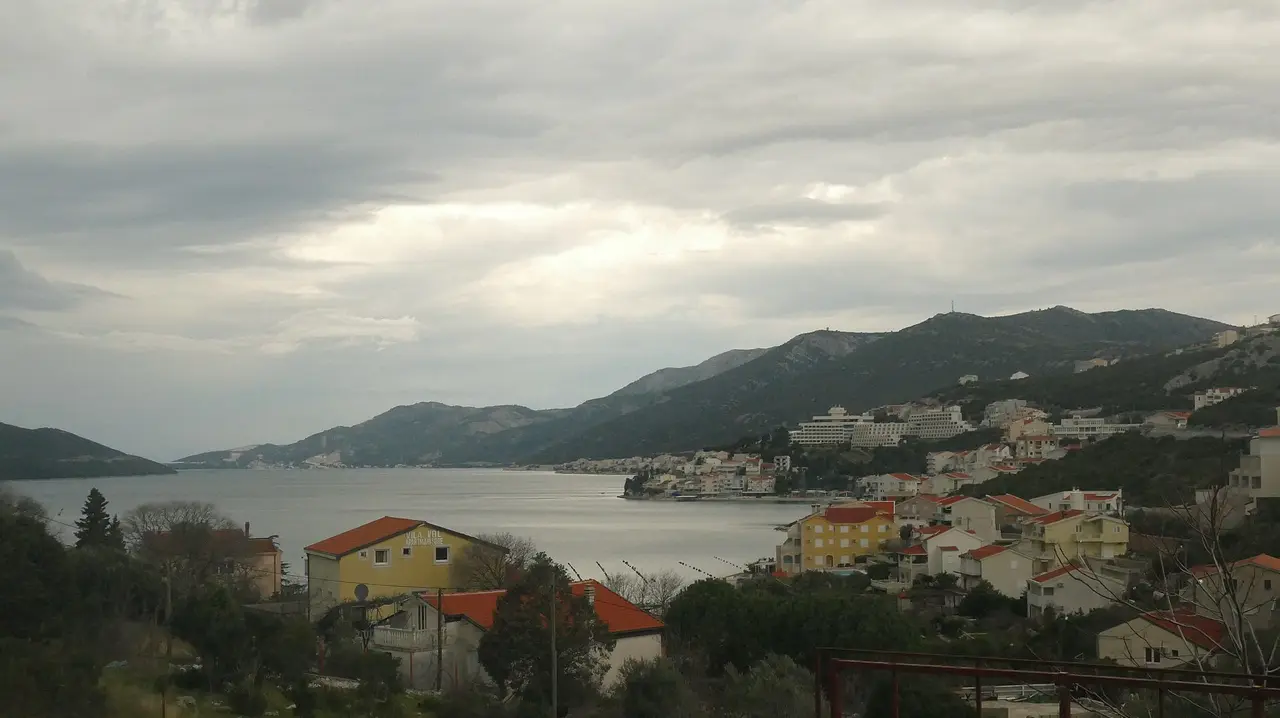
Here’s the geography quirk worth understanding. Bosnia owns a roughly 20 km strip of Adriatic coast around the town of Neum, one of the shortest national coastlines in the world, and it cuts Croatia’s coastline in two. For years that meant anyone driving the Croatian coast road between Split and Dubrovnik crossed two borders in quick succession: out of Croatia, through the Neum strip, then back into Croatia at Klek.
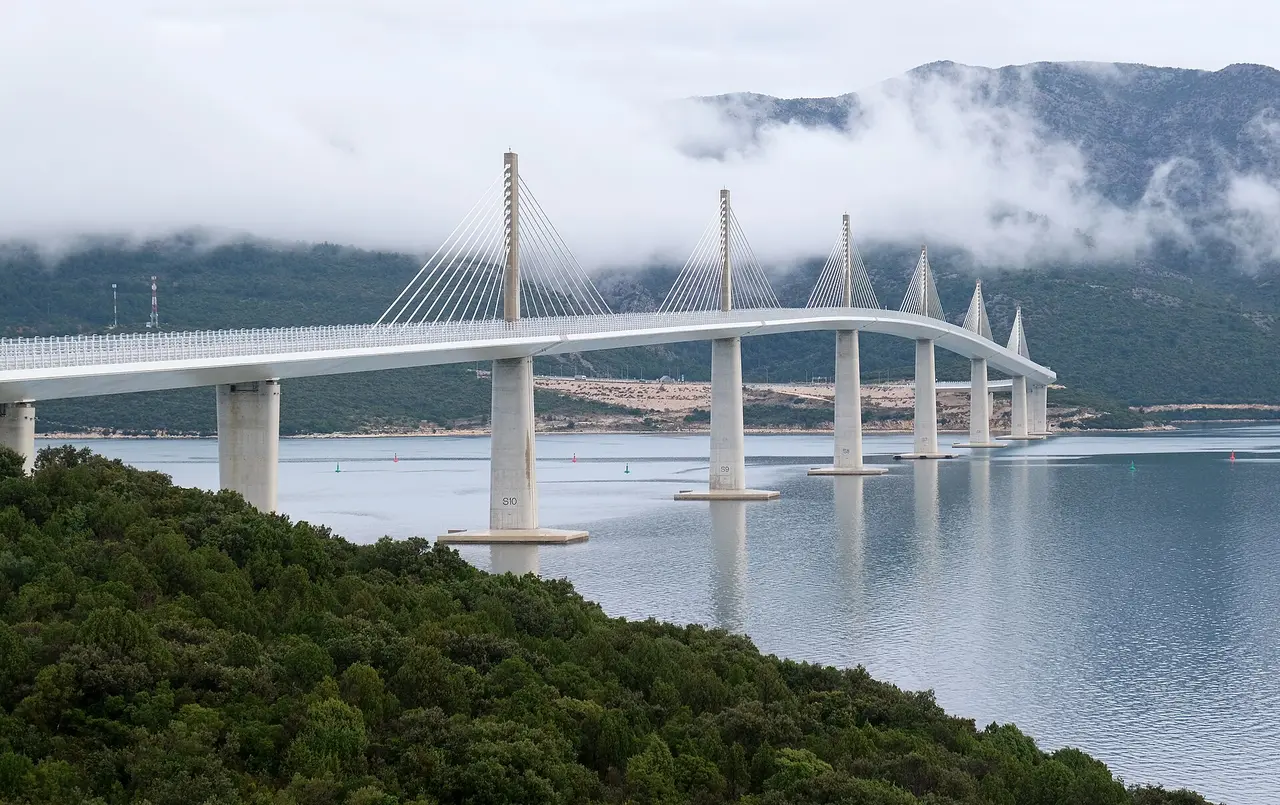
The Peljesac Bridge, the 2.4 km cable-stayed span that opened in July 2022, changed that - but only for one kind of traveller. If you’re driving Split to Dubrovnik and staying in Croatia, the bridge lets you sail over the channel and bypass Neum entirely: no Bosnian entry stamp, no exit stamp, no queue. It’s the best thing to happen to that drive in a generation. The catch, and it is the point most people miss, is that if Bosnia is actually your destination - Mostar, Kravice, Sarajevo - the bridge does nothing for you. You still have to enter Bosnia at a proper border either way, whether that’s the Neum-corridor crossing or the inland one at Doljani. So don’t assume the new bridge means no border checks on a Bosnia trip; it doesn’t.
Which crossing for your route
There’s no single “the border” - which crossing you use depends on where you’re coming from, and it makes a real difference to the wait.
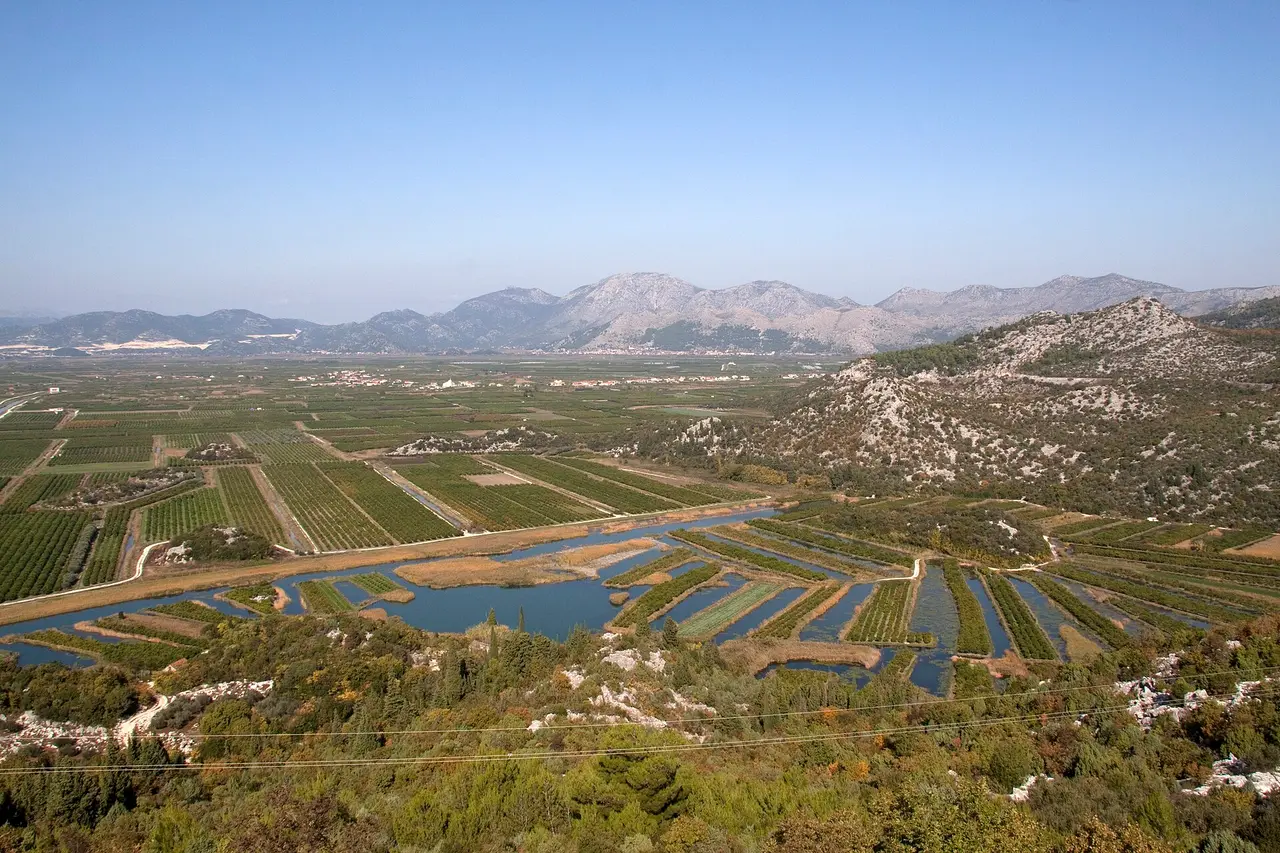
- From Dubrovnik toward Mostar: most traffic uses the Doljani crossing, inland above the Neretva delta near Metkovic. It’s the standard routing for the Dubrovnik to Mostar run and for many buses.
- From the coast road generally: the Neum / Klek crossings on the old Adriatic highway handle Makarska, Split and Dubrovnik traffic heading into Herzegovina. Neum is the most-used coastal point.
- From Split toward Mostar: the Kamensko and Nova Sela / Bijaca crossings, the latter on the A1 motorway, are the routing for the Split to Mostar trip - and they are usually the quickest of the lot.
- Toward the north (Una, Bihac): crossings such as Izacic serve the northwest, for anyone coming from Zagreb or Plitvice toward Una National Park. Traffic here is far lighter than on the coast.
The major crossings - Doljani, Kamensko, the coastal ones - are open 24 hours, so timing is about traffic, not opening hours.
What the queues actually look like in summer
This is the part that decides your day, and it’s right now that it bites - July and August are the peak. Rough guide, and these swing hard with the day and the hour:
- Neum: around 10 to 30 minutes in normal traffic, stretching to 30 to 60 minutes on peak July and August weekends. During Mladifest in early August, the youth festival at nearby Medjugorje, the surrounding crossings can crawl to 60 to 90 minutes.
- Doljani: typically 15 to 45 minutes in summer, and it can hit close to two hours at the worst moments, generally Friday and Sunday afternoons as weekend traffic returns.
- Kamensko / Bijaca: usually under 15 minutes even in high season, which is exactly why routing via Split can be the smart move.
On the very worst Adriatic-bound Saturdays, coastal crossings have been known to sit at two to four hours. The single most useful thing to know is that a long queue doesn’t clear over the middle of the day: if it looks like a car park at 10 am, it’ll still look like one at noon. So cross early - before about 9 am - or in the evening, favour weekdays over weekends, and avoid the classic 09:00 and 17:00 pinch points. Croatia’s HAK auto-club app shows live webcams and waits at the main crossings, and it’s worth a look before you commit to a departure time.
EES: what the biometric check actually involves
Bosnia isn’t in the EU, so the Croatian side of every one of these crossings is an external border of the Union. That’s what puts the Entry/Exit System here. The European Commission started it progressively on 12 October 2025 and states that it became fully operational on 10 April 2026, and that from that date it replaces the stamping of passports, with overstays detected automatically instead.
Croatia’s Ministry of the Interior is specific about where it applies: at all international border crossing points, and also at the local crossing points temporarily opened to international traffic under the Croatia-Bosnia and Herzegovina agreement. In plain terms, that covers everything you might use, from the motorway post at Bijaca down to the small inland ones.
What happens at the window depends on who you are:
- Non-EU passport holders (UK, US, Canada, Australia and the rest). On your first crossing the officer takes four fingerprints and a facial image along with your document details, and that record is stored and reused. The system logs the date, place and direction of every crossing, entry and exit both, plus any refusal of entry. Expect the first registration to take a few extra minutes per traveller.
- On later crossings there’s no repeat of the fingerprinting. The check is a live facial image matched against your existing file, which is quick.
- Nobody with free movement. The Croatian ministry puts EU nationals outside the system “regardless of their place of residence”, and the Commission’s own exemption list adds citizens of Iceland, Liechtenstein, Norway and Switzerland, plus Andorra, Monaco, San Marino and the Vatican. You show a passport or ID card as before and give no biometrics.
- Two exemptions people miss. Non-EU nationals holding a long-stay visa or a residence permit are not registered - except for permits issued by Cyprus and Ireland, whose holders are - and neither are non-EU family members of an EU, Icelandic, Liechtenstein, Norwegian or Swiss citizen who hold a residence card. If that’s you, carry the card and say so at the window rather than queuing for the fingerprint reader.
Three practical consequences. First, the stamp is gone, so don’t go looking for one to prove when you left the Schengen area; the record is digital now. Second, EES is an EU system and the Bosnian booth is unaffected - Bosnia runs its own check, and its own 90-days-in-180 allowance is counted separately from the Schengen one. Third, and this is the part that costs you time, the slowest queue is the one where a coachload of non-EU passengers is being enrolled for the first time. If you have a choice of hour, cross early. (Checked 2026-08-04 against the European Commission, its exemption list of 27 July 2026 and the Croatian Ministry of the Interior; this is a fast-moving area, so confirm the current position before you travel.)
What to have ready, and what not to bring back
A few practical things smooth the crossing:
- Documents reachable. Keep passports or ID cards somewhere you can reach without unbuckling. If you’re in a hire car, have the rental paperwork to hand - on your phone is fine.
- Rental cars: permission matters more than the label. Taking a hire car across needs the rental company’s written permission before you leave the lot, plus usually a cross-border fee - sort both when you book, not at the barrier. Since 2021 a Croatian (EU) plate’s cover is recognised in Bosnia on its own, so the border itself no longer insists on a paper Green Card; it’s the rental desk’s own cross-border paperwork, which plenty of companies still label a Green Card out of habit, that they can refuse to let you drive without. A cross-border trip is also exactly the kind of drive where decent travel insurance earns its place, since your home cover may lapse once you leave the EU.
- Watch what you carry back into the EU. Coming from Bosnia into Croatia, meat, milk and dairy products from a non-EU country may not be brought in at all. Croatian customs is blunt about the consequences: undeclared goods of this kind are seized and destroyed, and failing to declare them is itself a punishable offence carrying a fine, though the customs page prescribes the penalty without publishing an amount. A forgotten prosciutto sandwich makes a bad souvenir. Tobacco allowances are tight at land borders too, so check the current limits on carina.gov.hr if you’ve been shopping, and declare anything you’re unsure about.
- Cash and currency. Croatia is on the euro; Bosnia uses the convertible mark (KM / BAM), about 1.96 to the euro. Neum’s shops and filling stations are a popular quick stop and often take euros, but carry a little KM for anywhere inland that does not.
The bottom line
Crossing between Croatia and Bosnia is straightforward as long as two things are true: everyone has the right document - a passport, or a national ID card for EU, EEA and Schengen citizens - and you haven’t walked into a summer-weekend queue by accident. Sort the documents, pick the right crossing for your route - Doljani from Dubrovnik, Bijaca from Split, and expect the coastal points to be busiest - and cross early or late rather than mid-morning on a Saturday. Do that and the border is a formality rather than the memory of the trip. Once you are through, our guide to driving in Bosnia covers the roads ahead, and if you are weighing how to pair the two countries, Croatia vs Bosnia lays out how they fit together. If you’re continuing south into Montenegro, our Bosnia-Montenegro border crossings guide covers Hum, Klobuk and Deleuša on the inland side.
Photos
Read also

Transport · 11 min read
Sarajevo Public Transport: Trams, Buses & Tickets
Verified · September 3, 2026How Sarajevo trams, trolleybuses and buses work: GRAS fares in KM, where to buy tickets, the Javni Prevoz KS app, and when to walk instead.

Transport · 13 min read
Bosnia-Montenegro Border Crossings: What to Expect
Verified · August 24, 2026Bosnia-Montenegro at Hum, Klobuk, Deleuša and Zupci: real insurance rules, honest queue ranges, rental car paperwork, and which crossing fits your route.

Transport · 11 min read
Sarajevo to Travnik & Jajce: Bus and Driving Guide
Verified · August 22, 2026Sarajevo to Travnik and Jajce: Centrotrans bus from 26.50 KM, or drive 90 min to Travnik, 2h50 to Jajce. One corridor, both towns. Checked August 2026.

Transport · 10 min read
Sarajevo to Trebinje 2026: Drive 4h or 07:45 Bus
Verified · August 15, 2026Sarajevo to Trebinje: 222 km, about 4 hours by car via Foča and Gacko. Morning bus from East Sarajevo; confirm the fare at the window.