Dubrovnik to Mostar: Day Trip & Transfer
Dubrovnik to Mostar as a day trip: car, bus or transfer, ~147 km and 2.5 hours, one border (an EU ID is fine, others a passport), and the best stops.
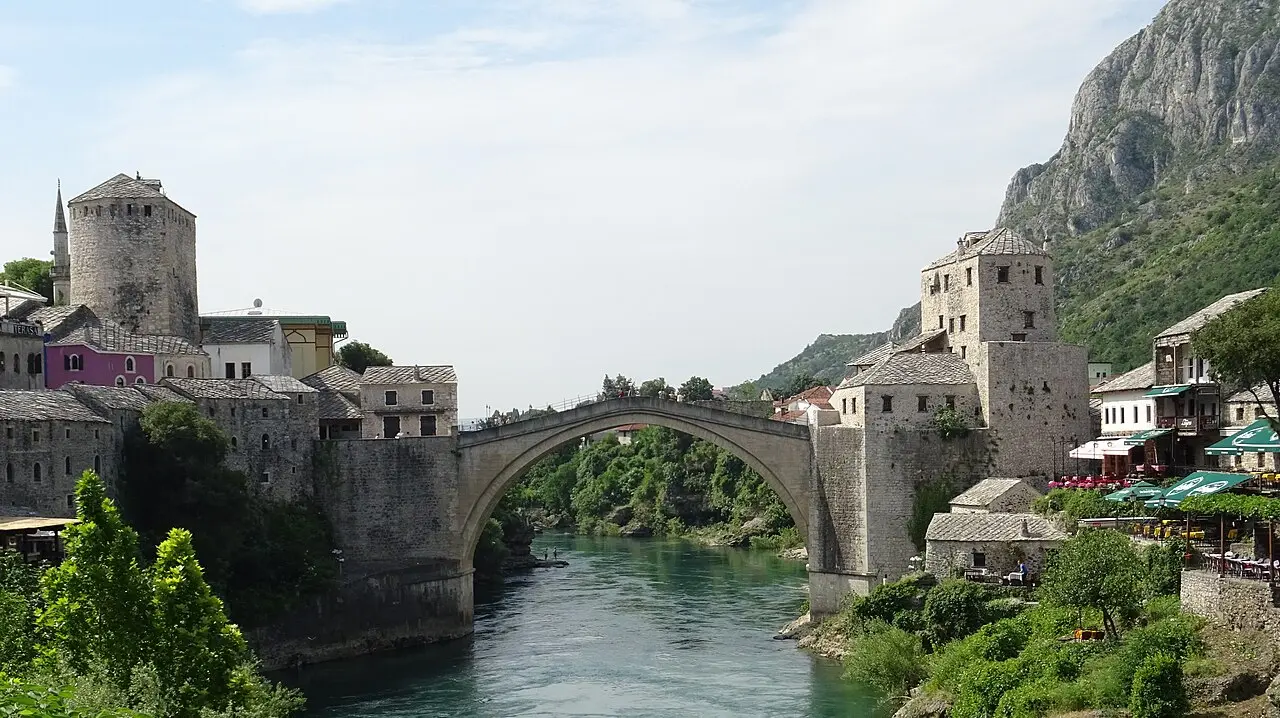
Short answer: yes, Mostar works as a day trip from Dubrovnik, and it’s one of the most popular in the region. It’s about 147 km and 2.5 to 3 hours each way, with one border crossing into Bosnia. The most flexible way to do it is by car or a private transfer, because the handful of daily buses are awkwardly timed for a same-day return. The one thing worth sorting before you leave is documents: Bosnia is outside the EU, but EU, EEA and Schengen citizens can cross on a valid national ID card; travellers from outside that group, such as UK and US passport holders, need a passport. This guide covers the drive, the Old Bridge at the far end, the border, the best stops to fold in along the way, and the honest case for staying a night rather than rushing there and back. If you are heading all the way inland to the capital instead, that’s a longer, different trip, and our Dubrovnik to Sarajevo guide covers it.
The honest numbers
By road it’s roughly 147 km over the Pelješac bridge, and a routing app will quote you about two and a half hours of driving. (FlixBus publishes 131 km for its own bus routeing - that is the coach’s path, not yours.) Add the border and it becomes closer to 2.5 to 3 hours in practice, sometimes more in high summer. So a day trip means real time on the road: reckon on five to six hours of travel there and back, which is exactly why leaving early matters.
Prices in Bosnia are in convertible marks (KM / BAM), pegged at about 1.96 to the euro, while Croatia is on the euro. Bosnia doesn’t universally take euros, so carry a little cash in KM for parking, entry tickets and cafes once you cross. The one-way distance is short enough that this is a genuine day trip and not an endurance test, but only if you treat the timings with respect.
The border: which document you need
There’s exactly one border crossing on this route, and it is a proper international frontier, since Bosnia and Herzegovina sits outside the EU and the Schengen area. That doesn’t mean everyone needs a passport, and this is the point worth getting right. Bosnia lets EU, EEA and Schengen nationals (plus citizens of a handful of neighbours such as Albania, Montenegro, North Macedonia and Serbia) enter and stay up to 90 days in any 180 on a valid national ID card - a passport is not required for them. Where it matters is for everyone else: if you hold a non-EU passport, such as UK, US, Canadian or Australian, you do need a valid passport to cross. So the practical rule is simple, since Bosnia is outside the EU and Schengen: check that everyone in the car is carrying a valid travel document before you leave Dubrovnik, an ID card for EU travellers, a passport for the rest.
Entry rules change and depend on your nationality - confirm the current position with the Bosnian Border Police or your own country’s travel advice before you go (checked 2026-07-04).
Wait times swing with the season. Out of season the crossing is often a two to ten minute formality; in summer it can stretch to 15 to 45 minutes, and it’s at its worst on Friday and Sunday afternoons with weekend and diaspora traffic. If you’re going in July or August, the simple fix is to cross early, before about 9 am, and to head back either before the afternoon rush or after it. Build a buffer into your plans rather than assuming a clean run.
Driving it yourself
Self-driving is the option most people should pick for a day trip, because it hands you the two things the bus can’t: your own timing, so you can beat the border queue with an early start, and the freedom to stop. The route runs northwest out of Dubrovnik along the coast, crosses into Bosnia near the Neretva delta around Metković, and then follows the green river valley up to Mostar.
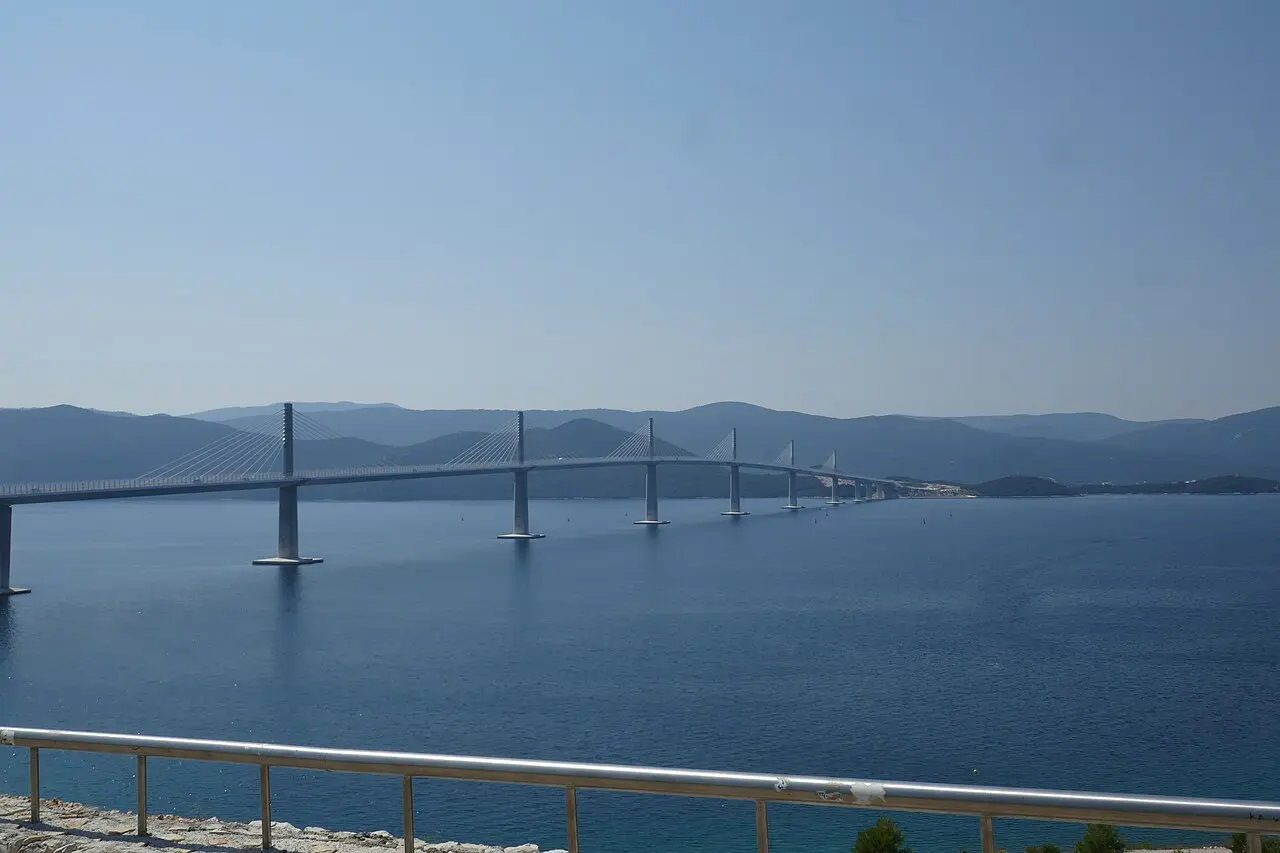
A genuine improvement here’s the Peljesac Bridge, the 2.4 km cable-stayed span that opened in 2022. Before it, the coast road forced a double border crossing through Neum, the short strip of Bosnian coastline, which meant queueing twice. The bridge lets you bypass Neum entirely, so the Croatian side of the drive now flows like a normal motorway and the only frontier you deal with is the one into Bosnia proper. It has quietly made this day trip smoother than the older guides suggest.
One thing to sort at the rental desk: taking a Croatian hire car into Bosnia needs the company’s written permission, usually with a cross-border fee attached. Since 2021 a Croatian plate’s insurance is recognised in Bosnia on its own, so the actual Green Card certificate isn’t a legal requirement at this border - it’s the desk’s own paperwork that counts, even though plenty of companies still call it that out of habit. Flag the plan when you book and get it in writing, because a car without the company’s own authorisation is the one that can cause trouble at the frontier. If Bosnia’s roads are new to you, our guide to driving in Bosnia covers the two-lane highways, tolls and the general rhythm of it.
The bus, and why it is awkward for a day trip
There are buses, but be honest with yourself about them. Only a few run each day from Dubrovnik to Mostar, mostly clustered in the morning and late afternoon, and the ride takes roughly 3.5 to 4.5 hours once the border is factored in. Fares are cheap, around €15 to €25 one way. The problem is not the price or the comfort, it’s the timetable: the departures rarely line up to give you a useful there-and-back day, and you can easily find that the only return leaves too early to see much or too late to matter.
So the bus makes sense in two cases: if you are staying overnight in Mostar, or if you’re travelling one way and carrying on into Bosnia afterwards. For a classic same-day return, it’s the weakest choice. Buses leave from Dubrovnik’s main bus station in Gruž and pull into Mostar’s bus station in the north of town, a short walk or taxi from the Old Bridge.
Turning the drive into the day: the stops
The best argument for driving is what you can string onto the route, and it’s why a car beats a straight bus run. All of these sit on or just off the road between the coast and Mostar.
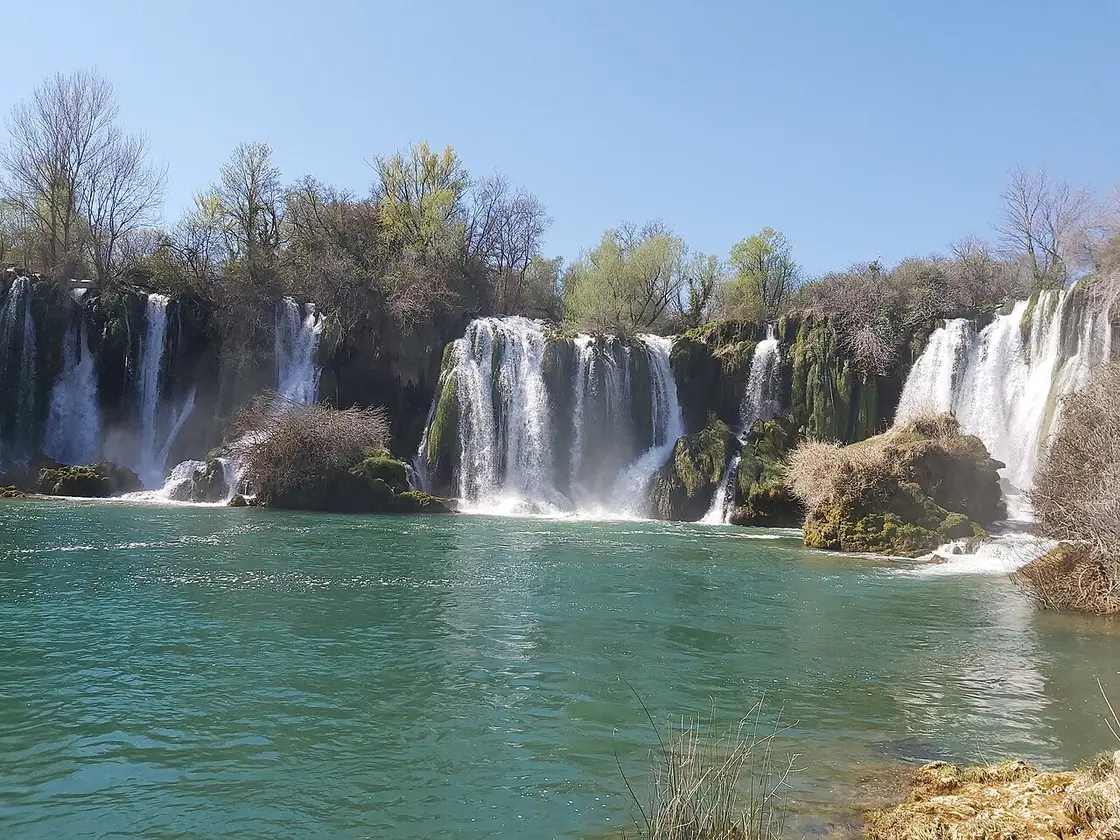
- Kravice waterfalls. Bosnia’s most-visited falls, a wide curtain of cascades dropping into an emerald pool you can swim in during summer. It’s about a five-minute walk down from the car park, and it lands neatly on the corridor, roughly an hour short of Mostar. Our Kravice waterfalls guide has the details on the entry fee, the walk and the best months.
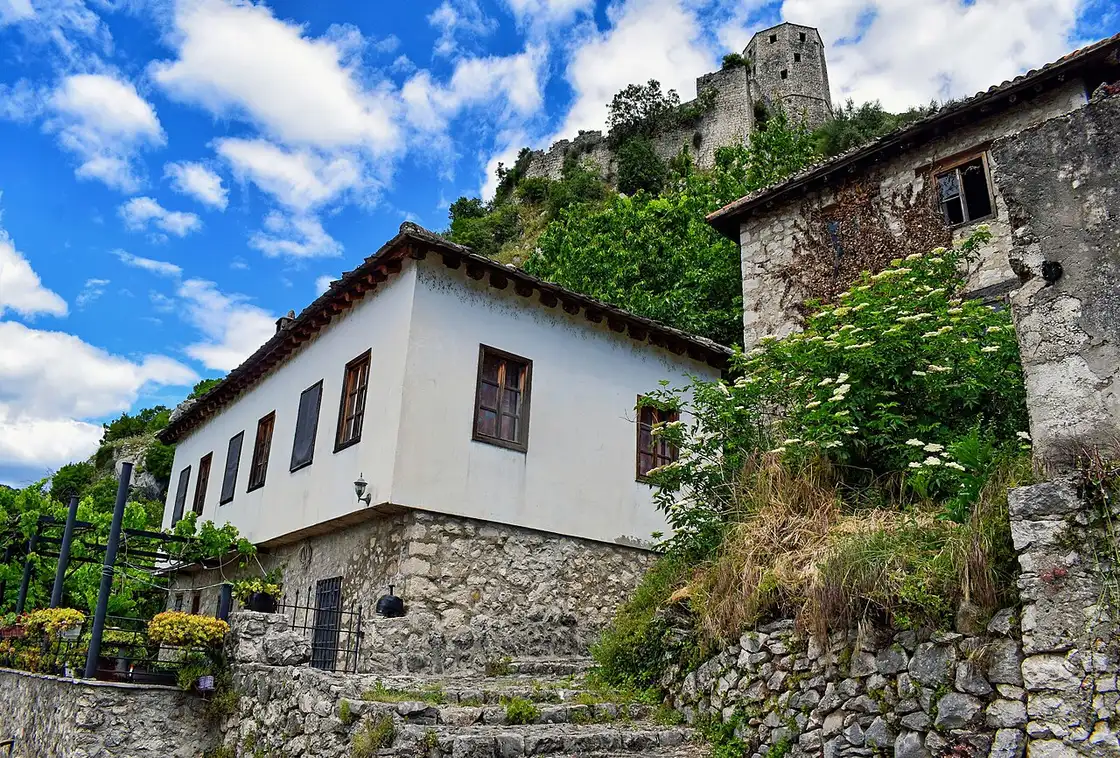
- Počitelj. A stacked Ottoman village of pale stone climbing to a hilltop fort, on UNESCO’s tentative list and one of the loveliest silhouettes in Herzegovina. It sits right by the road and makes a perfect early stop if you set off from Dubrovnik at first light.
- Medjugorje. A short detour inland brings you to Medjugorje, one of the world’s busiest pilgrimage towns since the 1981 apparitions. It’s a stop for a particular traveller rather than everyone, but if the story interests you our Medjugorje guide has the practicalities.
- Blagaj. The dervish house at the source of the Buna river, tucked under a cliff about 12 km from Mostar, is a beauty, but it’s the one that’s hard to squeeze into a same-day trip once you account for the driving and time in Mostar itself. Treat it as a bonus if you’re moving fast, or a reason to stay the night.
A realistic self-drive day from Dubrovnik is Mostar plus Kravice, and Počitelj too if you leave early. Try to add Blagaj on top and you’ll spend the day watching the clock rather than the view.
Private transfer: the middle path
If you don’t want to drive but the bus times defeat you, a private transfer splits the difference. It runs door to door in about 2.5 to 3 hours, collects you right by Dubrovnik’s Old Town where coaches don’t go, and carries you across the border in one vehicle so there’s no bag-shuffle at the crossing. Most drivers will fold in a stop at Kravice or Počitelj for an agreed price, which effectively turns the transfer into a private day tour without you touching a wheel or a timetable. It’s the priciest way to travel, but for a family or a small group the per-head cost narrows, and since you’re crossing into another country and back, the fair comparison is a one-way rental with its cross-border drop fee rather than a cheap local hire.
Day trip, or stay the night?
This is the real decision, and it is worth thinking about before you book. A day trip absolutely works: leave Dubrovnik early, cross before the queues, spend the middle of the day on the Old Bridge and in the bazaar, add Kravice on the way, and be back on the coast for dinner. It’s a long but rewarding day, best done by car or transfer.
Staying a night buys you a different Mostar. You get the Old Bridge at dawn and after dark once the day-trip coaches have gone and the town empties out, and you’ve time to add Blagaj, Počitelj and Kravice properly rather than in a rush. It also puts you in position to carry on deeper into Bosnia. If Mostar is the whole reason you’re coming inland, the overnight is the more satisfying call; if it’s one highlight among many on a Croatia-focused holiday, the day trip does the job. Our guide to things to do in Mostar helps you judge how much time the town really deserves.
Which way to go
Match the transport to the kind of day you want:
- You want to stop and see Kravice or Počitelj → drive, or book a transfer that builds the stops in. This is the way to get the most out of the route.
- You just want to reach Mostar cheaply and you are staying over → the bus is fine one way, and the low fare is welcome.
- No driving, no timetable, door to door → a private transfer, especially with a group or bags, which effectively becomes a private day tour with a Kravice stop.
Whichever you choose, the two things that make you settle it early are the documents and the summer border, so confirm everyone has a valid travel document (an ID card for EU travellers, a passport for the rest) and cross before the afternoon rush, and the rest of the day looks after itself. This is one of the great short journeys in the region, from the polished marble of the Dalmatian coast to the Ottoman stone and turquoise river of Herzegovina in a couple of hours, and it’s exactly why so many people fold both countries into one trip: our Croatia vs Bosnia comparison weighs them up if you’re still deciding how to split your time. If you’re basing yourself on the coast, the Dubrovnik travel guide on our sister site sets up the other end, and once Bosnia has you, our guides to things to do in Mostar and the wider Herzegovina attractions show what else is within reach.
Photos
Read also

Transport · 11 min read
Sarajevo Public Transport: Trams, Buses & Tickets
Verified · September 3, 2026How Sarajevo trams, trolleybuses and buses work: GRAS fares in KM, where to buy tickets, the Javni Prevoz KS app, and when to walk instead.

Transport · 13 min read
Bosnia-Montenegro Border Crossings: What to Expect
Verified · August 24, 2026Bosnia-Montenegro at Hum, Klobuk, Deleuša and Zupci: real insurance rules, honest queue ranges, rental car paperwork, and which crossing fits your route.

Transport · 11 min read
Sarajevo to Travnik & Jajce: Bus and Driving Guide
Verified · August 22, 2026Sarajevo to Travnik and Jajce: Centrotrans bus from 26.50 KM, or drive 90 min to Travnik, 2h50 to Jajce. One corridor, both towns. Checked August 2026.

Transport · 10 min read
Sarajevo to Trebinje 2026: Drive 4h or 07:45 Bus
Verified · August 15, 2026Sarajevo to Trebinje: 222 km, about 4 hours by car via Foča and Gacko. Morning bus from East Sarajevo; confirm the fare at the window.