Neum: Bosnia's Only Beach Town
Bosnia's only stretch of coast: 20 km of Adriatic at Neum, pebble beaches and hotels at roughly half Croatian prices. What it's like and when to go.
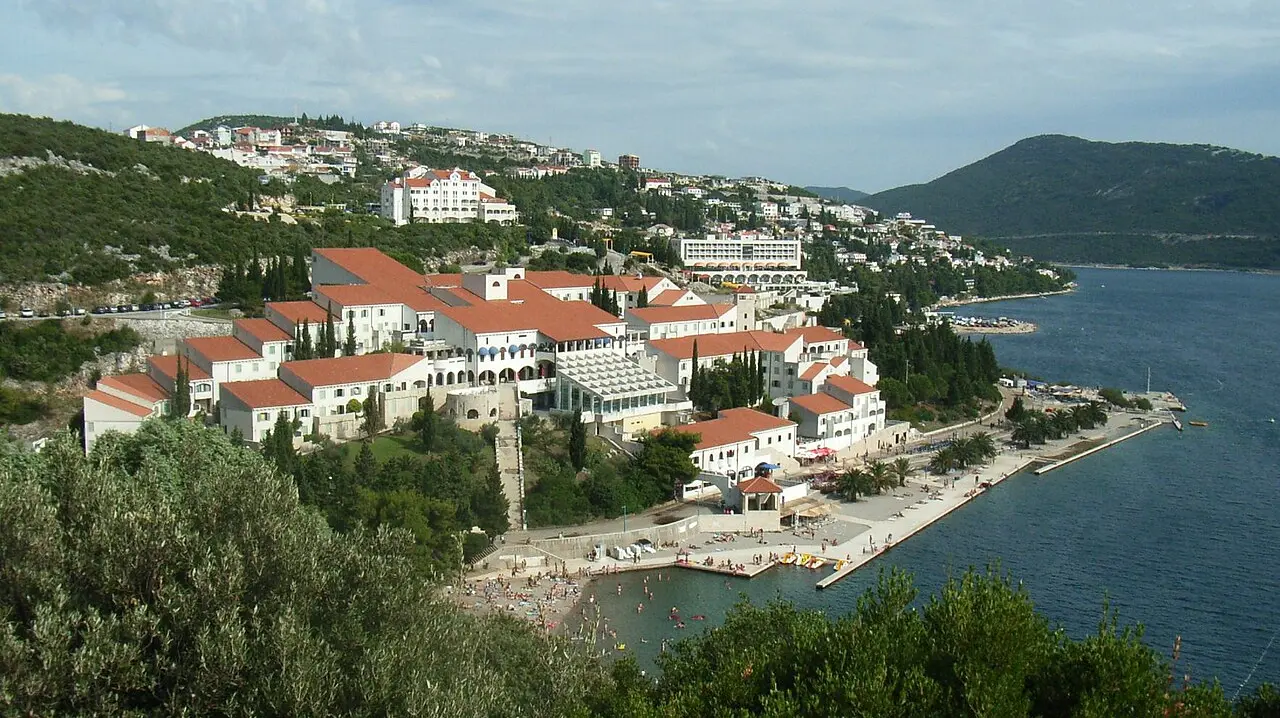
Neum is the only town on Bosnia and Herzegovina’s tiny stretch of coast, and for most people it’s the answer to a trivia question before it’s a destination: this landlocked-feeling country has about 20 km of Adriatic, and this is where you swim. It’s a modest, mid-century resort town of pebble beaches and concrete bathing platforms, not the postcard sand of the brochures, but it comes with one genuine draw that keeps it on the map. Everything here, from a hotel room to a plate of grilled fish, costs roughly 40 to 60 percent less than the Croatian coast a few kilometres either side. Treat Neum as a cheap sea stop of a night or two rather than a week-long beach holiday and it delivers. This guide covers what the beaches are actually like, when to come, where to sleep and how the money works.
Why Bosnia has a beach at all
The odd shape of the map is the most interesting thing about Neum, so it is worth knowing before you arrive. Bosnia’s coast is a leftover of an old piece of diplomacy. Under the Treaty of Karlowitz in 1699, the Republic of Ragusa, the merchant city-state based on Dubrovnik, handed two thin buffer zones to the Ottoman Empire on purpose. Ragusa wanted a no-man’s-land between itself and Venice, its great rival up the coast, and letting the Ottomans hold the strip at Neum did exactly that. The corridor stayed under Ottoman control for about 179 years until Austria-Hungary took over Bosnia in 1878, and the border has more or less survived every reshuffle since.
The practical result is a roughly 20 km ribbon of coast, one of the world’s shortest national coastlines, with Neum as its only town. It sits in the Federation of Bosnia and Herzegovina rather than Republika Srpska, and it splits Croatia’s Dalmatian coast in two. For years that meant every car driving between Split and Dubrovnik crossed Bosnia twice. Since the Peljesac Bridge opened in 2022, Croatia-only traffic can now bypass the corridor entirely, which has taken some of the transit chaos out of Neum but left the town quieter and a little more dependent on people who actually mean to stop.
The beaches: what they are actually like
Set your expectations correctly and you’ll not be disappointed. Neum is built on a steep hillside above a long, sheltered bay, so its shoreline is mostly concrete promenades, stepped bathing platforms and small pebble coves rather than broad sandy beach. The two main spots are Zenit beach, in the middle of town below the hotels, with sun loungers, ladders into the water and cafes right behind, and Eronet beach, a bit further out and quieter. Pack a pair of water shoes; the pebbles and concrete edges are hard on bare feet, and they’re the single cheapest upgrade to your day.
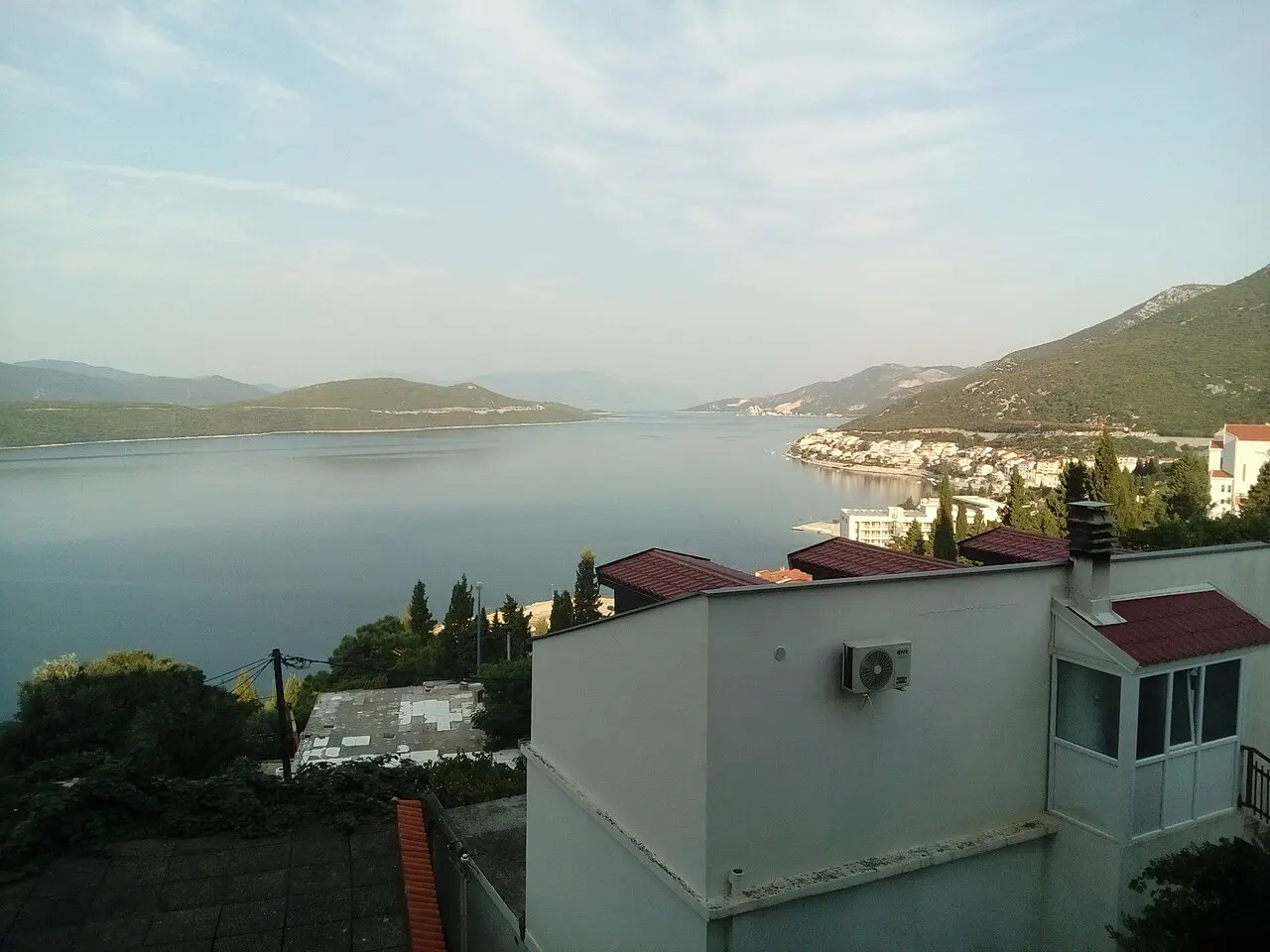
What Neum does have is calm, clear water. Because the town faces its bay rather than the open Adriatic, the sea is unusually flat and sheltered, which makes it easy swimming for children and nervous swimmers. Look across the water and you’re looking at Croatia’s Peljesac peninsula; the bay is also dotted with mussel farms, part of the wider Bay of Mali Ston that ranks among the Adriatic’s great shellfish grounds, a reminder that this is a working stretch of coast as much as a tourist one, and fresh shellfish turns up on plenty of local menus. Sea temperatures climb to around 28°C in July and August, so by midsummer the swimming is genuinely warm.
The honest caveat: this isn’t a resort in the Croatian or Montenegrin sense. There’s no real nightlife, no marina scene, no string of beach clubs. What you get is a low-key family town where the evening entertainment is a slow walk along the front and an ice cream. That is exactly why some people love it and others are bored by lunchtime on day two.
When to go
The swimming season on this coast runs from June through September, and Neum has a small head start on the rest of the country. Because it sits at sea level in the warm Herzegovina lowlands, it heats up first, and the water is often comfortable to swim in by late May. September is the smart pick if you can manage it: the sea is still warm from a summer of sun, but the crowds and prices have eased off.
July and August are the peak, and the peak here has a particular flavour. Neum fills up with Bosnian families on their annual sea holiday and with plenty of Croatian visitors crossing over for the cheaper prices, so the hotels run full and the beach platforms get busy by mid-morning. It’s hot, lively and cheap rather than glamorous. If you want the sea without the squeeze, aim for June or the second half of September.
Where to stay
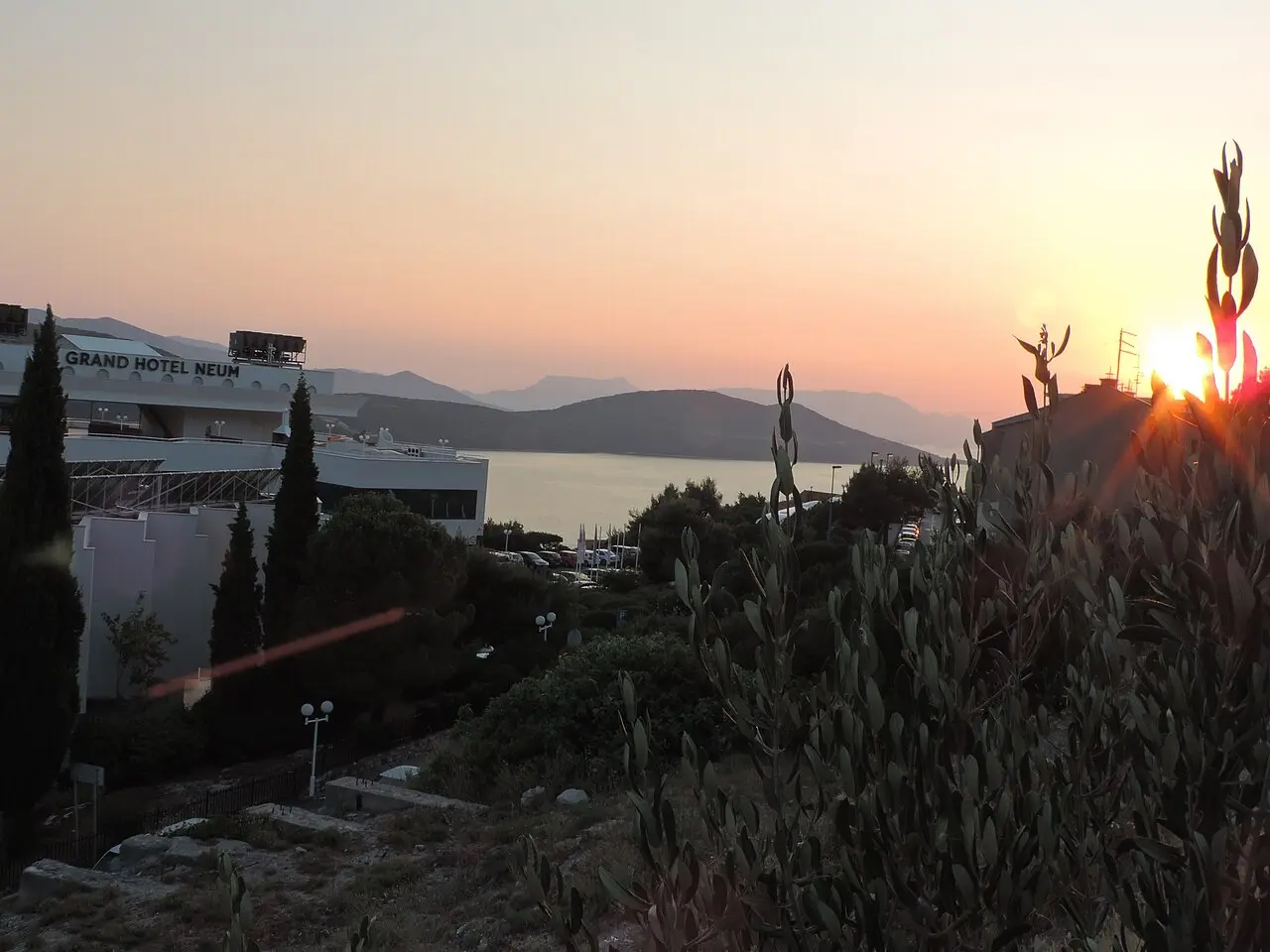
Neum has around 7,000 tourist beds for a town of fewer than 5,000 people, so in practice you have a lot of choice and, outside peak weekends, little trouble finding a room. The landmark is the Grand Hotel Neum, the largest hotel on the strip, a four-star block with a wellness centre, several pools and sea-view balconies stepping down toward its own beach. Rooms there have been quoted from around 90 to 100 euros a night, rising with the July peak, though you should always check live rates for your dates. Other solid mid-range options include Hotel Adria, a smaller four-star a short walk from the beach, plus Hotel Zenit with its own bathing area and Hotel Stella, both with sea-view rooms and terraces.
Below the hotels sits the cheaper layer that makes Neum worth the detour: guesthouses and apartments such as Apartments Leona in the town centre, with views over the bay, and family-run spots like Pansion Lida. Budget rooms have been listed from as little as 35 euros a night on the booking sites, which is the kind of seaside price that has all but vanished from Croatia.
The trade-off to weigh is simple. If your priority is the sea and the bill, Neum wins; if you want atmosphere and restaurants after dark, you’ll be happier basing yourself elsewhere and visiting for the day. For a property-by-property rundown of the seafront hotels, the cheaper hillside apartments and the half-board deals, see our guide to where to stay in Neum.
Getting there
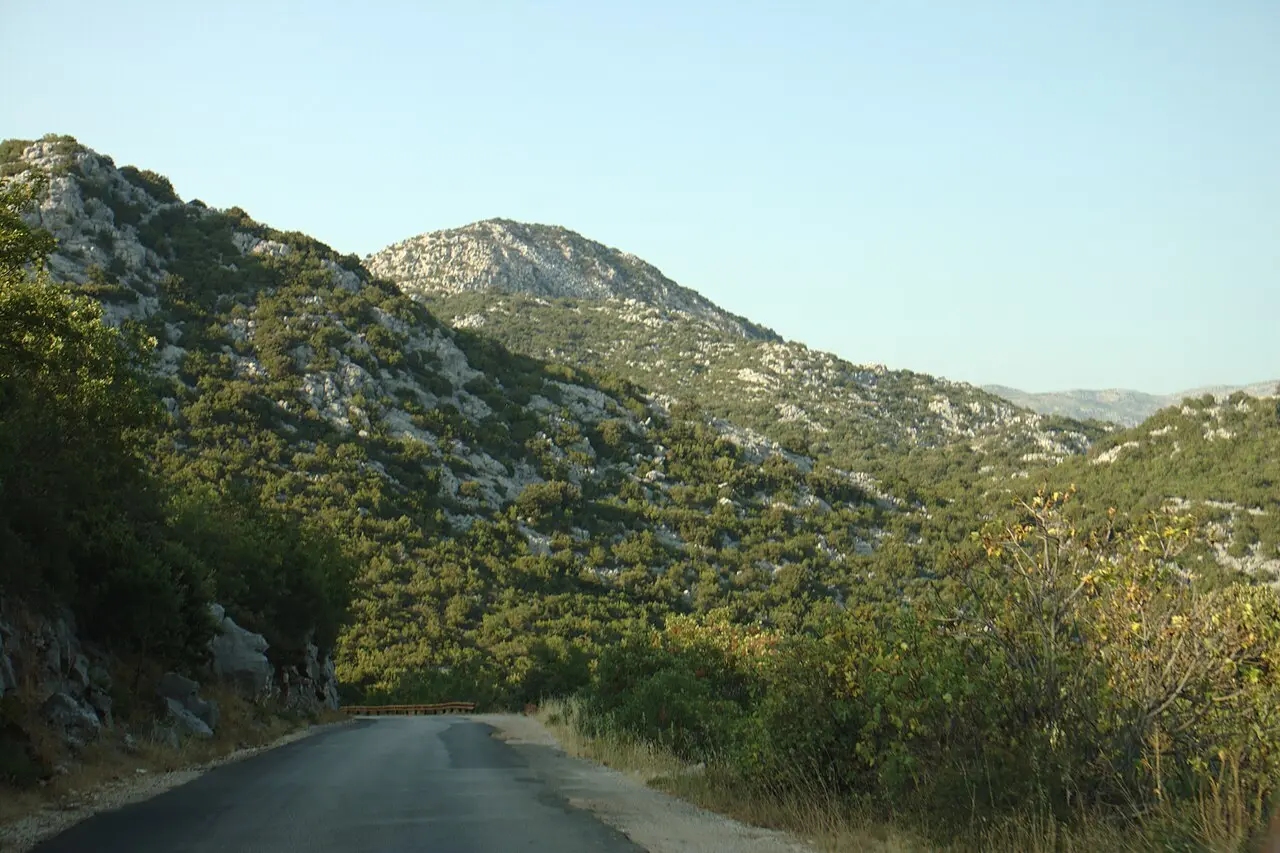
Neum sits right on the coastal road, so it’s easy to reach and hard to avoid. From Dubrovnik it’s about an hour by car, and from Mostar roughly the same up through the Herzegovina hills. Split is farther, around two to two and a half hours, and Sarajevo is a long day at roughly three hours on mountain roads, which is why the capital pairs best with a night in Mostar on the way down. A car is easily the most flexible way to do it, and it lets you string Neum together with Mostar, the Kravice falls or the wine town of Trebinje.
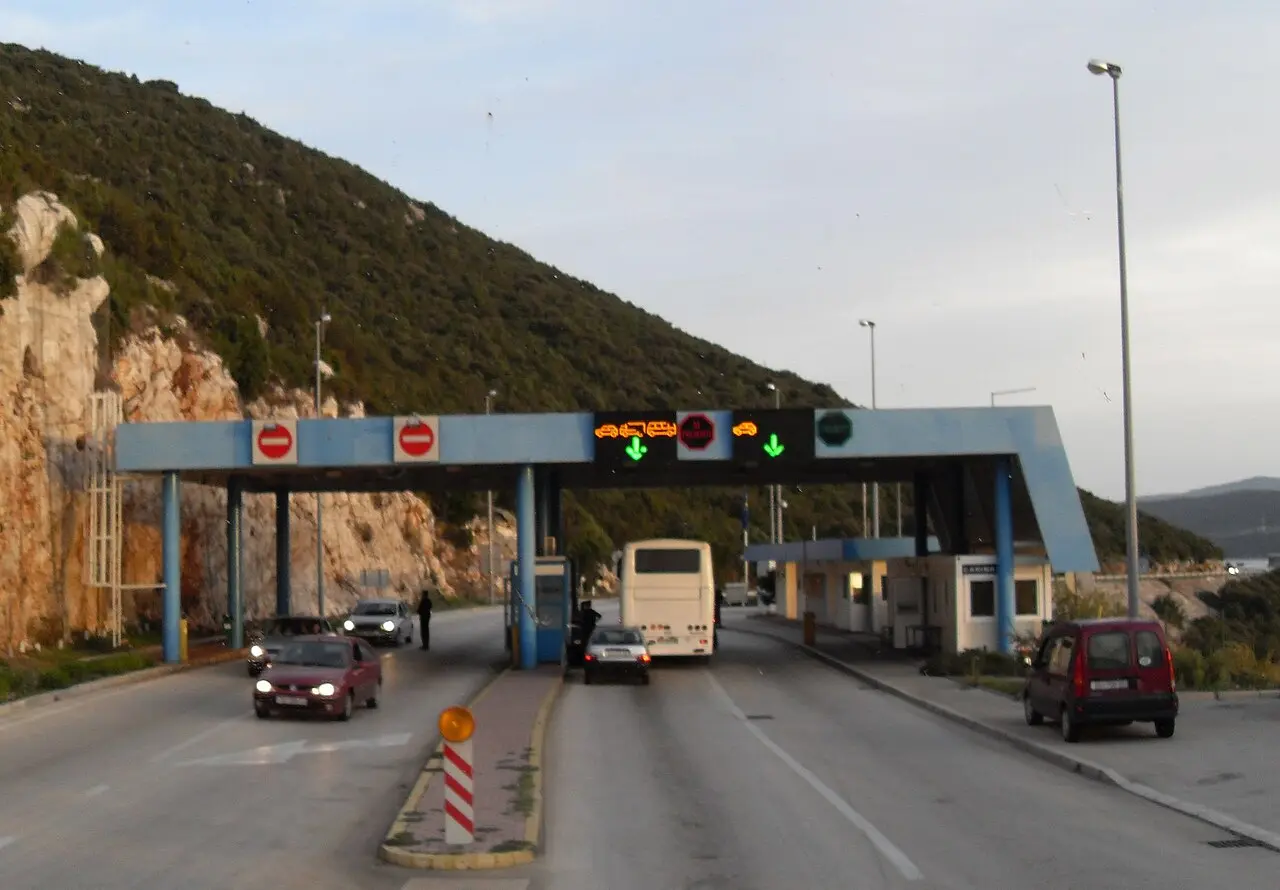
The catch is the border. Bosnia sits outside the EU and Schengen, so you cross a real frontier to reach Neum. Non-EU travellers (UK, US, Canada, Australia) need a passport; citizens of the EU, EEA and Schengen can cross on a national ID card. The Croatian side is a Schengen external border, so expect proper checks, and in July and August the coastal crossings can back up, so build in a buffer and don’t cut a Dubrovnik flight fine. Our guide to the Croatia-Bosnia border crossings explains which posts to use and how bad the summer queues really get.
One of the few places in Bosnia where euros work
Here’s a genuinely useful quirk. Almost everywhere in Bosnia you need the local currency, the convertible mark (KM / BAM), which is pegged to the euro at a fixed 1.96. Neum is one of the exceptions. Because it lives on Croatian and passing-through tourism, most hotels, cafes and shops here will happily take euros in cash, which they rarely do in Sarajevo or Mostar.
The small print is that they usually convert at a flat 2 marks to the euro, slightly worse than the official rate, and hand back any change in KM. So euros will get you through Neum in a pinch, but you lose a few percent on every transaction and end up with a pocket of marks anyway. If you’re travelling on into the rest of the country, draw KM from an ATM and use that; if Neum is a quick in-and-out from Croatia, paying in euros is a fair convenience.
So, is Neum worth it?
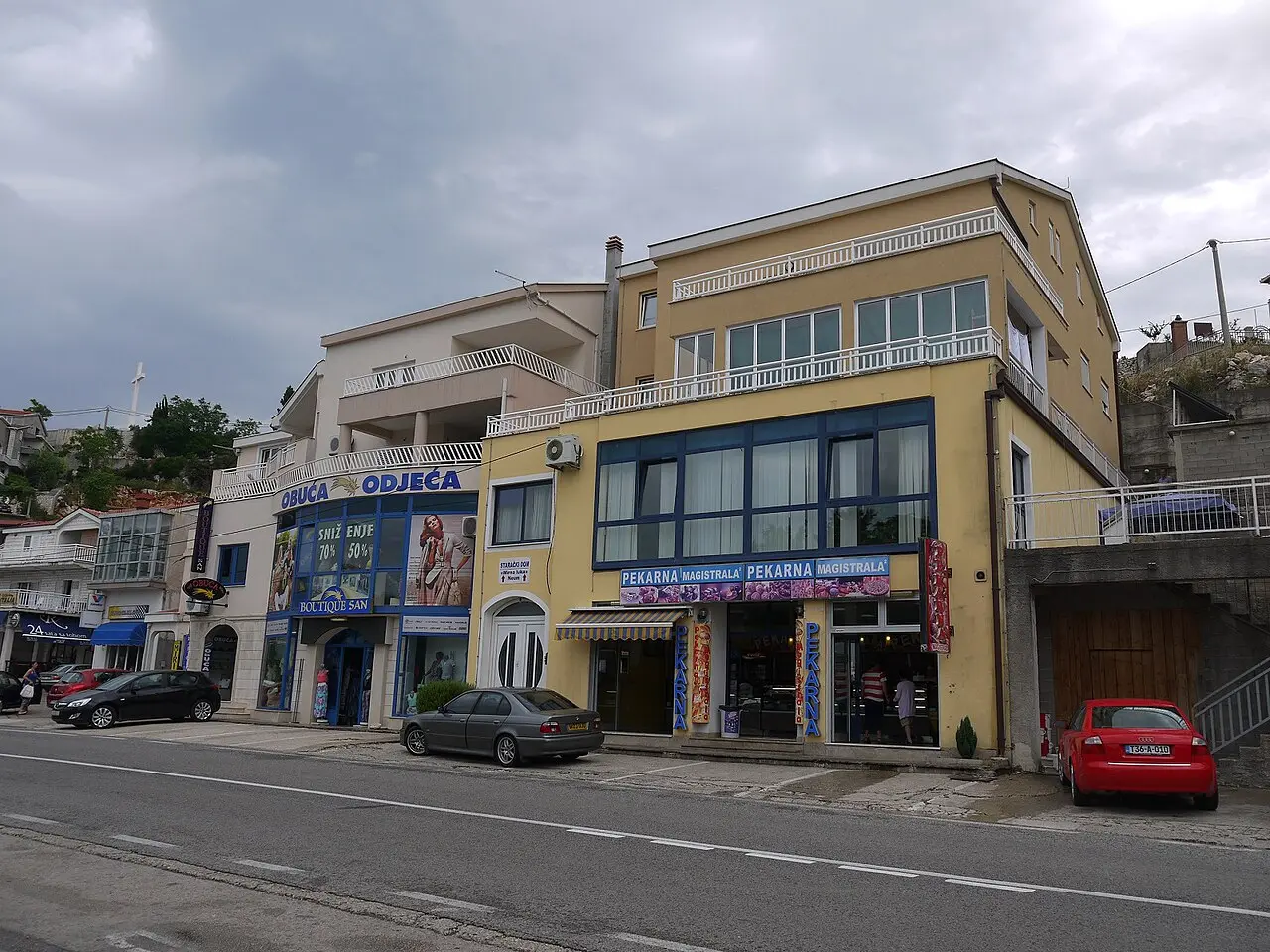
For the right traveller, yes. If you’re driving the coast and want a cheap night by the sea, or you’re based in Mostar and fancy a swim without paying Croatian prices, Neum is a sensible, friendly stop. It’s also a smart-value base for seeing Dubrovnik on a day trip while paying half the hotel bill. What it’s not is a beach destination in its own right; the shoreline is functional rather than beautiful, and a week here would test most people’s patience.
The clean way to think about it’s as part of a bigger trip rather than the point of one. Fold it into a Herzegovina loop with the Old Bridge at Mostar and the Kravice waterfalls, or use it as your cut-price beach fix on a Croatia run. If you’re still weighing the two countries against each other, our comparison of Croatia versus Bosnia lays out where each wins, and the best time to visit Bosnia covers how the coast and the interior differ by season. Come to Neum for the value and the easy swimming, keep the expectations realistic, and it earns its place on the map.
Photos
On the map
The map loads on click - to keep the page lightweight.
The map didn’t load. Check your connection and refresh the page.
Distance
- Sarajevo ≈122 km · ~2.5-3 h by car A long day from the capital on mountain roads; better paired with a night in Mostar on the way down.
- Mostar ≈50 km · ~1 h by car up the corridor road The closest beach to Mostar and Herzegovina, and an easy day out or overnight from there.
- Dubrovnik ≈47 km · ~1 h by car, one border crossing The nearest resort coast to Dubrovnik. The Croatian side is a Schengen external border with summer queues; non-EU visitors need a passport, while EU, EEA and Schengen citizens can cross on a national ID card.
Read also

Cities · 12 min read
Bihać City Guide: Your Base for Una National Park
Verified · July 23, 2026Bihac in northwest Bosnia: a Gothic church that became a mosque in 1592, the Captains Tower museum, the Una through town and the July regatta.

Cities · 9 min read
Konjic: Ottoman Bridge, Rafting & Cold War Secrets
Verified · July 21, 2026A guide to Konjic on the Neretva: the 1682 Ottoman bridge, upper-Neretva rafting, a secret Cold War bunker, a UNESCO woodcraft and Boračko Lake.

Cities · 12 min read
Things to Do in Banja Luka: Bosnia's Second City
Verified · August 9, 2026Things to do in Banja Luka: Kastel fortress on the Vrbas, the rebuilt Ferhadija mosque, cafe-lined Gospodska and the city's Trappist beer heritage.

Cities · 10 min read
Travnik: Vizier Capital, Fortress & Painted Mosque
Verified · July 20, 2026Things to do in Travnik, Bosnia's old Ottoman vizier capital: the best-preserved fortress, the painted Sarena Dzamija over a bazaar, and Plava Voda.