Best Time to Visit Bosnia (Month by Month)
When to visit Bosnia and Herzegovina: month-by-month weather, why Mostar bakes in summer, when Kravice runs fullest, ski season, and the sweet-spot months.
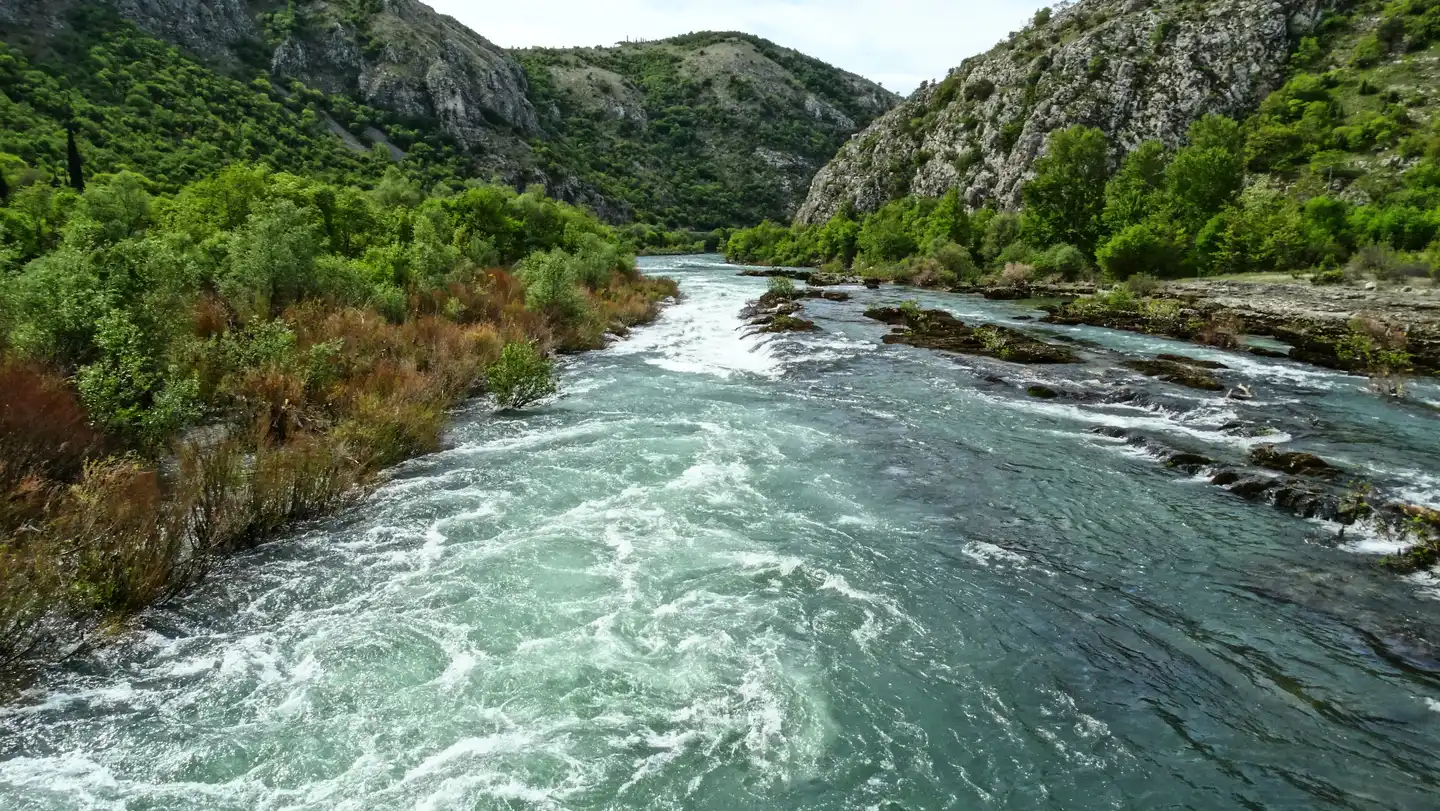
The best all-round time to visit Bosnia and Herzegovina is late spring and early autumn - roughly mid-May to June, and September into early October. That’s when the weather is warm without the summer furnace, the countryside is green, the rivers and waterfalls still run well, and the tour-bus crowds thin out. But it depends heavily on where you’re going and what you want, because this small country packs in two very different climates: a hot Mediterranean-flavoured south around Mostar, and a cooler continental interior around Sarajevo and the mountains. This guide breaks down the seasons and goes month by month, so you can time your trip to the trip you actually want.
Bosnia has two climates - plan around that
The single most useful thing to understand before you book is that Bosnia and Herzegovina isn’t one weather zone. Broadly, there are two you’ll actually feel:
- The south: Herzegovina (Mostar, Blagaj, Počitelj, the Kravice falls, Trebinje). This is low, sun-baked and sub-Mediterranean: mild winters and genuinely hot, dry summers. Mostar sits in a valley cut off from the sea breeze, which traps the heat.
- The interior: the Sarajevo region and the highlands (Sarajevo, Jajce, Travnik, the Olympic mountains). This is continental and higher up (Sarajevo is around 500 m): proper cold, snowy winters and warm, but rarely scorching, summers.
The gap is real. In July, Mostar’s daytime highs average around 31°C and routinely push into the mid-30s, occasionally topping 40°C (the record is 43°C, set in August 2007), while Sarajevo in the same month averages a far gentler ~21°C. In January it flips: Mostar sits around a mild 6°C while the mountains above Sarajevo are deep in snow, and Bjelašnica (2,000 m) averages about -6.5°C. So “what to pack” and “when to go” really come down to which Bosnia you’re visiting.
Spring (March-May): green hills and full waterfalls
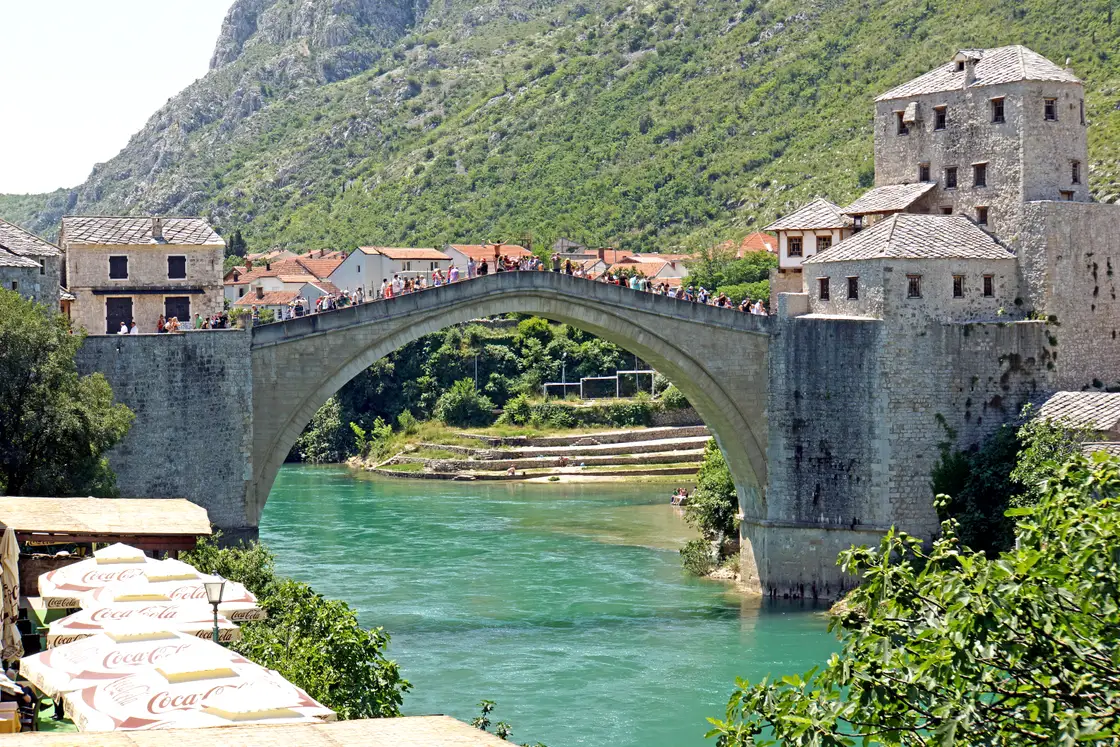
Spring is arguably the best-kept secret of the Bosnian year. As the snow melts off the mountains and the spring rains come through, the whole country turns vivid green, the wildflowers are out, and - crucially - the rivers and waterfalls are at full power.
This is the time for Kravice, the great horseshoe of falls in the south. After the snowmelt, the entire ledge runs, the spray drifts across the basin, and the flow can be several times what you get by late summer. It’s the most dramatic the falls ever look. Just don’t expect to swim: the pool is far too cold this early, so spring is for looking, not bathing.
Temperatures are pleasant rather than hot: Herzegovina warms up nicely by April and May, while Sarajevo and the interior can still be cool and showery early on. Pack layers and a rain jacket, especially in March, and expect the high mountains to hold snow well into the season. Crowds are light, prices are lower, and if you want photographs of a green, roaring Bosnia, this is your window.
Summer (June-August): peak season, and hot in the south
Summer is when most people come, and it’s the only season when everything is reliably open: every boat, every mountain hut, every swimming spot. It’s also the hottest and busiest.
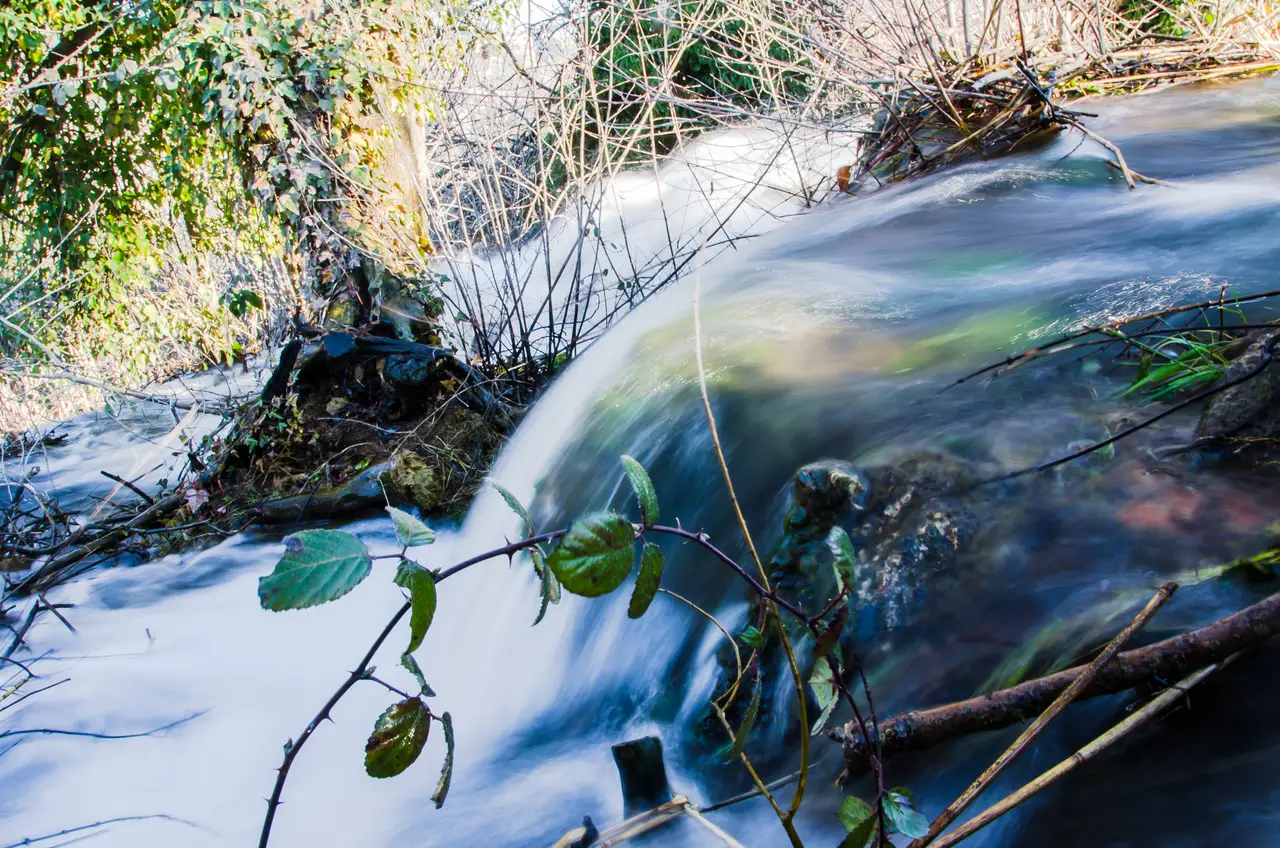
In the south, brace for heat. Mostar, Počitelj and the Herzegovina lowlands bake through July and August, with long, cloudless, dry days and afternoons in the mid-30s. It’s very doable, but you’ll want to sightsee early and late, hide in the shade at midday, and drink constantly. The upside: this is exactly when you want to be swimming, and the region’s cold, clear rivers and waterfalls come into their own. Kravice is now warm enough to swim (the water tops out around 20°C), the Neretva is a magnet for jumpers and bathers, and - up in the far northwest - the emerald Una is at its best for rafting around Bihać. Summer is also prime season for rafting Bosnia’s three great rivers, the Una, Tara and Vrbas. Bosnia’s answer to a beach holiday is a river one; the country’s only coastline is the tiny strip at Neum, so inland water is where you cool off.
The interior is far more comfortable in summer: Sarajevo’s ~21°C average and mountain air make it a pleasant escape from the coast’s crush, and July-August is prime hiking season in the highlands - the only reliable window for the high trails of Sutjeska National Park and Maglić, the country’s highest peak. The trade-offs everywhere are crowds and price: the Old Bridge and the Baščaršija fill with day-trippers, and beds are at their most expensive. If you’re set on July or August, book accommodation well ahead, particularly around Sarajevo’s film festival in mid-August, when the capital is packed.
Autumn (September-October): the sweet spot returns
September is a gift. The ferocious heat breaks, but the water is still warm from summer, the light turns golden, and the crowds fall away as the coach tours wind down. For a lot of travellers, mid-September to early October is the single best time to visit - warm enough for the rivers, cool enough to walk Mostar or climb to Počitelj’s fortress without wilting, and cheaper than peak summer.
Into October the interior cools noticeably and the forests turn; it’s a beautiful time for the mountains and for drives through the Neretva canyon, though you’ll want warmer layers up high and evenings get crisp. Late autumn (November) is the wettest stretch of the year in Herzegovina - the rains return in force - so it’s a quieter, moodier, less reliable time to travel, better suited to city breaks than outdoor days. If September and October are your window, our dedicated guide to Bosnia in autumn goes deeper on the month-by-month split, the wine harvest and what closes for the year.
Winter (December-March): snow, and a serious ski scene
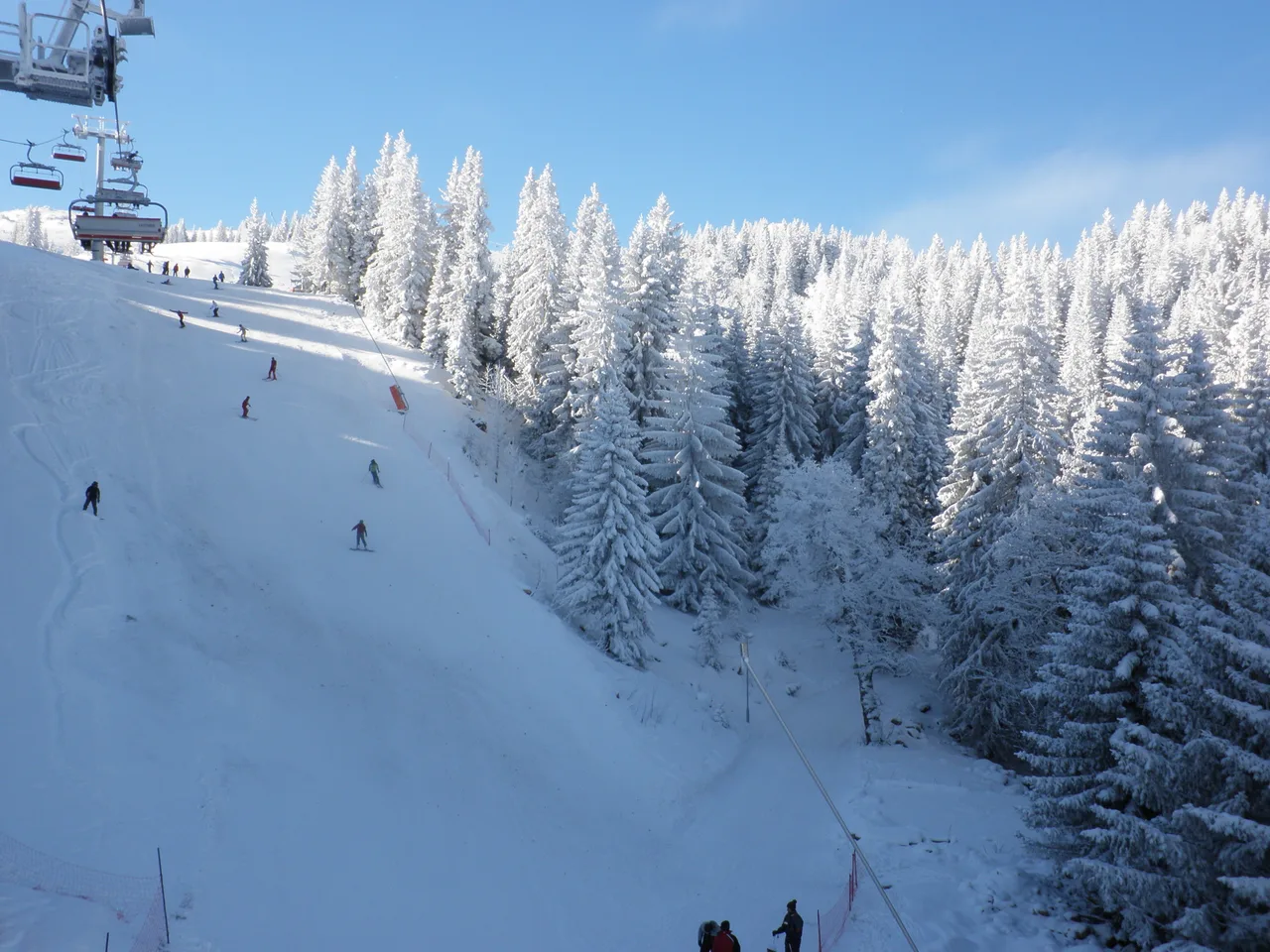
Bosnia’s winter is a real season with a real draw: this is a skiing country, and a surprisingly good-value one. Sarajevo hosted the 1984 Winter Olympics, and its two headline resorts are still going strong on the mountains just outside the city:
- Jahorina, about 28 km from Sarajevo, topping out at 1,916 m. It has the widest choice of long, scenic runs and is the friendlier mountain for beginners and intermediates; our guide to where to stay on Jahorina covers its four base areas and the current pass prices.
- Bjelašnica, around 30 km southwest, rising to 2,067 m, home to the 1984 Olympic downhill course and the steeper, more challenging terrain for advanced skiers.
The ski season runs roughly mid-December to late March, with the most reliable snow and fullest terrain from mid-January to late February - though, as everywhere, it’s snow-dependent, so check conditions before you commit. Lift passes and lessons here cost a fraction of what you’d pay in the Alps, which is a big part of the appeal. One thing that’s not automatic, though: many policies exclude snow sports by default, so if you’re skiing, make sure your travel insurance for Bosnia actually covers the slopes before you buy a lift pass.
Off the slopes, Sarajevo in winter is atmospheric, with snow on the minarets and rooftops, coffee houses steamed up and festive markets, if you don’t mind the cold and short days. That cold is worth budgeting for if you’re staying a while, since heating bills climb through the winter months; our guide to the cost of living in Bosnia has the detail. The south stays mild: Mostar rarely sees snow and is walkable year-round, making a winter city-break to Herzegovina perfectly viable, just with lower, quieter light and some attractions on reduced hours. If a cold-weather trip is what you’re weighing, our dedicated guide to Bosnia in winter goes deeper on the skiing, the festive season and pairing the snowy north with the mild south.
Month by month, at a glance
- January-February: Deep winter. Peak ski season in the mountains; cold, snowy interior; mild but quiet in Mostar. For skiers and winter-city fans.
- March: Shoulder month. Snow lingers up high, spring stirs in the south; showery and unpredictable, but the waterfalls start to swell.
- April: Spring proper. Green, fresh, waterfalls strong, Herzegovina pleasantly warm; the interior still cool. Lovely and uncrowded.
- May: One of the best months. Warm, green, everything reopening, rivers full, crowds still modest. An ideal all-rounder.
- June: Early-summer sweet spot. Warm to hot, long days, swimming begins, not yet peak-busy. Excellent.
- July: Peak season. Hot in the south (mid-30s), buzzing, everything open, best for river swimming, but crowded and pricey.
- August: Peak and hottest. Herzegovina bakes; Sarajevo’s film festival crowds the capital. Book ahead; seek shade and water.
- September: The top pick for many. Heat eases, water still warm, golden light, crowds fading. Hard to beat.
- October: Beautiful autumn. Cooler, the forests turn; great for the interior and for drives, with layers needed up high.
- November: Wettest and quietest. Moody; better for cities than the outdoors as the rains set in.
For exact festival dates rather than seasonal generalities, see our Bosnia events calendar - it covers everything from Baščaršija Nights to the public holiday quirks that catch visitors out.
- December: Winter returns; ski season opens mid-month, and Sarajevo turns festive.
So, when should you go?
If you want the one answer: aim for May-June or September. You get warm, stable weather, green landscapes, full-flowing rivers still worth swimming in the summer months, and far fewer crowds than July-August.
Beyond that, match the month to the mission. Come in spring for the waterfalls at full roar and the greenest countryside. Come in high summer if your trip is about swimming in the rivers and you can handle the heat and crowds in the south, though it’s also the priciest window, as our guide to how much a Bosnia trip costs explains. Come in winter to ski the 1984 Olympic mountains cheaply, or for an atmospheric, snowy Sarajevo. Whenever you land, our city guides to Sarajevo and Mostar cover what to do once you’re there, and if you’re planning a full loop, the 7-day Bosnia itinerary strings the highlights together - most of which are at their best in exactly those shoulder-season months. And if you’re weighing the trip up in the first place, our guide to whether Bosnia is safe to visit covers the one country-specific caution worth knowing before you book.
Photos
Read also

Before you go · 10 min read
Where to Stay in Medjugorje: Pansions & Hotels
Updated · August 25, 2026Where to stay in Medjugorje: guesthouses near St James Church, pilgrim hotels, peak dates, and whether to sleep here or day-trip from Mostar.

Before you go · 9 min read
Where to Stay in Jajce: Hotels by the Waterfall
Updated · August 23, 2026Where to stay in Jajce: old-town hotels steps from the Pliva Waterfall, lakeside rooms by the watermills, and which base suits a one-night stop.

Before you go · 11 min read
Mostar or Trebinje: Which Herzegovina Base?
Verified · August 18, 2026Mostar or Trebinje as a Herzegovina base: crowds, hotel prices, summer heat, Dubrovnik access and wine - pick the nights that fit your trip.

Before you go · 7 min read
Cash, Cards and Tipping Across the Balkans in 2026
Verified · August 15, 2026Twelve currencies, three of them the euro, and two pegged to it. What is fixed, what is a habit, and where you still need notes in your pocket.