Is Bosnia Expensive? 2026 Daily Budget & Prices
Is Bosnia expensive? No: food prices sit at 83% of the EU average, restaurants and hotels at 75%, versus 104% and 95% in Croatia. Budget EUR45-200 a day.
No, not by Western European standards - Bosnia is still one of Europe’s cheaper trips, and it undercuts Croatia next door on almost everything except getting around. As a working guide for 2026, a backpacker gets by on about 45 to 60 euros a day, a mid-range traveller on 100 to 130, and someone who wants comfort spends 160 to 200; over a week that’s roughly 315 to 420 euros at the low end and 1,120 to 1,400 at the top. Where you land depends almost entirely on your bed and how often you sit down in restaurants - sights and coffee are cheap enough to barely move the number, and the one line that can surprise you is a private transfer. For how the two countries compare beyond the daily budget, see our Bosnia vs Croatia guide; for two more neighbours, there’s Bosnia vs Montenegro and Bosnia vs Albania.
Currency converter
- BAM
- KM 174.24
- USD
- $100
- EUR
- €89.09
- GBP
- £75.75
Is Bosnia expensive? What the official numbers say
Statistically, no - and the gap holds even on the exact same yardstick used for the rest of Europe. Eurostat runs a purchasing-power-parity survey every year that scores each country’s price level against the EU-27 average, set at 100. Its 2024 figures, published in June 2025, put Bosnia and Herzegovina at 63 for consumer goods and services overall; that’s well under Croatia’s 76 on the same table. Narrow it to what a visitor actually spends money on, rather than a resident’s whole shopping basket, and the gap doesn’t close: food and non-alcoholic beverages price out at 83 in Bosnia against 104 in Croatia, and restaurants and hotels, the single category that covers a holiday’s two biggest costs, sit at 75 against 95.
Of the lines a visitor spends on, one breaks the pattern: transport services score 118 in Bosnia against just 87 in Croatia. Eurostat measures price levels at market exchange rates, so this one is literal - a comparable basket of fares, from taxis to intercity tickets, costs about a third more in Bosnia than in Croatia. Paying someone else to move you is where Bosnia stops being a bargain, and it’s why the taxi and bus rows in the table below deserve a second look.
The money you’ll be spending
Bosnia’s currency is the convertible mark, written KM or BAM, and it’s fixed to the euro at a rate of 1 EUR = 1.95583 KM under a long-standing currency board (call it roughly two marks to the euro for quick sums). That fixed peg is genuinely useful: euro and mark prices track each other exactly, so you can hold your budget in whichever you think in. What it doesn’t mean is that you can pay in euros everywhere - the market stall, the café, the bus ticket and the corner bakery run on marks in cash, often at a poor rate if you insist on euros. Draw KM from an ATM on arrival and keep small notes on you. Our full guide to money in Bosnia covers euros, cards, ATMs and tipping in detail.
This guide covers a trip, not a move. If you’re weighing up rent, coworking and a monthly grocery shop for a longer base, our separate guide to the cost of living in Bosnia is the one you want.
The three daily budgets, and who each one suits
Here’s the useful way to think about it: pick the tier that matches how you like to travel, then adjust for your own habits.
Backpacker, about 45 to 60 euros a day. This is a hostel dorm bed, ćevapi and burek from bakeries and grill houses, the free sights (which in Bosnia means most of the best ones), and local buses and trains between towns. Travel lean and you can dip below it, closer to 30 to 45 a day, if you cook a little, walk everywhere and skip the paid museums. Two people sharing a private hostel room often land in this tier per person too.
Mid-range, about 100 to 130 euros a day. A three-star hotel or a good guesthouse, restaurant meals rather than street food, every paid attraction you fancy, and the odd taxi when you can’t be bothered to walk. This is the comfortable middle most independent travellers settle into, and it still feels cheap for what you get.
Comfort, about 160 to 200 euros a day. A boutique hotel, eating and drinking wherever you like without checking the price, private transfers instead of buses, and every activity on the list. You can spend more than this in Sarajevo if you try, but 200 a day already buys a genuinely plush trip by Bosnian standards.
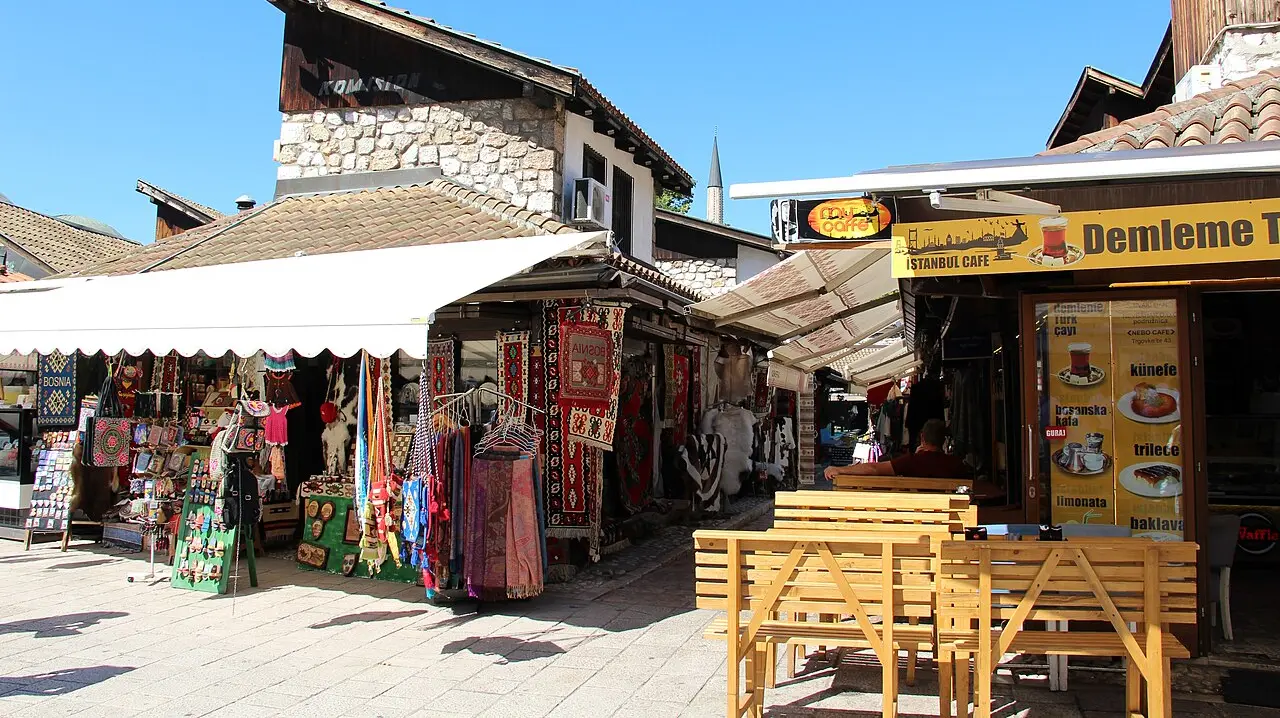
A note on where you are: inside a city, the tourist core costs more than the streets around it, and that gap is wider than the one between cities. In June 2025 the same ten ćevapi cost 14 KM on Baščaršija and 12 KM on Titova street a few minutes away, and a Bosnian coffee at the Sebilj caffe bar on Baščaršija was 6 KM. The prices someone actually fixes, bus fares, taxi tariffs and the nightly tourist tax, barely differ between Sarajevo, Mostar, Trebinje and Banja Luka. Our Bosnia cost index sets the four main bases side by side, line by line.
Six everyday prices, in marks and euros
Ranges are useful for planning a trip; a few hard prices are useful for spotting an overcharge on the day. Here’s what six ordinary things cost, each tied to a dated price survey, a published operator tariff or an official statistics release, with the date on every row. Some are fresher than others, and the table says which.
| What | Price in KM | Roughly in EUR | Source and date |
|---|---|---|---|
| Bosnian coffee | 2.50-3 KM when Sarajevo cafes were last surveyed in 2022, so reckon on a little more today; up to 6 KM on Baščaršija | EUR 1.30-1.55, up to EUR 3.10 | N1 survey of Sarajevo cafes, 20 October 2022; the Sebilj caffe bar’s own price list on Baščaršija, reported 4 June 2025 |
| Burek (meat), a frtalj (quarter-kilo) | 5.50-7 KM in the old town, 4.50-5 KM in other districts | EUR 2.30-3.60 | Radio Sarajevo bakery price check, 10 June 2025 (22-28 KM a kilo in the old town, 18-20 KM in Novo Sarajevo, Ilidža and Novi Grad) |
| Ćevapi, standard desetka (10 pieces) | 12-14 KM | EUR 6-7 | Klix and Radio Sarajevo grill surveys, June 2025 (14 KM on Baščaršija, 12 KM on Titova) |
| Beer, 0.5-litre bottle, shop | about 1.60 KM | EUR 0.80 | Agency for Statistics of BiH, average consumer prices, August 2026 (a bar or kafana charges a mark-up on top) |
| Taxi from Sarajevo Airport (Sarajevo Taxi) | 3.50 KM + 2.30 KM/km, 5 KM per bag | EUR 1.80 + EUR 1.20/km | price list published by Sarajevo International Airport, in force since 30 March 2026 |
| Bus, Sarajevo to Mostar, one-way | 34.00 KM | EUR 17 | Centrotrans booking engine, checked 23 September 2026 |
Two things about that table. Burek is sold by the kilogram, so the old-town mark-up is real but small: a mark or two on a frtalj against a bakery out in Novo Sarajevo or Ilidža. And the coffee row is the widest on the page for a reason - a neighbourhood cafe and the Sebilj caffe bar on Baščaršija are charging for two different things, and the gap has nothing to do with the coffee. Eurostat makes the same point at country level for what you drink: alcoholic beverages price out at 90 in Bosnia against 126 in Croatia, non-alcoholic at 91 against 131.
Trip budget calculator
Estimated total for the trip, flights excluded
- EUR
- €1,400-1,820
- BAM
- KM 2,738-3,560
- USD
- $1,572-2,043
- GBP
- £1,190-1,548
Where the money actually goes: a night’s sleep
Accommodation is the line that decides which tier you’re in, so it’s worth getting specific. A hostel dorm bed runs about 10 to 18 euros a night (roughly 20 to 35 KM). A private hostel or guesthouse room sits around 18 to 35 euros. Step up to a mid-range hotel and you’re looking at roughly 50 to 90 euros (about 100 to 175 KM) for a double, while a boutique place runs 80 to 150. Those are ranges we compiled from booking-site listings in July 2026 rather than quotes from a named hotel, so treat them as the shape of the market and price your own dates; Eurostat’s restaurants-and-hotels line says the same thing from a different direction, 75 in Bosnia against 95 in Croatia.
Mostar tends to undercut Sarajevo on rooms, and the smaller towns undercut both. Guesthouses here are often family-run and frequently throw in breakfast, which quietly shaves a few marks off your food spend. Prices climb in July and August and around any festival, so if you’re travelling in high summer, book ahead and expect the top of each range rather than the bottom.
Eating well for very little
This is where Bosnia feels almost implausibly cheap, and where you can flex your budget hardest. Self-catering from the green markets and supermarkets costs next to nothing: staples run a mark or two each, and the markets are a nicer way to shop than any supermarket aisle.
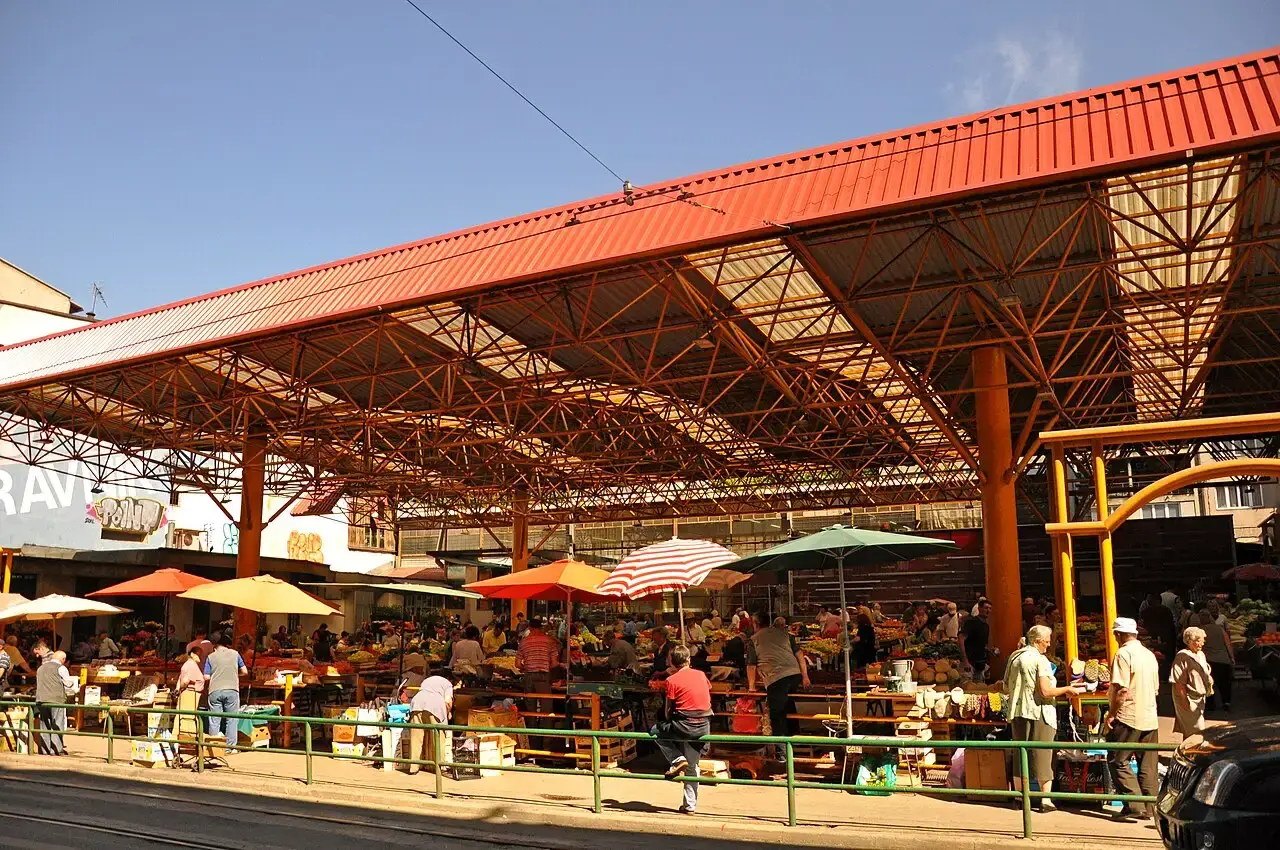
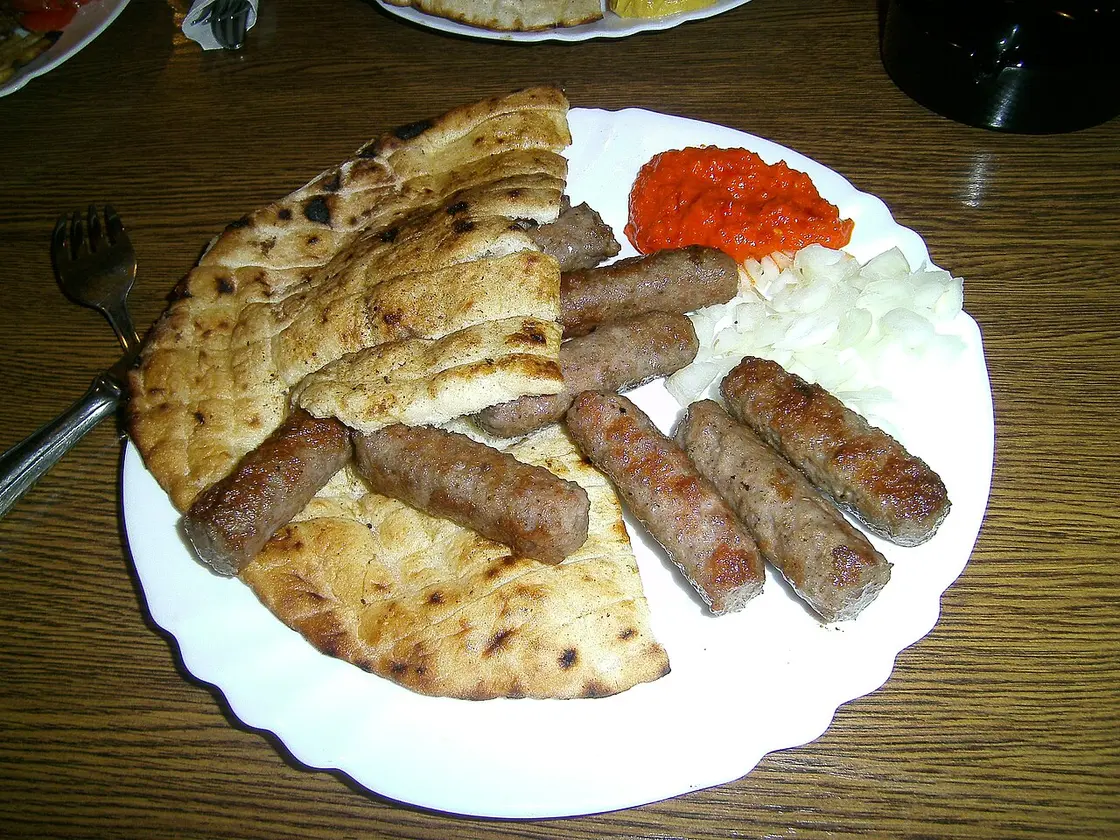
Eating out barely costs more than cooking for yourself, which is why most visitors just do it. Burek and its meat-free cousins are sold by the kilogram rather than the piece, a plate of ćevapi is the classic sit-down lunch, and both are priced in the table above. Move up to a proper restaurant and the numbers stay mild: the Agency for Statistics of BiH puts the national average for a pizza at 13.10 KM and a steak portion at 21.30 KM in August 2026, which is roughly 6.70 and 10.90 euros. A Bosnian coffee is a slow social ritual here rather than a takeaway habit, and cheap enough that nobody’s counting cups. Stack a bakery breakfast, a ćevapi lunch and a simple dinner and you’re comfortably under 40 KM (about 20 euros) for the day, less again if you self-cater one meal.
The official numbers back up what your wallet notices. Bosnia’s restaurants-and-hotels line sits at 75 against the EU’s 100, below even its grocery line at 83, so the discount on home prices is bigger at a restaurant table than in a supermarket aisle. That is the whole reason eating out here barely costs more than cooking.
Getting around, and the one ride that costs more than two hotel nights
Inside a city, transport is close to free. A single tram, trolleybus or bus ticket in Sarajevo is 2.20 KM (GRAS’s own fare list, the same price from a kiosk or the driver), and the flat, walkable old centre means you often won’t need one at all. Taxi meters average about 2.40 KM a kilometre nationwide (Agency for Statistics of BiH, August 2026), so a short hop across the centre is a few euros. The airport rank works to its own published list - 3.50 KM to start, 2.30 KM a kilometre and 5 KM a bag - which puts the ride into the centre at roughly 30 to 35 KM, about 15 to 18 euros, before luggage.
Between towns, public transport stays cheap. The train from Sarajevo down the Neretva canyon to Mostar is one of the Balkans’ great scenic rides and cheap: second class was 14.10 KM (around 7 euros) at the last published tariff, and ŽFBH announced a 20 percent fare rise from 1 March 2026 without publishing a new price list, so budget up to about 17 KM and confirm at the counter (checked September 2026); a return earns a 20 percent discount, though the train runs just twice a day. The bus (34.00 KM one-way, in the table above) takes about 40 minutes longer - Centrotrans times every departure at 2 hours 36 to 2 hours 45 - but it runs far more often. Our Sarajevo to Mostar guide weighs the train against the bus and the drive.
The ride that costs more than two hotel nights is a private transfer to or from the Croatian coast. A private car from Dubrovnik to Mostar runs from roughly 215 to 230 euros for the car (Kiwitaxi quotes from EUR216 for up to 4 people, and Easy Balkan Transfers lists from EUR230 for up to 3; both checked on 23 September 2026), which works out to somewhere around 55 to 115 euros a head depending on how many of you split it. The public bus on that route costs a small fraction of it per person; the private transfer buys convenience, not a bargain. Our Dubrovnik to Mostar guide lays out every option and what each really costs.
If you’d rather explore Herzegovina under your own steam, hiring a car for a few days is often the most efficient way to reach the waterfalls and hilltop towns, and it opens up day trips no timetable covers. The country-wide picture is in our getting around Bosnia overview.
What sights actually cost
Bosnia’s biggest pleasures don’t cost a thing. Walking the old towns of Sarajevo and Mostar, crossing the Old Bridge (Stari Most) as many times as you like, wandering the bazaars and browsing the coppersmiths costs nothing.
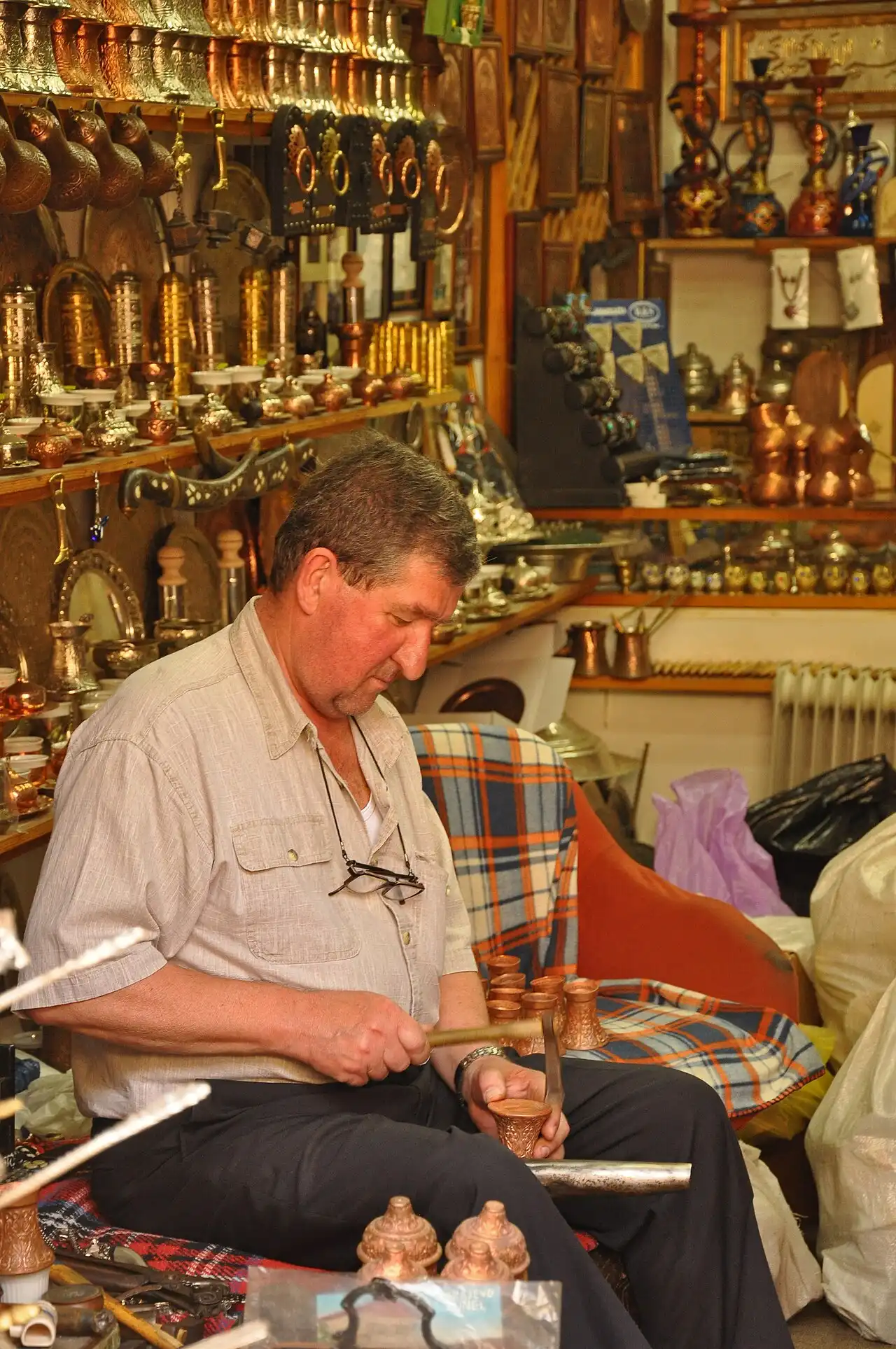
The paid attractions are modest. The Tunnel of Hope, the moving siege museum on the edge of Sarajevo, is 20 KM for adults (roughly 10 euros, cash in marks only; 8 KM for students), run by the Memorial Centre Sarajevo. The War Childhood Museum is 15 KM for adults (about 7.50 euros; 12 KM students, 7 KM ages 6-17, a 35 KM family pass), per its own official price list. Out in Herzegovina, the Kravice waterfalls charge 20 KM year-round, and that one ticket also covers the Kocusa falls and the Humac monastery museum. The Old Bridge Museum in the Mostar towers doesn’t publish a price online and takes walk-ins daily 10:00-18:00 between 1 April and 1 November, and Blagaj’s dervish house charges an entry fee at its booth that the lodge doesn’t publish either, so carry marks for both and ask at the door. A full sightseeing day in Sarajevo stays around 18 euros in tickets: the Tunnel of Hope and the War Childhood Museum together come to 35 KM.
The bazaars are also where a souvenir budget can quietly grow. A hand-made copper coffee set, a piece of Bosnian rug or a bag of ground coffee are the classic buys, and gentle haggling is normal.
Building your own number
Here’s how the tiers at the top come together, using nothing but the prices on this page. A backpacker day in Sarajevo: a dorm bed (call it 27 KM, the middle of the 20-35 KM range above), a burek frtalj for breakfast (5 KM), a desetka of ćevapi for lunch (13 KM), another grill-house plate for dinner (13 KM), two coffees (6 KM), two tram rides (4.40 KM) and the War Childhood Museum (15 KM). That comes to about 83 KM, or 43 euros - a shade under the bottom of the backpacker band, before any intercity bus. Swap the dorm for a mid-range double at 70 euros and the same street-food day runs to roughly 193 KM, or 99 euros. For one traveller the room alone moves you into mid-range, which is why the bed decides your budget.
Multiply by your nights. A week as a backpacker comes to roughly 315 to 420 euros; a mid-range week to about 700 to 910; a comfortable week to somewhere around 1,120 to 1,400. Flights, any private transfer from Dubrovnik, insurance and an eSIM sit outside that and need their own line.
Two calls move the total more than your daily style does. When you go: July and August push accommodation to the top of every range and fill the good rooms early, while spring and autumn are cheaper and quieter, so our guide to the best time to visit Bosnia doubles as a way to save money. And how long you stay, which our take on how many days you need in Bosnia helps you right-size before you multiply anything. Get those two right and Bosnia will almost certainly cost you less than wherever you’re coming from.
Photos
Read also

Before you go · 10 min read
Where to Stay in Medjugorje: Pansions & Hotels
Updated · August 25, 2026Where to stay in Medjugorje: guesthouses near St James Church, pilgrim hotels, peak dates, and whether to sleep here or day-trip from Mostar.

Before you go · 9 min read
Where to Stay in Jajce: Hotels by the Waterfall
Updated · August 23, 2026Where to stay in Jajce: old-town hotels steps from the Pliva Waterfall, lakeside rooms by the watermills, and which base suits a one-night stop.

Before you go · 11 min read
Mostar or Trebinje: Which Herzegovina Base?
Verified · August 18, 2026Mostar or Trebinje as a Herzegovina base: crowds, hotel prices, summer heat, Dubrovnik access and wine - pick the nights that fit your trip.

Before you go · 7 min read
Cash, Cards and Tipping Across the Balkans in 2026
Verified · August 15, 2026Twelve currencies, three of them the euro, and two pegged to it. What is fixed, what is a habit, and where you still need notes in your pocket.