Mostar or Trebinje: Which Herzegovina Base?
Mostar or Trebinje as a Herzegovina base: crowds, hotel prices, summer heat, Dubrovnik access and wine - pick the nights that fit your trip.
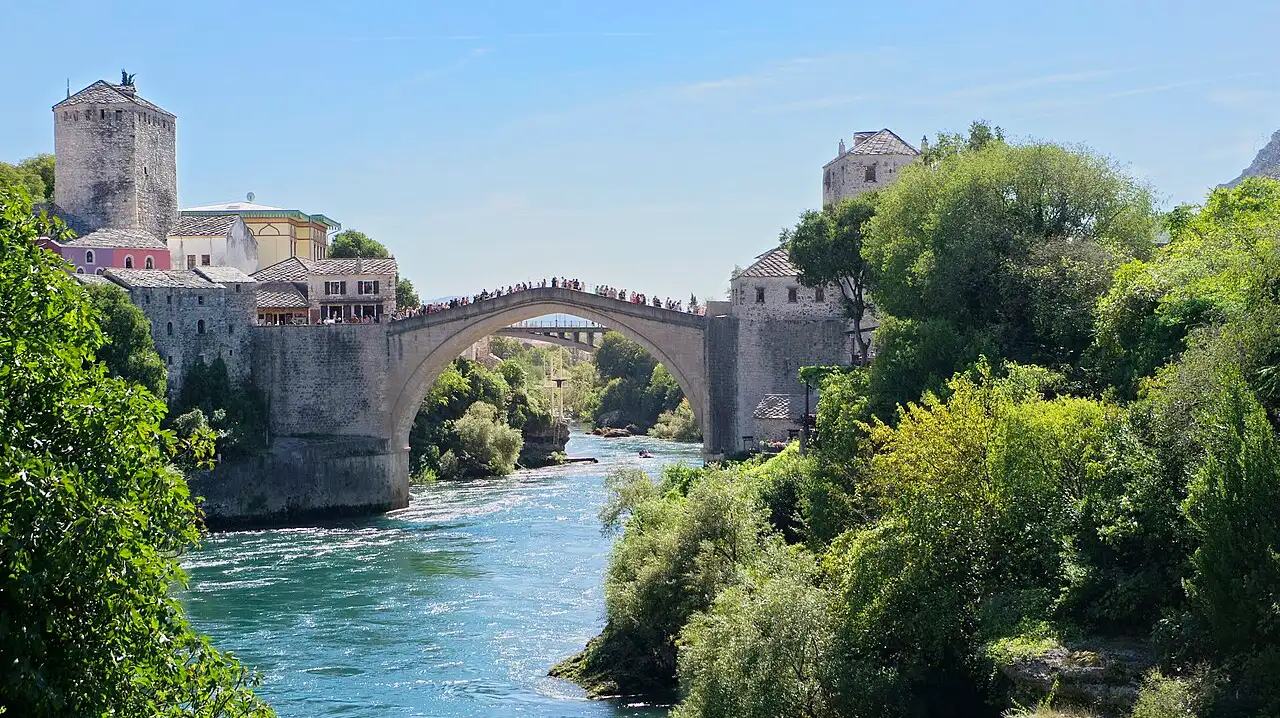
Short answer: base in Mostar if your nights are about Herzegovina’s classic day-trip radius and you accept a busy midday; base in Trebinje if you want quieter beds, easier Dubrovnik hops, and wine country on foot from the square. They’re about two to two and a half hours apart by road, so this is a lodging call, not a “you’ll never see the other” call. What changes is how your evenings feel, what you pay for a mid-range room, and which border or waterfall sits closest to your breakfast table.
The one-line verdict
Skip the long version if you already know which nights you have:
- Pick Mostar if Kravice, Blagaj and Počitelj are the point of the south, or you’re coming inland from Split / Makarska / Dubrovnik day coaches and want the postcard town after dark.
- Pick Trebinje if Dubrovnik is already on the itinerary, you care about wine cellars without a long shuttle, or you want a southern stop that doesn’t fill with day buses at 10:00.
- Only room for one southern base? Mostar is the safer default for a first Bosnia trip; Trebinje wins when the Adriatic hinge matters more than the Old Bridge crush.
- Got three-plus nights in the south? Split them - Mostar for the central Herzegovina loop, Trebinje for the far-south and coast days - rather than forcing one town to do both jobs.
This page is about where you sleep. For the capital-versus-bridge split further north, see Sarajevo or Mostar. For what fills a Mostar day once the bag is down, use things to do in Mostar; for Trebinje’s own map, use the Trebinje town guide.
Crowds change the overnight more than the sights list does
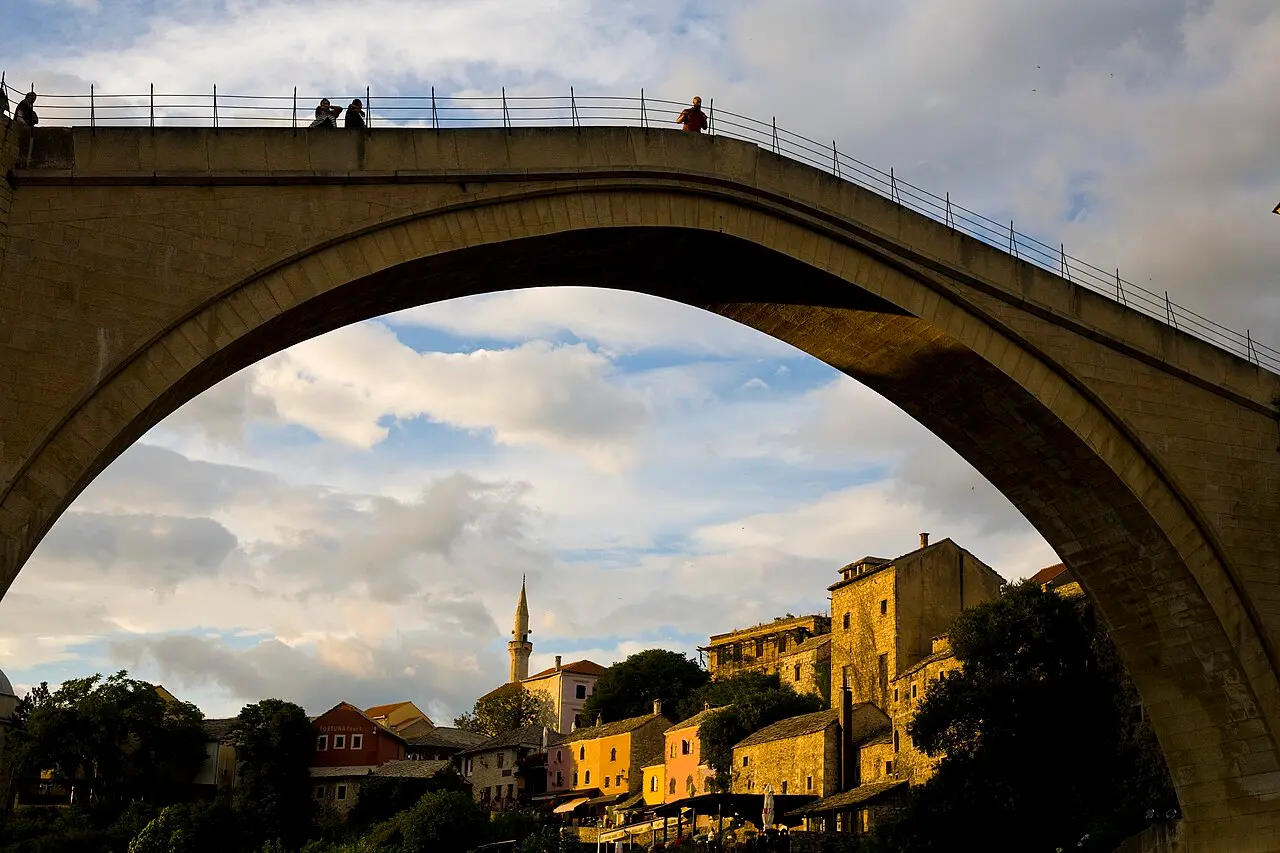
Mostar’s problem as a base isn’t a shortage of things to do - it’s the shape of the day. Coaches from the Dalmatian coast and from Sarajevo pour into the Old Town late morning and leave again in the late afternoon. Between those hours the bridge lanes and riverside terraces run at theme-park density. Sleep there and you buy the other half of the clock: dawn on empty stone, and evenings once the last day-trip groups have gone. That overnight is still worth it for many people. It just means you’re paying hotel money partly for crowd timing, not only for location.
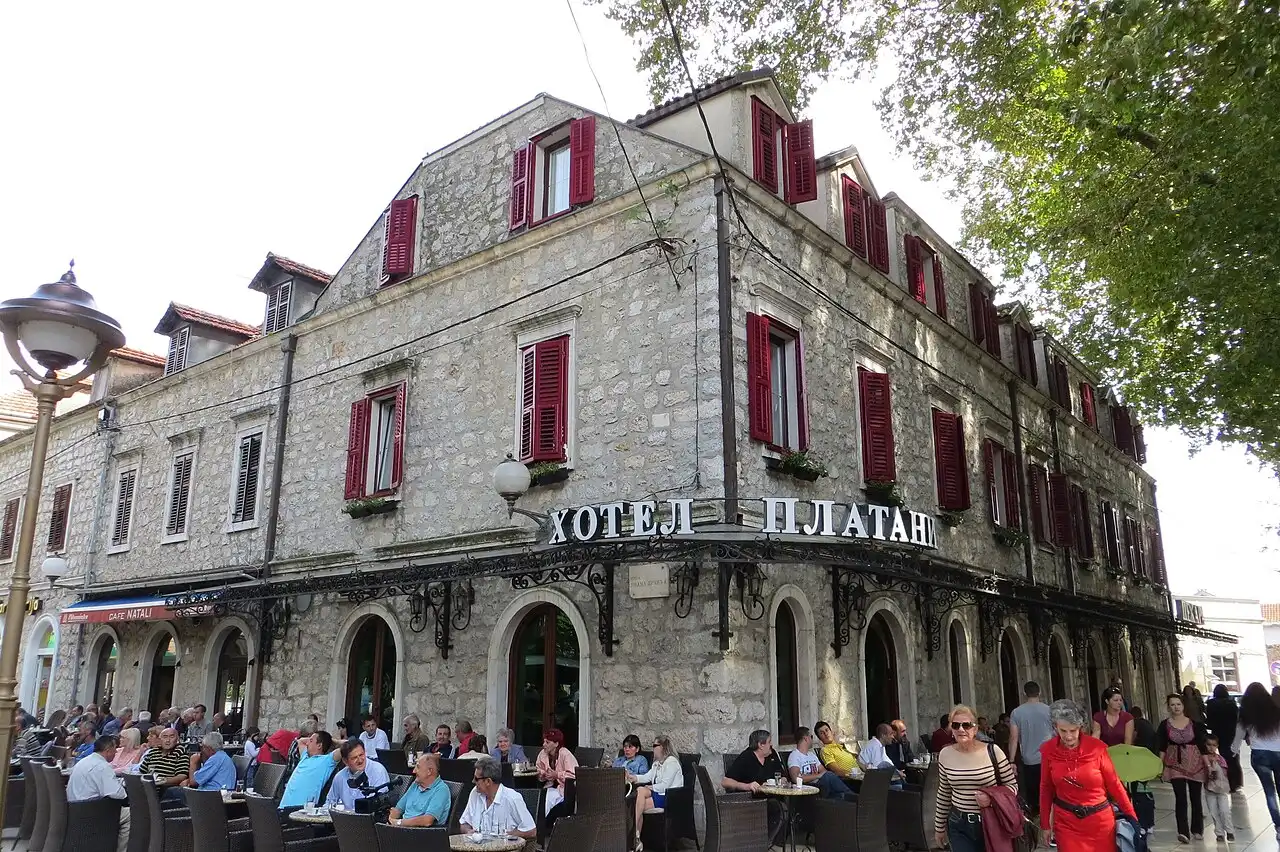
Trebinje takes a different kind of pressure. It sees day visitors from Dubrovnik, especially in high summer, but it doesn’t absorb the same multi-country coach volume that Mostar does. Evenings under the plane trees feel like a local promenade rather than a queue for the next viewpoint. If your idea of a base is “come back from a day out and still find a free café table,” Trebinje is the easier town to live in. If your idea of a base is “I need to be inside the famous postcard after dark,” Mostar still wins that specific trade.
Beds and what you actually pay
Compare like with like: a mid-range double with breakfast in each town for the same dates, not a Mostar Old Town hostel against a Trebinje boutique suite.
On the Trebinje side, an operator-published snapshot is easy to cite. Hotel Central Park on Trg Slobode lists standard doubles from €61, Standard Plus from €66, Comfort from €71, and larger apartments from €139, breakfast included (hotel site, re-checked 18 August 2026). Those are “from” rates on their calendar, not a guarantee for every summer weekend, so always re-check your nights. The useful point is the tier: a proper central hotel with breakfast sits in the low-to-mid €60s before peak spikes.
Mostar’s bed market is wider and more seasonal. Old Town guesthouses sell atmosphere and walk-to-everything convenience, and they book early for July and August; the west bank around Spanish Square offers modern hotels and easier parking at a different price point. I’m not going to invent a single “Mostar costs X” figure without an operator “from” rate in hand for the same mid-range hotel tier. The honest method is to open the same dates for both cities and compare mid-range doubles side by side - our neighbourhood notes in where to stay in Mostar and where to stay in Trebinje help you filter areas before you stare at a results page.
Currency is the convertible mark (BAM / KM) in both towns, pegged at roughly 1.96 to the euro. Larger hotels take cards; small guesthouses and markets still lean cash. Euros work patchily inland and often at a poor rate, so don’t plan as if you’re still on the Croatian coast.
Heat: both bake - the difference is shade and airflow
Herzegovina summers are hard. In Mostar, long-term averages put July highs around 33°C with nights near 20°C, and the same climate series notes summer peaks above 40°C are possible (Climates to Travel, Mostar table). A 2025 bioclimate paper on Mostar tourism comfort sampled the day at 07:00, 14:00 and 21:00 and found the heaviest thermal stress in the summer afternoon readings - the 14:00 figure is the one that decides whether you walk or sit. Trebinje sits a little higher and further south, but it is still a hot, dry valley town - you’re not escaping the regional heat by picking one over the other.
What does change is how the overnight feels. Mostar’s Old Town lanes are stone, narrow and poorly ventilated; air conditioning isn’t optional in July if you’re a light sleeper. Trebinje’s centre has those enormous plane trees over the main square, so evening café life has shade even when the day has been fierce. If you’re travelling in peak heat and care about recoverable evenings, that shade matters more than the one degree between them: the same series gives Mostar a July max of 33 C and Trebinje 32 C, with identical 20 C nights.
Practical take: in July and August, book AC explicitly in both towns, do outdoor walking early and late, and don’t assume a “quieter” base means a cooler climate. It means a different street to come home to.
Dubrovnik access, like-for-like
This is where the two bases stop being interchangeable.
Trebinje to Dubrovnik is roughly 30 km and about 30-40 minutes by car once you clear the Bosnia-Croatia border (hotel and tourism listings round it the same way; local wine-route pages sometimes print 27 km to the same coast). It’s a real border - EU/EEA/Schengen citizens can usually cross on a national ID card; others need a passport - and summer queues add time. Still, as a day hop from a Bosnian bed, it’s the shortest Adriatic link in the country. Full road and timing detail sits in Dubrovnik to Trebinje.
Mostar to Dubrovnik is a different animal: about 147 km and roughly 2 hours 30 minutes by car in normal conditions, going out to the coast and over the Peljesac Bridge (OSRM on OpenStreetMap data, two engines agreeing, checked 18 August 2026). By bus it is longer: FlixBus prints 131 km for its own routeing and 3 hours 15 minutes as the scheduled run, and queues at the border stretch that. You can still do it as a long day or a transfer day, and many people do - see Dubrovnik to Mostar - but it’s not the same “breakfast in Bosnia, walls by lunch” convenience Trebinje offers.
So if Dubrovnik is already booked for two nights and you’re adding a Bosnia overnight for flavour and price, Trebinje is the rational hinge. If Dubrovnik is a one-way transfer into Bosnia and you’ll spend the rest of the week inland, Mostar is usually the cleaner first base.
What each base unlocks without pretending they’re the same trip
Mostar and Trebinje sit about 115 km and roughly 2 hours 20 minutes apart by the usual road routing, the M-17 south to Stolac and then the M-I 118 over the karst (OSRM on OpenStreetMap data, checked 18 August 2026; independent runs land between 115 and 119 km depending on where in each town you start, so treat it as a rough two-and-a-quarter hours rather than a timetable). Transfer operators quote similar ballparks around two hours and 117-135 km depending on the exact line they drive. You’re not choosing distant regions; you’re choosing which radius your mornings start from.
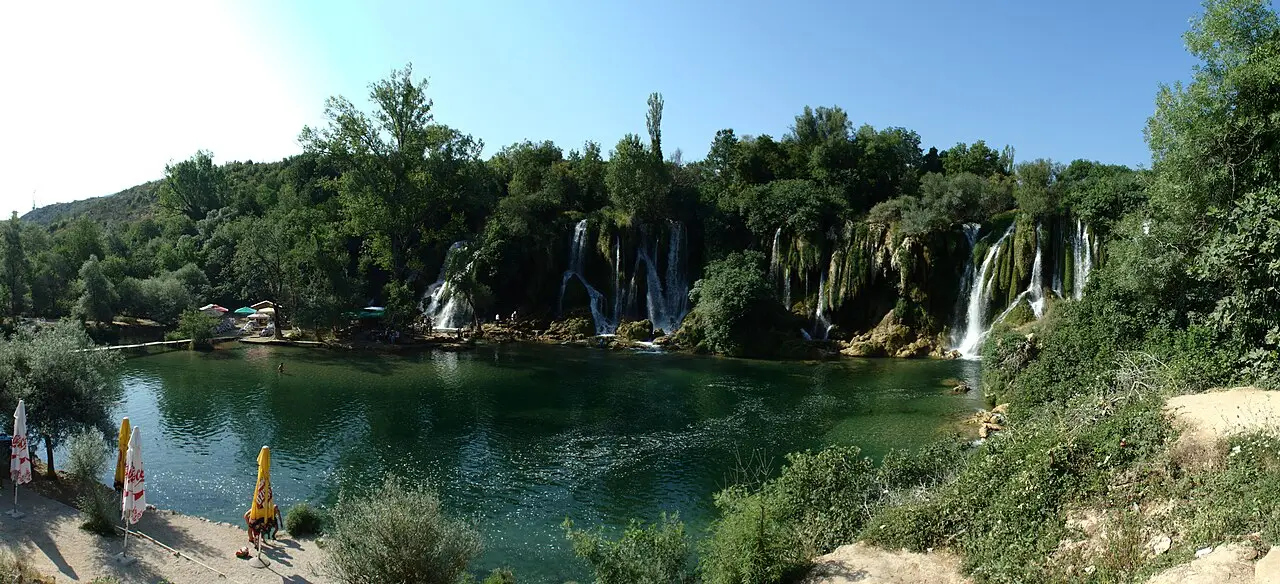
From a Mostar bed, the classic Herzegovina day-trip set is close: the Kravice falls, the Blagaj dervish house, hilltop Počitelj. That’s the reason Mostar still earns one or two nights even for people who dislike midday crowds - the geography is simply better for that loop. You can reach Trebinje as a long day from here, but you’ll spend a big chunk of it on the road.
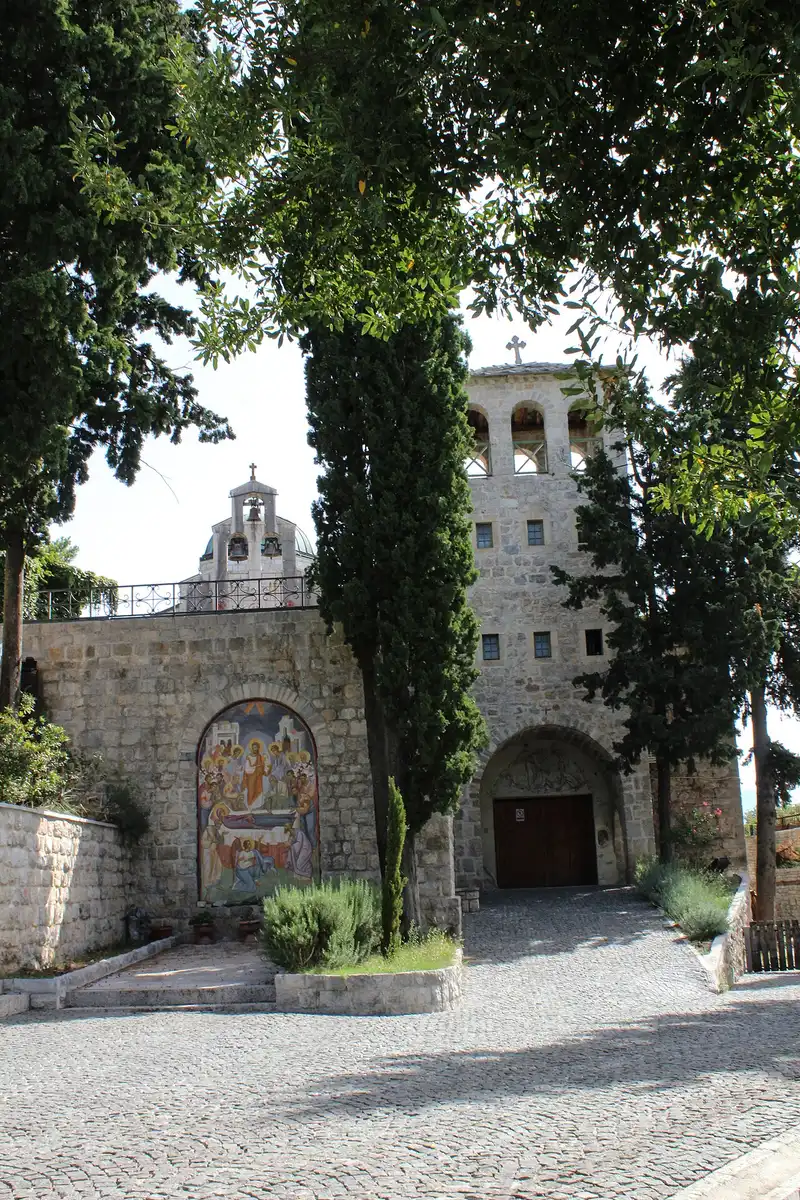
From a Trebinje bed, the payoffs tilt the other way: wine cellars a few kilometres out (Tvrdoš and neighbours), the far-south feel of Republika Srpska’s sunny corner, and that short Dubrovnik hop. Central Herzegovina sights still work with a car and an early start, but you’re stretching the day. Trebinje is the better overnight when wine and the coast are the point of the southern chapter, not when you need three Herzegovina waterfalls and an Ottoman hillside before dinner.
Match the base to the trip you’ve already booked
Strip away the postcard and ask what the calendar already contains:
- Flying into Dubrovnik (DBV) and spending time on the walls: Trebinje as the Bosnia overnight (or two) is the clean hinge. Mostar becomes a longer inland push.
- Flying into Sarajevo and driving or training south: Mostar is the natural first Herzegovina stop; add Trebinje only if nights remain after the central loop.
- A short Bosnia sample (two southern nights): put both in Mostar unless Dubrovnik is already paid for - then flip to Trebinje.
- A wine-forward weekend: Trebinje. Mostar has wine nearby, but Trebinje is where the southern cellars sit tightly around town.
- Photographers who need the empty bridge: Mostar overnight, even in peak season. Trebinje won’t give you that frame.
- Travellers who hate midday crowds and don’t need the bridge at dawn: Trebinje, with Mostar as a daytime visit if you must tick it.
If you only book one southern base
Use this as the final filter, not a slogan:
| Your priority | Book |
|---|---|
| Classic Herzegovina day trips + overnight after the coaches leave | Mostar |
| Quiet evenings, a published room rate you can check in advance, wine within a short drive | Trebinje |
| Dubrovnik already on the trip | Trebinje |
| First Bosnia visit with limited nights | Mostar |
| Heat in July/August | Either, with AC - prefer Trebinje if café shade after dark matters more than the bridge |
Default for a first-timer who isn’t already sleeping on the Adriatic: Mostar, where eating in Mostar’s old town is part of the case for staying. Default when the Adriatic is already paid for and you want Bosnia without another long transfer: Trebinje. If the calendar gives you both, don’t make one town pretend it’s the other - give Mostar the waterfall days and Trebinje the wine-and-coast days, and the south will feel like two useful bases instead of one compromised compromise.
Photos
Read also

Before you go · 10 min read
Where to Stay in Medjugorje: Pansions & Hotels
Updated · August 25, 2026Where to stay in Medjugorje: guesthouses near St James Church, pilgrim hotels, peak dates, and whether to sleep here or day-trip from Mostar.

Before you go · 9 min read
Where to Stay in Jajce: Hotels by the Waterfall
Updated · August 23, 2026Where to stay in Jajce: old-town hotels steps from the Pliva Waterfall, lakeside rooms by the watermills, and which base suits a one-night stop.

Before you go · 7 min read
Cash, Cards and Tipping Across the Balkans in 2026
Verified · August 15, 2026Twelve currencies, three of them the euro, and two pegged to it. What is fixed, what is a habit, and where you still need notes in your pocket.

Before you go · 9 min read
Where to Stay in Trebinje: Hotels & Wine Stays
Verified · August 14, 2026Where to stay in Trebinje: hotels under the plane trees, riverside rooms, wine-country apartments, and why it beats Dubrovnik prices ~30 km away.