Where to Stay in Jajce: Hotels by the Waterfall
Where to stay in Jajce: old-town hotels steps from the Pliva Waterfall, lakeside rooms by the watermills, and which base suits a one-night stop.
Stay in the old town, within a few minutes’ walk of the Pliva Waterfall. Jajce is tiny - the medieval streets, the fortress, the catacombs and the falls all sit in one walkable knot - so the only real choice is whether you want to sleep on the hill above the cascade or out by the Pliva Lakes three kilometres west, where the watermills and swimming beaches are. For most visitors on a one-night stop, the old town wins: you’ll hear the falls from some rooms in spring, and you won’t need a car to see the sights.
Old town or the lakes?
- One night, sights on foot: the old town around the fortress and waterfall. Hotels like Stari Grad and Premium put the padlock bridge and the lower viewpoint on your doorstep.
- Swimming, pedalos, watermills: the Pliva Lakes strip west of town. Hotel Plivsko Jezero is the main lakeside pick; you’ll drive or taxi the few kilometres to the waterfall.
- A bit quieter, still central: the streets below the fortress near the Pliva river, where Hotel Turist 98 looks up at the citadel and down at the water.
- Budget or self-catering: guesthouses and apartments scattered through town; nothing is far, but check how steep the walk back up is after dinner.
Jajce isn’t a base for a whole Bosnia trip - for that, see where to stay in Bosnia - but if you’re folding the town into a northern loop with Travnik or Banja Luka, one night here is enough for the waterfall and the fortress, and two for a full lakes day.
Old town by the waterfall: the default pick
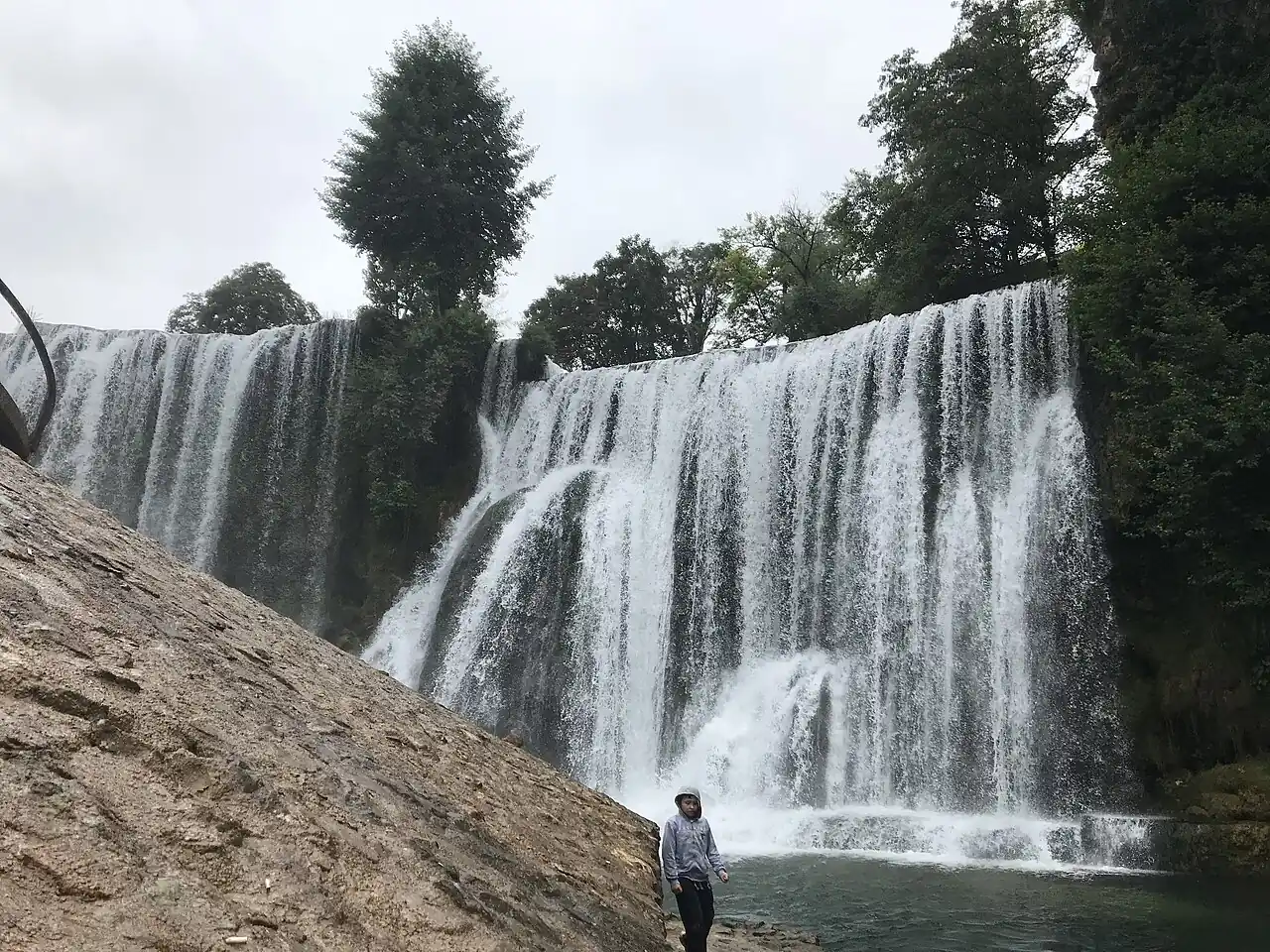
The old town climbs the hill above the confluence of the Pliva and Vrbas rivers, and the Pliva Waterfall sits at the bottom of that slope - a broad sheet of water dropping roughly 20 to 22 metres through the middle of the streets. Stay up here and the fortress, the Mithras temple, the catacombs and the falls are all within a short walk, which is why almost every first-time visitor should book in this zone.
Hotel Stari Grad on Svetog Luke is the name you’ll see most often: a small central hotel (around nine rooms) right in the medieval core, opposite the main mosque and a few minutes from the falls. The draw isn’t luxury - rooms can feel compact - but the location and the on-site restaurant, which sits over the glassed-in remains of a Turkish hammam, make it the obvious old-town anchor. Hotel Premium on Donje Pijavice is a larger, more modern counterpoint about a 10-minute walk from the cascade, with river views from some balconies and enough rooms that it’s easier to find space in peak summer.
Guesthouses and apartments fill the gaps between them - search the old-town streets and you’ll find family-run rooms with breakfast for less than the branded hotels charge. The trade-off is the same as anywhere on a hillside: ask whether your room faces the gorge (lovely by day, and you’ll hear the water after snowmelt) or a quieter lane behind the fortress.
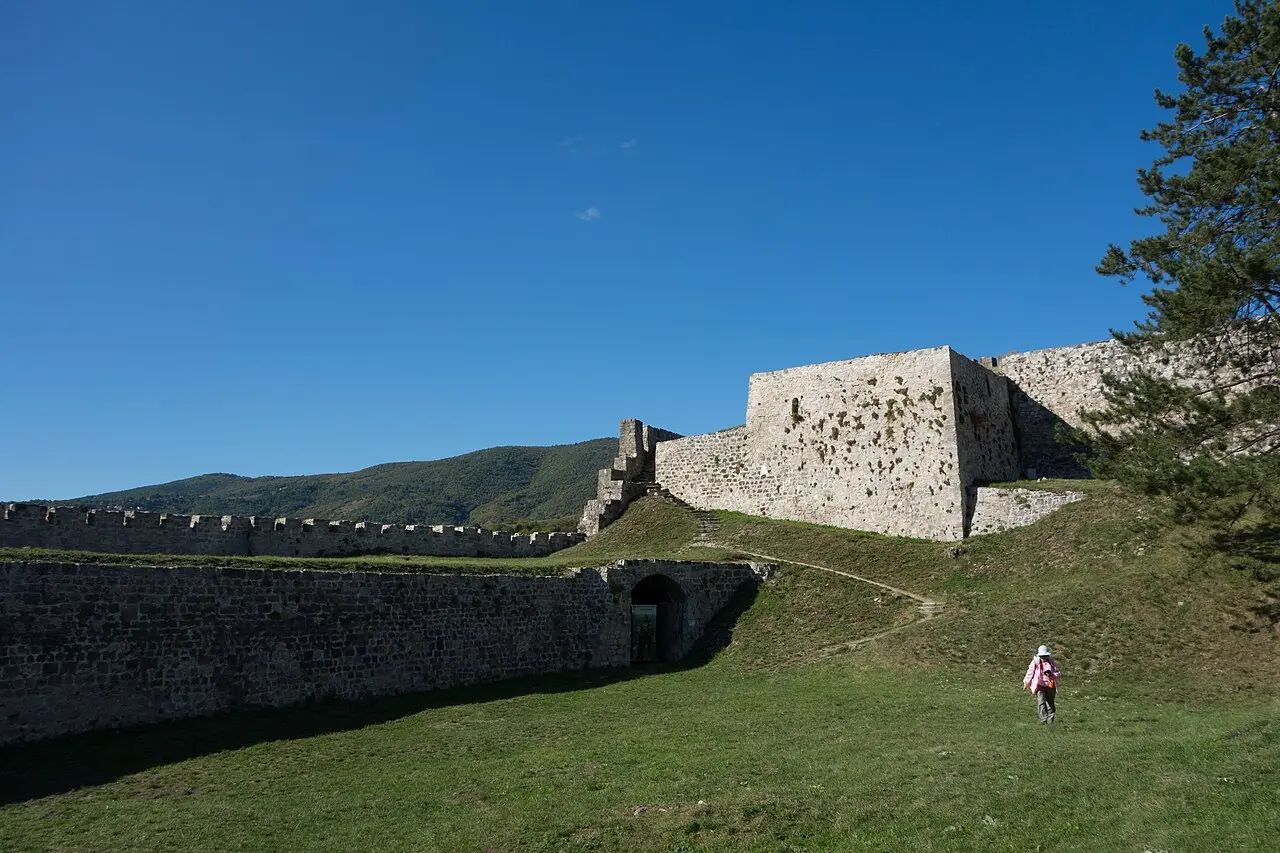
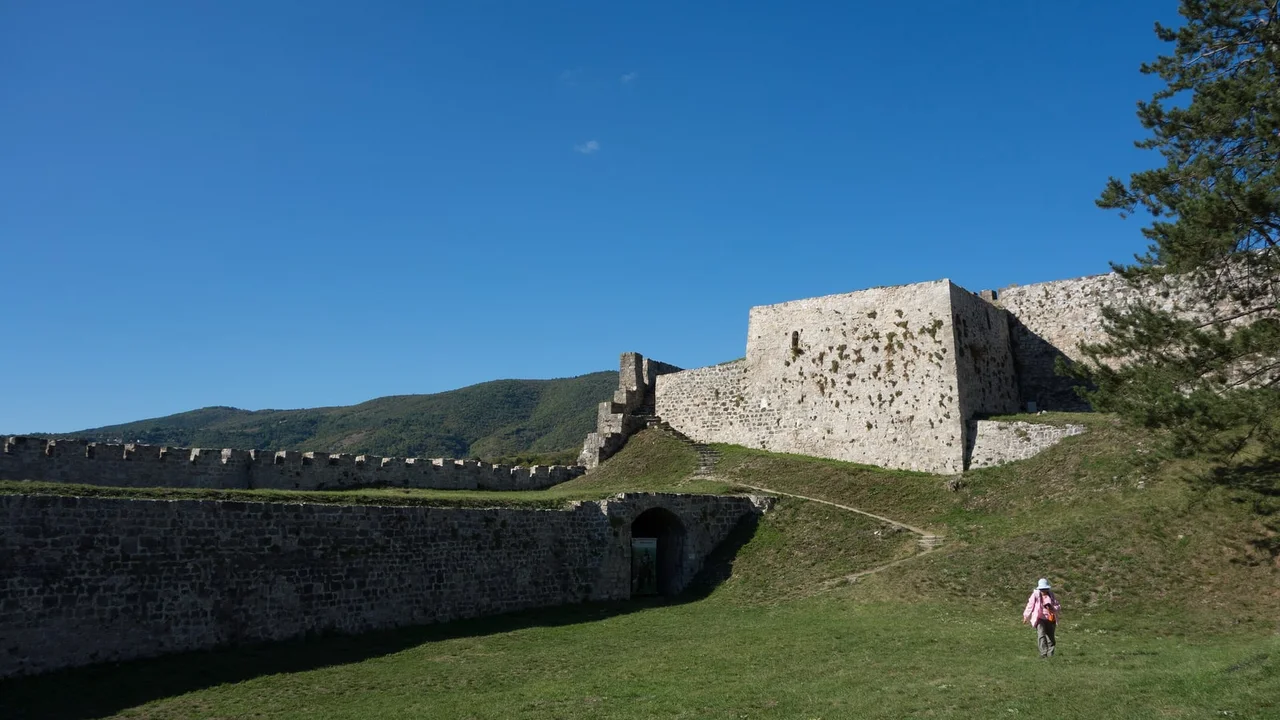
What you give up by staying central is easy lake swimming: the Pliva watermills and beaches are a short drive west, not a walk with towels. If that’s a big part of your plan, read the next section - but if you’re here for the king’s fortress and the waterfall in the town square, you won’t beat sleeping on the hill.
Pliva Lakes and the watermills: the summer base
Three kilometres west of the old town, the river widens into Veliko and Malo Plivsko jezero - a pair of calm green lakes, though not the country’s largest: Blidinje is bigger, and Busko Blato bigger still, if artificial - with the photogenic Mlinčići watermills straddling the channels between them. In July and August this is where Jajce goes to swim, rent pedalos and picnic on the grass, and a lakeside room makes that your front garden instead of a taxi ride.
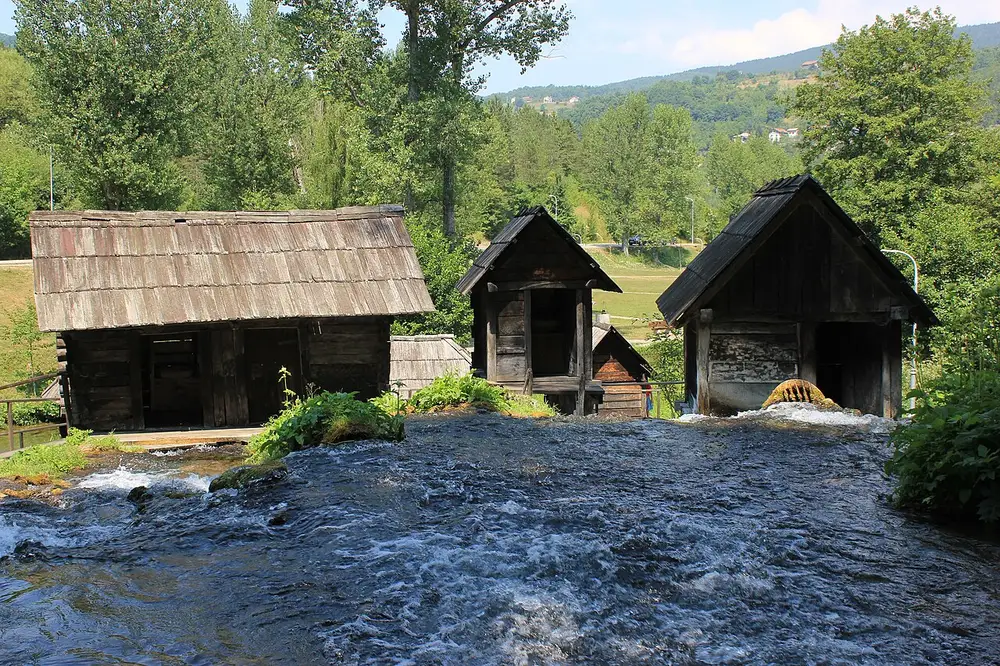
Hotel Plivsko Jezero is the main purpose-built option here: a renovated lakeside hotel with a few dozen rooms, boat rental, bike hire and a children’s play area, about five kilometres by road from the old town according to the hotel’s own site. You’ll trade waterfall proximity for emerald water at the window and an easy morning at the mills. Apartment-style stays such as Villa Pliva Lake suit families who want a kitchen and a private terrace above the water.
The honest catch: you’ll need wheels, or at least a taxi budget, to reach the fortress and the waterfall for an evening stroll. Buses and day-trippers rarely sleep out here; locals and families do. Pair a lakes night with a full morning in town before you move on, or do it the other way round - old town first, then one lazy lake day before heading toward Banja Luka or Bihać.
Below the fortress: Turist 98 and the riverbank
Not everyone wants to sleep on the steepest lanes. Hotel Turist 98 on Kulina bana sits just outside the tightest old-town core, with the Pliva on one side and the fortress rising on the other - the hotel’s own description pitches it as calm but still walking distance to the centre, the citadel and the falls. It’s a larger, more conventional city hotel than Stari Grad, with parking, a restaurant terrace and conference space, which makes it a practical pick if you’re arriving by car on the Sarajevo-Banja Luka road or need a straightforward check-in after a long drive.
This strip also clusters a few cheaper guesthouses and motels along the approach roads. They’re not scenic in the way the old town is, but Jajce is small enough that “outskirts” still means a ten- to fifteen-minute walk to the waterfall, not a suburb. If you’re watching the budget and don’t mind a flat walk instead of a climb, compare prices here before you commit to the hill.
Prices and how long to stay
Jajce is among the cheaper overnight stops in Bosnia. As a rough guide at the time of writing, basic guesthouse rooms often start around 40 to 70 KM (about 20 to 35 euros), comfortable three-star doubles noticeably above that, and the lakeside hotels run higher when they’re full on summer weekends - confirm current rates when you book, because the town’s still off the main tourist highway and prices move with local demand more than with international apps.
Most people need one night. The waterfall, fortress, catacombs and Mithras temple fit into a focused half-day, and you can add the lakes on the same calendar day if you’ve got a car. Stay two nights if you’re pairing Jajce with Travnik on the road from Sarajevo, or for a slow morning at the watermills without packing the car at dawn. Anything beyond that is rare unless you’re using the town as a hub for the wider north - in which case where to stay in Bosnia is the better place to plan the wider loop.
Pay in convertible marks (KM / BAM) where you can; euros aren’t reliably accepted in central Bosnia, and smaller guesthouses may want cash. Cards work in the larger hotels, but keep notes for parking at the lakes and for the waterfall viewpoint ticket in season.
Getting here, and whether you need a car
Jajce sits on the main road between Sarajevo and Banja Luka, roughly 166 km and about 2 hours 50 minutes northwest of the capital. Buses run from Sarajevo, Banja Luka and Travnik several times a day, so a one-night old-town stay is absolutely doable without a car - our Sarajevo to Travnik and Jajce guide has the current fares and departure times. The bus station is a short walk from the centre.
A car still helps. It makes the lakes and watermills easy, opens the two-day Travnik and Jajce route without juggling luggage on buses, and it’s how most visitors on a ten-day northern loop reach town after Mostar and Sarajevo. Park in the signed lots near the old town or the lakes; don’t assume every guesthouse has a private space without asking.
Matching the room to your trip
If you’re still weighing areas, think in scenarios rather than star ratings.
The waterfall-at-dusk photographer wants the old town, full stop - Stari Grad or Premium, or a guesthouse on the lanes between them, so you can walk the padlock bridge after the day buses leave.
The family with kids who need to swim should bias toward the lakes, accept the short drive to the fortress, and plan one morning in town rather than trying to do everything from a hillside room.
The motorbike or road-trip stopover fits Turist 98 or a lakes motel: easy parking, a restaurant on site, and no tight medieval streets to navigate with panniers.
The Travnik pairing works either way - both towns are compact - but sleeping in Jajce’s old town means you can see the falls lit at night and still reach Travnik’s fortress in about 1h20 by car or 1h30-1h45 by bus the next morning.
However you book, you’re choosing between two moods in a town that barely spreads beyond its rivers: medieval streets with a waterfall under your window, or green lake water with the mills at the end of the lane. Either is a good night in a place most Bosnia itineraries only rush through - and if you’ve got the time, it’s worth not rushing.
Photos
Read also

Before you go · 10 min read
Where to Stay in Medjugorje: Pansions & Hotels
Updated · August 25, 2026Where to stay in Medjugorje: guesthouses near St James Church, pilgrim hotels, peak dates, and whether to sleep here or day-trip from Mostar.

Before you go · 11 min read
Mostar or Trebinje: Which Herzegovina Base?
Verified · August 18, 2026Mostar or Trebinje as a Herzegovina base: crowds, hotel prices, summer heat, Dubrovnik access and wine - pick the nights that fit your trip.

Before you go · 7 min read
Cash, Cards and Tipping Across the Balkans in 2026
Verified · August 15, 2026Twelve currencies, three of them the euro, and two pegged to it. What is fixed, what is a habit, and where you still need notes in your pocket.

Before you go · 9 min read
Where to Stay in Trebinje: Hotels & Wine Stays
Verified · August 14, 2026Where to stay in Trebinje: hotels under the plane trees, riverside rooms, wine-country apartments, and why it beats Dubrovnik prices ~30 km away.