
Where to Stay in Mostar: Best Areas
Where to stay in Mostar by area: the atmospheric east-bank Old Town, quieter Donja Mahala, the modern west bank, the station area and Blagaj for drivers.
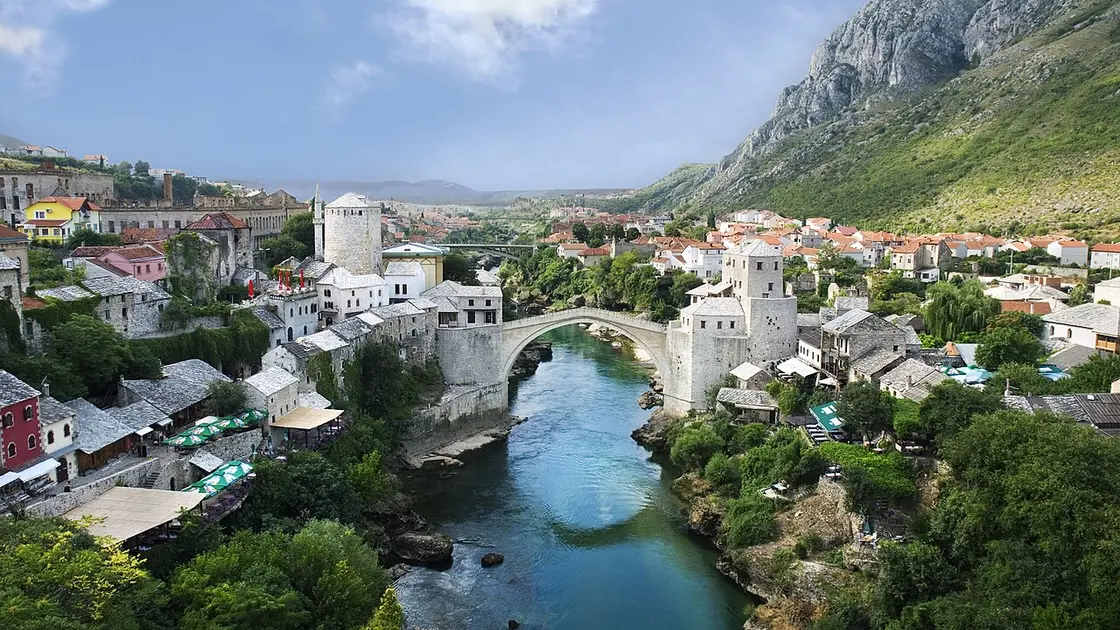
For a first visit, stay in or just above the Old Town on the east bank, because the Old Bridge, the bazaar and the best restaurants are all a few minutes’ walk away and, crucially, you get the town at dawn and after dark once the day-trip buses have gone. If the bazaar sounds too loud to sleep in, drop back to Donja Mahala, the quieter residential slice of the same east bank, or cross to the modern west bank around Spanish Square for a contemporary hotel, easier parking and calmer nights. Sleeping by the station in the north makes sense only for a quick connection, and Blagaj, out of town, is a lovely base if you have a car. Mostar is small, so none of this is far apart, but the two banks genuinely feel like different towns. This guide runs through each area, what it’s like after dark, and who it actually suits. If you’re still weighing Mostar against Sarajevo and the other towns as a base, our country-level guide to where to stay in Bosnia compares them.
The thing to understand first is the river. The Neretva splits Mostar in two, and the split isn’t just geographic: the Ottoman Old Town, Stari Most and the coppersmith bazaar sit on the east bank, while the modern, Croat-majority city spreads across the west, where the 1990s frontline once ran along the Bulevar. Where you sleep decides which of those two Mostars you wake up in, and that matters more here than the star rating on the door.
The Old Town: most atmospheric, and loud until midnight
This is where most first-timers should book, and the reason is simple: you’re inside the thing you came to see. Step out of your guesthouse and Stari Most, the Kujundžiluk bazaar and the riverside mosques are on your doorstep, the stone lanes glow after sunset, and you can be on the bridge for the first light before a single coach has arrived. If your stay is short, nothing else squeezes as much out of it. The Old Bridge itself has its own guide, and what you actually do from this base is covered in our Mostar things-to-do guide.
Now the honest part, because the Old Town asks for something in return. It stays lively until around midnight, with café music and crowds on and around the bridge, and the many minarets mean an early call to prayer carries across the stone. The narrow lanes trap the Herzegovina summer heat with little shade or airflow, so a room with real air conditioning is worth paying for in July and August. The streets are a genuine maze, you’ll get pleasantly lost, and cars can’t reach many of the cobbled guesthouses, so there’s effectively nowhere to park. Two practical points that catch people out: pack light, because you may be hauling a bag up steep, polished stone, and check whether your guesthouse has a lift, as plenty are up several flights of Ottoman stairs.
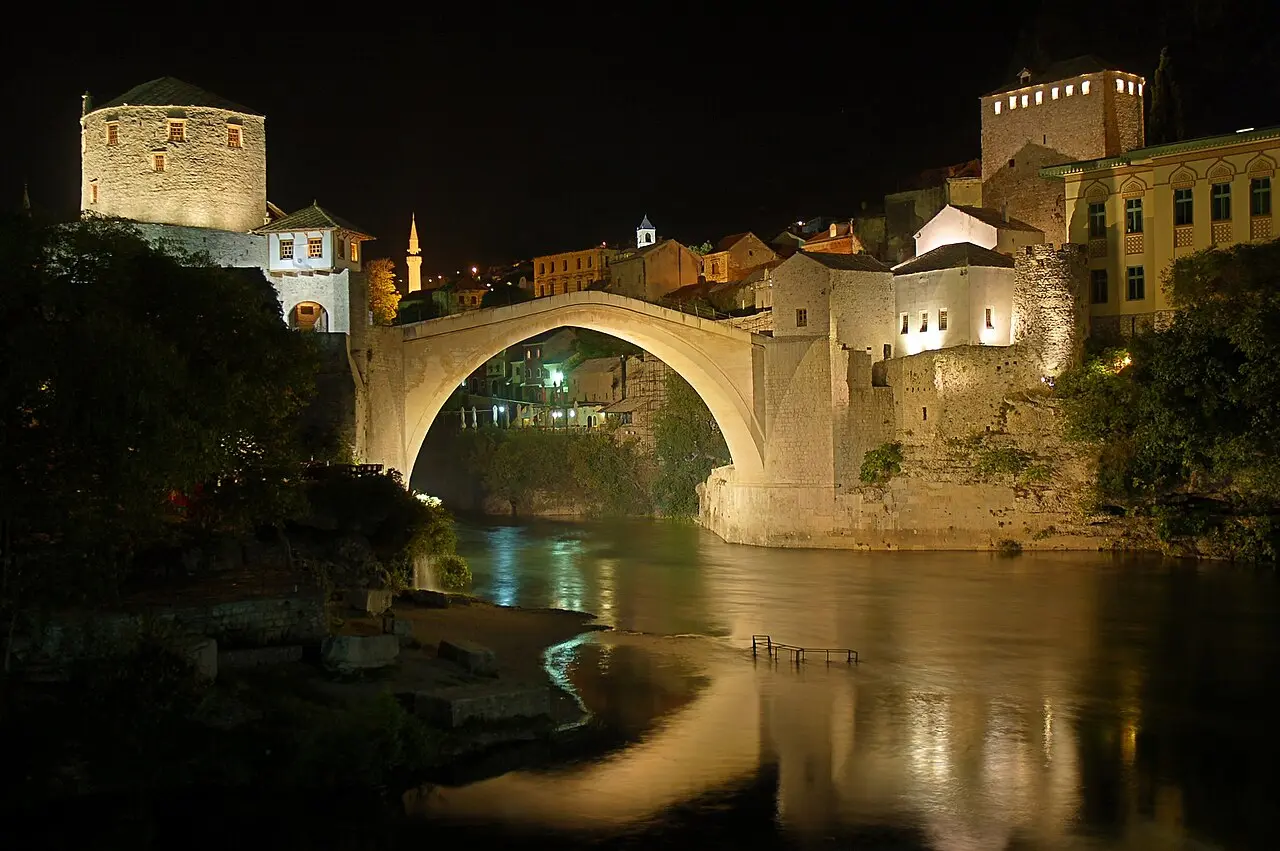
Best for: first-time visitors, short stays, and anyone who wants the maximum-atmosphere, walk-everywhere Mostar and will trade a quiet night for it.
Donja Mahala: same east bank, calmer streets
A short walk south along the east bank, roughly ten to fifteen minutes from the bridge, Donja Mahala is the compromise a lot of returning visitors settle on. It’s an old residential quarter of traditional houses and family-run guesthouses that keeps the Ottoman character and the walkable position but drops most of the tourist volume. Life here runs to a local rhythm rather than a bazaar one, the restaurants aim at neighbours rather than day-trippers, and you tend to eat better Bosnian food for less than the places crowded around the bridge charge. Named rooms for a view terrace, a courtyard or a grill are in where to eat in Mostar.
You give up being right on top of Stari Most, and that trade is the whole appeal. You’re close enough to walk in for the evening and far enough to sleep, parking is more realistic than in the tangle by the bridge, and the mood on the street is residential calm. If the Old Town appeals but the noise worries you, this is the first place to look before you give up on the east bank entirely.
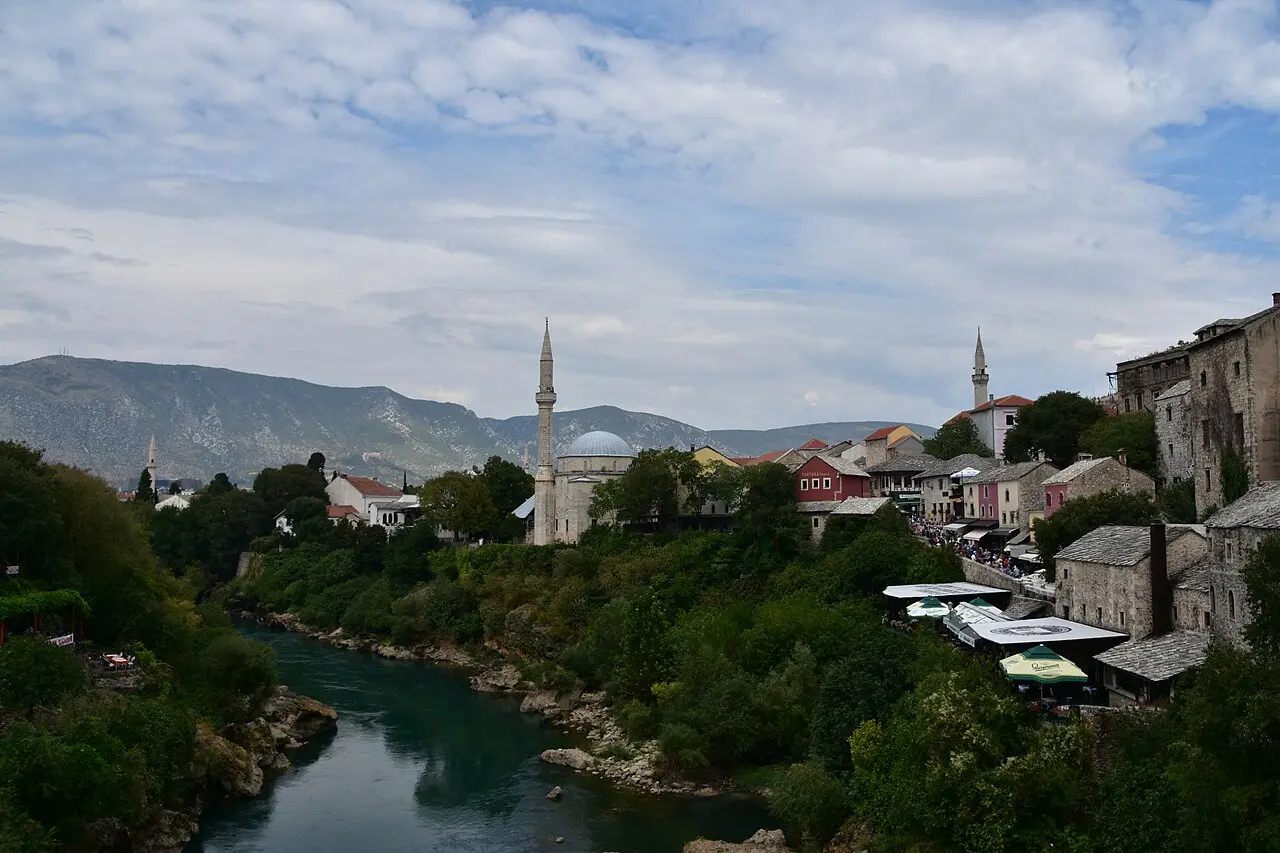
Best for: travellers who want the atmospheric, walkable side of Mostar but with a residential calm and better local food than the bridge strip.
The west bank: modern hotels, easier parking
Cross to the west side and Mostar changes personality. This is the contemporary, Croat-majority city, and around Spanish Square you find the larger modern hotels, the Mepas shopping mall, and the sort of full-service comfort the Old Town guesthouses can’t offer. It’s roughly a fifteen-to-twenty-minute walk, or a short taxi, from the bridge, so you’re close without being in the thick of it, evenings are quieter, and paid parking is available and reliable in a way it simply isn’t across the river. A useful chunk of the west bank was rebuilt after the war, so expect function and traffic over old-world charm.
The reason to choose it’s comfort and logistics rather than atmosphere. If you want a modern room with a lift and dependable air conditioning, if you’re driving and want to leave the car somewhere sensible, or if you would rather sleep away from the bazaar and stroll over for dinner, the west bank delivers. Families travelling with a car often find it the path of least resistance. Just be clear about the swap: you’re choosing convenience over the wake-up-in-the-Old-Town magic.
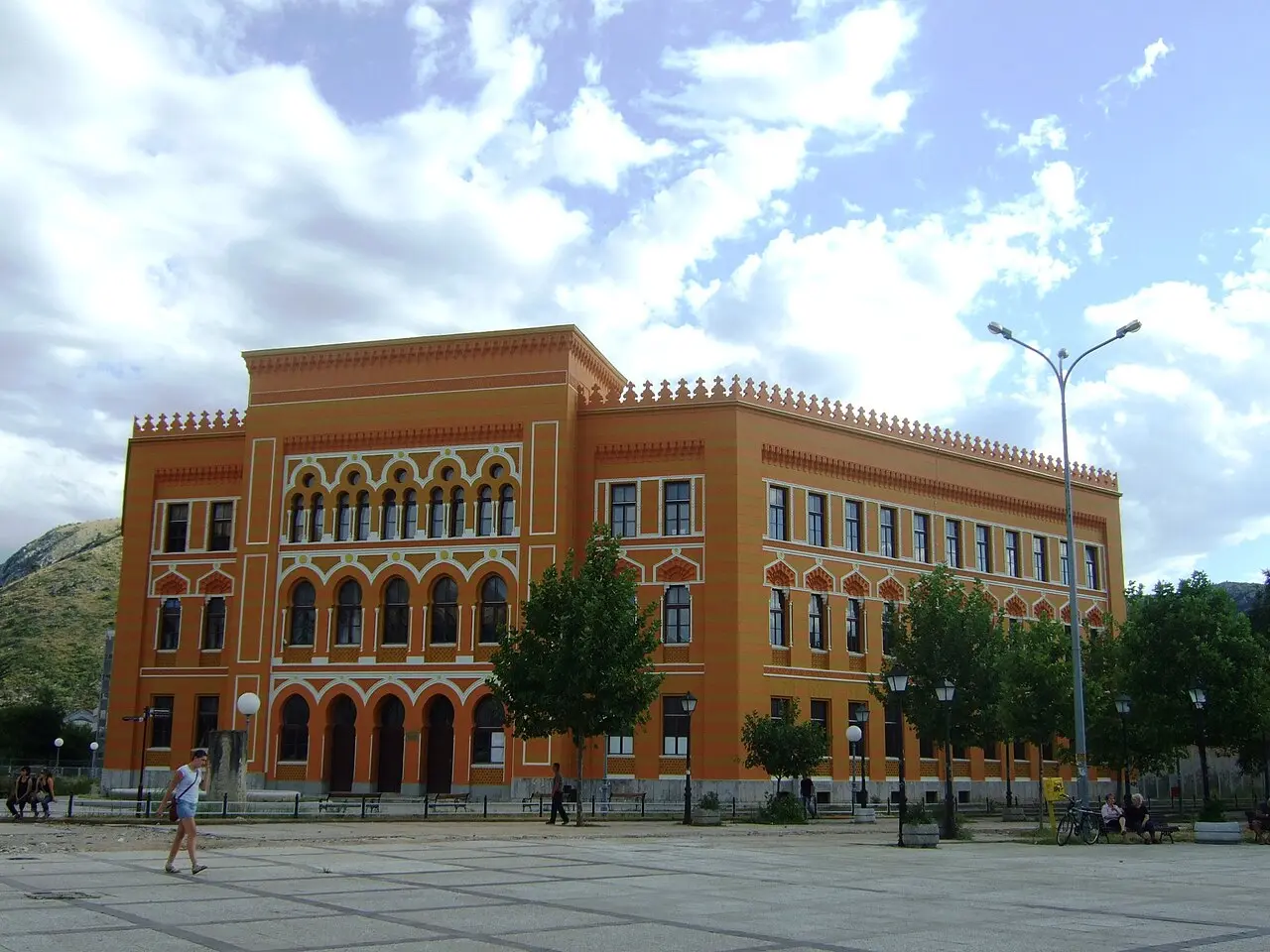
Best for: anyone after a modern full-service hotel, drivers who want easy parking, families, and travellers who value a calm night and a short walk to the sights over being inside the historic core.
By the station: a bed for a connection, not a stay
Mostar’s bus and train stations sit together in the north of the city, and the streets around them, the Carina area, are the budget, functional end of town. Rooms here are the cheapest in Mostar, and the appeal is purely practical: you’re steps from the train down the Neretva canyon from Sarajevo and the intercity buses, which is worth a lot if you’re rolling in late or leaving at dawn. It’s roughly a fifteen-to-twenty-five-minute walk to the Old Bridge, mostly downhill on the way in.
Set expectations, though. This is a transit district, not a place with its own charm, so if Mostar itself is the point rather than a stepping stone, sleep somewhere with a view and just walk or taxi to the station on your way out. Where it earns its keep is the single-night connection: a very early train, a late bus, or a quick overnight between two other destinations, where being able to fall out of bed onto your departure beats everything else.
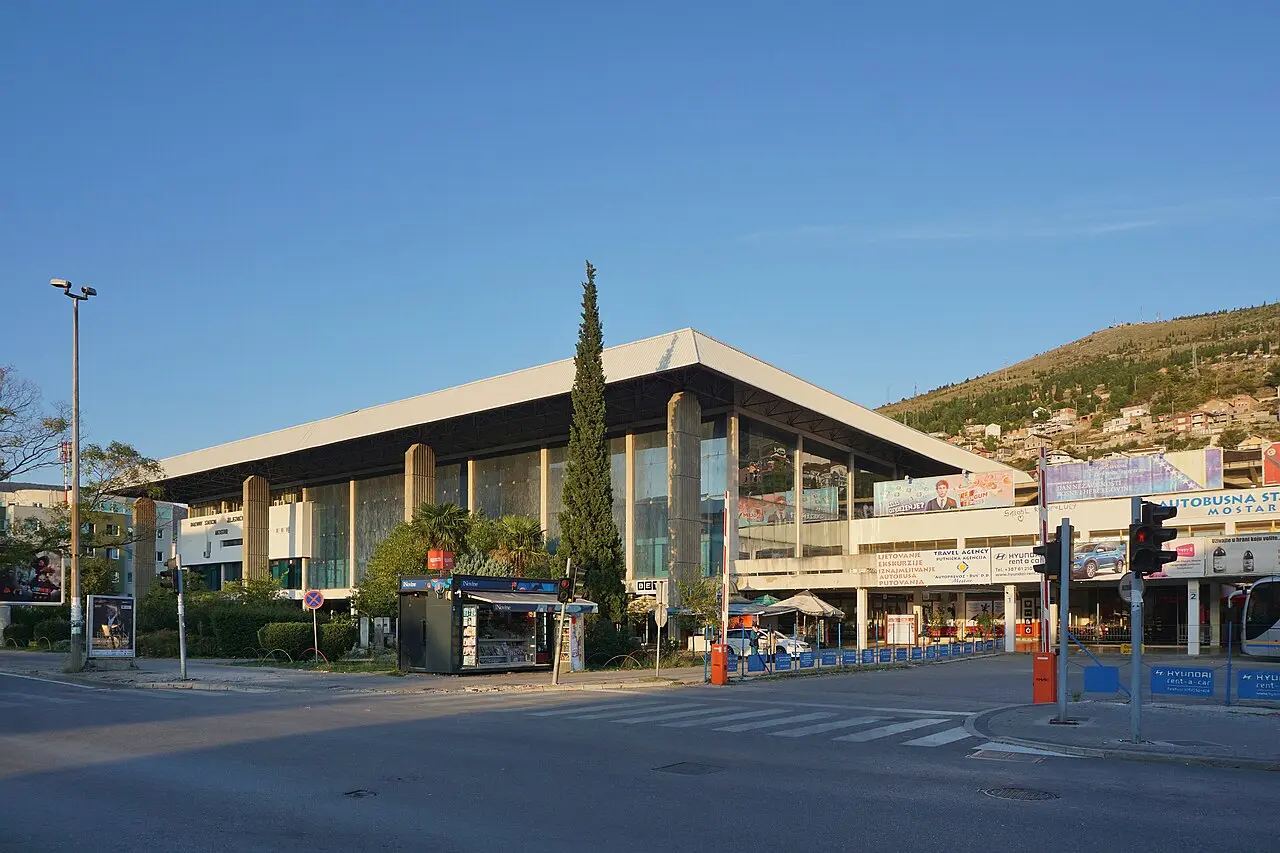
Best for: one-night stopovers built around a bus or train connection, and travellers who prize the cheapest bed and the shortest walk to their departure.
Blagaj: a rural base if you have a car
If you’re driving and the idea of a town centre doesn’t appeal, consider basing yourself out at Blagaj, the village about 12 km southeast of Mostar where the Buna river bursts, startlingly clear, from the foot of a cliff beneath a white dervish house. It’s a serene, riverside setting, the guesthouses and small villas look onto green water and stone, and you wake to birdsong rather than bazaar trade. It also puts you neatly on the doorstep of the Herzegovina day trips, so touring the region each morning is easy.
The condition is spelled out in the name of the section: you really do need a car. Public transport out here’s patchy, and without wheels you’re stranded from both Mostar’s restaurants and its evenings. Blagaj is a poor choice if your plan is late nights by the lit-up bridge, and a fine one if your plan is quiet, nature and a car parked outside your door ready for the next day. For the site itself, the boat into the spring cave and the fortress above, see our Blagaj Tekke guide.
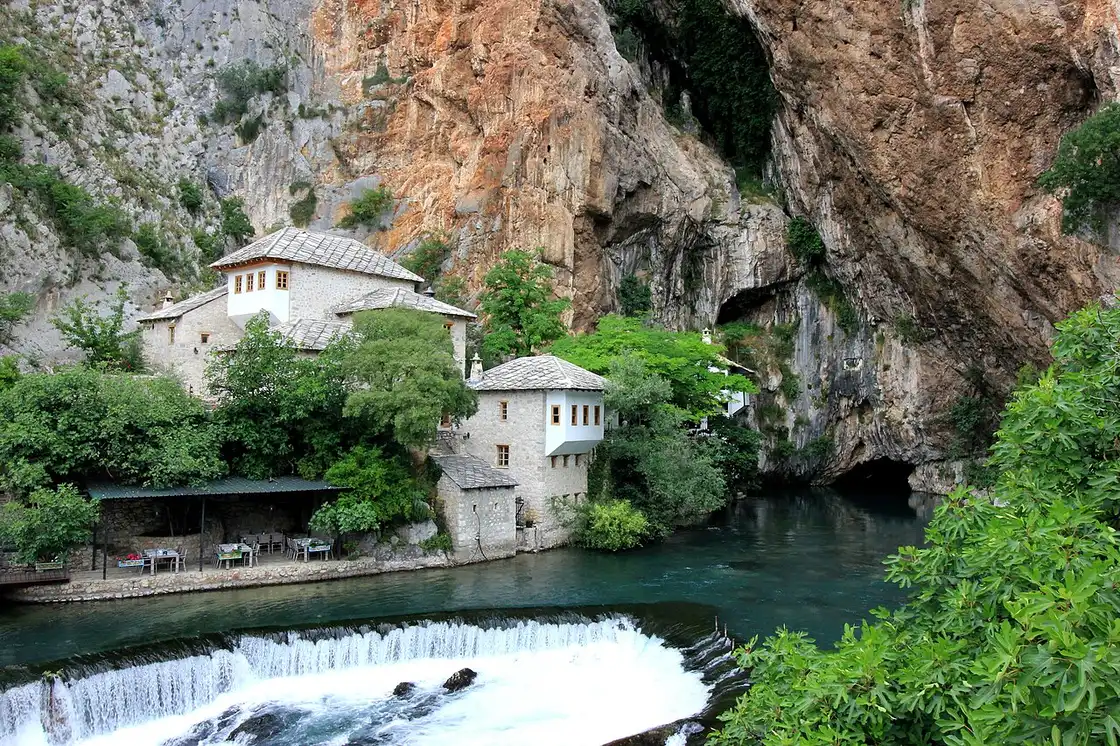
Best for: drivers and couples who want a quiet, scenic rural base and are happy to commute into town, or not bother at all.
Money and booking, briefly
A few things worth sorting before you reserve. Prices in Mostar are quoted in convertible marks (BAM / KM), pegged at roughly 1.96 to the euro; larger west-bank hotels take cards without fuss, but smaller family guesthouses are often cash-friendly and euros are accepted patchily and at poor rates, so carry some marks. Beds in the Old Town are limited and go early, so book a month or two ahead for July and August; late spring and September are cheaper, cooler and less crowded, which for the heat-trapped Old Town lanes is no small thing.
So which area should you pick?
Match the area to the trip. First visit or a short one, sleep in or above the Old Town and accept a lively night for the walk-everywhere, wake-up-on-the-bridge version of Mostar. Want that same east-bank position with a calmer street and better-value food, look at Donja Mahala. After a modern hotel, easy parking or a quiet night, cross to the west bank around Spanish Square. Chasing the cheapest bed for a single-night connection, take the station area and walk in. Driving, and craving green and quiet over nightlife, base at Blagaj and tour from there. Whichever you settle on, compare a few places across the area for your dates rather than grabbing the first result, and once the base is sorted, our guides to Mostar’s sights and getting there from Sarajevo will handle the rest.
Photos
On the map
The map loads on click - to keep the page lightweight.
The map didn’t load. Check your connection and refresh the page.
Read also

Cities · 12 min read
Bihać City Guide: Your Base for Una National Park
Verified · July 23, 2026Bihac in northwest Bosnia: a Gothic church that became a mosque in 1592, the Captains Tower museum, the Una through town and the July regatta.

Cities · 9 min read
Konjic: Ottoman Bridge, Rafting & Cold War Secrets
Verified · July 21, 2026A guide to Konjic on the Neretva: the 1682 Ottoman bridge, upper-Neretva rafting, a secret Cold War bunker, a UNESCO woodcraft and Boračko Lake.

Cities · 12 min read
Things to Do in Banja Luka: Bosnia's Second City
Verified · August 9, 2026Things to do in Banja Luka: Kastel fortress on the Vrbas, the rebuilt Ferhadija mosque, cafe-lined Gospodska and the city's Trappist beer heritage.

Cities · 10 min read
Travnik: Vizier Capital, Fortress & Painted Mosque
Verified · July 20, 2026Things to do in Travnik, Bosnia's old Ottoman vizier capital: the best-preserved fortress, the painted Sarena Dzamija over a bazaar, and Plava Voda.