Trebinje: Herzegovina's Sunny Southern Town
Trebinje, sunny southern Herzegovina: the Ottoman old town, Arslanagić bridge, hilltop Gračanica, wine at Tvrdoš, and a 30 km hop from Dubrovnik.
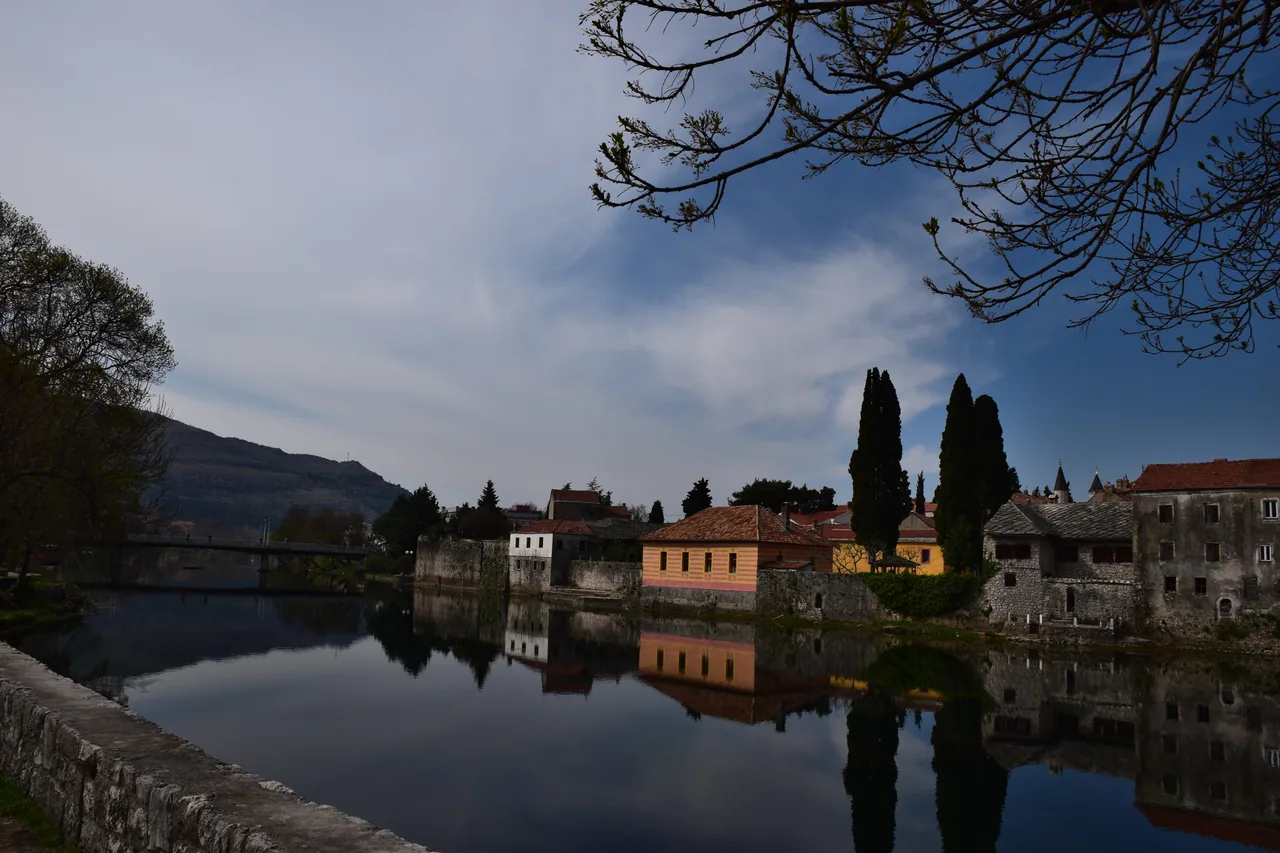
Trebinje is the town most people never quite get to: the closest Bosnian town to Dubrovnik, about 30 km inland, yet still passed over by nearly everyone who “does” the coast. That is exactly its appeal. You get an Ottoman old town, a river the colour of green glass, plane trees the size of houses, a hilltop monastery with the best view in Herzegovina, and two serious wine cellars, all with a fraction of Mostar’s crowds. This guide covers what to see, where the wine is, and how to fold it into a day out of Dubrovnik. If you’re choosing Trebinje as a southern overnight instead of Mostar, start with Mostar or Trebinje. Our Dubrovnik to Trebinje guide covers the drive, taxi and border in full.
Where Trebinje is, and why it feels different
Trebinje sits at 275 metres in the far south of Herzegovina, strung along the Trebišnjica river under the bare grey ridge of Mount Leotar. Locals call it “the town of sun and plane trees,” and both halves are earned: this is one of the sunniest corners of the country, and the huge plane trees on the main square are a genuine landmark rather than a slogan. From the capital it’s a highland day rather than a border errand: Sarajevo to Trebinje covers the East Sarajevo bus and the Foča-Gacko drive.
Two things set it apart from the rest of the country. First, it is in Republika Srpska, the Serb-majority entity of Bosnia and Herzegovina, so the churches outnumber the mosques and you’ll see Cyrillic on the shopfronts alongside the Latin script. Second, it looks south rather than north. Historically and culturally Trebinje leans toward Dubrovnik and the Adriatic, a day’s mule train from the coast for centuries, and it still feels more Mediterranean than Balkan: stone, cypresses, wine, an unhurried café culture that peaks in the evening rather than at lunch.
The old town and the plane-tree square
The walled Old Town (Stari Grad) is small, and that’s fine - you wander it in twenty minutes rather than fighting for space on a famous bridge. The walls, the little square inside and two mosques went up at the start of the 18th century, built by the Resulbegović family who ran the town in the Ottoman period. Inside you’ll find a couple of cafés, an art gallery and quiet lanes; it’s more lived-in than museum-piece, which is part of the charm.
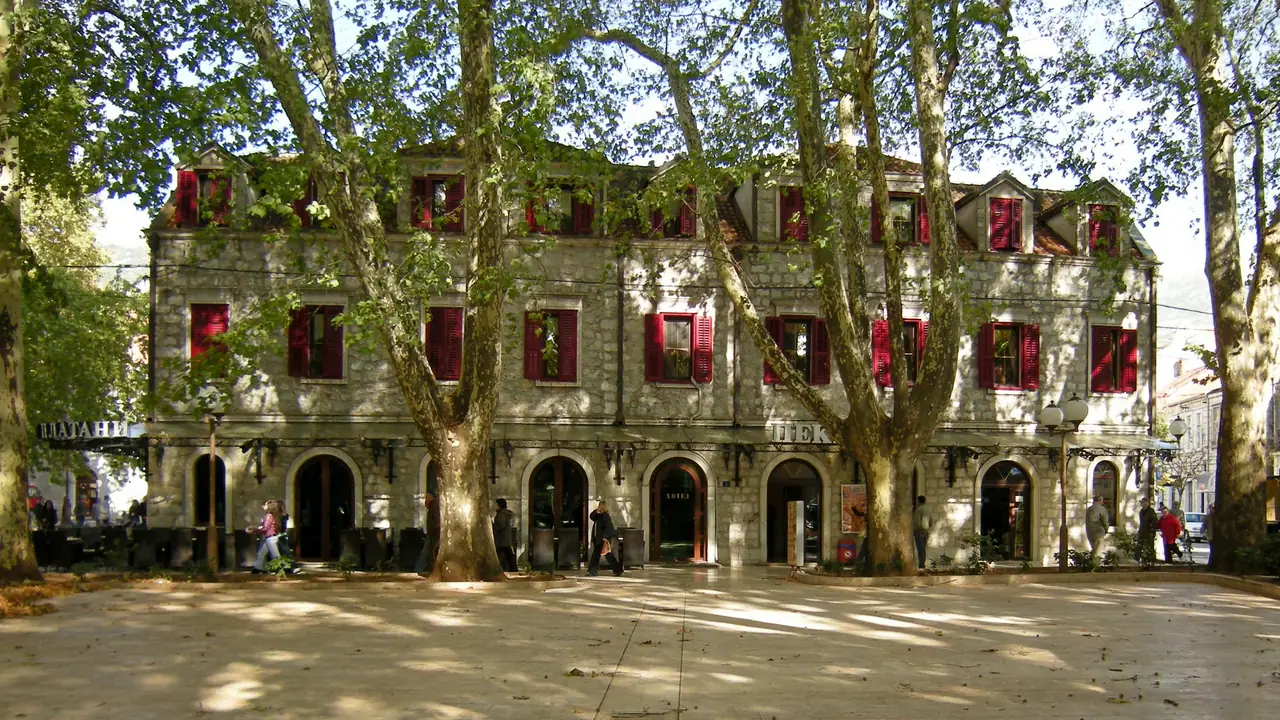
The real social heart, though, is just outside the walls: the plane-tree square (Trg Slobode and the promenade around it), shaded by enormous plane trees that turn the whole space cool and green even in the July heat. This is where Trebinje actually happens - the morning market under the trees, coffee that stretches for hours, an evening korzo stroll when the whole town seems to be out. Grab a table, order a coffee or a glass of local white, and just watch for a while. It’s the single most pleasant thing to do in town and it costs almost nothing.
On Saturdays the square hosts a farmers’ market worth timing your visit for - Herzegovinian honey, dried figs, cheese, olive oil and pomegranate products from the surrounding valleys. Prices are in convertible marks (KM / BAM), the local currency, and while a few places near the border take euros, you’ll want KM in cash for the market and small cafés.
The Arslanagić bridge, the one that moved
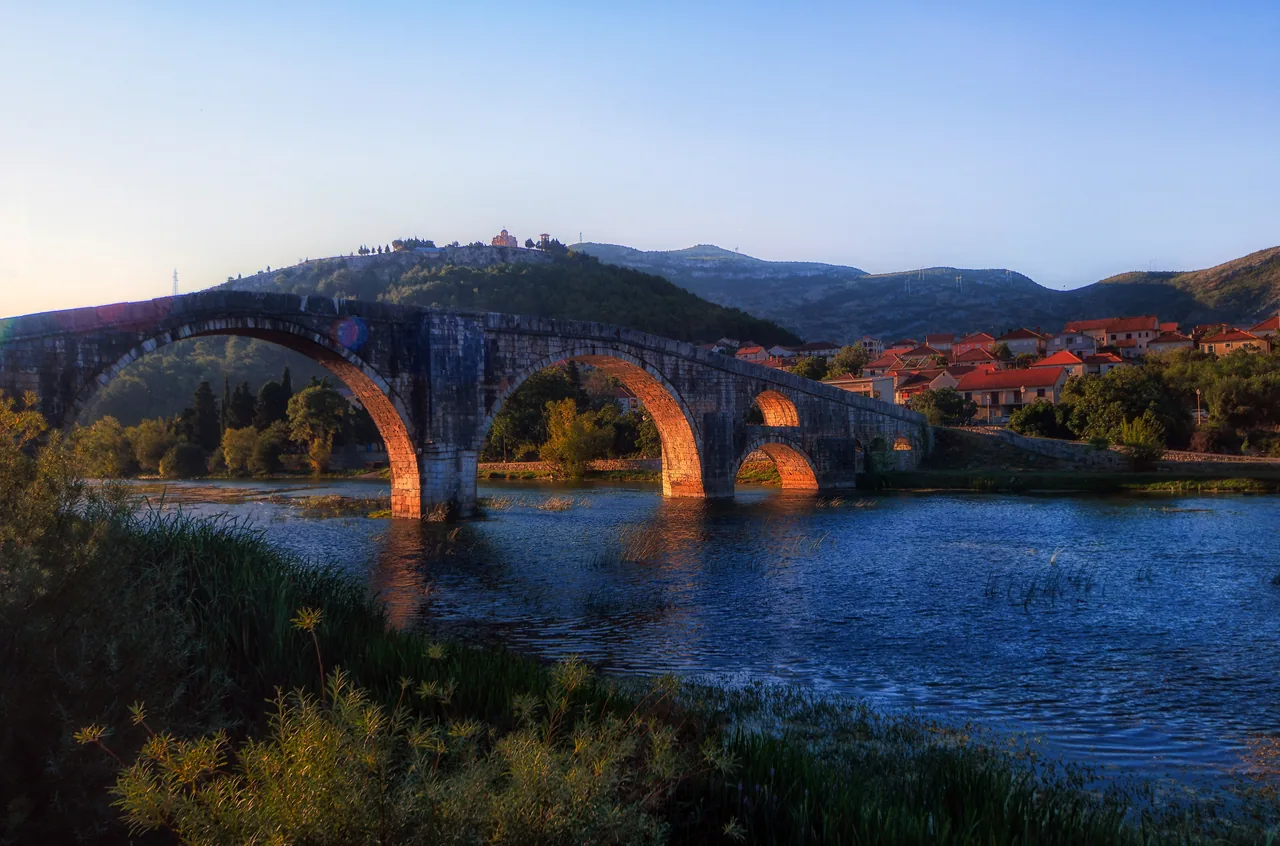
A short walk or drive from the centre stands Trebinje’s most photographed monument, the Arslanagić bridge (also called the Perović bridge) - a handsome Ottoman span with two large and two small arches stepping across the Trebišnjica. It dates to the 16th century, commonly to 1574, and was built during the era of the great Ottoman statesman Mehmed-paša Sokolović, whose name is on the more famous bridge at Višegrad too.
There’s a twist that makes it worth the detour. This is not where the bridge was built. It originally stood about 10 km upstream, but in the 1960s the reservoir behind a new hydroelectric dam threatened to drown it - so the whole thing was taken apart stone by stone and rebuilt on its present site in town. That is why the setting can feel slightly staged: the bridge is genuinely 450 years old, but it was carefully moved to save it. Cross it, then photograph it from the riverside promenade, where the four arches line up over the green water.
Hercegovačka Gračanica: the view from Crkvina hill
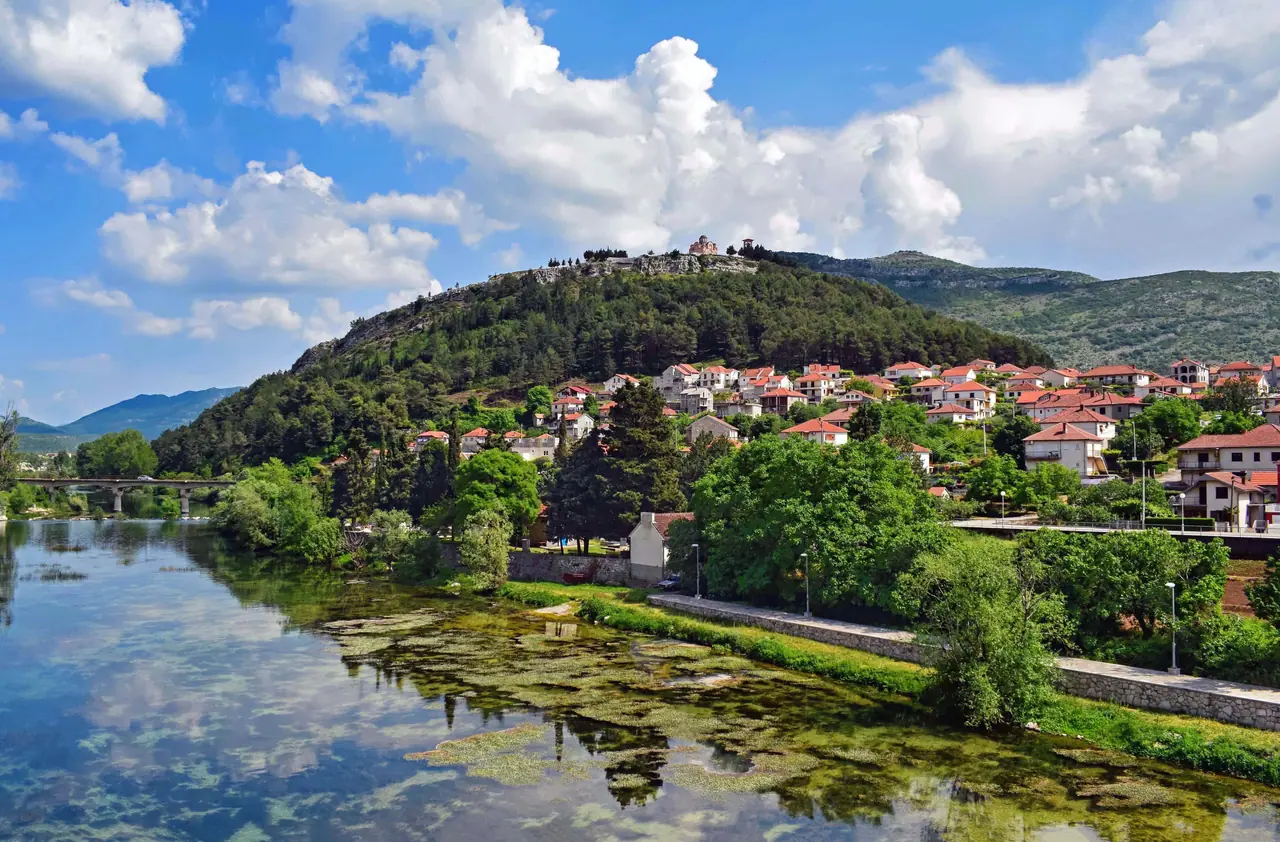
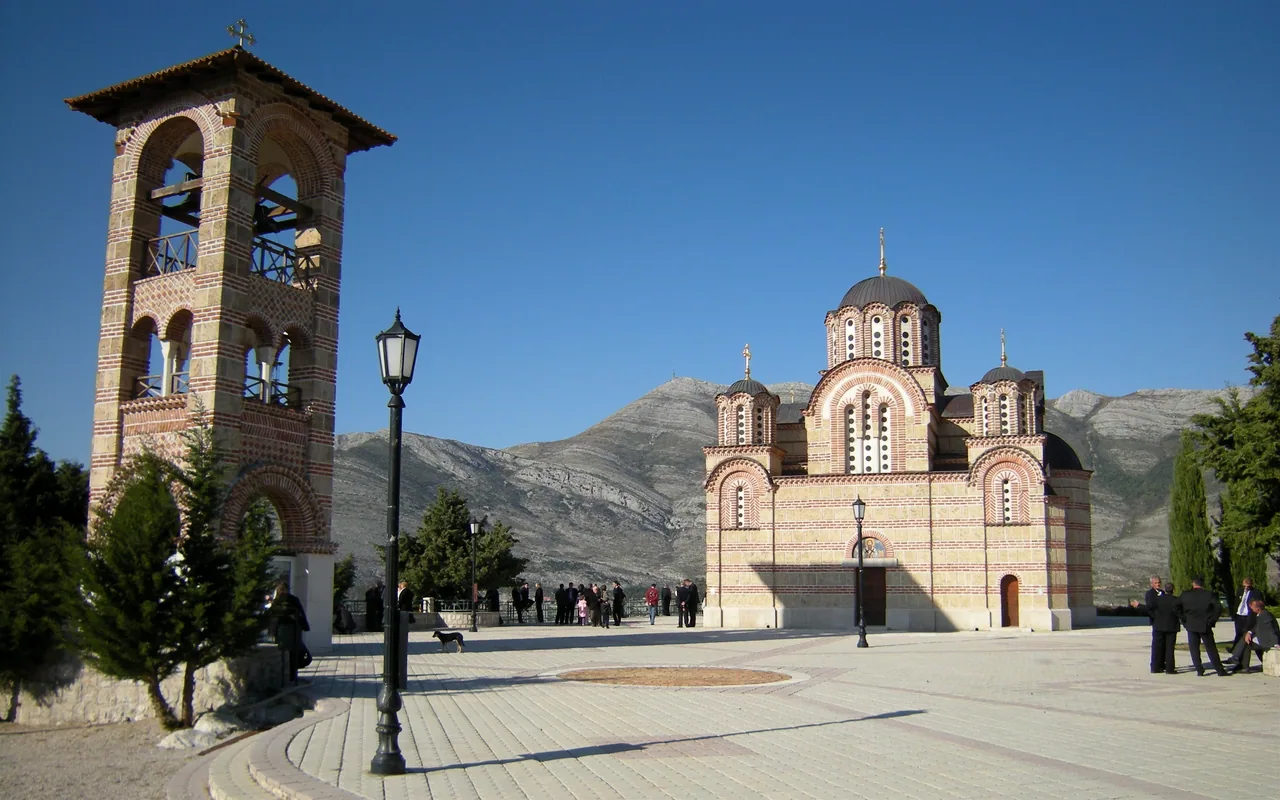
For the best view of Trebinje, climb to Hercegovačka Gračanica, the Serbian Orthodox monastery church that crowns Crkvina hill above the town. It looks older than it is: completed in 2000, it’s a loose copy of the medieval Gračanica monastery in Kosovo, and it was built to house the remains of the poet Jovan Dučić, Trebinje’s most famous son. The frescoed interior is striking, but the reason to make the climb is the terrace, which lays the whole town, the river bends and the surrounding vineyards out below you. Go late in the day when the light softens and the stone warms up.
It’s a real hill, so drive or taxi up if the heat is fierce; the walk is doable but exposed. It’s an active place of worship - cover shoulders and knees, and keep it low-key inside.
Wine: Tvrdoš monastery and Vukoje
This is the part most day-trippers miss, and it’s the reason to give Trebinje more than a passing hour. The valleys around town are proper wine country, planted with two local grapes: Žilavka, a characterful white, and Vranac, a dark, full red. Two cellars stand out.
Tvrdoš Monastery, a few kilometres out of town on the Trebišnjica, is the atmospheric one. The monastery was founded around the late 15th or early 16th century, and the monks have made wine here for centuries - one of the vaulted cellars dates to the 15th century. You can visit the church and, in the cellar shop, taste and buy the monastery’s Žilavka and Vranac. It’s the kind of place that fixes Trebinje in the memory: old stone, cool vaults, wine made where it has always been made.
Vukoje (Podrumi Vukoje 1982), on the edge of town, is the polished counterpart - a family winery going since 1982 that has grown into one of the country’s best-known labels. Its cellars run about eight metres underground, and the winery house has a tasting room, a restaurant and a rooftop terrace where you can work through the range, from the everyday Hercegovačka Žilavka to the premium Tribunia and Carsko wines, over a proper meal. Between the two you get both ends of Herzegovinian wine in an afternoon - see our Herzegovina wine guide for the native grapes and the full Wine Route from Mostar down to here.
Opening hours and tasting fees at both change with the season and it is worth calling or booking ahead, especially for a group or a meal at Vukoje - confirm before you turn up rather than assuming a walk-in.
Day trip from Dubrovnik, or a base for the far south
The obvious way to see Trebinje is as a half-day trip from Dubrovnik: it’s only about 30 km, roughly 40 to 50 minutes by car once you clear the border, which makes it the easiest cross-border escape on the whole Dalmatian coast. Bring the right document - EU, EEA and Schengen citizens can cross on a national ID card, while other travellers need a passport - and expect the crossing to add anywhere from a few minutes to half an hour depending on the season. A hire car is much the easiest way to do it - you set the pace and can string together the old town, the bridge, the monastery view and a cellar or two. There are also some cross-border buses and organised tours, but the timings are limited, so check the current schedule before relying on them.
It also works the other way round. If you are exploring Herzegovina from the north, Trebinje is about just over two hours from Mostar and pairs naturally with Blagaj, Počitelj and the Kravice falls on a southern loop - see our guide to things to do in Mostar for that side of the region. Sitting between Herzegovina and the Bay of Kotor, it also makes a logical overnight on a wider Bosnia and Montenegro road trip, the week-long drive that strings Sarajevo, Mostar, Kotor and the Durmitor mountains into one loop. For beds by the plane trees versus wine stays outside town, see where to stay in Trebinje. For timing the trip, our guide to the best time to visit Bosnia covers why Herzegovina bakes in July and August and why late spring and September are the sweet spot down here.
The strongest argument for basing yourself here, though, is what sits west of town. Vjetrenica cave at Zavala is 41.6 km away, around fifty minutes along the rim of Popovo polje: a UNESCO World Heritage site since 2024, one of the richest caves on earth for underground species, and a place nobody staying in Dubrovnik ever gets to. Tours leave on the hour and last under an hour, so it’s a comfortable half-day from Trebinje and an awkward slog from anywhere else. Coming from Mostar, our East Herzegovina wine route strings Radimlja, Hutovo Blato and Vjetrenica together into the two days that end here. Our guide to the best day trips from Trebinje ranks the cave against Dubrovnik and Mostar if you’re deciding how to spend your time here.
What to know before you go
A few practical notes:
- Money. The currency is the convertible mark (KM / BAM), pegged at roughly 1.96 to the euro. Some border-facing spots take euros at poor rates; draw KM from an ATM for the market, cafés and cellar shops.
- The right document. Bosnia is outside the EU and Schengen, so you cross a real border from Croatia: EU, EEA and Schengen citizens can use a national ID card, while everyone else needs a passport. Keep a little time buffer in high summer.
- When to come. Trebinje is hot and dry in midsummer; the plane-tree square and the cellars are your friends. Spring and autumn are gentler and the vineyards look their best in September.
- Give it longer than an hour. Most people rush the old town and leave. The town rewards a slow evening - the korzo, dinner under the trees, a glass of Žilavka - far more than a quick photo stop.
Trebinje isn’t going to out-headline Mostar, and it’s not trying to. It’s the sunny, winey, unbothered southern town you visit to slow down - and being half an hour from Dubrovnik, there is very little excuse not to.
Photos
On the map
The map loads on click - to keep the page lightweight.
The map didn’t load. Check your connection and refresh the page.
Distance
- Mostar ≈115 km · ~2 h 20 min by car Reached down the scenic route via the Popovo valley or over the hills; less visited from the north than from the coast.
- Dubrovnik ≈30 km · ~40-50 min by car, plus one border crossing The closest Bosnian town to Dubrovnik and an easy half-day trip. At the Croatia-Bosnia border, EU/EEA/Schengen citizens can use a national ID card; others need a passport.
Read also

Cities · 12 min read
Bihać City Guide: Your Base for Una National Park
Verified · July 23, 2026Bihac in northwest Bosnia: a Gothic church that became a mosque in 1592, the Captains Tower museum, the Una through town and the July regatta.

Cities · 9 min read
Konjic: Ottoman Bridge, Rafting & Cold War Secrets
Verified · July 21, 2026A guide to Konjic on the Neretva: the 1682 Ottoman bridge, upper-Neretva rafting, a secret Cold War bunker, a UNESCO woodcraft and Boračko Lake.

Cities · 12 min read
Things to Do in Banja Luka: Bosnia's Second City
Verified · August 9, 2026Things to do in Banja Luka: Kastel fortress on the Vrbas, the rebuilt Ferhadija mosque, cafe-lined Gospodska and the city's Trappist beer heritage.

Cities · 10 min read
Travnik: Vizier Capital, Fortress & Painted Mosque
Verified · July 20, 2026Things to do in Travnik, Bosnia's old Ottoman vizier capital: the best-preserved fortress, the painted Sarena Dzamija over a bazaar, and Plava Voda.