East Herzegovina Wine & Stone Route: 2 Days
A 2-day drive from Mostar: UNESCO stecci at Radimlja, a wetland boat ride, Vjetrenica cave and the Trebinje wine cellars, with distances and hours.
You’ll cover East Herzegovina’s two UNESCO World Heritage sites, a Ramsar wetland and the southern half of an official wine route in a rectangle that fits a weekend. This loop runs Mostar - Stolac - Hutovo Blato - Zavala - Trebinje - Mostar, about 290 km of two-lane road, with the night in Trebinje. Fixed entry costs come to 58 KM a head, roughly 30 euros, and you need your own car because no bus strings these places together.
The reason it doesn’t compress into one long day isn’t distance. It’s opening hours and the drink-drive limit: squeeze it and you reach the wine with a two-hour drive still ahead of you, the one part of this trip that genuinely doesn’t work.
Why this loop takes two days
On a map the distances look trivial: nothing here’s more than an hour from the last thing. The catch is that every stop on day one runs on somebody else’s clock. The Hutovo Blato boat is scheduled rather than on demand, and Vjetrenica sends groups in on the hour, the last at 16:00 in spring and autumn. Miss a link and the rest of the chain slides.
Two days also fixes the wine problem. Bosnia’s blood-alcohol limit is low and enforced, so a day trip means somebody swirls and spits while everyone else drinks. Sleep in Trebinje and the driving is done before the tasting starts.
Buses do reach Stolac and Trebinje, but they leave you 3 km short of Radimlja, nowhere near the Karaotok pier and stranded entirely at Zavala. Our car rental in Bosnia guide covers deposits and cross-border paperwork, driving in Bosnia what the police expect of you.
Day one: Radimlja and the stecci
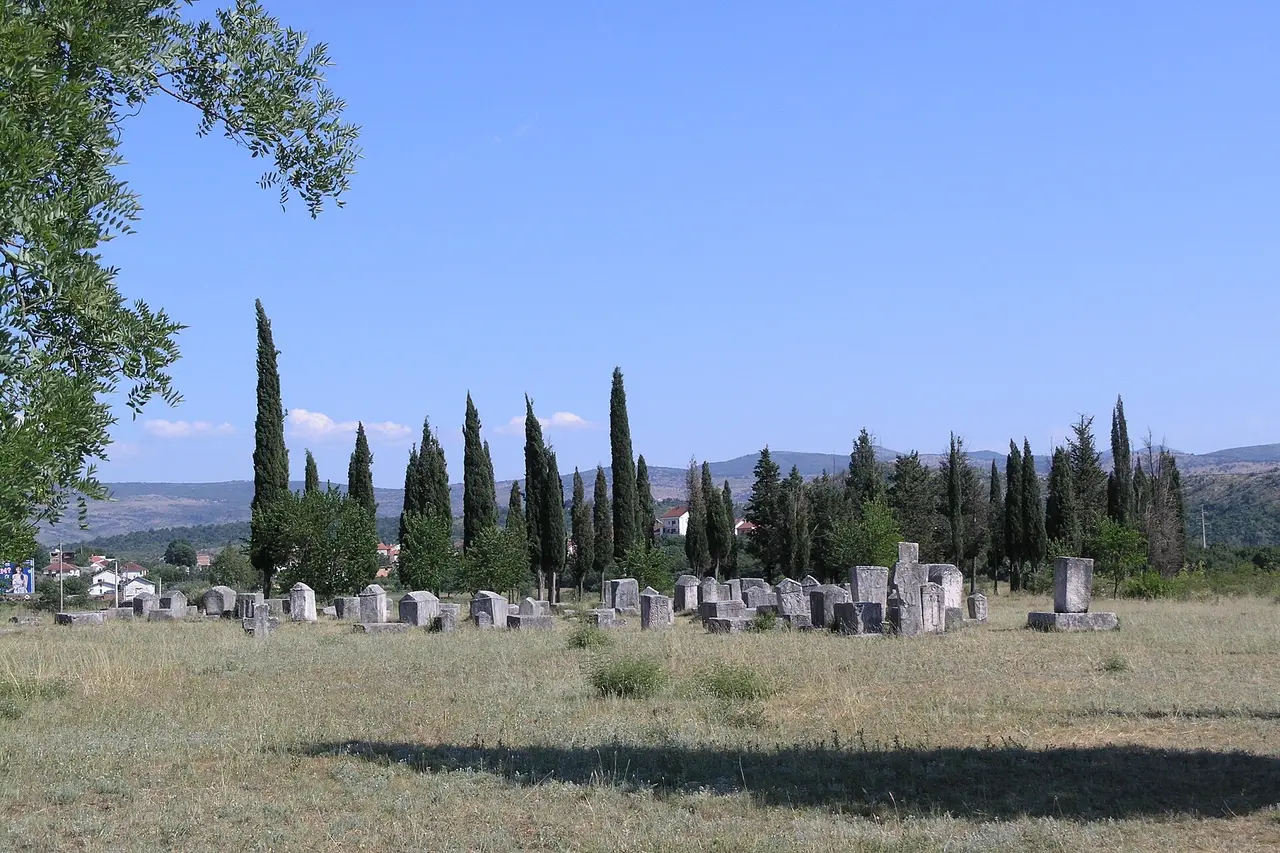
Leave Mostar by 08:30. The first stop is 47 km south-east, an hour on the M17 and then east on the M6, and it’s the one people drive past without knowing what they missed: Radimlja, a field of 133 medieval tombstones in the grass 3 km west of Stolac. These are stecci, the carved limestone monoliths medieval Bosnia produced by the tens of thousands, and this necropolis has been part of a UNESCO World Heritage property since 15 July 2016.
Sixty-three of the stones carry carving, and the one everyone photographs is a standing man with an enormous raised right hand that nobody has managed to explain. Give the field 45 minutes, enough to walk it twice. Summer hours are 07:00 to 18:00 on weekdays, 09:00 to 17:00 at weekends.
Here’s the detail that pays for the stop order. The road on from Stolac toward Hutovo Blato passes Boljuni, the other Stolac necropolis on the same UNESCO listing and by numbers the bigger of the two: 274 tombstones, 92 of them decorated, some signed by a carver called Grubac. The institution that runs both sites lists it as free. It costs another half hour off the through road, so treat it as optional, but if the stones are why you came, this is the leg to spend it on.
Hutovo Blato: the boat you have to phone about
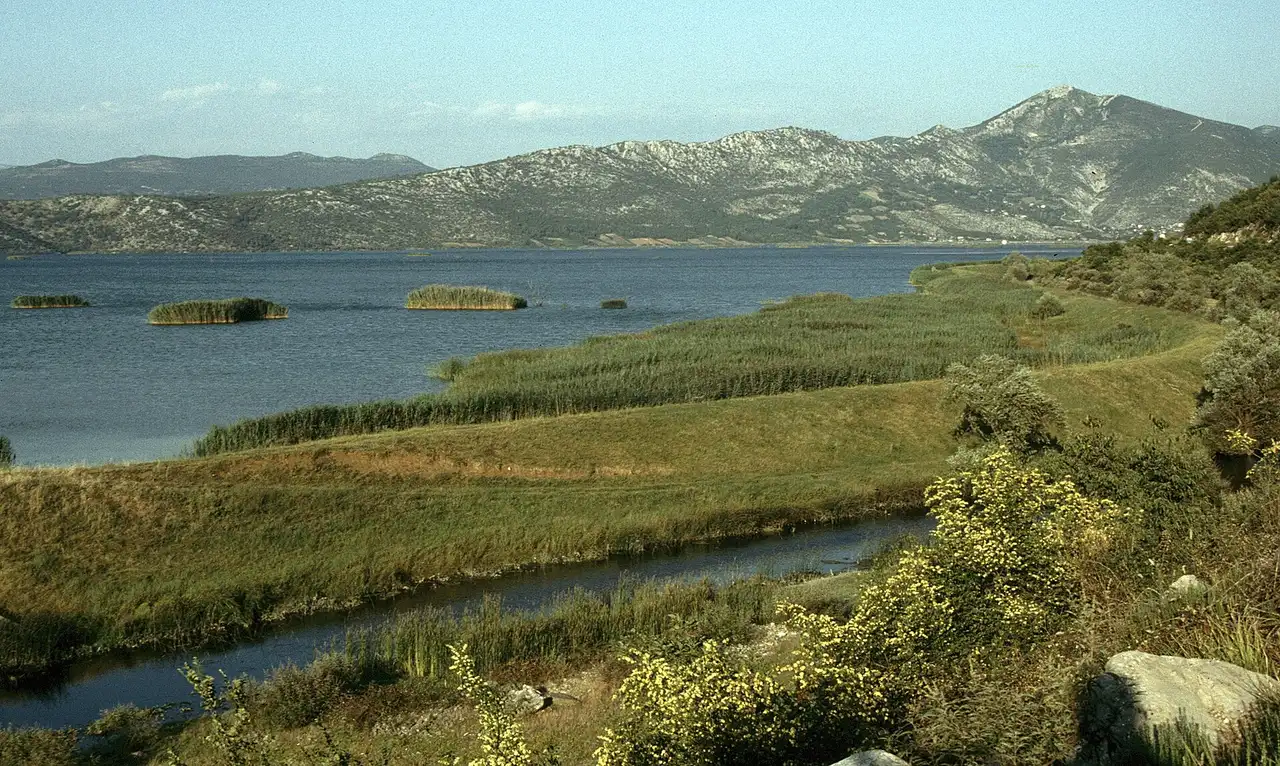
35 km and about 45 minutes west of Radimlja, the karst suddenly stops being dry. Hutovo Blato is a Ramsar-listed wetland on the left bank of the Neretva, and the thing to do is get on the water: a flat launch leaves the pier at Karaotok, pushes into a channel walled with reeds and cuts the engine among the lily pads. Entry is 5 KM, the boat ride 20 KM, the combined ticket 25 KM on the park’s official 2026 list.
The word “scheduled” is doing real work there. Boats go at set times that shift with the season and are published nowhere useful, and group rides need booking a day ahead, so phone +387 36 814 716 before you leave Mostar rather than when you arrive. There’s a motel and restaurant at the pier, which makes this the natural lunch stop of the loop.
If birds are the reason you’re here rather than a side benefit, run the day the other way: Karaotok first thing, then back east to Stolac, then south. It costs about seven extra kilometres and buys you the wetland at first light. For everyone else the order above wins, because it puts lunch in the middle.
Vjetrenica and Zavala: cave, monastery, one stop
The leg from Karaotok to Zavala is the slow one: 51 km in about 80 minutes, over the ridge and down into Popovo polje, the long flat-bottomed karst field the Trebisnjica runs into. The emptiest driving of the trip, and the best of it.
Vjetrenica is the payoff. The operator puts the entrance 300 m east of the centre of Zavala village, 12 km in a straight line from the Adriatic. Inside are 7,014 m of mapped channel, 600 m of it laid out for visitors, and the cave went onto the UNESCO World Heritage list in July 2024 for what lives in it: 93 species that exist nowhere but underground, which the peer-reviewed 2023 inventory ranks second in the world, behind Postojna-Planina in Slovenia and its 116. Tours go on the hour and take 40 to 60 minutes, and foreign visitors pay 25 KM. It’s 11.6 C in there all year, the floor is wet, and the operator asks for long trousers and proper shoes: the flip-flops you wore on the boat won’t get you in.
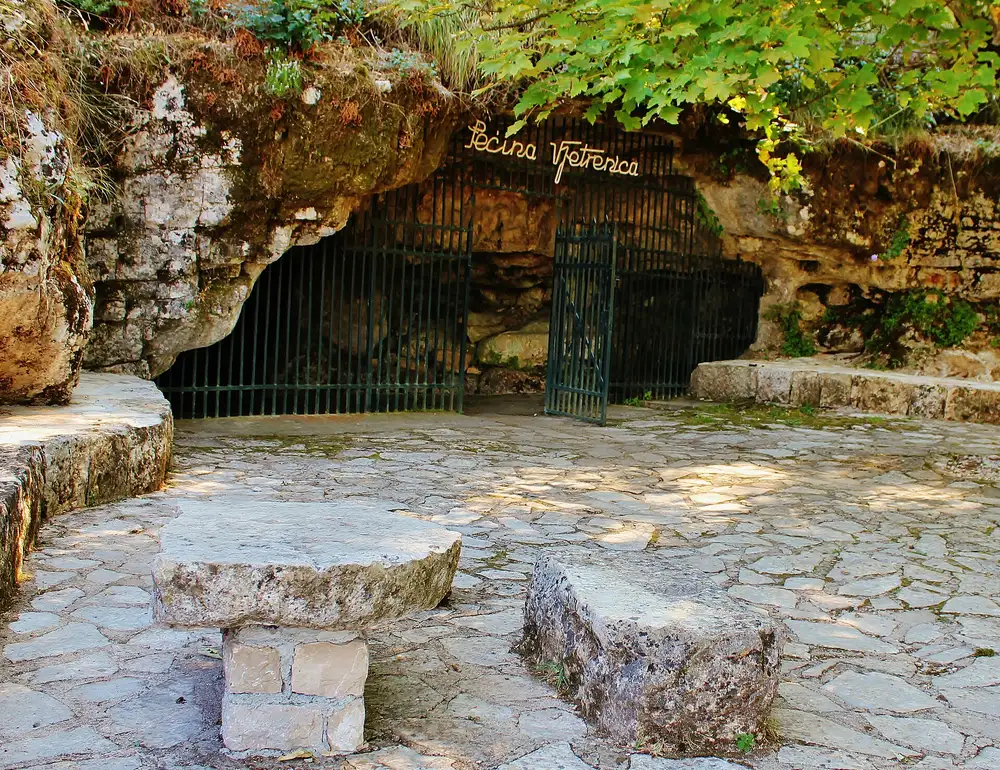
Don’t get back in the car straight after. Zavala monastery stands 300 m back west of the cave mouth, its church tucked against the cliff behind a retaining wall you walk through by tunnel. Give it fifteen minutes for one thing: the church was frescoed in 1619 by Georgije Mitrofanovic, a monk from Hilandar, and those paintings are generally reckoned the finest fresco work to survive anywhere in the country from the Ottoman centuries. It’s also where Basil of Ostrog took his monastic vows, and it ties the two halves of this drive together in one line: the earliest written mention of the place, in 1514, records an abbot buying a vineyard. People have made wine on this road for five centuries and the paperwork proves it.
Two more things here that nobody signposts. In front of Vjetrenica and neighbouring Orlovica lie medieval graves carrying around eighty stones between them, so you get stecci and a World Heritage cave within a few minutes of each other. And the spring called Lukavac, directly below the entrance, runs on water traced to the lower levels of Vjetrenica itself. Popovo polje has no permanent springs at all, only intermittent ones governed by a dolomite barrier between the field and the sea: they pour after a long spell of rain and all but stop in a dry August.
The cellars: what the Wine Route really is
The Herzegovina Wine Route is a real organisation rather than a slogan on a brown sign. Set up in 2007 by the regional tourism board with EU funding and a member of the Council of Europe’s Iter Vitis since September 2022, it covers around 30 wineries across six wine towns: Mostar, Capljina, Citluk, Ljubuski, Stolac and Trebinje. Two of those are on this loop, which is the argument for driving the eastern arm rather than the crowded Mostar-Citluk end.
You’re here for two cellars. Tvrdos monastery is the atmospheric one, about 7 km and ten minutes out of the centre along the Trebisnjica: monks have made wine here for centuries, one vaulted cellar goes back to roughly the 15th century, and the shop pours the monastery’s Zilavka and Vranac. Dress for it - this is a working monastery with a dress code, no bare shoulders or shorts, and turning up in beach clothes after a hot day in the car is the one way to get turned around at the gate. Podrumi Vukoje 1982, on the edge of Trebinje, is the polished counterpart, a family winery with cellars eight metres underground, a tasting room, a restaurant and a rooftop terrace. Between them you get both ends of Herzegovinian wine in one evening.
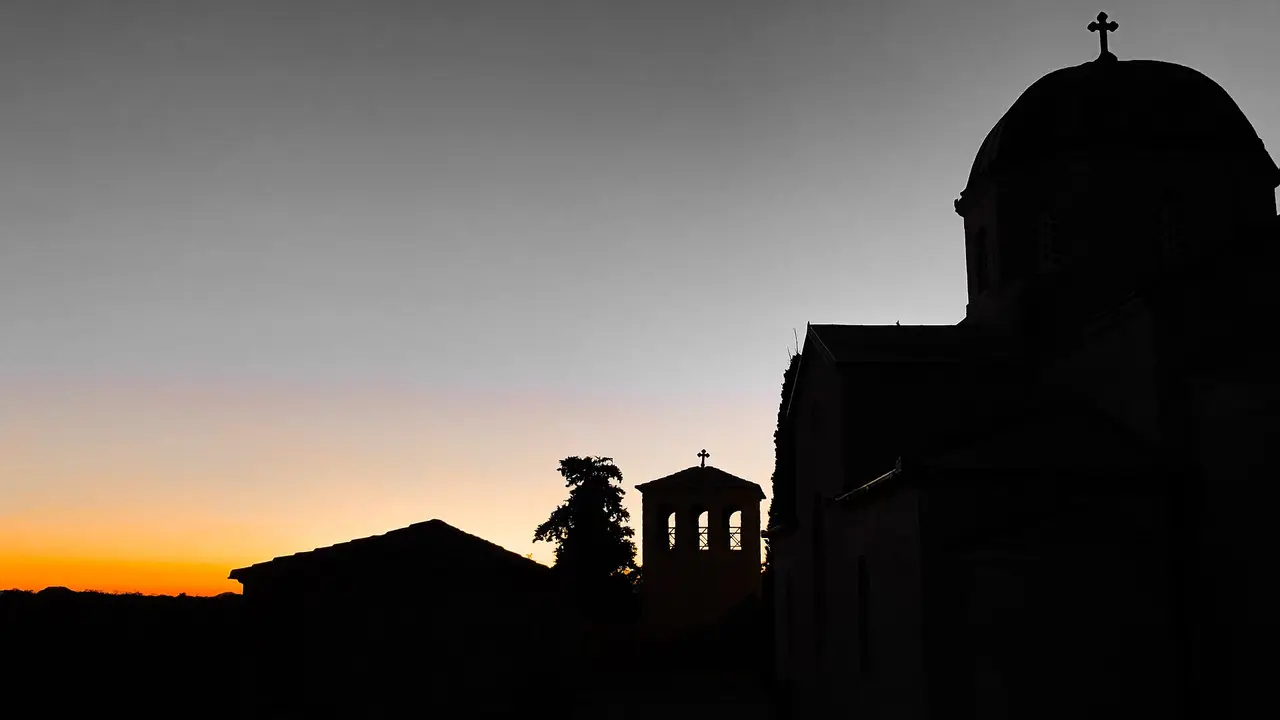
Neither publishes its hours or tasting fees reliably and both move them with the season, so message ahead rather than trusting a walk-in, especially for a group or a meal. Our Herzegovina wine guide explains why Blatina can’t pollinate itself and what Zilavka tastes like off this limestone.
Where to sleep in Trebinje
Trebinje is the right place to break the loop, and the cellars are only half the reason: the square outside the old town walls is roofed by plane trees big enough to cool the whole space in August, and the evening here’s a slow lap of it with everyone else in town. Book the room rather than trusting to luck, because the town is small and fills from the Dubrovnik side, only about 30 km away over the border.
Day two: the road back to Mostar
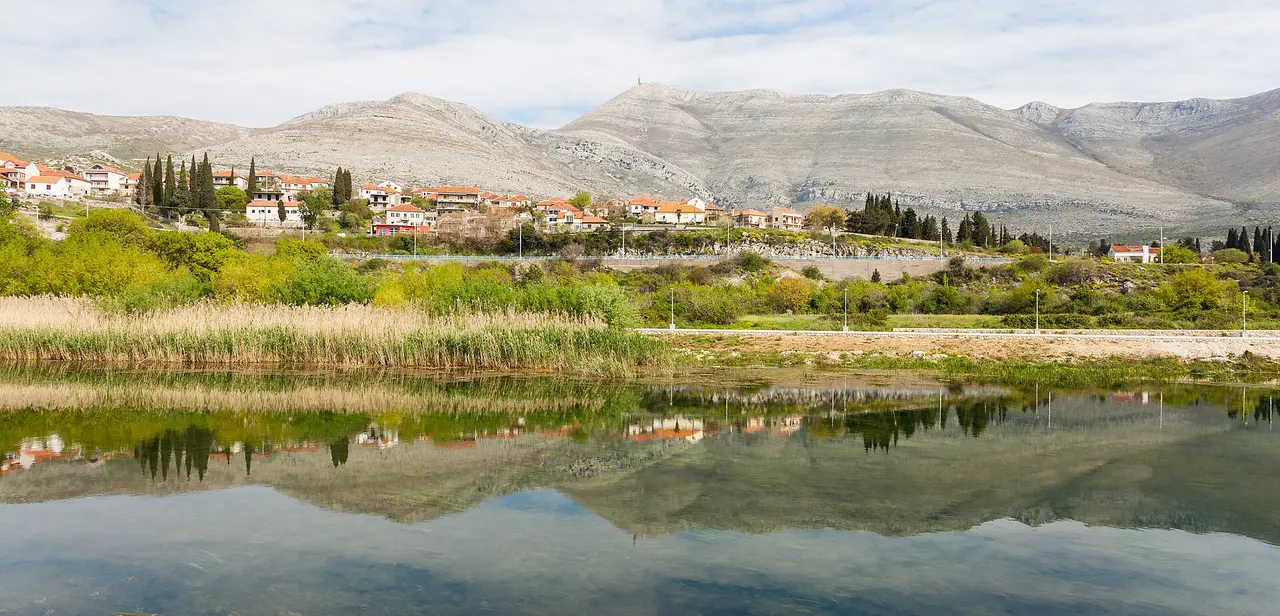
Give the second morning to whichever cellar you missed, then point north. The two ways home aren’t the same drive. Back along Popovo polje is about 115 km and a little over two hours, and it lets you pick up anything you skipped on day one. The higher inland line by Bileca and Nevesinje is longer at roughly 140 km and about two hours forty (our own routing check, August 2026), and it’s worth the extra half hour only if you want empty highland road rather than a second look at the polje.
With a third day, the wild west road trip runs the other way out of Mostar, onto the Blidinje plateau and out to the wild horses above Livno: mountains where this one is karst and cellars, and the two barely overlap.
What it costs, and what to carry
Entry to all three ticketed stops comes to 58 KM per adult: 8 KM at Radimlja, 25 KM for the Hutovo Blato combined ticket, 25 KM at Vjetrenica, about 30 euros in total. All three were checked in August 2026 and none of the operators dates its own price list, so treat them as the current ask rather than a guarantee and confirm before you drive. Radimlja is the loose one: the public institution that runs it publishes 8 KM, recent visitors report walking in without paying at all, and older guides still quote 4 KM, so you’ll want to carry 10 KM in cash and take whatever happens at the hut. Everything on top - fuel, the bed, dinner, tastings - depends on what you book, and a realistic all-in for two days starts around 120 euros a head.
A few things that save the day:
- Cash in convertible marks. All three ticket offices and most small cellars want KM. Euros are accepted in tourist-facing places at a rounded rate that costs you money, and cards thin out fast off the M17.
- A jacket in the car, even in July. Vjetrenica sits at 11.6 C year round while Stolac is baking outside.
- You cross an entity line and never notice. Zavala is in the Federation, Trebinje in Republika Srpska. No checkpoint, no paperwork: the signs switch to Cyrillic and the coffee stays the same price.
When to drive it
September and October are the best weeks of the year for this. The harvest runs through both months, the light goes long and low over Popovo polje, and the heat has left the limestone. The trade-off: winemakers are flat out, so you’ll want to book further ahead than you would in spring.
Late April to June is the other sweet spot, greener and quieter, with the wetland at its most active. July and August work if you start early and hand the middle of the day to the shade. Winter is the season to avoid, and the reason is the hours rather than the weather: Radimlja closes at 15:00 and takes weekends off from 21 October, and Vjetrenica drops to five departures between 10:00 and 14:00. There isn’t enough daylight left to hold the loop together - don’t try to force it. Our guide to the best time to visit Bosnia breaks the year down month by month, and things to do in Mostar covers the town you drove away from.
Route day by day
- Days on the road
- 2
- Distance
- ≈290 km
- Budget from
- 120 EUR
- Best season
- April, May, June, September, October
The route at a glance
-
Mostar
Route startstop ≈0 min
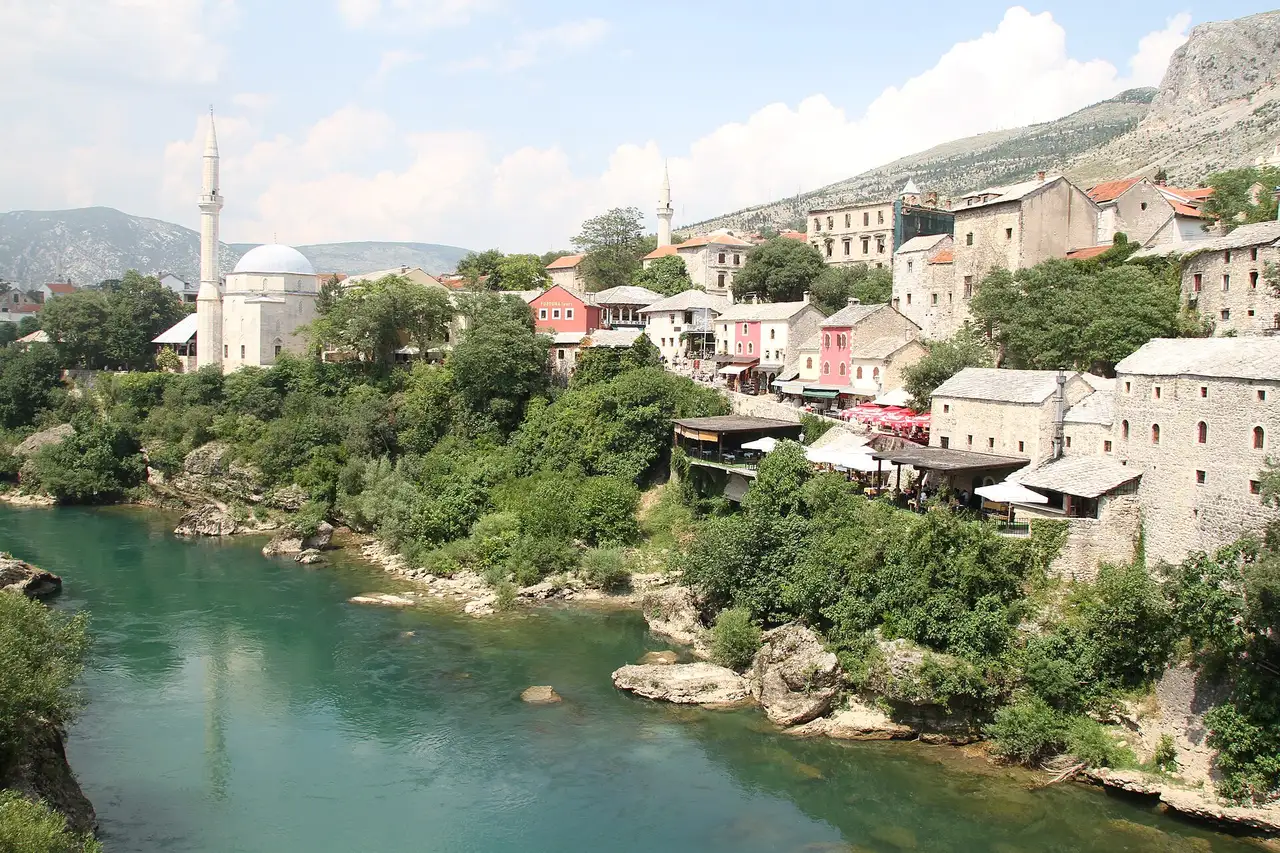
Start point. Draw cash in convertible marks before you leave: every ticket office and small cellar on this route wants KM, and card machines get unreliable the moment you turn off the M17. Leave by 08:30 if you want the boat and the cave on the same day.
Photo: Bjoertvedt / Wikimedia Commons, CC BY-SA 3.0 ( source) -
Radimlja necropolis, Stolac
47 km from the startstop ≈45 min
133 medieval stecci in a field beside the road 3 km west of Stolac, part of a UNESCO World Heritage property since 2016. Ticket 8 KM, parking and toilets included. Summer hours 07:00-18:00 on weekdays, 09:00-17:00 at weekends; in winter it closes at 15:00 and the operator says it does not work at weekends.
Photo: Matěj Baťha / Wikimedia Commons, CC BY-SA 3.0 ( source) -
Hutovo Blato (Karaotok)
82 km from the startstop ≈120 min
Ramsar wetland on the left bank of the Neretva. The reason to stop is the boat: a flat-bottomed launch from the Karaotok pier into the reed channels. Combined ticket 25 KM. Departures are scheduled rather than on demand, so phone +387 36 814 716 the day before. Motel and restaurant at the pier for lunch.
Photo: Ziegler175 / Wikimedia Commons, CC BY-SA 3.0 ( source) -
Vjetrenica cave and Zavala
133 km from the startstop ≈120 min
The cave mouth sits 300 m east of the middle of Zavala village on the rim of Popovo polje, UNESCO-listed in July 2024 for underground biodiversity. Tours leave on the hour and last 40 to 60 minutes; 25 KM for foreign visitors. It is 11.6 C inside, so carry a jacket. Zavala monastery is a short walk from the ticket office.
Photo: InDoRoN / Wikimedia Commons, CC BY-SA 3.0 ( source) -
Trebinje and the cellars
175 km from the startstop ≈240 min
Overnight stop. Tvrdos monastery is about 7 km out of town on the Trebisnjica, with a vaulted cellar dating to roughly the 15th century and a shop that pours Zilavka and Vranac - it is a working monastery with a dress code, no bare shoulders or shorts; Podrumi Vukoje 1982 sits on the edge of town with a tasting room, a restaurant and a rooftop terrace. Phone or message both before you turn up.
Photo: GoranR1s / Wikimedia Commons, CC BY-SA 4.0 ( source) -
Mostar (return)
290 km from the startstop ≈0 min
Back north on the second afternoon, about 115 km and two hours from Trebinje whichever line you pick. Total for the loop is roughly 290 km, almost none of it motorway.
Photo: Diego Delso / Wikimedia Commons, CC BY-SA 3.0 ( source)
Route map
The map with stops loads on click - to keep the page lightweight.
The map didn’t load. Check your connection and refresh the page.