Hutovo Blato Nature Park: Birdwatching by Boat
Hutovo Blato near Capljina: an hour-long boat safari through the reed channels, the best wetland birding in Bosnia, 2026 prices and how to get there.
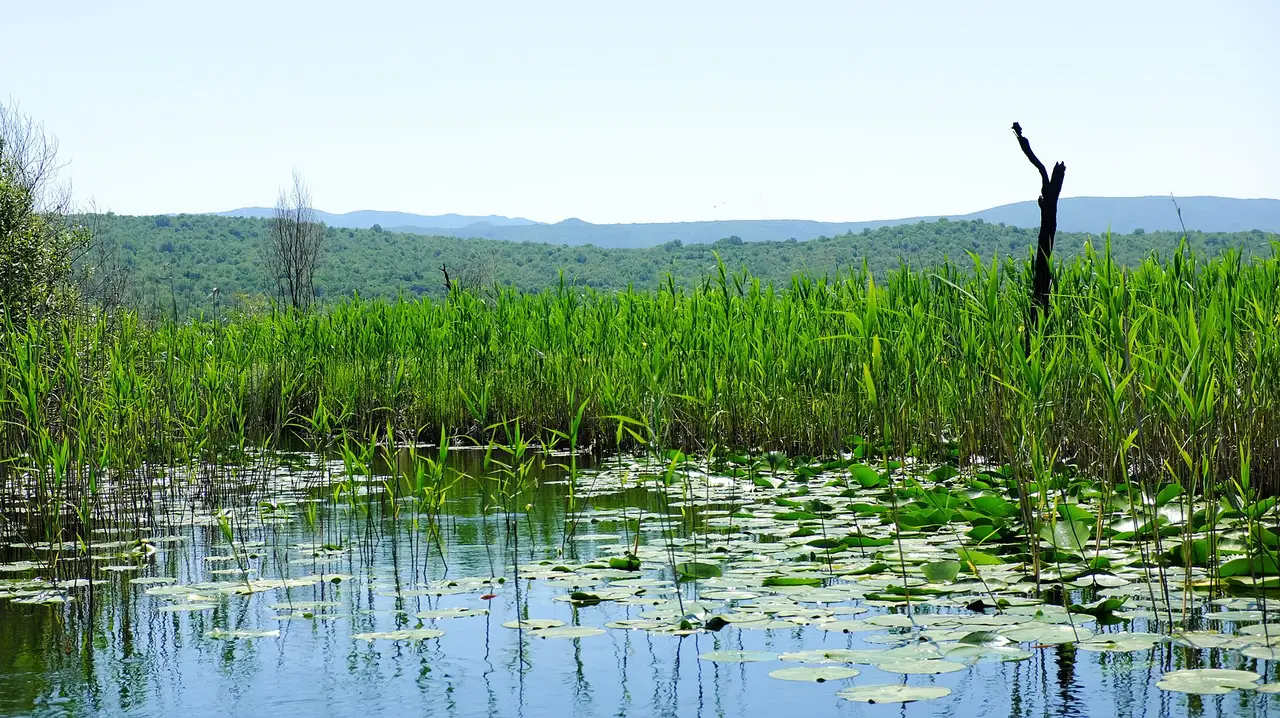
Hutovo Blato is a Ramsar-listed wetland three quarters of an hour to an hour south of Mostar. The reason to come is an hour on the water: a flat boat leaves the pier at Karaotok, noses into a reed channel, and drops you into a landscape that has no business existing in the middle of Herzegovina’s bare limestone. Entry is 5 KM, the scheduled boat ride is 20 KM, and a combined ticket covering both plus the interpretive centre is 25 KM on the park’s official 2026 list. Bring binoculars, or borrow someone else’s.
The park covers 6,144 hectares on the left bank of the Neretva by its own reckoning, though the figure isn’t settled: the official site quotes the area of the 1954 ornithological reserve, while Parks Dinarides and Wikipedia give the present park as 7,411 hectares, about 74 km². Either way, almost everyone drives straight past it on the way to the coast. That’s the whole opportunity.
A marsh in the middle of the karst
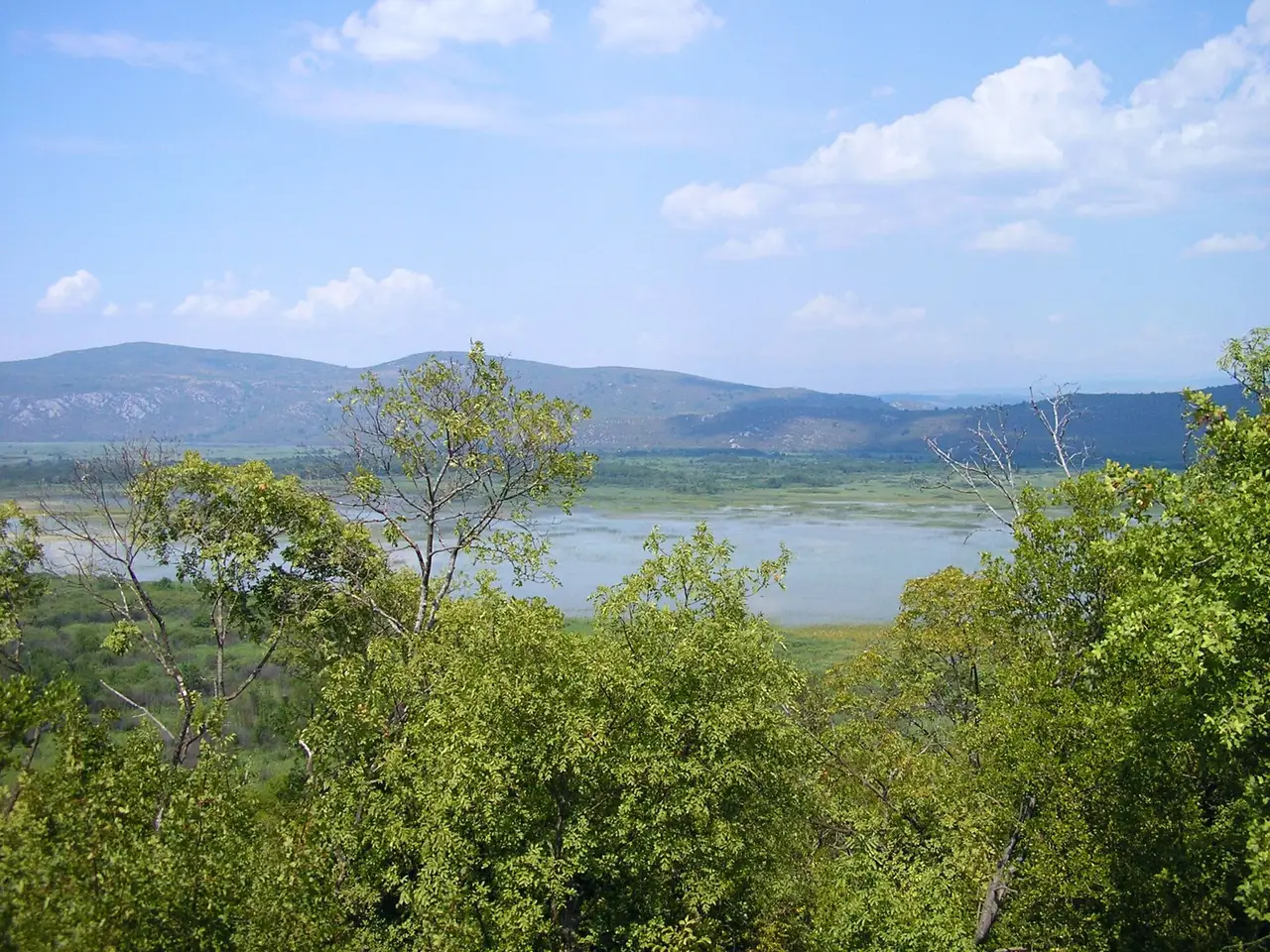
Herzegovina south of Mostar is stone: white ridges, thin scrub, vineyards squeezed into pockets of red earth. Then the road drops and there’s water everywhere, in six large lakes (Deransko, Jelim, Drijen, Orah, Škrka and Svitava) joined by a web of channels. Some of the lake beds are below sea level, with Jelim reaching 18 m under it.
None of this comes from a river running down off the mountains. The marsh is fed from underneath, by the karst aquifer that drains the limestone all around it, which is why the water is cold, clear and startlingly constant in a region that otherwise bakes dry every summer. That’s what keeps the lakes full when the hills around them look bone-dry. The park was protected in 1995 and listed as a Ramsar wetland of international importance in 2001. Before that it was best known as hunting and fishing country, and Karaotok, where you now buy a ticket, was the hunting base.
The boat safari, and what an hour buys you
The park calls it a photo safari, which oversells the safari and undersells the photography. The route is a loop from the Karaotok pier: out along the Sunčani channel for about 1,100 m, down the Krupa for 2.5 km and roughly half an hour, then back through the Lopoča channel and its 800 m of reeds. The whole circuit runs about an hour. Boats take up to 25 people, so a full one is a coach party and a half-empty one is close to silent.
Two extras are worth knowing about on top of the ticket prices in the intro: the interpretive centre is 3 KM on its own, and a family ticket for two adults and two children is 50 KM, with under-sevens free. VAT is included and the park reserves the right to change the numbers, so treat these as the July 2026 position rather than a promise.
The thing that catches people out is the timetable. Departures are scheduled, not on demand, and they move with the season, so phone +387 36 814 716 or email the park before you drive out - don’t assume there’ll be a spare seat waiting. If you want a private boat, a longer run down towards Drijen, or a guided birdwatching trip rather than the standard loop, those are group bookings that need at least a day’s notice and are quoted on request. Turning up at 16:00 in October hoping to jump on a boat is how people end up looking at a locked pier.
The birds, and the argument about how many
Hutovo Blato is one of the more important bird wintering grounds in Europe, and the ICBP recognised it as an internationally significant habitat back in 1998. How many species have been logged here’s genuinely disputed, and the surprise is which way round it goes. The park’s own materials are the conservative ones: citing recent LIFE-project survey work, they put it at 163 species from 39 families, of which 53 are wintering birds. Wikipedia and some birding resources go with 240 or more, from the same 39 families. Survey method and time window explain most of the gap. Either figure makes this the richest wetland birding in the country by a distance, which is the part nobody disputes.
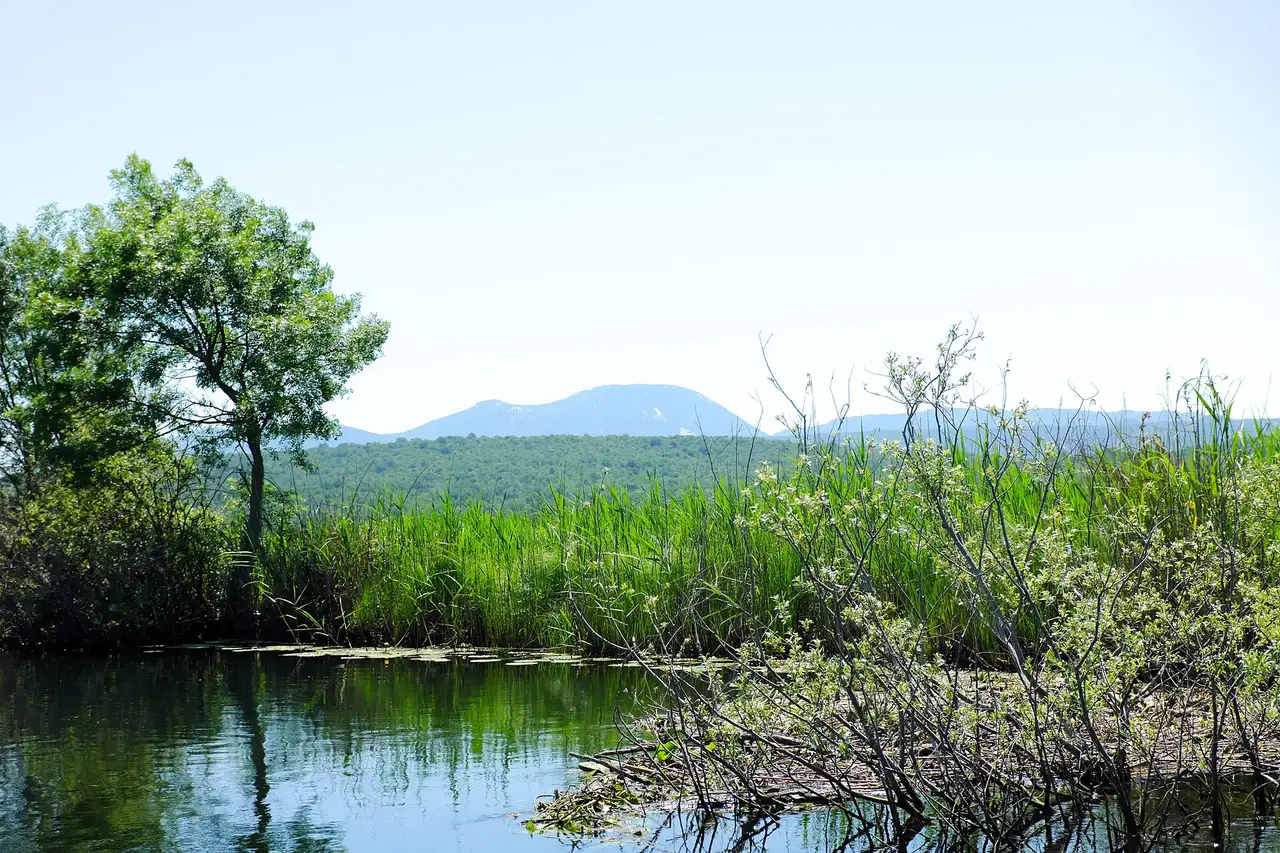
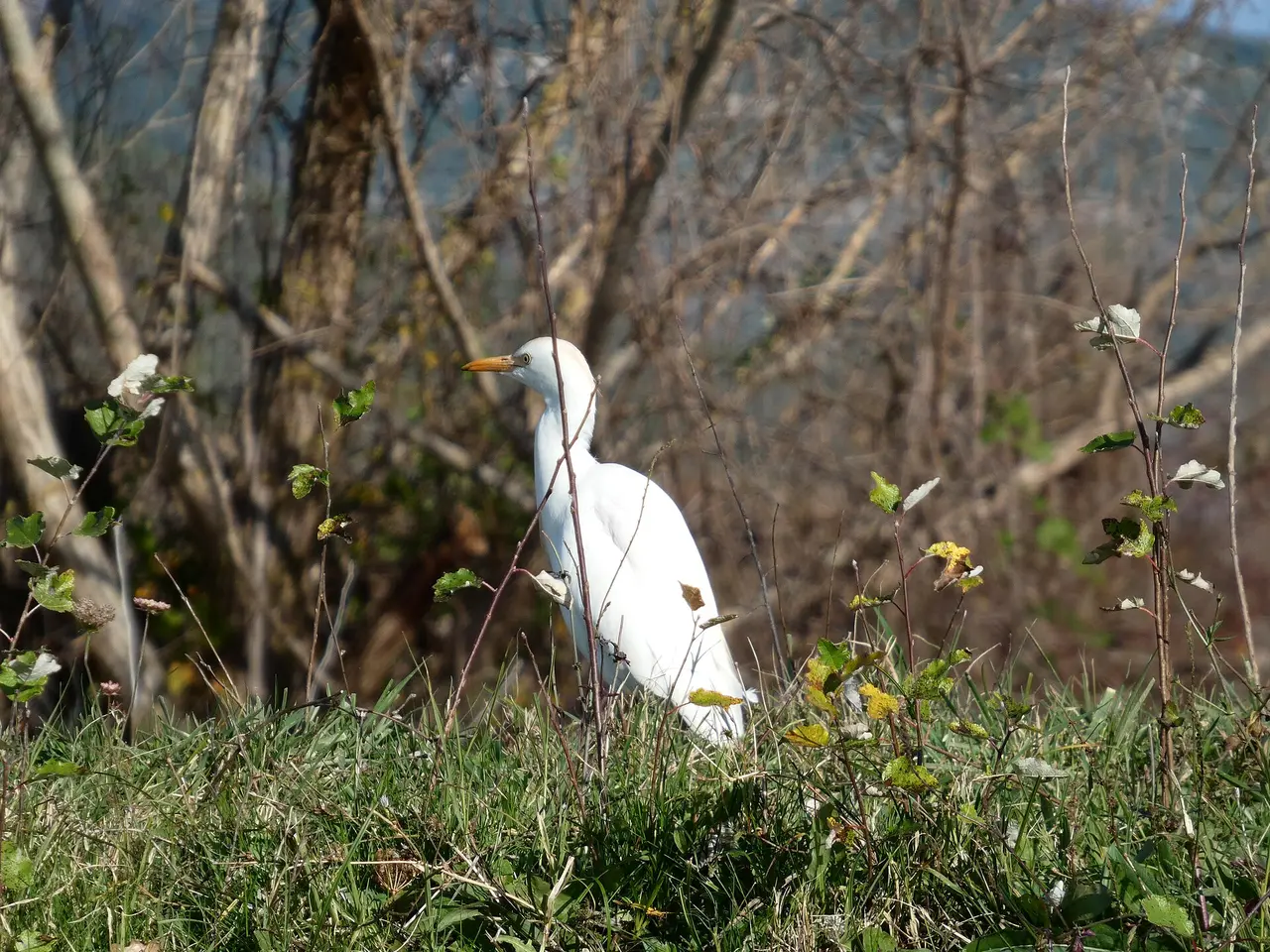
What you see from a boat in summer is herons and egrets standing in the shallows, coots and ducks scattering ahead of the bow, and a kingfisher if you’re lucky and quiet. Spring and autumn migration is the serious business, when the lakes fill with waterfowl and the numbers are counted in tens of thousands rather than dozens. The park has built observation hides and marked nature trails; access to the hides is arranged through the visitor centre rather than published on the price list, so ask when you book.
The river that runs backwards
The best fact about this place is one nobody puts on a poster. The Krupa, the 9 km river your boat follows, averages 5 m deep, has no proper source of its own, and flows in both directions. It runs the usual way from its head to its mouth on the Neretva, but when the Neretva rises the bigger river pushes the Krupa back up its own bed and the whole marsh fills in reverse. That’s the mechanism that keeps Hutovo Blato wet, and it’s rare enough in Europe to be the park’s real claim to fame.
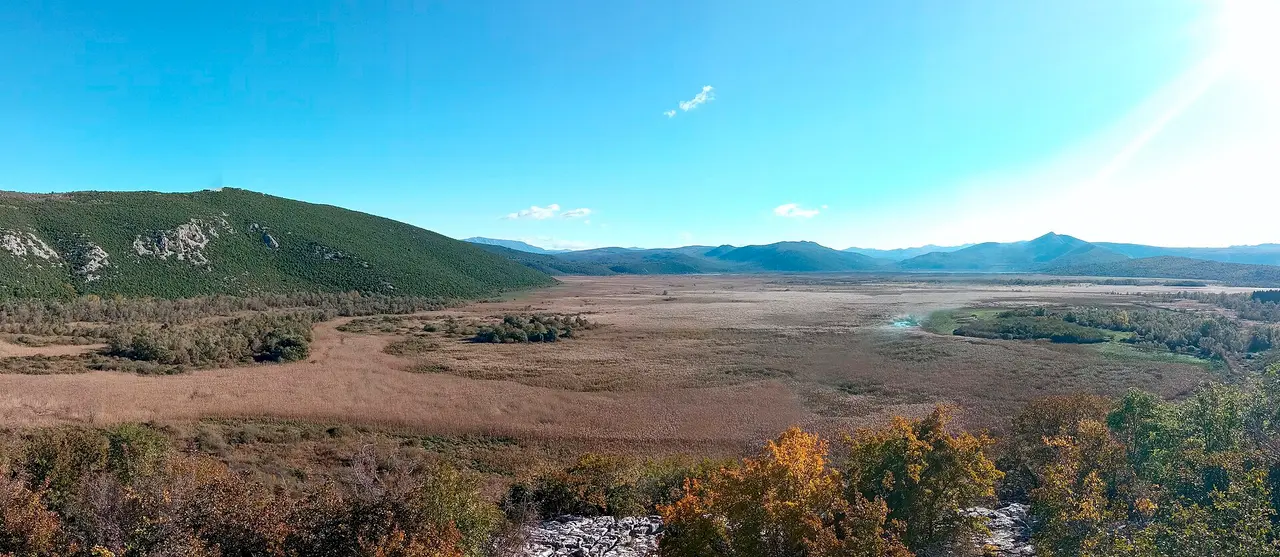
It also explains why the place looks so different month to month. After heavy rain the lakes join into one sheet of water. In a dry August the same view is a plain of reeds with channels cut through it. Neither version is wrong, and the second one photographs better than you would expect.
When to come
Spring and autumn are the right answer, for the migration and for the light. April to early June gives you nesting birds, green reeds and bearable temperatures; September and October bring the return passage and the softest evenings of the year out here. Winter is the serious birding season, cold, quiet and busy with waterfowl.
Midsummer is the compromise most travellers end up making, since they’re already in Mostar. Go early or late in the day: this is the hottest corner of the country, with average July and August highs in Mostar sitting around 33C and plenty of days going past that, so the middle of the day is glaring and the birds are sensibly hiding. Late afternoon boats also drop you at the Karaotok restaurant at exactly the right hour. Mosquito repellent isn’t optional in the warm months. Our guide to the best time to visit Bosnia sets out the seasons countrywide.
Fitting it into a Herzegovina day
Hutovo Blato slots neatly onto the southern loop out of Mostar, and it’s the piece most itineraries leave out. Head down the M17 and you pass Počitelj, the Ottoman hilltop town, about 20 minutes before the turning; Kravice waterfalls are a short detour west of Čapljina; Blagaj and its dervish house sit just outside Mostar on the way back. A workable day: Blagaj early, Počitelj mid-morning, Kravice for a swim, Hutovo Blato for the late boat. Our best day trips from Mostar guide compares the options if you only have time for one.
The park is also on the inland road towards the coast, so it works as a break on a drive to Neum or on to Dubrovnik, rather than as a detour you have to justify.
The same turning is the start of the road east into Popovo polje, which is how you reach Vjetrenica cave at Zavala - Bosnia’s UNESCO-listed cave and one of the richest on earth for underground species. Don’t try to bolt it onto the day above: the cave is roughly another 51 km and 80 minutes east on slow karst road (our own routing check, August 2026), the tour is ticketed and guided, and from December to February the last one leaves at 14:00. Hutovo Blato plus Vjetrenica is a full day of its own, and a good one - see our East Herzegovina wine route for how to pair both with Radimlja and a night in Trebinje.
Getting there and practicalities
Karaotok is roughly 40 to 50 km from Mostar depending on the route, so 45 minutes to an hour behind the wheel: south on the M17 past Počitelj, through Čapljina, then follow the brown signs. No bus serves the park. Public transport gets you as far as Čapljina, after which it’s a taxi each way, so most visitors either drive or hire a driver for the day. Renting is straightforward if you would rather do it yourself; our guide to car rental in Bosnia covers the paperwork, including the cross-border letter you need if you picked the car up in Croatia.
Bring cash in convertible marks, binoculars, a hat and repellent. There’s a motel and restaurant at Karaotok where boats finish, which is the sensible place for lunch since there’s nothing else nearby. If you’re basing yourself in Mostar, the Mostar guide covers the town end of the trip.
Half a day, 25 KM, and you get the one landscape in Herzegovina that nobody expects. For a country sold on waterfalls and old bridges, a silent reed channel with a heron in it’s a completely different afternoon.
Photos
On the map
The map loads on click - to keep the page lightweight.
The map didn’t load. Check your connection and refresh the page.
Admission and opening hours
- Admission price
- Official 2026 park price list: basic entry 5 KM per adult, children under 7 free; interpretive centre 3 KM; scheduled boat ride 20 KM; combined ticket covering entry, interpretive centre and the scheduled boat ride 25 KM; family ticket (2 adults + 2 children) 50 KM. VAT included. Group boat trips must be booked at least a day ahead; birdwatching tours and long rides are priced on request.
- Opening hours
- The visitor centre and pier are at Karaotok. Boat departures are scheduled rather than on demand, and the timetable shifts with the season - phone +387 36 814 716 or email info@hutovo-blato.ba to confirm before you drive out, especially outside July and August.
Prices are in convertible marks (KM / BAM) and the park notes it may adjust them. Bring cash. There is a motel and restaurant at Karaotok for lunch after the boat.
Details checked: July 23, 2026
Distance
- Mostar ≈45 km · ~45 min to 1 h by car South on the M17 past Počitelj to Čapljina, then signposted to Karaotok. No bus serves the park itself; the nearest public transport is Čapljina, then a taxi.
- Dubrovnik ≈90 km · ~1.5-2 h by car, plus border waits Reachable on the inland route via Neum and Čapljina, which makes it a plausible stop on a Dubrovnik to Mostar drive. Budget extra for the Neum and Doljani crossings, which back up badly in summer.
Read also

What to see · 15 min read
Via Dinarica Bosnia: Huts, Stages & Logistics
Verified · September 12, 2026Plan the Via Dinarica White Trail in Bosnia: 12 stages, 334 km, hut booking, trailheads, closures and three workable section packages.

What to see · 10 min read
Jablanica: Neretva Bridge & Roast Lamb Stop
Verified · September 4, 2026Jablanica on the Sarajevo-Mostar road: Battle for the Wounded museum (5 KM), the 1943 bridge, roast lamb lunch. Hours, parking, how long to stop.

What to see · 8 min read
Prokoško Lake: Shepherd Huts High Above Fojnica
Verified · September 3, 2026Prokoško on Vranica at 1,636 m: katuni, gate prices for foreigners, no swimming, and the 2026 asphalt climb from Fojnica.

What to see · 11 min read
Franz Ferdinand's Sarajevo: Latin Bridge & 1914 Site
Verified · August 29, 2026The Latin Bridge corner in Sarajevo where Franz Ferdinand was shot in 1914: what happened, the Museum of Sarajevo 1878-1918 inside, hours and tickets.