
Vjetrenica Cave: Bosnia's UNESCO Underground World
Vjetrenica in Zavala: UNESCO-listed since 2024, 25 KM tickets, hourly 40-60 min tours, 11.6 C inside, and how to drive in from Trebinje or Mostar.
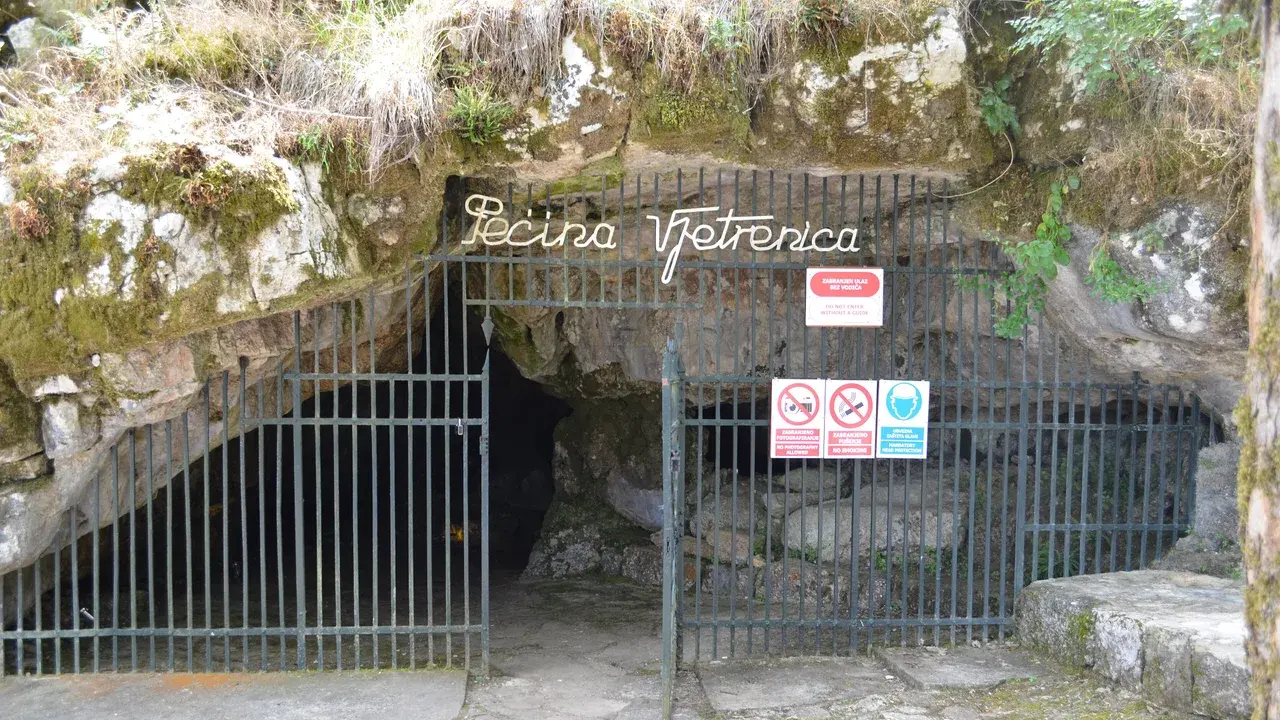
Vjetrenica is a show cave at Zavala, in the far south of Herzegovina, and visiting it means a guided walk of about 600 m that takes 40 to 60 minutes. Tours leave on the hour, seven days a week, a foreign adult ticket is 25 KM (about 13 EUR), and the drive from Trebinje is 41.6 km. UNESCO put it on the World Heritage List in July 2024, which makes it the first natural site Bosnia and Herzegovina has won on a nomination of its own.
Two things catch people out. Plenty of travel write-ups still say the cave shuts for the winter; the operator publishes a December-to-February timetable with five departures a day, and what genuinely changes in winter is the water level deep inside, not the opening season. The other is temperature. It’s 11.6 C in there whatever the thermometer says outside, so on a 35 C afternoon in Popovo polje you’re walking into a drop of more than twenty degrees. People turn up in a vest and shorts and come out shivering; put a fleece in the car before you set off.
What UNESCO actually listed
The property is registered as Vjetrenica Cave, Ravno, reference 1673, inscribed under decision 46 COM 8B.4 at the Committee’s 46th session in New Delhi in July 2024. It went on the list under criterion (x) alone - biodiversity. Not scenery, not geology, not archaeology; what the world protected here’s mostly invisible to a visitor.
The property covers 413.97 ha, the cave itself 22.87 ha, inside the Vjetrenica-Popovo Polje Protected Landscape. UNESCO gives its length as 7,324 m and the operator says 7,014 m; the sources simply differ. The main channel runs about 2.47 km, and from the shape of the terrain geologists reckon the whole system may extend 15 to 20 km from the entrance - far enough to reach the Adriatic, 12 km away in a straight line.
Bosnia and Herzegovina now has five World Heritage properties - Mostar’s Old Bridge area, the bridge at Višegrad, the stećci tombstone graveyards, a share of the transnational beech forest listing and Vjetrenica - and Vjetrenica is the only natural one it nominated and won on its own.
The “most biodiverse cave in the world” claim, checked
The operator’s banner says “World’s #1 in biodiversity”. The honest version is more interesting.
UNESCO’s evaluation counts more than 230 taxa here, including 180 animals, 14 fungi and 35 protists. 93 are troglobionts - creatures that live nowhere but underground - and 40 were first described to science here, making Vjetrenica their type locality. It also holds the world’s only subterranean tubeworm, Marifugia cavatica.
But the peer-reviewed 2023 inventory that produced the count of 93 (Delić and colleagues, in Diversity) says in its own abstract that this makes Vjetrenica the second richest locality in subterranean biodiversity in the world - counting the whole Vjetrenica Cave System, which takes in neighbouring Bjelušica and the Lukavac spring, not the show cave alone. First place goes to Postojna-Planina in Slovenia, with 116. Second on the planet needs no marketing help.
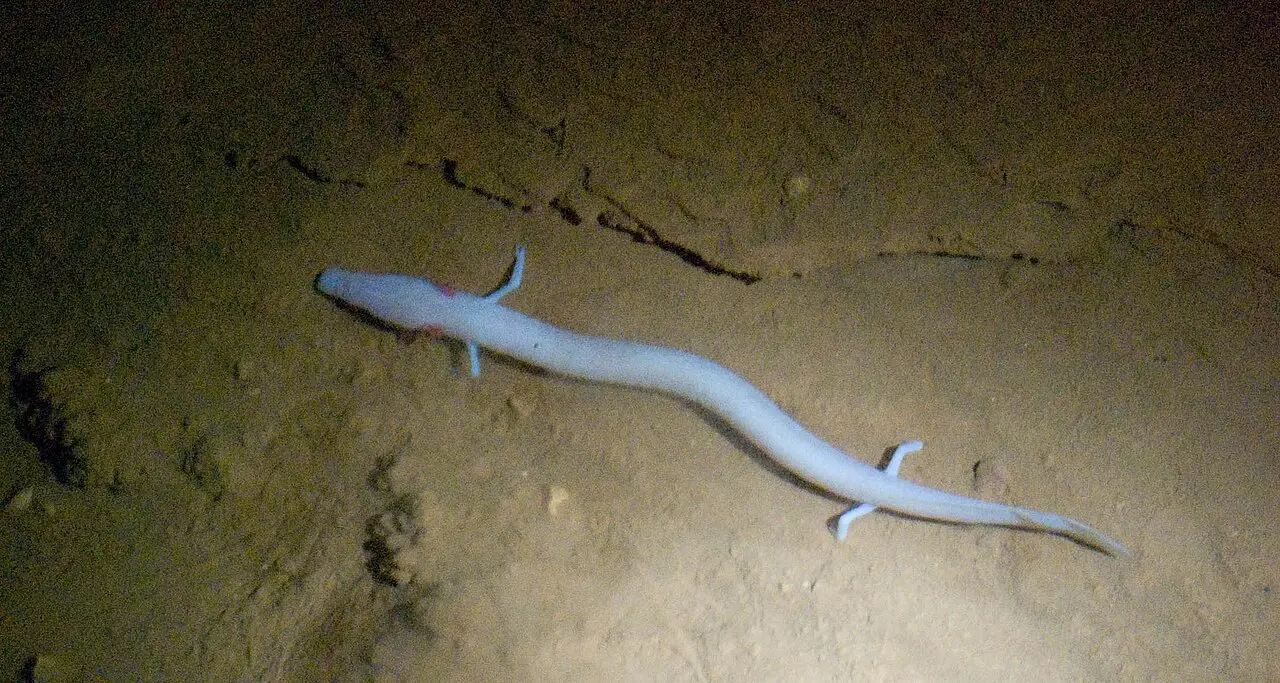
Manage your expectations about the olm. The blind salamander does live here - the Trebinje tourist board bills it as the cave’s headline resident - but it stays in the submerged channels well past where you’re allowed to walk. Seeing one on a standard tour is luck, not itinerary. What’s definitely come out of Vjetrenica is older: the remains of a prehistoric cave bear, and a complete leopard skeleton found in the side passage now named Leopardov kanal after it.
Why it’s called the wind cave
Stand at the gate on a hot day and cold air pours out hard enough to move your hair. That’s the name: vjetrenica means blowhole, or wind cave.
It isn’t weather. Deep fissures above let warm outside air sink into the system in summer; it cools to cave temperature and pours back out of the main mouth. The operator’s pages record airflow of around 10 m/s, with a peak of 13 m/s on one page and 15 m/s on another - they don’t agree, so treat it as “startling” rather than as a measurement. In winter it reverses and air is drawn in; in spring and autumn it can change direction more than once a day, and if the deep siphon floods the circulation stops altogether.
None of this is news. The operator traces the first written mention to Pliny the Elder’s Historia naturalis, published in AD 77, which arguably makes it the oldest continuously known tourist attraction in Bosnia.
What you actually see in those 600 metres
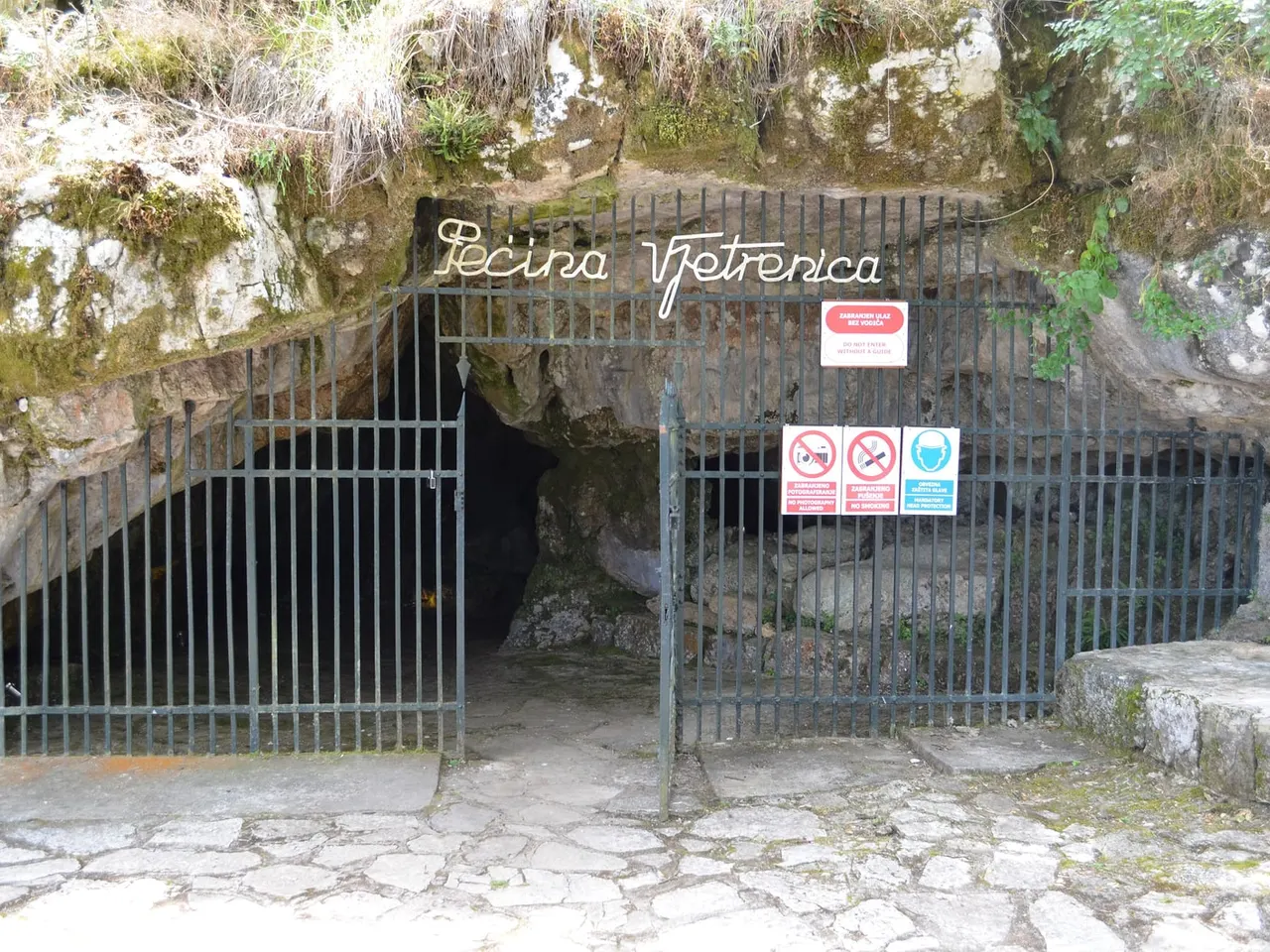
The path is concrete, railed and electrically lit: fitted out for visitors before 1940 and properly wired in 1964, over a stretch of 1,050 m. Helmets are handed out at the ticket office - visitor photographs show the day’s supply stacked outside the door - and the gate sign spells out that you don’t go in without a guide.
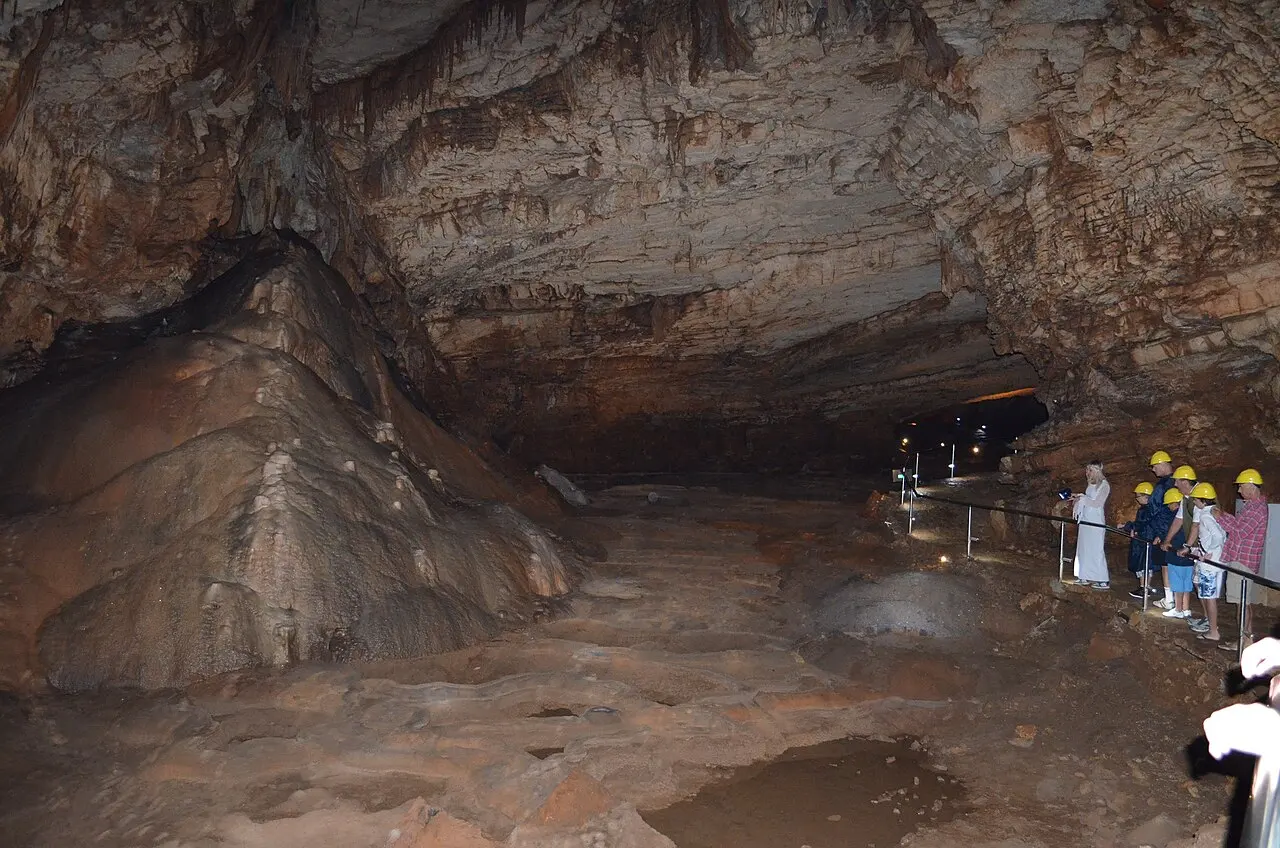
The first 150 m are low, and the entrance hall - about 40 m of it - ends at Vrata, “the Gate”, a round hole roughly 2.5 m across, scoured by water. Past it the halls widen into the Forked Hall and then the Crossroads, over 100 m long. Somewhere in there’s Vilino guvno, the fairies’ threshing floor, and that’s where the legends cling to it: Jakov Sorkočević wrote in 1582 that locals said nymphs, vile in their own language, danced and played music in the cave at night.
Every marker the guides quote counts metres from the entrance, not from the last hall. Drip columns stand at about 110 m; the pjati, cascading rimstone terraces that look like stacked plates, come after them, along with the Golden Hall, the operator’s signature room; and the third calcite lake at 480 m is the first permanent water you meet. Further on, a cluster of stalagmites on clay is called the Turkish cemetery, because they look like Ottoman gravestones. The tourist section finishes at Hajdučki stol, an outlaw’s table of stone with seats around it, and you turn back.
Beyond the barrier is where the science lives. At 1,003 m the ceiling drops to 120 cm at the siphon and that stretch drowns entirely in winter. Veliko jezero at 1,250 m is 180 m of black water, the largest surface in the cave, and winter floods have been known to swamp the boats left on it. Karel Absolon, the Czech scientist who worked here from 1912 to 1914, found almost every channel we know today; the biggest side passage carries his name.
Tickets, times and the rules that matter
The operator’s full tariff and its seasonal timetable are reproduced in the panel at the foot of this page. Short version: 25 KM for a foreign adult, less for students, pensioners and children. Departures are hourly, and the season shifts both ends of the day - 10:00 to 14:00 from December to the end of February, 09:00 to 18:00 at the height of summer. It’s the operator’s own timetable, so ring +387 36 891 034 the day before a December or January drive and you can’t be caught out.
The rules are worth reading before you drive out, because one of them changes what you pack: long trousers and sturdy shoes, with no flip-flops and nothing on a slippery sole. Wet limestone under artificial light is exactly as treacherous as it sounds. The operator also states plainly that it strongly advises against the visit for children under four, for anyone claustrophobic, and for anyone with difficulty walking, and there’s no positive accessibility claim anywhere on its pages. If that matters, phone before you commit to the drive.
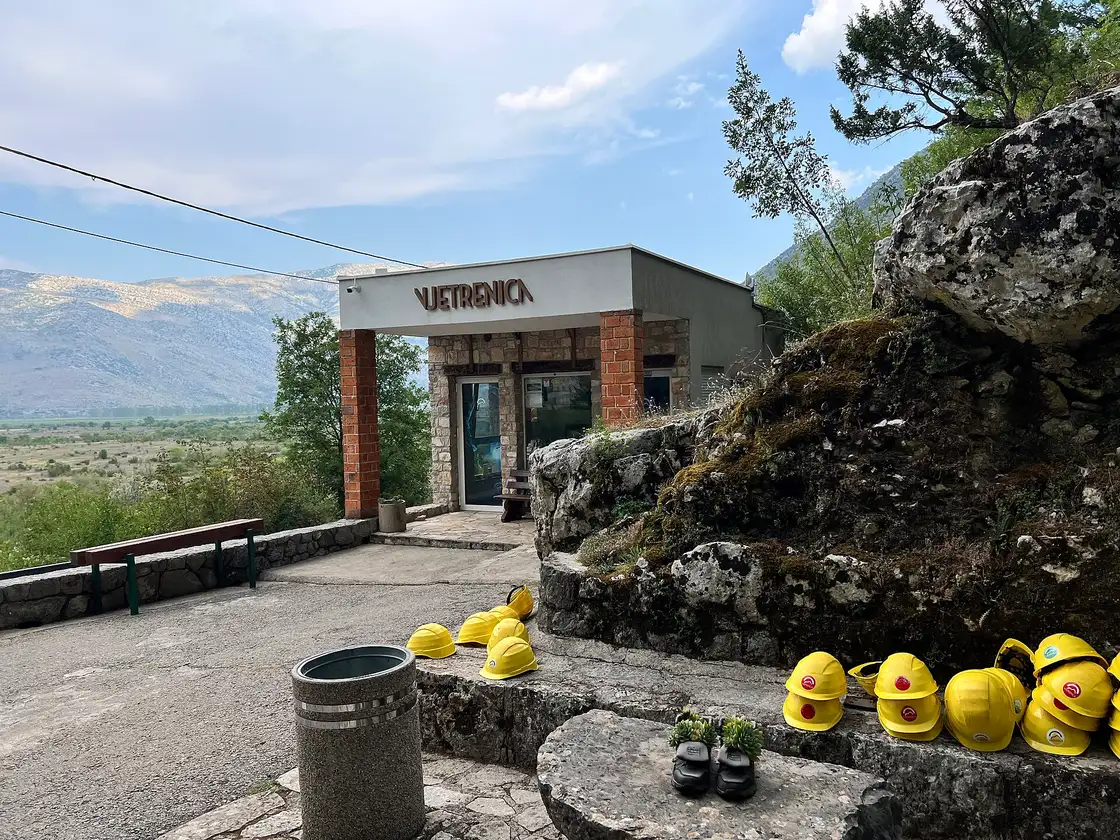
A pair of details the operator doesn’t spell out. Prices are in convertible marks with no published word on cards or euro, so carry KM in cash - the same advice we give for the cellars on the Herzegovina wine route. And the gate carries a crossed-out camera sign reading “no photography allowed”, beside the no-smoking and hard-hat ones. Ask your guide before you shoot.
If Herzegovina is too far for your schedule, Bijambare Caves near Sarajevo offers a shorter underground half-day on the M18.
How to get to Zavala
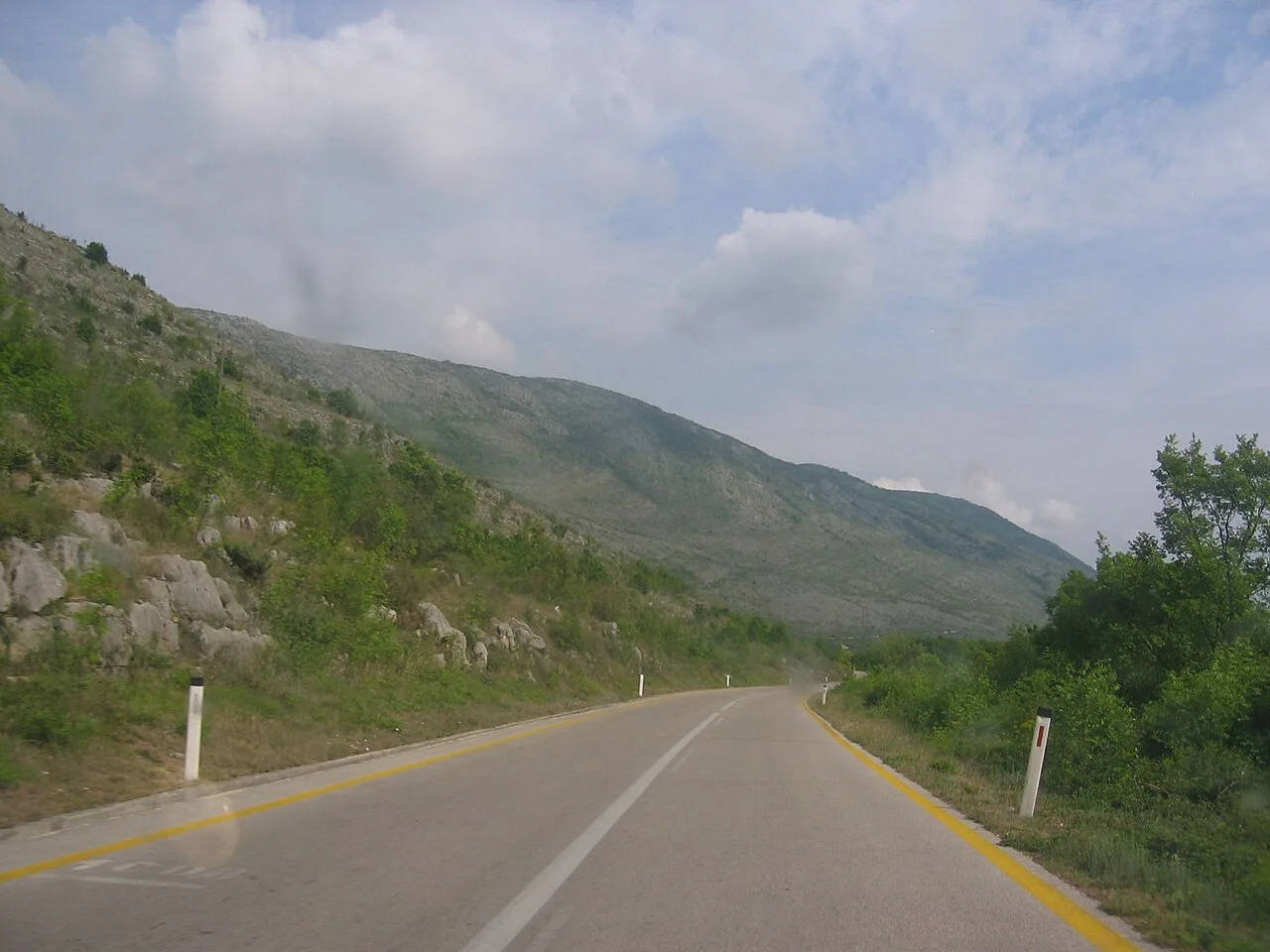
From Trebinje it’s 41.6 km from the city centre, per the city’s own tourist board, and that’s the easiest approach by some distance - around fifty minutes on quiet roads along the edge of Popovo polje. Based in Trebinje, this is a half-day, no argument.
From Mostar, reckon on about 80 km and an hour and a half, south past Čapljina and then east into the polje through Ravno. That’s a long day on its own, and a much better one chained with Radimlja or the wetlands at Hutovo Blato; our day trips from Mostar guide sets out those combinations.
From Dubrovnik, the quick way is Brgat Gornji - Ivanica to Trebinje - 30 km, 30 to 40 minutes - and then the 41.6 km west to Zavala; our Dubrovnik to Trebinje guide covers that crossing. The Neum corridor is the better line if you’re dropping down through Čapljina rather than straight off the coast road, and it’s explained in our Croatia-Bosnia border crossings guide. The map also offers something much shorter-looking, the little Orahov Do - Slano post, but don’t build a day around it. Its international status is temporary: the Border Police decision of 19 May 2026 opens it to international passenger traffic for three months from the day of the decision, or until the commission’s next session, whichever comes first. That’s the external Schengen border, and a rental car turned away there costs you the day - check before you leave the coast. Drivers also report mapping apps sending cars up a narrow local switchback above Slano instead of the proper road.
From Sarajevo it’s too far for a day trip: 130 km and two hours to Mostar, then roughly 80 km more. Sleep in Mostar or Trebinje.
One honest gap: we couldn’t find a scheduled bus to Zavala on any timetable. Assume car, taxi or private driver.
The rest of Zavala, and how to build a proper day
Three hundred metres west of the cave mouth stands Zavala monastery, tucked under the cliff. Its church was frescoed in 1619 by Georgije Mitrofanović, a monk from Hilandar, and those paintings are generally reckoned the finest fresco work to survive in the country from the Ottoman centuries. Fifteen minutes, and the reason not to drive straight back.
The other reason to linger is the railway. The narrow-gauge Ćiro line, built between 1898 and 1901, ran Mostar to Dubrovnik through Čapljina, Ravno, Zavala and the junction at Hum, and its trackbed is now a cycle route, gently graded the way railways are - Zavala to Trebinje is about 45 km of it. The cave operator sells a package built around this: cave at 09:00, a 10 km circular ride on the old line with a local guide, then the bio-speleological museum at 12:30. Four hours all in, 120 m of climbing, bikes and helmets included, booking required the day before, not recommended under ten; the price isn’t published, so ask.
So is it worth the detour?
From Trebinje, yes, easily - around fifty minutes each way for a UNESCO site most people driving the Adriatic have never heard of, plus the best frescoes in the country next door. From Mostar or Dubrovnik it works when it anchors a day rather than being the day: cave, monastery, then Radimlja or a wine tasting on the way back.
What it isn’t is a spectacle cave. No vast chambers, no boat rides, no lighting show. It’s a broad, low, wet passage with good formations and a modest visitor route, and what makes it globally significant is a list of blind invertebrates you won’t see. Go for the strangeness of it: the wind that changes direction with the season, and a place a Roman naturalist wrote about nineteen and a half centuries ago that still smells of cold water and rock.
Photos
On the map
The map loads on click - to keep the page lightweight.
The map didn’t load. Check your connection and refresh the page.
Admission and opening hours
- Admission price
- Published by the operator JP Vjetrenica d.o.o. and read on 2026-07-28 (the page carries no valid-from date): foreign visitors 25 KM adult, 20 KM students and pensioners, 15 KM children; citizens of Bosnia and Herzegovina 18 / 12 / 10 KM. Groups of 20 or more get 20% off. The bio-speleological museum on its own is 2 KM per person, and a private guided tour is 50 KM. Tickets can be bought online through the operator site. The operator does not say whether cards or euro are accepted, so bring convertible marks in cash.
- Opening hours
- Tours leave on the hour, every day of the week. 1 March to 31 May and 1 October to 30 November: 09:00-16:00 (eight departures). 1 June to 31 August: 09:00-18:00. 1-30 September: 09:00-17:00. 1 December to end of February: 10:00-14:00 (five departures). One complete tour takes about 40-60 minutes. Give the operator notice the day before and the terms of the visit can be adapted.
Inside it is 11.6 C year-round and damp, so bring a jacket even in August. The operator asks for long trousers and sturdy shoes, bans flip-flops and slippery soles, allows no pets, and strongly advises against the visit for children under 4, anyone claustrophobic and anyone with difficulty walking. Phone +387 36 891 034 or +387 36 819 061 before a winter drive.
Details checked: July 28, 2026
Distance
- Sarajevo ≈210 km · ~3 h 30 by car No single published figure exists. This is the sum of two legs we have measured elsewhere: Sarajevo to Mostar about 130 km and two hours, then roughly 80 km more to Zavala. Too far for a comfortable day trip - sleep in Mostar or Trebinje.
- Mostar ≈80 km · ~1 h 30 by car RFE/RL puts the cave about 80 km from Mostar; there is no operator figure. The sensible line is Mostar, Capljina, then east into Popovo polje via Ravno. Pair it with Radimlja or Hutovo Blato and it becomes a full day rather than a detour.
- Dubrovnik ≈72 km · ~1 h 30 by car including the border Quickest line is Brgat Gornji - Ivanica to Trebinje (30 km, 30-40 min on our own canon) and then 41.6 km west to Zavala. The Neum corridor suits arrivals via Capljina. The short-looking Orahov Do - Slano post takes international traffic only under a temporary regime: the joint Croatia-BiH commission decision of 19 May 2026, published by the BiH Border Police on 28 May 2026, runs three months from the day it was taken or until the commission next sits, whichever comes first. This is the external Schengen border, so check the status before you drive. Mapping apps also send cars up a narrow local switchback above Slano instead of the proper road.
Read also

What to see · 15 min read
Via Dinarica Bosnia: Huts, Stages & Logistics
Verified · September 12, 2026Plan the Via Dinarica White Trail in Bosnia: 12 stages, 334 km, hut booking, trailheads, closures and three workable section packages.

What to see · 10 min read
Jablanica: Neretva Bridge & Roast Lamb Stop
Verified · September 4, 2026Jablanica on the Sarajevo-Mostar road: Battle for the Wounded museum (5 KM), the 1943 bridge, roast lamb lunch. Hours, parking, how long to stop.

What to see · 8 min read
Prokoško Lake: Shepherd Huts High Above Fojnica
Verified · September 3, 2026Prokoško on Vranica at 1,636 m: katuni, gate prices for foreigners, no swimming, and the 2026 asphalt climb from Fojnica.

What to see · 11 min read
Franz Ferdinand's Sarajevo: Latin Bridge & 1914 Site
Verified · August 29, 2026The Latin Bridge corner in Sarajevo where Franz Ferdinand was shot in 1914: what happened, the Museum of Sarajevo 1878-1918 inside, hours and tickets.