
Bijambare Caves & Nature Park: An Easy Sarajevo Escape
Bijambare caves from Sarajevo: 40 km on the M-18, 5+6 KM tickets, timed cave tours Apr-Nov, forest trails and stećci - how to plan the half-day.
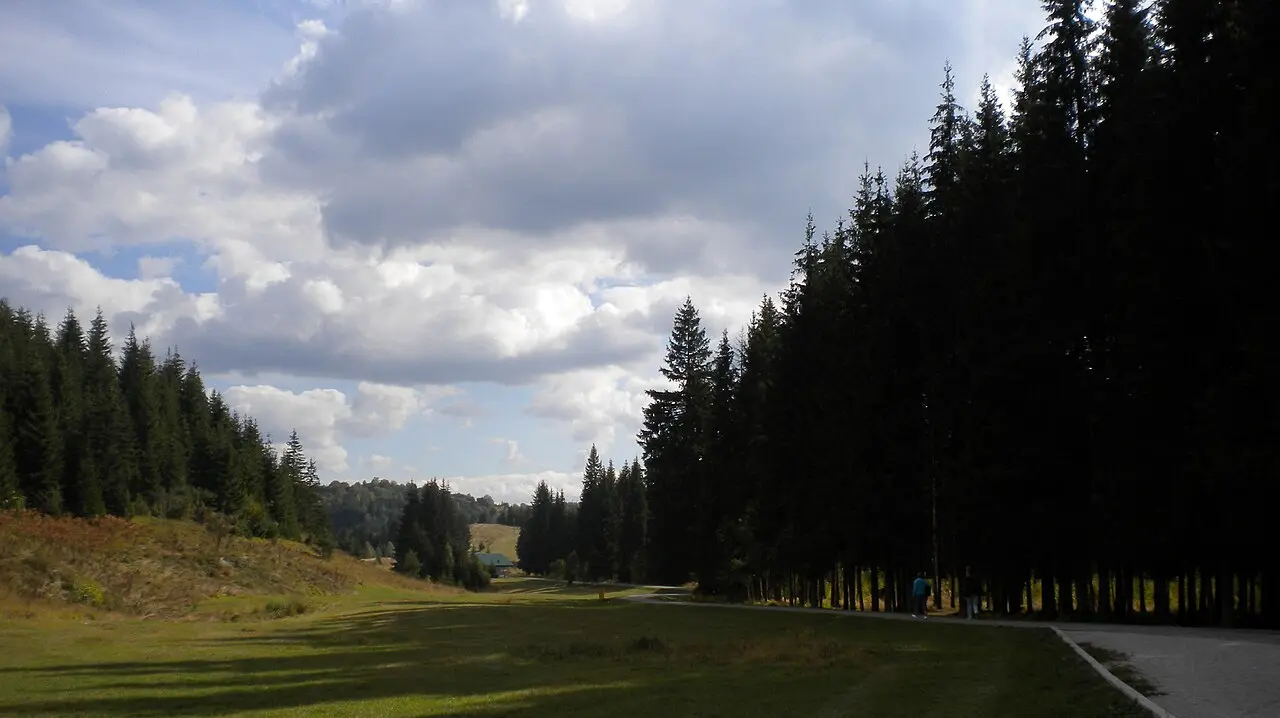
Bijambare is a karst forest park 40 km northeast of Sarajevo where eight limestone caves sit under spruce on the Nišići plateau, and only one of them - the Middle Bijambare Cave - is lit, paved and sold on timed tickets. It’s the closest proper show cave to the capital, cheaper and gentler than Herzegovina’s Vjetrenica, and honest as a half-day escape when you’ve already walked Baščaršija and don’t want another museum. Plan on 5 KM landscape entry plus 6 KM for the cave (foreign adult KM tariffs), KM withdrawn from a Sarajevo ATM before you leave town - cards and euros aren’t guaranteed at the gate - and either a rental car or a bus driver who knows the turnoff. The operator publishes distances, not a city-centre taxi fare.
What you get for the drive isn’t a single underground spectacle but a 497-hectare protected landscape at roughly 950 m: marked forest trails, a children’s wooden playground, a stećci necropolis, and a short guided walk through dripstone halls that locals have used as a picnic ground for generations. If you’re collecting caves, it’s the easy one. For UNESCO-listed biodiversity and a wind that hits you in the face at the gate, save the long haul south for Vjetrenica.
At a glance
| Detail | |
|---|---|
| Distance from Sarajevo | 40 km on the M-18 toward Tuzla (operator figure) |
| Drive time | About 45-60 min by car in normal traffic - not an operator quote |
| Open | Cave tours with published slots Apr-Oct; November - call ahead; cave closed Dec-Apr |
| Foreign adult tickets | 5 KM landscape + 6 KM cave (+ 2 KM tourist train one way if you use it) |
| Cave path | About 400-500 m on a paved, lit route through four halls |
| Tour capacity | 30 visitors per timed slot |
| Phone | +387 33 201 112 |
| Best paired with | Morning in the old town; afternoon here; back for dinner |
Figures follow the Sarajevo Cantonal protected-areas institution pages as of August 2026. Call +387 33 201 112 before you drive up if you’re travelling outside the summer slot grid.
What’s on the Bijambare plateau
Climb the M-18 out of the Ljubina valley and the city drops away into rolling meadows and conifer forest. The operator describes 133 plant communities and more than 800 species of higher plants in the park - which sounds like brochure copy until you notice how many medicinal and honey plants the signage names on the educational trails. On a Saturday afternoon you’re more likely to meet families pushing strollers and groups from Sarajevo escaping the heat.
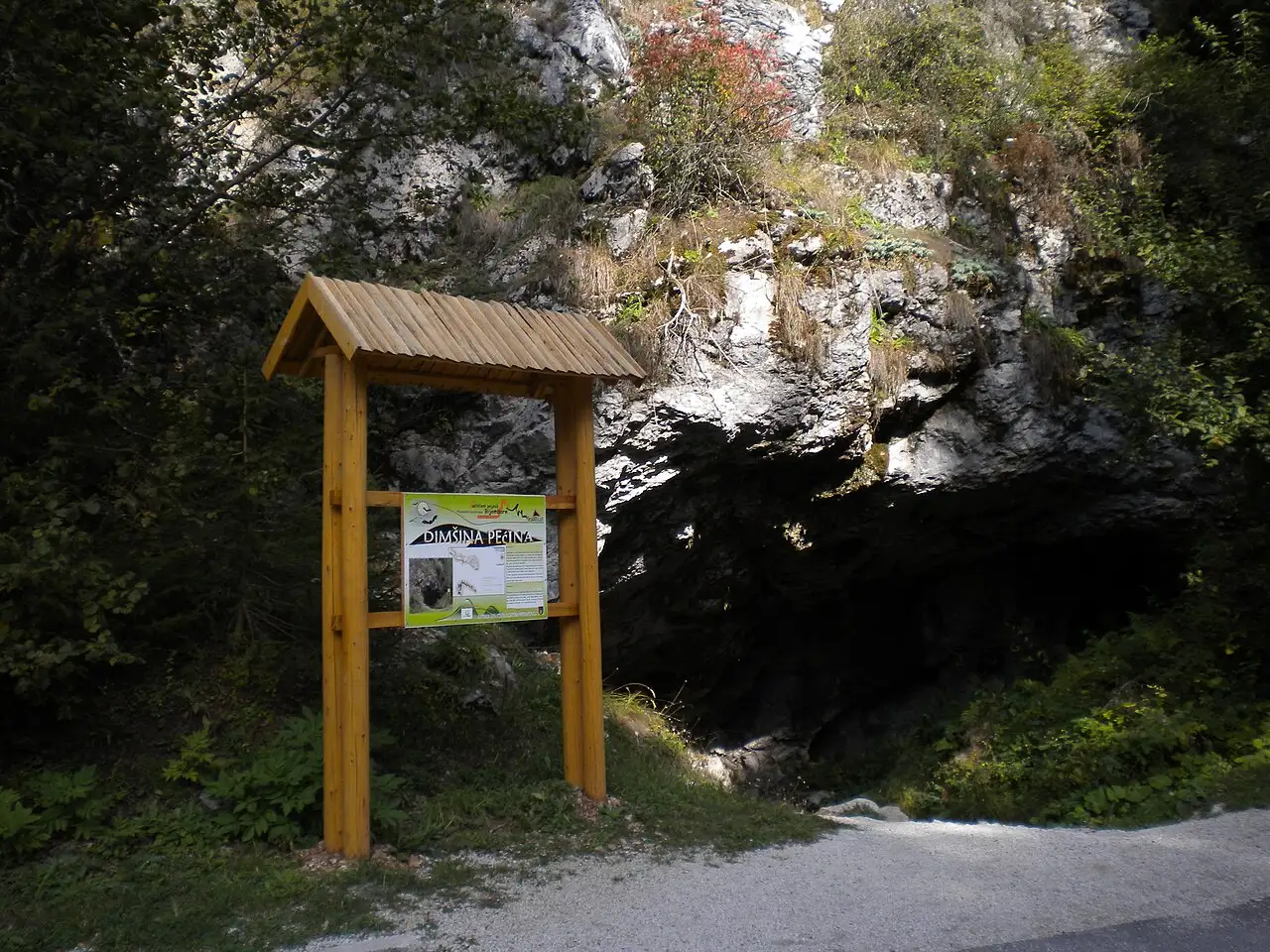
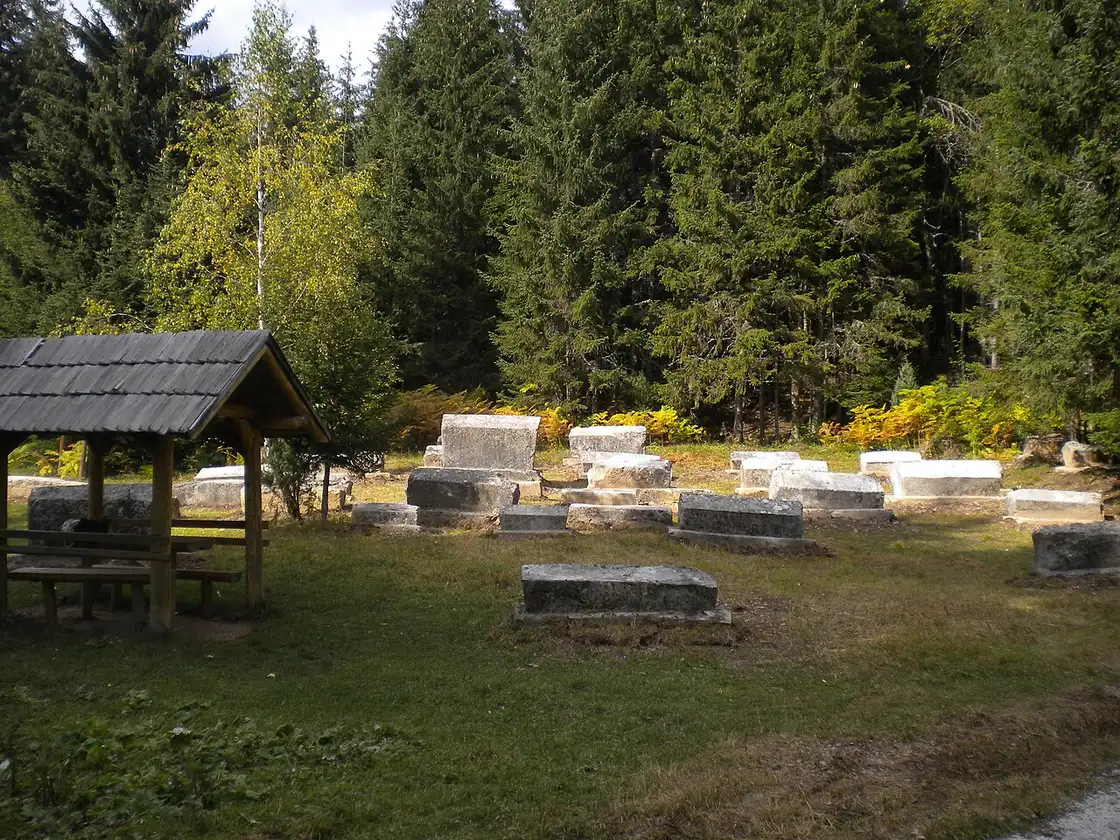
The park is split into three protection zones (137 ha, 308 ha and 52 ha). What that means on the ground is a hard core around the cave nucleus, a wider buffer of managed forest, and picnic infrastructure - benches, the “Wooden City” playground, bike hire, and an education and information centre where cave tickets are sold. Stone Age tools turned up in the upper cave and now sit in the National Museum in Sarajevo; out here the human layer you can actually see is medieval: the Mramorje stećci necropolis, a protected historical site scattered across the grass.
Inside the Middle Bijambare Cave
This is the only cavity the institution keeps open. The operator puts its total length at about 500 m, arranged as four halls along a paved, electrically lit path roughly 400 m long on the tourist route (guidebooks and cave databases often round that to 420 m). You won’t rappel or boat; you’ll walk in a line behind a guide, maximum 30 people per departure.
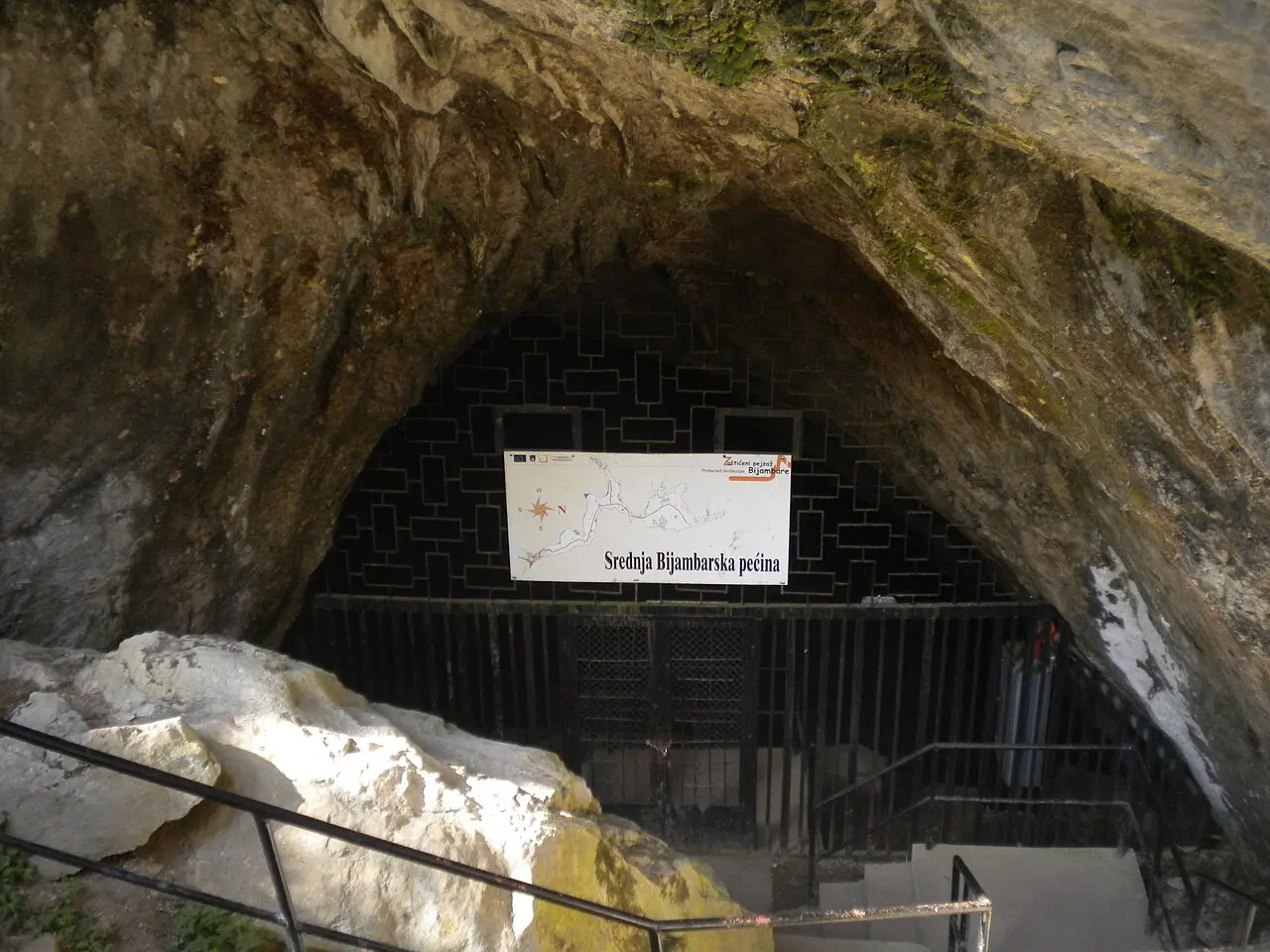
Formations are the usual karst vocabulary - stalactites, stalagmites, curtains, rimstone pools - with one number worth remembering because it slows you down: the operator says a stalactite here needs 100 to 150 years to grow a single centimetre. The fourth hall earned the nickname “concert hall” for its acoustics; Wikipedia cites spans on the order of 60 m across and 15-30 m of headroom, which is why school groups still sing in it on field trips.
Temperature isn’t published on the operator site the way Vjetrenica publishes its 11.6 °C. Pack a light layer anyway; underground air stays cool even when the plateau bakes in August. Photography rules aren’t spelled out online - ask at the info-point before you wave a flash at wet calcite.
Tickets, trains and timing the slot grid
Full tariffs and the seasonal timetable are in the visit box. The mechanics that trip people up are simpler than the price list:
- Pay landscape entry at the gate.
- Buy cave tickets only at the info-point - not at the gate, not on the train.
- Pick a slot and show up on time; when a departure fills at 30, you’re waiting for the next one.
- Budget the electric tourist train if you don’t want to walk the access stretch from the main parking - 2 KM one way for foreign visitors on the published tariff.
June through September runs the densest grid: the operator’s English timetable lists weekday entries at 11:00, 12:30, 14:00, 15:15 and 16:40, with an extra weekend run at 13:30 - ring +387 33 201 112 to confirm, because the Bosnian price page currently shows 12:15 and 16:30 instead. April, May and October shift the clock by a few minutes - 11:15 instead of 11:00 on weekdays, for example. From December through April the cave is closed entirely; the forest may still look inviting on a map, but the reason to come is underground.
Site hours are listed as 11:00-17:00 on the tourism offer page, which lines up with those departures. A late start from Sarajevo after a long lunch can easily cost you the last slot - this isn’t a turn-up-at-sunset stroll like the Skakavac waterfall hike.
Beyond the cave: stećci, trails and lunch
If the cave tour takes under an hour, you’ve still got the plateau. The Mramorje stećci are the cultural counterweight to the geology - carved medieval tombstones in the grass, not reconstructed for Instagram, which is exactly why they’re worth ten minutes.
Marked cycling and forest trails loop through the spruce; bike hire is 3 KM for the first hour on the operator tariff, then 2 KM each additional hour. In winter the same office rents sleds. None of this is world-class alpine sport - it’s a municipal forest park done well - but it’s enough to stretch a half-day if you’ve brought children or if the cave slot isn’t until mid-afternoon.
There’s a restaurant node near the education centre where weekend crowds queue for grilled meat and coffee. Cards may or may not work; the operator never says, and we’ve been burned assuming euros at smaller Bosnian gates. Marks from an ATM in Sarajevo are the safe play.
Driving from Sarajevo on the M-18
The institution’s directions are blunt: from Sarajevo, follow the main road M-18 toward Tuzla until the signed asphalt branch to Bijambare. They measure 40 km from the capital and 31 km from the Vogošća loop to the entrance. That’s an easy northeast run - no mountain pass, no border - on tarmac that ordinary hire cars handle without drama.
If you’re already weighing rental for a wider Bosnia loop, our day trips from Sarajevo guide puts Bijambare in the “forest and plateau” bucket alongside the Olympic ridges and the Skakavac hike, not in the same league as Mostar or Jajce for drama. Bijambare wins on distance and simplicity: you can leave after breakfast, see a cave, walk an hour, and be back in Baščaršija for ćevapi without a hotel change.
By bus, the operator points you to intercity services Sarajevo-Tuzla from the main bus station and tells you to inform the driver you’re getting off for Bijambare. That’s viable if you’re patient and speak enough Bosnian to negotiate the turnoff; it’s a poor fit if you’re chasing a 12:30 cave slot after a delayed departure. We don’t have a published city-bus line number or a commuter timetable to cite - treat bus access as possible, not pleasant.
Taxi quotes from the centre aren’t on any official sheet we’ve found. If you’re carless, compare a half-day private driver against the cost of a rental; for two people doing several Sarajevo escapes in a week, the car usually wins.
Bijambare or Vjetrenica?
Both are show caves with guides, electric light and a cap on group size. The differences are distance, price and what you’re optimising for.
| Bijambare | Vjetrenica | |
|---|---|---|
| From Sarajevo | ~40 km, half-day | ~210 km, needs an overnight south |
| Foreign adult cave ticket | 6 KM (+ 5 KM landscape) | 25 KM |
| Underground vibe | Short paved loop, family-friendly | Longer route, wind at the mouth, UNESCO-listed biodiversity |
| Season | Cave Apr-Nov | Year-round with a denser winter grid |
| Best base | Sarajevo | Mostar or Trebinje |
Choose Bijambare when you’re time-boxed in the capital and want a cave tick without sacrificing a Herzegovina day. Choose Vjetrenica when you’re already south and want the serious end of Bosnian speleology - olms, wind, and a ticket price that reflects it.
Fitting it into a Sarajevo stay
On a two-day city break, Bijambare is the afternoon you’d slot after the Tunnel and Trebević cable car from our Sarajevo sights guide: culture and siege history in the morning, cool forest air after lunch. On a longer stay, it pairs with nothing heavier than a lazy evening in the old town - don’t stack it ahead of a dawn bus to Mostar.
April-May and September-October give you fewer picnic crowds and a timetable that’s slightly sparser - check the operator’s April/May column before you assume an 11:00 run exists on a Tuesday. July-August mean green forest and a busy slot grid, but also heat on the walk from parking if you skip the train. November: no cave entry grid is published online - call +387 33 201 112 before you drive. After the cave closes for winter (December through April), redirect to museums or the bobsled track.
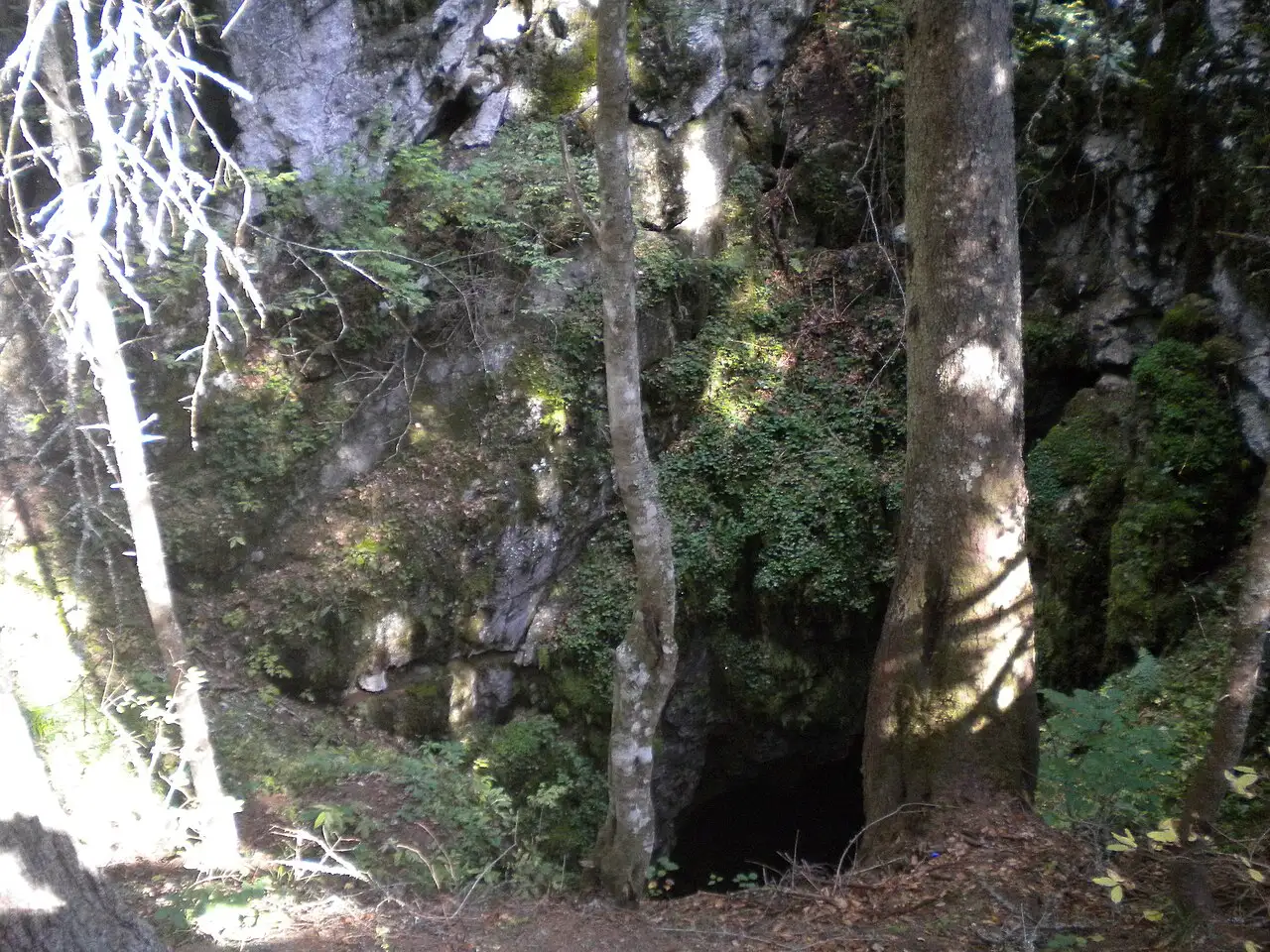
One last practical note: this is a managed park, not wilderness caving. Stay on the marked routes, keep hold of children near karst holes, and don’t treat the other seven caves as optional side quests - they’re closed for good reason. Done with respect, Bijambare is what it promises on the tin - an easy Sarajevo escape that actually feels a world away from the tram bells, even though the city is less than an hour’s drive back down the M-18.
Photos
On the map
The map loads on click - to keep the page lightweight.
The map didn’t load. Check your connection and refresh the page.
Admission and opening hours
- Admission price
- Published by the Cantonal Public Institution for Protected Natural Areas (zppks.ba, read 2026-08-27; no valid-from date on the page): landscape entry 5 KM foreign adult, 3 KM foreign child aged 6-18, under 6 free; Middle Bijambare Cave 6 KM foreign adult, 4 KM foreign child 6-18; electric tourist train 2 KM per foreign visitor one way. Cave tickets are sold only at the info-point. The operator does not say whether cards or euro are accepted, so carry convertible marks (KM) in cash.
- Opening hours
- The tourism offer lists site opening 11:00-17:00. Middle Bijambare Cave runs fixed entry slots April through November and is closed December through April. June-September weekdays: 11:00, 12:30, 14:00, 15:15, 16:40; weekends 11:10, 12:30, 13:30, 14:30, 15:40, 16:30. April, May and October use a slightly different timetable on the operator price page. Maximum 30 visitors per slot. Phone +387 33 201 112 before a winter visit.
You'll share the forest with local families on summer weekends. Closed-toe shoes help on the paved cave path; the operator does not publish accessibility details. Pair with a morning in Baščaršija, not with a late flight.
Details checked: August 27, 2026
Distance ≈40 km · about 45-60 min by car depending on traffic
- Sarajevo ≈40 km · about 45-60 min by car depending on traffic 40 km northeast on the M-18 toward Tuzla per the park operator; 31 km from the Vogošća loop to the entrance gate. Intercity buses Sarajevo-Tuzla leave from the main bus station (operator info line 00 387 33 21 31 00) - ask the driver for the Bijambare turnoff. A car or prebooked driver is far easier for hitting a cave time slot.
Read also

What to see · 15 min read
Via Dinarica Bosnia: Huts, Stages & Logistics
Verified · September 12, 2026Plan the Via Dinarica White Trail in Bosnia: 12 stages, 334 km, hut booking, trailheads, closures and three workable section packages.

What to see · 10 min read
Jablanica: Neretva Bridge & Roast Lamb Stop
Verified · September 4, 2026Jablanica on the Sarajevo-Mostar road: Battle for the Wounded museum (5 KM), the 1943 bridge, roast lamb lunch. Hours, parking, how long to stop.

What to see · 8 min read
Prokoško Lake: Shepherd Huts High Above Fojnica
Verified · September 3, 2026Prokoško on Vranica at 1,636 m: katuni, gate prices for foreigners, no swimming, and the 2026 asphalt climb from Fojnica.

What to see · 11 min read
Franz Ferdinand's Sarajevo: Latin Bridge & 1914 Site
Verified · August 29, 2026The Latin Bridge corner in Sarajevo where Franz Ferdinand was shot in 1914: what happened, the Museum of Sarajevo 1878-1918 inside, hours and tickets.