The Best Day Trips From Sarajevo
Which day trips from Sarajevo are worth the drive: Mostar, Jajce and Travnik, Višegrad, Srebrenica and the Olympic mountains, with times and how to go.
Sarajevo sits in a bowl of mountains with the rest of the country fanning out from it, which makes it the best base in Bosnia for day trips. The city itself easily fills a couple of days - our guide to things to do in Sarajevo covers that side of it - and this page is about the trips out from it. The pick of them, ranked by how many people should bother: the abandoned Olympic mountains and the war Tunnel right on the edge of town for a half-day; Travnik paired with Jajce to the northwest for the best full day out; the Drina bridge at Višegrad and the genocide memorial at Srebrenica to the east for longer, more particular trips; and Mostar, the famous one, which you can do in a day but really shouldn’t. Below is each trip with an honest read on whether it’s worth your time, how far it is, and whether you need a car.
The short version
Match the line to the day you’ve got:
- You only have a spare morning: the Tunnel of Hope by the airport, and the cable car up Mount Trebević to the derelict Olympic bobsled run. Both sit on the city’s edge.
- One good full day, no car: Mostar by the canyon train, or Travnik by bus.
- One good full day, with a car: Travnik and Jajce together, the strongest loop of the lot.
- A long, serious day: Srebrenica for the memorial, or Višegrad for the bridge. Both are two and a half hours or more each way.
- Snow or hiking weather: the ski mountains at Bjelašnica and Jahorina, the shepherds’ village of Lukomir, or the Skakavac waterfall hike above Nahorevo.
- An easy, offbeat half-day: the Bosnian pyramids at Visoko, about half an hour north - more curiosity than archaeology, but a cool tunnel walk and a real medieval town.
How much of this you’ll actually fit in depends on how long you’re in the country, which is its own question, worked through in how many days you need in Bosnia.
The half-days you don’t need to leave town for
Two of Sarajevo’s best “excursions” barely count as day trips. The Tunnel of Hope in the suburb of Butmir, dug under the airport runway to keep the besieged city supplied, is about fifteen minutes out by taxi and takes forty-five minutes to an hour to see. Entry is 20 KM, cash only in convertible marks, so bring notes because there’s no card machine at the door. It’s the single clearest way to grasp what the siege meant day to day, and the full story of how to get there is in our guide to the Tunnel of Hope.
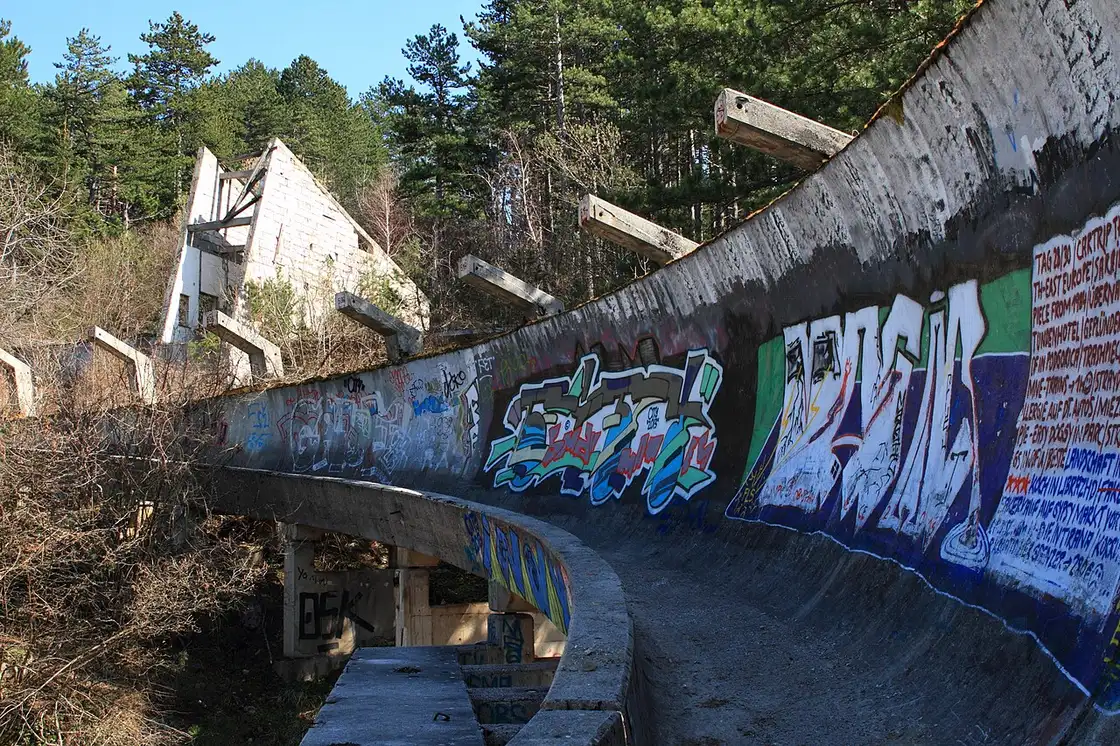
Pair it with Mount Trebević, the ridge that looms over the old town. The cable car climbs from Bistrik in about eight minutes (a return ticket is 30 KM), and at the top you can walk the abandoned bobsled and luge track from the 1984 Winter Olympics, now covered end to end in graffiti and slowly being taken back by the forest. Trebević was a front line during the war, so the two stops tell one story, and they sit inside the wider siege of Sarajevo route through the city; our Trebević cable car and bobsled track guide has the tickets and timing. Together they make a full, unhurried day without ever leaving the valley.
Travnik and Jajce: the best full day out
If you have a car and one day, drive the northwest. Travnik, about 90 km and an hour and a half away, was the seat of the Ottoman viziers and is one of the better-kept old towns in the country. Climb to its stone fortress for the view, walk up to Plava Voda, where a cold blue-green spring surfaces among old watermills and café terraces, and look in on the painted Šarena Džamija, the Many-Coloured Mosque. Travnik is also the birthplace of Ivo Andrić, the only Yugoslav writer to win the Nobel Prize, which matters more once you’ve read him.
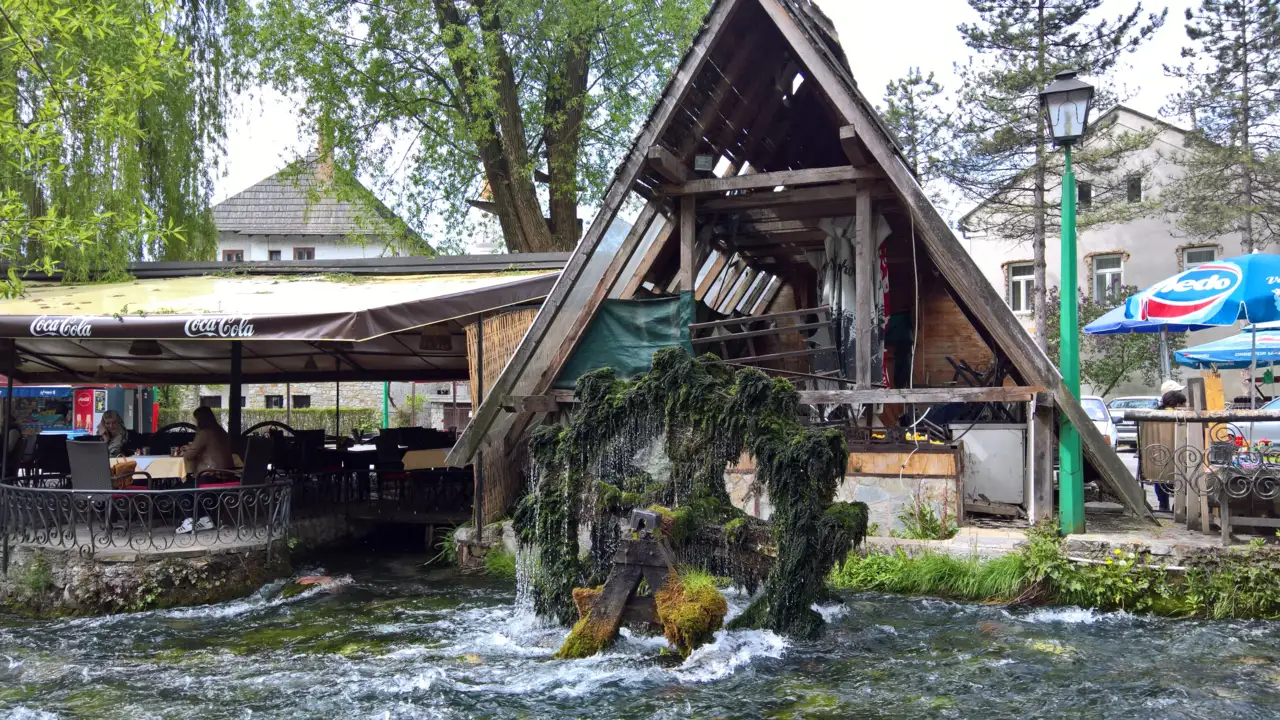
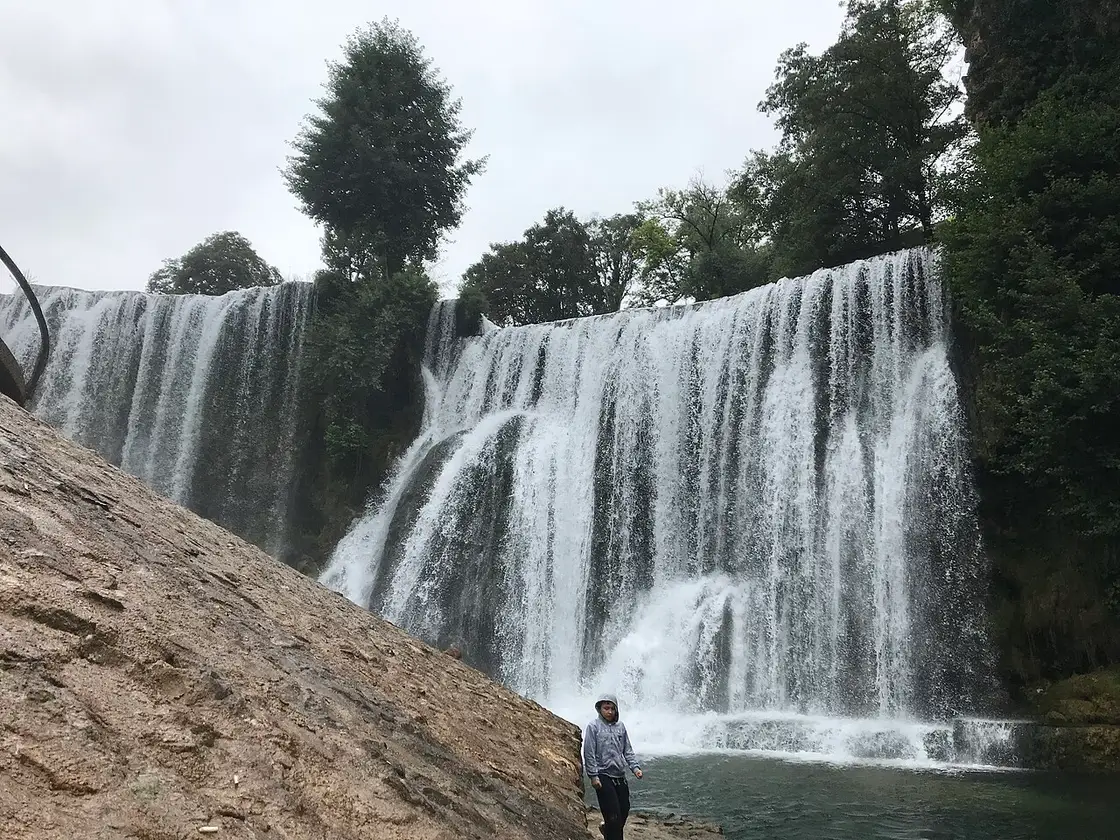
Push on another hour to Jajce, roughly 165 km from Sarajevo, and you reach the trip’s real reward: a roughly 22-metre waterfall crashing through the middle of the town, at the exact spot the Pliva river drops into the Vrbas. It’s one of very few waterfalls anywhere that sits inside an urban centre, and the medieval fortress above it and the cluster of wooden Pliva watermills just upstream round out the visit. Doing both towns in a day is a stretch on public transport, since you’d have to chain two bus legs, so this is the loop where a hire car earns its keep. Our Jajce guide has the detail if you decide it deserves an overnight instead. Our Jajce guide has the town; if you’d rather give it a night, the two-day Travnik and Jajce route is the overnight logistics.
Mostar: the day trip you should turn into a night
Mostar is the classic, and on paper it’s easy: about 130 km south, two hours by car or on the twice-daily train that threads the Neretva canyon, one of the finest short rail journeys in the Balkans. Buses run through the day as well. The catch is that a day trip shows you Mostar at its worst, packed shoulder to shoulder with coach groups while the Old Bridge divers perform for the midday crowd. The last buses back leave in the late afternoon, so you never see the town empty.
Stay the night and it flips completely: the lit bridge after dark, dawn on bare cobbles, and a base for the string of Herzegovina sights to the south, from the dervish house at Blagaj to the Kravice falls - our guide to the best day trips from Mostar ranks that southern loop and the quieter runs beyond it. That case, and everything to see once you’re there, is laid out in things to do in Mostar. Come as a day trip if the schedule forces it, but if you can shuffle a night onto it, do.
Srebrenica: the hardest day, and a worthwhile one
East of Sarajevo, roughly two and a half to three hours on mountain roads, the Srebrenica-Potočari memorial marks the July 1995 genocide, when more than eight thousand Bosniak men and boys were murdered in the closing months of the war. The cemetery of white marble pillars sits a few kilometres north of Srebrenica town, across the road from the former UN base that failed to protect them. This is not sightseeing, and it deserves to be approached that way.
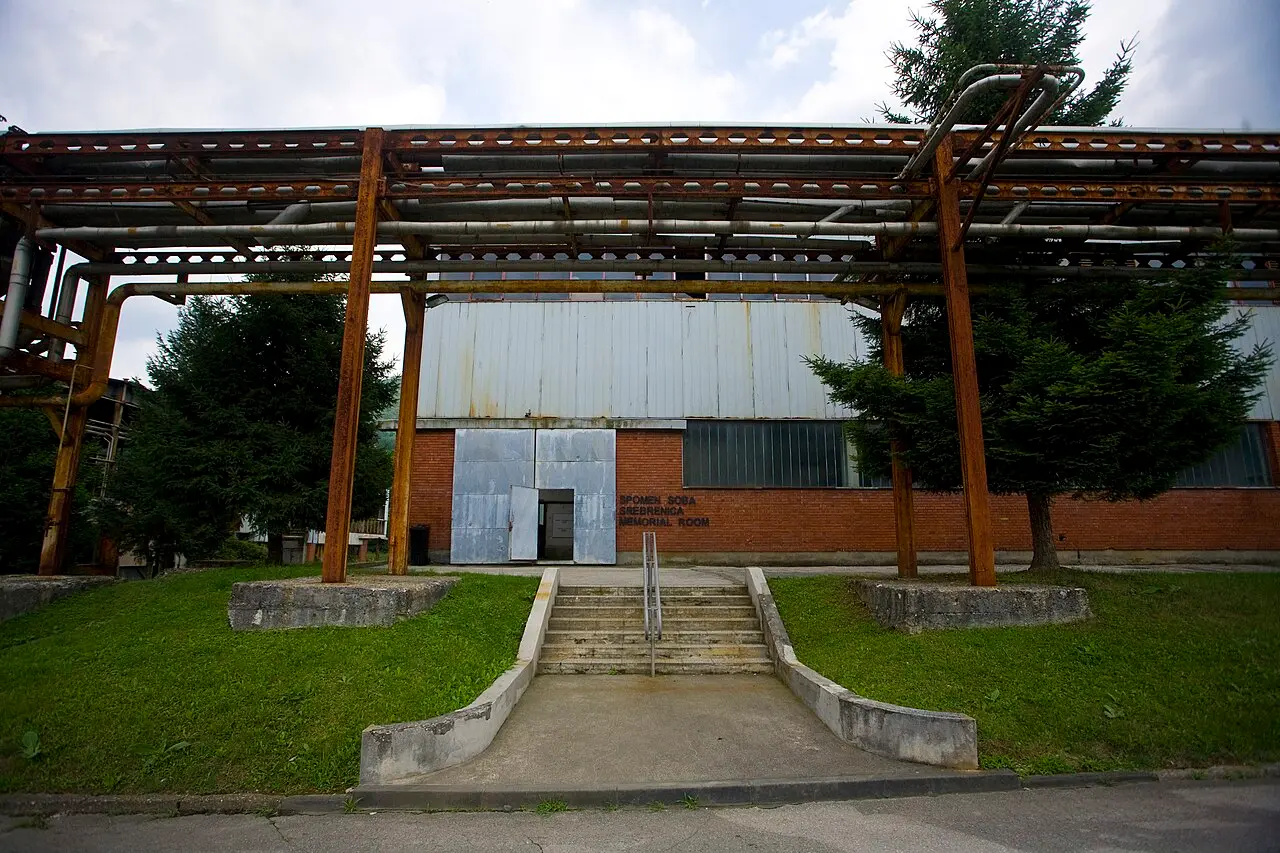
Budget a full day, nine or ten hours door to door with a couple of hours at the site. A guide is worth it here more than anywhere, less for the driving than for the context, which a bare visit can’t give you. Give yourself an easy evening back in Sarajevo afterwards; most people need one.
Višegrad: the bridge on the Drina
Also to the east, and about the same long haul, Višegrad exists in the traveller’s imagination mainly through one object: the eleven-arched Mehmed Paša Sokolović bridge, built in the 1570s, listed by UNESCO in 2007, and made famous by Andrić’s novel The Bridge on the Drina. Standing on it over the deep green river, with the story in your head, is the whole point of the trip. Beside it sits Andrićgrad, a stone-built tourist quarter that the film director Emir Kusturica dreamed up as a homage to the writer, part film set and part theme park depending on your mood.
There’s no regular tour and the winding roads make it a genuine two-and-a-half-hour drive each way, so this is one for people who love the book or are already heading toward Serbia, rather than a casual outing. With your own car you can fold it into the wider east; without one, it’s a long day for a single bridge, however great that bridge is. If a single afternoon at the bridge feels too rushed for the drive it takes to get there, our Eastern Bosnia route turns the same road into a proper 3-day loop through Foča and Sutjeska National Park instead of an out-and-back.
The Olympic mountains and the wild south
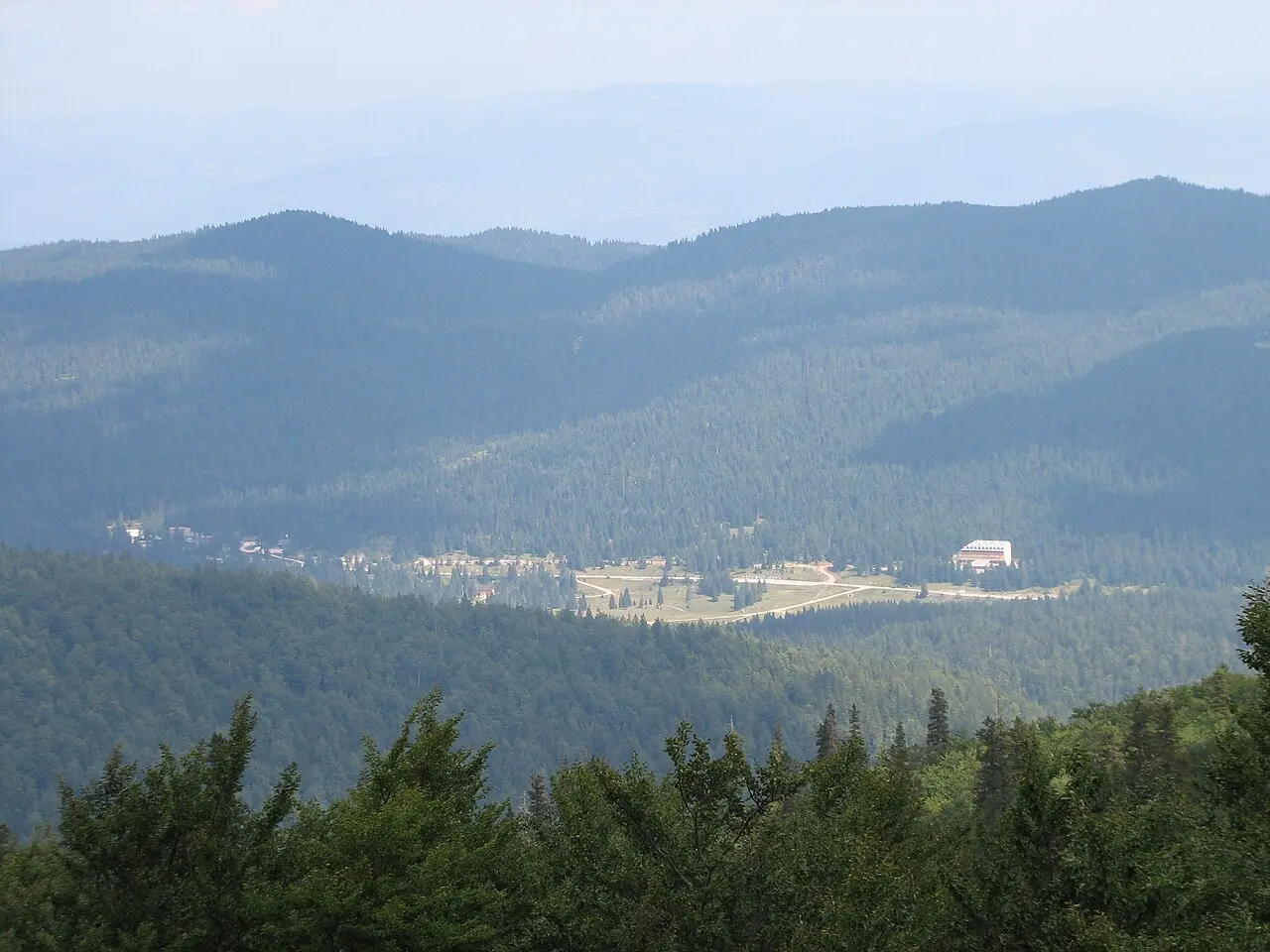
Sarajevo’s ring of ski mountains is a half-hour drive and switches character with the season. Bjelašnica (about 25 to 30 km southwest) and Jahorina (around 28 km southeast) hosted the 1984 Games and run their lifts for skiing from roughly December to March; in summer, from about June to October, the same slopes are for hiking and mountain biking, green and near-empty. If the skiing turns into more than a day out, our guide to where to stay on Jahorina compares sleeping on the mountain against commuting up from the city.
Beyond the ski centres, three warm-weather trips stand out. The Bijambare Caves make an easy half-day on the M18 northeast of the city - lit cave, pine trails and stećci without the long drive east. Lukomir, the highest and most remote village in the country, sits on the Bjelašnica plateau at the end of a rough final stretch of road that wants a car with some clearance or a lift with a local; it’s cut off by snow in winter but pure highland stone-and-shingle in summer. And Konjic, an hour south on the Neretva, gives you an old Ottoman bridge, Tito’s secret Cold War nuclear bunker, and the launch point for the rafting that the river is known for. Serious hikers with more time push further to Sutjeska National Park and Maglić, the country’s highest peak, though that’s better as an overnight than a day trip.
If you’d rather string the whole ring together in one go, our Olympic mountains day loop from Sarajevo drives Trebević, Bjelašnica, the shepherd villages of Umoljani and Lukomir, the Igman ski jumps and the Vrelo Bosne springs into a single self-drive day between May and October.
How to actually do these
The split is simple. The near-city half-days and the classic runs to Mostar and Travnik work fine on public transport; the loops and the outliers need wheels. Travnik-and-Jajce in a day, the ski mountains, Lukomir and the fuller Herzegovina south are all far easier with a hire car, and renting for a day or two is the common move, covered in car rental in Bosnia. For the heavy eastern days to Srebrenica and Višegrad, a private driver or booked transfer often makes more sense than either self-driving unfamiliar mountain roads or piecing together sparse buses, and it frees you to take in a hard day rather than navigate it.
If a couple of these turn into overnights, as Mostar and Jajce both reward, it’s worth rethinking where you sleep rather than treating everything as a return trip from the capital; our guide to where to stay in Bosnia sets out the bases. And for the nuts and bolts of trains, buses and driving between all these points, start with getting around Bosnia. Pick one big trip and one half-day, and you’ll have seen more of the country than most people manage in a week.
Photos
Read also

Before you go · 10 min read
Where to Stay in Medjugorje: Pansions & Hotels
Updated · August 25, 2026Where to stay in Medjugorje: guesthouses near St James Church, pilgrim hotels, peak dates, and whether to sleep here or day-trip from Mostar.

Before you go · 9 min read
Where to Stay in Jajce: Hotels by the Waterfall
Updated · August 23, 2026Where to stay in Jajce: old-town hotels steps from the Pliva Waterfall, lakeside rooms by the watermills, and which base suits a one-night stop.

Before you go · 11 min read
Mostar or Trebinje: Which Herzegovina Base?
Verified · August 18, 2026Mostar or Trebinje as a Herzegovina base: crowds, hotel prices, summer heat, Dubrovnik access and wine - pick the nights that fit your trip.

Before you go · 7 min read
Cash, Cards and Tipping Across the Balkans in 2026
Verified · August 15, 2026Twelve currencies, three of them the euro, and two pegged to it. What is fixed, what is a habit, and where you still need notes in your pocket.