
Lukomir: Visiting Bosnia's Highest Mountain Village
How to visit Lukomir, the highest village in Bosnia: the stone-and-shingle houses, the gravel road, the Rakitnica canyon, and exactly when to go.
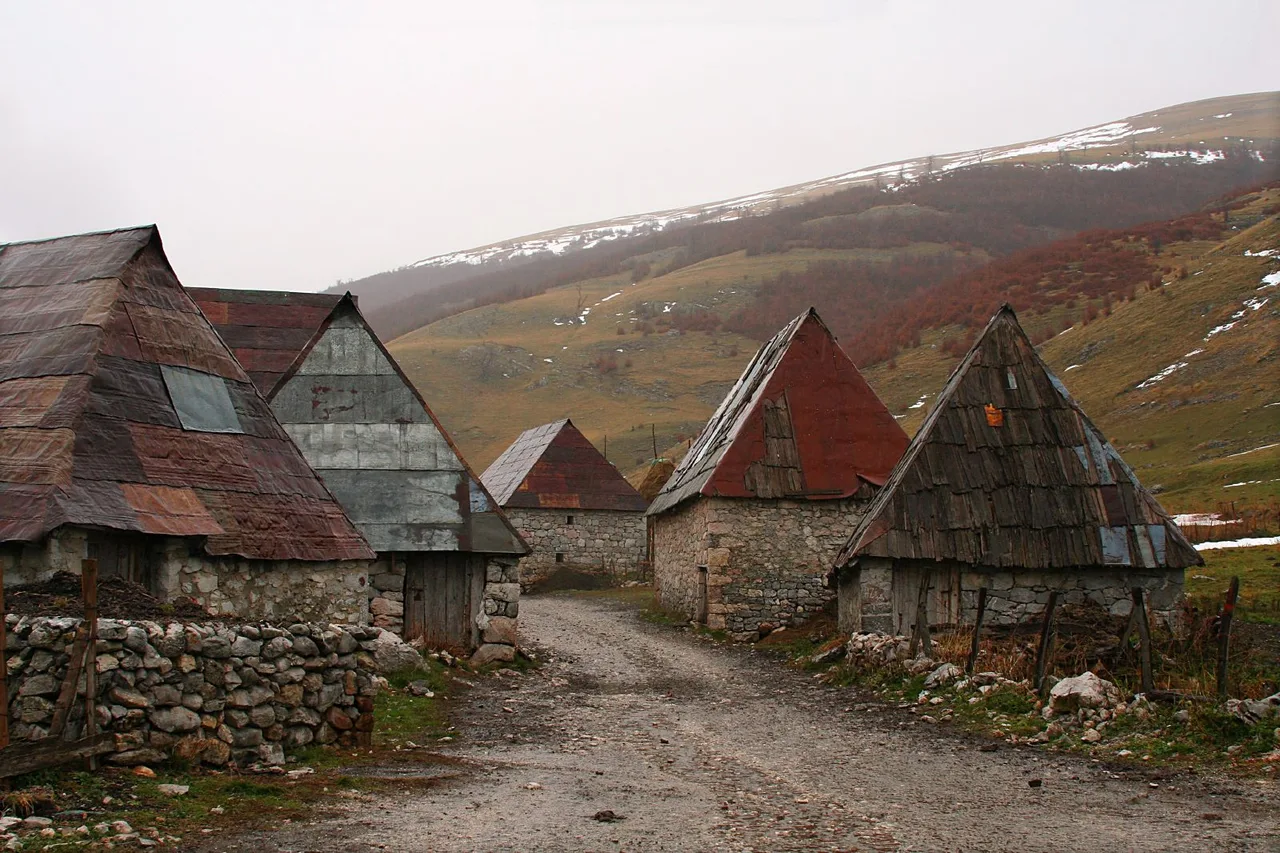
Lukomir is the highest permanently inhabited village in Bosnia and Herzegovina: a cluster of stone houses under steep wooden-shingle roofs at roughly 1,500 metres on the shoulder of Bjelašnica, right on the lip of the enormous Rakitnica canyon. It sits about 50 km and an hour and a half from Sarajevo, and it is genuinely remote. The last 11 km is gravel, the whole road is snowed shut from about November to April, and the families here are semi-nomadic - they come up for the warm months and leave before winter. Come between May and October and you get one of the last living, medieval-feeling villages in this corner of Europe. Come at the wrong time, or in the wrong car, and you don’t get in at all.
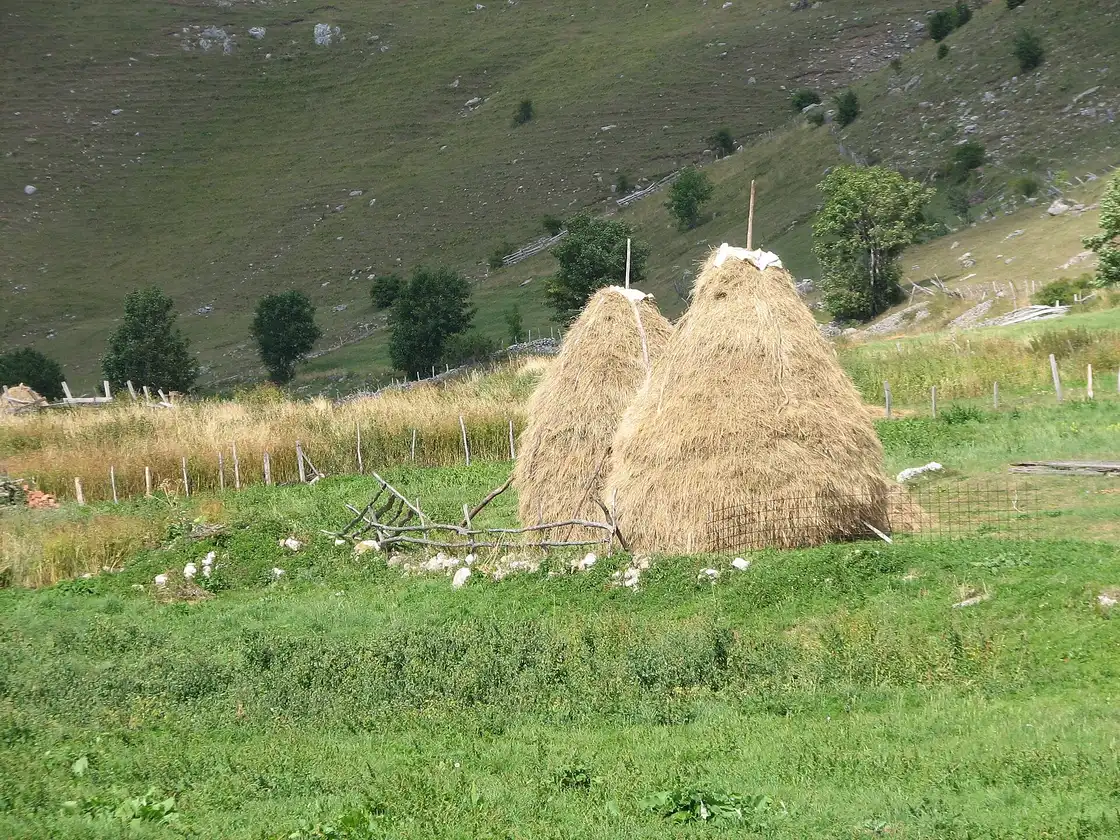
What makes the drive worth it’s not one headline sight - there is no museum and no marquee monument - but the whole intact picture. Fifty-odd limestone houses that haven’t changed shape in two centuries, sheep loose on the karst, a canyon dropping 800 metres away at the edge of the gardens, and no trees for miles because you’re above the line where they grow. The honest catch is the road, the season, and the tour vans that grind up from the city around noon. Get the timing right and you can have the ridge almost to yourself.
The highest village in the country
The headline number moves around a little depending on who’s measuring - you’ll see 1,469 m, 1,472 m and 1,495 m quoted - but the point holds: at about 1,500 metres, Lukomir is the highest inhabited village in Bosnia and Herzegovina, and it feels every metre of it. There are roughly 50 houses, many of them more than 200 years old, built from local grey limestone with those distinctive steep roofs that were traditionally shingled in cherry, oak or fir. Nothing about the shape of the place is modern; the settlement has roots reaching back to the 14th century, and a scatter of medieval stećci - the carved Bosnian tombstones that appear all over these mountains - sits near the village from the same era.
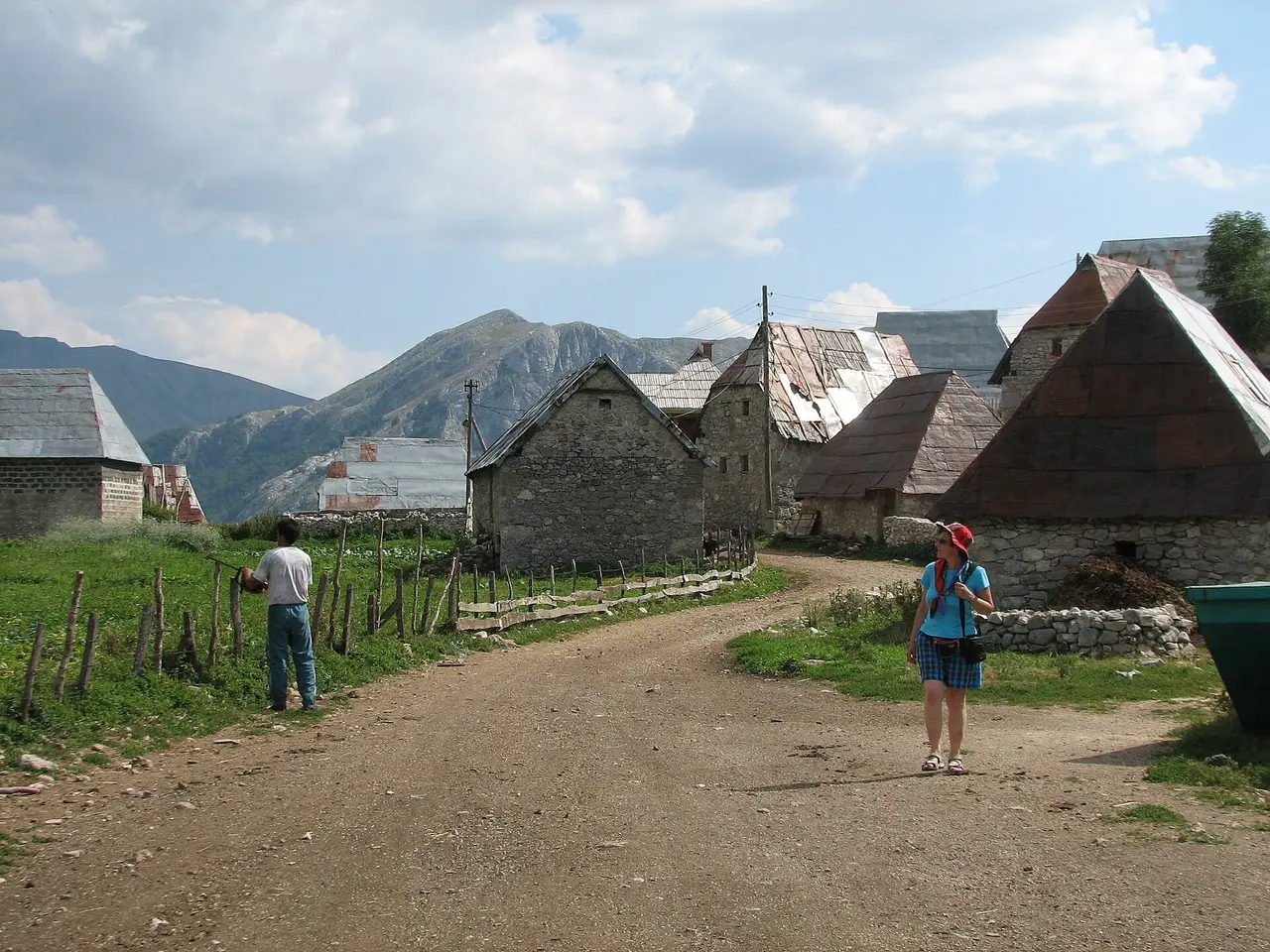
The word most guides reach for is “authentic,” and for once it’s close to earned: this is a working shepherds’ village, not a re-creation. National Geographic put it on the map for a wider audience a few years back, and in 2023 it was named the most beautiful village in the country. That has brought more visitors, but it hasn’t yet turned Lukomir into a theme park - come outside the midday rush and it is still a handful of families, their flocks and the wind.
The road that guards it
Almost everything people worry about before visiting Lukomir comes down to the road, and it is worth being straight about it. From Sarajevo you climb southwest over Bjelašnica, the 1984 Olympic ski mountain, then push past the resort and the village of Umoljani until the tarmac runs out. The final 11 km is unpaved gravel, twisting across bare karst, and that rough surface is exactly what has kept Lukomir quiet - it filters out anyone in a hurry.
In dry summer weather an ordinary hire car does the gravel fine if you take it slowly and mind your clearance. After rain, or early and late in the season, the surface turns greasy and a higher car or a proper 4x4 is far more comfortable, sometimes necessary. There is no bus and there never will be, so your options are your own car, a hired driver, or a day tour out of Sarajevo. If you’re driving yourself, read our driving in Bosnia notes first, and our car rental in Bosnia guide covers the deposits and the cross-border paperwork.
Lukomir actually belongs to the Konjic municipality, not Sarajevo, and although nearly everyone drives up over Bjelašnica from the capital, the town of Konjic on the Neretva - the one with the Ottoman bridge and Tito’s Cold War bunker - is only about 35 km away and pairs naturally with the village on a longer loop through these mountains.
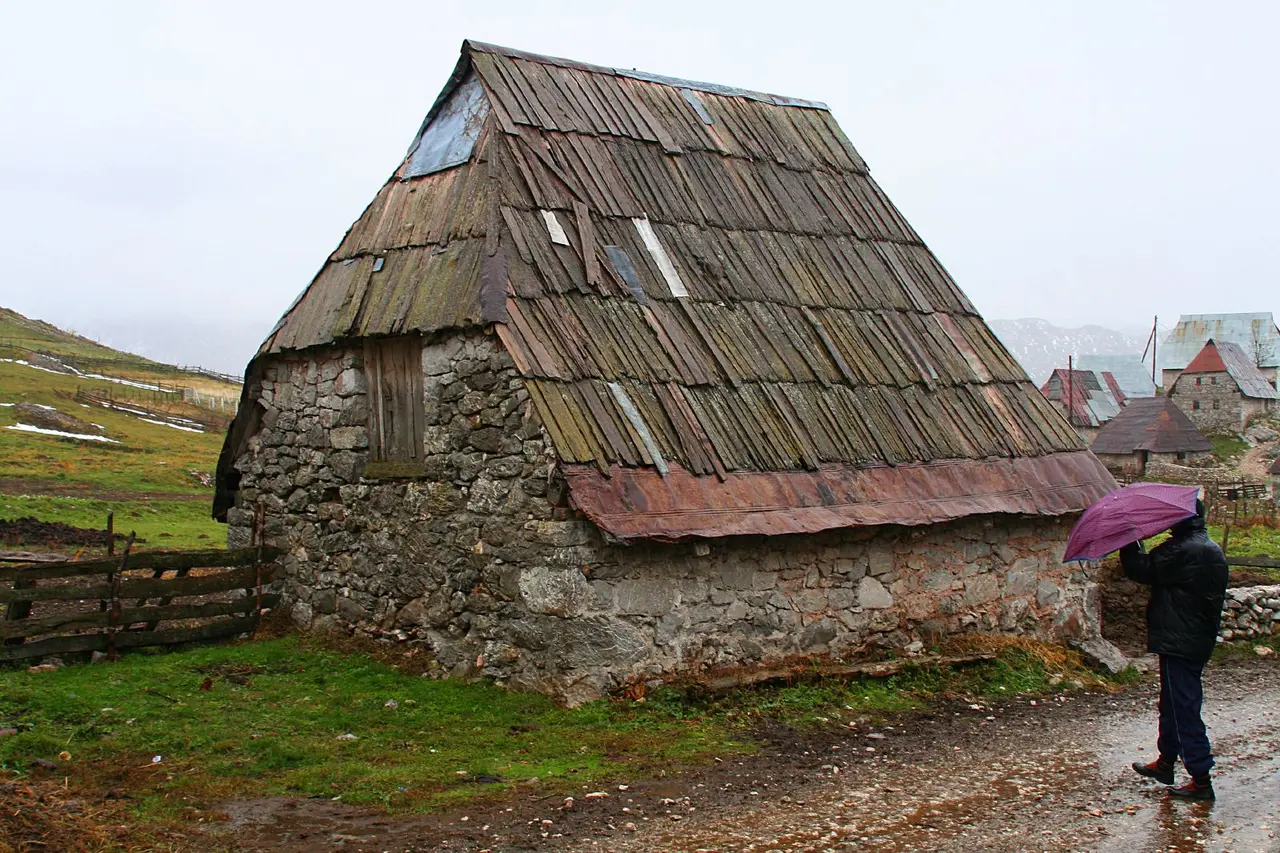
The season is the other hard limit. The road is buried under deep snow from roughly November into April and the village all but closes, so this is a late-spring-to-autumn trip, full stop. Lukomir is the scenic high point of our Olympic Mountains day loop from Sarajevo, which strings it together with Trebević, Bjelašnica and the Vrelo Bosne springs, and it ranks among the strongest of the day trips from Sarajevo when the road is open.
Hiking in the back way
If you would rather earn the village than park at it, walk. Two marked trails link Umoljani and Lukomir, and the classic route runs for a few hours along and above the rim of the Rakitnica canyon - an 800-metre gash in the mountains that you barely notice from the road but that opens up beneath you on foot. It’s the better arrival by far: you crest a rise and the stone roofs appear on the ridge ahead, exactly as they have for approaching travellers for centuries.
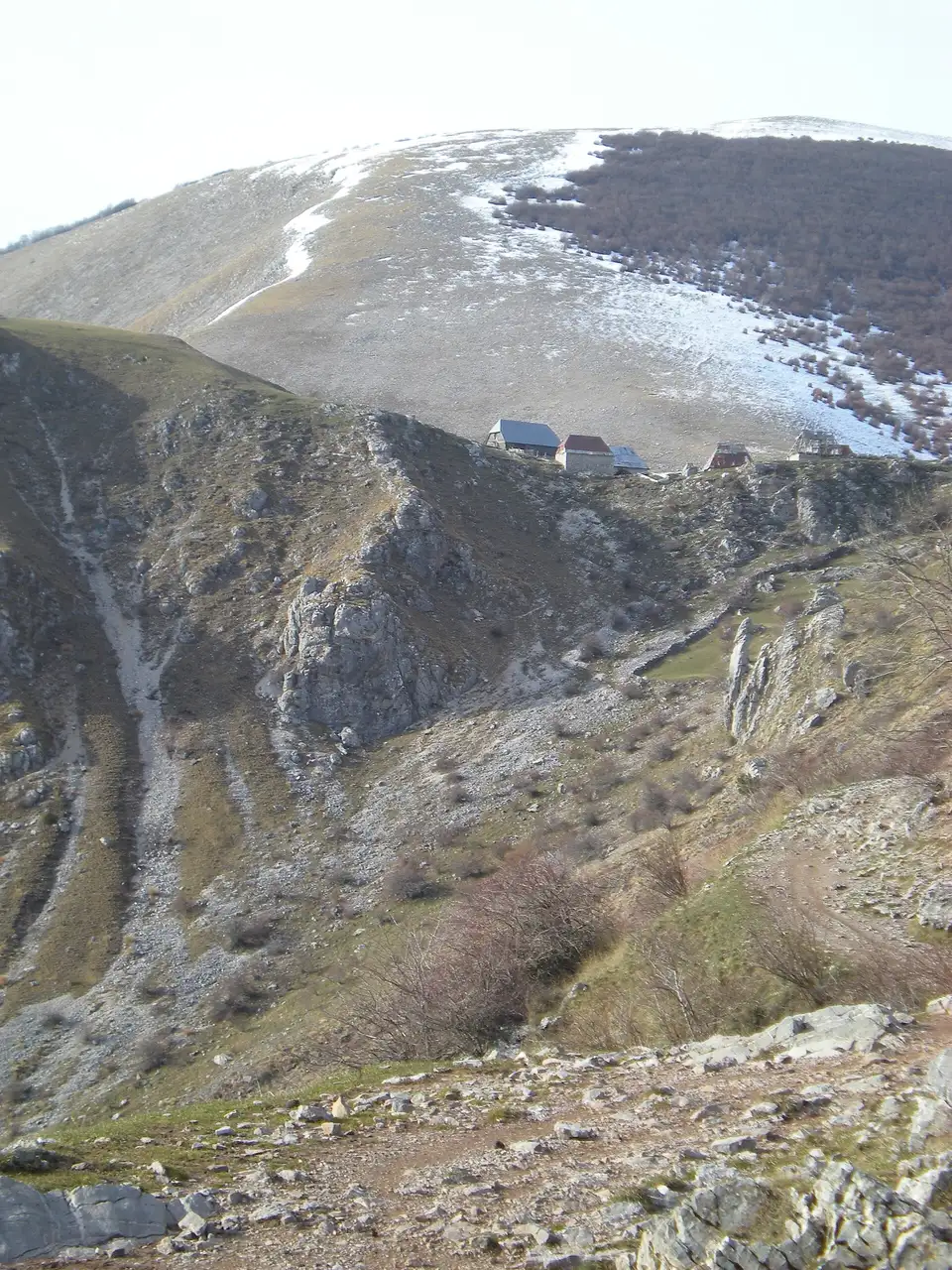
Treat it as a real mountain walk rather than a stroll: it’s exposed, the karst is sharp underfoot, and the weather at 1,500 metres swings from sun to cold wind in minutes. Take water, take layers, and if you’re not confident with route-finding, one of the Sarajevo hiking outfits runs guided day walks out here in summer. That Umoljani-Lukomir walk is the day hike we send first-timers on in our guide to hiking in Bosnia, which lays out the main massifs and the one safety rule that matters up here.
What there is to do once you arrive
Not much, and that’s the point. You walk the lanes, you look at the houses, and you go out to the canyon rim where the ground simply drops away - the single most dramatic thing in Lukomir, and free. There are usually one or two konobas open in season serving the mountain staples: fresh trout, pita (the coiled filo pie), grilled meat and thick sour milk, cash only in marks. Prices and opening are informal, so confirm on the day rather than counting on a set lunch.
The one souvenir worth carrying home is wool. The village women, from the long-established Čomor and Masleša families among others, hand-knit heavy socks, sweaters and slippers from their own sheep and sell them from the houses - warm, cheap and genuinely made here. And a plea that these mountains earn: this is somebody’s home, not a set. Ask before you photograph people, close the gates you open, and keep to the paths around the gardens and the flocks.
When to go, and getting the timing right
The window is May to October, and within it the trade-off is simple. High summer is warmest and the surest bet for the road and the konobas, but it also brings the tour vans; late morning to early afternoon is the busy stretch. Come early in the day or stay into the late afternoon and the crowds thin to nothing. June and September are the quiet sweet spot - green in early summer, gold and near-empty in autumn - though you are gambling a little more on the weather. Whenever you come, pack for the altitude: it is several degrees cooler than the city and the wind on the ridge bites even in July. For the wider month-by-month picture, our guide to the best time to visit Bosnia sets out the seasons.
Base yourself in the capital and run Lukomir as a long day out; our things to do in Sarajevo guide covers where to stay and how the mountains fit around the city. Give the village half a day at least, go on your own two feet if you can, and Lukomir gives you something most of Europe lost a century ago - a lived-in mountain village at the end of a road that closes with the first snow.
On the map
The map loads on click - to keep the page lightweight.
The map didn’t load. Check your connection and refresh the page.
Admission and opening hours
- Admission price
- Free to visit - there is no gate or ticket for the village. Carry cash in convertible marks (KM) for lunch at a konoba and any wool you buy; cards are not an option up here.
- Opening hours
- Open access at any hour. This is a warm-season place: the road is usually clear and the konobas open roughly May to October, then families and food both come down before the snow.
The last ~11 km from Umoljani is unpaved gravel. A normal car manages it slowly in dry summer weather; after rain, or early and late in the season, a higher car or a 4x4 is far more comfortable. Check the road at the Bjelašnica resort before you commit.
Details checked: July 21, 2026
Distance ≈50 km · ~1 h 20 by car
- Sarajevo ≈50 km · ~1 h 20 by car Via Bjelašnica and Umoljani; the last 11 km is gravel. No bus goes anywhere near - you need a car, a driver or a tour. Konjic is closer at about 35 km, but the usual approach is from Sarajevo over Bjelašnica.
Read also

What to see · 15 min read
Via Dinarica Bosnia: Huts, Stages & Logistics
Verified · September 12, 2026Plan the Via Dinarica White Trail in Bosnia: 12 stages, 334 km, hut booking, trailheads, closures and three workable section packages.

What to see · 10 min read
Jablanica: Neretva Bridge & Roast Lamb Stop
Verified · September 4, 2026Jablanica on the Sarajevo-Mostar road: Battle for the Wounded museum (5 KM), the 1943 bridge, roast lamb lunch. Hours, parking, how long to stop.

What to see · 8 min read
Prokoško Lake: Shepherd Huts High Above Fojnica
Verified · September 3, 2026Prokoško on Vranica at 1,636 m: katuni, gate prices for foreigners, no swimming, and the 2026 asphalt climb from Fojnica.

What to see · 11 min read
Franz Ferdinand's Sarajevo: Latin Bridge & 1914 Site
Verified · August 29, 2026The Latin Bridge corner in Sarajevo where Franz Ferdinand was shot in 1914: what happened, the Museum of Sarajevo 1878-1918 inside, hours and tickets.