The Bosnian Pyramids of Visoko: What to Expect
Are the Bosnian pyramids of Visoko real? An honest sceptic's guide: what science actually says, what you see at the Ravne tunnels, and how to get there.
Let me answer the question you came with first: no, the “Bosnian pyramids” of Visoko aren’t man-made pyramids. Geologists and archaeologists who have studied the hills say they’re natural formations, and the mainstream scientific verdict has been settled and firmly negative since 2006. That said, thousands of people visit every year and plenty enjoy the day, so this guide does both jobs: it tells you straight what the science says, and then treats you like an adult who might want to go anyway and shows you exactly what’s there, what it costs, and how to get to Visoko from Sarajevo.
Are the Bosnian pyramids real?
The short version: the hills around Visoko are natural, and the claim that they’re the world’s largest ancient pyramids has no support in mainstream science.
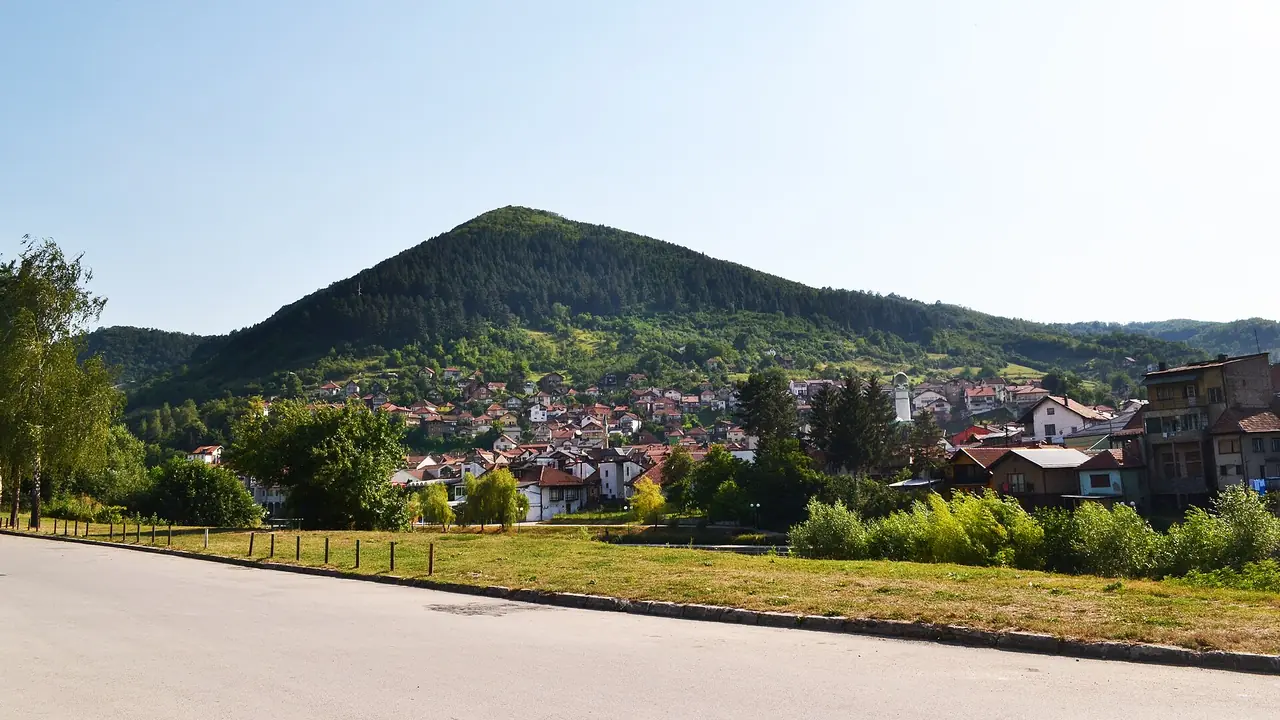
The main hill, Visočica, has a strikingly triangular shape - which is why the idea caught on and why the cover photo above looks so convincing. But geologists identify it as a flatiron, a natural landform produced when tilted rock layers erode into a steep, faceted, pyramid-like slope. They’re common worldwide. Geologists from the University of Tuzla examined the site and described it as a “natural geological formation, made of clastic sediments of layered composition.” In December 2006 the European Association of Archaeologists issued a formal declaration calling the project “a cruel hoax on an unsuspecting public.” When independent archaeologists dug at the site, they turned up medieval artifacts, not evidence of a prehistoric civilisation.
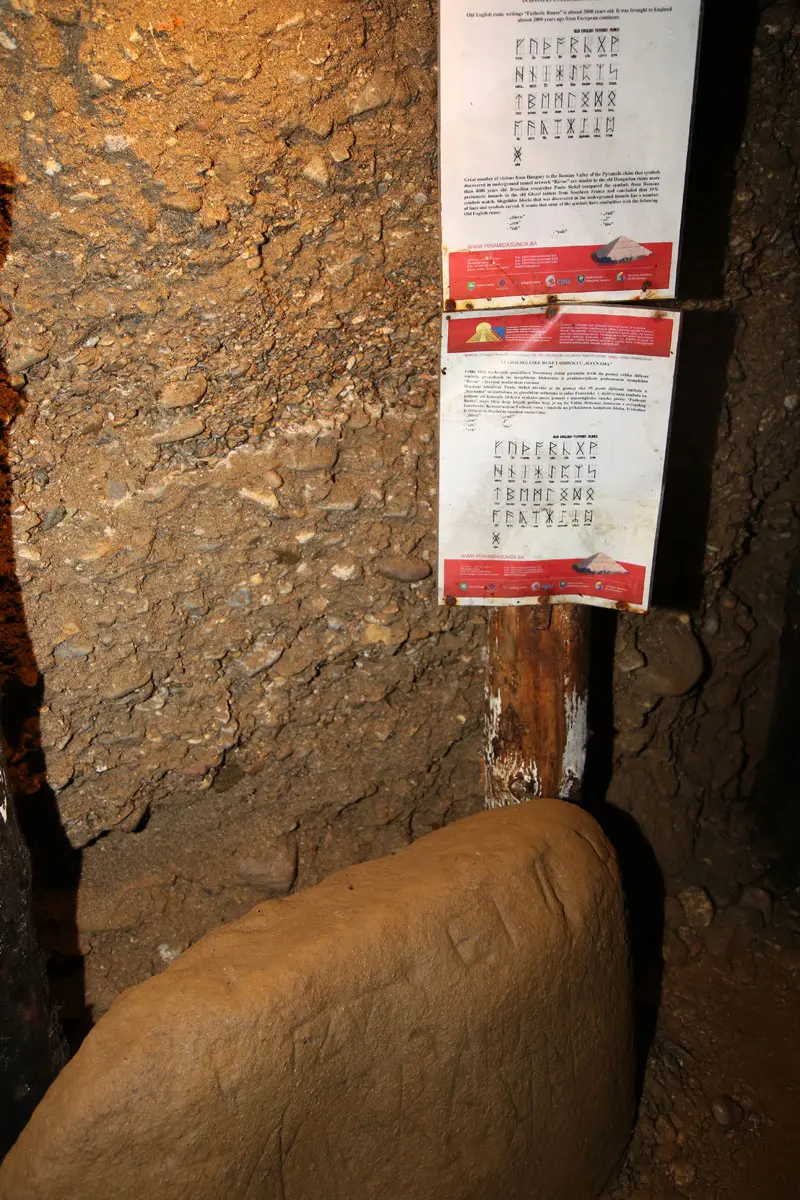
So treat the on-site signage, with its talk of 12,000-year-old concrete blocks, energy beams and ancient tunnels, as part of the show rather than as accepted fact. None of this is meant to sneer at anyone who finds the place moving - just to make sure you arrive knowing which parts are archaeology and which parts are marketing.
There is a serious side to the scepticism, too. Professional archaeologists have long warned that unsupervised digging in search of pyramids risks damaging the genuine medieval and Roman-era remains that the Visoko valley really does contain, and there were repeated calls to cancel the excavation permits over exactly that. In other words, the objection isn’t just “these are hills” - it’s that chasing an invented ancient civilisation can trample the real, documented one underfoot. Keep that in the back of your mind as you walk around.
Who is behind it
The pyramids are the project of Semir Osmanagić, a Bosnian-American businessman based in Houston, who announced in October 2005 that Visoko’s hills were artificial pyramids and began excavating. He named the biggest hills the Pyramid of the Sun (Visočica) and the Pyramid of the Moon, with others dubbed the pyramids of Love, the Earth and the Dragon. His foundation has run the digs and the visitor sites ever since.
Whatever the archaeology, the enterprise has been a real economic lifeline for a town that badly needed one. Visoko lost its industry in the 1990s war, and the pyramid tourism - guides, guesthouses, cafes, souvenir stalls - brought jobs and visitors back. That’s worth keeping in mind: you can be completely unconvinced by the claims and still see why the town embraced them.
What you actually visit
There are two main things to do, and they’re quite different.
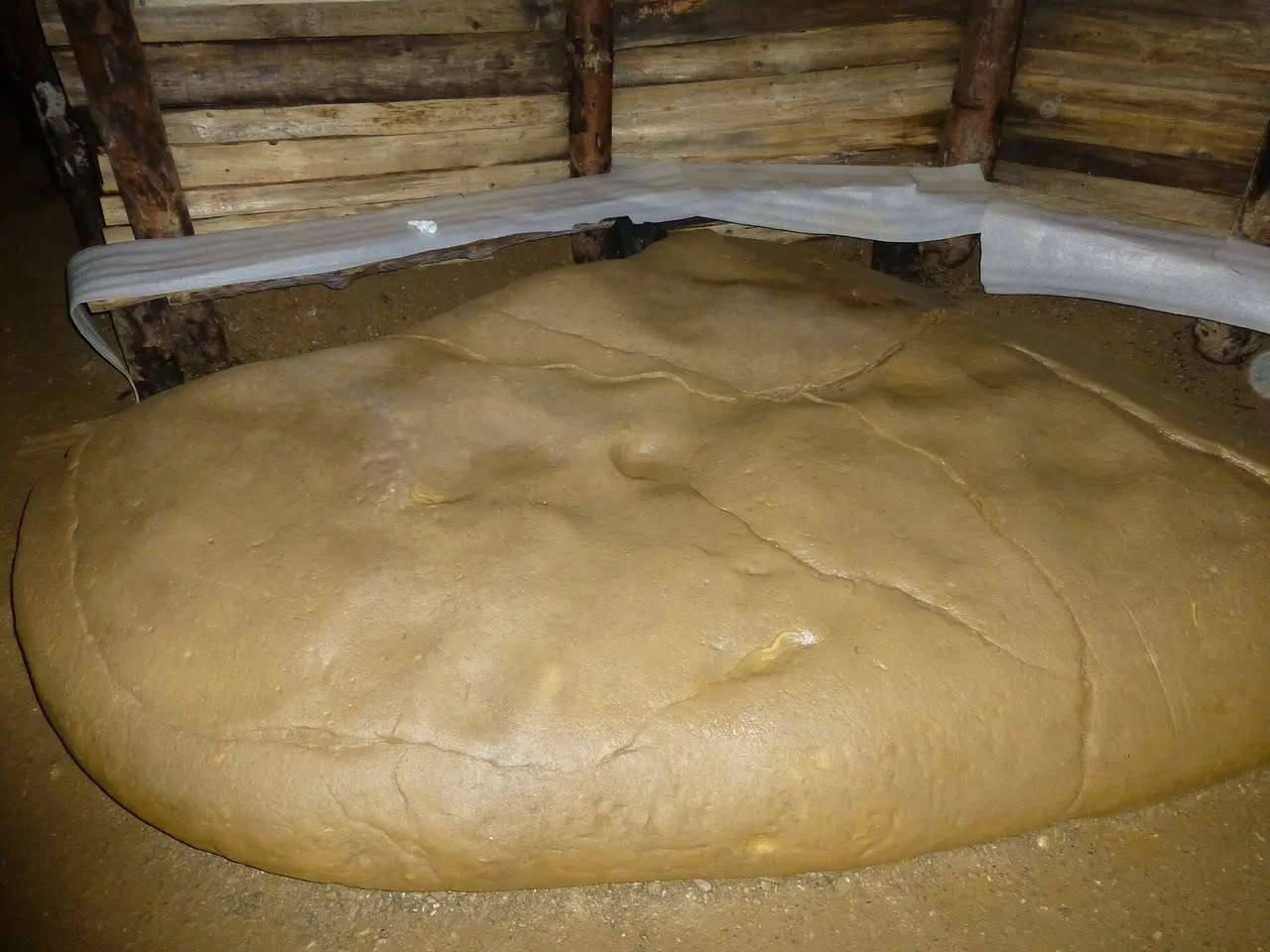
The Ravne tunnels are the headline attraction and the one most day-tourists book. You take a guided walk of about 45 minutes to an hour through a network of cool, narrow underground passages, hard hat on, past features the guides present as ancient - smooth sandstone boulders described as “megaliths,” spots marked out as energy or healing chambers. Set the theory aside and it’s still a mildly fun, slightly surreal underground walk, and the temperature (around 12°C) is a blessing on a hot summer afternoon. Some visitors go back in afterwards to sit and meditate; others find the whole thing kitsch. Both reactions are common.
The Pyramid of the Sun (Visočica) is simply a hill walk. There’s a marked path to the wooded summit, an hour or more of climbing, and the reward is a good view over Visoko and the valley rather than any visible masonry. You’ll pass a few exposed digs where slabs of layered sandstone are framed as “terracing”; geologists see the same natural bedding you would find on any nearby slope. If you like a leg-stretch and a viewpoint, it delivers; if you’re expecting exposed pyramid stone, you will be disappointed. Around the tunnel entrance the project has built up a small park - the Ravne 2 park - with lawns, a stream, standing stones, a stage for summer events and a painted concrete pyramid model. It’s pleasant enough for an hour, and firmly in theme-park territory; families with kids tend to like it more than purists do.
The real history most visitors miss
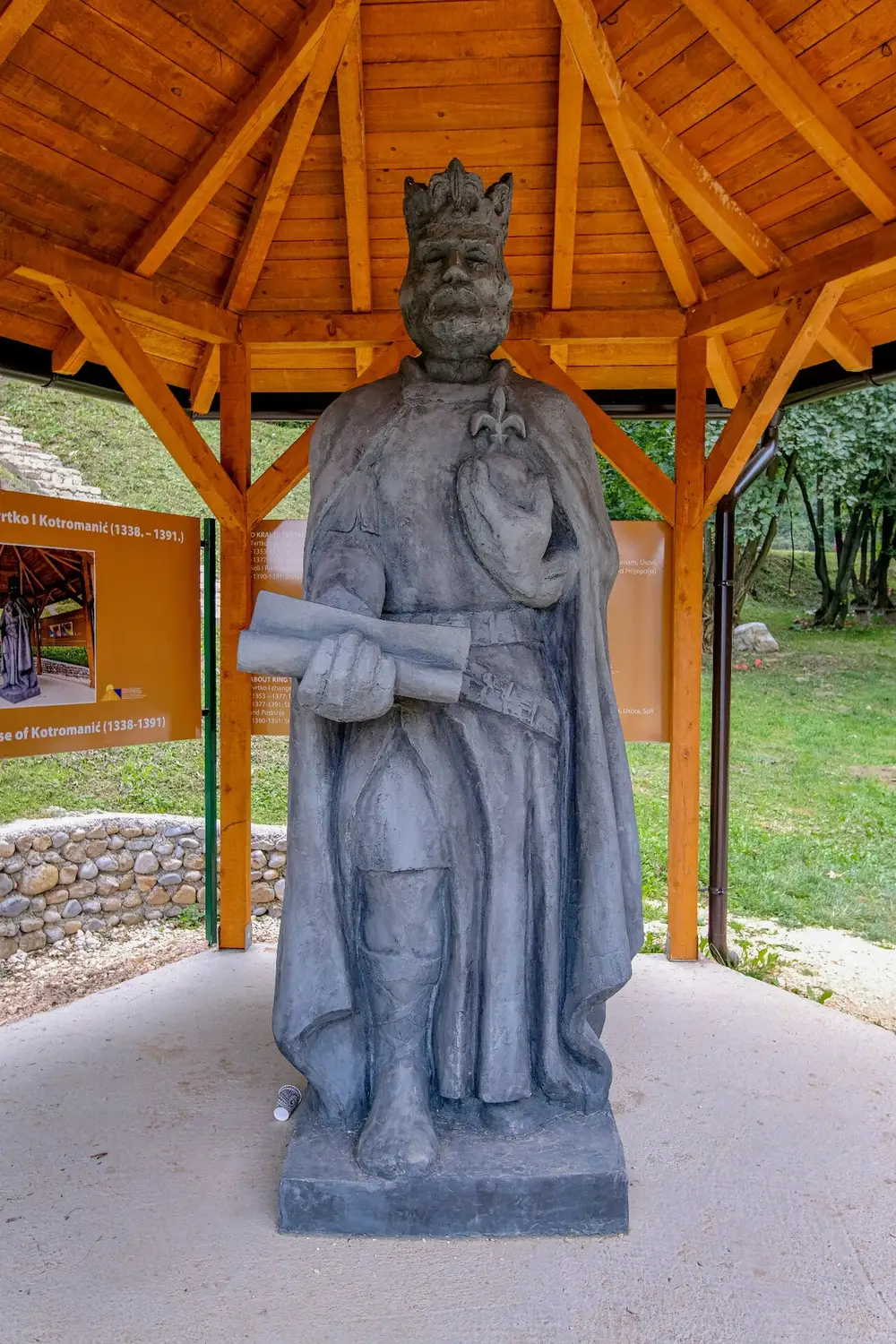
Here is the genuine irony. Visoko sits on top of one of the most important sites in real Bosnian history, and almost nobody who comes for the pyramids notices. This valley was the heartland of the medieval Bosnian state. The nearby fortress hill of Visoki was a royal seat, and the medieval town of Mile just outside Visoko is where Bosnian rulers were crowned and buried - including Tvrtko I Kotromanić, who was crowned the first King of Bosnia in the 1370s and whose statue now stands, a little incongruously, inside the pyramid park. If you have any interest in the actual past, ask locally about the medieval sites; that history is real, documented and criminally under-visited next to the pyramid buzz.
Getting there, tickets and timing
Visoko is easy from the capital - about 30 km northwest of Sarajevo, roughly 40 to 50 minutes by car on the A1 motorway. Public buses from Sarajevo’s main bus station run several times a day and take about an hour; from the centre of Visoko it’s a short, cheap taxi (around €1-2) out to the tunnel and pyramid sites. Because Bosnia has no established local tour partner, most independent travellers do this as a self-drive day trip or a private transfer rather than a packaged tour, which also lets you fold in the medieval sites and lunch in town. It slots neatly into a wider day trip from Sarajevo, and pairs well with the sights in our Sarajevo guide; drivers heading further can follow our Visoko, Vranduk and Tuzla loop.
On tickets, bring cash in convertible marks (KM) - euros are patchy. Reckon on roughly 20 KM (about €10) for the guided tunnel tour and about 10 KM (about €5) for the Pyramid of the Sun site, though the figures move year to year, so confirm at the ticket office. The park and tours run daily in season with roughly hourly departures and shorter winter hours. A half-day covers the tunnels and the hill comfortably.
So, is it worth it? If you want a serious archaeological site, no - go to the Old Bridge in Mostar or Sarajevo’s museums instead. But as a properly odd, only-in-Bosnia half-day, a cool tunnel walk in the summer heat, and a chance to see a real town make the best of a strange story, Visoko can be a fun detour - as long as you pack your sense of humour along with your scepticism.
Photos
On the map
The map loads on click - to keep the page lightweight.
The map didn’t load. Check your connection and refresh the page.
Admission and opening hours
- Admission price
- Cash in convertible marks (KM): roughly 20 KM (~€10) for the guided Ravne tunnel tour and about 10 KM (~€5) for the Pyramid of the Sun site. Prices shift year to year - confirm at the ticket office.
- Opening hours
- The Ravne 2 park and the tunnel tours run daily in the tourist season with roughly hourly guided departures; hours are shorter in winter. Check the current schedule before you travel.
Bring cash in KM - euros are not reliably taken. The tunnel is cool (about 12°C) year-round, so take a layer even in summer. The Pyramid of the Sun (Visočica) is a real hill walk of an hour or more to the top; wear proper shoes.
Details checked: July 15, 2026
Distance ≈30 km · ~40-50 min by car
- Sarajevo ≈30 km · ~40-50 min by car Northwest on the A1 motorway. Public buses from Sarajevo main bus station run several times a day and take about an hour; from Visoko centre it is a short taxi (~€1-2) to the tunnel and pyramid sites.
Read also

What to see · 15 min read
Via Dinarica Bosnia: Huts, Stages & Logistics
Verified · September 12, 2026Plan the Via Dinarica White Trail in Bosnia: 12 stages, 334 km, hut booking, trailheads, closures and three workable section packages.

What to see · 10 min read
Jablanica: Neretva Bridge & Roast Lamb Stop
Verified · September 4, 2026Jablanica on the Sarajevo-Mostar road: Battle for the Wounded museum (5 KM), the 1943 bridge, roast lamb lunch. Hours, parking, how long to stop.

What to see · 8 min read
Prokoško Lake: Shepherd Huts High Above Fojnica
Verified · September 3, 2026Prokoško on Vranica at 1,636 m: katuni, gate prices for foreigners, no swimming, and the 2026 asphalt climb from Fojnica.

What to see · 11 min read
Franz Ferdinand's Sarajevo: Latin Bridge & 1914 Site
Verified · August 29, 2026The Latin Bridge corner in Sarajevo where Franz Ferdinand was shot in 1914: what happened, the Museum of Sarajevo 1878-1918 inside, hours and tickets.