Northeast Bosnia: Visoko, Vranduk & Tuzla
A 2-day road trip north from Sarajevo up the Bosna valley: the Visoko pyramid hills, the royal fortress at Vranduk, and Tuzla salt lakes in the city.
Two days north of Sarajevo, up the Bosna river valley, buys you a stranger and more varied slice of Bosnia than the tourist trail usually admits: an old leather town wrapped around the country’s most notorious pseudo-archaeology, a genuine medieval royal fortress on a cliff over a river bend, a hard-working steel city, and a spa town with three salt lakes sitting right in its centre. It’s a self-drive loop of roughly 330 km, easily done in two days with one overnight, and it works precisely because the stops are so different from each other. You need your own car; there is no sensible way to string Vranduk and Tuzla together by bus.
This is the northeast and the industrial heart of the country, not the mountains that ring the capital. If you want peaks and ski villages, that’s a different trip. Come between May and September, when Tuzla’s lakes are open and warm; the salt-lake swimming is the summer payoff at the end of day one. For the wider picture of when to go, our best time to visit Bosnia guide sorts it by season.
Getting out of Sarajevo, and why you need a car
Head north out of Sarajevo and the first surprise is how fast it goes. The Sarajevo-to-north corridor has been getting serious motorway upgrades, with new A1 bypasses and a fresh tunnelled stretch around Zenica, so the opening leg up the Bosna is quick and smooth. That doesn’t hold for the whole loop, though: the cross-country run east to Tuzla is slower trunk road over the hills, and Bosnian roads in general still range from brand-new to patched-and-potholed. Our driving in Bosnia guide covers what to expect at the wheel.
A hire car is essential here. Public transport reaches the cities but not the fortress, and it certainly won’t chain these four very different places into two days. Pick a car up in Sarajevo, carry cash in convertible marks (BAM / KM, about 1.96 to the euro), because Visoko’s pyramid park and plenty else out here are cash-only, and treat the whole thing as a loop rather than a set of separate day trips. Our car rental in Bosnia guide has the details on deposits and paperwork.
Visoko: leather, an old town, and those “pyramids”
Twenty-five kilometres up the valley, Visoko is a town that has tanned and worked leather since before the Ottomans arrived, and still does; in Yugoslav times its KTK plant was the biggest leather works in the country, and there’s a leather school here dating to 1929. Above the modern town, the Old Town of Visoki on Visočica hill was a seat of the medieval Bosnian state. That’s the real, verifiable Visoko, and it is worth an hour on its own.
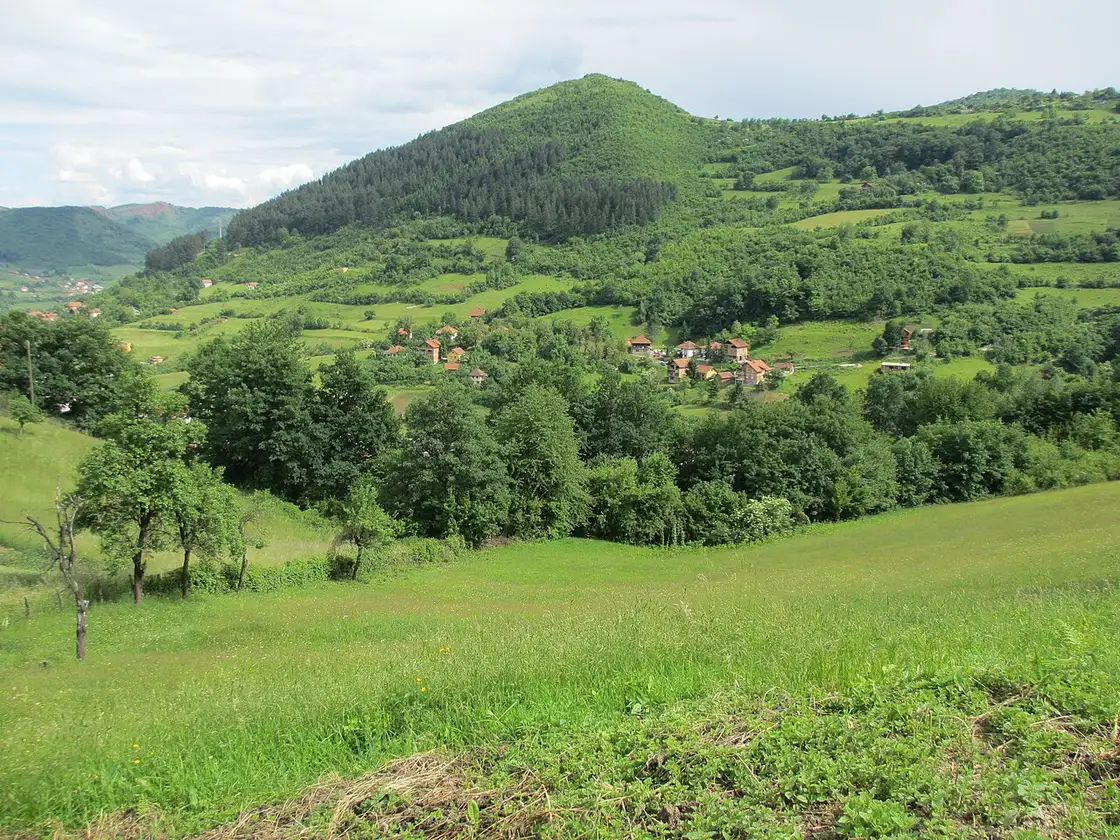
Then there are the pyramids, and it is worth being straight about them. Since 2005 a businessman named Semir Osmanagić has promoted the idea that Visočica and the hills around it are the largest human-built pyramids on Earth. The scientific verdict isn’t mixed: geologists identify the hills as flatirons, natural triangular formations shaped by erosion, and the wider archaeological community has been blunt, with leading European archaeologists calling the whole thing a “cruel hoax”. They’re natural hills. That’s the honest answer to the question that brought you here.
And yet. The visitor operation built around the claim, the Ravne tunnels and the hillside park, is a genuinely popular, well-kept, faintly surreal half-day out, whatever you make of the theory. The tunnels themselves are cool, quiet and pleasant to walk, wrapped in New Age talk of energy and healing that you can take or leave; the walk up Visočica is a steep 25 minutes with a real view at the top. It’s cash-only, with ATMs on site, and hours run roughly 9am to 5pm. Go in with your eyes open and it’s an oddly enjoyable stop; go in expecting proven ancient wonders and you’ll feel sold to. Either way it’s a talking point you will not get anywhere else in Europe.
Zenica: the steel city
Push on about 45 km and the valley industrialises into Zenica, Bosnia’s fourth-largest city and the home of its steel industry. Nobody comes to Zenica for its looks: it is a functional place of Yugoslav towers and a working steelworks strung along the Bosna, and it wears that honestly.
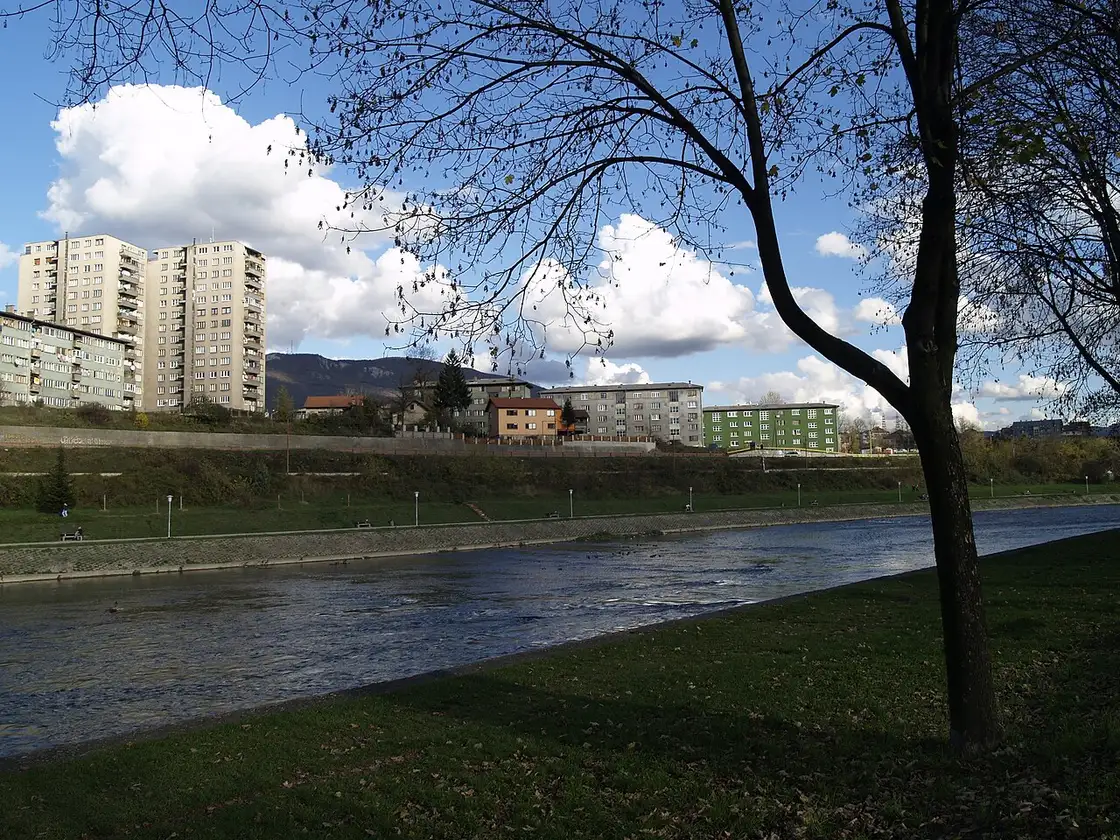
Treat it as a pit stop. It’s a sensible place to refuel, grab a burek and draw cash before the fortress and the long leg east, and it has a decent theatre and a workaday centre if you want to stretch your legs. If you would rather split the loop into two gentle halves, Zenica also makes a plain, inexpensive overnight base, though Tuzla is the nicer place to sleep. The reason you’re in Zenica at all is what sits just up the river.
Vranduk: the fortress on the river bend
Ten kilometres north of Zenica, the Bosna throws a near-complete hairpin around a spur of rock, and on that rock sits Vranduk, the best medieval fortress on this whole route. Built at the end of the 14th century to guard the strategic river pass, it was a stronghold of the Kingdom of Bosnia and is tied by tradition to King Stjepan Tomaš, who ruled in the mid-1400s. The whole village is tiny, barely 450 people, and it climbs the hillside below the keep in a huddle of stone and timber houses.
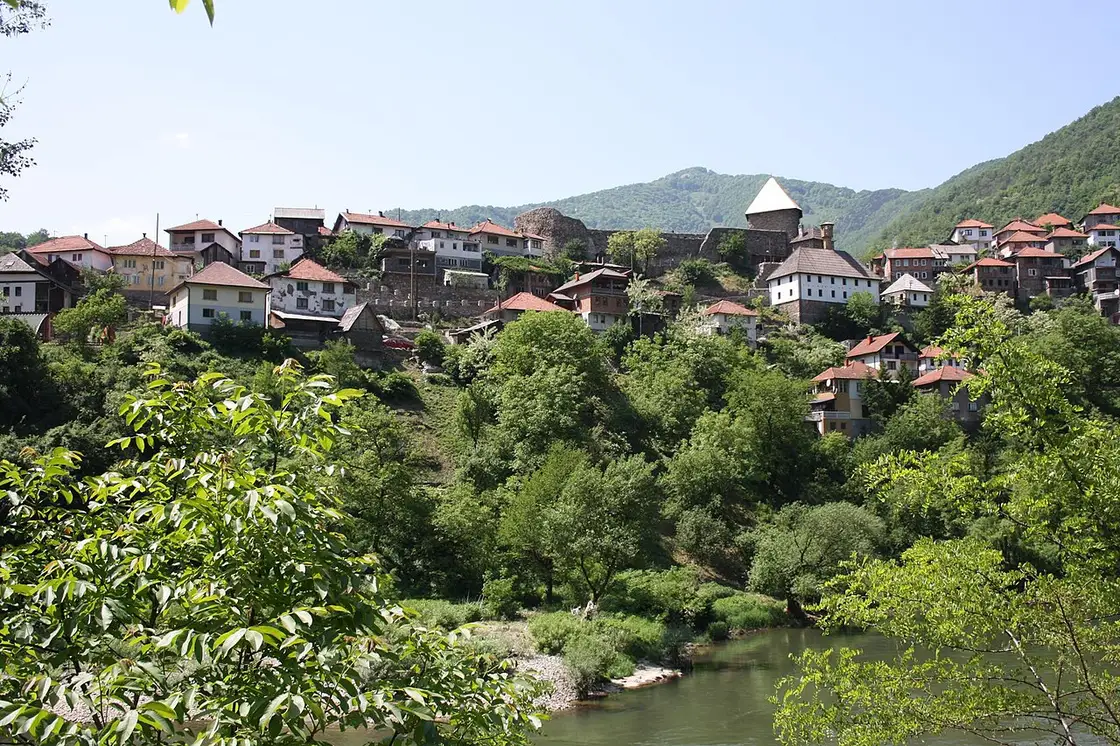
The fortress has been restored with care and now runs as a small museum: you can walk the keep and the walls and poke around reconstructed rooms - a smithy, a scriptorium, a kitchen, even a pillory - and in season it hosts medieval-cuisine days and archery. Below the citadel is a small Ottoman mosque named for Sultan Mehmed II, the “Imperial Mosque,” and a little cafe sits between the two. Entry is cheap, and it is open year-round, though hours shrink off-season. Getting in is part of the experience: from the M-17 you find the turn, drive about a kilometre, pass through a narrow former rail tunnel, then double back to the bridge over the river. It’s the kind of approach that makes a place feel earned.
Give it a good couple of hours. Vranduk is the emotional high point of the loop, the one stop that’s unambiguously worth the drive on its own terms.
Tuzla: salt lakes in the middle of town
From Vranduk it’s a longer haul, around 130 km east over the hills, to Tuzla, and the payoff is genuinely one of a kind. Tuzla is built on salt, which it has mined for thousands of years - the name comes from the Turkish for salt - and in its centre it has done something no other city in Europe has: it has three artificial salt lakes, fed with brine drawn from the ancient Pannonian Sea, with a salinity close to the sea’s own.
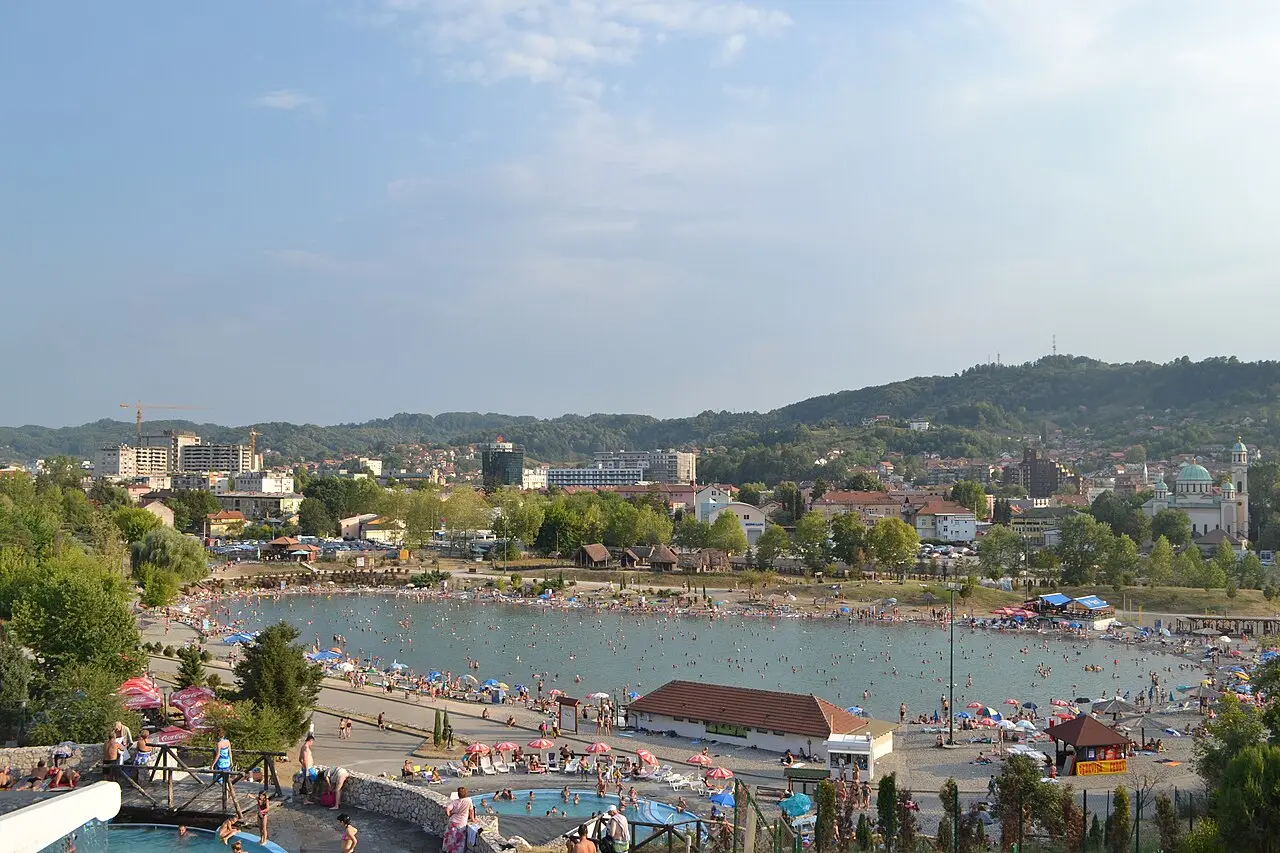
In summer the Pannonica complex turns into a proper beach: the salt water warms up, there are sandy patches and sunbeds, and the whole town seems to be in it. Entry is almost nominal - roughly a couple of euros a day, though prices shift by season, so check the current rates on the lakes’ official pages before you go - and around the lakes there’s a reconstructed Neolithic pile-dwelling settlement, a geology museum and the usual cafes and kids’ rides. It gets busy in July and August, especially at weekends, so come early to claim a patch. This is the place to end day one: a swim in warm salt water in the middle of a Bosnian city is a genuinely strange, lovely thing.
Tuzla is also the nicest overnight of the loop. Bed down here, and the drive home the next morning is easy: it’s about 124 km and just over two hours back to Sarajevo, closing a circle of roughly 330 km. Sort a base with our where to stay in Bosnia guide.
Practical notes for the northeast loop
A few things to make it run:
- Two days, one night. You can force it into a single very long day, but you would spend nine hours driving and rush the two best stops. An overnight in Tuzla, or a cheaper one in Zenica, makes it a real trip.
- Cash in marks, always. Visoko’s park is cash-only, and small places east of Zenica prefer marks. Draw money in Sarajevo or at Zenica.
- Fast start, slow middle. The A1 north is quick; the leg from the Zenica area east to Tuzla is slower trunk road. Budget accordingly and don’t expect motorway speeds all the way round.
- Swimming kit for Tuzla. Bring swimmers and a towel: the salt lakes are the highlight and it would be a shame to just look at them. In peak summer arrive before midday for a spot.
- Read Visoko honestly. The hills are natural, not built. Go for the tunnels, the walk and the curiosity, not for proof of ancient pyramids, and you’ll enjoy it.
Run this way, over two days and one salty overnight, the northeast loop shows you a working, unpolished, genuinely surprising Bosnia that the Mostar-and-Sarajevo circuit skips entirely. For the same kind of empty back-country trip at the western end of the country, our wild west Herzegovina route climbs out of Mostar to the Blidinje plateau and the free-roaming wild horses above Livno. And if you would rather stay closer to the capital, the Sarajevo things-to-do guide is the place to plan from.
Route day by day
- Days on the road
- 2
- Distance
- ≈330 km
- Budget from
- 90 EUR
- Best season
- May, June, July, August, September
-
Sarajevo
Route startstop ≈0 min
Start point. Head north out of the city up the Bosna valley on the M-17 and the new A1 stretches. Much of this corridor is fresh motorway now, so the first leg is quick.
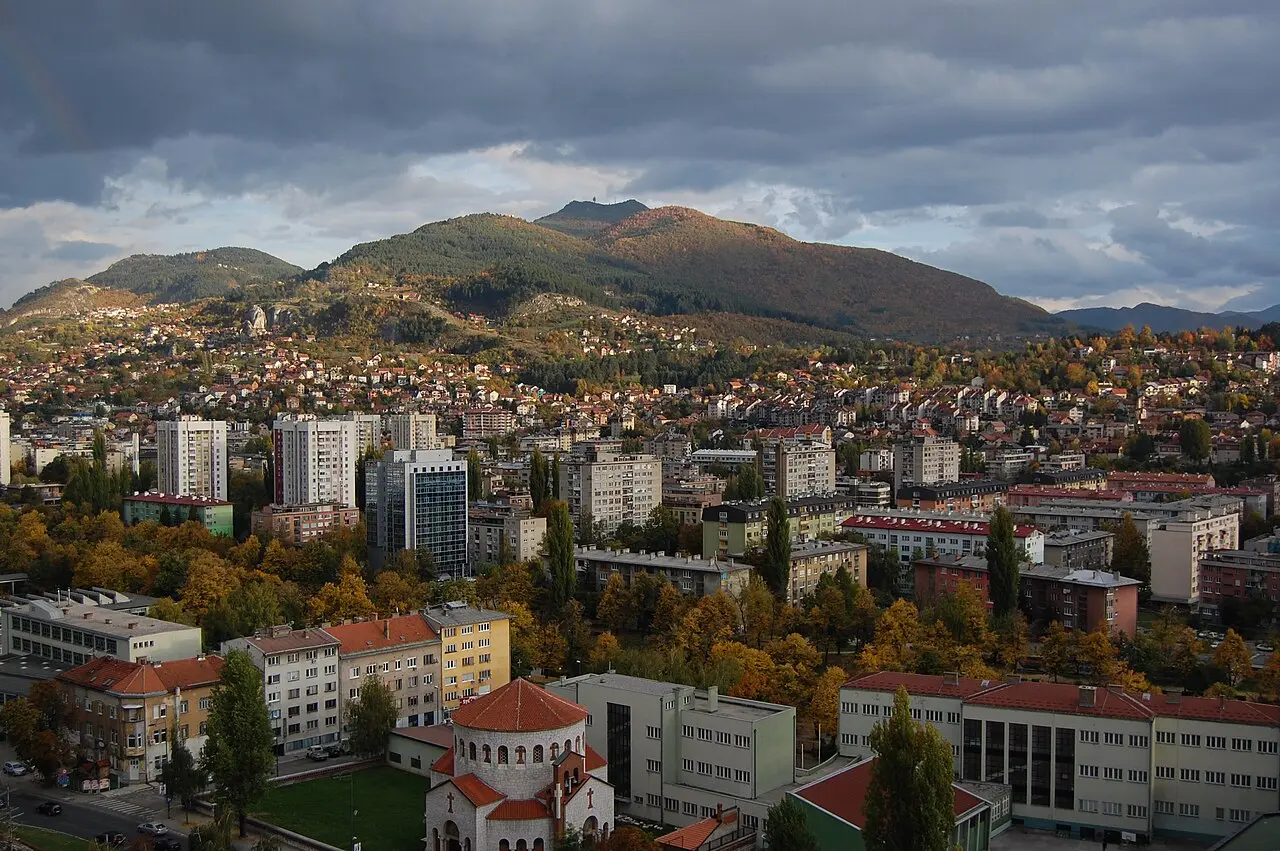
Photo: Milan Suvajac / Wikimedia Commons, CC BY-SA 4.0 ( source) -
Visoko
25 km from the startstop ≈180 min
About 25 km north of Sarajevo. An old leather-tanning town with a medieval Old Town on Visocica hill - the hill at the centre of the "Bosnian pyramid" claim. Scientists call the hills natural; the Ravne tunnels and hill park are a popular, oddly enjoyable half-day. Cash only.
Photo: Mhare / Wikimedia Commons, CC BY-SA 4.0 ( source) -
Zenica
70 km from the startstop ≈45 min
Bosnia fourth-largest city, roughly 45 km on. A working steel town on the Bosna, not a pretty one, but a practical stop for lunch, fuel and cash, and the gateway to Vranduk 10 km further north.
Photo: elisabeth / Wikimedia Commons, CC BY 2.0 ( source) -
Vranduk
80 km from the startstop ≈120 min
A tiny medieval village on a sheer rock where the Bosna swings almost 180 degrees, about 10 km north of Zenica. Its restored 14th-century fortress guarded the Kingdom of Bosnia and is now a small museum. Reach it off the M-17 through a narrow old rail tunnel.
Photo: Assetta / Wikimedia Commons, CC BY-SA 3.0 ( source) -
Tuzla
210 km from the startstop ≈180 min
The salt city, roughly 130 km east across the hills. Tuzla has the only salt lakes in a European city centre: three man-made lakes fed by brine from an ancient sea, warm and swimmable in summer, right in the middle of town. A good place to end day one.
Photo: Edinwiki / Wikimedia Commons, CC BY-SA 3.0 ( source) -
Sarajevo (return)
330 km from the startstop ≈0 min
Drive back to Sarajevo, about 124 km and just over two hours direct from Tuzla. The whole loop runs to roughly 330 km, a comfortable two days with an overnight in Tuzla or Zenica.
Route map
The map with stops loads on click - to keep the page lightweight.
The map didn’t load. Check your connection and refresh the page.