The Best Day Trips from Mostar
Day trips from Mostar worth the drive: Blagaj, Kravice, Počitelj, Medjugorje, Stolac and Trebinje, with distances, costs and how to go.
The area around Mostar is, if anything, a stronger reason to come than the Old Bridge itself: a dervish house at the mouth of a cave, a horseshoe of waterfalls you can swim in, a whole Ottoman town stacked up a cliff, and a wine town two hours south. The catch is that almost none of it links up by bus. Below is each trip ranked by whether it earns the drive, with the distance, the cost, and an honest word on whether you need a car - which, for the best of them, you do. The three headline sights south of town (Blagaj, Počitelj and Kravice) sit close enough to chain into one loop, and that’s the standout day out in Herzegovina.
The short version
Match the trip to the kind of day you want:
- A relaxed half-day: Blagaj, 12 km out, the closest and most striking of the lot.
- A hot afternoon with swimmers packed: the Kravice waterfalls, the region’s best swimming hole from June to September.
- One full self-drive day, the classic: Blagaj, then Počitelj and Kravice on a southbound loop - two or three sights at a comfortable pace.
- A quieter, offbeat run: the medieval tombstones at Radimlja near Stolac, and a few marks to get in.
- A pilgrimage, or just curiosity: Medjugorje, 25 km southwest, one of the world’s busiest Marian shrines.
- An overnight, not a day trip: Trebinje, the sunny wine town two hours south - or duck across the border to Dubrovnik.
- Cool mountains instead of the south: Blidinje Nature Park, about an hour and a half northwest via Jablanica - plateau, shallow mountain lake, UNESCO stećci.
How many of these you fit in comes down to how long you give Herzegovina, which our guide to things to do in Mostar puts in context. Most of the good ones need wheels, so you’ll want to settle the car question first.
Blagaj: the closest, and the best half-day
Twelve kilometres southeast of Mostar, about fifteen minutes by car, Blagaj is the trip to do if you only do one. The Blagaj Tekke is a white 16th-century dervish house built flush against a 200-metre cliff, right where the Buna river bursts out of a cave at the base of the rock - one of the largest karst springs in Europe, and startlingly clear. The entry fee is paid at the booth, so bring marks in cash (the lodge doesn’t publish the amount online), and there’s a real dress code (shoulders and knees covered; free wraps at the door), because it’s still a working Sufi lodge.
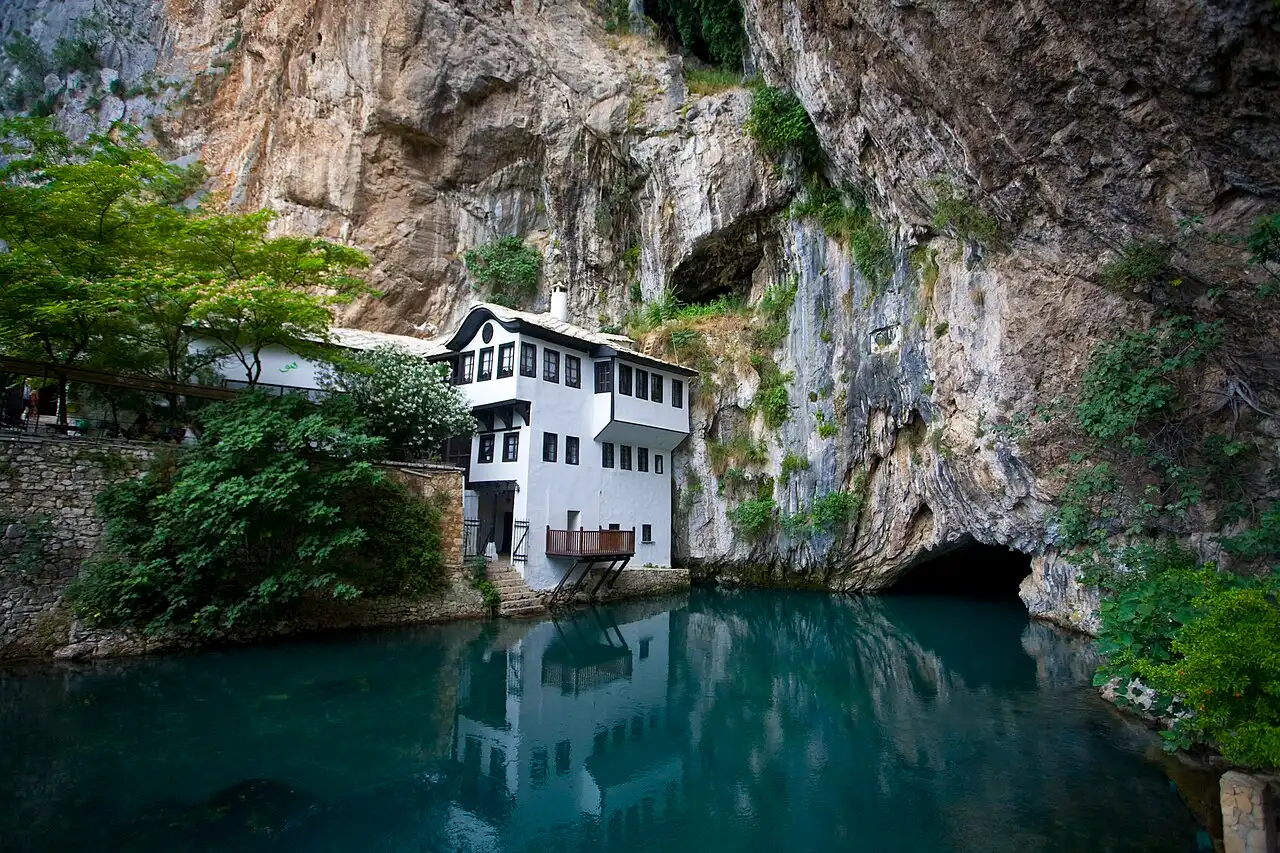
Most visitors photograph the house from the terrace café and leave inside twenty minutes, which sells the place short. A small boat runs into the spring cave (no season is published, so ask on the day), and you can climb to the ruined Stjepan-grad fortress on the ridge above for the view down the valley. Come before about ten in the morning or after five, when the tour buses have gone and the water is at its stillest - that’s when the place earns the drive. Our full Blagaj Tekke guide covers the boat, the fortress and the best light.
Počitelj and Kravice: the southern loop
Head south and two of Herzegovina’s headline sights sit a short drive apart, easy to pair in one relaxed loop - the strongest reason to have a car down here, because you won’t find a useful bus linking them.
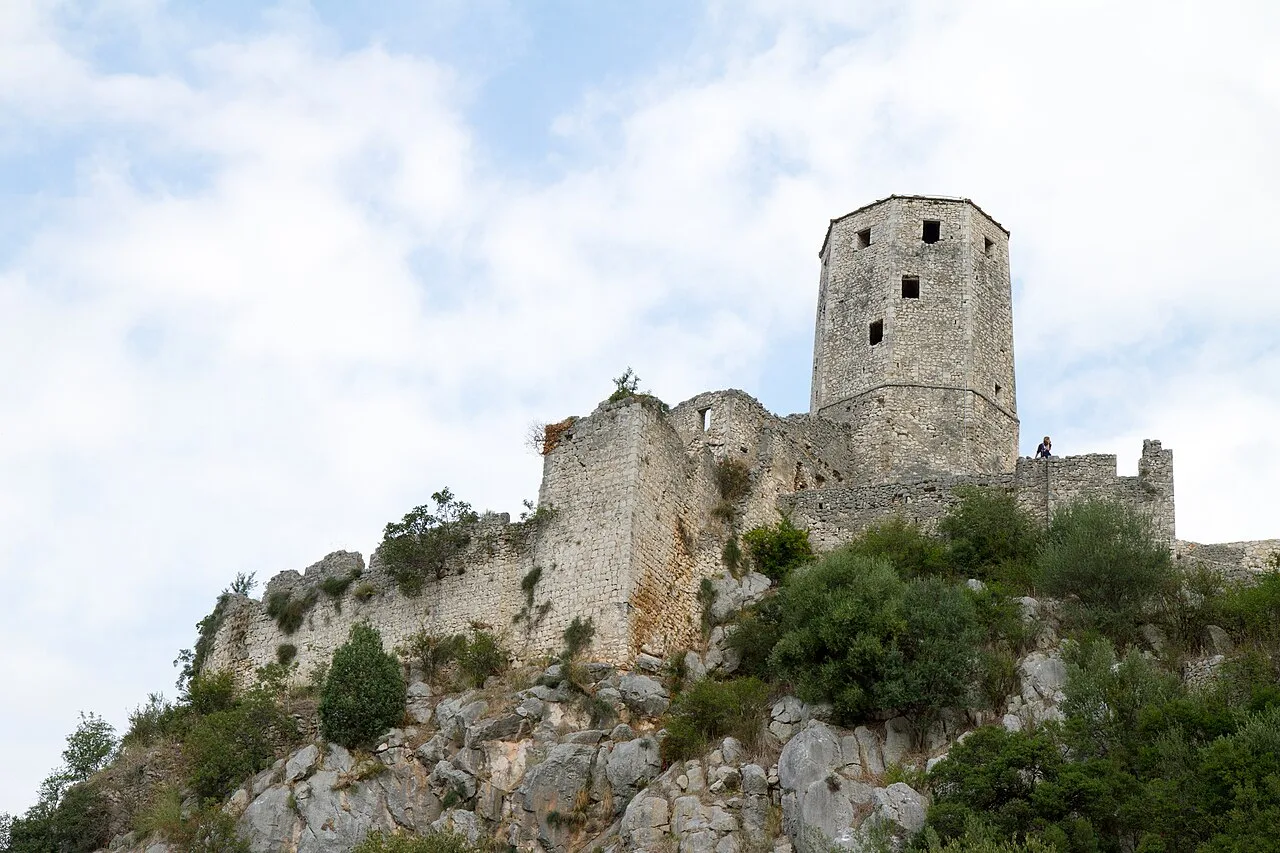
Počitelj, about 30 km and half an hour from Mostar, is a stepped Ottoman-medieval town climbing a hillside above the Neretva: a fortress first raised by King Tvrtko I in 1383, an Ottoman mosque of 1563, and a stone clock tower, all in pale limestone. It’s free and open all hours, takes about 45 to 90 minutes to wander and climb, and from the top of the citadel you look back over terracotta roofs to the river, largely to yourself outside the brief coach windows. It sits on the UNESCO tentative list, and deservedly.
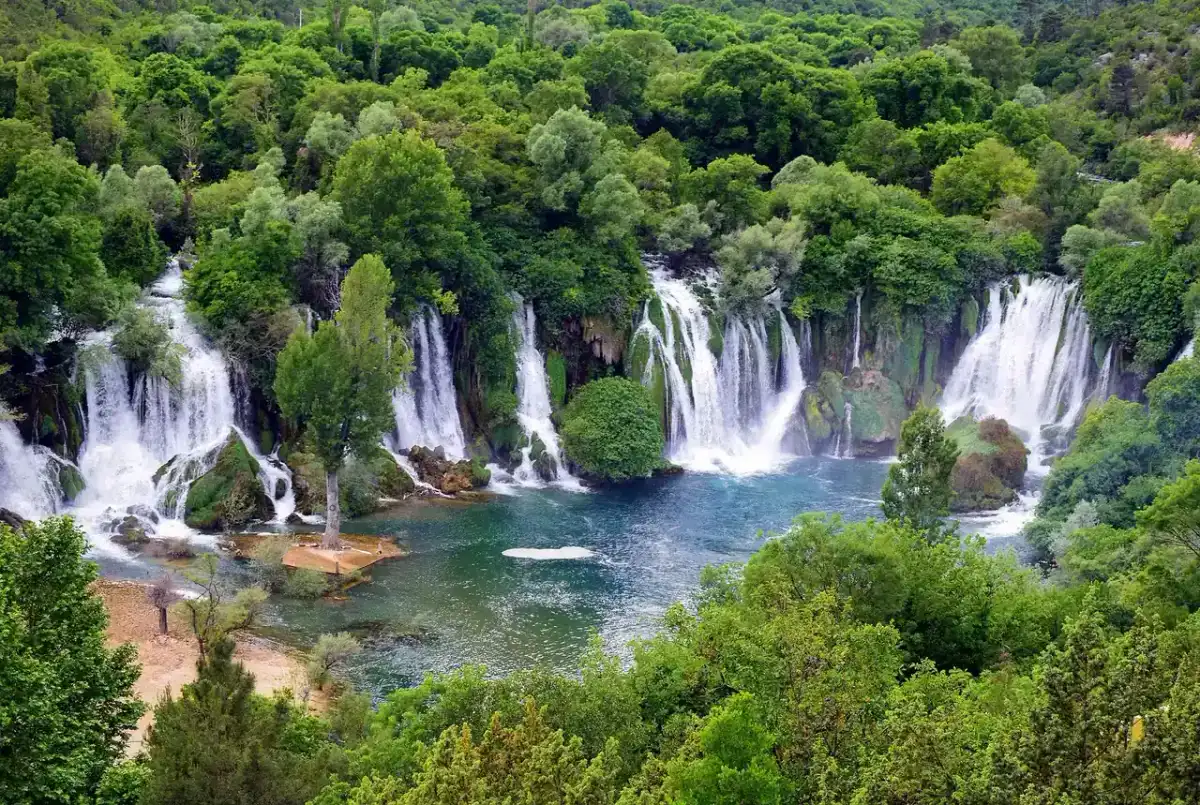
Another twenty minutes or so brings you to the Kravice Waterfalls, about 40 km from Mostar all in. Kravice is a broad horseshoe of falls on the Trebižat, roughly 28 metres high and 120 metres across, tumbling over a curved travertine ledge into a wide green pool - and from June to September it doubles as the best swimming hole in the country. Entry is 20 KM (about EUR 10), cash, year-round, with parking charged on top; the gate runs 07:00 to 22:00 in high summer (June-September), shorter hours the rest of the year. The water tops out around a bracing 20C and there are no lifeguards, but under a Herzegovina sun it’s glorious. Go early or late to dodge the midday crush; our Kravice guide has the fee, the swim season and the timing in full.
With your own car you can fold Blagaj into this loop too and see all three in a day, though that’s a full day rather than a lazy one - two sights plus a swim is the honest, happy version. If you would rather not drive, a private driver for the day is the flexible alternative; a fixed coach tour will get you there but sets the clock for you. Want to push on and add Kocusa and Medjugorje too, with the timing worked out stop by stop? Our Herzegovina highlights loop runs all five in one circuit.
Radimlja and Stolac: the offbeat one
For a quieter run that most visitors skip, drive roughly an hour south to Stolac (some 40 to 50 km, depending on the road you take) and stop at the Radimlja necropolis, 3 km short of the town. It’s a field of stecci - the monumental medieval Bosnian tombstones, carved between the 12th and 16th centuries and among the finest anywhere, their reliefs of figures, arcades and hunting scenes still crisp in the white stone. 133 of them stand here in situ, most of them 15th-century; the stecci as a group are UNESCO-listed. The public institution that runs it publishes a ticket - 8 KM an adult, 5 KM for BH citizens - and staffed hours that drop to 07:00-15:00 with no weekends from 21 October; some recent visitors still report walking straight in, so you’ll want to carry 10 KM in cash. A walk round takes half an hour.
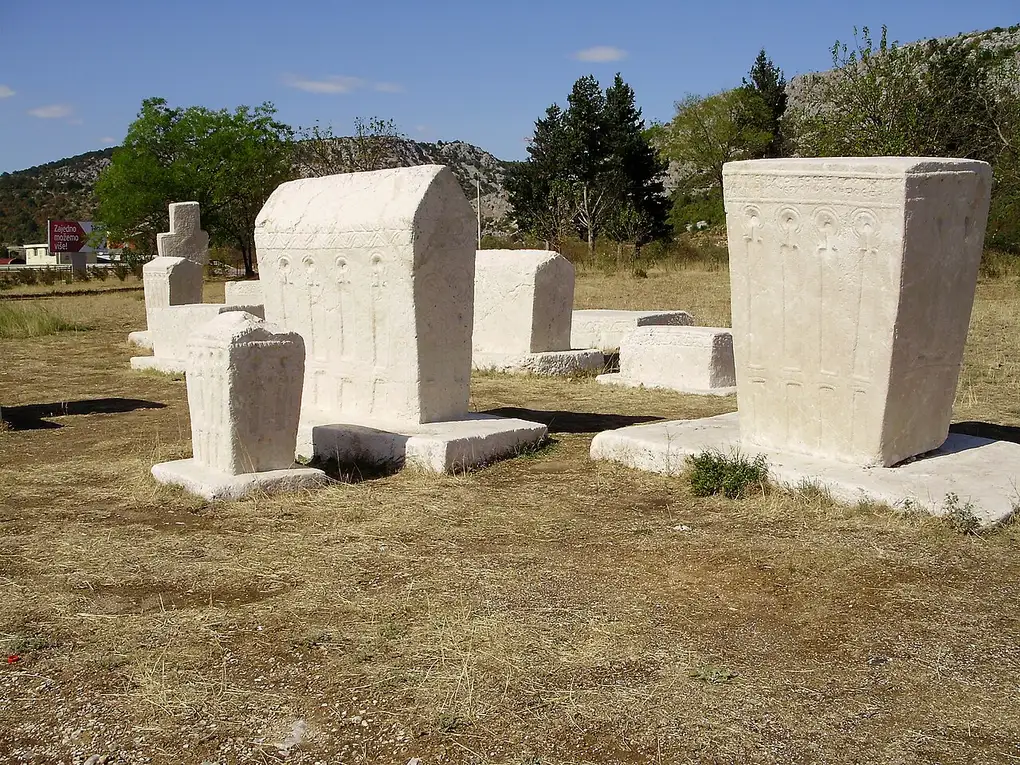
Stolac itself has an Ottoman old town and the ruined Vidoski fortress above it, and the wetland bird reserve of Hutovo Blato lies about an hour further west if you want to make a full day of it. This one’s for travellers with a car and a taste for the road less driven; it also falls neatly on the way to Trebinje, so you can string the two together.
Blidinje: the mountain half of Herzegovina
Everything above points south. Turn the other way and Blidinje Nature Park sits about an hour and a half from Mostar via the Neretva and Jablanica - a karst plateau at 1,150-1,300 m with Blidinje Lake, the Dugo Polje stećci field, and Bosnian pine around Masna Luka. There’s no gate fee and no useful bus; take a car, take a jumper even in July, and treat it as the antidote to the Blagaj-Kravice coach circuit. A half-day covers the lake and the stones; an overnight on the plateau is better if you can spare it. For the longer western loop that continues to Livno’s wild horses, use the wild west Herzegovina route.
Medjugorje: the pilgrimage town
Just 25 km southwest of Mostar, about half an hour, Medjugorje grew from a quiet Herzegovina village into one of the busiest Catholic pilgrimage sites on earth after six local teenagers reported apparitions of the Virgin Mary here in 1981. Millions have come since. The twin-towered St James Church anchors it, with Apparition Hill and the Cross Mountain walk above the town, and the whole place runs on the trade of the faithful - guesthouses, rosary stalls and coach parks.
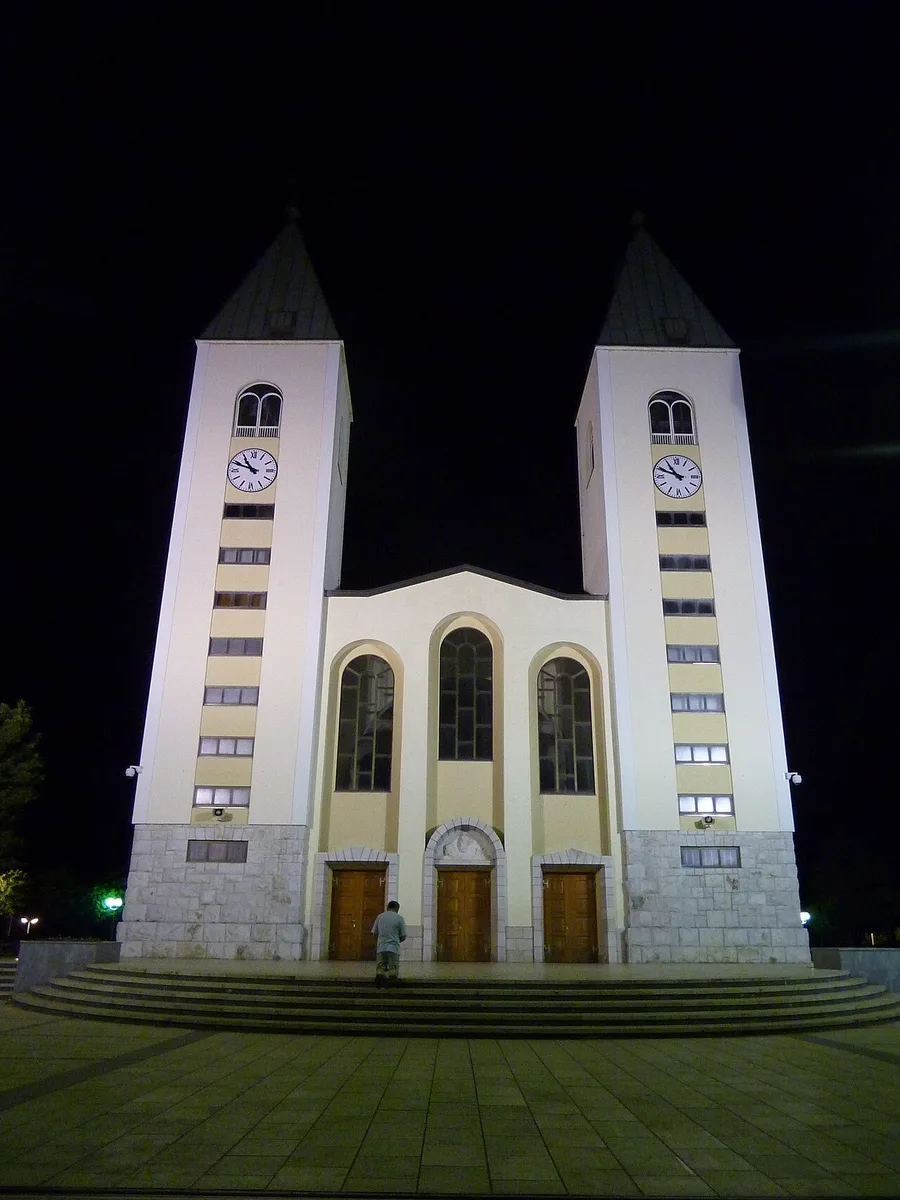
Whether the apparition story moves you or not, it’s an interesting stop - a study in modern faith and the economy that grows around it - and it pairs easily with the southern loop. Our Medjugorje guide covers the church, the hills and the practicalities. If you’re staying overnight rather than day-tripping from Mostar, where to stay in Medjugorje compares pensions near St James with sleeping across in Mostar.
Trebinje: the overnight, not the day trip
Trebinje is the loveliest place in this list and the one you shouldn’t try to do in a day - our East Herzegovina wine route turns it into an overnight with Radimlja, Hutovo Blato and Vjetrenica along the way. It’s about 115 km and just over two hours south, a sunny walled Ottoman old town wrapped around a plane-tree square, set in Herzegovina’s wine country. Its landmark is the graceful Arslanagic Bridge, an Ottoman span of 1574 dismantled stone by numbered stone when the river was dammed in the 1960s and rebuilt about 10 km downstream; a hilltop church and the wine-making Tvrdos Monastery round out a visit.
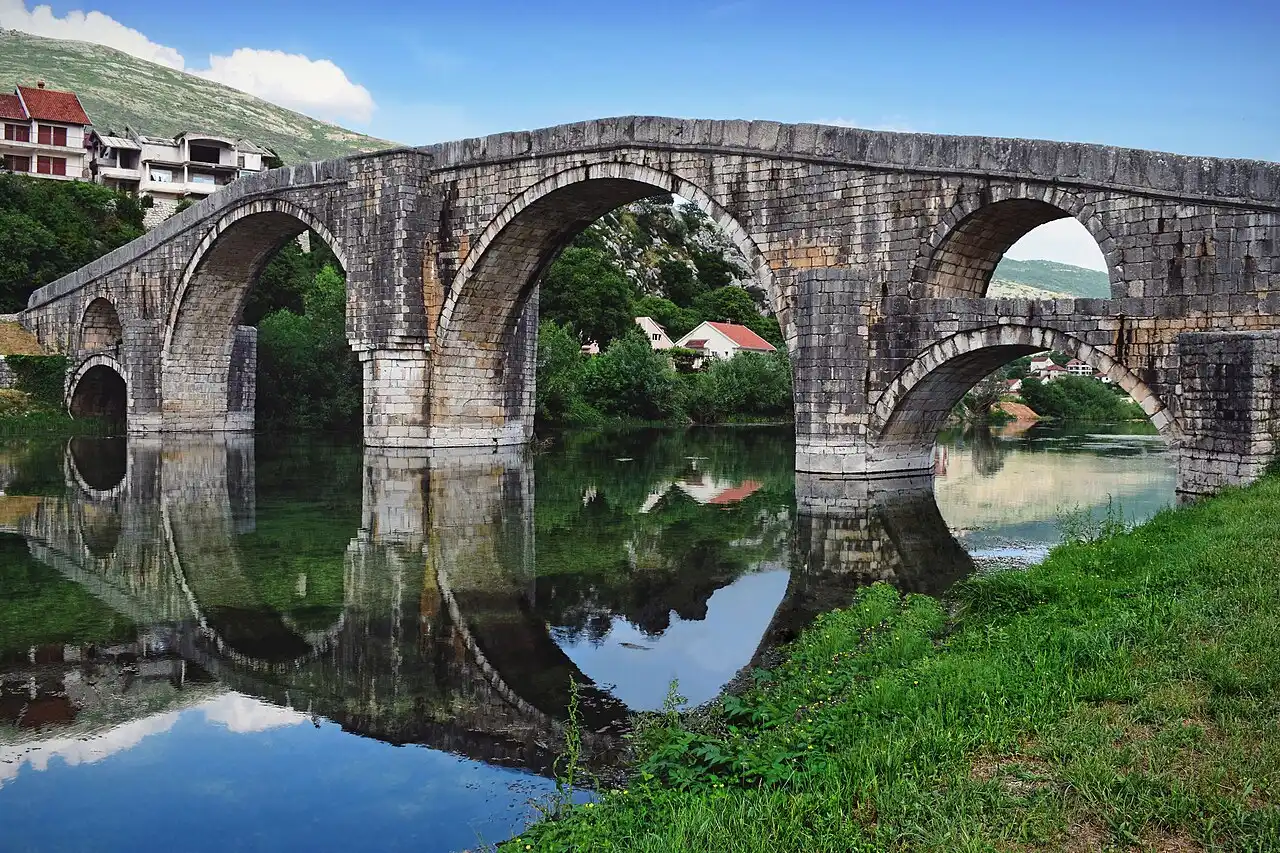
Trebinje sits in Republika Srpska, the Serb-majority half of the country; there’s no passport check crossing between the entities, but the signage switches to Cyrillic. The town empties beautifully once the Dubrovnik day-trippers leave, which is exactly why it is worth a night rather than a dash. Our Trebinje guide makes the case in full, and it’s the natural halfway pause if you carry on down to the Montenegrin coast.
Staying the night also puts a second UNESCO site within reach: Vjetrenica cave at Zavala is only around fifty minutes west of Trebinje, and it’s roughly 80 km from Mostar - far enough that chasing it and the town in one day means seeing neither properly. That’s the argument for the overnight in a sentence.
Across the border: Dubrovnik, Split and the coast
Mostar is close enough to the Adriatic to make the coast a day trip in reverse. Dubrovnik is about 147 km and two and a half hours by car, with a single border crossing since the Peljesac Bridge opened in 2022 (EU, EEA and Schengen nationals can use an ID card; UK, US and others need a passport). It’s a long but doable day, or the smarter move is a night in Mostar bookending a night on the coast - our Dubrovnik to Mostar guide covers the run, and the Dubrovnik guide on our sister Croatia site covers the other end. Split is farther, about two and a half to three hours up the coast, and works better as a one-way leg than a there-and-back; see our Split to Mostar guide.
Closer to home, Bosnia’s own tiny sliver of coast at Neum is roughly an hour south over the hills - not the postcard Adriatic, but a cheap swim and a plate of grilled fish at well below Croatian prices, as our Neum guide explains.
How to actually do these
The pattern is simple: the closest sights lean on a car, and the money is cash.
- Get wheels for the southern loop. Blagaj, Počitelj and Kravice have no useful bus links between them, so a hire car turns them into one flowing day at your own pace - the single best reason to drive in Herzegovina. Our car rental in Bosnia guide covers booking, fuel and the roads.
- Or hire a driver. If you would rather not drive unfamiliar back roads, a private driver for the day does the southern loop hands-free and lets you bolt on Blagaj or Medjugorje. It’s pricier than self-driving but far more flexible than a fixed coach tour.
- Bring marks, not euros. Herzegovina runs on the convertible mark (BAM / KM), pegged near 1.96 to the euro, and the booths at Blagaj and Kravice want KM in cash - euros get a poor, patchy rate and cards are rare, though Kravice’s own site also links an online ticket shop, ticket4you, if you’d rather pay ahead. Draw enough from a Mostar ATM before you set off and you’re covered. (Neum, oddly, does take euros.)
- Wear real shoes. The climbs at Počitelj, the paths at Blagaj and the wet rock at Kravice are all steep, uneven, polished-slippery stone. Flip-flops will betray you.
- Come in late spring or September if you can: warm enough for the Kravice swim, without the July-August heat or the thickest crowds. Our best time to visit Bosnia guide breaks the seasons down.
Pick the southern loop plus one quieter run - Radimlja, say, or a night in Trebinje - and you’ll have seen the best of Herzegovina, the part that most day-trippers to Mostar never reach. If any of it tempts you into staying longer, our guide to where to stay in Mostar sorts the bases, and an overnight in the south turns a rushed circuit into the trip people remember. Come back into town after four and eat then: where to eat in Mostar is built for that sitting, not for the lunch crush on the bridge.
Photos
Read also

Before you go · 10 min read
Where to Stay in Medjugorje: Pansions & Hotels
Updated · August 25, 2026Where to stay in Medjugorje: guesthouses near St James Church, pilgrim hotels, peak dates, and whether to sleep here or day-trip from Mostar.

Before you go · 9 min read
Where to Stay in Jajce: Hotels by the Waterfall
Updated · August 23, 2026Where to stay in Jajce: old-town hotels steps from the Pliva Waterfall, lakeside rooms by the watermills, and which base suits a one-night stop.

Before you go · 11 min read
Mostar or Trebinje: Which Herzegovina Base?
Verified · August 18, 2026Mostar or Trebinje as a Herzegovina base: crowds, hotel prices, summer heat, Dubrovnik access and wine - pick the nights that fit your trip.

Before you go · 7 min read
Cash, Cards and Tipping Across the Balkans in 2026
Verified · August 15, 2026Twelve currencies, three of them the euro, and two pegged to it. What is fixed, what is a habit, and where you still need notes in your pocket.