
Herzegovina Wine Guide: Žilavka, Blatina & the Wine Route
Herzegovina wine: the native Žilavka and Blatina grapes, the Wine Route cellars from Mostar to Trebinje, when to go, and how to taste it.
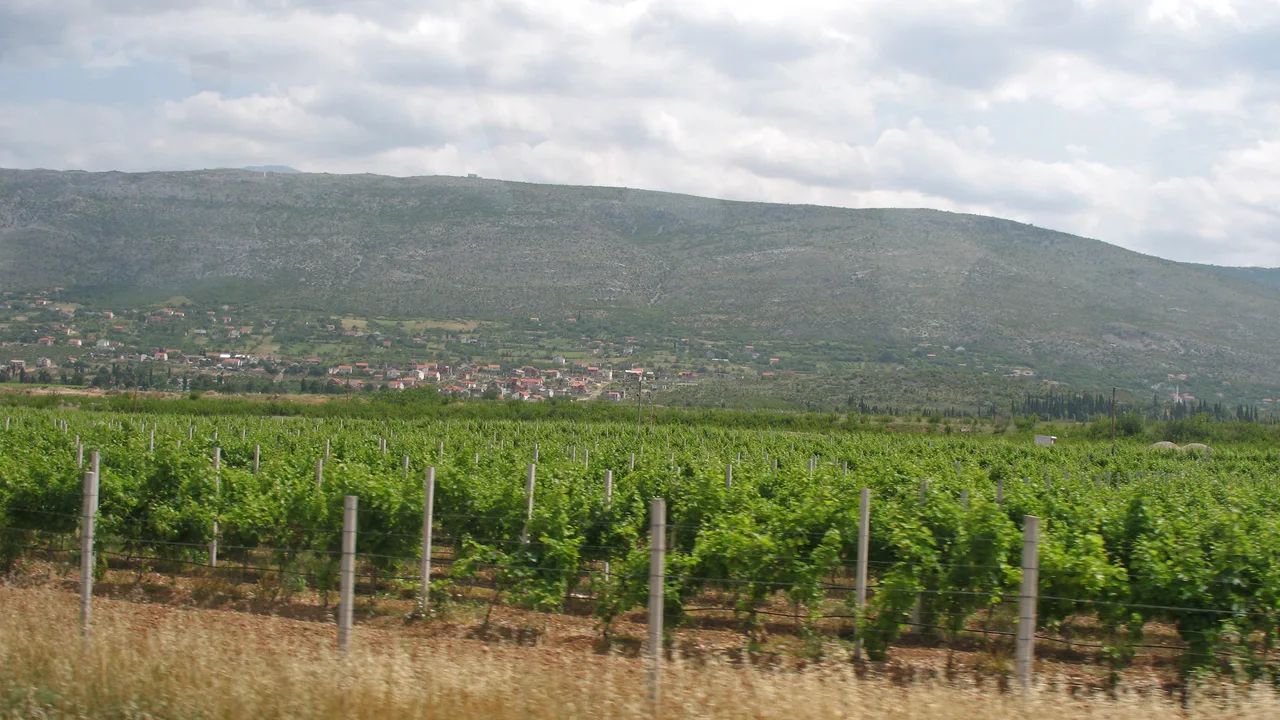
Herzegovina makes proper wine, and almost nobody outside the Balkans knows it. The south of Bosnia and Herzegovina is a hot, limestone strip that feels more Mediterranean than Balkan, and it grows two grapes you have most likely never tasted: a sharp white called Žilavka and a dark red called Blatina. An official Herzegovina Wine Route links around 30 cellars between Mostar and Trebinje, most of them small family places that will pour you a glass for less than a supermarket bottle costs back home.
This is not a novelty you drink to be polite. Decanter runs a straight-faced buyer’s guide to the region, and the wine route sells itself, without a hint of irony, as “the hidden side of the Mediterranean.” On the ground that means characterful bottles at honest prices, cellars cut into karst rock, and vineyards you can see from the car window on the Mostar to Dubrovnik run. The catch is that it’s genuinely small and genuinely local, so a little planning pays off, mostly around opening hours and how you move between cellars without someone ending up over the drink-drive limit.
The two grapes: Žilavka and Blatina
Get these two names down and you can order confidently anywhere in the south. Žilavka is the white, and it’s the everyday wine of Herzegovina. Grown mostly around Mostar on thin limestone soil, it comes out fresh and high in acid, with citrus and stone fruit, a bit of lemon and peach, sometimes a floral note and a chalky, mineral edge from the rock underneath. Most of it’s crisp and unoaked, poured young and cold. Some producers age it in barrel for a fuller, nuttier style, and a few now make a skin-contact “orange” version, of which Škegro’s Orange Žilavka is the one you’ll see cited most. It ripens early, often picked in late August, which is worth knowing if you’re timing a trip around the harvest.
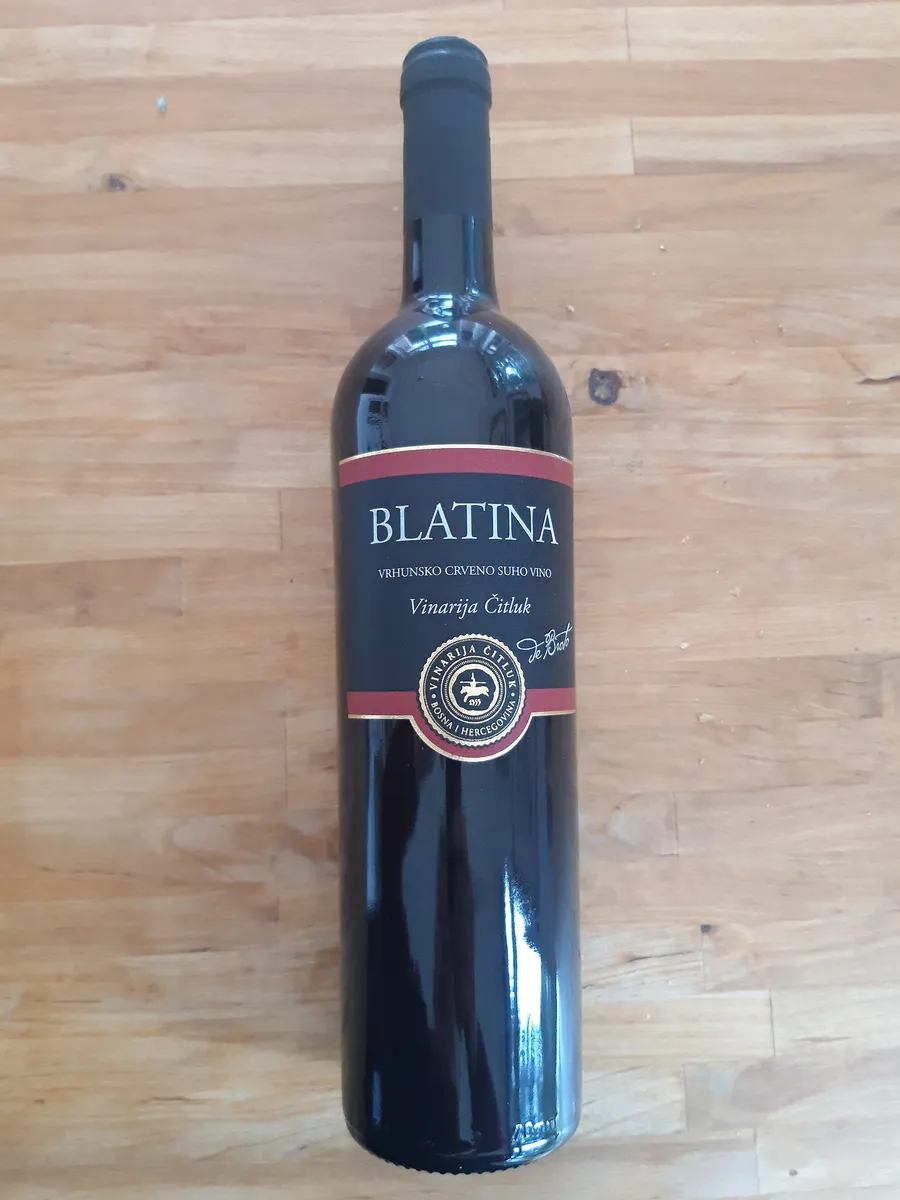
Blatina is the red, and it has a quirk that explains a lot about the wine. Blatina has a functional female flower and is what growers call auto-sterile: it can’t pollinate itself. To set any fruit at all it has to be planted alongside a pollinating variety, usually Alicante Bouschet (known locally as Kambuša), Merlot, or the native Trnjak. That dependence has a cost. If it rains during flowering, the partner vines fail to do their job and the Blatina sets no crop, a washout the locals call praznobačva - literally “empty barrels.” It’s also why a bottle labelled Blatina can legally carry a splash of the pollinator grape in the blend. When it works, the wine is a dry, dark ruby red, around 12 to 13.5 percent, with blackberry and black cherry, plum, a touch of Mediterranean herb and a medium, earthy body. You will meet two more reds along the route, Vranac and Trnjak, but Žilavka and Blatina are the pair that define the place.
The Wine Route: what it is and how to do it
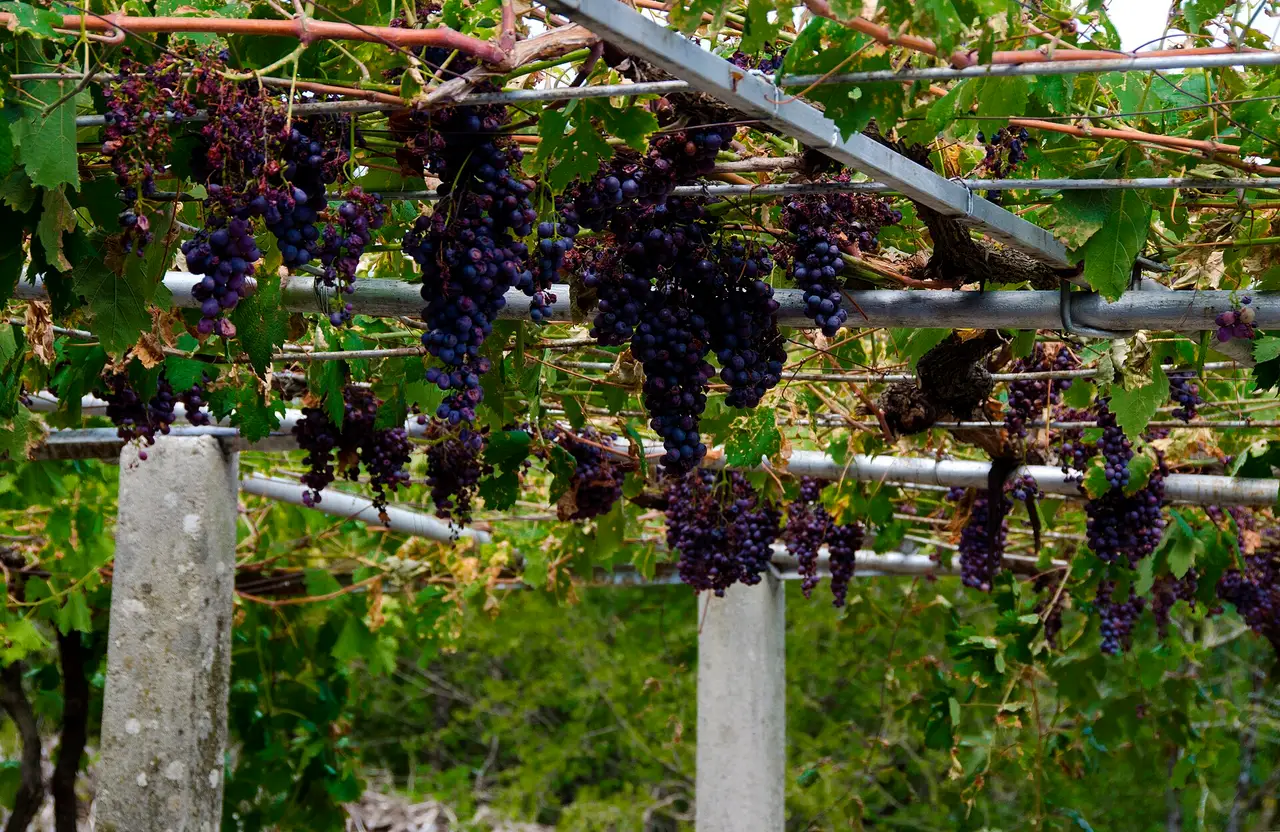
The Herzegovina Wine Route (hwr.ba) is not a marketing slogan bolted onto a map. It was set up in 2007 by the regional tourism board as an EU-funded project to network the cellars and put them on a signed trail. Today it lists around 30 member wineries, though the number moves year to year and you’ll also see 22 or 29 quoted, spread across six wine towns: Mostar, Čitluk, Ljubuški, Čapljina, Stolac and Trebinje. It runs roughly north to south, with Mostar at the top and Trebinje near the bottom, close enough to the Adriatic that the last stretch feels like Dalmatia.
There are two honest ways to do it. Self-drive gives you the freedom to string three or four cellars into a day, but Bosnia’s drink-drive limit is low and enforced, so someone has to be the designated driver and stick to a swirl-and-spit. The alternative, which most people who actually want to taste end up choosing, is to hire a driver or book a transfer for the day. Either way, treat the route as a series of appointments rather than a pub crawl. These are working farms and small family operations, not a tasting-room strip, so a walk-in can find the gate shut and the owner out in the vineyard. Phone or message ahead, and you’ll nearly always get a warmer welcome and a longer pour.
Cellars worth the detour
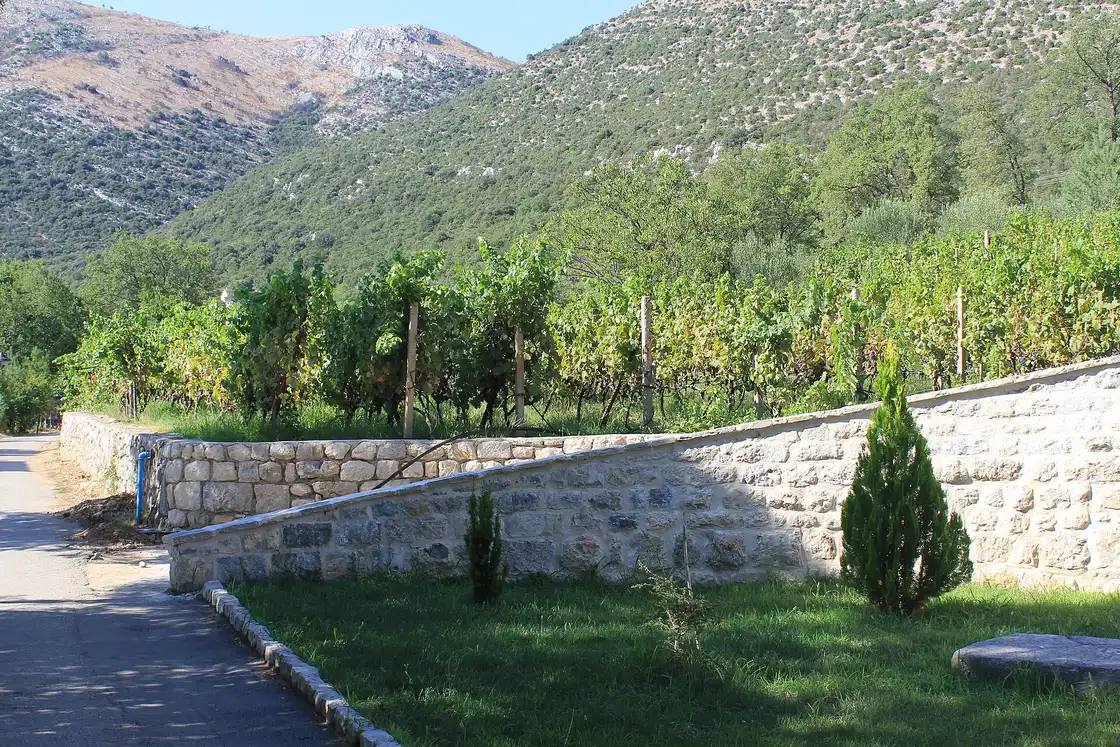
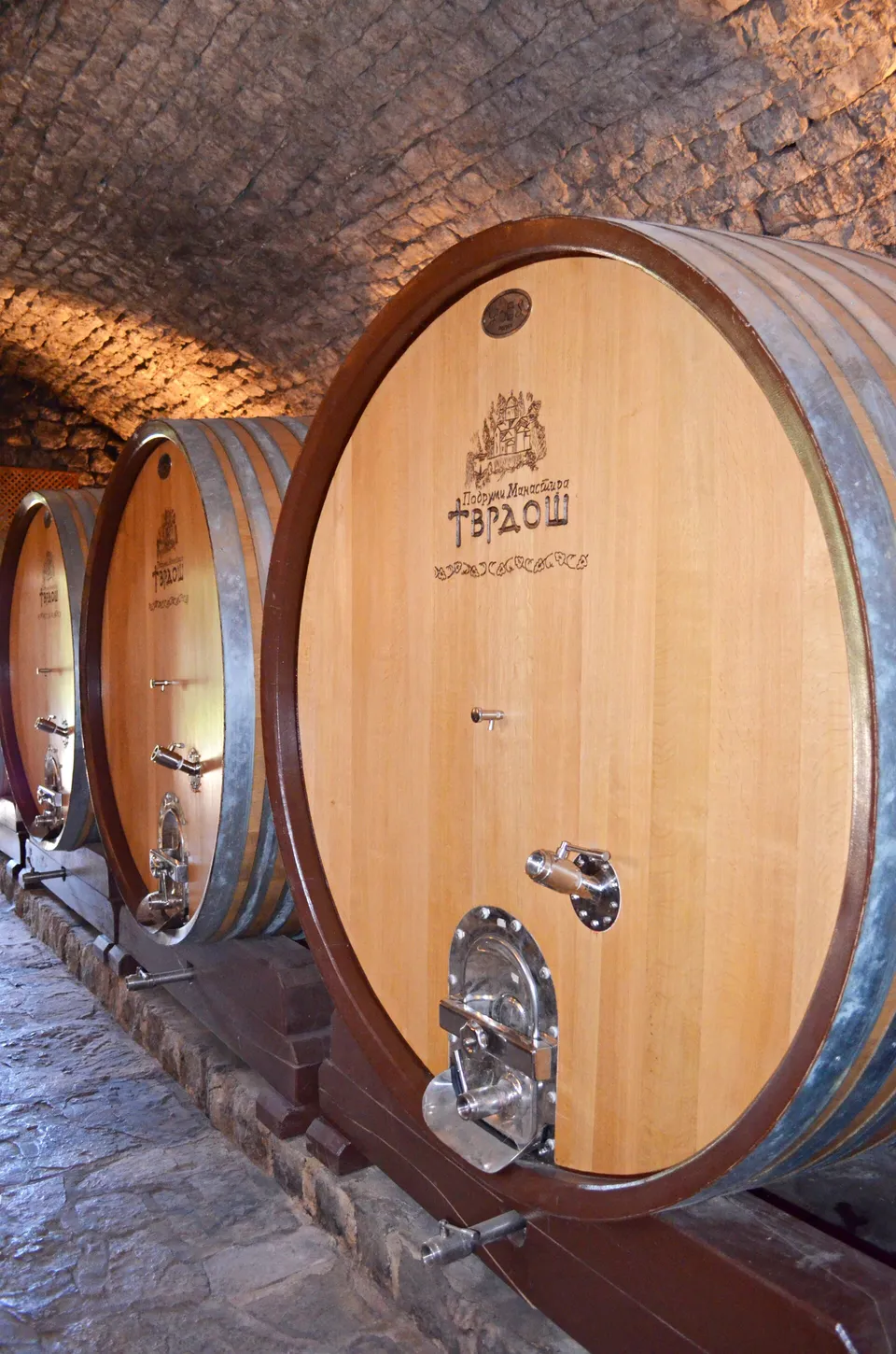
You cannot visit all thirty, so here’s where to point the day. The single most atmospheric stop is Tvrdoš Monastery, a few kilometres out of Trebinje on the Trebišnjica river. Orthodox monks have made wine here for centuries, one of the vaulted cellars dates to around the 15th century, and it’s now one of the largest producers in the country. You can look round the church and then taste and buy the monastery’s Žilavka and Vranac in the cellar shop. It’s the kind of place that stays with you: cool stone, old barrels, wine made where it has always been made.
The polished counterpart, also in Trebinje, is Podrumi Vukoje 1982, a family winery running since 1982 whose cellars go about eight metres underground. It has a proper tasting room, a restaurant and a rooftop terrace, and the range climbs from the everyday Hercegovačka Žilavka to premium labels like Tribunia and Carsko. Between Tvrdoš and Vukoje you get both ends of Herzegovinian wine in one afternoon, which is exactly why Trebinje makes a better wine base than most visitors realise.
Further north around Mostar and Čitluk the choice widens. Vinarija Čitluk is the big historic producer whose Blatina and Žilavka labels fill the shop shelves across the country, useful if you want to taste the benchmark before hunting down the boutiques. Škegro Family Winery is the name for that Orange Žilavka, and Nuić, out near Ljubuški, is another well-regarded family cellar. None of these are hard to reach, but all reward a call before you turn up.
When to come: harvest and heat
The grape harvest, the berba, runs through September and October and is done by hand. That’s the postcard window, when the vines are heavy, the cellars are busy and the light is soft, and it is the reason to plan a wine trip for early autumn rather than midsummer. The one honest warning is that harvest is also when winemakers are flat out, so a September visit needs booking further ahead than a quiet week in spring. Žilavka comes in earlier, often by the end of August, so if you turn up in late summer you may catch the first white grapes going through.
High summer is a different proposition. July and August on the karst are genuinely hot, fine for a quick tasting and a cold bottle but hard going if you want to walk the rows at midday. Spring and early autumn are kinder for the whole day out. And the wine itself, of course, is there all year, so a wet January afternoon in a warm cellar is no bad thing either. For the wider picture of what else September and October are good for beyond the cellars, our guide to Bosnia in autumn covers the season month by month.
Booking, driving and paying
A few practical notes save a wasted drive. Opening hours and tasting fees vary by season, by group size and by whether food is included, and most small cellars don’t publish them reliably, so call or message ahead and confirm rather than assuming a walk-in. Bring cash in convertible marks (KM); the smaller family places are often cash-only, and euros aren’t accepted everywhere despite what the coast has trained you to expect. Note too that Trebinje sits in Republika Srpska while Mostar and Čitluk are in the Federation - it’s the same wine route across two entities of the same country, and it makes no difference to you as a visitor beyond seeing both Latin and Cyrillic on the labels.
The one thing not to improvise is the drive. The limit is strict, the roads are winding, and a full day of tastings and a car don’t mix, so either nominate a driver who spits, or book a transfer and taste freely. Trebinje is only about 30 km inland from Dubrovnik, which makes the southern cellars an easy add-on to a Croatia trip. When you are back at the table, pour the local way and slow down for it, the same unhurried pace you will have learned over a Bosnian coffee; the wine is the reason you stopped, not fuel for the next stop. For where these bottles sit in the wider spread of Herzegovinian eating, our guide to what to eat in Bosnia covers the plates to put beside them, and if you’re basing yourself in Mostar first, the things to do in Mostar guide points you at the old town before you head for the vines.
Photos
Read also

Food · 12 min read
Where to Eat in Mostar: Old Town Restaurants With a View
Verified · August 17, 2026Mostar Old Town restaurants by job: a terrace facing Stari Most, a courtyard off the bazaar, and a grill for cevapi. Addresses, cash, and what to order.

Food · 8 min read
Rakija in Bosnia: What It Is and Where to Taste It
Verified · August 9, 2026Rakija in Bosnia: the types, three named Sarajevo bars, tours with 2026 prices, customs limits for taking a bottle home, and how to decline politely.

Food · 11 min read
Bosnian Burek: Types, Etiquette & Where to Try It
Verified · July 24, 2026In Bosnia burek means meat, full stop. What sirnica and zeljanica are, how pita is sold by the kilo, what it costs and where to eat it in Sarajevo.

Food · 11 min read
Where to Eat in Sarajevo: Best Restaurants Beyond Ćevapi
Verified · September 23, 2026Sit-down restaurants in Sarajevo worth an evening: Ascinica ASDZ, Dveri, Avlija, Kibe Mahala, Park Princeva, Inat kuca. Addresses, closing days, booking.