
Where to Eat in Sarajevo: Best Restaurants Beyond Ćevapi
Sit-down restaurants in Sarajevo worth an evening: Ascinica ASDZ, Dveri, Avlija, Kibe Mahala, Park Princeva, Inat kuca. Addresses, closing days, booking.
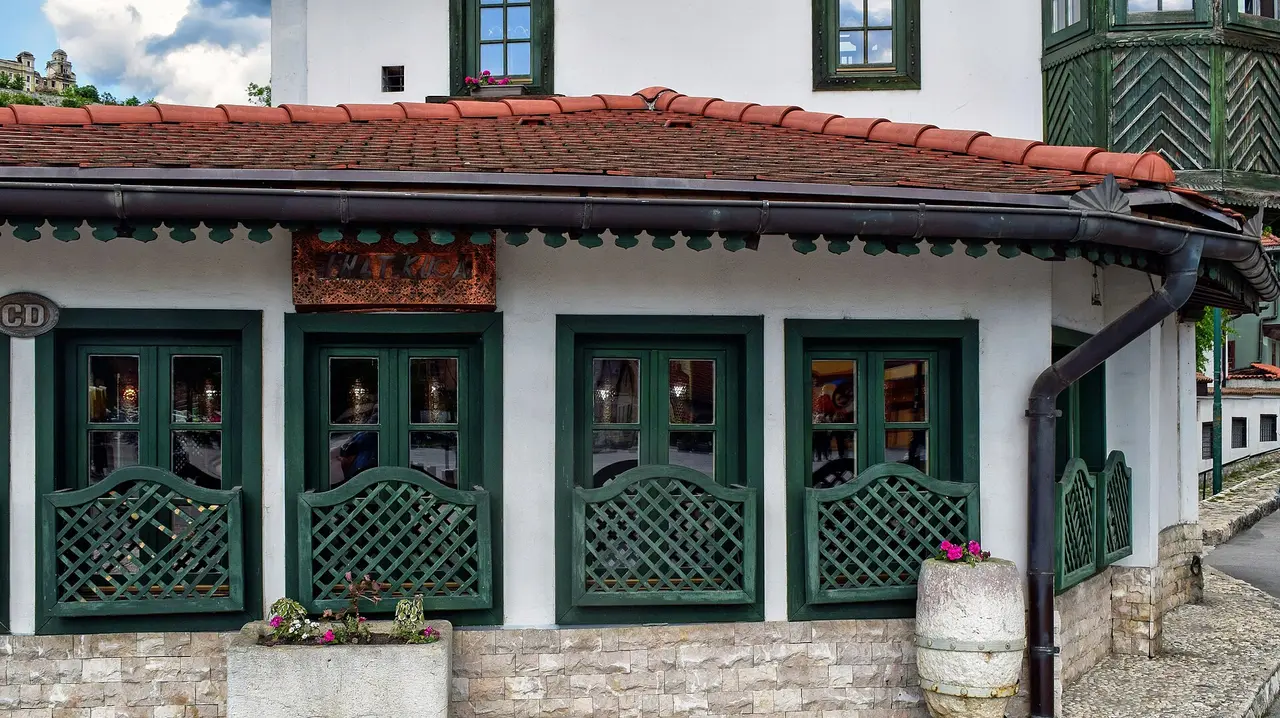
Sarajevo’s most famous meal is a plate of ćevapi for 12 to 14 KM, and most visitors eat it three days running. This page is about the other half of the city’s food: the rooms you sit down in, book a table at and give an evening to. Six of them, plus the beer hall and the courtyard you should take your coffee in, with addresses, the days they’re shut and how to get a table.
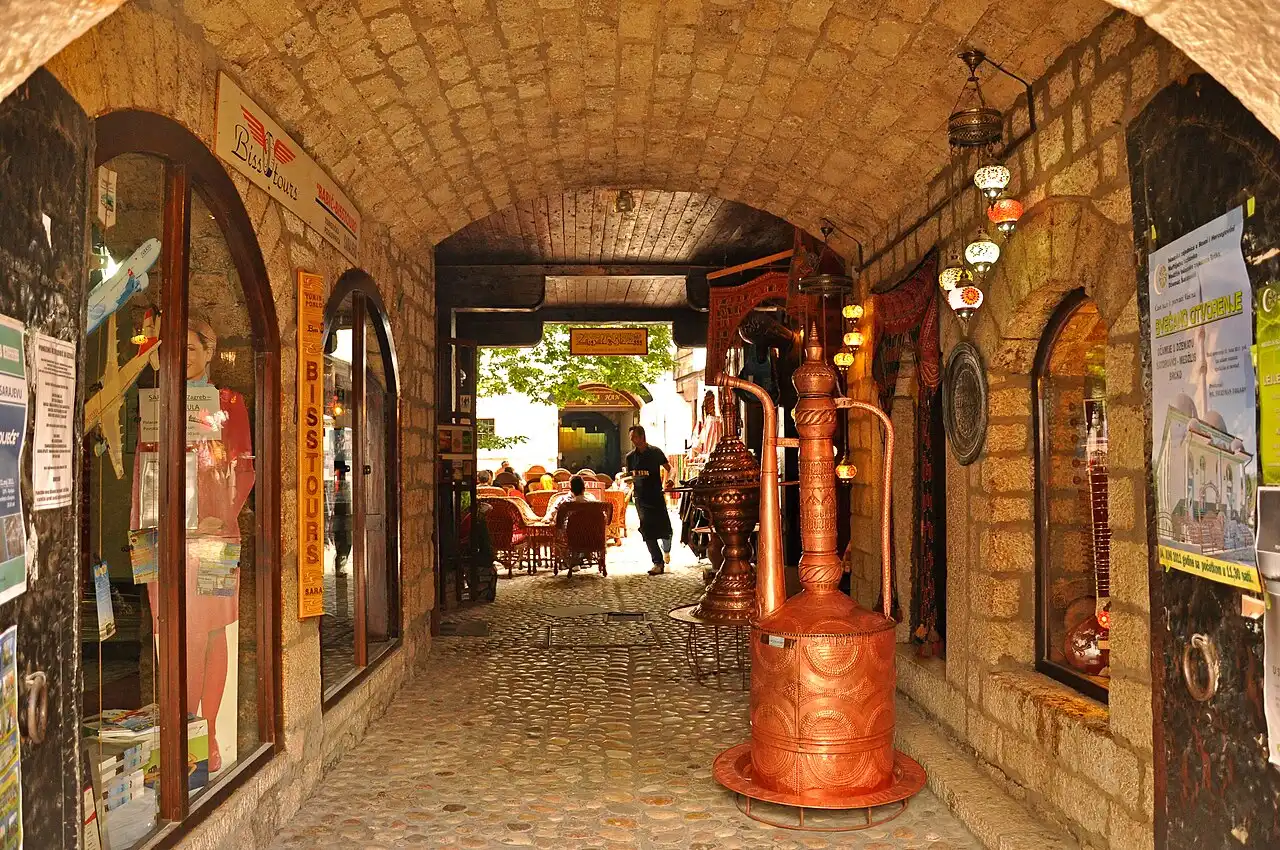
The geography is simple once you notice it. The two bazaar lanes, Bravadžiluk and Kundurdžiluk, are almost entirely grills and pie shops. The restaurants worth an evening sit just outside that grid: a couple of minutes west on Prote Bakovića, over the river at Alifakovac, or up the hillsides at Vrbanjuša and Hrid, where the view starts.
Lunch first: the aščinica
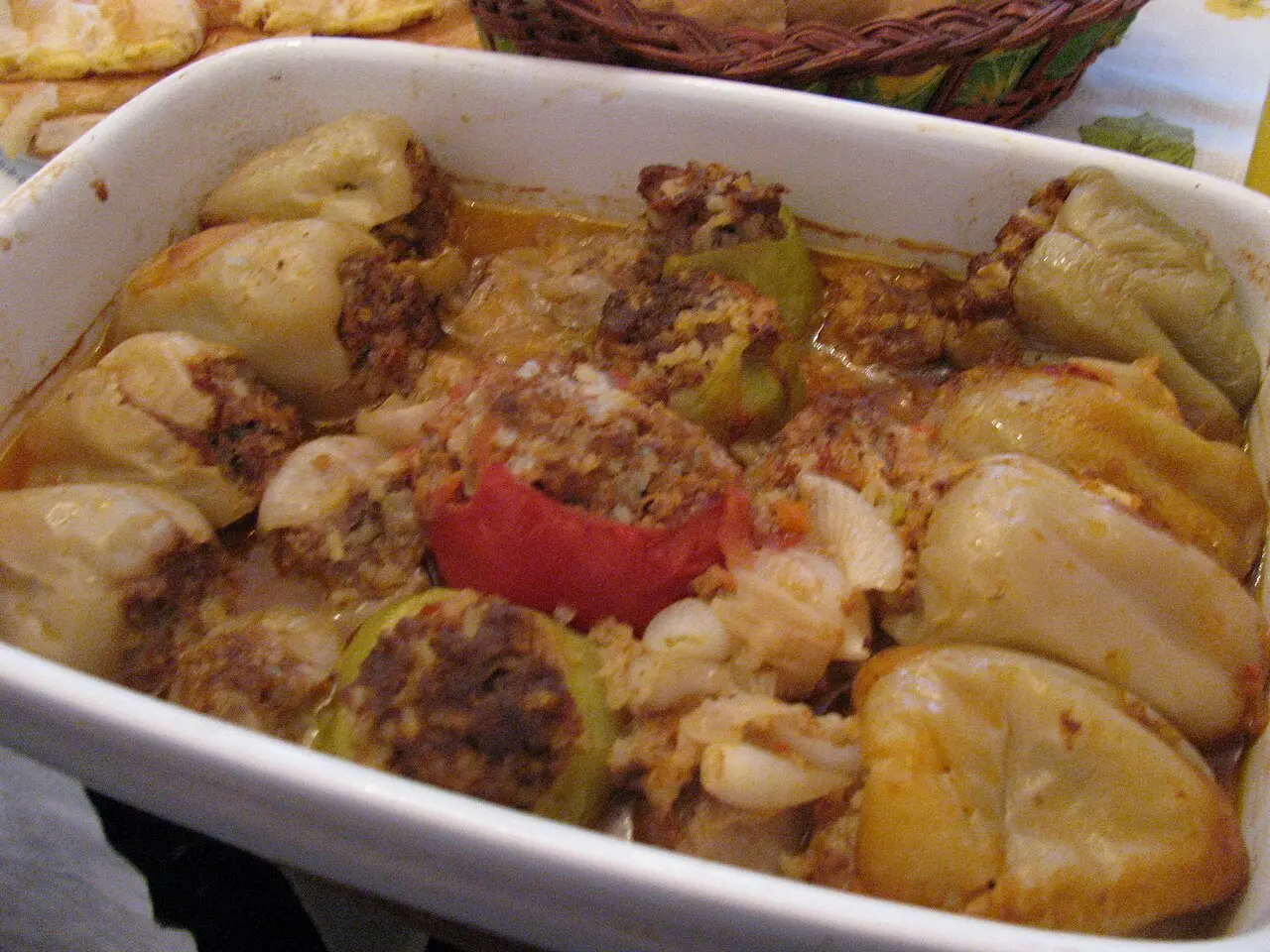
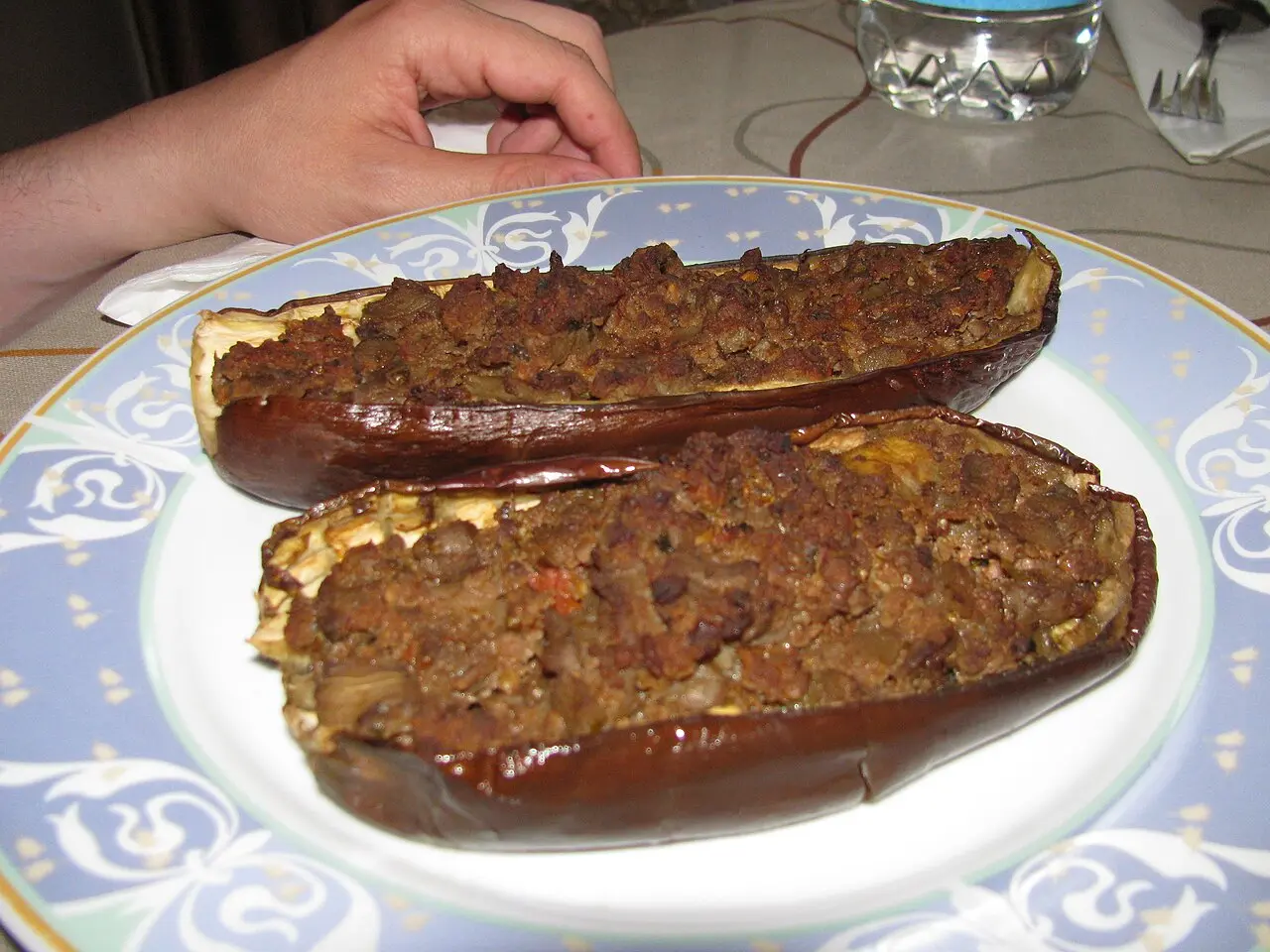
An aščinica is the old-style canteen where the slow food lives, the stews and stuffed vegetables that take four hours and can’t be cooked to order. Aščinica ASDŽ at Ćurčiluk mali 3, a minute off the main bazaar street, is the one locals send people to. It has been cooking since 1994, started with about ten dishes and now lists more than sixty: stuffed peppers, stuffed onions, mushrooms and a long row of stews. When Forbes asked the Sarajevo guide Edin Ogrešević in July 2025 where to eat traditional food that’s neither ćevapi nor pies, this was his answer too.
The mechanics are different from a restaurant. You look at the trays, you point, you pay by what you took. It’s the cheapest way to eat properly in Sarajevo, and the hours tell you what it’s for: their own site says every day, 09:00 to 19:00, which is a lunch operation, not a dinner one. Come at noon rather than at nine in the evening, because when a tray is finished it is finished.
It’s also a decent answer for vegetarians, who otherwise have a thin time of it in a kitchen this carnivorous. You can see the trays before you commit, so ask which ones are meatless and point; the rice-only stuffed vegetables our Bosnian food guide describes turn up here more reliably than on any restaurant menu.
Dveri: the smallest room in the old town
Restoran Dveri, at Prote Bakovića 12, describes itself as one of the smallest restaurants in Sarajevo, and that is not marketing modesty. A handful of tables, dried herbs and bottles on every shelf, Bosnian home cooking with a Central European accent, and, unusually for the old town, a fish and seafood section on the menu. Breakfast runs until 12:00 and starts at 7 KM for an omelette, which makes it a rare sit-down alternative to a pastry at nine in the morning.
Two things to do before you go. Their booking page asks for reservations at least 24 hours ahead, and with a room this size that’s not a formality in July. And phone +387 33 53 70 20 to confirm they’re serving: their own site lists them open every day, 08:00 to 23:00, but at least one large listing site currently flags the restaurant as not taking guests, and we could not resolve that contradiction from here. Ten seconds on the phone saves the walk.
Avlija: the courtyard everybody means when they say “garden”
Restoran Avlija on Sumbul Avde 2 started as a family garden where friends gathered through the 1970s and became a restaurant in 1995, which in this city is a date with weight behind it. The courtyard is roofed in vines and hung with junk of the beloved kind, and the tables sit close enough together that you end up in someone else’s conversation.
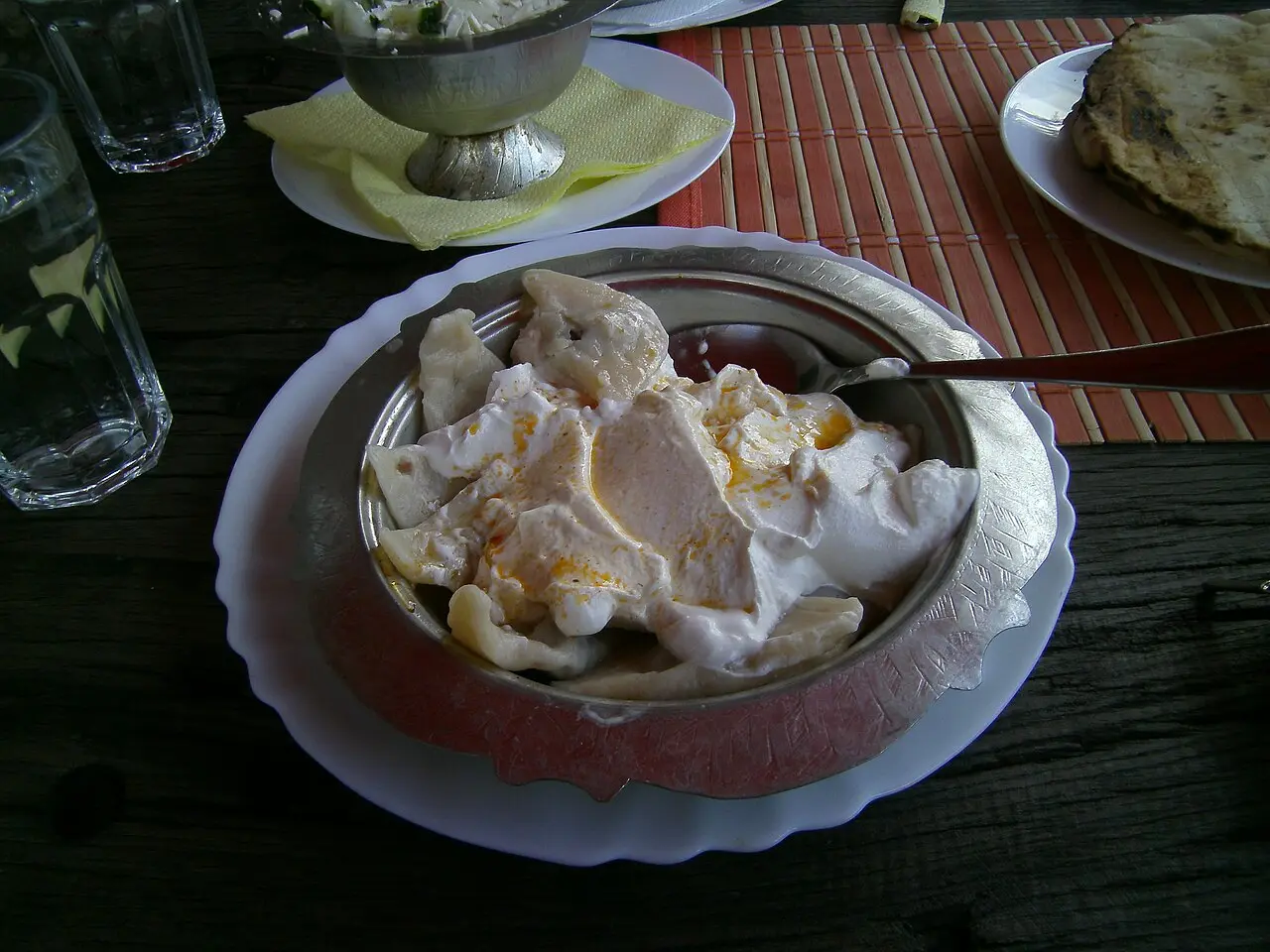
Order klepe here, dumplings of minced beef under garlic yoghurt, 15 KM on their own menu, or mućkalica at 19 KM if you want the stir-fried version of a Bosnian grill. This is also the one kitchen on this page that labels its vegetarian and vegan dishes: kljukuša, the old potato-and-onion bake, is 13 KM and comes in both. Breakfast runs daily from 09:00 to midday.
Two practical details from their own site. It’s open Monday to Saturday, 08:00 to 23:00, and closed on Sunday. And reservations are taken only through the form on their website, not by email and not by Instagram message, which is unusual enough that people miss it and arrive to find the courtyard full.
The view costs a hill, not money
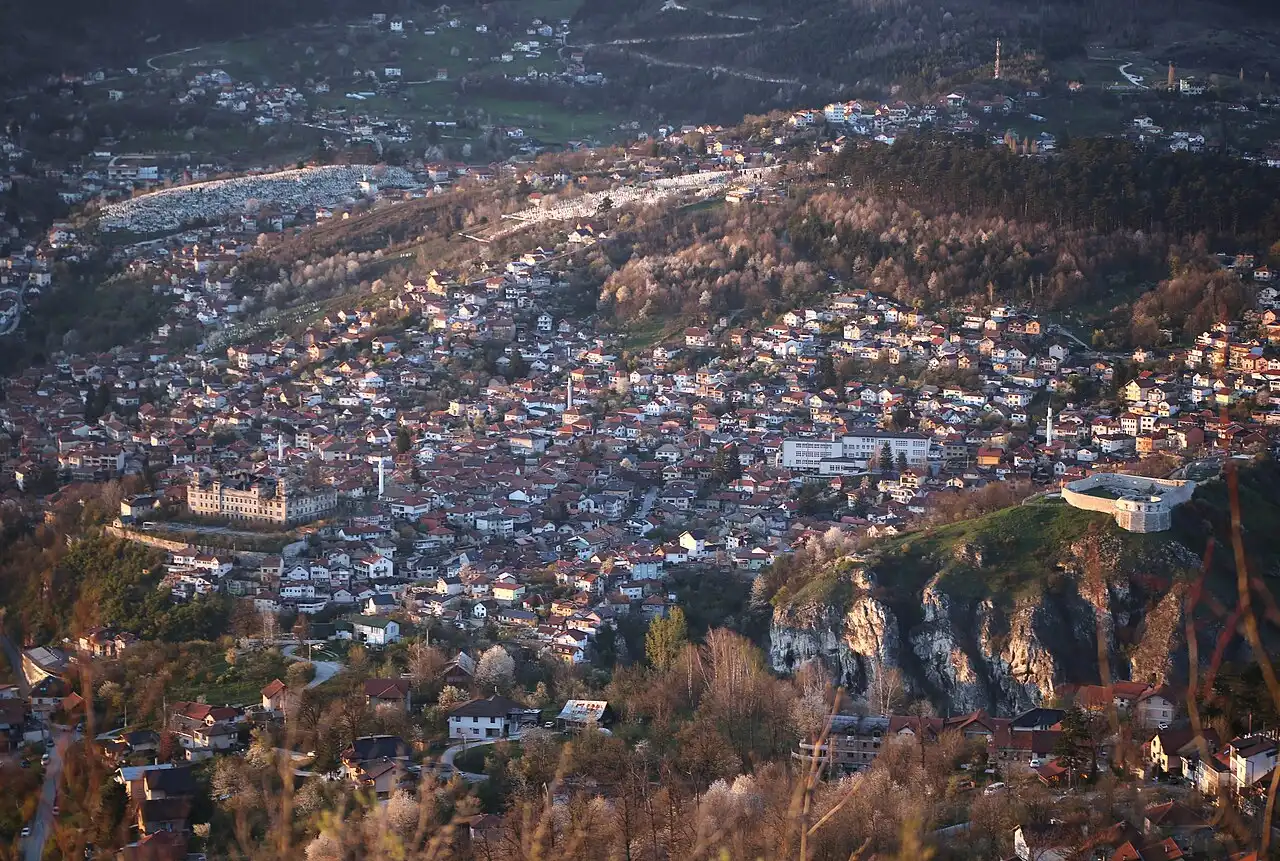
Sarajevo is a bowl, so the restaurants with the famous panoramas are all uphill. Two are worth the climb, and both publish their own hours.
Kibe Mahala sits at Vrbanjuša 106, in the mahala of the same name on the slope above the old town, open Monday to Saturday, 11:00 to 23:00. The house dish is spit-roasted lamb, the wine list runs through Bosnian and regional bottles, and the restaurant is spread across seven separate parts, so ask for a table with the view rather than accepting whichever room has space. Their own site notes that the meat comes only from domestic breeding, that two guitarists will play at guests’ request and that pets aren’t allowed, which between them tell you the register of the evening.
Restoran Park Prinčeva is at Iza Hrida 7, open daily 08:00 to 23:00, and has been running for twenty-four years by its own count. The kitchen mixes traditional plates with steaks, the terrace looks straight down the valley, and the menu keeps the local classics honest: hadžijski ćevap, homemade pita.
Choosing between them is easier than it looks. Go to Kibe if the lamb is the point of the evening and you’re not travelling on a Sunday, when it’s shut. Go to Park Prinčeva if you’re here on a Sunday, if someone at the table wants a steak rather than another plate of Bosnian classics, or if you want lunch rather than dinner, since it opens at eight in the morning.
The catch with both is the same, and no listing mentions it: the walk up is steep and the walk down at midnight is worse. Budget a taxi each way, and the view ends up costing a few marks in fares rather than a premium on the food.
Inat kuća: the house that was moved out of spite
Across the river from the Vijećnica, at Veliki Alifakovac 1, stands a small Ottoman house that shouldn’t be there. When the Austro-Hungarians laid out the ground for the City Hall in the 1890s, the plot they wanted belonged to a man remembered as Benderija, who refused to sell. The deal he finally accepted was that his house be dismantled and rebuilt stone by stone on the far bank, which was done in 1895. The sack of gold ducats he supposedly also demanded is the part every guide tells and nobody can document.
The house has been called Inat kuća, the house of spite, ever since, and has been a traditional restaurant since 1997. It is small and it fills up, so use the reservations number on their own site, +387 66 444 216, which is also the fastest way to find out when they’re open, since they publish no hours. Two things to bring: cash, because this is one of the addresses regularly reported as not taking cards, and a table booking. Sit upstairs if you can, and look across the water at the Vijećnica, the building this whole argument was about, which our Sarajevo city guide covers in full.
Beer, and where it actually comes from
The local lager is Sarajevsko, brewed in the city since 1864, and the place to drink it’s Pivnica HS on Franjevačka 15, in the brewery’s own building a few minutes upriver from Baščaršija. The draw is the unfiltered light and dark beer, which is brewed metres away and isn’t the same drink as the bottled version you get everywhere else. The hall is enormous, dark wood and brass, and the food is solid rather than the reason to come. Hours from their own site: Monday to Saturday, 10:00 to midnight, closed on Sunday. There’s a small museum of the brewery attached, which is a better hour than it sounds.
Coffee is a separate outing, not a dessert
Nobody here finishes dinner with coffee and leaves. Bosanska kafa is its own hour, and the setting that gets it right is Morića Han, the old Ottoman travellers’ inn on Sarači, where the courtyard cafe serves it with baklava, hurmašica and kadaif under the wooden gallery. Forbes’s guide named it in July 2025 for exactly that combination. Our guide to Bosnian coffee explains the džezva, the sugar cube and why rushing it’s the one real mistake. If you want the tea side of the same ritual instead, Čajdžinica Džirlo is a tiny room up in Kovači, a few minutes above the bazaar, and it costs pocket change.
Sunday, booking and cash
Sunday is the quiet trap, and it’s worse than most guides admit. Three of the places on this page shut for the day: Avlija, Kibe Mahala and Pivnica HS. Every grill and pie shop in the bazaar stays open, which is exactly how visitors end up eating ćevapi for the fourth time and concluding that Sarajevo has one dish.
What’s open on a Sunday, by the venues’ own hours: Park Prinčeva, daily 08:00 to 23:00, for the view, and Aščinica ASDŽ, daily 09:00 to 19:00, for lunch off the trays. Dveri lists Sunday hours too, with the caveat above about phoning first. Plan the hill dinner for a weekday and you avoid the whole problem.
Book the small rooms: Dveri and Inat kuća seat very few people and fill nightly in July and August. Carry convertible marks rather than relying on a card, especially at Inat kuća. Where a restaurant publishes its own menu we have quoted its prices above, and Avlija’s are a fair guide to the level: a main course between 13 and 24 KM, a platter for two around 31 KM. For everything around the meal, our Bosnia cost index sets the level for taxis, drinks and a night out.
One honest note on the shape of this list. It’s deliberately traditional, because those are the kitchens whose own sites publish the details we’re willing to print. If you want the modern, chef-driven end of the city instead, the name people give is Mala Kuhinja, and the canton tourism association still lists it; we have kept it out of the picks above because we couldn’t confirm its current hours or booking rules from the restaurant itself. Same for Karuzo, the small vegetarian-and-fish kitchen that works by advance reservation.
Two evenings, if that is all you have
First evening, book Avlija and eat in the courtyard, then walk ten minutes back into the bazaar for a coffee at Morića Han. Second evening, taxi up to Kibe Mahala for the lamb and the view, and come down slowly - if you still have energy, the same Ferhadija corridor opens into bars and live rooms covered in our Sarajevo nightlife guide. Fill the middle of the day with an aščinica lunch at ASDŽ, which costs a fraction of either and teaches you more about how the country actually eats than both of them put together.
For the dishes themselves, what to eat in Bosnia explains why the specialists beat the all-purpose terrace, and yes, you should still do the grills: our guide to the best ćevapi in Sarajevo sorts out Željo from Petica. If you’re booking a bed as well, where to stay in Sarajevo puts you inside walking distance of most of this list.
Photos
Admission and opening hours
- Opening hours
- Opening days taken from the restaurants' own sites on 24 July 2026: Ascinica ASDZ, Curciluk mali 3, every day 09:00-19:00. Dveri, Prote Bakovica 12, listed daily 08:00-23:00. Avlija, Sumbul Avde 2, Monday to Saturday 08:00-23:00 and closed on Sunday. Kibe Mahala, Vrbanjusa 106, Monday to Saturday 11:00-23:00. Park Princeva, Iza Hrida 7, daily 08:00-23:00. Pivnica HS, Franjevacka 15, Monday to Saturday 10:00-24:00 and closed on Sunday. Inat kuca, Veliki Alifakovac 1, publishes no hours; reservations on +387 66 444 216.
Bills are in convertible marks (KM / BAM). Three of these close on Sunday: Avlija, Kibe Mahala and Pivnica HS. Book the small rooms ahead: Avlija takes reservations only through the form on its own website, not by email or social media, and Dveri asks for bookings at least 24 hours in advance. Card acceptance varies, so carry cash.
Details checked: July 24, 2026
Read also

Food · 12 min read
Where to Eat in Mostar: Old Town Restaurants With a View
Verified · August 17, 2026Mostar Old Town restaurants by job: a terrace facing Stari Most, a courtyard off the bazaar, and a grill for cevapi. Addresses, cash, and what to order.

Food · 8 min read
Rakija in Bosnia: What It Is and Where to Taste It
Verified · August 9, 2026Rakija in Bosnia: the types, three named Sarajevo bars, tours with 2026 prices, customs limits for taking a bottle home, and how to decline politely.

Food · 9 min read
Herzegovina Wine Guide: Žilavka, Blatina & the Wine Route
Verified · July 25, 2026Herzegovina wine: the native Žilavka and Blatina grapes, the Wine Route cellars from Mostar to Trebinje, when to go, and how to taste it.

Food · 11 min read
Bosnian Burek: Types, Etiquette & Where to Try It
Verified · July 24, 2026In Bosnia burek means meat, full stop. What sirnica and zeljanica are, how pita is sold by the kilo, what it costs and where to eat it in Sarajevo.