Where to Stay in Sarajevo: Best Areas
Where to stay in Sarajevo by area: atmospheric Baščaršija, central Ferhadija, modern Marijin Dvor and the green spa suburb of Ilidža, and who each suits.
For a first visit, base yourself in or right beside Baščaršija, the Ottoman old town, because everything you came to see is within walking distance and the atmosphere is what you came for. If the bazaar sounds too busy to sleep in, shift one street west to Ferhadija and the Austro-Hungarian centre for the same walkability with a calmer night, pick modern Marijin Dvor if you want a contemporary hotel and good transport, or head out to leafy Ilidža near the airport if you want a spa, quiet or a driving base. Sarajevo is compact, so none of these are far apart, but they feel genuinely different to stay in. This guide walks through each area, what it’s like at night, and exactly who it suits, so you book the right corner of the city rather than the first hotel that pops up. If you’re still deciding which Bosnian towns to base in at all, our country-level guide to where to stay in Bosnia sets Sarajevo alongside Mostar and the rest. One timing note before you book: if your trip lands on the Sarajevo Film Festival in mid-August, the whole city fills and prices climb, so reserve early and aim for the old town to walk between the screenings.
Baščaršija and the old town: most atmospheric, most central
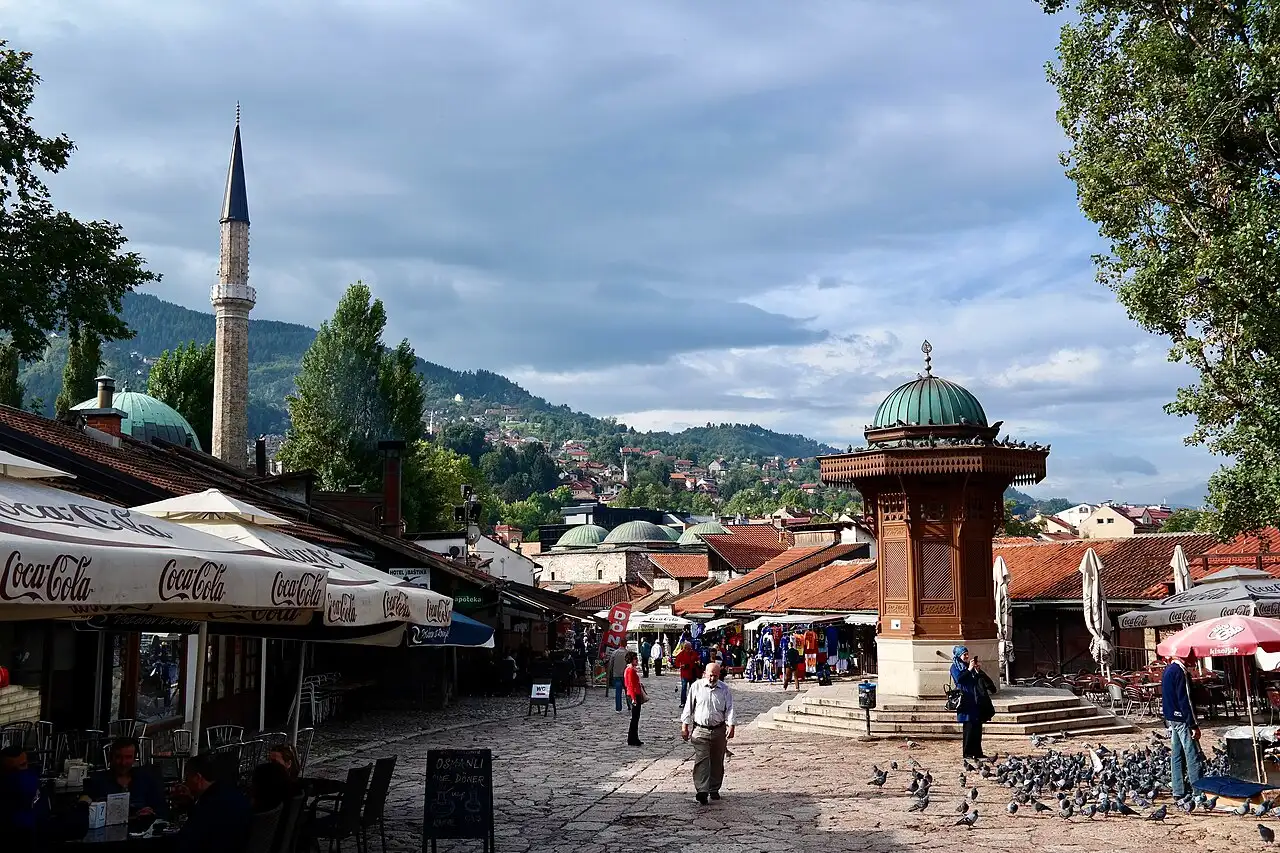
This is where most first-timers should stay, and for a simple reason: you wake up inside the thing you came to see. The Ottoman bazaar, the Sebilj fountain, the coppersmith lane, the big mosques and the best of the traditional restaurants are all on your doorstep, and the walk to the Austro-Hungarian centre takes minutes. If your Sarajevo is short, staying here squeezes the most out of it. What you’ll actually do from this base is covered in our Sarajevo things to do guide; the old bazaar itself has its own deep dive.
The trade-off is noise, and it’s worth being honest about it. The bazaar is lively into the evening, the cafés hum, and the many mosques mean an early call to prayer that carries across the stone lanes. Light sleepers should ask for a room off the main square or in a side street, and pack earplugs either way. The lanes here are also pedestrian, so if you’re driving, don’t expect to park at the door; you’ll use a garage on the edge and walk in, as our guide to driving in Bosnia explains.
Best for: first-time visitors, short stays, and anyone who wants the maximum-atmosphere, walk-everywhere version of the city and doesn’t mind a bit of evening buzz.
Ferhadija and the centre: central but calmer
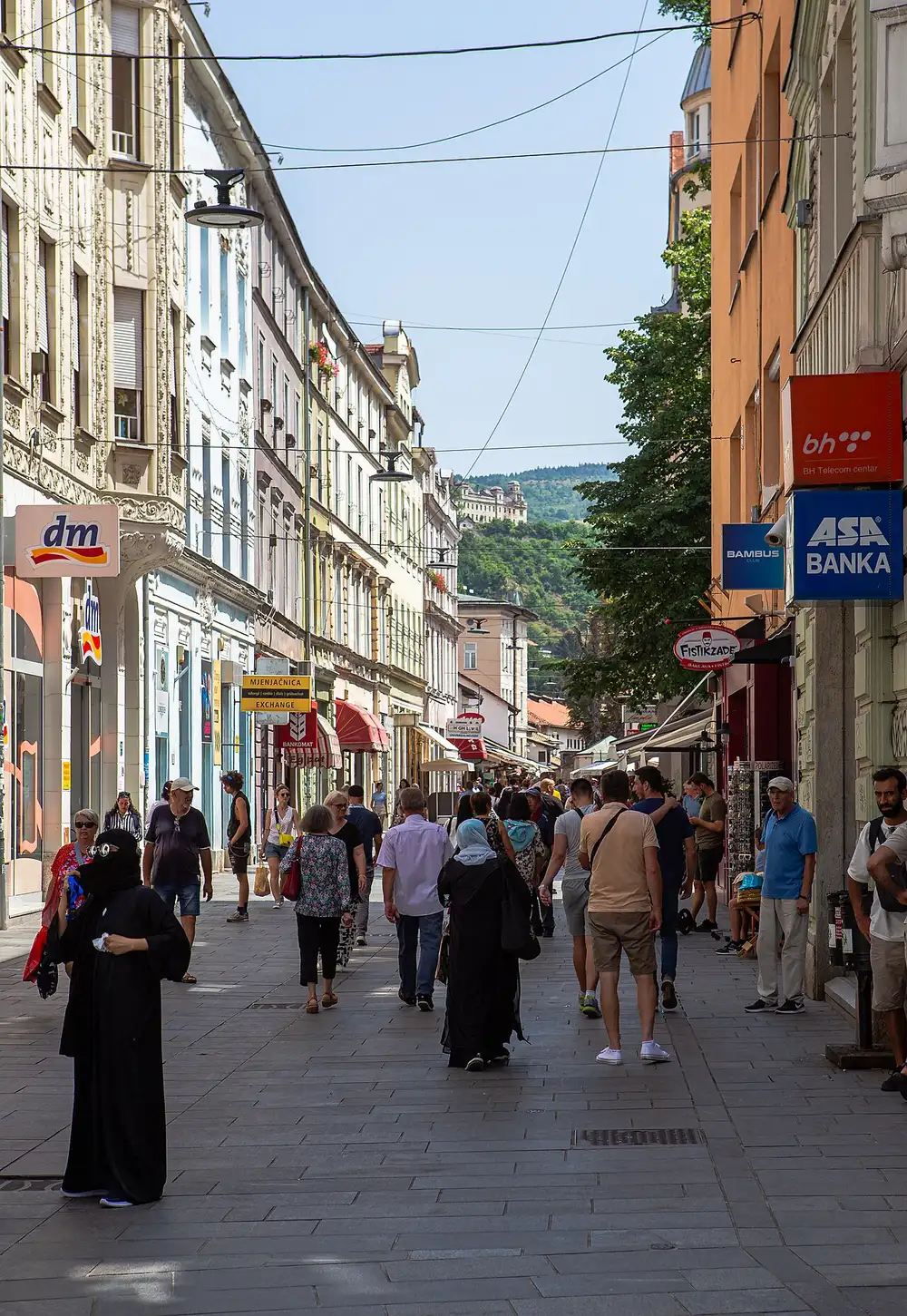
Walk west out of the bazaar and the city changes character in a single block, from Ottoman timber and stone to grand Austro-Hungarian facades, along the pedestrian Ferhadija street that forms the spine of the centre. This stretch has the densest run of bars, cafés and restaurants in the city, plus the cathedral and the Latin Bridge close by, and it’s still only a five-minute stroll back to Baščaršija. You keep the walkable-everything advantage while trading a little of the bazaar’s intensity for a slightly steadier night.
It’s the natural pick if you want to eat and drink well without committing to the busiest square, or if the idea of a dawn call to prayer directly overhead puts you off. Prices and hotel styles here sit a notch broader than the old town’s guesthouses, running from boutique places to larger central hotels.
Best for: travellers who want to be dead-central and near the nightlife and dining, but with a touch more breathing room than the bazaar core.
Marijin Dvor: modern, well-connected, quieter after dark
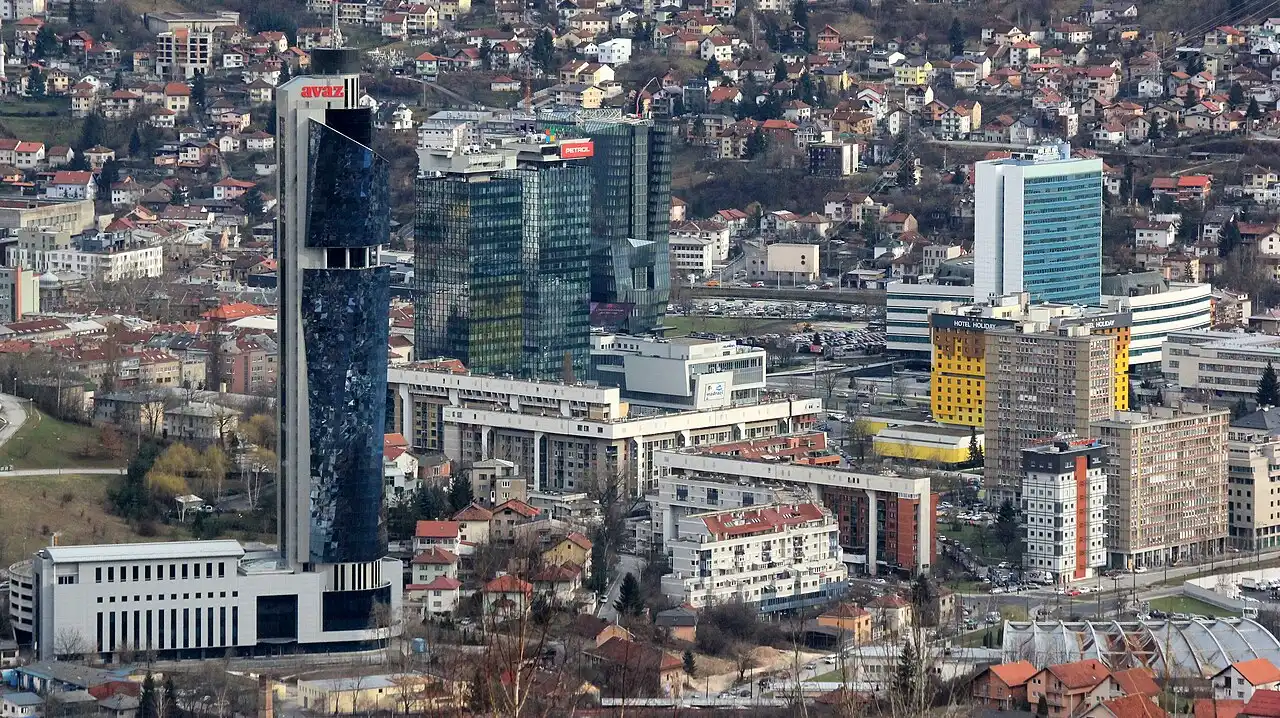
Keep going west and you reach Marijin Dvor, Sarajevo’s business and administrative district, where Austro-Hungarian blocks give way to glass towers like the Avaz Twist Tower, the big shopping mall, and the National and History museums. This is where a lot of the newer, larger hotels have opened. It’s a 15-to-25-minute walk or a short tram ride to the old town, so you’re not central in the on-your-doorstep sense, but you’re very well linked, and it’s noticeably quieter once the offices empty.
The reason to pick it is comfort and connections rather than romance. If you want a modern room with a lift and a gym, reliable transport toward the airport, or simply a calm night’s sleep away from bazaar bustle, this delivers. It also works well as a first or last night if you’re catching an early flight, since getting out to the airport from here is straightforward.
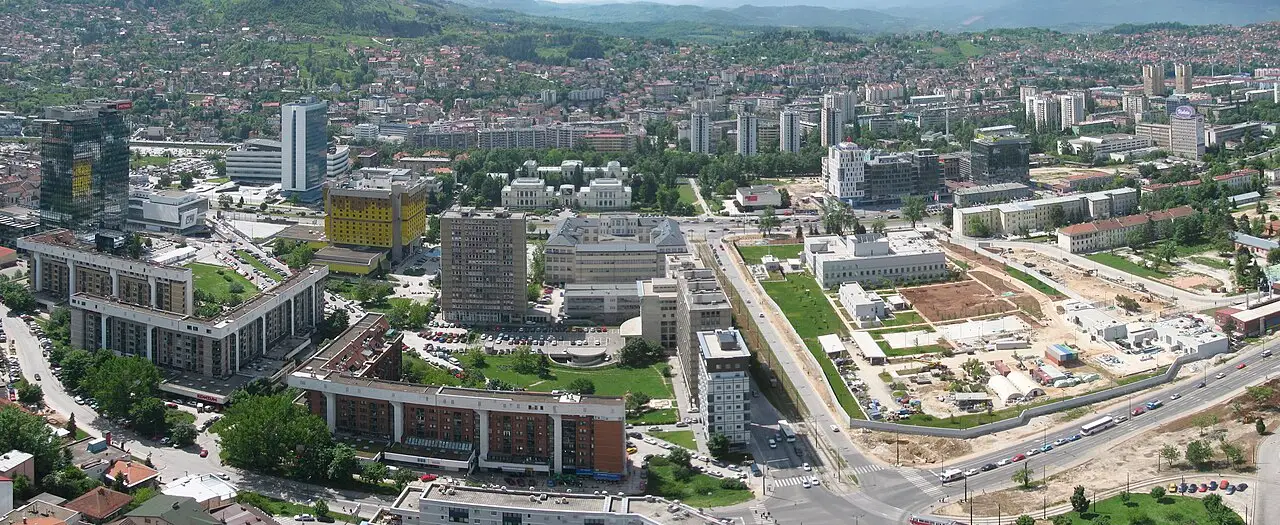
Best for: business travellers, anyone who prefers a modern hotel over a bazaar guesthouse, and people who value quiet and easy airport access over being in the historic heart.
Ilidža: green, spa-focused and near the airport
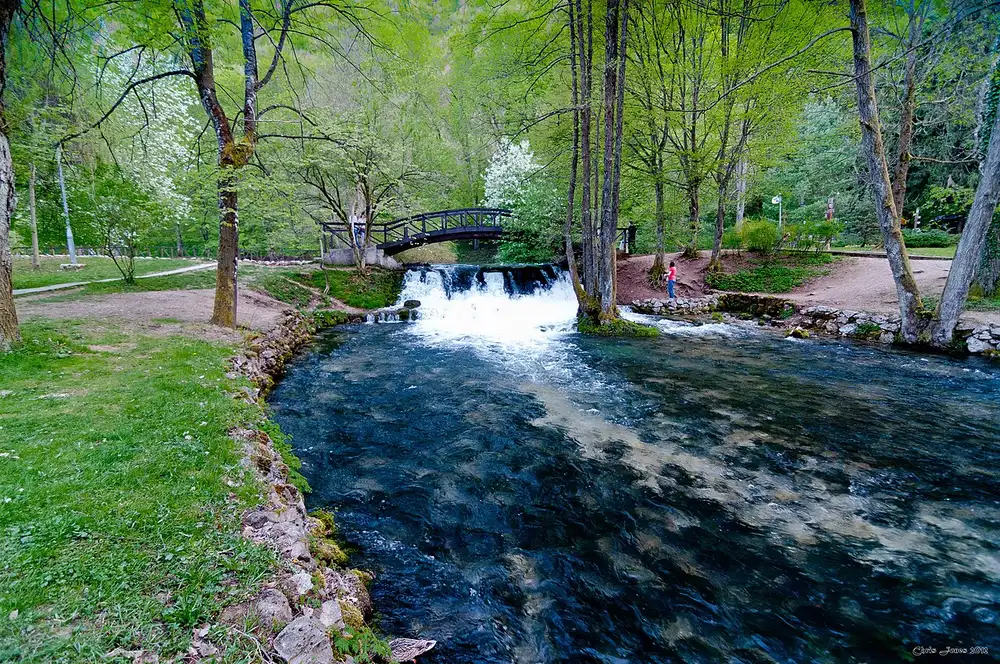
About 12 km southwest of the centre sits Ilidža, a spa suburb that feels a world away from the old town. Its draw is the Vrelo Bosne park, where the Bosna river surfaces from the ground in a spread of clear channels among the trees, reached by a long avenue you can walk, cycle or ride in a horse-drawn fijaker. There are thermal and spa hotels here, more space and greenery, and it’s the closest area to Sarajevo International Airport.
The trade-off is that you are not in Sarajevo proper, so factor the commute in. The good news is that tram line 3 runs straight from Ilidža to Baščaršija, the full length of the city, in around half an hour, so you can day-trip into the sights without a car and roll home to the quiet in the evening. Ilidža makes most sense if you’re travelling with a car (parking is easier and you’re poised for day trips and the road to Mostar), if you want a spa-and-green stay, or if an early or late flight makes airport proximity worth more than old-town atmosphere. It’s the wrong call if your plan is late nights in the bazaar.
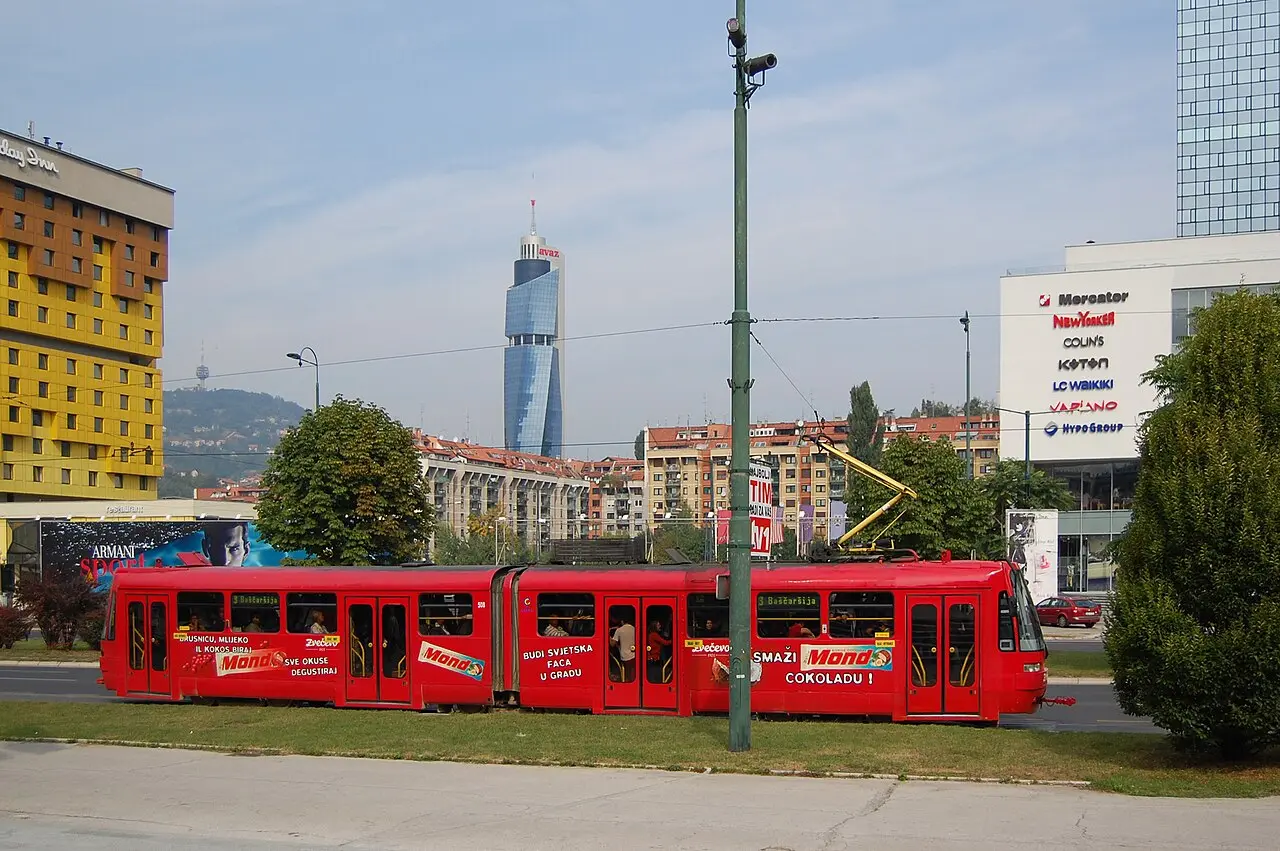
Best for: families, spa seekers, drivers using Sarajevo as a touring base, and anyone with an awkward flight time who’d rather be near the airport.
A quieter, cheaper alternative: Bistrik and the hillsides
One more option if the central areas look pricey or too busy. Bistrik, on the slopes just south of the river, is quiet, local and tree-lined, a short (if uphill) walk from the centre, and it tends to be kinder on the budget while keeping you close to everything. The hillside neighbourhoods in general trade a flat five-minute stroll for lower prices and a residential feel, and the views back over the valley are a bonus. It’s a good middle path for travellers who want central-ish without central prices. If you’re weighing a longer stay rather than a few nights, our guide to the cost of living in Bosnia breaks down rents, bills and a monthly budget, and our Sarajevo digital nomad guide covers which districts suit remote work best.
So which area should you pick?
Match the area to the trip. First visit or a short one, sleep in or beside Baščaršija and accept a livelier night for maximum atmosphere and walkability. Want the same central position with better dining and a slightly calmer night, choose Ferhadija and the Austro-Hungarian centre. After a modern hotel, quiet and easy airport links, book Marijin Dvor. Travelling with a car, chasing a spa, or tied to an early flight, take Ilidža and let tram 3 handle the sightseeing. On a budget, look at Bistrik and the hillsides. Whichever you choose, check a handful of options for your exact dates before you commit, and once you’ve settled the base, our Sarajevo things to do guide and the sobering history of the siege of Sarajevo will fill your days.
Photos
On the map
The map loads on click - to keep the page lightweight.
The map didn’t load. Check your connection and refresh the page.
Read also

Cities · 12 min read
Bihać City Guide: Your Base for Una National Park
Verified · July 23, 2026Bihac in northwest Bosnia: a Gothic church that became a mosque in 1592, the Captains Tower museum, the Una through town and the July regatta.

Cities · 9 min read
Konjic: Ottoman Bridge, Rafting & Cold War Secrets
Verified · July 21, 2026A guide to Konjic on the Neretva: the 1682 Ottoman bridge, upper-Neretva rafting, a secret Cold War bunker, a UNESCO woodcraft and Boračko Lake.

Cities · 12 min read
Things to Do in Banja Luka: Bosnia's Second City
Verified · August 9, 2026Things to do in Banja Luka: Kastel fortress on the Vrbas, the rebuilt Ferhadija mosque, cafe-lined Gospodska and the city's Trappist beer heritage.

Cities · 10 min read
Travnik: Vizier Capital, Fortress & Painted Mosque
Verified · July 20, 2026Things to do in Travnik, Bosnia's old Ottoman vizier capital: the best-preserved fortress, the painted Sarena Dzamija over a bazaar, and Plava Voda.