Sarajevo Film Festival 2026: A Visitor's Guide
The Sarajevo Film Festival runs 14-21 August 2026: what it is, the open-air cinema, how tickets work, the guests and where to stay.
The Sarajevo Film Festival is the biggest film event in Southeast Europe, and for one week in August it turns the whole city into a cinema. The 32nd edition runs 14-21 August 2026, with the closing Heart of Sarajevo award ceremony on the 21st (dates from the festival’s own site, sff.ba, checked in July 2026). You do not need an accreditation or an invitation to enjoy it: most of the best of it, above all the vast open-air screenings, is open to anyone with a cheap ticket. What follows is the visitor’s-eye version: where a festival born under siege came from, which nights you can actually buy your way into, what a ticket costs, and whether it is worth building a trip around - the short answer being yes, if you book a bed early.
What it is, and why it matters here
The festival was born in the worst circumstances imaginable. It started in 1995, during the siege of Sarajevo, when running a film festival in a city under daily shelling was an act of defiance as much as culture. That first edition, held from late October into November 1995, showed 37 films from 15 countries and drew some 15,000 people who crossed sniper-threatened streets to sit in the dark and watch. Knowing that origin changes how the whole thing feels; the story behind it is told in our guide to the siege of Sarajevo.
Three decades on it has become the region’s flagship, drawing more than 100,000 visitors a year and screening hundreds of films, with a particular mission: it’s the launch pad for new cinema from Southeast Europe and, more recently, the Caucasus, premiering work from more than 20 countries that the bigger Western festivals often miss. It’s a serious industry event, but it never lost the street-level, city-wide feel it started with.
The open-air cinema: the thing to actually do
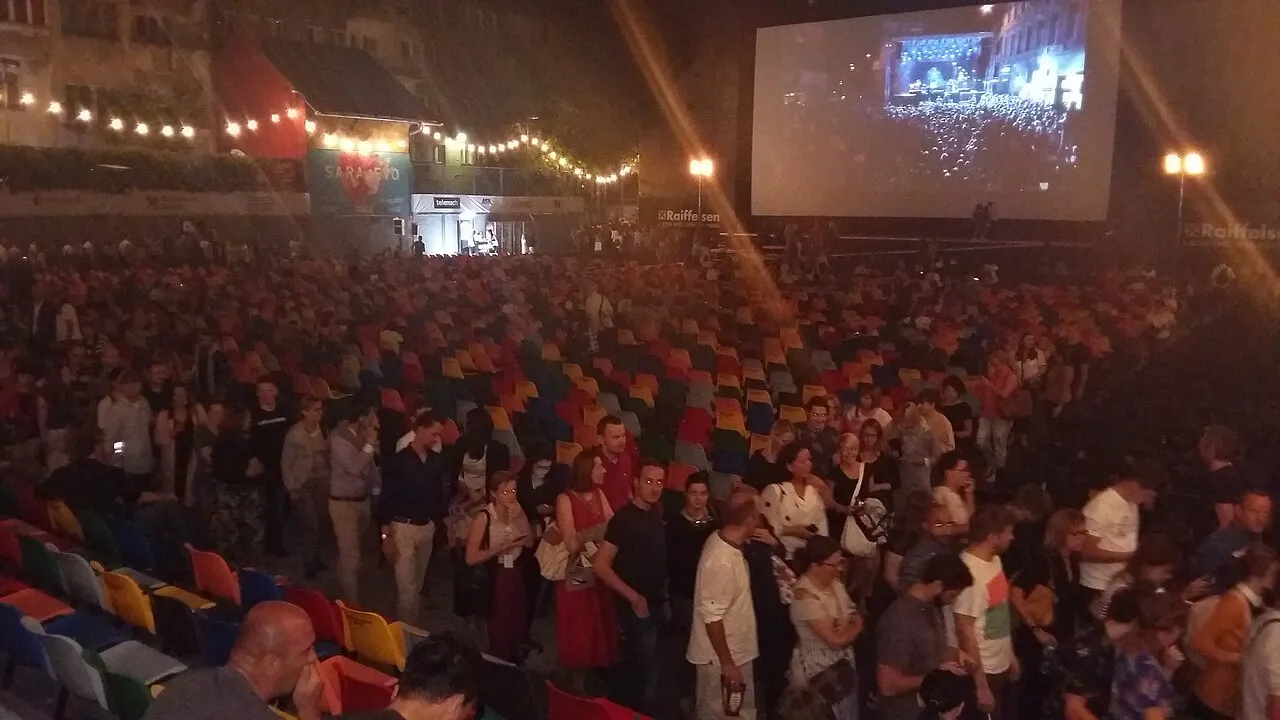
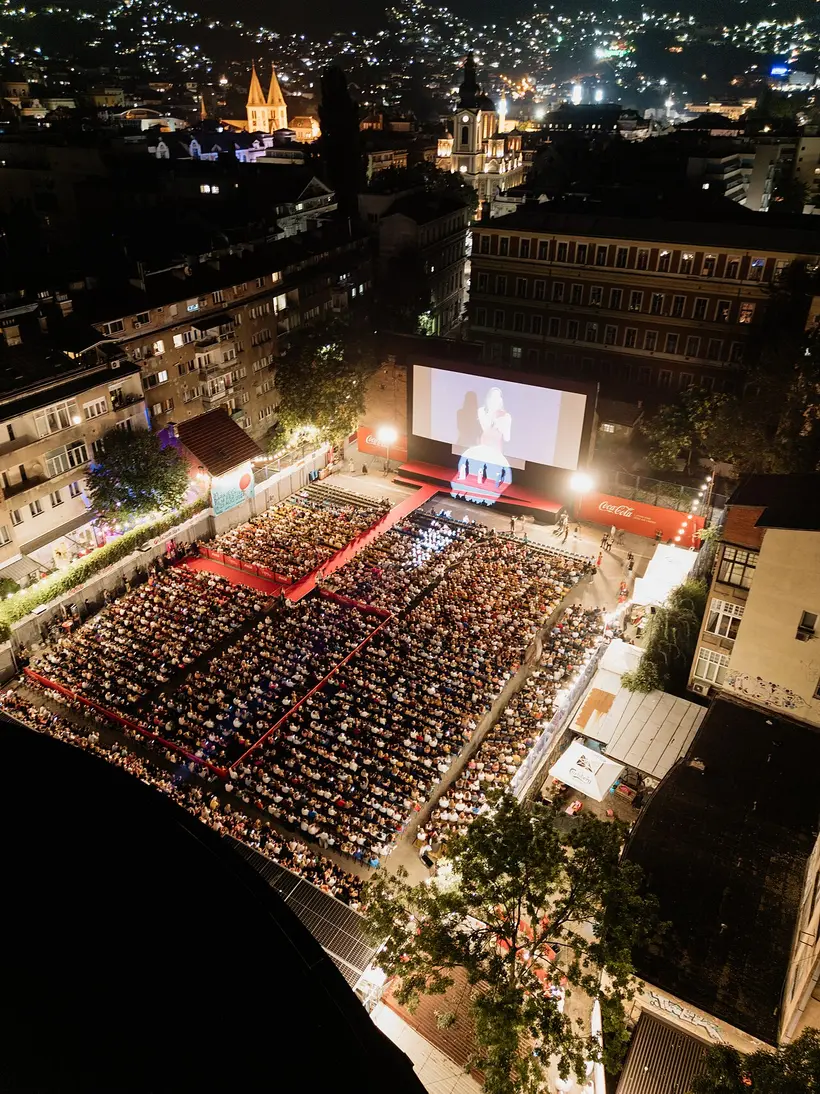
If you do one festival thing as a visitor, make it a night at the Open Air Cinema. Thousands of people fill a huge open-air auditorium in the middle of the city, banked rows of coloured seats facing a giant screen, for a premiere or a crowd-pleaser under the summer sky. The atmosphere - warm night, packed house, a whole city watching together - is the single best reason to time a visit to the festival, and it is worlds away from a normal cinema trip.
Alongside the big Open Air venue there’s a second large evening screen, the Summer Screen, and both have covered backup venues if it rains, so a shower does not cancel your night. The catch to know: the sponsor names attached to these venues change from year to year, so look them up under whatever branding the 2026 programme uses rather than an old name.
What you can watch
The programme is broad enough that you do not have to be a cinephile to find your evening. The core is the Competition Programme - feature films, documentaries, shorts and student films vying for the top prizes - but the parts most visitors gravitate to are the crowd programmes: the Open Air premieres, the Summer Screen selection, and Kinoscope, a strand of buzzy international titles. There’s a strong Children’s Programme and a TeenArena for younger audiences, a Dealing with the Past section that reckons honestly with the region’s history, and BH Film, the showcase of new Bosnian-Herzegovinian work - the best single place to sample the country’s own cinema.
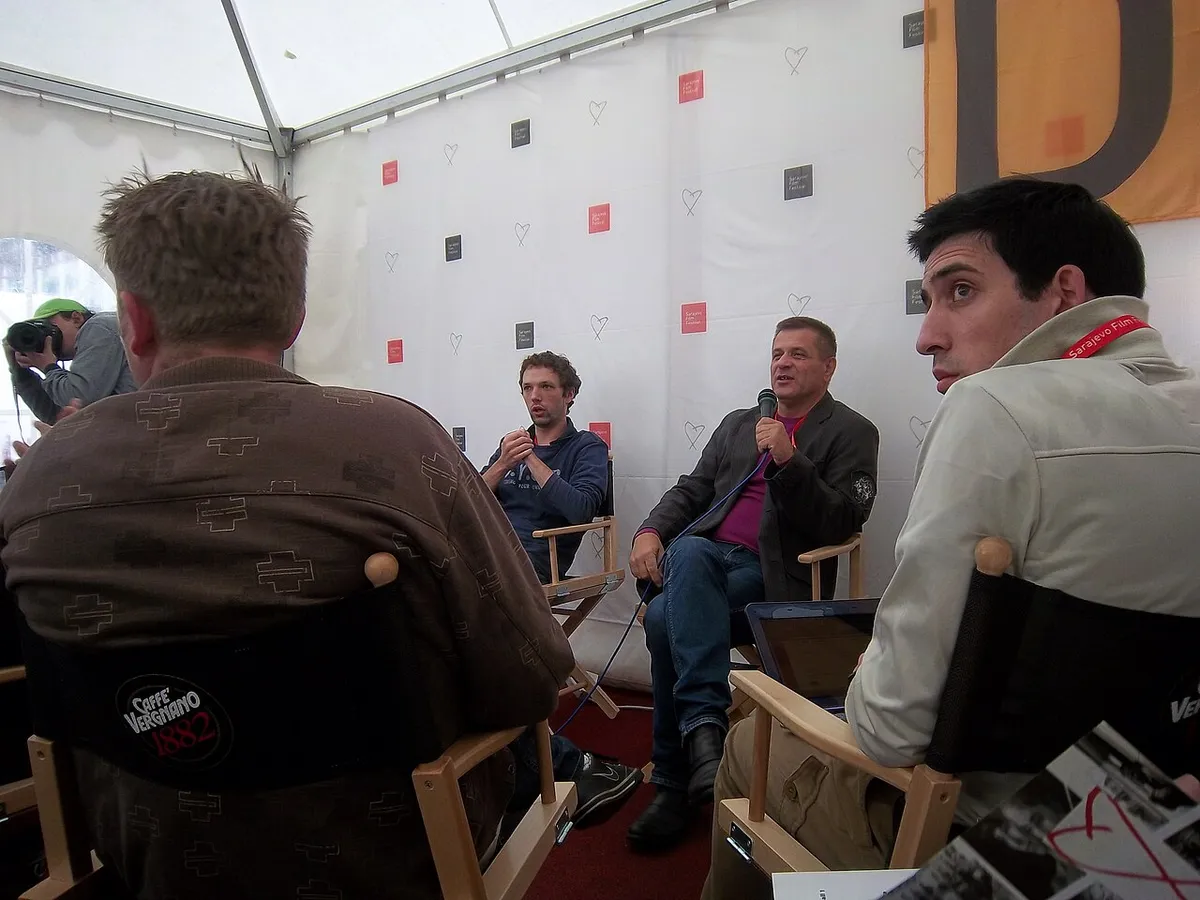
Behind the public screenings sits a substantial industry side: CineLink, running since 2003, is where regional projects hunt for co-production money, and Talents Sarajevo, since 2007, trains a picked group of young filmmakers each year. You need accreditation for those, but they’re the reason the festival punches above its size.
The Heart of Sarajevo, the red carpet and the guests
The festival’s top prize is the Heart of Sarajevo, awarded since 2004 for the best feature, and also to the best actor, actress, documentary and short, plus an honorary award to a career worth celebrating. The short-film prize carries real weight: since 2019 the festival has been Oscar-qualifying in the short category, so a Heart of Sarajevo can put a film on the road to the Academy Awards.
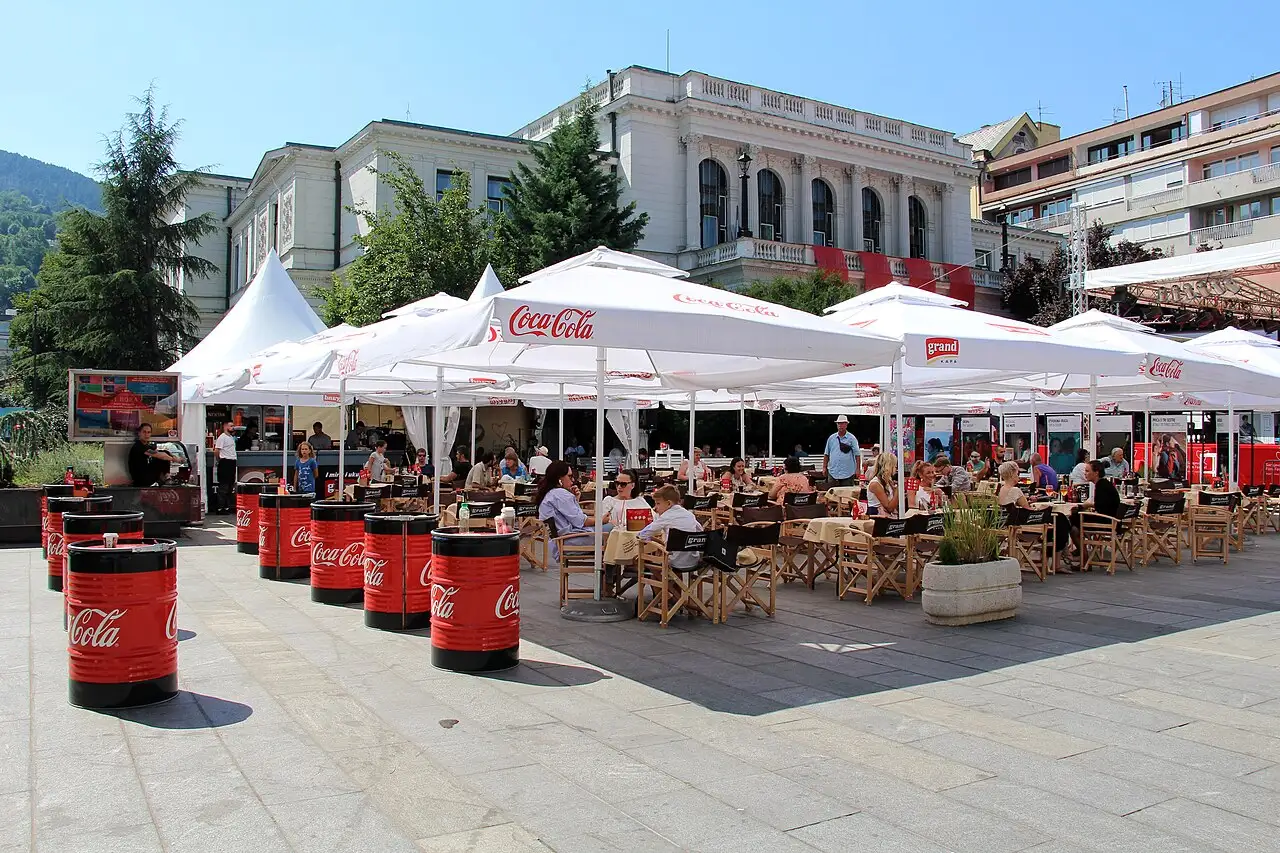
The red carpet and Festival Square sit in front of the grand National Theatre, and this is where the star-spotting happens. Past festivals have drawn the likes of Robert De Niro, Angelina Jolie - who has a real tie to the country through her Bosnian-war film - Brad Pitt and Daniel Craig, among many others; who turns up in any given year is announced closer to the dates, so don’t plan around a specific name. If you just want the buzz, the square and its cafes are free to loiter in, festival pass or not.
How tickets work
Tickets are cheap and easy, which is part of the festival’s charm. To give you the scale, at the 2025 edition an Open Air screening ran about 8 KM (opening night 15 KM, closing night 12 KM) and a Summer Screen ticket about 7 KM - a few euros to sit with thousands of people under the stars. Prices for 2026 weren’t published when this was written, so treat those as a guide and check the current figures nearer the dates.
Sales run online through the festival website and its mobile app, with a printed box office opening in the city in the days before the festival; each online ticket is a code you show on your phone or print. Popular Open Air premieres sell out, so buy those the moment sales open. As everywhere in Bosnia, carry cash in convertible marks (KM) as a backup, even though cards work online.
Is it worth planning a trip around?
For a lot of travellers, yes - but plan the bed before the film. The festival is the busiest week of Sarajevo’s year, and accommodation sells out and prices climb noticeably across the whole city, a point our guides to things to do in Sarajevo and where to stay in Sarajevo both flag. Book a room as early as you can, ideally in or beside the old town so you can walk between venues at night.
The timing helps: mid-August is warm and reliably dry, ideal for open-air screenings, and it slots neatly into a wider Bosnia trip - our guide to the best time to visit Bosnia sets out the season. Our full events calendar covers every other month too. Even if films aren’t your main reason to come, being in Sarajevo during the festival lifts an ordinary city break: the squares are lively past midnight, the cafes are full, and there’s a screening within walking distance most evenings.
Getting there and settling in
Sarajevo’s airport (SJJ) is about 12 km from the centre; our guide to getting from Sarajevo Airport to the city covers the taxi, bus and transfer options, which matter more than usual when you land into a full-up festival city late at night. Give yourself a day either side of the screenings to see the city properly - the old bazaar at Baščaršija, which runs its own free month of concerts in July, the war history in the museums, the ritual of a slow Bosnian coffee - and the festival becomes the centrepiece of a trip rather than the whole of it.
Come for a night at the Open Air, stay for the city, and book the room the day you decide. The Sarajevo Film Festival is that rare thing: a serious international festival that still belongs to its streets, and lets a visitor walk right into the middle of it.
Photos
Read also

Entertainment · 10 min read
Best Lakes in Bosnia for Swimming & Road Trips
Verified · September 3, 2026Five Bosnian lakes for swimming and road trips: Pliva, Boračko, Blidinje, Prokoško and Pannonica - which warm up, which ban bathing, how to link them.

Entertainment · 11 min read
Sarajevo Nightlife: Best Bars, Pubs & Clubs
Verified · August 10, 2026Where Sarajevo goes after dark: Bascarsija bars, Ferhadija pubs, live jazz, Sloga club nights and 06:00 closing times - all walkable, all cash-friendly.

Entertainment · 14 min read
Bosnia Events Calendar: Month by Month 2026-2027
Verified · September 23, 2026What happens in Bosnia each month: Bascarsija Nights all July, the film festival 14-21 August 2026, Jazz Fest 4-7 November, and the holiday trap.

Entertainment · 12 min read
Best Waterfalls in Bosnia
Verified · August 9, 2026The best waterfalls in Bosnia compared: Kravice, Štrbački buk, Pliva at Jajce, tall Skakavac and wide Kocusa - which to pick, where to swim, when to go.