Best Lakes in Bosnia for Swimming & Road Trips
Five Bosnian lakes for swimming and road trips: Pliva, Boračko, Blidinje, Prokoško and Pannonica - which warm up, which ban bathing, how to link them.
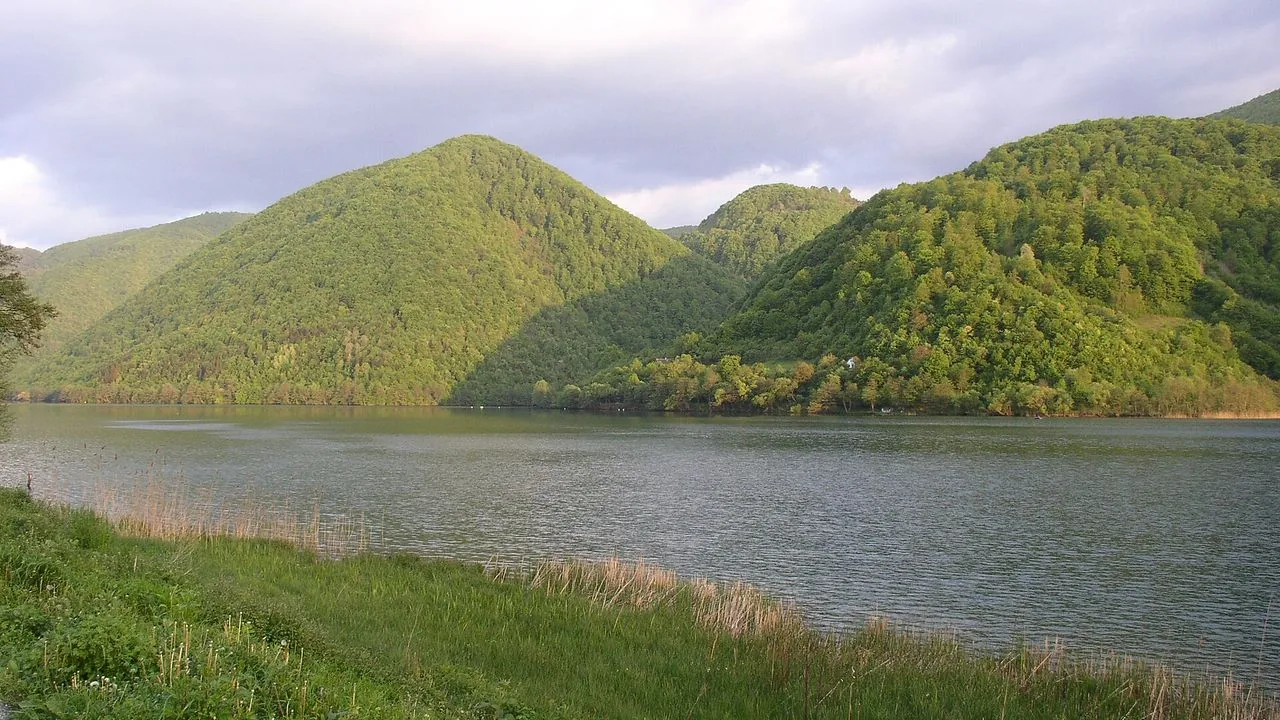
Altitude does more work than a pretty photo. A lake at 400 m can feel almost Mediterranean by August; the same month at 1,600 m stays sharp - and Prokoško bans bathing outright. Here’s how five lakes actually behave for swimming, road weeks and salt water in a city park, without packing a swimsuit for every blue pin.
Swim warm, look high, or float in salt
Altitude does more work here than people expect. A lake at 400 m can feel almost Mediterranean by August. The same month at 1,200 m or 1,600 m stays sharp even when the valleys are baking. Salt water in Tuzla plays by different rules again: it warms in shallow basins and floats you more than a mountain tarn ever will. Once you’ve got that map in your head, the photos make more sense - and you stop packing a swimsuit for every blue pin.
Pliva Lakes: easy swim near the waterfall town
A few kilometres west of Jajce, the Pliva widens into Veliko and Malo Plivsko jezero - Big and Small Pliva Lake. The travel portal visitbih.ba - a private title rather than a tourist board, and the piece dates from 2019 - puts Veliko at 425 m above sea level, about 3.3 km long and up to roughly a kilometre across, with a maximum depth of 36 m; Malo is shorter and narrower with the same depth figure. In summer the surface layer climbs above 21 °C, which is why this is where the town actually paddles, not at the famous waterfall in the centre.
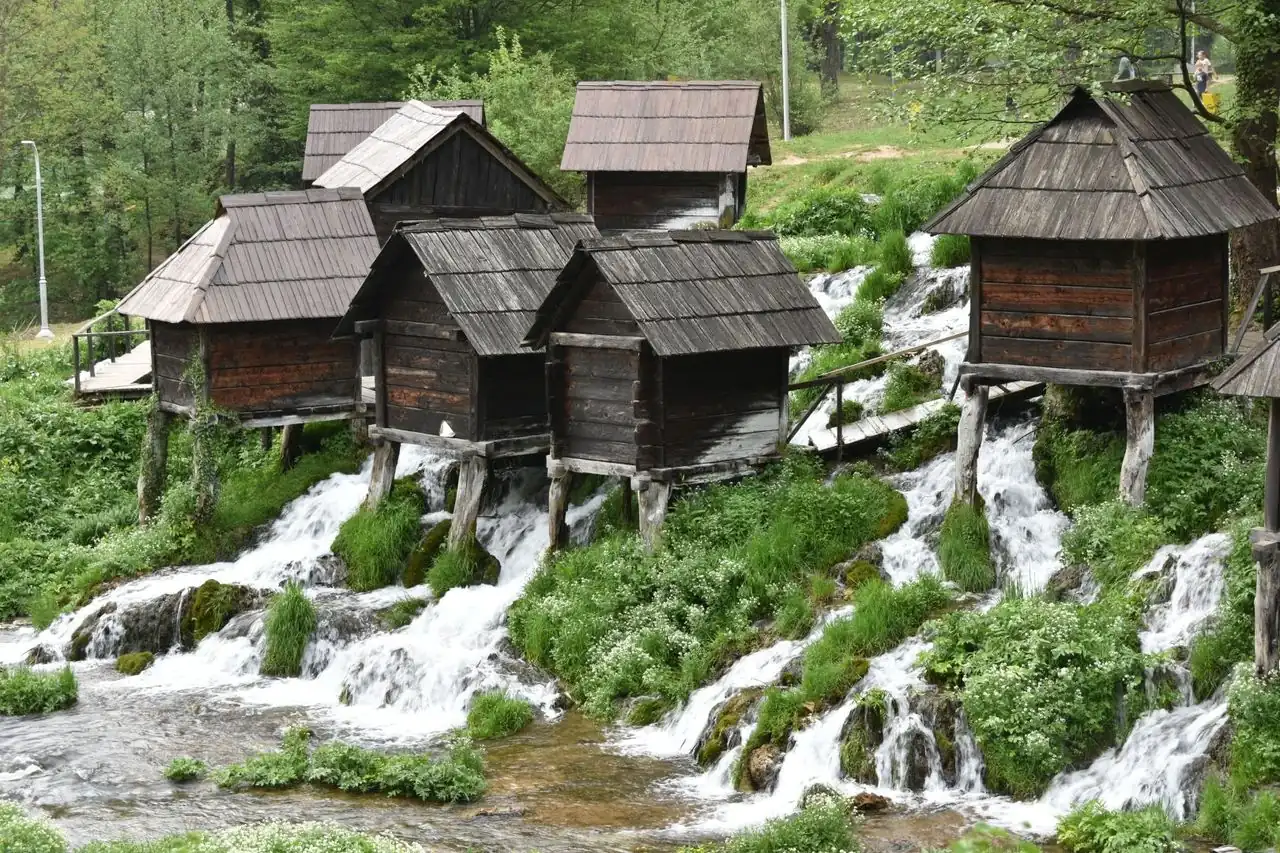
Between the two basins, a tufa barrier carries the wooden Mlinčići watermills - a national-monument cultural landscape, free to wander on boardwalks once you’ve sorted parking. The “heavy”, still water made Veliko a serious kayaking venue: in 1963 it hosted European and World flatwater races. You come for swimming and a picnic in July and August, for photos of the mills any clear day, and for an overnight that pairs cleanly with the town waterfall and fortress. If you’re collecting falling water as well as lakes, the best waterfalls in Bosnia guide covers the Pliva drop itself and how it sits against Kravice and the Una.
Boračko Lake: warm glacial water under Prenj
Boračko is the glacial lake people mean when they want a mountain swim without a full alpine approach. It sits at the northeastern foot of Prenj, in Konjic municipality, at 397 m. The basin is elliptical - about 786 m by 402 m, roughly 0.26 km², with a shoreline of 2.4 km and a deepest pocket of about 17 m in the southeast. Clarity can reach around eight metres on a good day. August surface water is quoted around 25 °C, which is why Konjic locals treat it as their summer bath; February can sit near freezing.
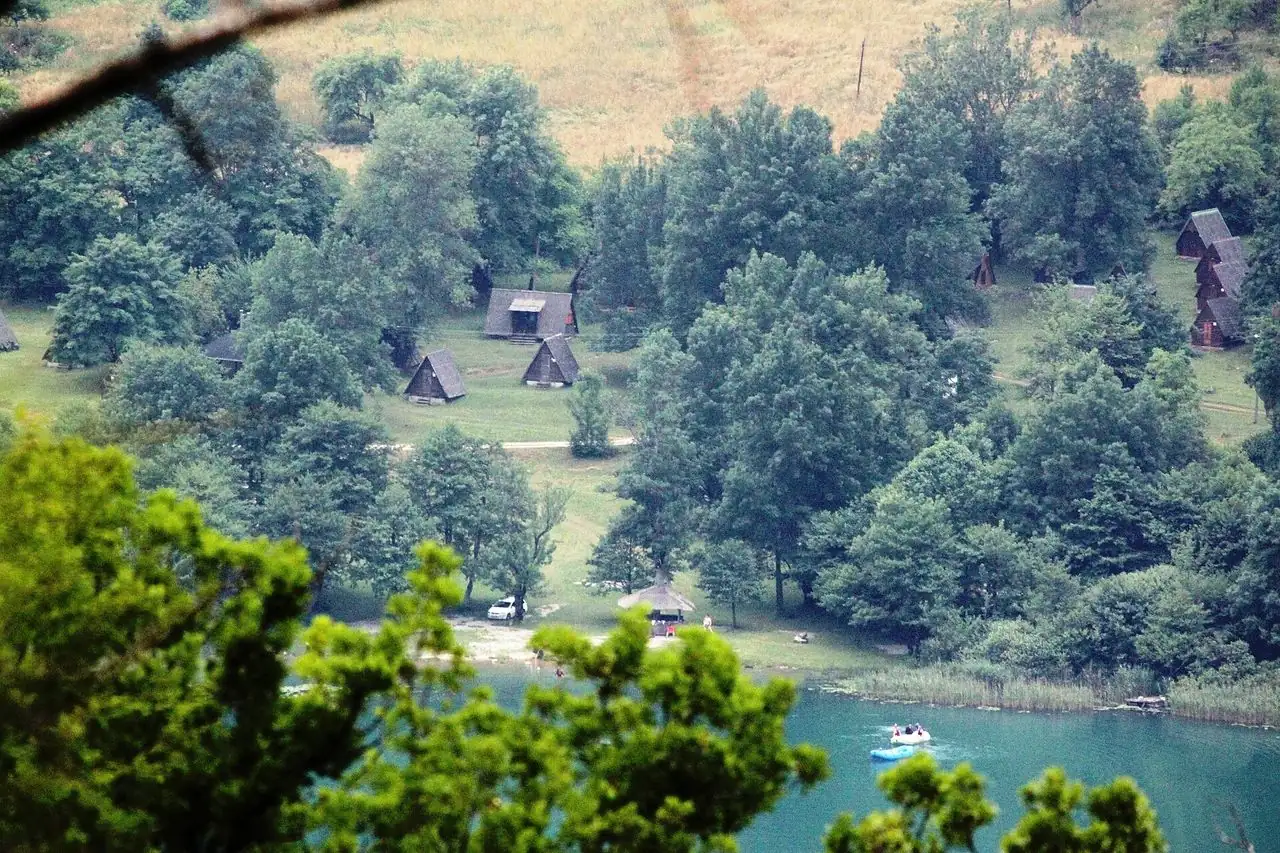
A paved road reaches the shore from the Konjic side, so you don’t need a 4×4 the way you do for higher lakes. That puts Boračko on the natural Sarajevo-Mostar axis: pull off for a swim, then continue toward rafting country or overnight in Konjic. Shore entry is mostly pebble and grass - bring water shoes - and there aren’t lifeguards, so you’re swimming at your own risk. It’s the lake I’d pick when the forecast is hot and I still want mountains in the frame.
Blidinje Lake: shallow water on a high plateau
Drive west of the Neretva onto the Blidinje plateau and the air changes. Blidinje Lake sits around 1,184-1,185 m in a long polje inside Blidinje Nature Park - 358 km² by the park company’s own legislation page, declared in 1995. The lake’s surface area swings with the season (figures commonly run from a few square kilometres up toward six), and it’s shallow: cool, windy, more wade-and-cool-off than a sandy swim resort.
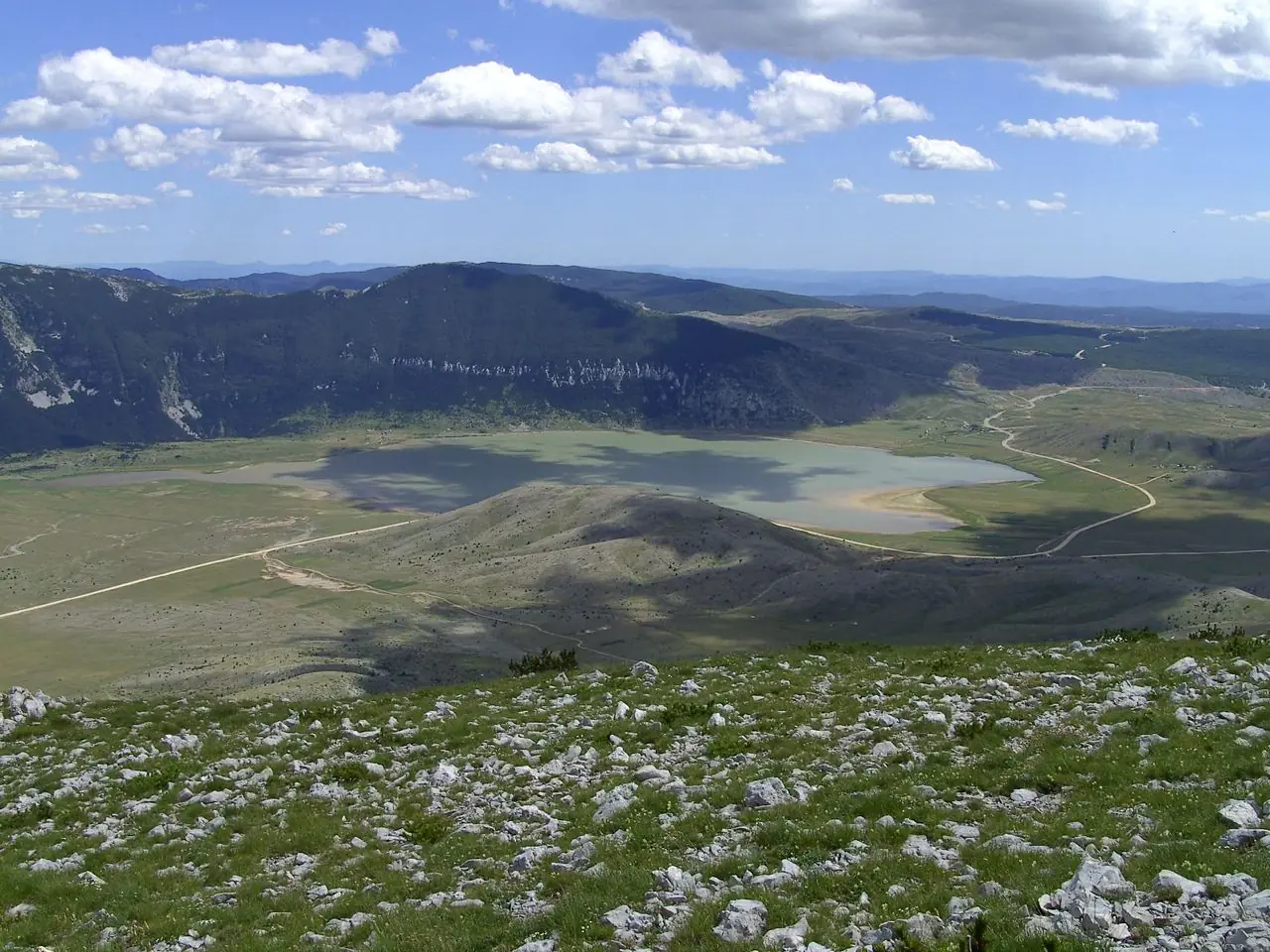
There’s a story behind the water: late-19th-century herders sealed swallow holes on the polje, and the lake has held since. Park visitor information lists no entry ticket for the landscape itself - you pay for guided programmes or the ski centre, not for standing by the shore. You do need a car. From Mostar you’re looking at roughly an hour and a half of climbing; from Sarajevo closer to two hours depending on the route. Layers matter even in July. Pair the lake with the stećci field at Dugo Polje and you’ve got a full plateau day that feels nothing like Kravice or the Old Bridge loop.
Prokoško Lake: the mountain eye you don’t enter
Prokoško is the postcard that tricks people into packing a swimsuit. The dedicated Prokoško Lake page covers the 2026 gate prices and the asphalt climb from Fojnica. The natural-monument managers put it at 1,636 m on Vranica, 22 km from Fojnica - a glacial “mountain eye” ringed by wooden shepherd huts (katuni). The site is famous for an endemic alpine newt subspecies historically tied to the area. 🔴 It is not free, and foreigners pay double. The managing utility published a price board in July 2026: parking is 15 KM for BiH citizens and 20 KM for foreign visitors, adult entry 3 KM and 6 KM respectively, with camping at 20 / 30 KM. Students, pensioners and over-70s pay 2 KM; herders and visitors with over 50% disability go free. Budget 32 KM for two foreigners in one car before you add anything else - 20 KM parking plus 6 KM each. The road is no longer the obstacle it was: Fojnica municipality finished paving the whole approach in summer 2026, 16 km in total - 11 km of regional road R-438 at 4 m wide, then the final 5 km up to the gate at 3 m. An ordinary car makes it in dry conditions; winter is a different question. You’ll pay at the gate when the rangers are on duty.
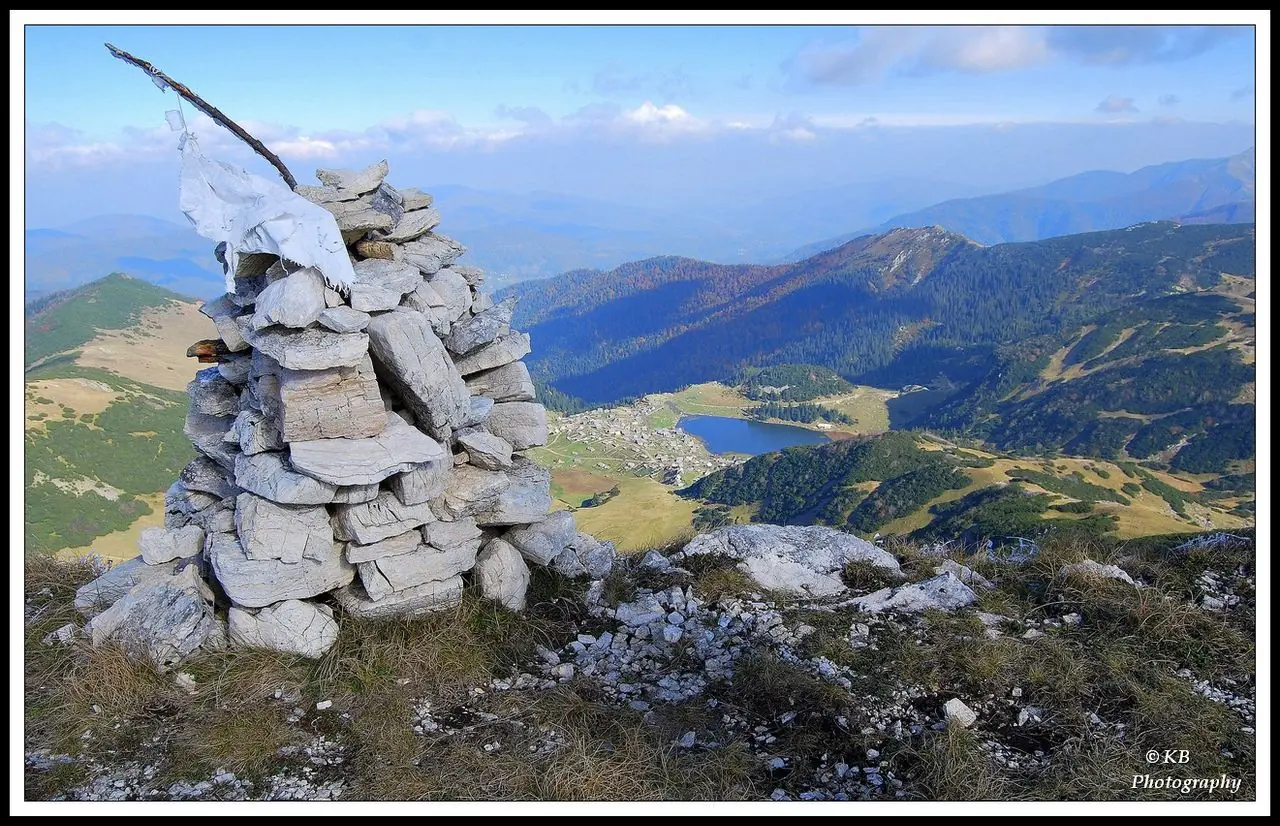
Here’s the line that travel blogs sometimes skip. On the official visitor Q&A of Spomenik prirode Prokoško jezero, bathing, swimming and any similar entry into the lake are strictly forbidden. That’s not a soft suggestion - it’s the protected-area rule. Come for the silence, the ridges and a night in a hut if you can arrange it; leave the swim for Boračko or Pliva on the way back down. I’ve seen people treat the ban as optional. Don’t. The whole point of the climb is that the water is still a wild habitat, not a lido.
Pannonica: salt lagoons inside Tuzla
Pannonica (Panonska jezera) is the odd one out, and that’s why it belongs on this list. In the middle of Tuzla, JP Pannonica runs an artificial salt-lake complex - several basins, salt waterfalls, sand edges and a full beach-park setup. The operator’s live board read 26 °C across the basins on 1 September 2026, and sits around 27-28 °C at the height of summer, with salinity near 30 g/L, which is why you float more than you thrash. It’s the swim you take when you’re already in the northeast and don’t want another mountain day.
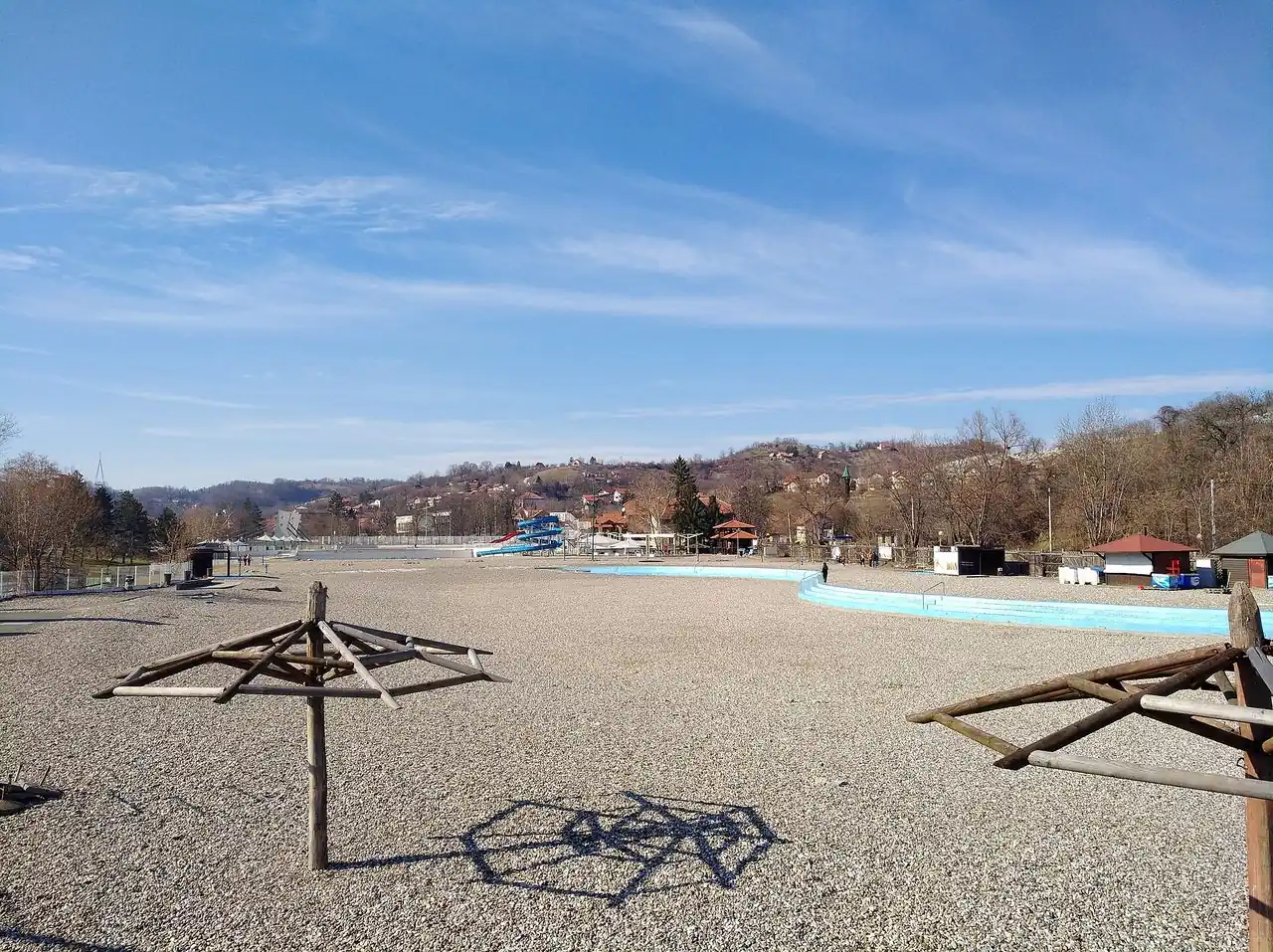
Tickets are published in convertible marks on panonika.ba. For the main summer season 1 June-31 August 2026, a regular weekday day ticket was 7.00 KM and a weekend ticket 9.00 KM (kids 4-14 cheaper; under-fours free). From 1 September 2026 the complex moved into shoulder pricing: a regular off-season day ticket 5.50 KM, September hours are settled, and the operator said so the day before this page went up: 09:00 to 18:00 daily, with the last ticket sold and the last entry at 17:00. That 17:00 cut-off is the part that catches people - turn up at 17:30 and the gate is closed even though the complex is open for another half hour. The stale 10:00 still printed on the price-list page is out of date. Season tickets stay valid through September; the operator does not name a final swim day, so ask when you call. Turnstiles and lockers are what actually make this one unusual in the five - not the fact of paying. Boračko charges for vehicle entry too (the Konjic tourist organisation documented a seasonal board in 2025, from 2 KM for a motorcycle to 50 KM for a full coach; ask at the barrier for the current year), and Prokoško now prints its own tariff. Bring cash in KM; euros aren’t a reliable plan anywhere in Bosnia.
Pairing lakes into a road week
These five don’t sit in a neat cluster. Treat them as modules you bolt onto routes you’re already driving.
- Pliva + Jajce: half a day to a night. Waterfall and fortress in town, swim and mills upstream. Fits a Sarajevo-Banja Luka or Travnik loop.
- Boračko on the Neretva corridor: a swim stop between Sarajevo and Mostar, or a Konjic overnight before rafting.
- Blidinje from Mostar: a full day up to the plateau when you need cool air; doesn’t combine well with Prokoško the same afternoon.
- Prokoško from Fojnica / central Bosnia: its own mountain day. Don’t try to force a swim agenda onto it.
- Pannonica: bolt onto a Tuzla / northeast stop. It’s the opposite energy of Vranica - urban, ticketed, salty.
Buses reach Jajce and Tuzla; they don’t usefully reach Blidinje Lake or the Prokoško gate. A hire car (or a local driver) is how you close those gaps without rewriting the week around public transport. If you’re already building a Herzegovina loop, Blidinje is the inland counterweight to the Trebižat waterfalls; if you’re hunting falling water and still water in the same week, keep the waterfalls guide and this page open together and assign each day a job.
Pick by mood, not by Instagram
If your week is swim-first, book Pliva for the easy green swim and Boračko for the mountain one, and leave high lakes for photos only. If your week is high-country quiet, take Blidinje for plateau air and Prokoško for the mountain-eye view - and respect the bathing ban when you get there. If you’re already aiming at northeast Bosnia, Pannonica is the salt-water half-day that doesn’t ask you to climb.
I’d rather send you to the right lake for the weather and the car you’ve got than to the prettiest thumbnail. Pliva when you want cafes and mills. Boračko when August heat meets Prenj. Blidinje when Mostar feels too hot. Prokoško when you’ll trade swimming for a mountain eye ringed by shepherd huts. Pannonica when you want warm salt water without leaving town. That split beats chasing every blue pin on the map.
Photos
Read also

Entertainment · 11 min read
Sarajevo Nightlife: Best Bars, Pubs & Clubs
Verified · August 10, 2026Where Sarajevo goes after dark: Bascarsija bars, Ferhadija pubs, live jazz, Sloga club nights and 06:00 closing times - all walkable, all cash-friendly.

Entertainment · 14 min read
Bosnia Events Calendar: Month by Month 2026-2027
Verified · September 23, 2026What happens in Bosnia each month: Bascarsija Nights all July, the film festival 14-21 August 2026, Jazz Fest 4-7 November, and the holiday trap.

Entertainment · 8 min read
Sarajevo Film Festival 2026: A Visitor's Guide
Verified · July 18, 2026The Sarajevo Film Festival runs 14-21 August 2026: what it is, the open-air cinema, how tickets work, the guests and where to stay.

Entertainment · 12 min read
Best Waterfalls in Bosnia
Verified · August 9, 2026The best waterfalls in Bosnia compared: Kravice, Štrbački buk, Pliva at Jajce, tall Skakavac and wide Kocusa - which to pick, where to swim, when to go.