Bosnia Events Calendar: Month by Month 2026-2027
What happens in Bosnia each month: Bascarsija Nights all July, the film festival 14-21 August 2026, Jazz Fest 4-7 November, and the holiday trap.
Upcoming events
- On now October 2-10, 2026 MESS International Theatre Festival (66th)
- November 4-7, 2026 Jazz Fest Sarajevo (30 years)
- Dayton Peace Agreement Day (public holiday, Republika Srpska)
All upcoming dates by month (18)
October 2026
- On now October 2-10, 2026 MESS International Theatre Festival (66th)
November 2026
- November 4-7, 2026 Jazz Fest Sarajevo (30 years)
- Dayton Peace Agreement Day (public holiday, Republika Srpska)
- Statehood Day (public holiday, Federation)
January 2027
- January 1-2, 2027 New Year (public holiday)
- Day of the Republic (public holiday, Republika Srpska)
- Orthodox New Year (public holiday, Republika Srpska)
February 2027
- February 7 - March 21, 2027 Sarajevo Winter festival (Sarajevska zima)
- Start of Ramadan (estimated, moon-dependent)
March 2027
- Independence Day (public holiday, Federation)
- Ramazanski bajram, Eid al-Fitr (estimated, moon-dependent)
- Catholic Easter
May 2027
- May 1-2, 2027 Labour Day (public holiday, both entities)
- Orthodox Easter
June 2027
- June 24-25, 2027 Medjugorje apparition anniversary and Peace March
July 2027
- July 1-31, 2027 Baščaršija Nights
- Kupres mowing competition (first Sunday of July)
- Old Bridge diving competition (last Sunday of July)
Dates marked "to be confirmed" follow the previous edition: the organiser had not announced the new ones when we last checked.
Dates checked: September 23, 2026
You’ll find Bosnia’s event year has a simple shape once you see it: one festival owns the whole of July, another owns the middle of August, and the rest of the calendar is quieter than the listings sites suggest. The fixed points you can book a flight around are Baščaršija Nights (fills essentially all of July, free entry), Sarajevo Winter (7 February to 21 March), Jazz Fest Sarajevo (first week of November), and two single-day fixtures - the Kupres mowing competition and the Old Bridge dive in Mostar. Everything else, including the Sarajevo Film Festival, only gets confirmed a few months out. Below is the month-by-month version, with what each period does to bed prices, plus the scheduling quirk that catches nearly every first-time visitor: Bosnia doesn’t have one public holiday calendar, it has two, and they disagree.
The dates that never move
Five events are safe to plan a year ahead, because their timing is written into how they work rather than announced each spring:
- Sarajevo Winter (Sarajevska zima) always runs 7 February to 21 March - the festival window itself is fixed, even though the ceremonial opening night moves within it. It dates from 1984, the year of the Winter Olympics. The 41st edition in 2026 held its opening night on 14 February under the motto “AI Artificial Intelligence & IA Intelligence in Art”, and an open call for the 2027 edition is already out.
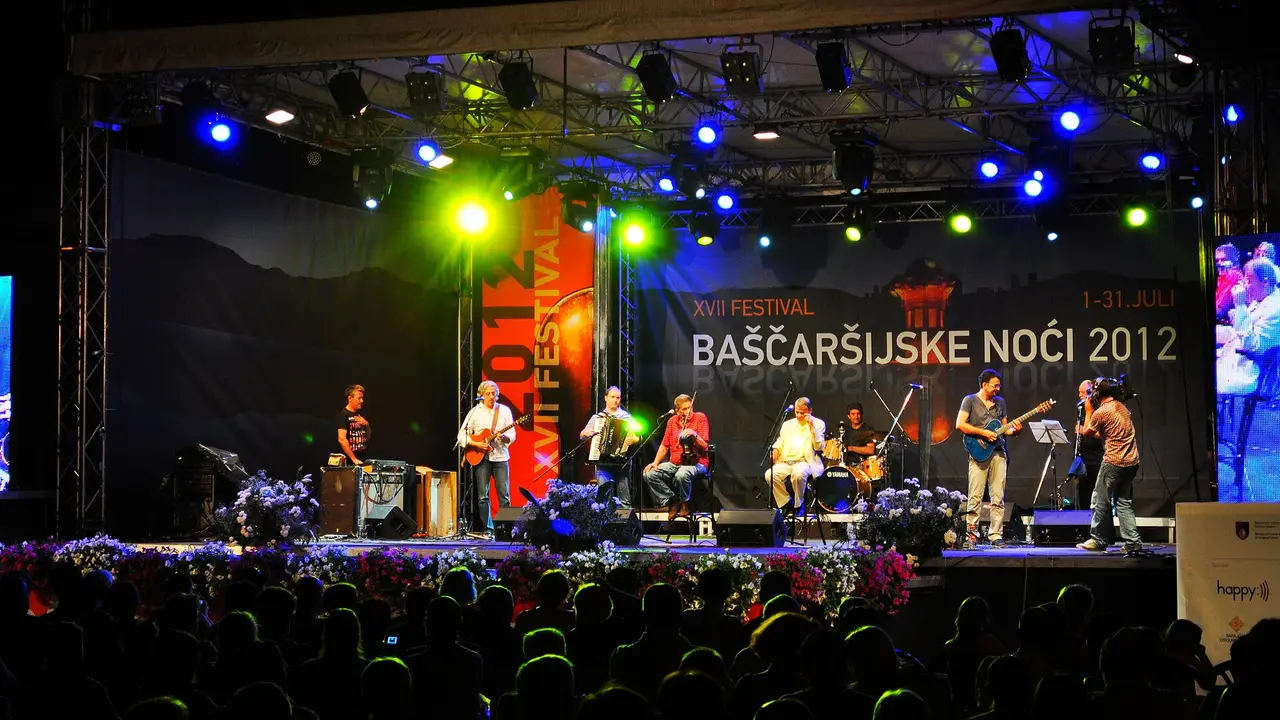
- Baščaršija Nights fills essentially all of July - free entry, 1st to 31st in 2026, though 2025 opened a day early on 30 June - with concerts, theatre and exhibitions across the old town. 2026 is the 30th edition.
- The Kupres mowing competition is held on the first Sunday of July on the Strljanica meadow.
- The traditional Old Bridge dive in Mostar happens on the last Sunday of July.
- Jazz Fest Sarajevo takes the first week of November. In 2026 that’s 4-7 November, billed as “30 Years of Jazz Fest”.
Everything after this point moves, including the Sarajevo Film Festival’s own dates (14-21 August in 2026, but 15-22 August in 2025). MESS, the country’s big international theatre festival, confirmed 2-10 October for 2026 and has its full programme up; in other years the dates land late. The Red Bull stop in Mostar depends on the world series schedule, and smaller music festivals sometimes skip a year. If a site quotes you exact dates a long way out without naming the organiser, it’s guessing.
December to February: markets, snow and the first festival of the year
The Sarajevo Holiday Market is the winter fixture, a run of more than thirty wooden cabins over about 35 days, with a daily programme of concerts, stand-up and food tastings at its winter pub. Its design is deliberate: it’s timed to cover Catholic Christmas, New Year, Orthodox Christmas on 7 January and the Orthodox New Year on 14 January in one stretch. The organiser announces exact dates each November, so don’t treat any date you find in August as booked.
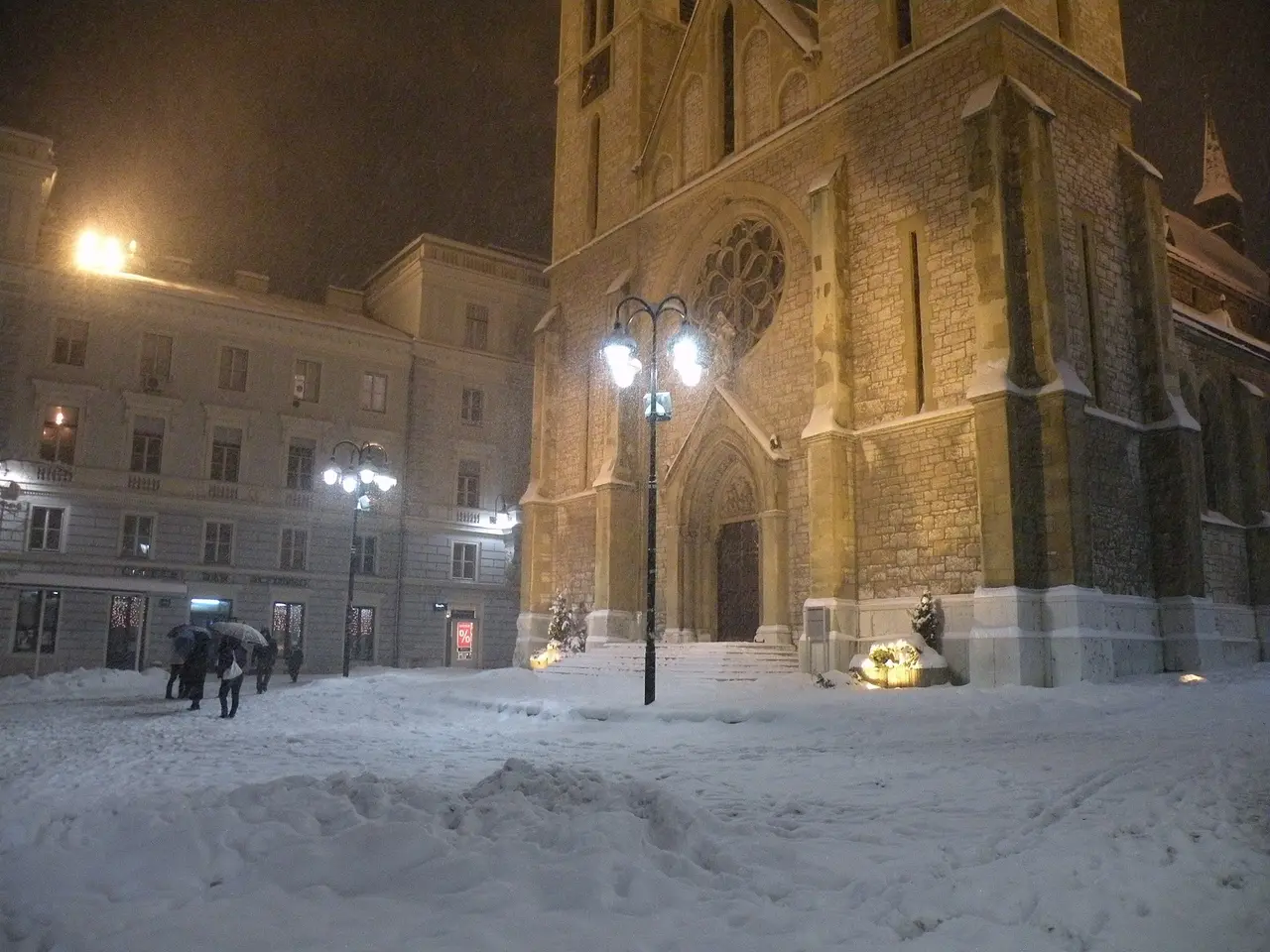
For the mountains, the honest guide to when they’ll be busy is the resorts’ own pricing. In 2025/26, Jahorina charged peak-season rates from 22 December to 15 January and again from 9 to 27 February - the resort republishes both windows each autumn, and they shift by a few days year to year, but the pattern tells you more about crowds and room rates than any tourism blurb. Our guide to Bosnia in winter covers the season properly.
Then February brings Sarajevo Winter, which is less a single event than six weeks of theatre, concerts, exhibitions and film scattered across the city. It runs deep into March, so a late-winter trip catches the tail of it.
March to May: the thin stretch, and the moving feasts
This is the quietest part of the Bosnian calendar and there’s no point pretending otherwise. Sarajevo Winter closes on 21 March, and from there until June the country runs on landscape rather than programme: snowmelt has the rivers at their loudest, and the rafting season on the Una, the Tara and the Vrbas opens up. If that’s your reason to come, start with our guide to rafting in Bosnia.
What lands here, and in some years spills into the tail of winter, is religious, and the dates shift every year. For the 2027 cycle: Ramadan begins around 8 February 2027, with Ramazanski bajram (Eid al-Fitr) around 10 March 2027 - both moon-dependent, so local religious authorities confirm them close to the day. Catholic Easter falls on 28 March 2027 and Orthodox Easter on 2 May 2027, five weeks apart, which is a normal state of affairs here. Ramadan is worth timing deliberately if you like cities at night: iftar tables spill out of restaurants that stay open right through the day for everyone else.
The other spring date that matters practically is 1-2 May, Labour Day - a two-day holiday in both entities and a popular long weekend, so mountain huts, lake cabins and campsites go early.
June: pilgrims first, then the festivals
June starts quietly and ends loudly. The fixed point is 24-25 June in Medjugorje, the anniversary of the first reported apparitions in 1981. An International Peace March walks from Humac to Medjugorje on the 24th, and the parish reports one of its largest pilgrim surges of the year around the 25th. Medjugorje already takes over a million visitors a year spread across twelve months, so what those two days do to it is worth respecting: a bed anywhere within reach of the village is contested. Our page on Medjugorje explains the site itself.
By the last week of June the outdoor stages are going up in Sarajevo and Mostar.
July: everything at once
If you’re getting one month in Bosnia and you want events in it, take July. Nothing else comes close - that’s the month to plan around.
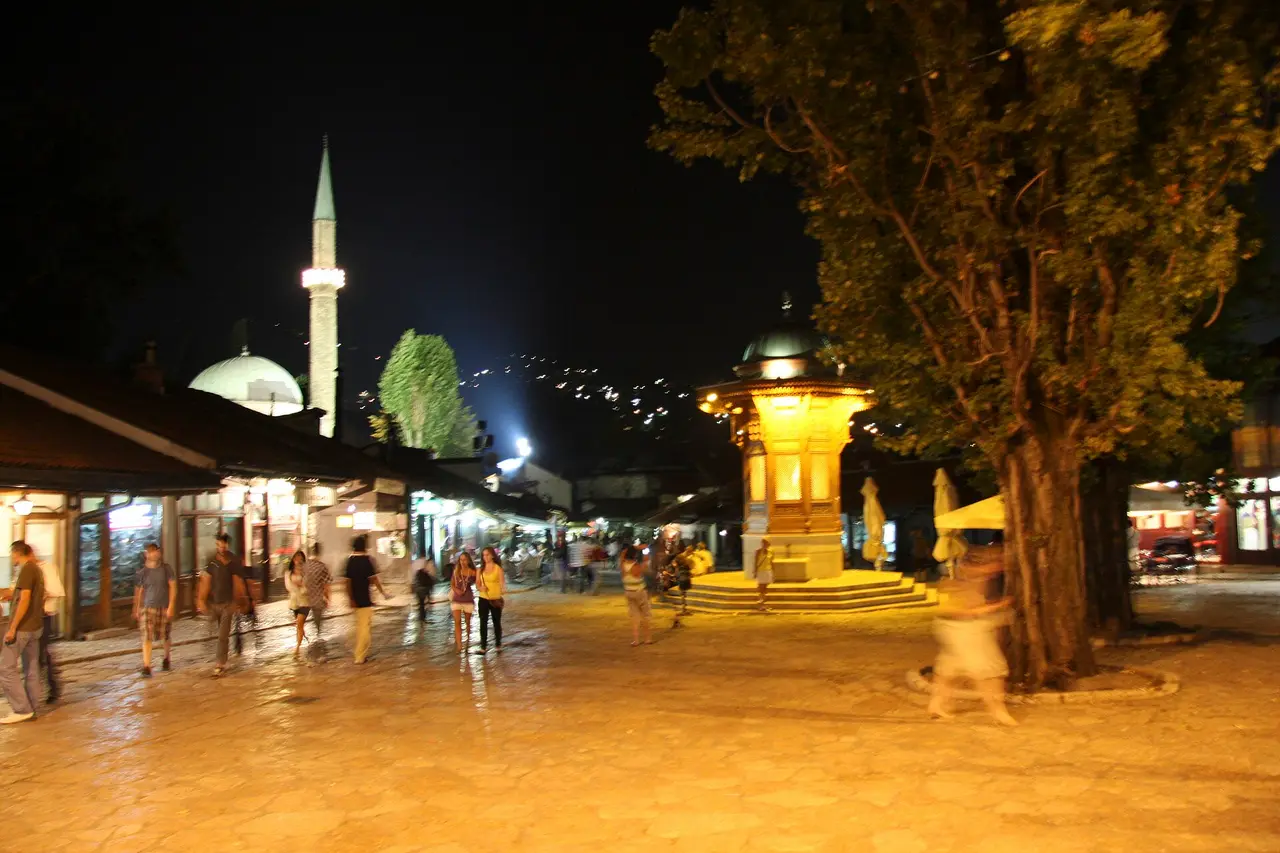
Baščaršija Nights runs the entire month across the old town: the Bosnian Cultural Centre, the City Hall stage, Mejdan Park, even the Bentbaša pool. The festival takes its name from Baščaršija, though the fixed venues - the Bosnian Cultural Centre and Theatre Square - actually sit a 15-minute walk west of the bazaar itself. The 2026 programme opened on 1 July with the rock band Bombaj Štampa and closed with a tribute to the sevdalinka singer Safet Isović, with swing, salsa, classical and Latin jazz in between. Our Sarajevo nightlife guide covers where the after-parties land.
Around it, five very different things happen in the same four weeks - don’t try to catch all of them:
- Mostar Summer Fest (2-4 July in 2026, at SC Kantarevac) is the south’s open-air music weekend.
- Demofest, staged inside Banja Luka’s Kastel fortress, is Republika Srpska’s own summer music festival - dates are set by the organiser each year rather than fixed to a date.
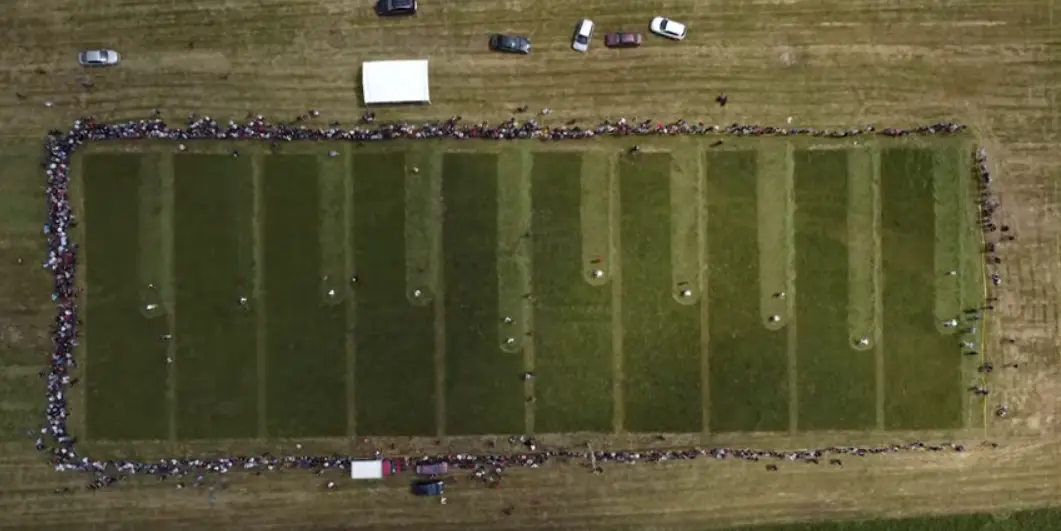
- The Kupres mowing competition on the first Sunday of July is the strangest and best of them. Men race across the Strljanica meadow with scythes, judged on time and on how much grass they cut, with shoulder-throwing, horse racing and tug-of-war alongside. The custom is traditionally dated to 1687 and went onto the UNESCO list of intangible cultural heritage in 2020.
- The International Una Regatta takes the river down at Bihać in late July: four days, seven stages and over 100 km of paddling. The 52nd edition ran 22-25 July 2026 - opening night at the Lučica camp in Martin Brod on the 22nd, the first stage down to Štrbački buk the next morning, then the show-stopper from the falls to Bihać, and a final leg to Bosanska Krupa shadowed by the tourist train through the canyon. Register early: the organiser caps places, and you won’t get a late walk-up berth. The river itself is covered in our Una National Park guide, and the town in our Bihać guide.
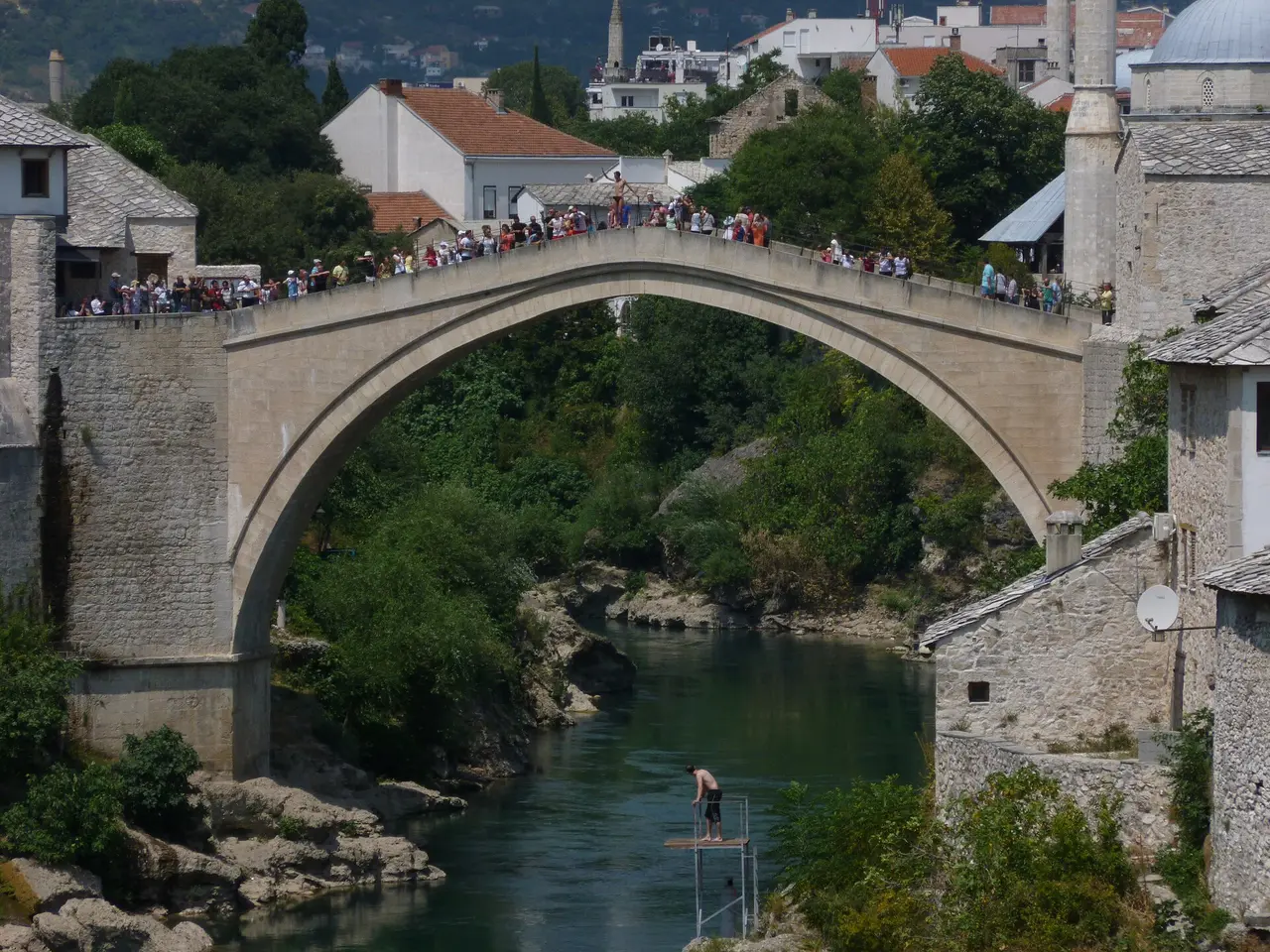
- The traditional Old Bridge dive in Mostar, on the last Sunday of the month, traces to 1566, when the bridge itself was built; the modern organised contest was formalised in 1968. The 460th edition on 26 July 2026 had 34 competitors, 18 diving head-first and 16 feet-first, with Igor Kazić taking his eleventh feet-first title.
July closes on the loudest note of all when the Red Bull Cliff Diving World Series stops at Stari Most. The 2026 stop ran 31 July to 1 August, the tenth time the series has come to the bridge - Mostar has landed at that July-August hinge most years, but the exact weekend moves with the wider World Series calendar, which the organisers publish each spring. On that weekend there’s standing room only along both banks of the Neretva, and it spills a day into August: beds in Mostar are gone before the month has properly started.
August: the film festival fortnight
Two events dominate, and they pull in opposite directions geographically.
Mladifest, the Medjugorje youth festival, takes the first week: 1-6 August in 2026, its 37th edition, themed “Ad fontem! To the Source”. It’s the second of Herzegovina’s two annual crowd surges, and the pressure doesn’t stay in the village: Mostar fills up too.
Then the Sarajevo Film Festival, 14-21 August 2026 for its 32nd edition, closing with the Heart of Sarajevo awards on the 21st. It’s the biggest film event in Southeast Europe and most of it, including the huge open-air screenings, is open to anyone with a cheap ticket. We’ve written it up separately in our Sarajevo Film Festival guide, which is the page to read if you’re building a trip around it.
August is also the hottest and priciest fortnight of the Bosnian year. Herzegovina bakes while Sarajevo sits at a far more civilised summer average of around 21°C, as our guide to the best time to visit Bosnia sets out. Beds in Sarajevo go first.
September to November: harvest, theatre and jazz
September is the month to take if you want the country without the August surcharge. The heat drops, the crowds thin, and the Sarajevo Half Marathon closes streets across the city on a Sunday in mid-September: in 2026 it ran on 13 September, with entries closing on the 8th and a 5k the same morning for people who would rather not do 21 kilometres of Sarajevo hills. The organisers post each year’s date on sarajevomarathon.ba, and the 2027 one was not up as of late September 2026. Herzegovina also gets another pilgrim peak this month, when Medjugorje marks the Exaltation of the Cross - traditionally the first Sunday after 8 September, and a parish-only occasion until 1981, an international pilgrim feast ever since. Our guide to Bosnia in autumn sets this event calendar against the month-by-month weather and what shuts for the year, if you’re weighing September against October.
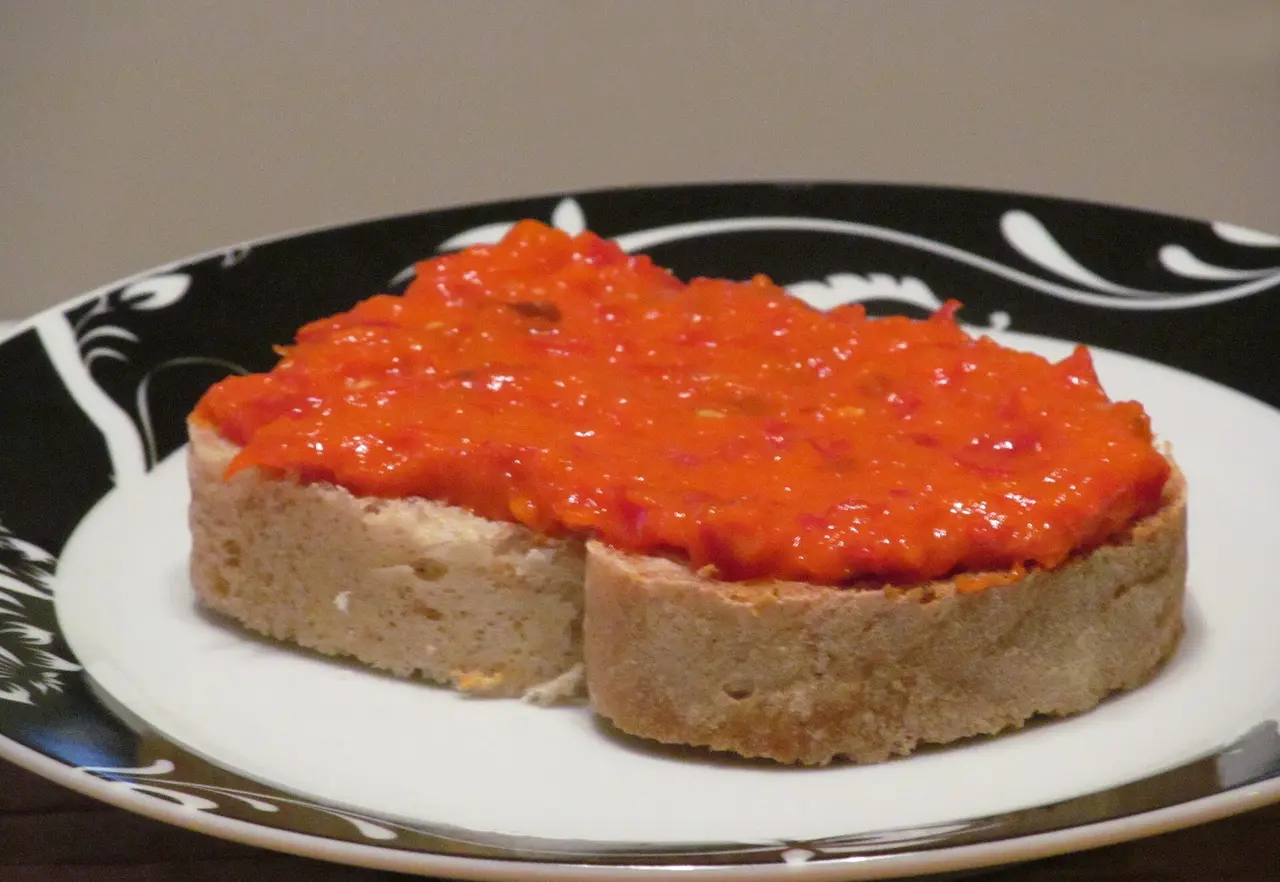
It’s also harvest season in Herzegovina. The pick starts with Žilavka in late August and runs through Blatina into October across the vineyards around Mostar and Trebinje, which is when the cellars are at their most welcoming and our Herzegovina wine guide is most useful. The other autumn ritual is domestic rather than touristic: through the autumn, whole families spend weekends roasting red peppers by the sackful to make ajvar for the winter. You’ll smell it before you see it.
October belongs to MESS, the international theatre festival that has been running in Sarajevo since 1960 and reaches its 66th edition in 2026: 2 to 10 October, with the day-by-day programme already published on mess.ba. November then brings Jazz Fest Sarajevo on 4-7 November 2026, the year the festival celebrates thirty years; the nine-concert programme has been on jazzfest.ba since 24 September 2026.
The public holiday trap
Bosnia doesn’t run on a single national holiday calendar, and the difference isn’t academic. Republika Srpska legislates its own list. Under the entity’s official protocol, non-working days include 1-2 January, 9 January (Day of the Republic), 14 January (Orthodox New Year), 1-2 May, 9 May and 21 November (Dayton Peace Agreement Day). The Federation of Bosnia and Herzegovina, and the state level generally, mark 1 March (Independence Day) and 25 November (Statehood Day) instead, and those two aren’t observed by the authorities in Republika Srpska.
In practice: on 1 March, offices, banks and many museums shut in Sarajevo, Mostar and Bihać while Banja Luka and Trebinje work a normal day. On 9 January the reverse happens. Intercity buses keep running but often on reduced holiday timetables, so check before you rely on a connection - our guide to getting around Bosnia covers the operators. Religious holidays add another layer, since Orthodox, Catholic and Muslim dates are all observed by the communities that keep them, and they rarely coincide.
The upside is that a holiday almost never shuts down the whole country at once. The downside is that “it’s a public holiday” is never a complete answer here. You have to ask where.
Booking around all this
Three practical points that apply to every date on this page.
Beds before tickets. Sarajevo in mid-August, Medjugorje in the first week of August and Mostar on the cliff-diving weekend are the three genuine sell-outs of the year. Book those months ahead; you can sort out a screening or a concert ticket a fortnight before with no trouble.
Carry cash in convertible marks. Festival bars, market stalls and box offices in smaller towns are cash-first, and the mark is pegged to the euro at a fixed rate, which makes the mental arithmetic easy. Our guide to money in Bosnia has the details, including where euros are and aren’t accepted.
Check the organiser, not the aggregator. Bosnian festivals publish late and third-party listings sites recycle last year’s dates without saying so. For anything in this calendar apart from the five fixed points above, the festival’s own site is the only date worth believing. And if you’re still deciding between months rather than events, the best time to visit Bosnia is a better place to start than any listings page.
Photos
Read also

Entertainment · 10 min read
Best Lakes in Bosnia for Swimming & Road Trips
Verified · September 3, 2026Five Bosnian lakes for swimming and road trips: Pliva, Boračko, Blidinje, Prokoško and Pannonica - which warm up, which ban bathing, how to link them.

Entertainment · 11 min read
Sarajevo Nightlife: Best Bars, Pubs & Clubs
Verified · August 10, 2026Where Sarajevo goes after dark: Bascarsija bars, Ferhadija pubs, live jazz, Sloga club nights and 06:00 closing times - all walkable, all cash-friendly.

Entertainment · 8 min read
Sarajevo Film Festival 2026: A Visitor's Guide
Verified · July 18, 2026The Sarajevo Film Festival runs 14-21 August 2026: what it is, the open-air cinema, how tickets work, the guests and where to stay.

Entertainment · 12 min read
Best Waterfalls in Bosnia
Verified · August 9, 2026The best waterfalls in Bosnia compared: Kravice, Štrbački buk, Pliva at Jajce, tall Skakavac and wide Kocusa - which to pick, where to swim, when to go.