Living in Sarajevo as a Digital Nomad
Sarajevo for remote work: cheap, atmospheric, decent internet, but a small community and cold winters. Coworking, cafes, neighbourhoods and the visa rule.
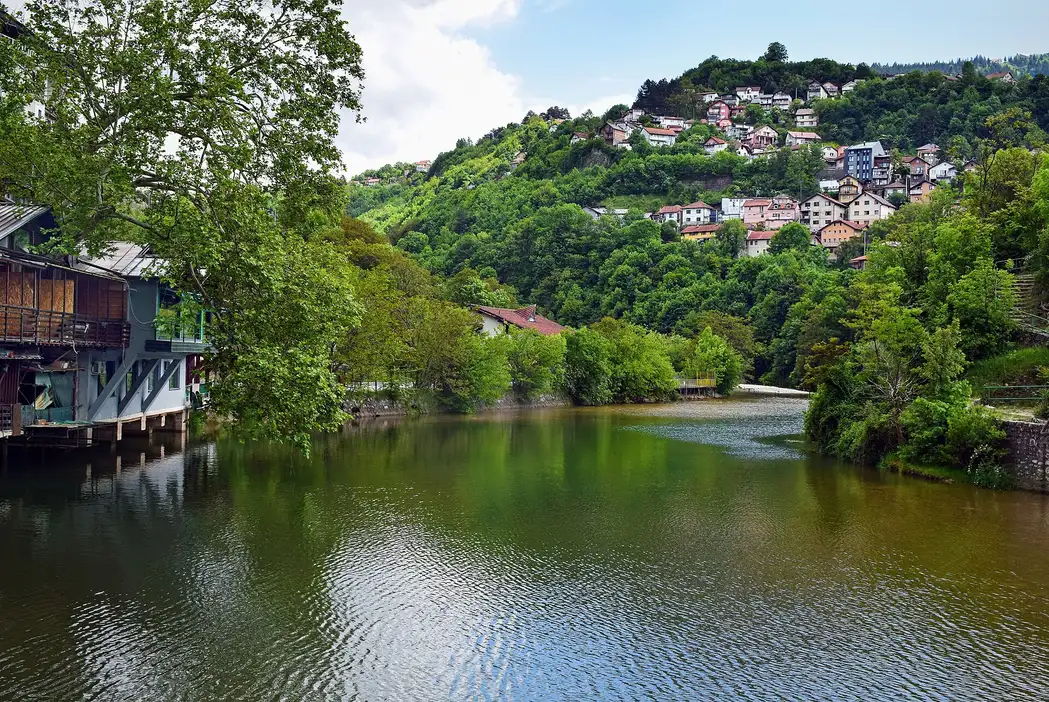
Sarajevo is a genuinely good base for a remote worker, with a couple of honest caveats. You get one of the cheapest capitals in Europe, a city with more character per square kilometre than almost anywhere on the continent, internet that’s better than its reputation, and a compact centre you can cross on foot. What you don’t get is a big ready-made nomad scene or a mild winter. The community is small, the cold months are proper cold, and the cafe wifi is a lottery. If you like the idea of a base with atmosphere and low costs, and you don’t need a hundred other laptop workers around you, it suits you well. This guide covers the internet, the coworking and cafe options, where nomads actually live, what it costs, and the one rule about visas and registration that trips people up.
The short version: come for a month or a season, work from a coworking desk or one of the reliable cafes, live in or near the flat centre, and budget for the winter heating. This is a base for the kind of nomad who wants to settle in and get to know a place rather than tick it off.
Is the internet fast enough?
This is the first question every remote worker asks about a smaller city, and the honest answer is yes, with the usual caveat that it depends where you plug in. On the Speedtest Global Index, Bosnia’s national median fixed broadband sits around 36 Mbps, but Sarajevo runs well ahead of the country: city figures put average broadband near 58 Mbps down with latency around 30 ms, and the fastest local provider averages closer to 88 Mbps. In plain terms, a normal flat or apartment in the centre gives you a connection that handles video calls, screen shares and large uploads without drama.
Two practical notes. First, the number that matters for calls isn’t the headline download speed but the upload and the stability, and Sarajevo’s roughly 16 Mbps average upload is fine for one person on Zoom, less comfortable if two of you’re both live at once. Second, always ask a prospective landlord what the connection actually is before you commit to a month, because an older building on a slow package is the one thing that can undercut the city average. Mobile data is cheap and a solid backup: a local prepaid SIM from BH Telecom, m:tel or HT Eronet gives generous allowances for small money, and if you would rather not queue for a SIM on arrival, an eSIM loaded before you fly has you online the moment you land. Our cost of living in Bosnia guide breaks down the SIM and data prices in more detail.
Coworking and cafes
If your work depends on a rock-solid line and a proper desk, use a coworking space rather than chancing a cafe. Sarajevo is the country’s coworking capital, and while the scene is small it’s real, with a cluster of well-run spaces offering fibre, meeting rooms, events and the usual free coffee. Two that publish their prices, from their own lists in September 2026:
- HUB387, at Maglajska 1, is the tech-hub option, an IT park as well as a coworking space, with a busy events calendar; a day pass is 30 KM, and a month with your own designated desk and 24/7 access is 399 to 419 KM.
- tershouse, at Kolodvorska 12, is a newer, creative space with unlimited coffee and tea and regular member events; a single day is 25 KM, less in its 5- and 10-day bundles (from 20 KM a day), and a dedicated desk starts at 300 KM a month.
Day passes mean you can dip in for a single focused day without a commitment, and both spaces sell multi-day packs if you only need a desk now and then. A lockable private office is another bracket entirely: tershouse starts them at 2,000 KM a month.
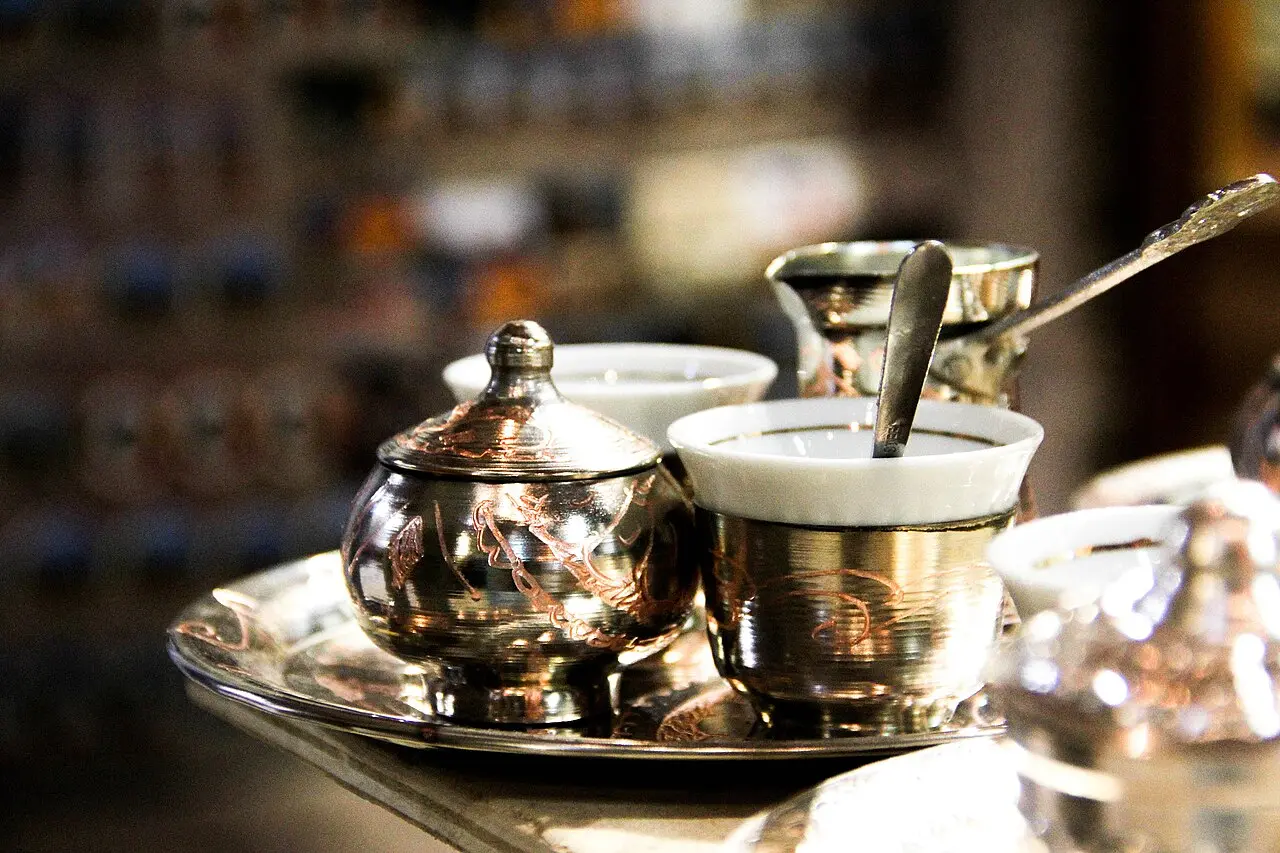
Cafes are where a newcomer gets caught out. Coffee here’s a slow social ritual poured from a copper džezva, not a laptop-and-headphones culture like Lisbon or Bali, and the wifi reflects that. Some places are genuinely good to work from: Kawa is a long-standing favourite for remote work, and Bistro Zdravo has a connection strong enough for video calls. Others are hit and miss, fine for email but not a client call, and a few of the grand old kafanas are there for the atmosphere rather than the bandwidth. The upshot is simple: keep one or two proven cafes in your back pocket, and don’t walk into a random one at nine in the morning expecting to take a meeting.
Where nomads live
Sarajevo is small and walkable, so no neighbourhood is far from anything, but each part of the centre has a different feel. Baščaršija and the old town are the most atmospheric, all Ottoman lanes and coppersmiths, but the short-lets here are tourist-priced and the buzz can tip into noise at night. The modern spine around Centar, Marijin Dvor and the Titova axis is the practical choice for most remote workers: cafes, the shopping centre, trams along the flat valley floor, and a good stock of flats. Just south and east, residential areas like Grbavica and Skenderija are cheaper and more local while still central enough to walk in, and further out Ilidža, at the end of the tram line, is greener, quieter and cheaper again if you don’t mind the commute.
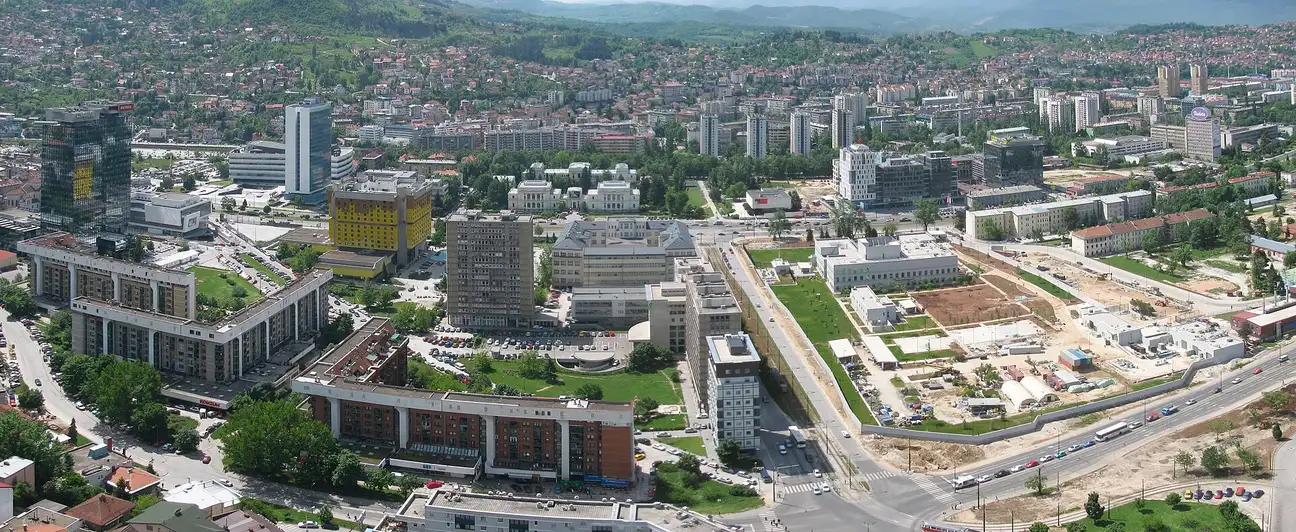
One thing to weigh up when you book: a furnished, flexible, month-to-month flat aimed at foreigners in a prime spot costs noticeably more than a plain local lease, because you’re paying for the furniture, the short commitment and the English-speaking landlord. That’s fine for a few weeks; if you’re staying several months, a longer local lease saves you a lot. Our guide to where to stay in Sarajevo goes through the districts in detail and matches each one to who it suits, which is worth a read before you sign anything.
The community: small, but there
Set your expectations here and you’ll not be disappointed. Sarajevo doesn’t have a large, humming nomad scene of the Tbilisi or Chiang Mai variety. What it has is a modest circle of remote workers and a friendly local tech crowd, and the way you meet them is through the coworking spaces and their events rather than a ready-made Facebook group of thousands. The city makes that easy in one important way: English is widely spoken among younger people, locals are genuinely warm, and the coffee culture means socialising is woven into every day. If you want a big anonymous nomad hub, this isn’t it. If you want to actually get to know a handful of people, Sarajevo is unusually good at it.
What it costs
Sarajevo is one of the cheapest capitals in Europe, which is a large part of the appeal. Rent is the line that decides your month: flats in Sarajevo were advertised at 600 to 1,000 KM (about 305 to 510 euros) when Face.ba went through the listings in September 2026, and everything else - coffee, food, transport, data - is cheap enough that it barely registers. An ordinary café coffee was 2.50 to 3 KM in Sarajevo when N1 last surveyed cafés in October 2022, the national average for a pizza was 13.10 KM in August 2026 (Agency for Statistics of BiH), and a monthly tram pass is about 60 KM. The country runs on the convertible mark (BAM, written KM), pegged at roughly 1.96 to the euro, and while some landlords will take euros, day-to-day life runs on marks in cash, so draw KM from an ATM and keep small notes.
The cost people forget is heating. Sarajevo sits at altitude and gets a cold, snowy winter, so utility bills climb through the heating season: on the canton’s district-heating tariff in force from April 2026, a 50 m² flat without a heat meter pays about 146 KM a month with VAT for seven months of the year, and a poorly insulated flat on electric heaters is a nasty surprise in January. Ask how a place is heated before you commit to a winter stay. For the full budget breakdown - rent bands, groceries, utilities and the seasonal swing - see our dedicated cost of living in Bosnia guide; there’s no point repeating every figure here.
The visa and registration rule
This is the part that catches people, so it is worth getting straight. Most Western nationals don’t need a visa: citizens of the US, UK, EU, Canada, Australia and New Zealand can enter visa-free for up to 90 days. The UK Foreign Office puts it plainly for Britons: “You can travel without a visa to Bosnia and Herzegovina for up to 90 days within a 6-month period,” with the usual passport conditions (issued within the last ten years, valid at least 90 days beyond your departure). EU and EEA citizens, along with several neighbouring nationalities, can even enter on a national ID card rather than a passport, though British travellers still need the passport.
Two things are easy to miss. First, if you’re not in commercial accommodation you have to register your address within 48 hours of entering the country, and only where the stay will run longer than three days. Both the Ministry of Security and the Service for Foreigners’ Affairs state that deadline; the UK Foreign Office still tells British travellers 72 hours, so work to the tighter Bosnian figure. A hotel or hostel handles it for you within 12 hours of check-in; a private flat or short-let doesn’t, so your host registers you or you do it yourself at the local field office of the Service. It’s a formality, but skipping it can mean a fine, and it can complicate a later residence application, so confirm on day one that it’s handled. Our Bosnia entry requirements guide goes through the registration rules and the conflicting advice in full. Second, and useful for anyone hopping around Europe, Bosnia isn’t in the Schengen Area or the EU, so your time here doesn’t count against the Schengen 90-in-180 allowance - a genuine reason nomads use it as a reset between Schengen stints.
One caveat to be clear about: as of mid-2026 there’s no dedicated digital nomad visa for Bosnia, and staying beyond the 90-day limit means entering temporary-residence territory, which depends on your nationality and is a matter for official sources, not a travel guide - our residence permit guide covers what that application actually involves. If a longer stay is your plan, check the current rules with the Bosnian authorities or a lawyer rather than relying on any blog, this one included. Treat everything here as a starting point and confirm the visa and residence details against official pages before you rely on them.
Living here off the clock
The reason to base yourself in Sarajevo rather than just pass through is what the city gives you after you close the laptop. The old bazaar of Baščaršija is a five-minute walk from most of the centre, the coffee ritual is a daily pleasure rather than a chore, and the wartime history - the Tunnel of Hope, the siege story told properly - is some of the most affecting in Europe. When you want out of the valley, the Trebević cable car lifts you from the edge of town to a mountain ridge with the whole city laid out below, and the old Olympic peaks of Bjelašnica and Jahorina are a short drive for hiking in summer or skiing in winter.
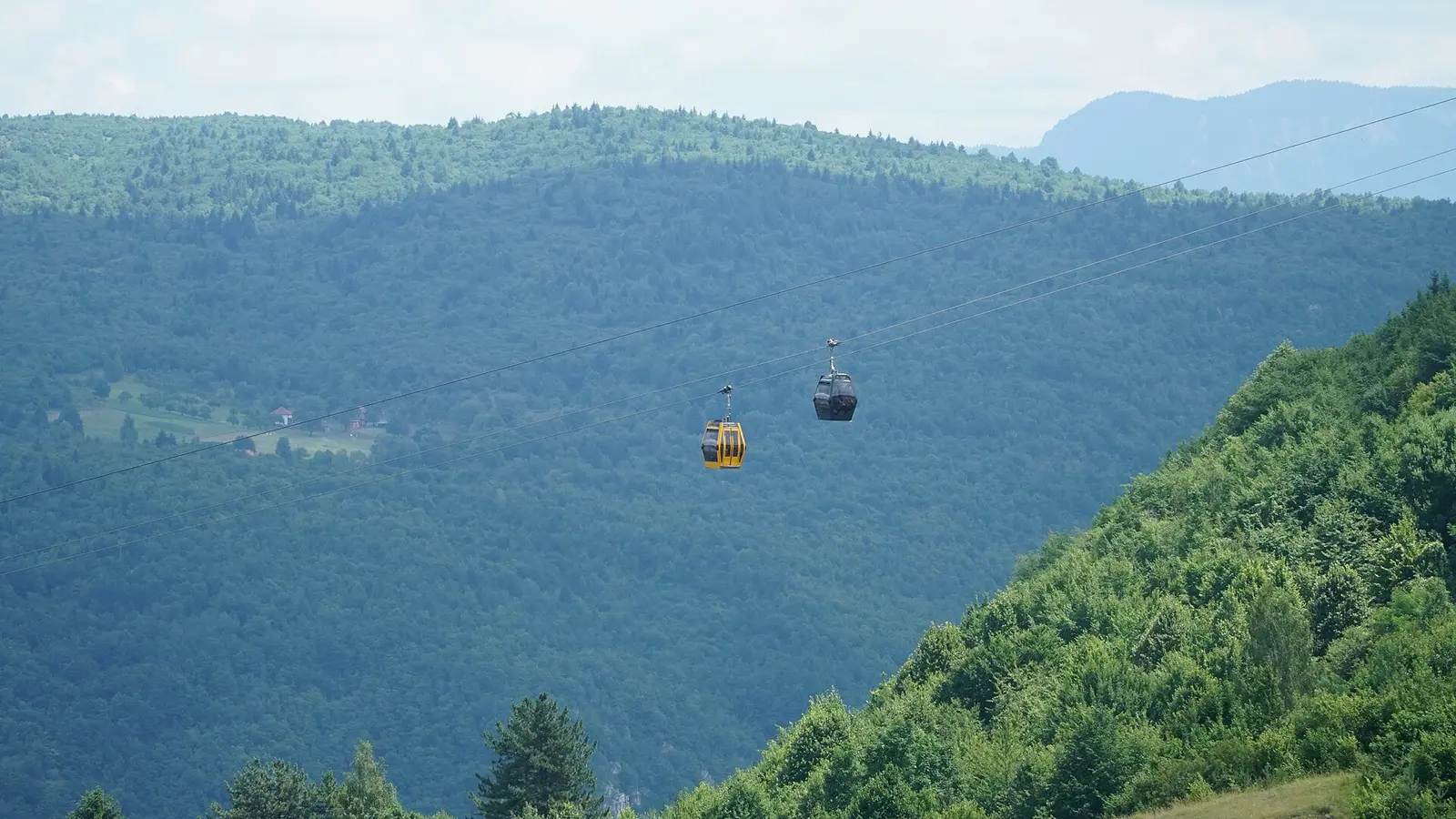
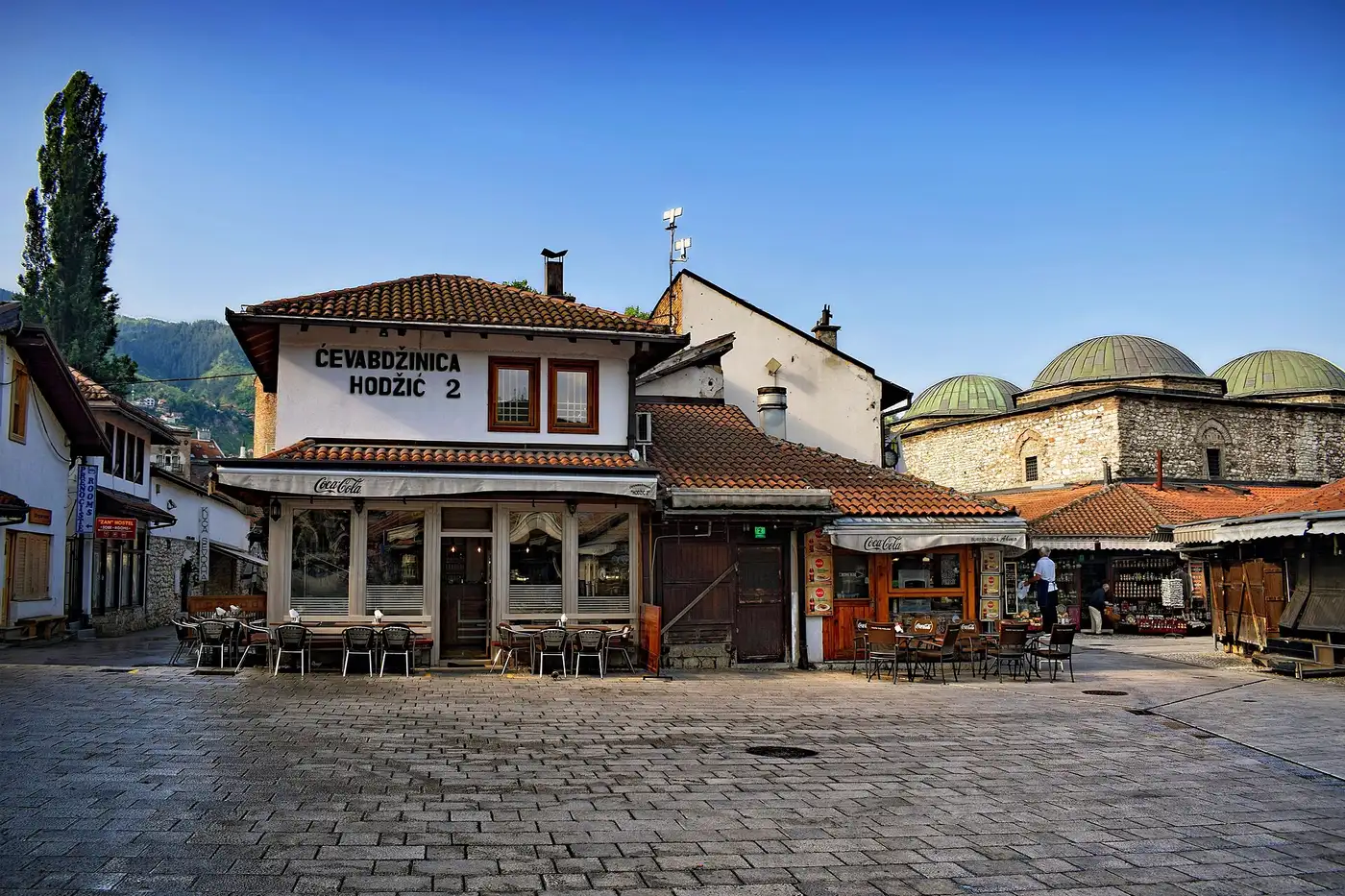
For a fuller list of what fills the weekends and evenings, our guide to things to do in Sarajevo runs through the sights, the viewpoints and the day trips.
So, is Sarajevo right for you?
It comes down to what you want from a base. If your priorities are low costs, a city with real character, walkable streets and mountains twenty minutes away, and you’re happy to build your own small circle rather than plug into a ready-made scene, Sarajevo is one of the best-value places in Europe to set up for a while. The internet holds up, the coffee is a joy, and your money stretches a long way.
Be honest with yourself about two things before you book. The winter is cold, snowy and long, and the valley can trap grey, poor-quality air on the worst days, so if you wilt without sun, come in the warmer half of the year. And the community is small, which is a feature if you find big nomad hubs exhausting and a drawback if you rely on them for your social life. Get those two calls right and Sarajevo delivers the rare combination of cheap, characterful and genuinely liveable - the sort of place people mean to visit for a month and end up staying the season.
Photos
Read also

Relocation · 14 min read
Moving to Bosnia: Residence Permits & the 90-Day Reality
Verified · August 3, 2026Bosnia gives you 90 visa-free days. After that: temporary residence up to a year, a 15-day filing deadline, about 150 KM in fees, 5 years to permanent.

Relocation · 12 min read
Cost of Living in Bosnia
Verified · September 25, 2026A longer stay in Bosnia in 2026: rent in Sarajevo, Mostar and Banja Luka, the Sarajevo heating tariff, shop prices, transport, data and coworking, in KM.

What to see · 15 min read
Via Dinarica Bosnia: Huts, Stages & Logistics
Verified · September 12, 2026Plan the Via Dinarica White Trail in Bosnia: 12 stages, 334 km, hut booking, trailheads, closures and three workable section packages.

What to see · 10 min read
Jablanica: Neretva Bridge & Roast Lamb Stop
Verified · September 4, 2026Jablanica on the Sarajevo-Mostar road: Battle for the Wounded museum (5 KM), the 1943 bridge, roast lamb lunch. Hours, parking, how long to stop.