Moving to Bosnia: Residence Permits & the 90-Day Reality
Bosnia gives you 90 visa-free days. After that: temporary residence up to a year, a 15-day filing deadline, about 150 KM in fees, 5 years to permanent.
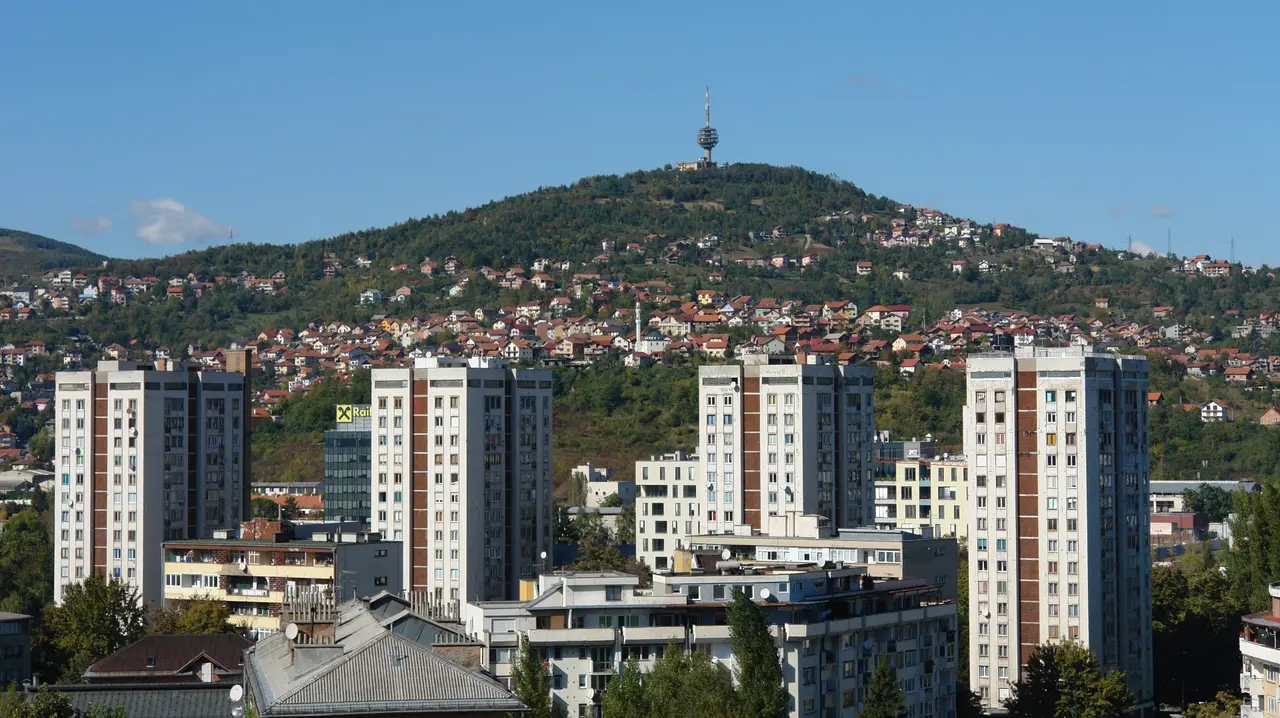
Bosnia gives most Western passports 90 days out of any 180 visa-free. Want longer and you need temporary residence: a permit of up to one year, granted only on a fixed list of grounds, and applied for at least 15 days before your visa-free days run out. The state fee is 150 KM on the current tariff, the Service has 60 days to decide an application filed inside the country, and permanent residence sits five years further on. Miss the filing window and the fine is 100 KM to 300 KM; let the stay itself run over and it’s 500 KM to 1,500 KM.
The short version for anyone weighing this up: with a job offer, a Bosnian spouse or a university place behind you, the route is cheap and unusually straightforward by European standards. Founding a company here’s the option that gets oversold, for a reason set out below. And if you’re a remote worker hoping to convert a long holiday into residency, read the grounds list closely, because the one you want isn’t on it.
The 90 days are not a clock you can reset
The allowance is 90 days in any 180-day period, and the wording matters more than the number. The Service for Foreigners’ Affairs defines the window as any 180 days “taking into account the 180 days preceding each day of stay”. That’s a rolling count, not a fresh allowance from your first entry. Drive out to Croatia for a weekend and you’ve bought nothing: the officer counts backwards 180 days from whatever day you’re standing in front of him, and your earlier weeks are still inside it.
Two entry details matter before you plan a long stay. Border officers can ask you to prove funds of 150.00 KM for every day of the intended stay, covering your living costs, healthcare and exit. And Bosnia sits outside the EU and Schengen, so these days don’t touch your Schengen count. Our guide to Bosnia entry requirements covers the passport rules and the border side.
The grounds you can actually use
Temporary residence isn’t general permission to live here. It’s granted on one of a closed list of grounds, and your evidence has to prove the ground. The Service lists them as family reunification, education, humanitarian reasons, work with a work permit, work without a work permit, other justified reasons, and, exceptionally, ownership of immovable property where an effective link with Bosnia exists.
Read that property line twice. Buying a flat in Mostar doesn’t hand you residency: the Ministry of Security calls the property ground an exception, conditional on that effective link, and it isn’t the shortcut estate agents imply. There’s also no digital nomad category on the list and no nomad visa as of August 2026. Remote work for a foreign employer isn’t a ground, and no amount of proof of income turns it into one.
Work is the common route, and it runs in an order you can’t rearrange. The Service’s own FAQ spells it out: your employer obtains the work permit from the employment bureau, you enter Bosnia only after it’s issued, then you apply for residence on the basis of it. You can’t start work before the residence permit is approved, and you can only work in the job the permit names. Residence granted on employment lasts for the work permit’s validity plus 30 days, never more than a year.
Founding your own company looks like the way around all that, and it’s the claim worth checking hardest. Working without a work permit as the founder of a Bosnian company is allowed under Article 77(2)(a) of the Law on Foreigners only where the company employs at least five Bosnian citizens for every foreigner in it, founders included, each on a gross salary of at least the national average. That’s a real payroll rather than a shell, so the company route sits in a business plan, not in a relocation shortcut.
Where you file, and the two deadlines that govern it
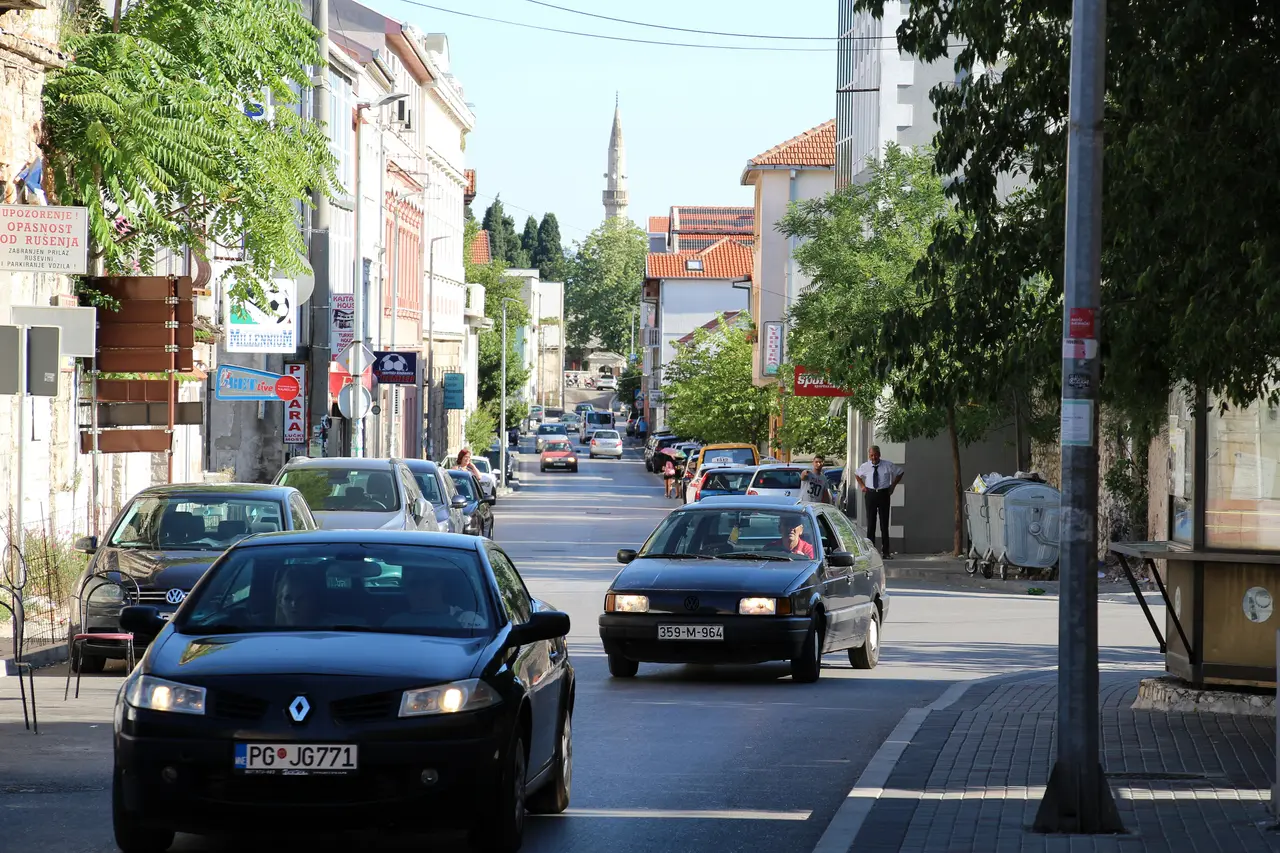
Applications go to the field centre of the Service covering your registered address, or, in work cases, the one covering where you’ll work. There are 16: Sarajevo, Banja Luka, Mostar, Tuzla, Zenica, Brčko, Doboj, Istočno Sarajevo, Bihać, Travnik, Trebinje, Bijeljina, Livno, Ljubuški, Orašje and Goražde. You don’t have to base yourself in the capital.
One rule reads far worse than it works out. As a rule the first application has to be submitted outside Bosnia, through a Bosnian embassy or consulate. You may file inside the country only if you entered on a long-term Visa D or you’re a national of a visa-free country. US, UK, EU, Canadian, Australian and New Zealand passports are typically visa-free here, so most readers of this page fall into that exception: Bosnia’s embassy in Washington states the American case plainly, and the UK Foreign Office the British one. Visa lists do get revised, so confirm yours before you plan around it.
The deadline is the real trap. A first application must be filed no later than 15 days before your visa-free stay expires, which in practice means day 75, not day 90. A renewal gets a window instead: no earlier than 60 days and no later than 15 days before the current permit runs out. Both are submitted in person, biometrics are taken when you file, and the form is Form 10.
What goes into the file
Beyond the evidence for your particular ground, the general requirements are the same on every route:
- a passport valid at least three months longer than the residence period you’re asking for;
- proof of sufficient means of subsistence, so you don’t become a welfare case here;
- proof of adequate accommodation in Bosnia;
- proof of health insurance in Bosnia;
- a medical certificate issued no more than three months before you apply, showing you don’t carry a disease that threatens public health;
- a criminal record certificate from your country of origin, no older than six months;
- proof that the administrative fee has been paid.
What counts as evidence is broader than people assume. Accommodation can be a title deed, a lease, a place in a student or care home, or a written statement from whoever is housing you with their proof of ownership. Means can be a bank statement, pension, employment contract, employer’s salary confirmation, scholarship, or a written undertaking by a Bosnian citizen or resident to cover your costs. Insurance can be a voluntary policy, a work permit, or travel health insurance from an authorised insurer valid for the period you intend to stay, which the Ministry lists as accepted proof of coverage. Our Bosnia travel insurance guide covers what a policy should do here.
One genuine shortcut: hold a Bosnian work permit and the law treats you as having satisfied both the means and the insurance conditions, collapsing two of the seven items into a document you already have.
The friction is in the format, not the list. Everything goes in as an original or certified copy, and anything in a foreign language needs a certified court interpreter. Nobody publishes a price list for that, so get quotes locally. Renewals also need a Bosnian criminal record certificate on top of the one from home.
The fee, the clock, and the paper that keeps you legal
Temporary residence costs 150 KM in administrative tax, paid into a Bosnian Treasury account before you file rather than over a counter. Amending a decision later is 20 KM, registering your address 10 KM, and permanent residence 200 KM. Those figures come off the Service’s own fee annex, which gets reissued from time to time and gives every line its own revenue code, so confirm the current amount with your field centre before you pay. A transfer for the wrong sum under the wrong code is slow to unpick, and there’s no counter to sort it out at. Our money in Bosnia guide explains why you’ll be handling convertible marks rather than euros for all of it.
The decision deadlines are set by law: 60 days if you filed directly with the Service inside Bosnia, 90 days through an embassy. That sounds slow until you see what protects you meanwhile. File in-country and you’re issued an attestation of the submitted application, and the law says you may remain in Bosnia until a final decision is reached. The fear that haunts most applicants, running out of legal days while an office sits on the file, doesn’t apply once the application is in. Let the 90 days lapse without filing and there’s nothing to protect you: you’re simply out of status, and filing late is an offence in its own right.
Renewal only works on the same ground
A permit can be extended, but only on the ground it was granted on. That single rule has more practical consequence than anything else here. Finish a degree and take a job, leave an employer to start a company, marry after arriving as a student, and you aren’t renewing: it’s a fresh application for approval, with the full document set behind it. Plan the change while the old permit still has months on it, not in the final fortnight.
The permit is also only ever as long as its foundation: a nine-month work permit buys ten months of residence, not a year, and the next deadline runs from that shorter date.
Five years, and the language exam at the end
Permanent residence, which has no expiry, comes after at least five years of continuous residence on temporary permits, and you must hold a valid temporary permit both when you apply and when the decision lands. Continuity is more forgiving than it sounds: absences of up to 10 months in total, or one single absence of six months, don’t break it, and Blue Card holders get 18 months in total or 12 at once. A break caused by changing your ground, or by disaster, serious illness or a death in the family, can be forgiven case by case.
Two details reward planning. Time on a student permit counts at half rate toward the five years, and you can’t file for permanent residence on the ground of education at all, so a degree here gets you halfway rather than home. And permanent residence requires knowledge of one of the languages and scripts in official use, tested by examination, with the applicant paying for the course and the exam. Pre-school children, anyone schooled in one of the official languages, and unemployed people over 60 are exempt.
Once approved, you’re assigned an identification number and have eight days from that decision to apply for a foreigner’s ID card. Missing that window is itself an offence, which sums up the system nicely.
What it costs to get this wrong
The penalties are published and specific, and the headline one is worth reading twice, because the official summaries haven’t caught up with it. Staying longer than your visa or permit allows now carries a fine of 500 KM to 1,500 KM: the 2023 amendments to the Law on Foreigners lifted the floor from 300 KM, and the Service’s own FAQ page still prints the old 300 KM figure, so don’t budget from it. Failing to apply inside the legal deadlines is a separate offence at 100 KM to 300 KM. Border Police can settle a short overstay on the spot at 150 KM for each extra day, and the same 2023 amendment widened that from three days to no more than five, provided you can justify the delay. Working without a permit or without residence costs another 200 KM to 500 KM, plus a bigger fine on whoever employed you. And a foreigner with no regulated stay is treated as an illegal migrant, facing removal and an entry ban of one to five years.
Registration is a separate obligation, and the confusion around it’s not about the deadline but about what it proves: the Service is blunt that the “white card” everyone waves around is only an address registration and isn’t proof that your stay is legal. The deadlines themselves, 48 hours in a private flat, 12 in a hotel, and 48 again to register your address once the permit lands or when you move, sit in our Bosnia entry requirements guide, along with why UK government advice still says 72.
Who this route actually works for
Against the rest of Europe, Bosnia’s system is cheap and unusually open about its own rules: no investment threshold or points test on the official grounds list, no income floor published as a number, and a first year whose state fees come to 150 KM for the permit plus 10 KM to register your address. Arrive with one of those grounds behind you and what stands between you and a permit is the paperwork itself, plus up to 60 days for a decision, on a five-year path to permanence that beats several EU countries.
If you’re a remote worker, be honest about what you’re reading. There’s no dedicated remote-work category, and you can’t plan around the one soft edge in the list: “other justified reasons” is a discretionary catch-all that neither the Service nor the Ministry spells out, decided case by case at the field centre. The practical option is the rolling 90 days rather than a permit. Our guides to living in Sarajevo as a digital nomad and the cost of living in Bosnia cover that version of the move.
Everything above was checked against official sources on 3 August 2026: the Service for Foreigners’ Affairs, the Ministry of Security, the Law on Foreigners (Official Gazette of BiH 88/15, 34/21 and 63/23) and the Rulebook on Entry and Stay of Aliens (25/16, 83/22 and 57/24). One caveat about sources, since it has practical consequences: the English translation of the Law that circulates online, the one hosted by the investment agency included, is the 88/15 plus 34/21 text and the 2023 amendments (63/23) aren’t in it. That’s how the superseded 300 KM fine keeps getting repeated on English-language pages. This is a practical summary by travel writers, not legal advice, and it stops short of tax, which is a different law and authority. Rules change, cases turn on details, and the per-ground document lists live in the Rulebook rather than on any blog. Before you commit money or a flight, confirm your case with the field centre covering your address, a Bosnian embassy, or an immigration lawyer.
Photos
Read also

Relocation · 12 min read
Cost of Living in Bosnia
Verified · September 25, 2026A longer stay in Bosnia in 2026: rent in Sarajevo, Mostar and Banja Luka, the Sarajevo heating tariff, shop prices, transport, data and coworking, in KM.

Relocation · 12 min read
Living in Sarajevo as a Digital Nomad
Verified · July 4, 2026Sarajevo for remote work: cheap, atmospheric, decent internet, but a small community and cold winters. Coworking, cafes, neighbourhoods and the visa rule.

What to see · 15 min read
Via Dinarica Bosnia: Huts, Stages & Logistics
Verified · September 12, 2026Plan the Via Dinarica White Trail in Bosnia: 12 stages, 334 km, hut booking, trailheads, closures and three workable section packages.

What to see · 10 min read
Jablanica: Neretva Bridge & Roast Lamb Stop
Verified · September 4, 2026Jablanica on the Sarajevo-Mostar road: Battle for the Wounded museum (5 KM), the 1943 bridge, roast lamb lunch. Hours, parking, how long to stop.