
Best Ćevapi in Sarajevo: Željo, Petica & Locals
Where to eat cevapi in Sarajevo: Zeljo vs Petica Ferhatovic, what a portion costs, how to order somun and kajmak, and where locals eat instead.
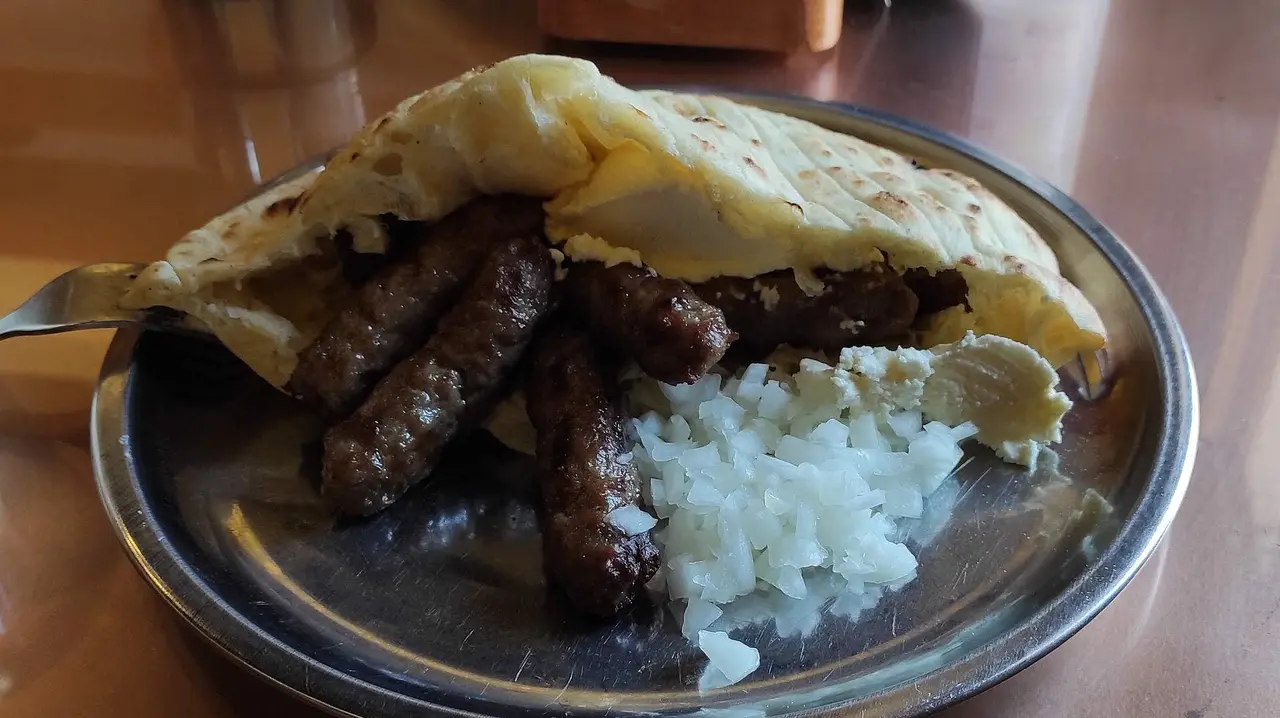
If you’ve one lunch in Sarajevo and want the best ćevapi, the real answer is a coin toss between two places that sit four minutes apart in the old bazaar. Željo, on Kundurdžiluk since 1968, does the classic Sarajevo version: soft, juicy, fast, and packed into steamed somun. Petica Ferhatović, on Bravadžiluk, comes from the family whose name has been on a ćevap counter here since 1957 and grills them noticeably smaller, tighter and a little more precisely. Ten pieces cost around 14 to 16 KM at either.
Which of them is the city’s oldest is itself contested: the Ferhatović family says the 1957 counter was Sarajevo’s first ćevabdžinica, while the Croatian outlet Index.hr hands that title to Mrkva. Nobody has produced a document that settles it, which is very much the spirit of the thing. The argument between the two big names is roughly sixty years old, and underneath the meat it’s really an argument about football.
Ordering, in two minutes
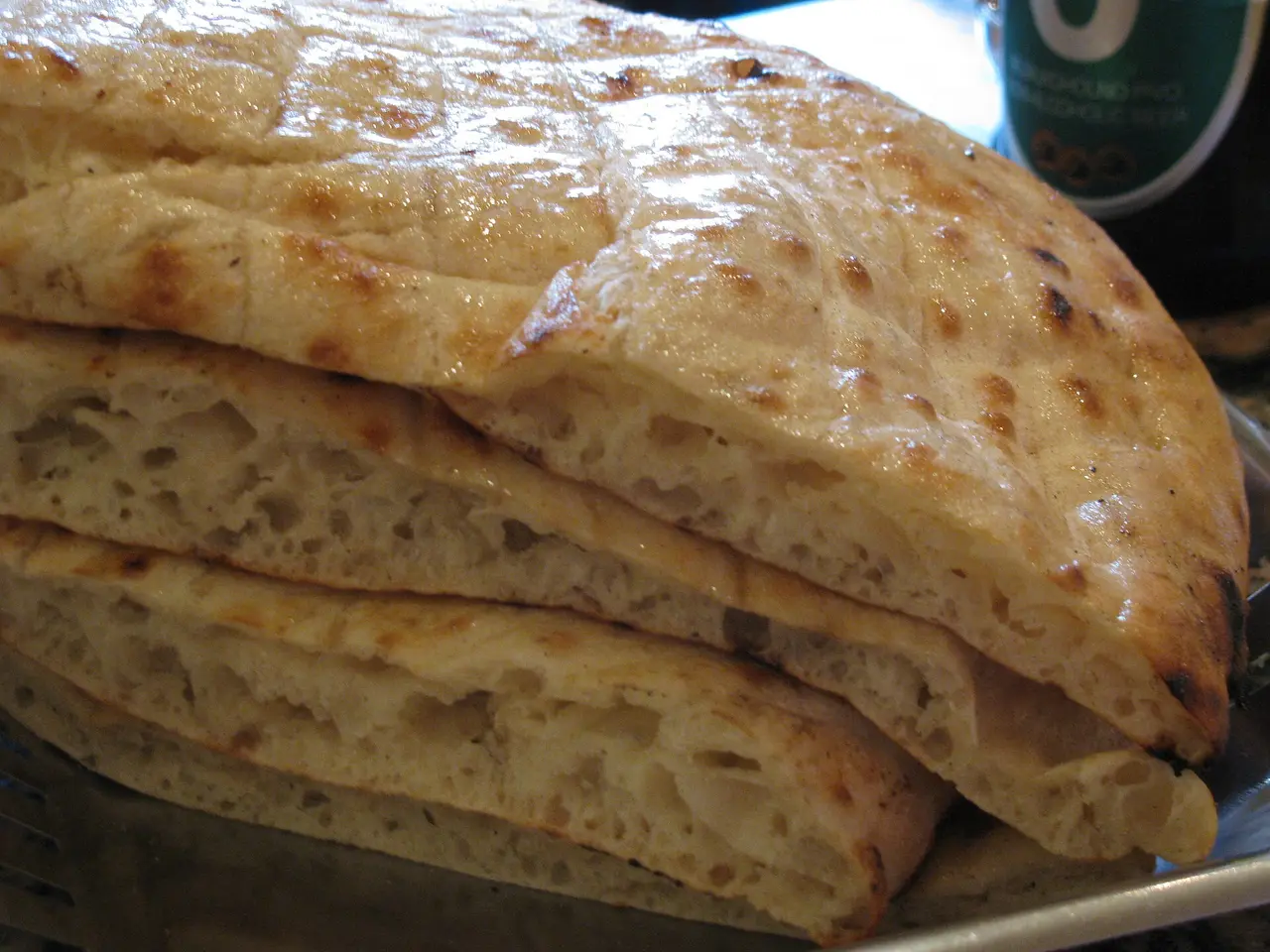
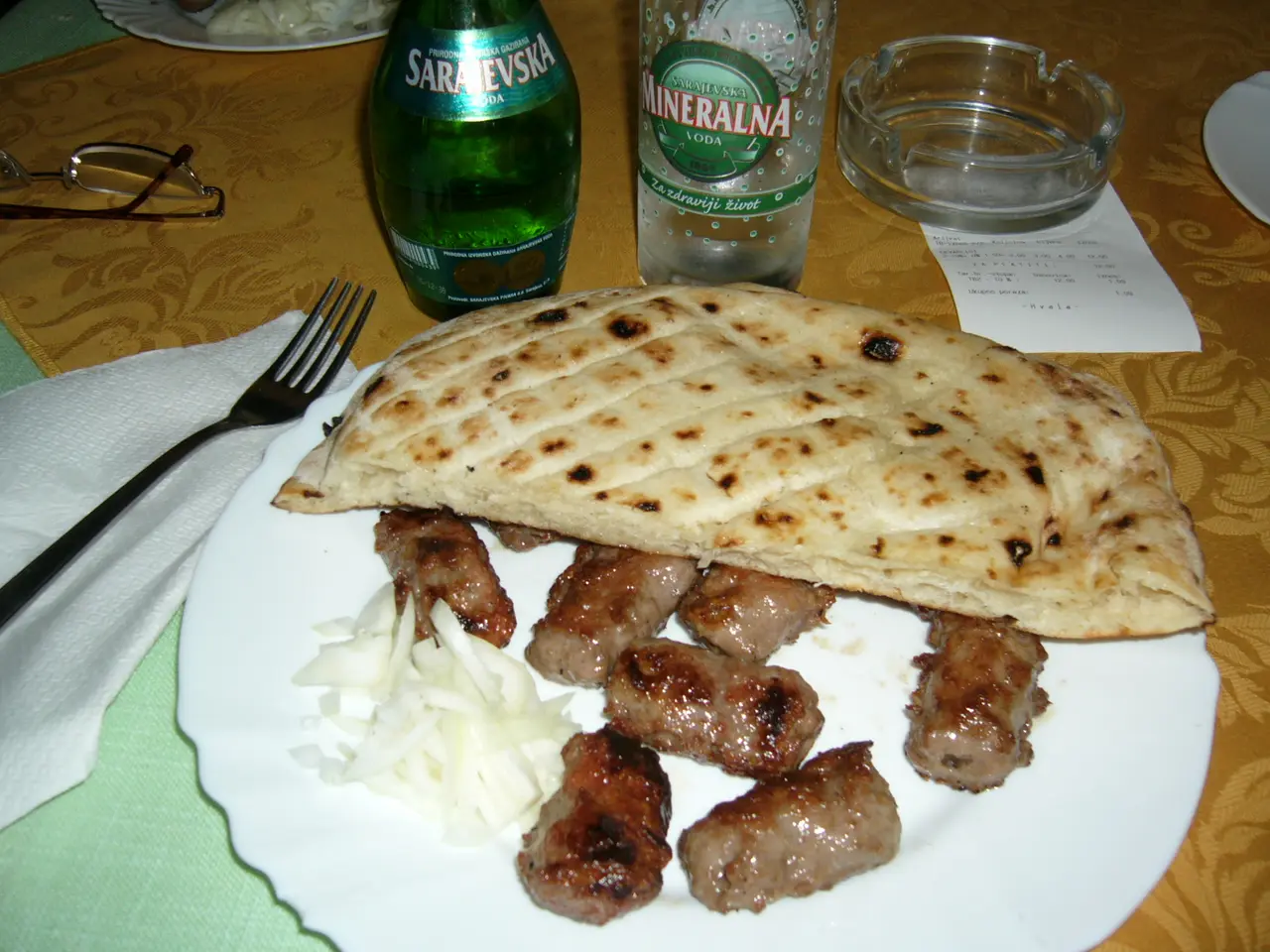
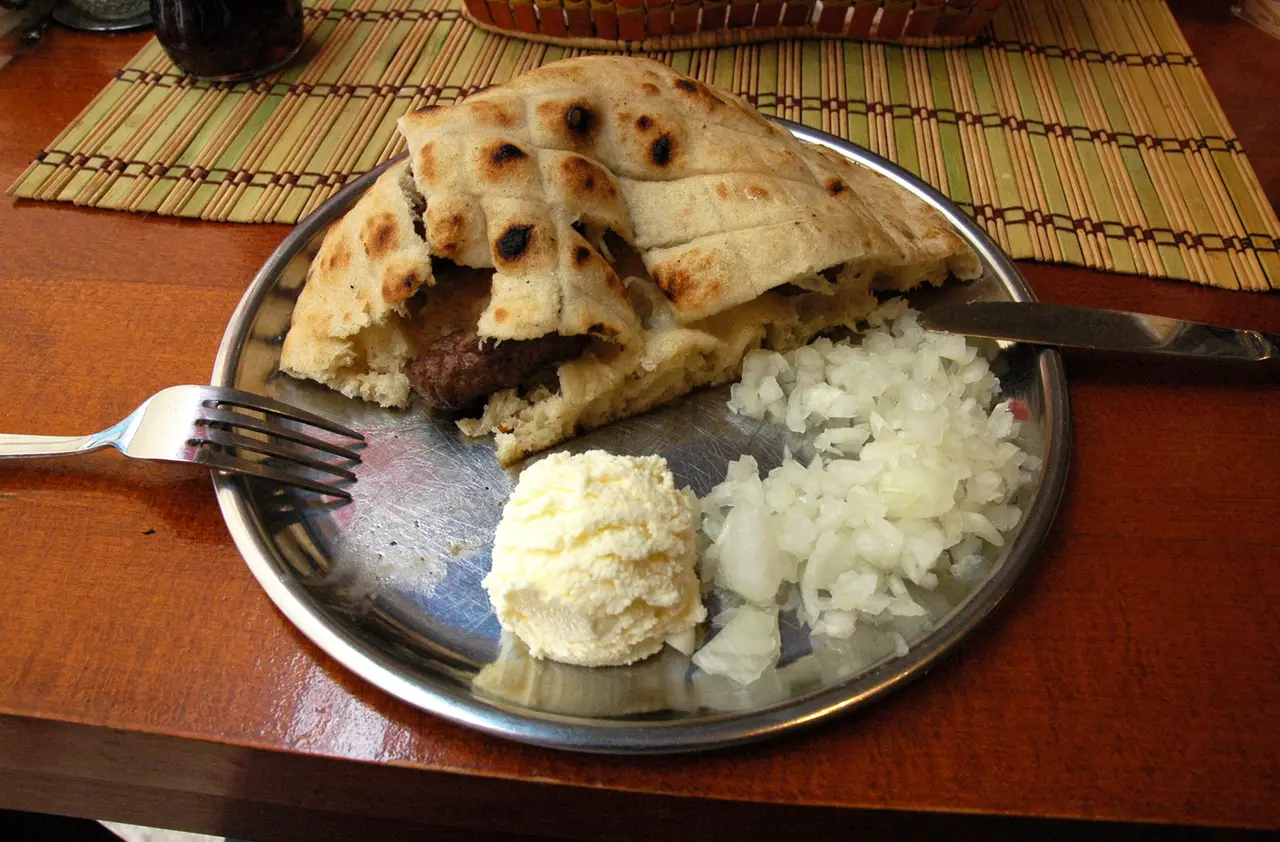
You order by the piece. A petica is five, a desetka is ten; five is a snack, ten is lunch. Whatever you order arrives inside a somun, a soft round flatbread scored in a crosshatch and split so the meat steams inside it, with a heap of raw chopped onion on the side. Kajmak, the tangy clotted cream that melts into the hot meat, is a separate line on the bill and is worth ordering the first time so you know what you think.
Sarajevo grills its ćevapi small and individual, from minced beef often cut with lamb, which is why a ten looks less intimidating here than the same order in Banja Luka, where they come in joined blocks of four. There’s no pork in the traditional repertoire, and the old-school grills don’t serve alcohol either. The drink is yoghurt, kefir or mineral water, and locals order it without irony. Bring cash.
Željo: the default, and a good one
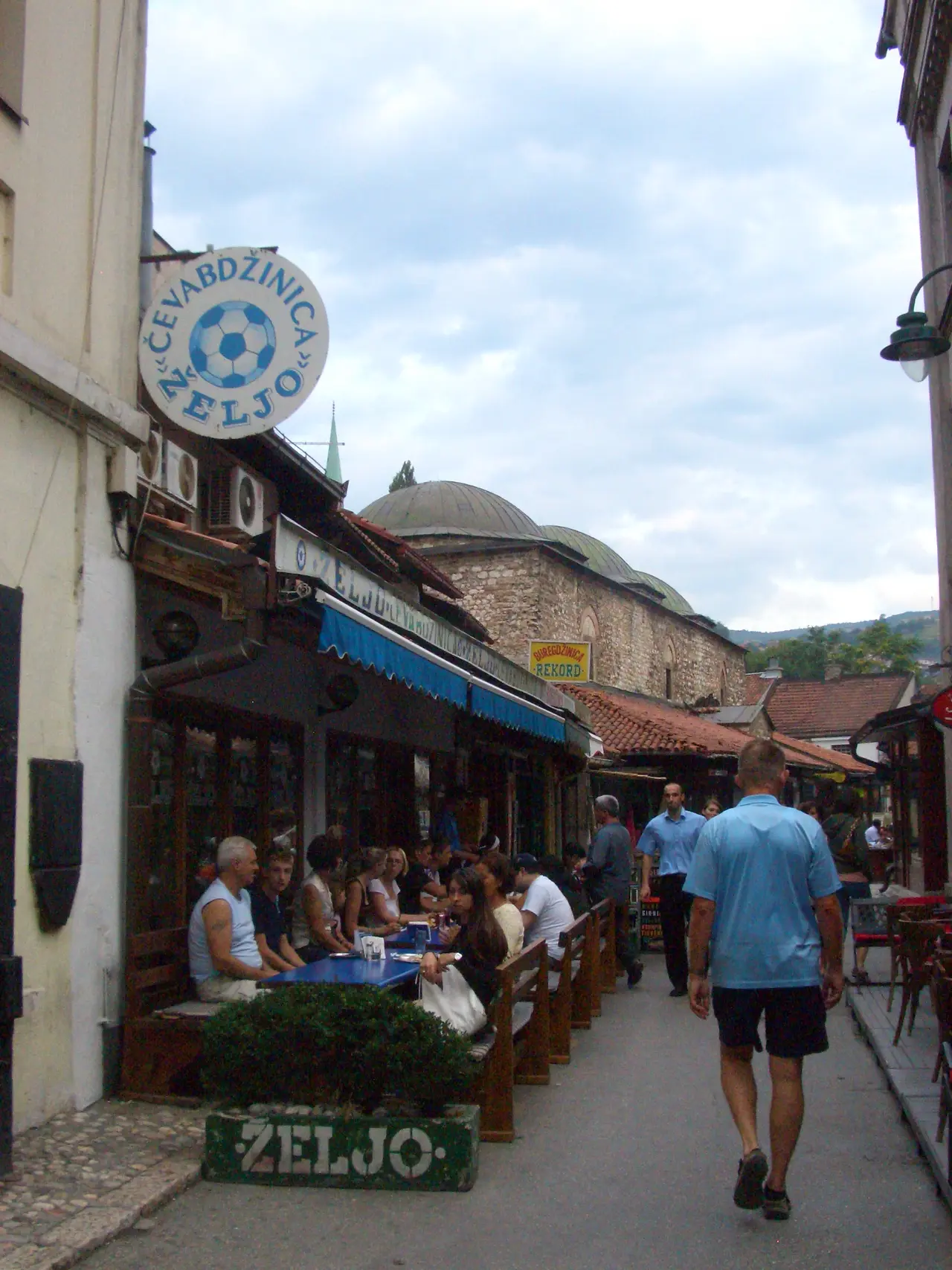
Ćevabdžinica Željo sits at Kundurdžiluk 19, a lane off the main bazaar, and has been grilling since 1968. The name isn’t a family name. It comes from FK Željezničar, the railway workers’ football club, universally shortened to Željo, which is why there is a blue and white ball painted on the sign. There are two branches facing each other across the same short street, which is how a place this famous manages to seat people at all.
Reputation-wise it is the safe pick. A 2022 taste test of ten Sarajevo ćevabdžinicas by Index.hr called it “number one in Sarajevo for years” and praised the juicy, well-grilled meat and the moist bread. In 2024 TasteAtlas put it on a list of the hundred most legendary restaurants in the world. Both are worth exactly as much as you think listicles are worth, but they line up with what most people in the city will tell you.
The one criticism in that 2022 test is worth knowing before you sit down: at peak hours the staff move you along briskly to free the table. Go at 11:00 or after 15:00 and the whole experience relaxes.
Petica Ferhatović: older, smaller, and the other football team
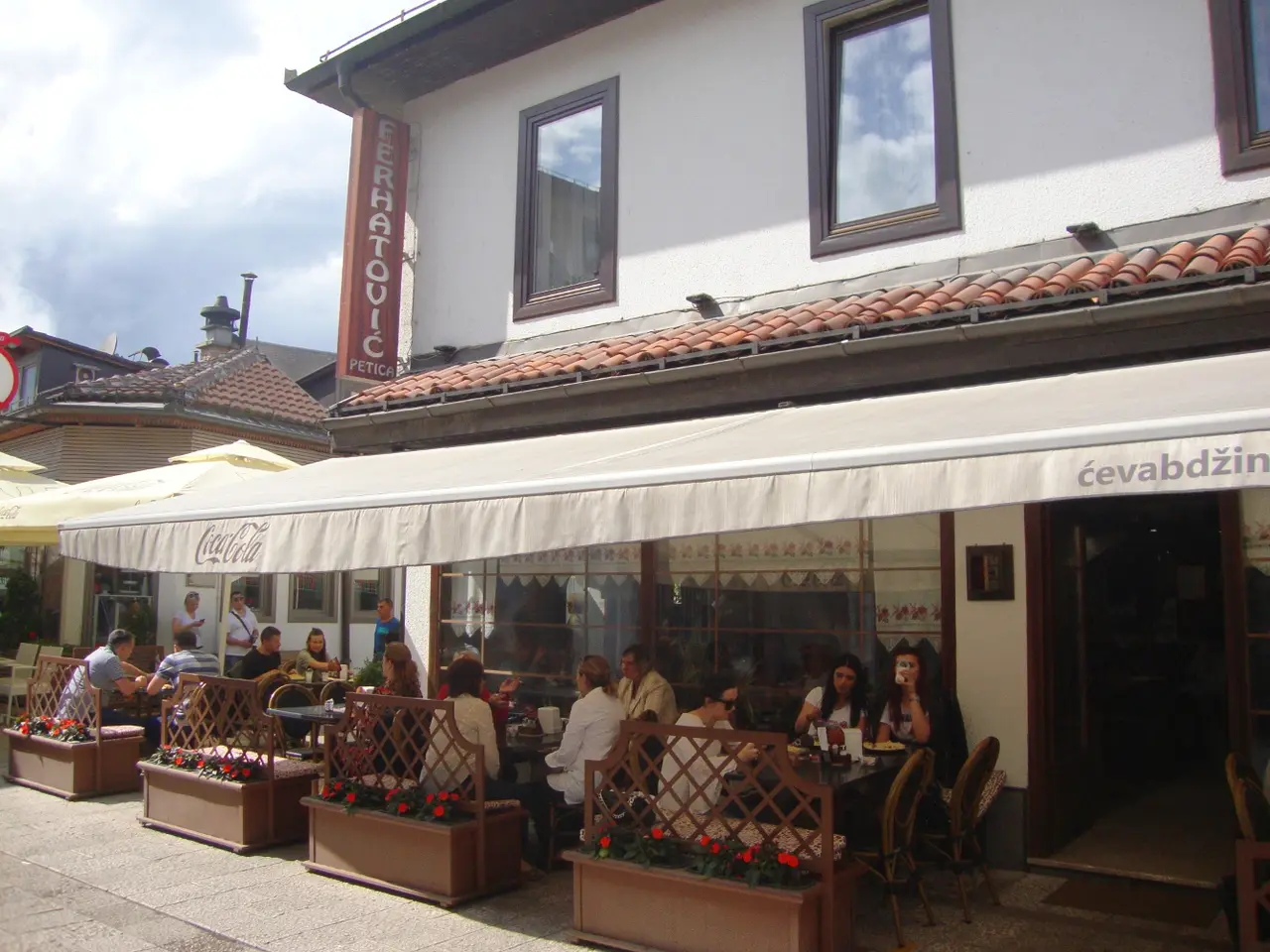
Round the corner on Bravadžiluk 21, Petica belongs to the Ferhatović family, whose own site dates the name to 1957, when they opened what they and much of the local press describe as the first ćevabdžinica in Sarajevo. The current premises are newer than that: they opened in 1984, the year of the Winter Olympics.
Here’s where it gets good. The Ferhatovićs are the family of Asim Ferhatović, “Hase”, the greatest player FK Sarajevo ever had, 198 goals in 422 games before his death in 1987, and the man the Koševo stadium is named after. Bosnian press accounts say Hase ran his own ćevabdžinica in the bazaar, called Devetka after the number nine shirt he wore. So the city’s two most argued-over grills line up almost exactly with its two football clubs: Željo for Željezničar, the Ferhatović name for Sarajevo. The link is the family rather than the shopfront - Hase’s own counter was Devetka, not Petica - but around here that counts as a technicality. Nobody will tell you any of it unprompted, and everybody knows it.
The ćevapi really are different, and the same 2022 test is the clearest guide to how. Index.hr, which handed Željo the “number one in Sarajevo for years” line, didn’t crown a single winner: it described the two of them as a pair that had pulled steadily away from the rest of the field. What it singled out at Petica was the size: links two to three times smaller than the usual, tender and juicy, in thinner and crisper bread, and the most expensive plate on the square, which the reviewers reckoned the flavour paid back. If Željo is the comfortable, generous version, this is the fussier one. The family also grills chicken ćevapčići, which almost nobody in Sarajevo does, although those are on the menu at their FAN restaurant rather than at the Petica counter.
The other names you will hear
Mrkva and Hodžić complete the set that locals reel off, and both come with caveats. Index.hr called Mrkva the oldest ćevabdžinica in the city and then panned what it served in 2022: meat too soft and short on flavour, bread cold. Hodžić divides opinion harder still. It’s a multiple winner of the local Zlatna ugostiteljska kruna (“Golden Hospitality Crown”) hospitality award, first taken in the ćevabdžinica category in 2006; the same 2022 test said it had slipped a long way from its prime and was better for sudžukice and veal cutlets than for ćevapi. Take those verdicts with the date attached. Kitchens change, and a grill can be transformed by one good chef.
What all four have in common is a postcode. They sit on or beside the two tourist lanes, and the ćevap map of Sarajevo is much bigger than that. Walk fifteen minutes west along Titova and the same portion cost 2 KM less when Klix walked it in 2025. Down at the train station, the Zmaj branch is the outlier: the 2022 reviewers found ćevapi two to three times bigger than elsewhere, more sausage than ćevap and heavy on the pepper, which some people drive across town for and others can’t stand. Out in Ilidža, Brajlović grills them from veal only, charges a couple of marks more, and was credited in that test with the best bread in the city. In Hrasno, Besko came out roughly a third cheaper than the centre.
What it costs
Two Sarajevo outlets, Klix and Radio Sarajevo, walked the bazaar in June 2025 and found the same numbers: the standard desetka rose from 12 KM to 14 KM, and a petica to 7 KM, at the well-known Baščaršija grills. Around Titova the equivalents were 12 KM and 6 KM. Restaurateurs blamed the price of meat, and told Klix that tourists reckoned the food was underpriced even then.
The June 2025 surveys put a desetka at 14 KM on Baščaršija and 12 KM a few minutes away on Titova, so set expectations at 12 to 14 KM for a plate, with kajmak and a drink on top. Two people eating well, with extras, will pass 30 KM. That’s still one of the best-value lunches in Europe, a point our Bosnia cost index makes across the whole trip.
Eating it without looking lost
Use your hands. Tear a piece of somun, pick up a ćevap with it, add onion, repeat. The onion is not garnish and skipping it changes the dish. If you order kajmak, smear it inside the bread while everything is still hot rather than eating it on the side.
The thing nobody says out loud: the variable is the bread, not the meat. Every one of these places grills competently. What separates a great plate from an ordinary one is whether the somun came out of the oven minutes ago and had time to soak up the juices. If your bread arrives dry at the edges, you have learned something about that kitchen’s afternoon, and it is worth trying again at a different hour rather than writing the place off.
One more piece of timing. Ćevabdžinicas are a breakfast and lunch institution here, not a dinner-party venue, and the best ones simply stop when the meat runs out. Around 12:00 to 14:00 you’ll queue on Baščaršija in summer. Push to 11:00 or 15:30 and you’ll walk in.
So, which one?
Pick Željo if you want the version everybody means when they say Sarajevo ćevapi, in a room that has been doing it since 1968, and you are happy to eat briskly. Pick Petica Ferhatović if you want the smaller, sharper, older-school interpretation and a slightly calmer table, and you do not mind paying a mark or two more. If you have two lunches, do both on consecutive days and you’ll have an opinion of your own, which is the entire point.
Either way, treat it as a starting point rather than the whole story. Our guide to Bosnian food runs through the fifteen dishes worth chasing, what to eat in Bosnia explains why you should follow the specialists rather than any menu claiming to do everything, and the Baščaršija guide maps the bazaar these grills sit in. And for the evenings when you want a table and a proper sit-down dinner rather than a counter and a lunch, our guide to where to eat in Sarajevo covers the restaurants worth an evening beyond the grill. Finish with a Bosnian coffee somewhere with a low copper table, and you’ve had the correct Sarajevo afternoon.
Photos
Admission and opening hours
- Admission price
- Local price surveys in June 2025 (Klix and Radio Sarajevo) found a ten-piece portion at 14 KM and a five-piece at 7 KM in the well-known Bascarsija places, against 12 KM and 6 KM around Titova street, so set expectations at 12 to 14 KM for ten. Kajmak and drinks are extra. Read the board on the day.
- Opening hours
- Cevabdzinicas open for breakfast and stop when the meat runs out, usually in the evening. Individual opening hours are not published reliably, so treat 12:00 to 14:00 as the busy window and go at 11:00 or after 15:00 for a table.
Prices are in convertible marks (KM / BAM). Many traditional grills take cash only and do not serve alcohol - yoghurt, kefir or mineral water is the local pairing.
Details checked: September 25, 2026
Read also

Food · 12 min read
Where to Eat in Mostar: Old Town Restaurants With a View
Verified · August 17, 2026Mostar Old Town restaurants by job: a terrace facing Stari Most, a courtyard off the bazaar, and a grill for cevapi. Addresses, cash, and what to order.

Food · 8 min read
Rakija in Bosnia: What It Is and Where to Taste It
Verified · August 9, 2026Rakija in Bosnia: the types, three named Sarajevo bars, tours with 2026 prices, customs limits for taking a bottle home, and how to decline politely.

Food · 9 min read
Herzegovina Wine Guide: Žilavka, Blatina & the Wine Route
Verified · July 25, 2026Herzegovina wine: the native Žilavka and Blatina grapes, the Wine Route cellars from Mostar to Trebinje, when to go, and how to taste it.

Food · 11 min read
Bosnian Burek: Types, Etiquette & Where to Try It
Verified · July 24, 2026In Bosnia burek means meat, full stop. What sirnica and zeljanica are, how pita is sold by the kilo, what it costs and where to eat it in Sarajevo.