Bosnia Travel Cost Index 2026: Sarajevo, Mostar & Beyond
Bosnia prices by city in 2026 from whoever sets them: bus fares, taxi tariffs, tourist tax and museum tickets in Sarajevo, Mostar, Trebinje, Banja Luka.
Bosnia’s reputation as a cheap trip holds up, but most city-by-city price tables for it are stitched together from crowd-sourced averages that nobody sets and nobody can check. This one prints only what someone actually fixes or records: a transport company’s fare list, a taxi association’s tariff, a canton’s tourist tax, a museum’s ticket desk, the national statistics agency, or a dated news check that names the grill or café, with the date next to every figure. Laid out that way, the fixed costs of a visit barely move between Sarajevo, Mostar, Trebinje and Banja Luka: for most of the year three of the four charge exactly 3 KM a night in tourist tax, and a basic city bus ticket costs 1.80 to 2.30 KM in the three cities that publish a fare. The gaps that matter sit elsewhere, in the flagship ticket, 20 KM at Sarajevo’s Tunnel of Hope against 5 KM at the Museum of Republika Srpska in Banja Luka, and in the tourist-strip mark-up on food and coffee, which can double a price inside one city. For a whole-trip budget by travel style, our Bosnia trip cost page does that job; this one is the comparison.
Currency converter
- BAM
- KM 174.24
- USD
- $100
- EUR
- €89.09
- GBP
- £75.75
How this index works
Every number below comes from one of four places, and the page says which. Fares and tariffs come from whoever sets them: GRAS for Sarajevo’s trams and buses, Mostar Bus for its three zones, the City of Banja Luka for its buses, and the taxi associations and firms for cabs. Taxes and tickets come from the canton or city that levies them and the museum or park that sells them. National averages come from the Agency for Statistics of Bosnia and Herzegovina (BHAS), which publishes average consumer prices every month. And what a plate or a cup costs on a given street comes from dated local news checks that name the place, because no authority sets the price of a coffee.
Two things are deliberately missing. There’s no room row, because nobody fixes hotel or hostel rates: each property prices each night on its own and moves it week to week. And there’s no single score ranking the four cities. BHAS itself warns that its average prices mustn’t be used to build an index, and we found no official source that compares price levels city by city, so a one-number ranking would be our guess dressed up as data. What you get instead is the line-by-line picture, which tells you more anyway.
The currency makes the maths easy. The convertible mark (KM, or BAM) is fixed at 1.95583 to the euro by the country’s currency board, so halve a KM figure for a close euro price: a 20 KM ticket is about €10. Pay in marks, though; our money in Bosnia guide explains why euros make a poor fallback.
What things cost, city by city
| Item (2026) | Sarajevo | Mostar | Trebinje | Banja Luka |
|---|---|---|---|---|
| City bus, single ticket | 2.20 KM on tram, trolleybus or bus; day ticket 7.10 KM | 1.80 KM in zone 1, up to 3.20 KM in zone 3 | Compact old town, done on foot; no city fare published online | 2.30 KM bought on the bus, or 9.70 KM for a set of five at the carriers' kiosks; day ticket 7.10 KM |
| Taxi tariff | 3.50 KM start + 2.30 KM a km, no night or Sunday surcharge | No common tariff: about 3 KM start + 1.80 KM a km (March 2026), set firm by firm | No tariff published online: agree the fare first | 3 KM start + 2 KM a km |
| Tourist tax, per person per night | 3 KM; 4 KM on 1-5 January, 1 July-31 August and 25-31 December | 3 KM | 3 KM per the city's decision reported in February 2025; check locally | 3-4 KM, the band Republika Srpska law has set for its tourist towns since 2025; check locally |
| Flagship paid sight | Tunnel of Hope 20 KM, students 8 KM | Old Bridge Museum: no price published; Kravice falls near Ljubuški 20 KM | No ticketed flagship: the old town and the Arslanagić bridge are free to walk | Museum of Republika Srpska 5 KM |
Prices in convertible marks (KM), fixed at 1.95583 to the euro, checked on 25 September 2026 against the operator, association, canton, museum or dated local report named in this page's sources. Pick one city to read the table comfortably on a phone.
Link to this table:
https://bosniaguidebook.com/planning/bosnia-cost-index/
Read across and the flat lines stand out first. The tourist tax is the same 3 KM a night in Sarajevo, Mostar and Trebinje (in Trebinje per the city’s decision reported in February 2025), and a bus ride sits within half a mark wherever there’s a network. Taxis are close too: 2.30 KM a kilometre on the Sarajevo meter, 2 KM in Banja Luka and about 1.80 KM in Mostar. Who sets that price differs more than the price does. Sarajevo’s drivers moved to one common list at the end of March 2026, and on it a 5 km ride comes to 15 KM. In Banja Luka the drivers’ associations agree the tariff, and the city’s own inspection office has said on record that it only confirms their decision. Mostar has no common tariff at all: each firm prices for itself, and when local reporters asked in March 2026 the going rate was about 1.80 KM a kilometre with a 3 KM start. Trebinje is the odd one out on transport simply because its old town is small enough to walk.
Sarajevo’s tax line is the one with a twist. The canton charges a higher “festival” rate of 4 KM a night from 1 July to 31 August and over New Year, so a couple pays 8 KM a night in August and 6 KM in September; children under 12 pay nothing and 12- to 18-year-olds pay half. Two more details from Sarajevo’s taxi list are worth knowing before you land: there’s no surcharge at night, on Sundays or on holidays, but the fare jumps 30 percent once you leave the canton, and the airport’s list quotes a flat 370 KM to Mostar. The same list says a driver may agree a fixed price with you, but never one above what the meter would show. And if you’re riding the trams a lot, GRAS’s 7.10 KM day ticket pays for itself on the fourth trip.
Tickets are where the real spread is. The Tunnel of Hope costs 20 KM and takes marks in cash only, no cards and no euros. The War Childhood Museum, the capital’s other big paid stop, is 15 KM, takes cards, and lets everyone in free on the last Thursday of the month from 17:00 to 19:00. In Banja Luka the Museum of Republika Srpska charges 5 KM and opens daily from 08:00 to 20:00. Mostar’s Old Bridge Museum publishes its hours, daily 10:00-18:00 from 1 April to 1 November and by arrangement for organised groups outside that window, but not its price, so you’ll find that out at the tower. The Kravice falls operator has the only residents’ price in the table: 20 KM for visitors and 10 KM for residents of Bosnia and Herzegovina, and the one ticket also covers the Kocusa falls and the Humac monastery museum.
Food and drink: dated checks, not averages
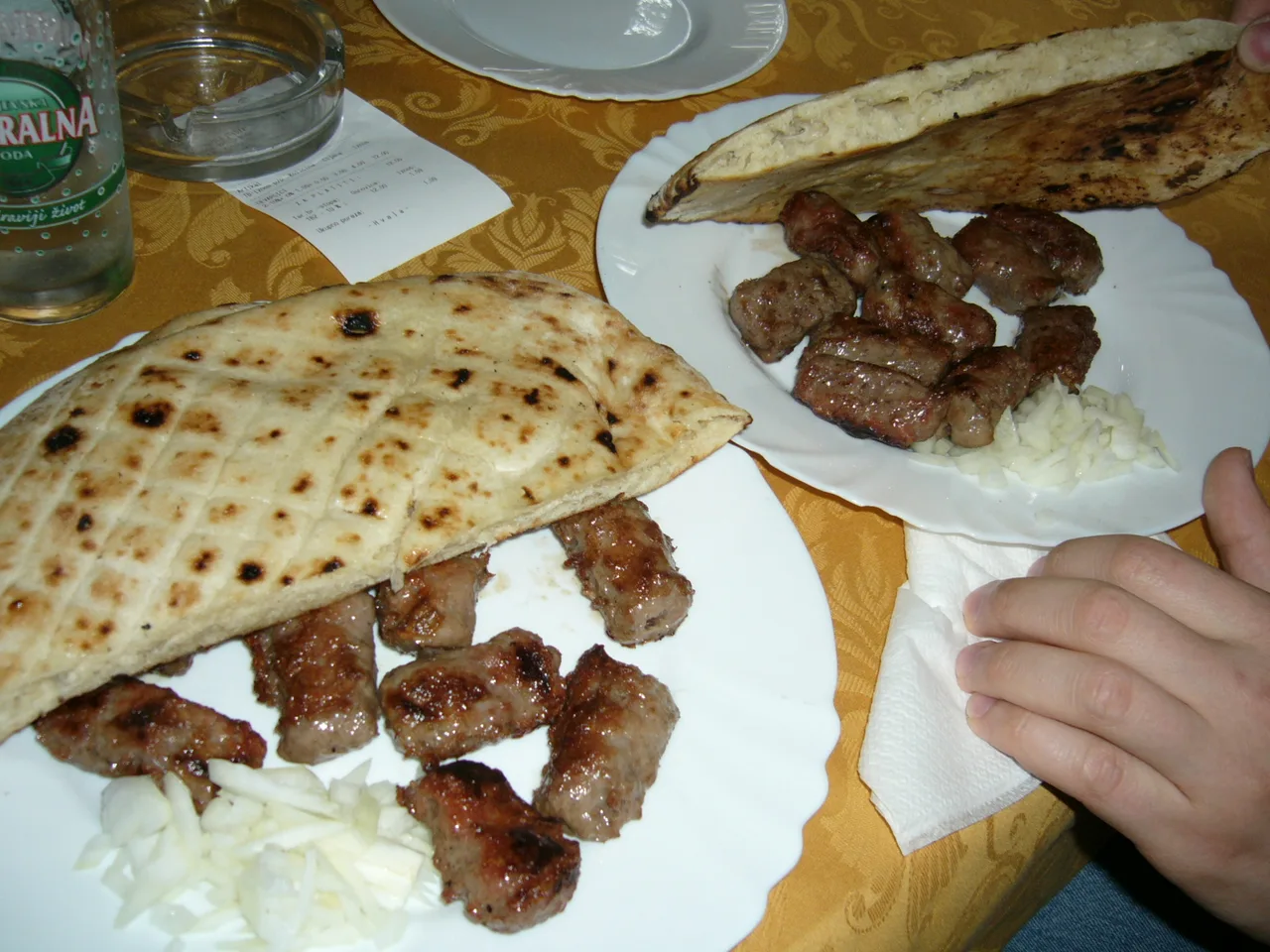
Nobody sets the price of a coffee or a plate of ćevapi, so this part of the index leans on local news checks that name the place and date them, plus the national averages BHAS records every month. Mind the years: they don’t all come from the same month, so compare within a row rather than down the column.
| What | Where and when | Price |
|---|---|---|
| Ten ćevapi (a desetka) | Grills on Baščaršija, Sarajevo, June 2025 | 14 KM |
| Ten ćevapi | Titova street, Sarajevo, June 2025 | 12 KM |
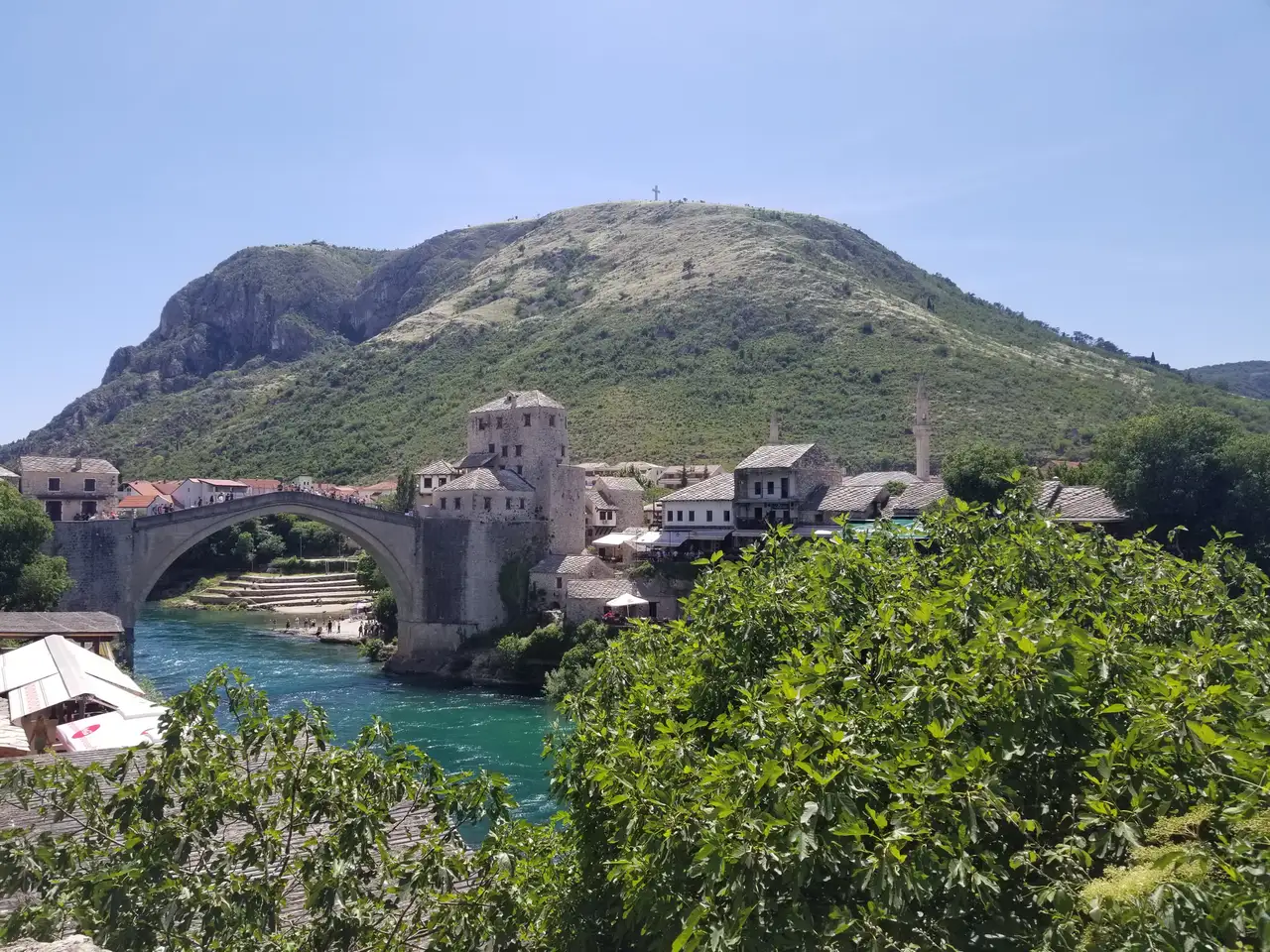
| Ten ćevapi with kajmak | Urban Grill, Mostar Old Town, bridge view, September 2024 | 22 KM |
| Burek, one frtalj (a quarter of the 22-28 KM kilo price) | Sarajevo old-town bakeries, June 2025 | 5.50-7 KM |
| Burek, one frtalj (a quarter of the 18-20 KM kilo price) | Novo Sarajevo, Ilidža and Novi Grad bakeries, June 2025 | 4.50-5 KM |
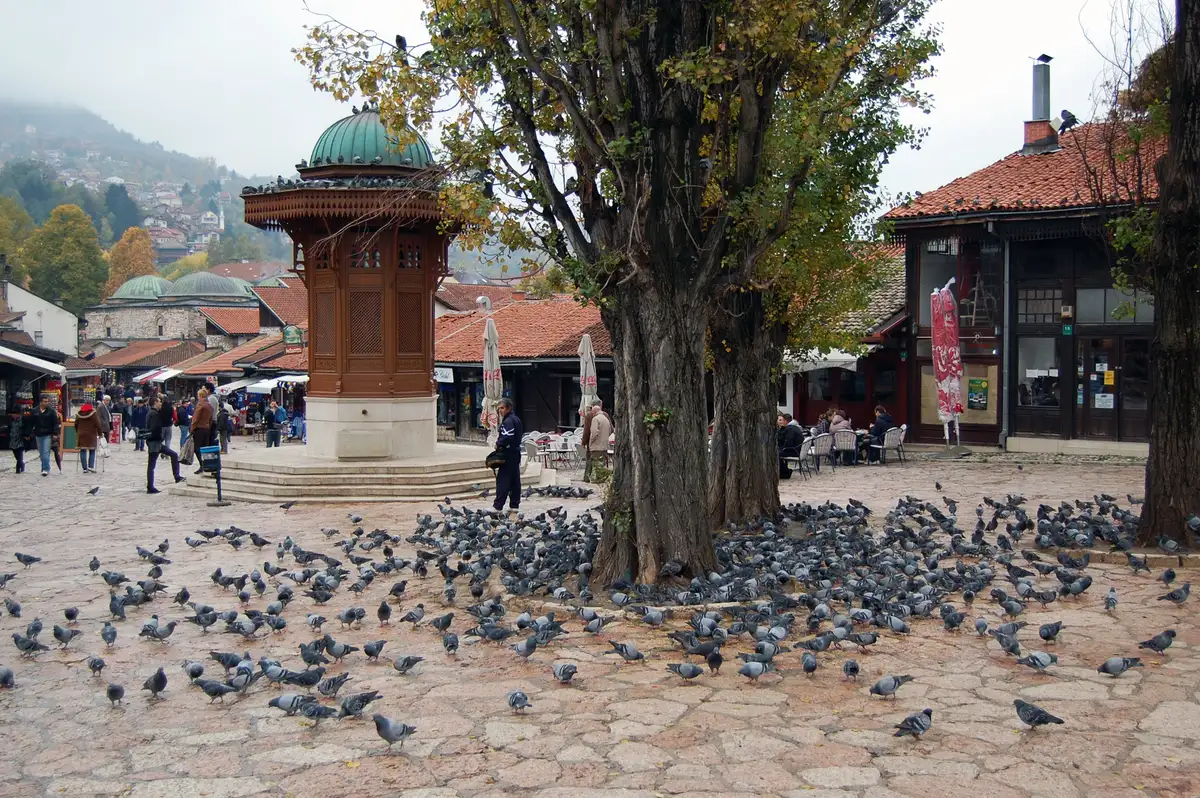
| Bosnian coffee | Sebilj caffe bar, Baščaršija, June 2025 | 6 KM |
| Ordinary coffee | Sarajevo cafés, October 2022 | 2.50-3 KM |
| Espresso | One Banja Luka café’s price list, June 2026 | 3.60 KM |
| Pizza | National average, August 2026 | 13.10 KM |
| Steak, one portion | National average, August 2026 | 21.30 KM |
| Bottled beer, from a shop | National average, August 2026 | 3.20 KM a litre |
Two lessons fall out of that table. The first is that the gap inside a city beats the gap between cities. The same desetka cost 12 KM on Titova and 14 KM a short walk away on Baščaršija; a Bosnian coffee at the Sebilj caffe bar on Baščaršija was 6 KM in June 2025, about double what an ordinary Sarajevo café was charging in 2022; and Klix found a grill in Mostar’s Old Town, with the bridge in view, asking 22 KM for ten ćevapi with kajmak when most towns charged about 10 to 12 KM for the same plate. Where you sit moves the bill more than which town you’re in. Burek works the same way on a smaller scale: it’s sold by the kilo, so the old-town mark-up comes to a mark or two on a frtalj.
The second lesson is that older checks run low. BHAS put consumer prices 4.9 percent above a year earlier in August 2026, and restaurants and hotels 4.8 percent above, so read the 2025 grill and bakery prices as a floor. Coffee shows the drift most starkly. N1 could still find a 1 KM coffee in Banja Luka in October 2022, while one Banja Luka café’s list in June 2026 put an espresso at 3.60 KM. They aren’t the same café, so that’s not a like-for-like rise, but it tells you which way to round. For scale, the average net wage in Bosnia and Herzegovina was 1,732 KM a month in July 2026, worth remembering when a Baščaršija café asks 6 KM for a coffee.
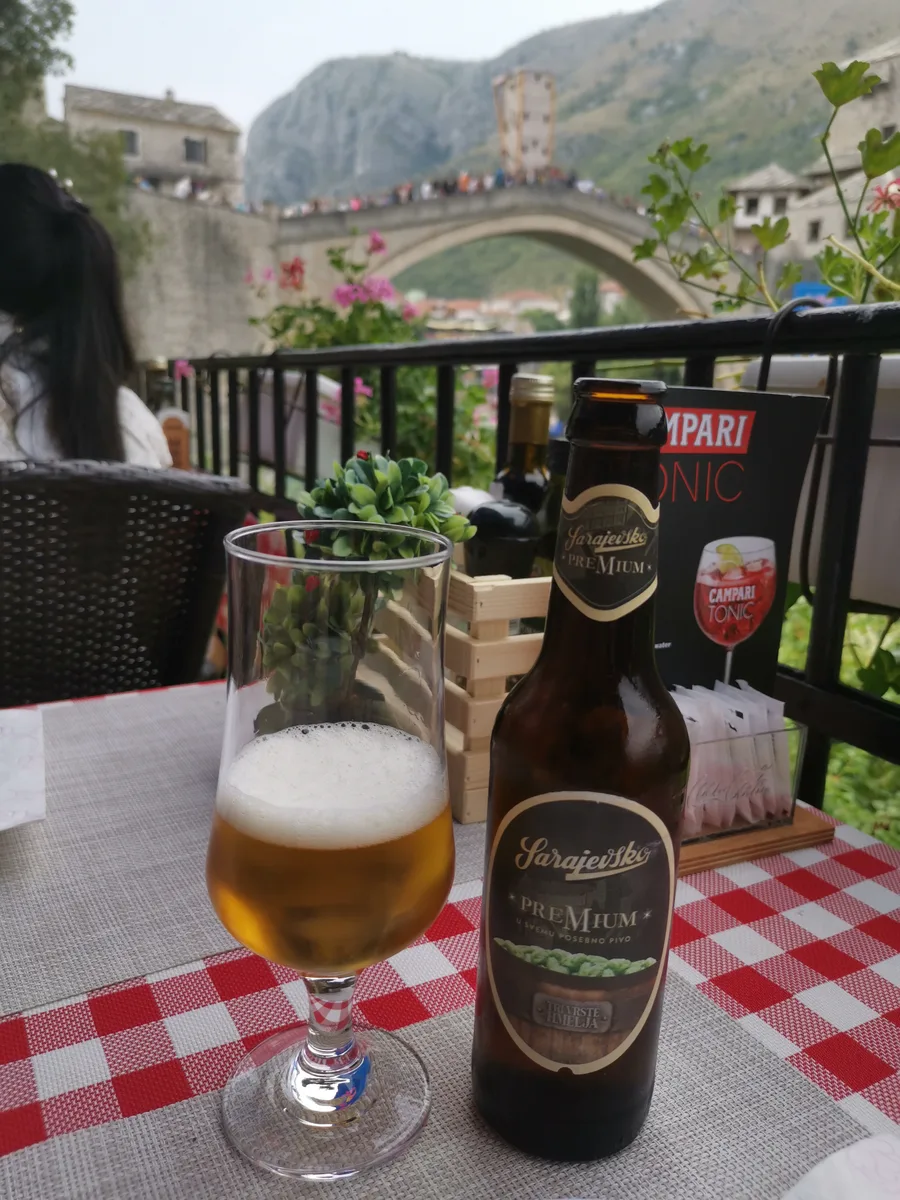
Rooms: the line nobody sets
Your bed will be the biggest item in the budget, and it’s the one line this index won’t print, because there’s no price to quote. Every hotel, guesthouse and hostel prices each date separately and moves the rate from week to week, so a range copied from a booking site has aged by the time you read it. Two things are fixed, and both help. The first is the tourist tax in the table above, which your host adds to the bill per person per night. The second is an official yardstick: Eurostat’s price-level survey scored restaurants and hotels at 74.6 in Bosnia and Herzegovina in 2024, against 95.4 in Croatia, with the EU average at 100. That’s one basket measured the same way in both countries, so it’s a fair read on how much further a euro spent on a bed or a restaurant meal goes here than next door.
The practical upshot is to price your own dates. Sarajevo’s festival-rate calendar is a useful hint too: the canton charges its higher rate in July, August and over New Year, the weeks it expects to be busiest, and it’s a fair bet room prices peak in the same weeks. And because the tax is per person, a family’s bill scales with ages; in Sarajevo, children under 12 don’t pay it at all.
Which base comes out cheaper, line by line
No single winner falls out of the prices someone sets, but each line has one. On sightseeing, Trebinje spends nothing, because its headline sights, the old town and the Arslanagić bridge, are free to walk; of the flagship tickets with a published price, Banja Luka’s is the cheapest, 5 KM against 20 KM for both the Tunnel of Hope and the Kravice falls near Mostar. On getting around, Trebinje’s old town is small enough to walk; of the three bus cities, Mostar’s zone-1 ticket is the cheapest ride, and Sarajevo and Banja Luka both sell a 7.10 KM day ticket for the days you’re hopping on and off. On tax, it’s a tie at 3 KM, except Sarajevo in high summer and over New Year, and Banja Luka, where the city’s figure sits somewhere in the 3 to 4 KM band. On eating and drinking, the towns tie and the streets decide: the grill a few blocks from the old core is where the saving is.
Put together, and leaving the flagship ticket aside, the four bases sit within a few marks a day of each other on everything that has a fixed price. So choose the base for what you want to see, and save by where you eat and when you book. Trebinje makes that case well: a small, walkable town whose old town and bridges cost nothing to wander, covered in our Trebinje guide. Banja Luka makes it too, with a 5 KM flagship museum; if you’re pricing a stay there, where to stay in Banja Luka breaks the districts down. In Mostar the rule about streets matters most, and our Mostar restaurant guide points you past the bridge-view terraces.
What the table leaves out
This page covers what you spend once you’re on the ground. Flights, a private transfer from the Croatian coast, a hire car, travel insurance and an eSIM all need their own lines, and if you’re staying for months rather than days, rent rewrites the sum; our cost of living in Bosnia page is the one for that.
Every figure here carries a date for a reason. Tariffs change by decision, and the dates in the sources tell you how fresh each one is: the Sarajevo taxi list changed on 30 March 2026, the canton around Mostar sets its tourist tax year by year (the current 3 KM applies to 2026), and the Banja Luka bus fare has stood at 2.30 KM since August 2022. Banja Luka was the one to watch when we last checked, on 25 September 2026: that day the city ruled out a bus fare rise, while its taxi drivers said they’d meet within a month to decide whether to raise theirs. Menus change without anyone announcing it, which is why the food rows carry the month of the check. If a price on the day differs from ours, the one on the counter wins. To see how the towns connect once you’ve picked a base, our Sarajevo to Mostar guide covers the most-travelled leg between them.
Photos
Read also

Before you go · 10 min read
Where to Stay in Medjugorje: Pansions & Hotels
Updated · August 25, 2026Where to stay in Medjugorje: guesthouses near St James Church, pilgrim hotels, peak dates, and whether to sleep here or day-trip from Mostar.

Before you go · 9 min read
Where to Stay in Jajce: Hotels by the Waterfall
Updated · August 23, 2026Where to stay in Jajce: old-town hotels steps from the Pliva Waterfall, lakeside rooms by the watermills, and which base suits a one-night stop.

Before you go · 11 min read
Mostar or Trebinje: Which Herzegovina Base?
Verified · August 18, 2026Mostar or Trebinje as a Herzegovina base: crowds, hotel prices, summer heat, Dubrovnik access and wine - pick the nights that fit your trip.

Before you go · 7 min read
Cash, Cards and Tipping Across the Balkans in 2026
Verified · August 15, 2026Twelve currencies, three of them the euro, and two pegged to it. What is fixed, what is a habit, and where you still need notes in your pocket.