
Visiting the Srebrenica Memorial from Sarajevo
A respectful guide to visiting the Srebrenica-Potočari Genocide Memorial from Sarajevo: free entry, hours, getting there, and how to visit with care.
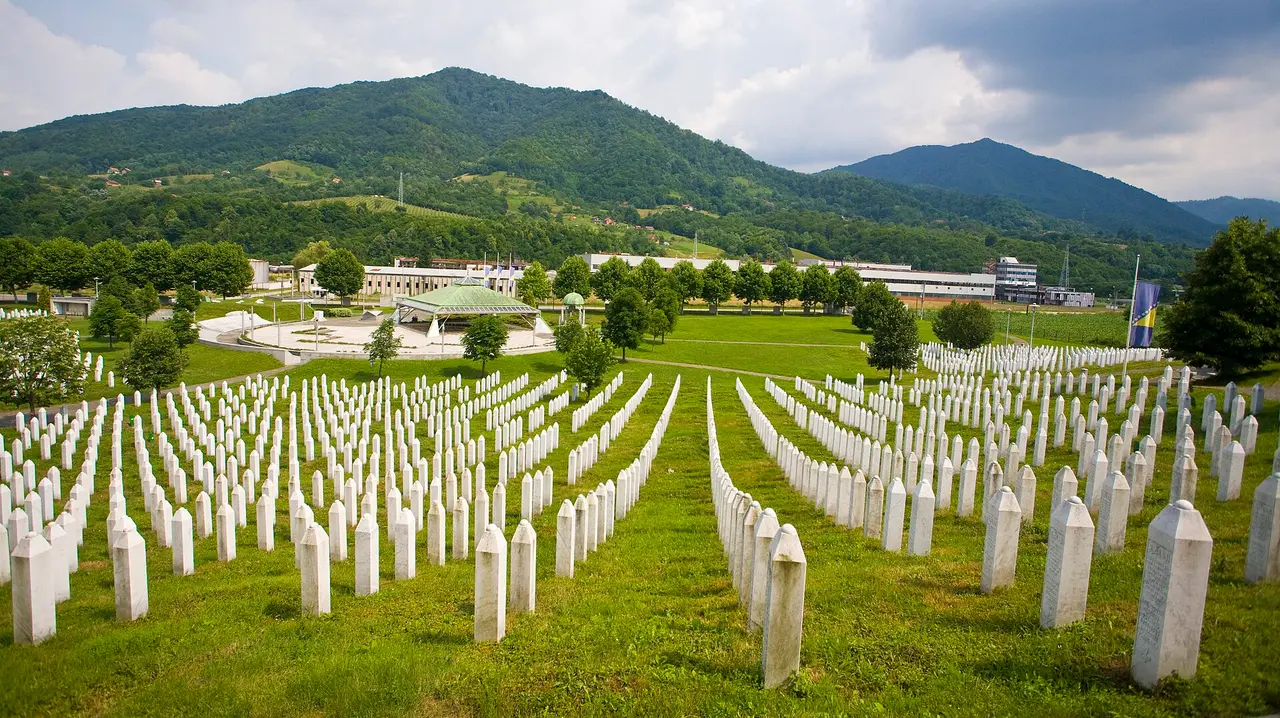
The Srebrenica-Potočari Memorial and Cemetery is where more than 8,000 Bosniak men and boys killed in July 1995 are remembered, and where over 6,000 of them are buried. It sits at Potočari, about a 2.5 to 3 hour drive east of Sarajevo, entry is free, and it’s open daily from 08:00 to 16:00. This guide covers how to get there, what you’ll see, and how to visit with the care the place asks of you. It’s written to help you go respectfully, not as a sightseeing tick-list.
What happened at Srebrenica
In July 1995, near the end of the Bosnian War, the town of Srebrenica in eastern Bosnia was a United Nations “safe area” crowded with Bosniak (Bosnian Muslim) civilians who had fled the fighting. When Bosnian Serb forces under General Ratko Mladić took the enclave, they separated the men and boys from the women and children. Over the following days more than 8,000 men and boys were killed, and the women and children were expelled. It was the largest mass killing in Europe since the Second World War.
International courts have examined these events in detail. The International Criminal Tribunal for the former Yugoslavia (ICTY) and the International Court of Justice, in its 2007 judgment, ruled that the killings at Srebrenica constituted genocide. Ratko Mladić and the wartime political leader Radovan Karadžić were later convicted, genocide among the charges against them. These are findings of law, not matters of opinion, and the memorial exists to hold that record and to honour the dead.
The memorial today
The Memorial Center stands at Potočari, a few kilometres north of Srebrenica town, and it has two connected parts facing each other across the road.
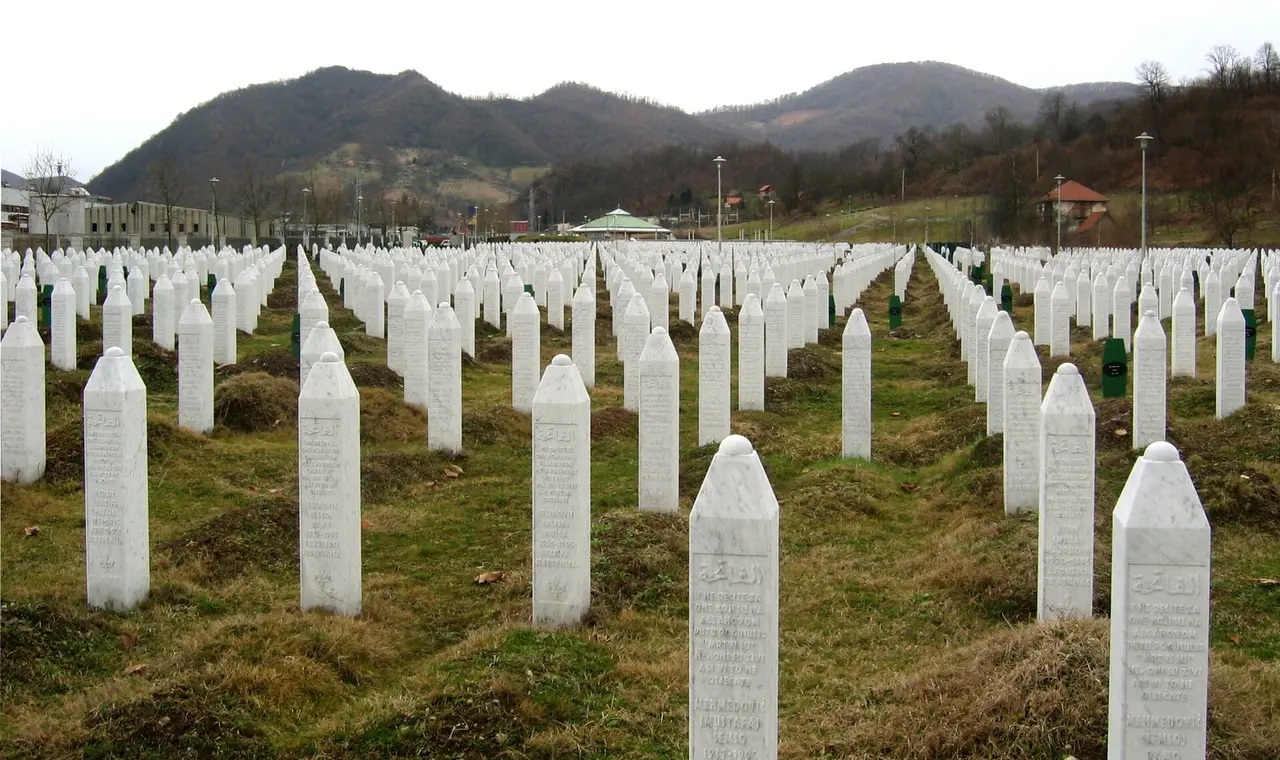
On one side is the cemetery, a wide field of slender white marble markers set among the green hills. Each marks an identified victim. Because remains are still being recovered from mass graves and identified, the cemetery has grown over the years, and newly identified victims continue to be buried. More than 6,000 people rest here, and the number isn’t final; that ongoing work is part of what makes a visit so quietly heavy.
The reason it’s still ongoing is itself part of the story. In 1995 the killers moved bodies between mass graves with machinery to hide the crime, scattering a single person’s remains across several sites. Piecing them back together has taken years of forensic and DNA work, much of it led by the International Commission on Missing Persons, matching bone fragments to blood samples given by surviving relatives. It’s painstaking, and it’s why families have sometimes waited more than a decade to bury a son or a father, and why some are still waiting.
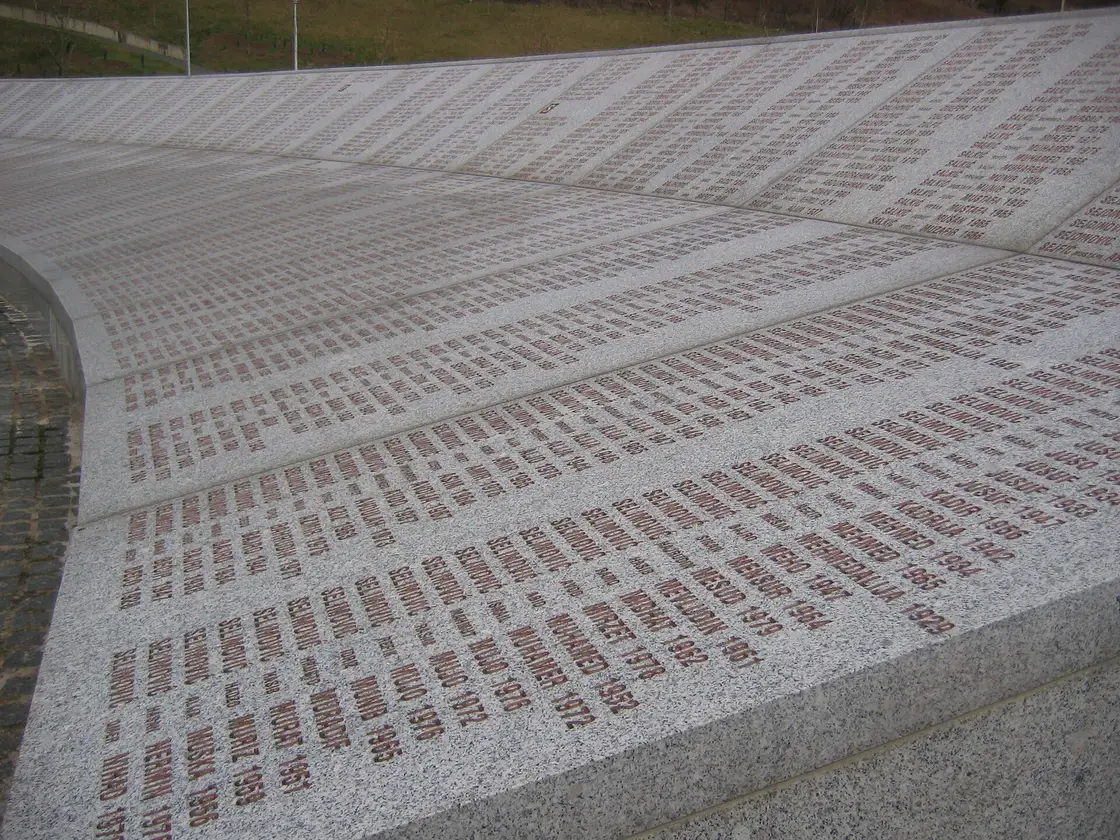
A memorial wall records the names and years of birth, and reading down the columns you notice how many were teenagers, and how many families lost several men at once. Near the centre of the cemetery stands a green-domed prayer pavilion where the annual commemoration is held.
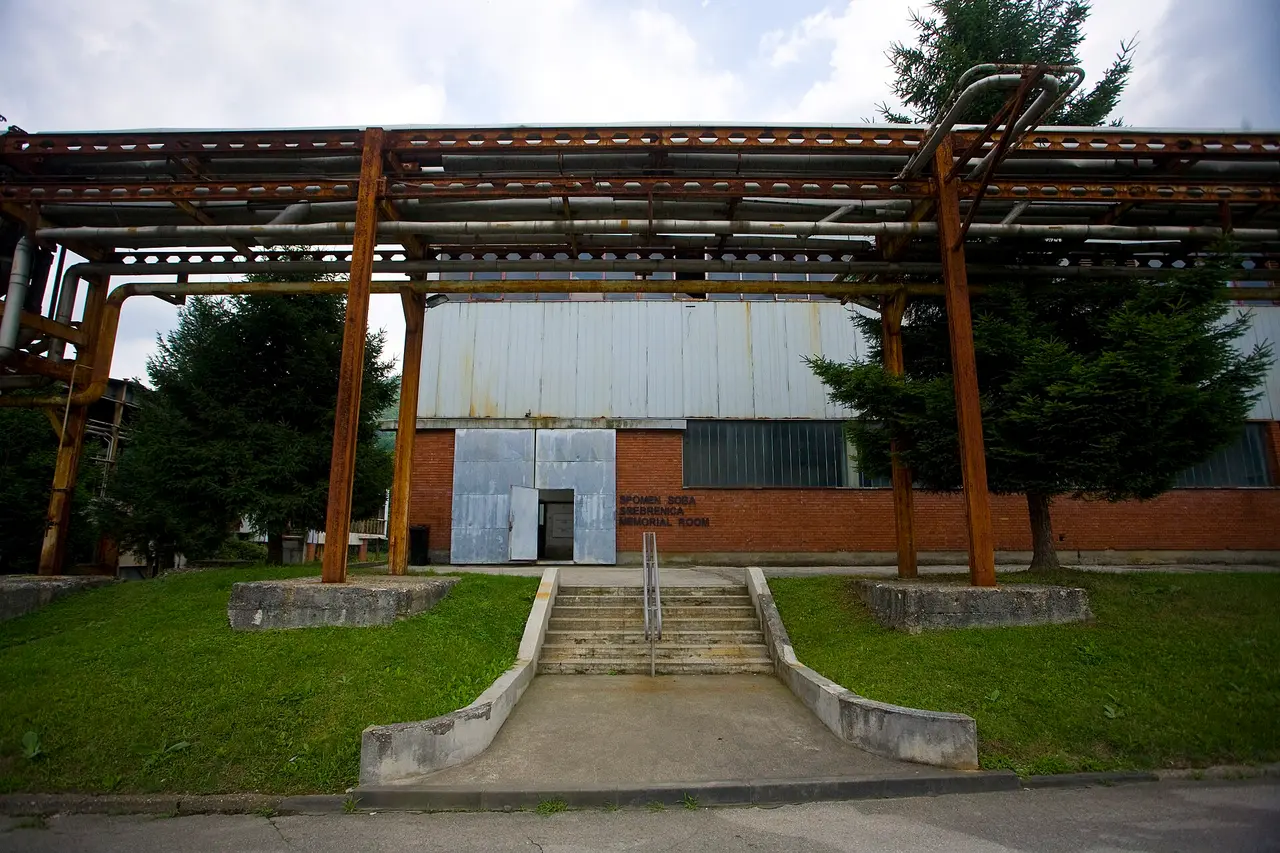
Across the road is the museum and exhibition space, housed in a former battery factory. That building matters: in July 1995 it was the base of the Dutch UN peacekeepers (Dutchbat), and thousands of civilians sheltered around it before the enclave fell. Today it holds the memorial’s exhibitions, a documentary screening room, and multimedia displays that tell the story through survivors’ words and belongings. Give yourself time here before or after the cemetery; the two together are what make the visit whole, and you shouldn’t rush either half.
Hours, entry and the guided programme
The Memorial Center is open daily from 08:00 to 16:00, and entry is free; the memorial states plainly that there aren’t any tickets or entrance fees. Confirm the current hours before you set out, and be aware that visiting around the 11 July anniversary is different, as that day is a large commemoration when new victims are buried, not an ordinary visit.
The most meaningful way to understand the site is through the memorial’s own guided programme, offered in Bosnian and English. It typically includes a documentary screening, a talk on the events of July 1995, a chance to ask questions of someone who knows the history closely, and a walk through the cemetery. Groups in particular should arrange this in advance; the memorial can be reached by phone or email through its official website to organise a visit. The wall of names and the graves speak for themselves, but the guided context is what most visitors say stayed with them.
Getting there from Sarajevo
Potočari is roughly 130 km east of Sarajevo, and the drive takes about 2.5 to 3 hours each way on winding mountain roads through Vlasenica and Han Pijesak. It’s a full-day round trip, and there’s no simple same-day public-transport option that gets you there and back comfortably, so in practice visitors choose one of three ways:
- Your own car or a private transfer. The most flexible option, and it lets you set your own pace at the memorial rather than a tour’s clock. For two or more people a private transfer can be a sensible way to cover the distance without driving the mountain roads yourself.
- An organised educational day tour from Sarajevo. Several run this as a considered, full-day trip, usually with a knowledgeable guide, for roughly 60 to 68 euro per person. Choose one that treats the day with the seriousness it deserves.
Whichever you pick, set out early. The distance, the roads, and the time you’ll want to spend at the site all add up, and rushing Srebrenica is the one thing you shouldn’t do. A gentle piece of advice: don’t bolt a light-hearted stop onto the same day. The memorial asks for your full attention, and it’s worth arranging your trip so that it can have it.
Why the record matters
Srebrenica isn’t only remembered in Bosnia. In 2024 the United Nations General Assembly designated 11 July as an international day of reflection and commemoration of the 1995 genocide, a recognition that met resistance and made news precisely because the events are still contested by some. Denial and minimisation persist in parts of the region, which is one reason the memorial takes such care to document what happened plainly and to let the evidence, the names, and the survivors speak. Visiting is, in a real sense, an act of bearing witness, and the memorial welcomes visitors in that spirit rather than as tourists ticking off a sight.
Visiting with respect
This isn’t a conventional attraction, and a few simple things matter. Dress modestly. Keep your voice down and your phone away except for considered, respectful photographs; the cemetery and museum are fine to photograph, but ask before photographing people or lingering over individual graves. Remember that this is an active cemetery: families come to visit sons, brothers and fathers, and you may be there alongside people in mourning. A quiet, attentive presence is the right one.
Many people pair Srebrenica with time in Sarajevo, where the war’s story continues at other sites. The Siege of Sarajevo shaped the same years, and the Tunnel of Hope that kept the capital alive under siege gives essential context for understanding what was happening across Bosnia in the early 1990s. In the city itself, Gallery 11/07/95 tells the Srebrenica story directly through Tarik Samarah’s photography, one of Sarajevo’s museums of the war that many visitors see before or after making this journey. Understanding one deepens the other.
A visit to Srebrenica is sobering, and it’s meant to be. People come away moved, and glad they made the effort to bear witness. Go with time, go with care, and let the place, and the people it remembers, set the tone.
Photos
On the map
The map loads on click - to keep the page lightweight.
The map didn’t load. Check your connection and refresh the page.
Admission and opening hours
- Admission price
- Free. There are no tickets or entrance fees to visit the Memorial Center (per the memorial). A guided programme can be arranged, especially for groups - contact the memorial in advance.
- Opening hours
- Open daily 08:00-16:00 (per the memorial). Confirm before travelling, and note that visiting around the 11 July anniversary is a commemoration rather than an ordinary visit.
This is an active cemetery and place of mourning. Dress modestly, keep a quiet demeanour, and ask before photographing people or individual graves. Families come here to grieve.
Details checked: July 16, 2026
Distance ≈130 km · ~2.5-3 hours each way by road
- Sarajevo ≈130 km · ~2.5-3 hours each way by road Potočari is roughly 130 km east of Sarajevo on mountain roads via Vlasenica. There is no simple same-day public-transport return, so most visitors go by car, private transfer, or an organised educational day tour. Plan a full day.
Read also

What to see · 15 min read
Via Dinarica Bosnia: Huts, Stages & Logistics
Verified · September 12, 2026Plan the Via Dinarica White Trail in Bosnia: 12 stages, 334 km, hut booking, trailheads, closures and three workable section packages.

What to see · 10 min read
Jablanica: Neretva Bridge & Roast Lamb Stop
Verified · September 4, 2026Jablanica on the Sarajevo-Mostar road: Battle for the Wounded museum (5 KM), the 1943 bridge, roast lamb lunch. Hours, parking, how long to stop.

What to see · 8 min read
Prokoško Lake: Shepherd Huts High Above Fojnica
Verified · September 3, 2026Prokoško on Vranica at 1,636 m: katuni, gate prices for foreigners, no swimming, and the 2026 asphalt climb from Fojnica.

What to see · 11 min read
Franz Ferdinand's Sarajevo: Latin Bridge & 1914 Site
Verified · August 29, 2026The Latin Bridge corner in Sarajevo where Franz Ferdinand was shot in 1914: what happened, the Museum of Sarajevo 1878-1918 inside, hours and tickets.