2 Days in Sarajevo: The Perfect Weekend Itinerary
An hour-by-hour 2-day Sarajevo weekend: the Ottoman old town, the siege history and Mount Trebevic, with where to eat and when to go.
Two days is the sweet spot for Sarajevo: enough to do the essentials properly rather than rush them, and a natural length for a city break or a stop on a longer trip. This is an hour-by-hour weekend plan built around three things worth your time - the Ottoman old town and the Habsburg west, the siege history that you can’t skip, and one long look at the city from the mountains above it. It assumes you arrive on a Friday evening and fly out on Sunday night; shift the days to suit. For where the capital fits into a trip of the whole country, our 7-day Bosnia itinerary is the fuller plan, and this weekend slots straight into the front of it.
The shape of the weekend
The plan splits cleanly, so you’re never doubling back:
- Friday evening: land, drop your bags in the old town, eat, and walk the bazaar as it lights up.
- Saturday: the Ottoman bazaar in the morning, the Habsburg centre and the riverfront in the afternoon, sunset from the fortress terrace.
- Sunday: the siege history at the Tunnel of Hope, then the cable car up Mount Trebevic, and a last coffee before the airport.
Base yourself in or right beside Baščaršija, the old bazaar, and you can walk this entire weekend; the sights sit strung along the flat valley floor. Our guide to where to stay in Sarajevo sorts the neighbourhoods by who they suit. It’s a full two days, but an unhurried one - Sarajevo is a city to sit in as much as tick off.
Friday evening: land and settle in
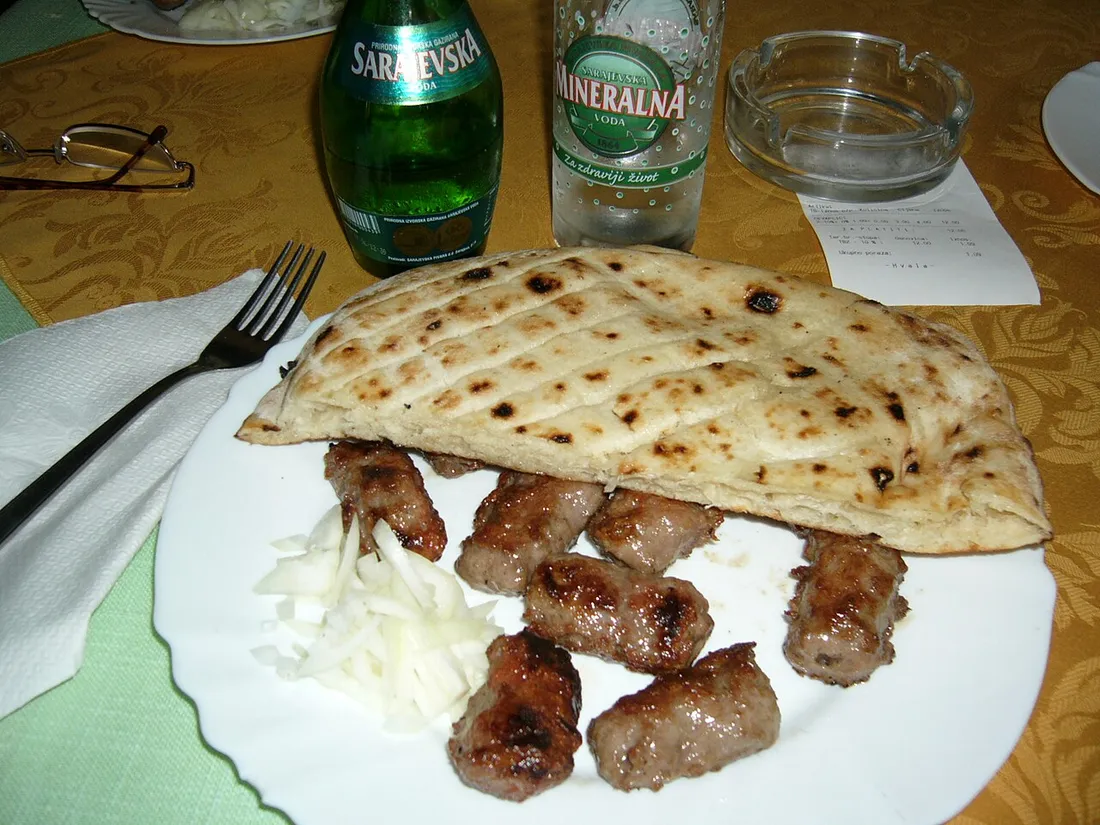
However late you arrive, get yourself to the old town and eat before you do anything else. The airport is about 12 km out and a taxi or transfer runs 20 to 30 minutes; our guide to Sarajevo Airport to the city covers the options and the late-arrival catch when the cheap buses stop. Drop your bags, then head for your first plate of ćevapi - grilled beef sausages in a puffy somun flatbread - at one of the bazaar grills. It’s the right, cheap, no-fuss first meal, and it puts you exactly where you want to be for a first wander.
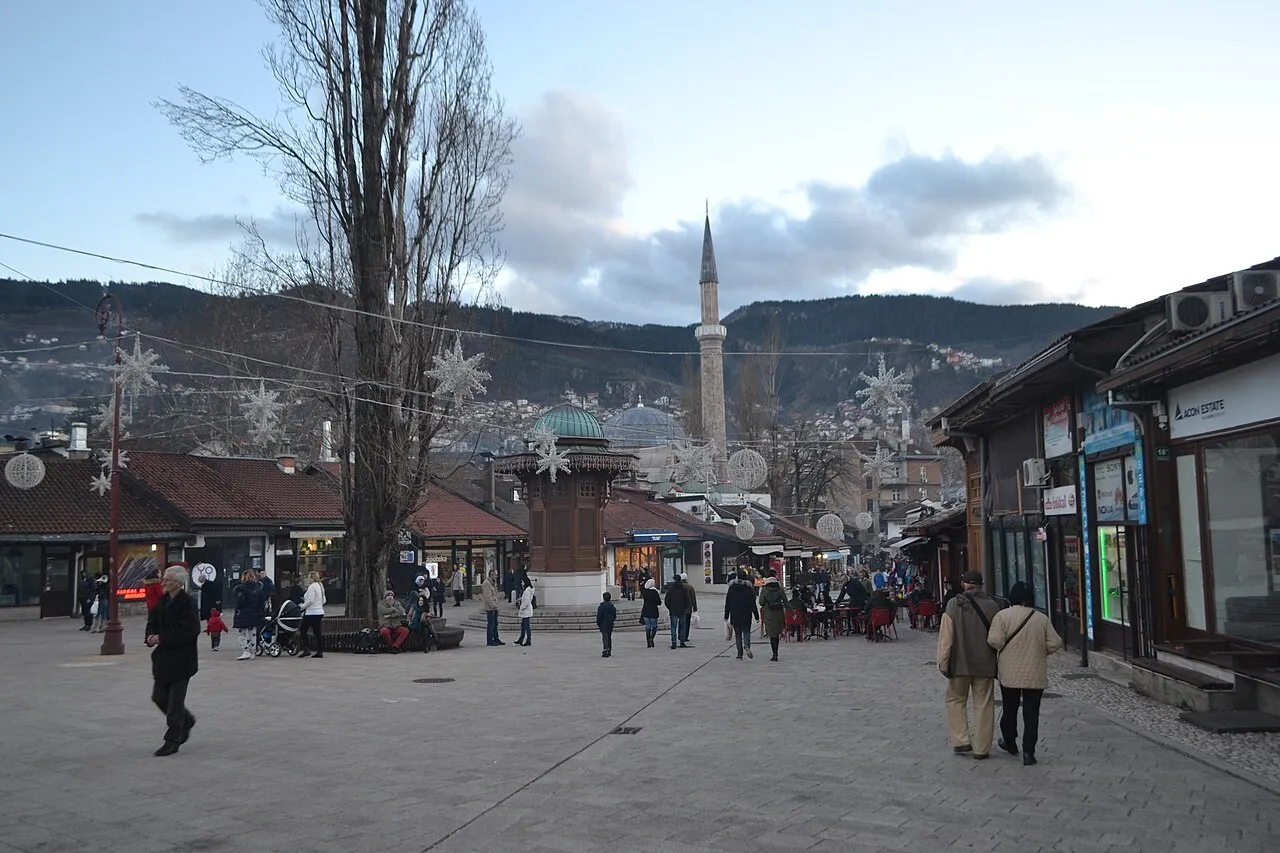
With a full belly, walk a slow loop of Baščaršija while it’s lit and cooling. You’re not sightseeing yet, just getting your bearings around the Sebilj fountain and the low copper-shop lanes, and finishing with a slow Bosnian coffee at a terrace. Early night: Saturday is the big day.
Saturday morning: the bazaar before the crowds
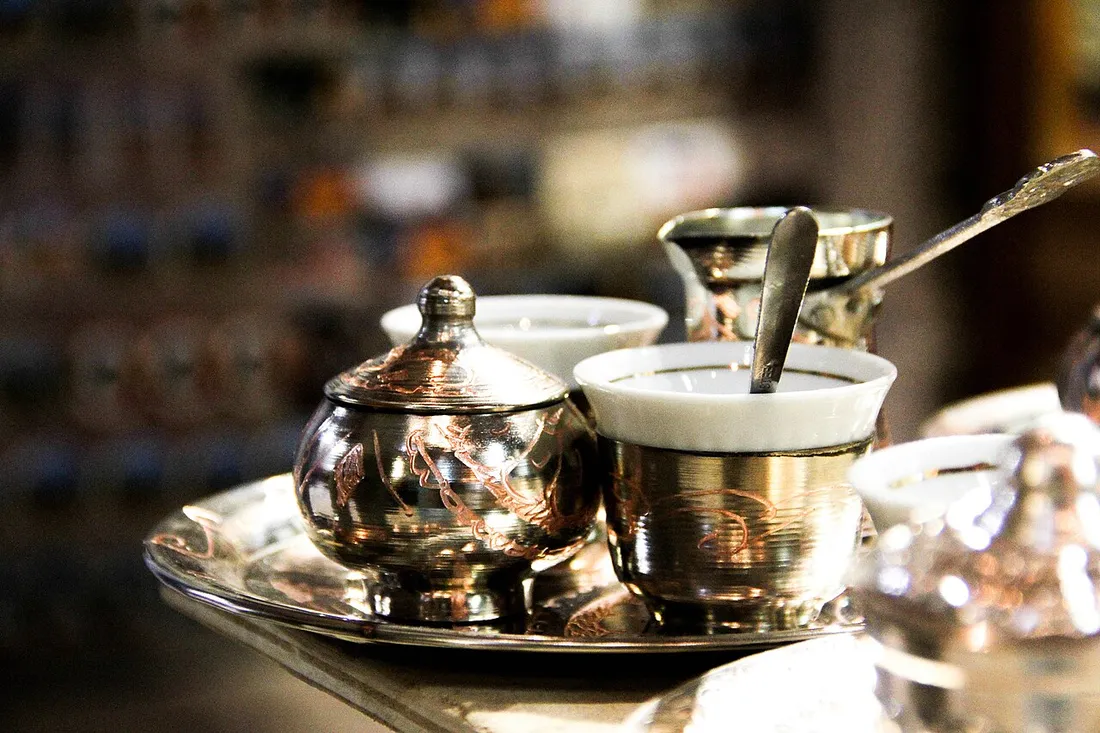
Be out by about half past eight, because the old town belongs to you for an hour before the day-trippers and coach groups arrive. Start at the Sebilj, then duck into Kazandžiluk, the coppersmiths’ lane, where a few workshops still hammer trays and coffee pots into shape - a hand-beaten copper set is the one souvenir worth the suitcase room. This is the calm, photogenic window; use it.
Aim to reach the Gazi Husrev-beg Mosque of 1531, the finest Ottoman building in the country, and here timing matters: non-Muslim visitors are welcome outside the five daily prayer times, so a mid-morning slot usually works, with a small fee and a dress code (shoulders and knees covered, scarves lent at the door). Everything worth seeing here’s unpacked in our full guide to things to do in Sarajevo; this weekend is about pacing it, not repeating it.
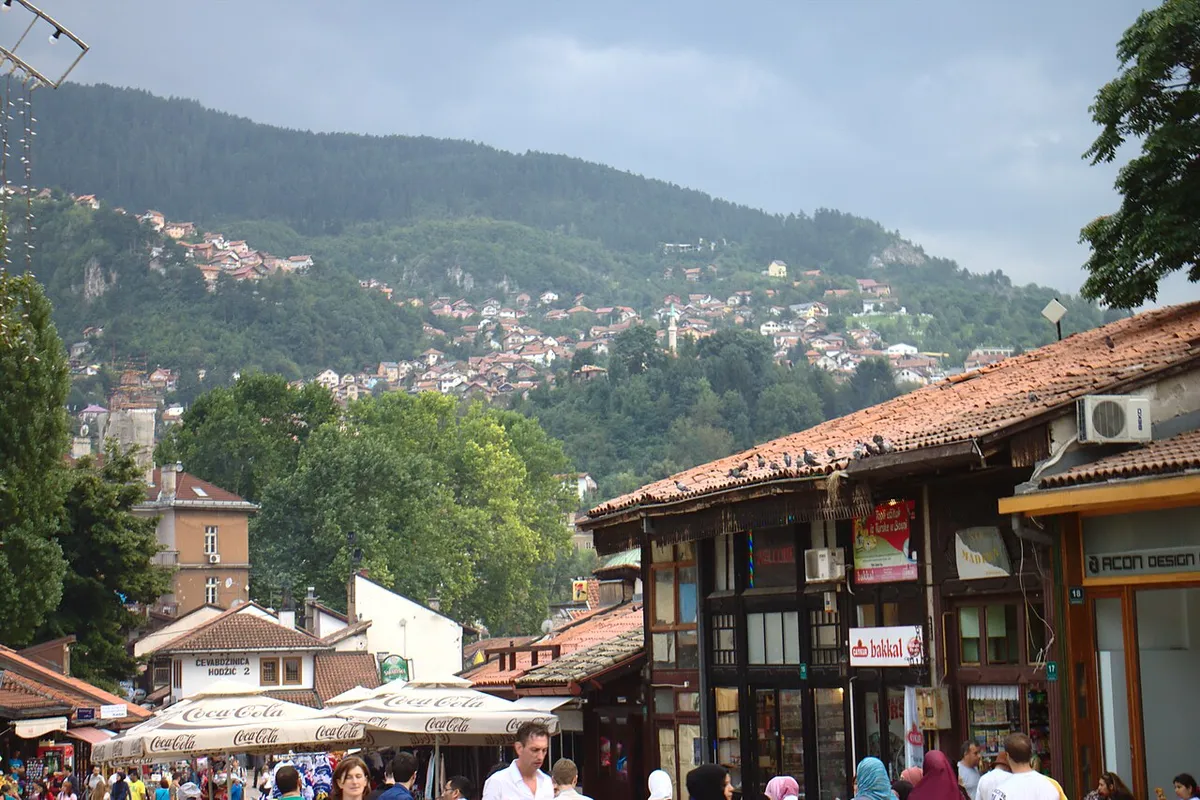
Break mid-morning for the thing Sarajevo does better than almost anywhere: a proper Bosnian coffee, taken slowly from a copper džezva with a sugar cube and a square of Turkish delight. It’s a ritual, not a caffeine hit, and half the city’s social life happens over one - our guide to Bosnian coffee walks through how to drink it.
Saturday lunch: ćevapi, done right
Have your main ćevapi lunch before one o’clock, ahead of the midday rush, at one of the bazaar’s famous grills - the names locals argue over are Željo, Petica and Mrkva, so pick whichever has the queue of locals rather than tourists. Order by the portion (five or ten in a somun, with raw onion), and if you would rather go cheaper and lighter, find a buregdžinica and get burek, the meat-filled filo coil sold by weight. Which kind of shop cooks what’s explained in our guide to Bosnian dishes to try, so you order in the right place.
Saturday afternoon: east meets west along the river
After lunch, walk west along Sarači and Ferhadija and cross the city’s most quietly dramatic spot: the brass “Sarajevo Meeting of Cultures” line set in the pavement, where the Ottoman cobbles give way in a single step to a Habsburg boulevard of grand façades. Stand with a foot on each side, then carry on west past the neo-Gothic Sacred Heart Cathedral to feel the change.
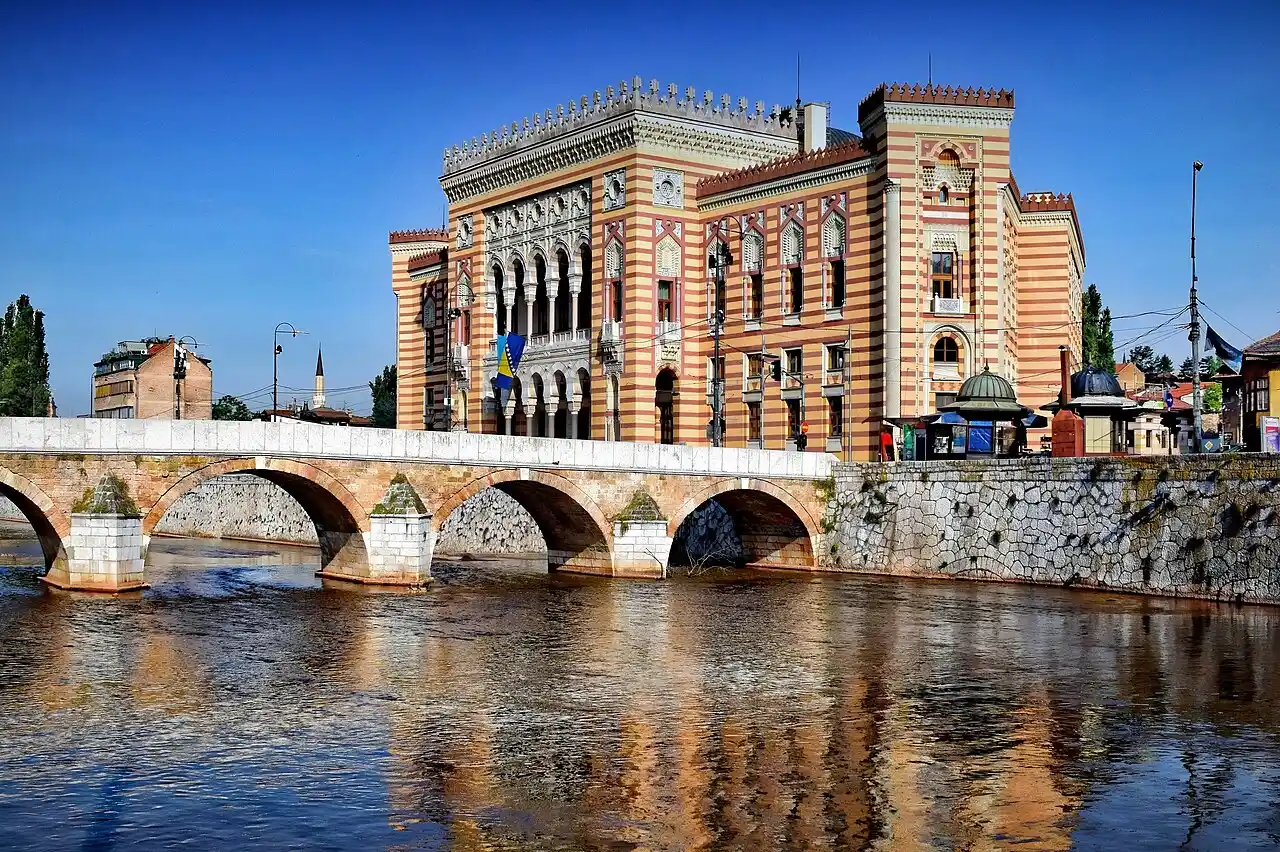
Loop back to the river for the afternoon’s two set-pieces. The Vijećnica, the striped City Hall on the Miljacka, is the grandest building in town - the library that burned under shelling in 1992, reopened in 2014, and worth the small fee to see the restored atrium. A short walk downstream is the modest Latin Bridge, where the shot that started the First World War was fired on 28 June 1914; the corner is now a small museum. It is a lot of history for one riverside stretch, and it flows naturally on foot.
Saturday evening: sunset from the fortress
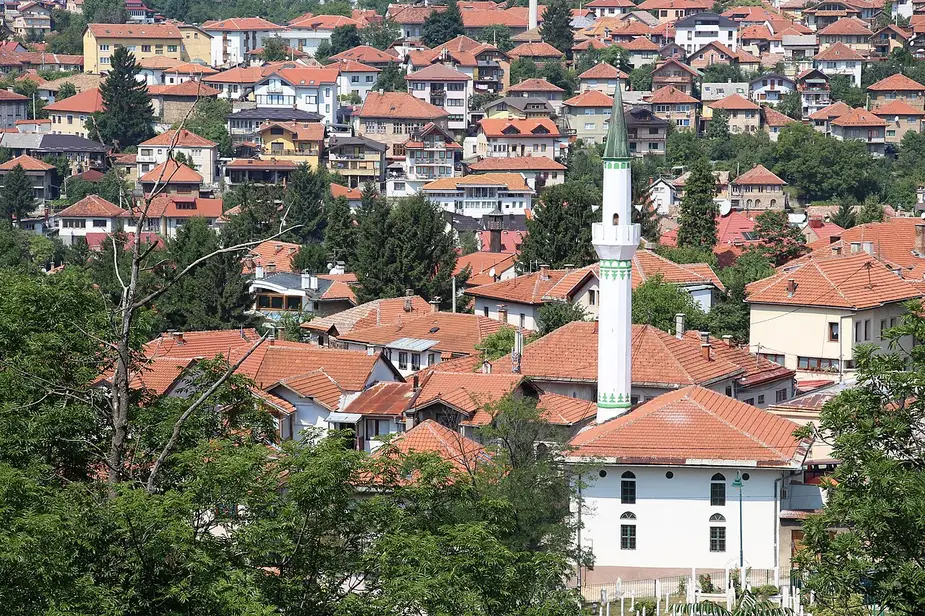
Late afternoon, climb up through the Vratnik quarter to the Yellow Bastion (Žuta tabija), an old Ottoman fortress terrace that is the city’s free sunset spot. Time it for the golden hour: the whole bowl of the city spreads out below, minarets and red roofs going amber, and in Ramadan the same terrace fires a cannon each evening to break the fast. It’s a fifteen-minute uphill walk from the bazaar and easily the best free thing you will do all weekend.
For dinner, come back down and eat two or three streets back from the water, where you get better food for less than the view-premium riverside places. Finish with a rakija or another coffee - or keep going into the Ferhadija bar strip if you want a proper night out; our Sarajevo nightlife guide maps the walkable options.
Sunday morning: the Tunnel of Hope
Give the first half of Sunday to the history you cannot leave Sarajevo without understanding. Get to the Tunnel of Hope out by the airport soon after it opens, around half past eight, before the tour groups fill the small museum. Dug by hand under the UN-held runway, it was the besieged city’s only link to the outside world, and the shell-scarred house it started from tells the siege honestly. Admission is 20 KM, cash only in marks (no cards, no euros), and a taxi out takes about fifteen minutes. Give it an hour; it is the single clearest way to grasp what the 1990s meant here, and the wider story is in our guide to the siege of Sarajevo.
Sunday afternoon: up Mount Trebevic, or a wet-weather plan
Back in town for a light lunch, then ride the cable car up Mount Trebevic - about eight minutes from Bistrik station to the ridge (a return ticket is 30 KM) for the finest overview of the city. From the top it’s a short downhill walk to the eerie, graffiti-covered 1984 Olympic bobsled track, free to walk and genuinely strange; wear real shoes, the concrete is slick with pine needles. Save this for a clear afternoon, because the whole point is the view.
If Sunday turns wet, or you would rather stay in the valley, swap it for the indoor war-history museums - the War Childhood Museum and Gallery 11/07/95 are both moving and central. Either way, leave half an hour for a final coffee on Ferhadija before you head for the airport.
Got a third day?
Two days does the city; a third opens up the country around it, and this is where a weekend becomes a proper trip. The easiest add is a day out - our guide to the best day trips from Sarajevo ranks the Olympic mountains, the pyramids at Visoko and the longer runs east by whether each is worth the drive. Better still, point south: the scenic train down the Neretva canyon puts Mostar two hours away, and our 3 days in Bosnia route builds exactly that weekend-plus-Mostar trip. Keep going and the full 7-day itinerary folds this Sarajevo weekend into a loop of the whole country.
Weekend practicalities
A few things that keep two tight days smooth:
- Carry cash in marks. The currency is the convertible mark (BAM / KM), about 1.96 to the euro. The Tunnel, the mosque and small cafés all want cash in KM; euros are patchy. ATMs are everywhere.
- Walk it. The old town, the riverfront and the fortress climb are all on foot; the historic tram line 3 covers the longer stretches, and a single ticket is 2.20 KM, the same price from the driver or a kiosk.
- Wear real shoes. The bazaar cobbles, the Vratnik climb and the bobsled track are all uneven and, in places, slippery.
- Book the bed early. Rooms are tightest and dearest during the Sarajevo Film Festival in mid-August and around New Year; spring and autumn are the sweet spot.
Give Sarajevo these two unhurried days rather than one rushed one, and you’ll leave understanding why people who plan a single night here so often wish they had booked two.
Photos
Read also

Before you go · 10 min read
Where to Stay in Medjugorje: Pansions & Hotels
Updated · August 25, 2026Where to stay in Medjugorje: guesthouses near St James Church, pilgrim hotels, peak dates, and whether to sleep here or day-trip from Mostar.

Before you go · 9 min read
Where to Stay in Jajce: Hotels by the Waterfall
Updated · August 23, 2026Where to stay in Jajce: old-town hotels steps from the Pliva Waterfall, lakeside rooms by the watermills, and which base suits a one-night stop.

Before you go · 11 min read
Mostar or Trebinje: Which Herzegovina Base?
Verified · August 18, 2026Mostar or Trebinje as a Herzegovina base: crowds, hotel prices, summer heat, Dubrovnik access and wine - pick the nights that fit your trip.

Before you go · 7 min read
Cash, Cards and Tipping Across the Balkans in 2026
Verified · August 15, 2026Twelve currencies, three of them the euro, and two pegged to it. What is fixed, what is a habit, and where you still need notes in your pocket.