Bosnia 10-Day Road Trip Itinerary
A self-drive 10-day Bosnia road trip: Sarajevo, Mostar and Herzegovina, then north to Jajce and Una National Park - real distances, drive times and stays.
Ten days is the number that buys you the whole country, not just its greatest hits. A week in Bosnia gets you Sarajevo, Mostar and the string of Herzegovina wonders in the south, and that’s a fine trip. Add three more days and you can point the car north to the parts most visitors never reach: the waterfall town of Jajce, and the emerald rafting country of Una National Park in the far northwest. This is a self-drive loop out of Sarajevo that does the classic southern circuit, then swings up through central and northern Bosnia before closing the ring - roughly 1,050 km over ten days, but only two of them involve any real distance behind the wheel.
You want your own car for this. The southern sights already sit off the bus map, and the northern leg makes that doubly true: Jajce, the Pliva lakes and the Una trailheads are stitched together by minor roads, not timetables. If you’ve exactly a week rather than ten days, our 7-day Bosnia itinerary covers the southern loop on its own and skips the north entirely, and our guide to how many days you need in Bosnia weighs up the trade-offs. Come in May, June or September for warm days, rivers you can swim, and none of the July-August furnace; the best time to visit Bosnia breaks it down month by month.
The shape of the ten days
The nights fall like this: two in Sarajevo, then the car; three in Mostar as a Herzegovina base for the day trips; one in Trebinje in the south; a long transfer day up to two nights in Jajce; and two out at the Una in the northwest, before the drive home. The rhythm is deliberate: cities first, while you’re still on foot, then the pace loosens into rivers and small towns where the driving becomes the actual point of the day. Only days 7 and 10 are real distance behind the wheel; the rest is short hops and day trips.
Days 1-2: Sarajevo
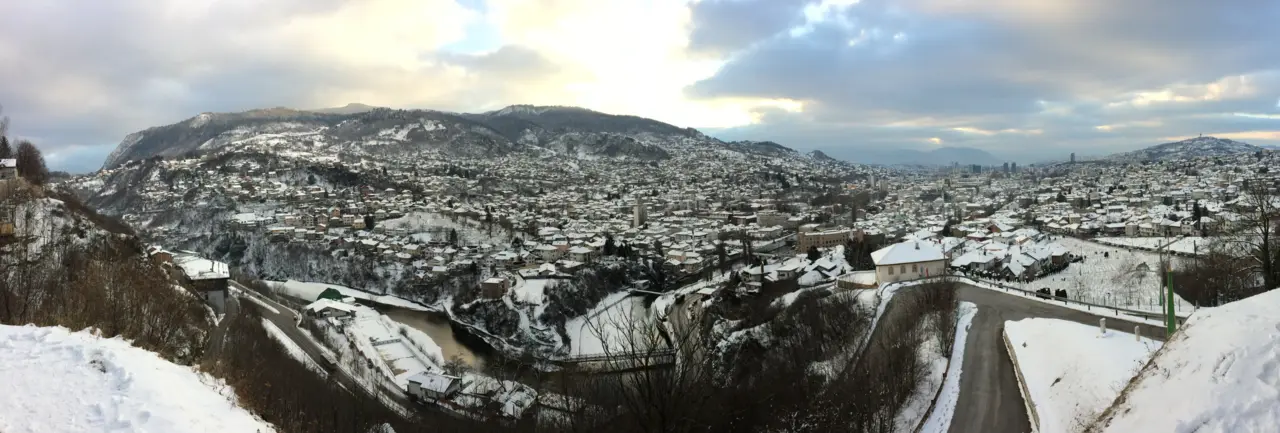
Two nights here earns its keep before the car ever gets involved. The old town works almost like a walking history lesson: Baščaršija’s Ottoman bazaar gives way, at a brass line set into the pavement, to a Habsburg boulevard, and the scars of the 1990s siege are visible the whole way along. Base yourself in or beside the bazaar so the cafés, the coppersmiths and the river sit on your doorstep, and spend day one working through the old quarter properly rather than rushing it - the Sebilj fountain, the Gazi Husrev-beg Mosque of 1531, and the Latin Bridge where the shot that started the First World War was fired in 1914.
Day two goes higher and deeper. Ride the cable car up Mount Trebević for the finest overview of the city, walk the eerie abandoned 1984 Olympic bobsled track near the top station, and give an hour to the Tunnel of Hope museum by the airport, which tells the siege honestly. Our full Sarajevo guide lays out how to pace it, and the old-bazaar detail is in our piece on Baščaršija. Pick up your hire car on the morning of day three, not before: a car sitting idle while you explore on foot is money thrown away, and the bazaar quarter is tight for parking anyway.
Day 3: Sarajevo to Mostar, the scenic way
This is one of the best drives in the Balkans, and today’s schedule gives it the time it deserves: 130 km and 2 to 2.5 hours of actual driving down the M17 through the Neretva canyon, stops aside. The first stretch out of Sarajevo is motorway through the Ivan Tunnel; after the toll you drop onto the two-lane M17 and follow the river. It’s a good road, but shared with trucks - tuck in behind the slow ones and watch the gorge instead of fighting to pass. The same river and the same road are covered, if you’d rather take the train to Mostar another time.
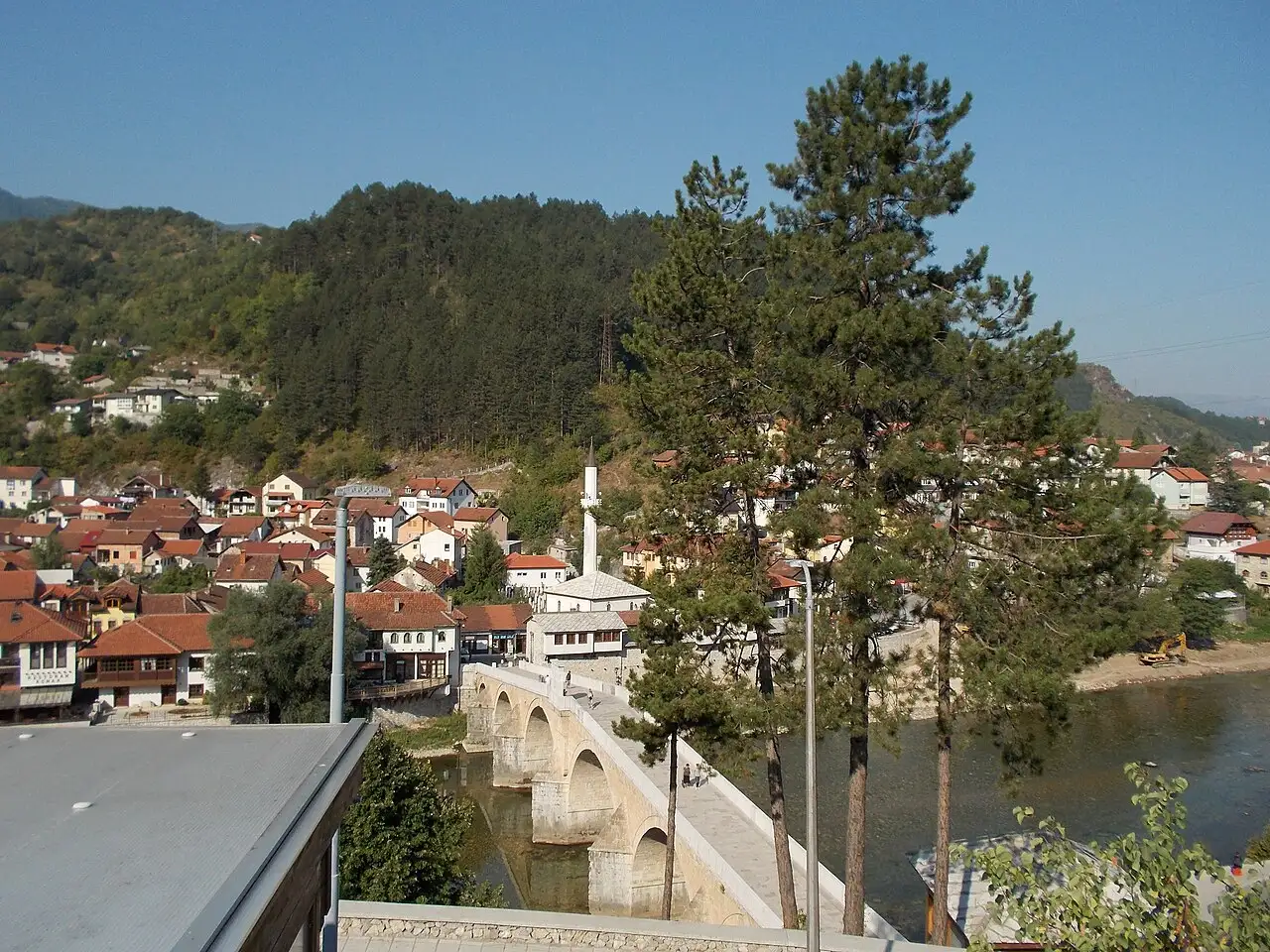
Break at Konjic, roughly halfway. Its restored Ottoman stone bridge is a five-minute stop and a lovely one, and the town is the unlikely home of ARK D-0, Tito’s secret nuclear bunker - a Cold War command complex dug 280 metres into the mountain, built in near-total secrecy between 1953 and 1979 to shelter the Yugoslav leadership. You can only go in on a guided tour, and you must prebook through the bunker’s own site; tours run around 60 to 90 minutes. Aim to reach Mostar in the late afternoon, as the day-trip coaches pull out and the town settles for the evening. Check into a guesthouse in or above the Old Town, drop the car where there’s parking on the flatter edges, and walk down to Stari Most as the light goes gold.
Days 4-5: Mostar and the Herzegovina day trips
Three nights in Mostar sounds generous until you count what it reaches. Give the first morning to Mostar itself while it’s quiet: everything orbits Stari Most, the single-arch Ottoman bridge rebuilt stone by stone after it was shelled to rubble in 1993 and reopened in 2004. Cross it slowly, lose an hour in the coppersmiths’ bazaar, and climb the Koski Mehmed-Paša minaret for the view down the river. Our Mostar guide has the full rundown, including the honest bit about the town’s still-visible wartime divide.
Then the car earns its keep. Three of Herzegovina’s headline sights sit south of Mostar, an easy drive apart:
- Blagaj, 12 km southeast, where the Buna river explodes out of a cave at the foot of a 200-metre cliff beneath a white 16th-century dervish house. Entry is paid at the booth, so bring marks in cash (the lodge publishes no price online), and the dress code is real, because it’s a working Sufi lodge; full detail in our Blagaj Tekke guide.
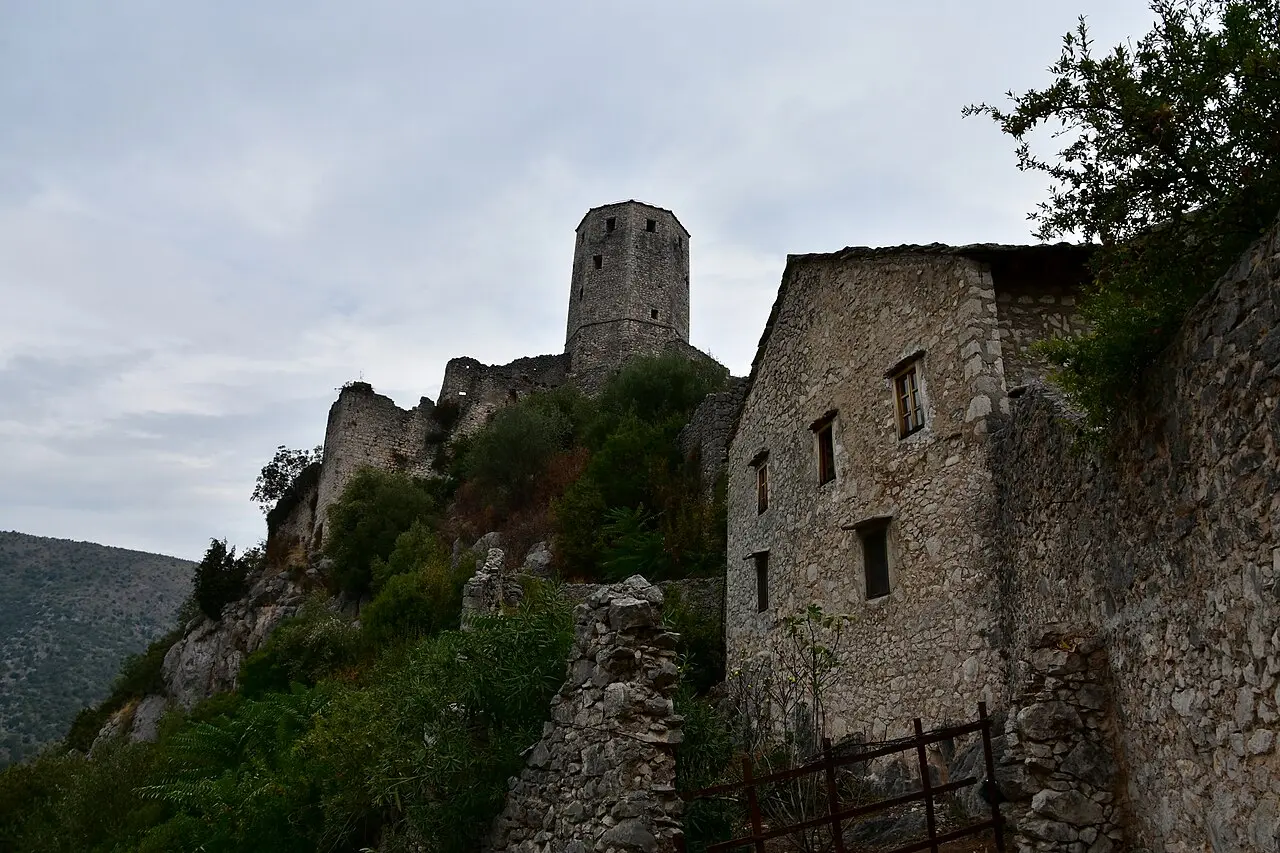
- Počitelj, a stepped Ottoman-medieval town stacked up the hillside above the Neretva, free and open all hours, with a fortress first raised by King Tvrtko I in 1383.
- Kravice, a broad horseshoe of falls on the Trebižat, roughly 28 metres high, that doubles as the country’s best swimming hole from June to September. Entry is 20 KM (about €10) year-round, paid at the gate or ahead through the online ticket shop the park links from its own site, plus parking; the water tops out at a bracing 20°C. Our Kravice guide covers the fee, the swim season and the timing.
Do Blagaj on day four and pair Počitelj with Kravice on day five - they line up on the same road south - and eat two or three streets back from the bridge each evening, where the view premium drops away.
Day 6: south to Trebinje
Leave the Neretva and cross into the country’s other half. It’s about 115 km and just over two hours from Mostar to Trebinje, and the drive is part of the reward: take the road via Stolac, pause at the Radimlja necropolis with its field of medieval carved tombstones, and climb the empty karst road toward the border of Republika Srpska, the Serb-majority entity. There’s no passport check crossing between the entities - same country, same currency - but the signage switches to Cyrillic.
You’ve earned Trebinje by the time you get there: a walled 18th-century Ottoman old town wrapped around a plane-tree square, and the unofficial capital of Herzegovina’s wine country. Its landmark, the Arslanagić Bridge, is an Ottoman span of 1574 that was taken apart stone by numbered stone when the river was dammed in the 1960s and rebuilt about 10 km downstream, in the Gradina district of town. Out of town, the Tvrdoš Monastery makes its own wine; a tasting of the native Vranac red or Žilavka white is the right way to close out the day. Spend the night here rather than pushing on - once the day-trippers from Dubrovnik clear out, the square becomes one of the most relaxed evening spots anywhere in the country. Our Trebinje guide has the wineries and the walk.
Day 7: the long haul north to Jajce
This is the trip’s one genuine transfer day, and there’s no dodging it: Trebinje to Jajce is roughly 300 km and five to five and a half hours, back up past Mostar and on through central Bosnia. Start early, break the drive where you fancy, and treat the road as scenery rather than a chore - the middle of the country is green, empty and largely un-touristed. If the long leg puts you off, this is the pivot where a shorter trip would simply loop home; the north is exactly what the extra days buy you.
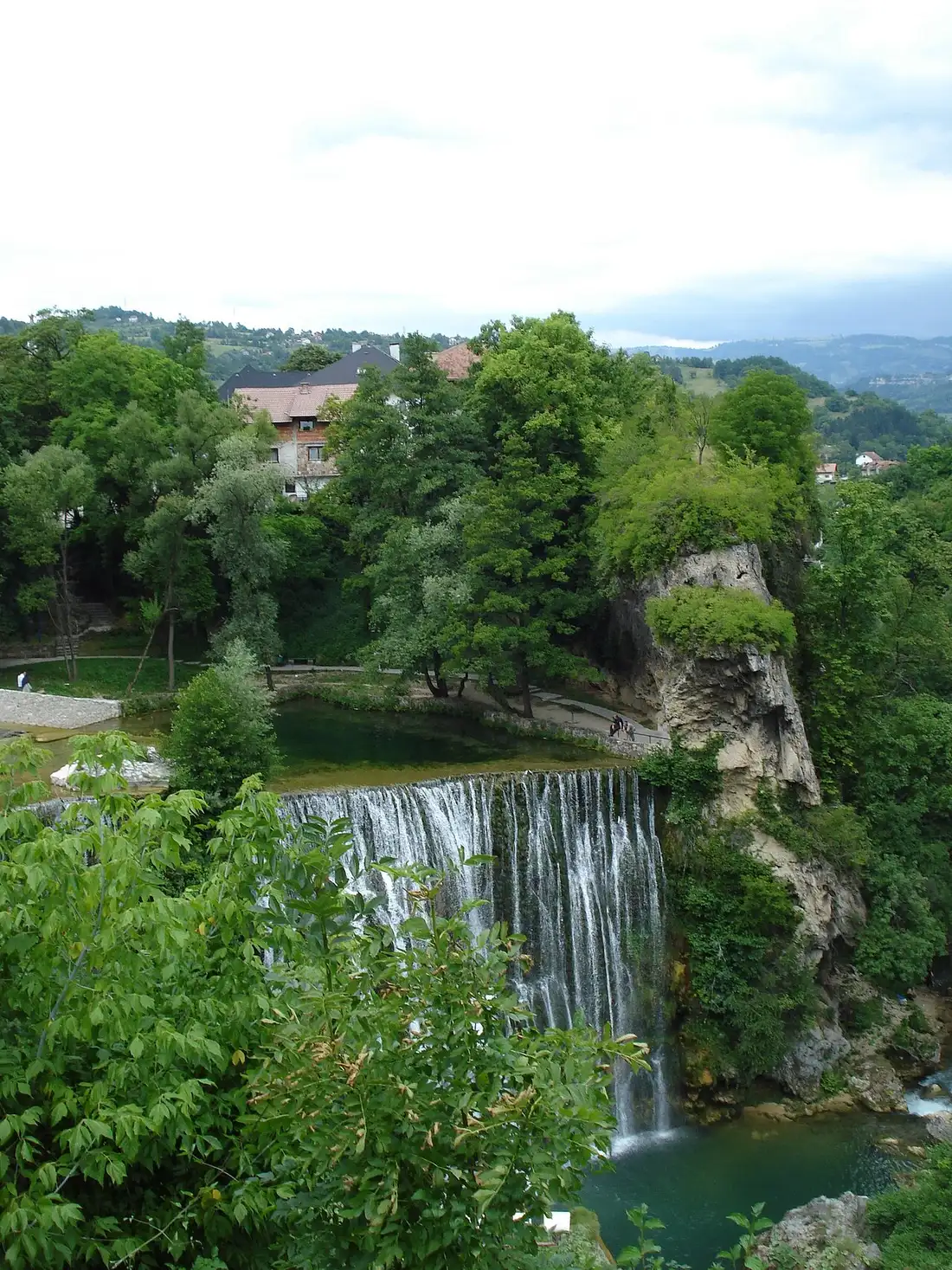
Your reward is one of the most singular small towns in the Balkans. Jajce is where a waterfall drops straight through the middle of the old streets: the Pliva river pouring about 22 metres over a tufa ledge right where it meets the Vrbas, under a walled medieval town. (Older sources put the falls nearer 30 metres; the drop shrank after 1990s war damage raised the pool below - take 22 as the honest number.) That fortress was the last capital of the Bosnian kingdom, where King Stjepan Tomašević was crowned in 1461 before the Ottomans took the town in 1463. Settle in for the night; the town is quiet after dark and rewards a slow evening.
Day 8: Jajce, the Pliva lakes, then west to the Una
Give the morning to Jajce proper. Beyond the waterfall and the fortress, the town hides a rock-cut medieval catacomb church begun around 1400 and a Roman Temple of Mithras, one of the best preserved in Europe - both a short walk apart, both a small cash fee. Then drive about 3 km west to the Pliva Lakes, a pair of calm green lakes strung with a cluster of little wooden watermills, the Mlinčići, free to wander among. Our Jajce guide maps the lot. It’s a comfortable half-day; don’t rush it to make time, because the afternoon drive is short enough.
In the early afternoon, point northwest for Bihać and Una National Park - roughly two to three hours on scenic minor roads. This is the far corner of the country, and it feels it: the landscape empties out, the road winds, and the Una appears as an improbably green ribbon of water. Check into Bihać or a riverside guesthouse for two nights, because the Una is worth a full day and you’ve earned a change of pace from all the driving.
Day 9: rafting and the Una waterfalls
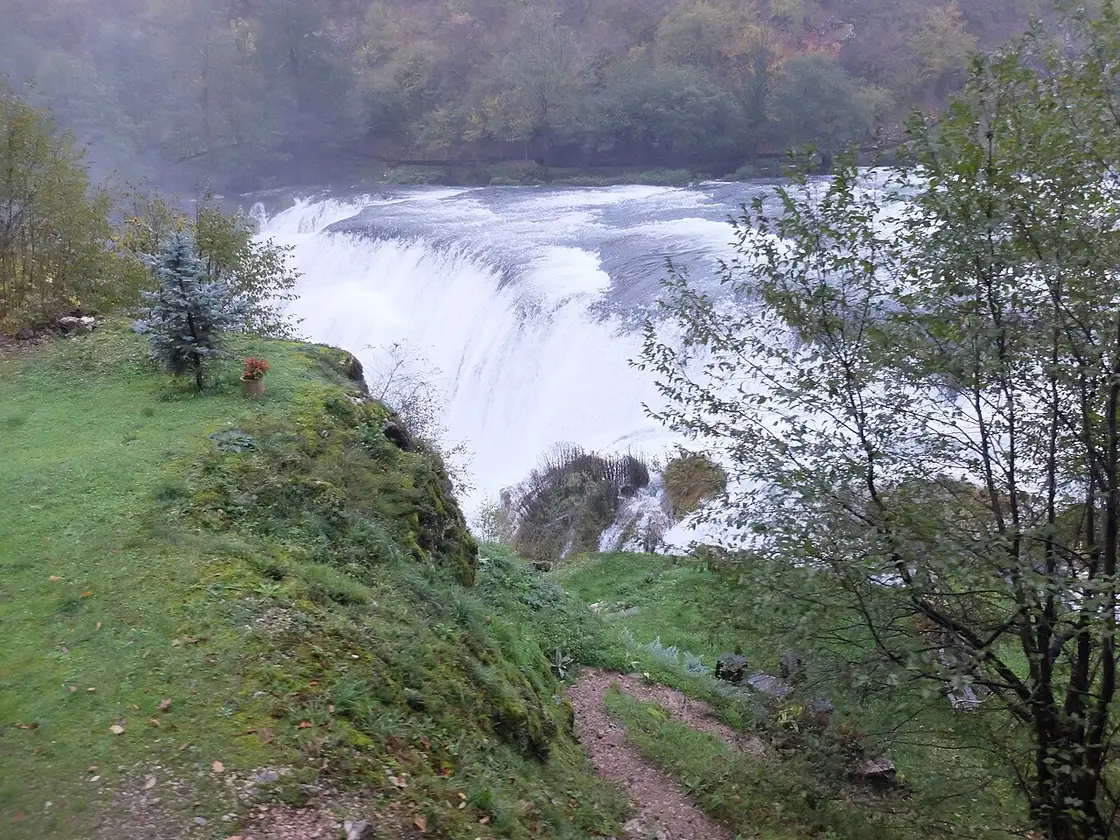
Day nine is the wild card of the whole trip, and for a lot of people it becomes the highlight. Una National Park is Bosnia’s biggest (established in 2008, about 350 km²), and most travellers come for the rafting: cold, clear, fast water through forest, with tufa ledges to bounce over and turquoise pools to drift between. Certified operators run out of Bihać, and there are two quite different experiences, so pick the section rather than just “rafting” - the Štrbački buk stage is the adrenaline run past the big waterfall, while the stretches around Kostela and Bosanska Krupa are gentle enough for families. A guided half-day runs around 100 to 105 KM (about €54) and usually includes park entry, gear, transfer and basic insurance, but rates vary, so confirm when you book.
Even if you skip the raft, don’t miss Štrbački buk itself, the tallest waterfall on the Una at roughly 24 to 25 metres, spread across a staircase of tufa steps - it sits right on the Croatian border, so half the view is technically in another country. Our full guide to Una National Park and Bihać covers the rafting sections, the fees and the waterfalls in detail, and rafting is exactly the kind of activity many standard travel policies exclude, so check your cover before you go. A note on money out here: card acceptance is patchy, so carry cash in convertible marks.
Day 10: back to Sarajevo, via Travnik
The last day closes the ring. Bihać to Sarajevo is roughly 300 km and four and a half to five hours the sensible way, back southeast through central Bosnia - the far northwest really is out on a limb, and this is the price of it. Break the drive at Travnik, the old Ottoman vizier town on the Sarajevo road: birthplace of the Nobel laureate Ivo Andrić (whose Bridge on the Drina won the 1961 prize), home to a colourful painted mosque and a fortress above the river, and a natural lunch stop. From there it’s the final run into the capital.
If your flight home is out of Sarajevo, time your arrival to drop the car. And if you’d rather bend the shape of this trip, the northwest gives you a neat option: because the Una sits barely an hour from Plitvice Lakes across the border, you can finish in Croatia instead of doubling back - tell the rental company you’re crossing so its cross-border authorisation is on the contract - that sign-off is the document that matters at the barrier, whatever the desk calls the insurance part of the package. Our sister site’s Croatia Guidebook picks up that end.
Renting a car and the practical bits
A hire car is the backbone of this itinerary - it turns a scattered set of hard-to-reach sights into one flowing loop, and the northern half simply doesn’t work without one. Book it in Sarajevo for pickup the morning you leave. A few things worth knowing:
- Money. The currency is the convertible mark (BAM / KM), pegged at about 1.96 to the euro. The gates at Blagaj, Kravice and Jajce, the rafting operators, and small cafés all want cash in marks - euros are patchy. Draw KM from ATMs in the towns.
- Cross-border cover. If you might dip into Croatia at the Una end, tell the rental company and get its cross-border authorisation noted - that is the paperwork the barrier asks for, and some agencies restrict certain cars from leaving the country at all. Our Bosnia car rental guide covers booking, winter tyres, tolls and the cross-border rules in full.
- The roads. Outside the short Sarajevo motorway you’re on two-lane roads shared with trucks - good surfaces, beautiful scenery, modest average speeds. Watch for police speed traps, especially in Republika Srpska.
Want to swap the north for the deep east? If wilderness pulls you harder than the northwest, trade the Jajce-and-Una leg for our Eastern Bosnia Drina route - Višegrad’s UNESCO bridge, Foča and Sutjeska National Park with Maglić - though it sits in the opposite corner and makes for a different, hikier trip. And if you’d rather not drive it all, a softer version links the cities by private transfers with local drivers for the day trips: pricier and less spontaneous, but hands-free.
Ten days like this gives you the country in full - two cities, a canyon drive, a wine town, a waterfall in a town centre, and a raft trip on the greenest river in the Balkans. The first week is the classic Bosnia; the last three days are the Bosnia most people miss. Take the roads at their own gentle pace, keep cash in marks for the small stuff, and there’s a fair chance the wild north ends up the part you talk about most on the way home.
Route day by day
- Days on the road
- 10
- Distance
- ≈1050 km
- Budget from
- 95 EUR
- Best season
- May, June, July, August, September
The route at a glance
-
Sarajevo
Route startstop ≈2880 min
Days 1-2. The layered capital, on foot: the Ottoman bazaar, the siege story and the cable car up Mount Trebević. Pick up the hire car the morning you leave.
Photo: User:Tomica / Wikimedia Commons, CC BY-SA 4.0 ( source) -
Konjic
55 km from the startstop ≈120 min
Day 3, en route. Halfway to Mostar on the M17: the Ottoman stone bridge over the Neretva and Tito’s Cold War bunker (ARK D-0, prebook the tour).
Photo: ArticCynda / Wikimedia Commons, CC BY-SA 4.0 ( source) -
Mostar
130 km from the startstop ≈2880 min
Days 3-5, your Herzegovina base. Stari Most and its divers, the coppersmiths’ bazaar, and the launch pad for the day trips below.
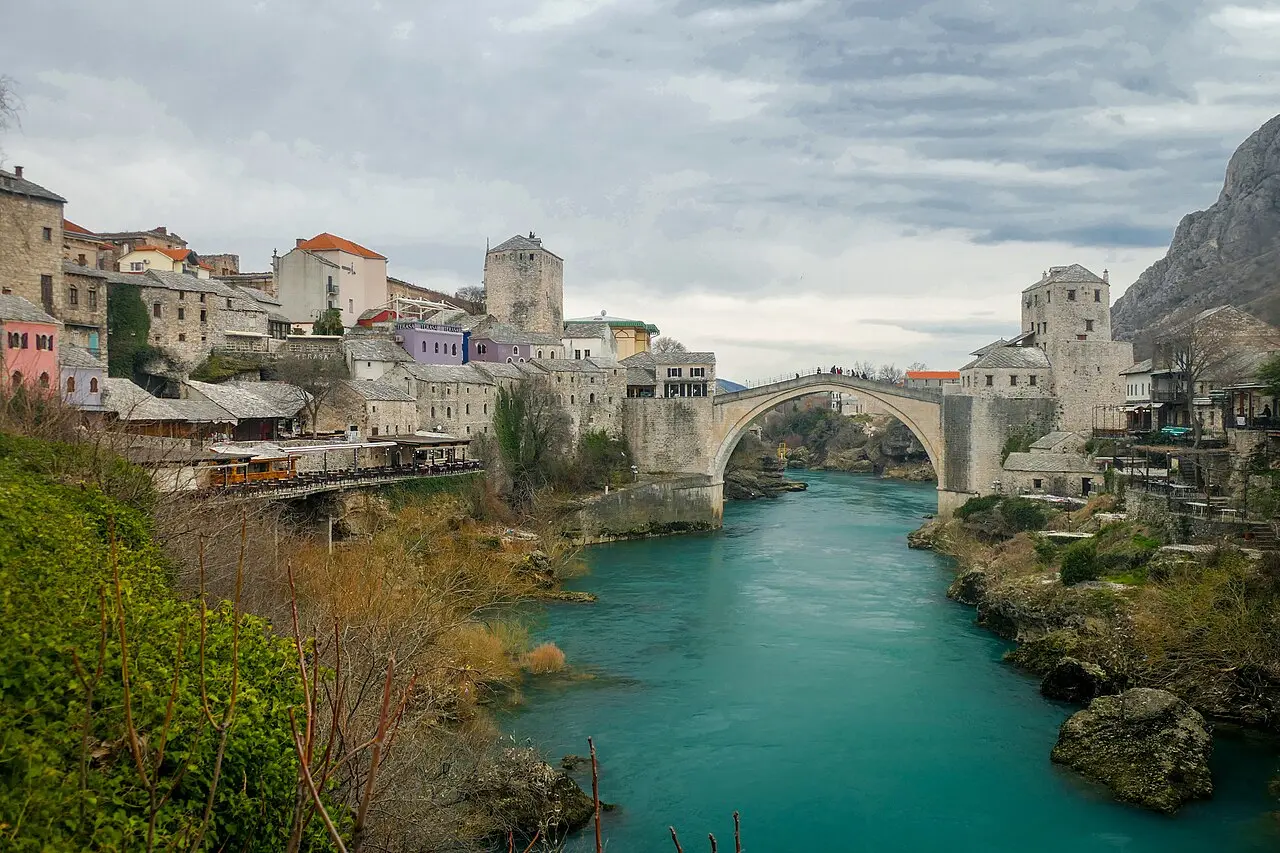
Photo: Hibasi / Wikimedia Commons, CC BY-SA 4.0 ( source) -
Blagaj
142 km from the startstop ≈150 min
Day 4. The white cliffside dervish house where the Buna river bursts from a cave, 12 km from Mostar - the classic half-day out.
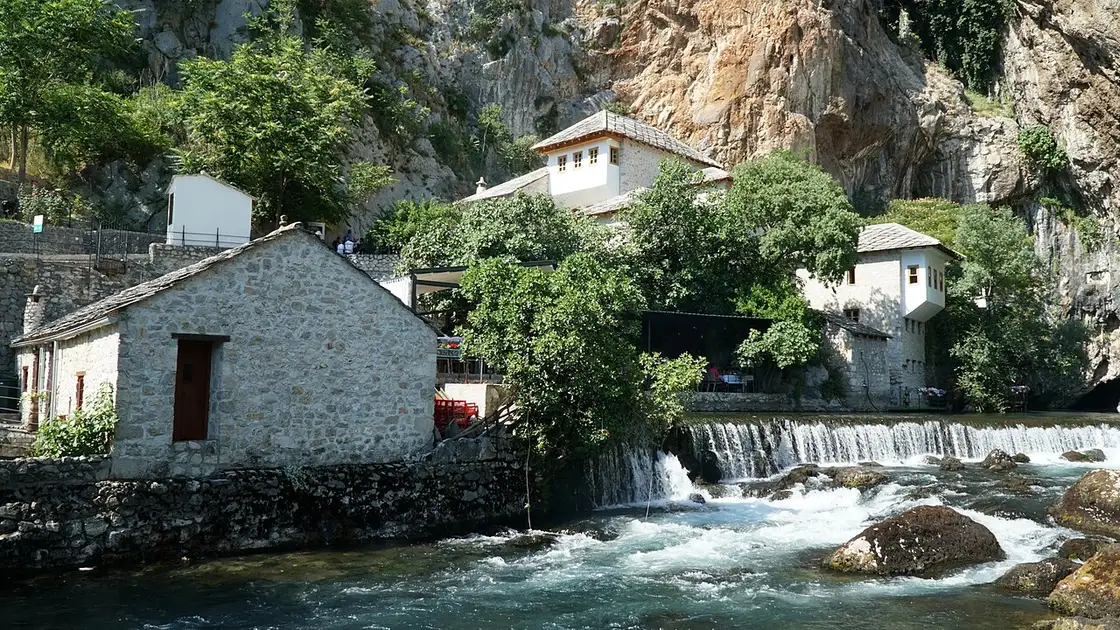
Photo: Adam Harangozó / Wikimedia Commons, CC BY-SA 4.0 ( source) -
Počitelj
160 km from the startstop ≈90 min
Day 5. A stepped Ottoman-medieval town stacked up the hillside above the Neretva, with a fortress you climb for free.
Photo: Richard Mortel / Wikimedia Commons, CC BY 2.0 ( source) -
Kravice Waterfalls
200 km from the startstop ≈180 min
Day 5. A broad horseshoe of falls on the Trebižat - and the region’s best swimming hole from June to September.
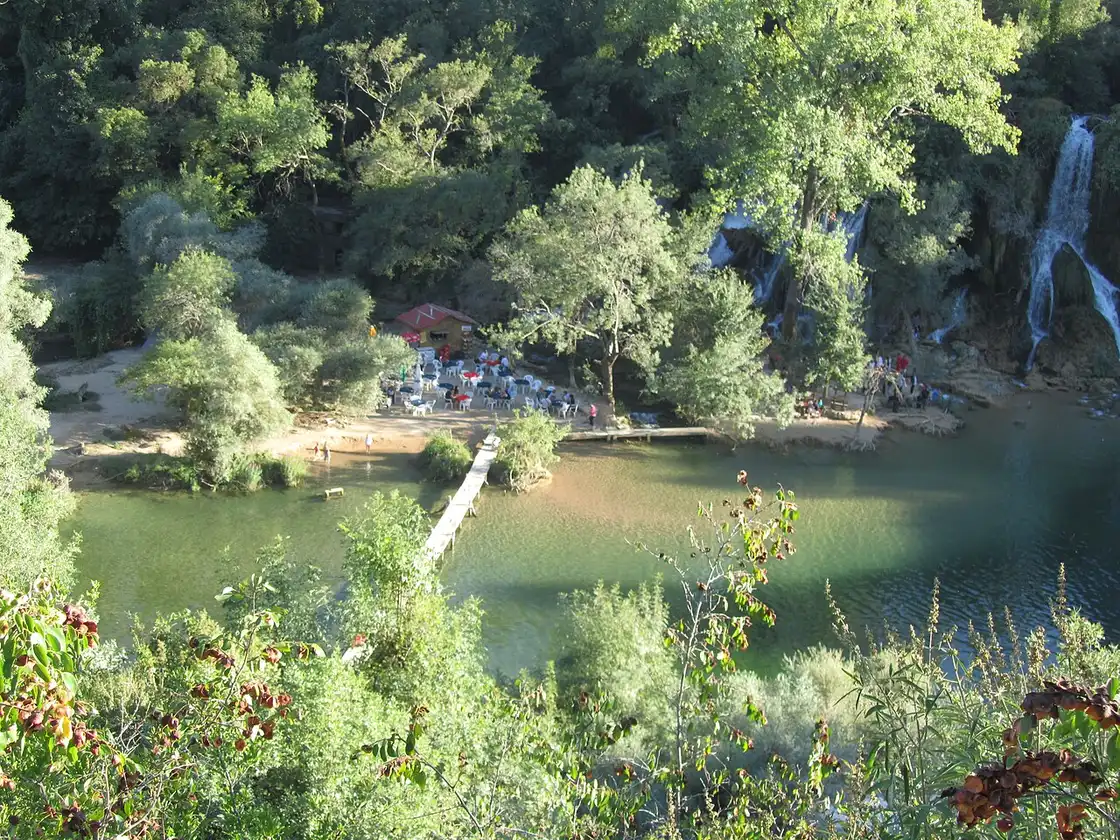
Photo: Stephan Hense / Wikimedia Commons, CC BY-SA 3.0 ( source) -
Trebinje
315 km from the startstop ≈1440 min
Day 6. Herzegovina’s wine town: a walled Ottoman old town, a rebuilt 16th-century bridge and the vineyards of Tvrdoš.
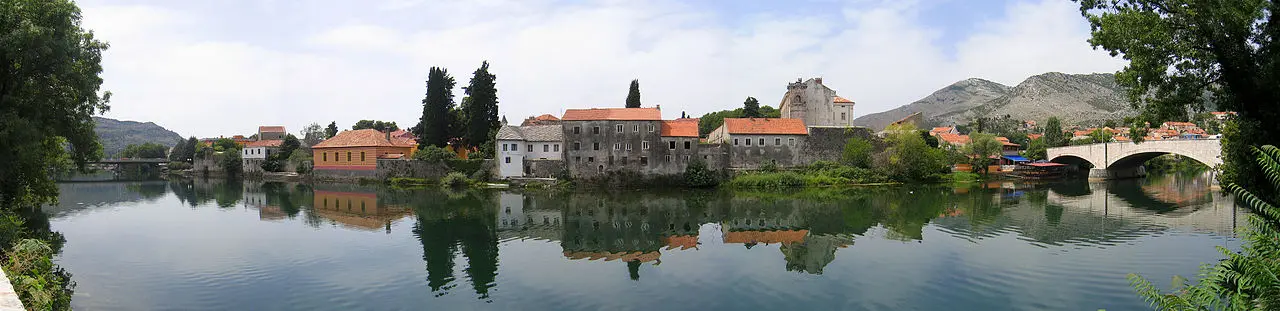
Photo: Goran Anđelić / Wikimedia Commons, CC BY-SA 4.0 ( source) -
Jajce
620 km from the startstop ≈1440 min
Days 7-8. The northern turn: a waterfall in the middle of the old town, a fortress that was the last royal capital, and the Pliva lakes and watermills.
Photo: Rochass / Wikimedia Commons, Public domain ( source) -
Una National Park (Bihać)
780 km from the startstop ≈2880 min
Days 8-9, the wild northwest. The emerald Una, rafting from Bihać, and the Štrbački buk waterfall right on the Croatian border.
Photo: Manfred Kopka / Wikimedia Commons, CC BY-SA 4.0 ( source)
Route map
The map with stops loads on click - to keep the page lightweight.
The map didn’t load. Check your connection and refresh the page.